Car shipping rates in 2026 range from about $550 on short regional routes to $1,900 coast to coast. A 1,000-mile move averages around $1,000, and a 2,500-mile move around $1,450. Enclosed transport adds 40 to 60 percent, and peak-season pricing adds another 20 to 40 percent on busy lanes.
This car shipping cost guide focuses on real numbers rather than vague ranges, including named route pairs, a worked distance example, and the specific line items a legitimate quote should include.
Comparing your own quote against the figures below takes just a few minutes. Get your free, price-locked quote today and see exactly how your route stacks up against these numbers.
What Does a Car Shipping Cost Guide Show for 2026?
A proper car shipping cost guide breaks pricing down by distance, vehicle type, transport method, and season, since no single number applies to every shipment. The $550 to $1,900 range reflects the full spread across all of these variables combined.
Distance | Estimated Cost Range | Typical Transit Time |
Under 500 miles | $550-$900 | 1-3 days |
500-1,000 miles | $800-$1,200 | 2-5 days |
1,000-1,500 miles | $950-$1,400 | 4-7 days |
1,500-2,500 miles | $1,100-$1,750 | 6-9 days |
2,500+ miles | $1,300-$1,900 | 7-10 days |
Every car shipping cost guide requirements list should include the same basics: distance, vehicle condition, transport type, and your ideal pickup window. Without these four details, any number you're quoted is closer to a guess than a real estimate.
Understanding this car shipping cost guide explained in plain terms means recognizing that per-mile rates actually drop as distance grows, since fixed costs like dispatch and fuel spread across more miles on a longer haul.
The car shipping cost guide 2026 figures throughout this page reflect current market conditions, though the underlying distance-based pricing logic has held steady for years.
What Does a 1,000-Mile Move Cost?
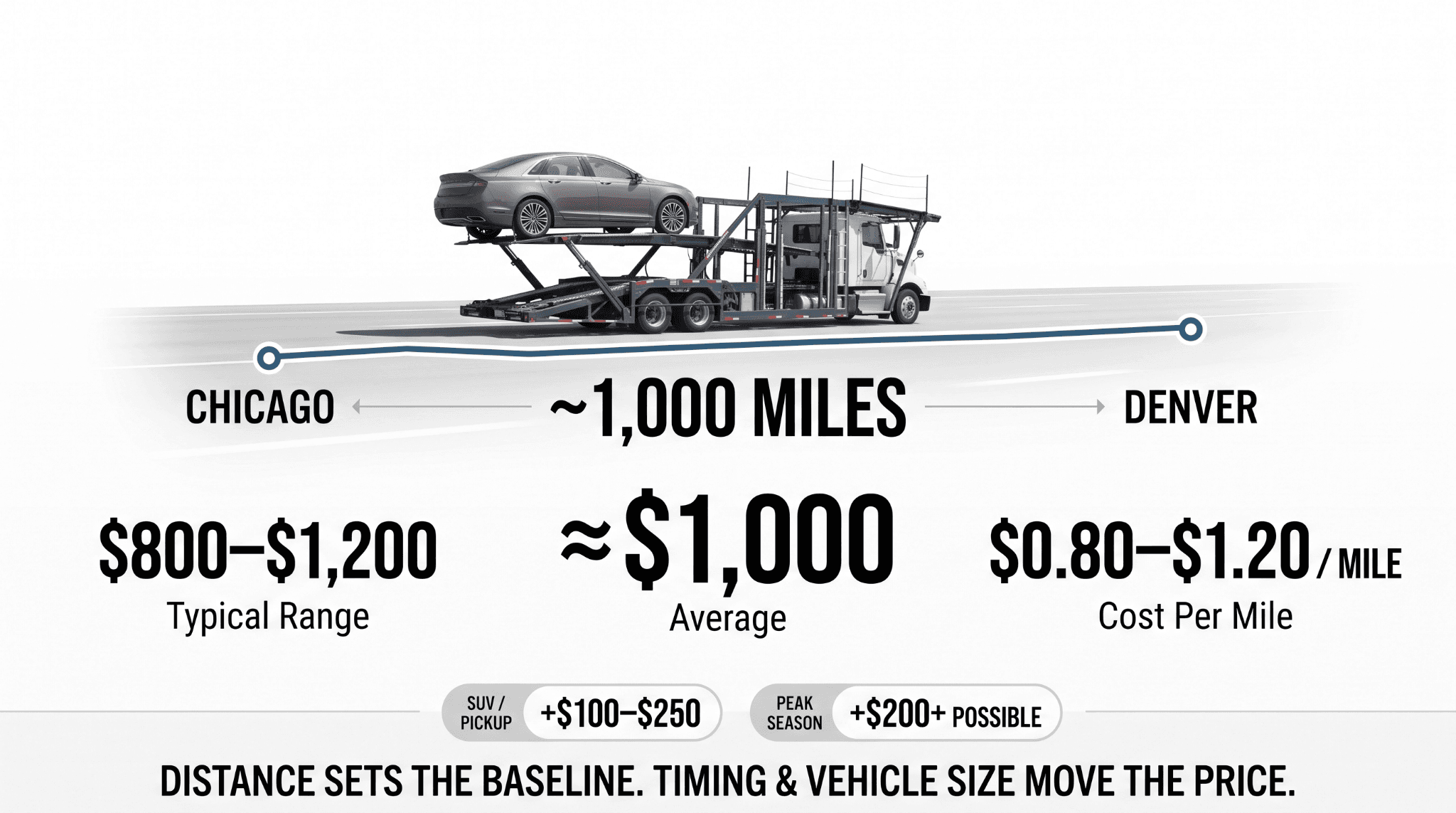
A 1,000-mile move averages around $1,000 for a standard sedan on open transport, typically falling between $800 and $1,200 depending on the specific route, season, and carrier availability. This works out to roughly $0.80 to $1.20 per mile.
Here's a worked example to show how this breaks down in practice: a Chicago-to-Denver move covers almost exactly 1,000 miles. At $950, that's $0.95 per mile, squarely inside the expected range for a route this length.
The car shipping cost guide price for a 1,000-mile move shifts with vehicle size too. An SUV or pickup on the same route typically runs $100 to $250 above the sedan figure, since it takes up more trailer space.
Car shipping cost guide rates for this same distance can vary $200 or more between peak and off-peak booking windows, which is often a bigger swing than the difference between two competing brokers on the same day.
What Are the Rates on the Busiest Routes?
The busiest US corridors price differently from a generic distance estimate, since carrier density on a specific route matters as much as the mileage itself. The table below reflects 2026 open transport rates for a standard sedan.
Route | Estimated Cost Range | Typical Transit Time |
New York, NY to Miami, FL | $1,100-$1,950 | 3-5 days |
New York, NY to Orlando, FL | $800-$1,300 | 3-5 days |
Los Angeles, CA to Houston, TX | $750-$1,171 | 3-4 days |
Chicago, IL to Miami, FL | $900-$1,300 | 3-5 days |
Los Angeles, CA to New York, NY | $1,200-$1,700 | 6-10 days |
Seattle, WA to Los Angeles, CA | $875-$1,025 | 1-4 days |
Atlanta, GA to Miami, FL | $650-$925 | 1-3 days |
Dallas, TX to Miami, FL | $700-$1,050 | 2-4 days |
The New York-to-Florida corridor is consistently the most demand-driven route in the country, with pricing spiking sharpest between December and February. The Seattle-to-LA corridor tends to price more moderately thanks to steady carrier traffic moving south along the coast.
If you're searching for a car shipping cost guide near me expecting local pricing to differ from these national figures, know that carrier density on your specific corridor matters far more than which city your broker's office sits in.
Real differences exist among car shipping cost guide companies in how transparently they price secondary routes that aren't in a standard table like this one.
The best car shipping cost guide comparison you can make is between your actual quote and the route-pair table above, since a generic distance estimate won't capture the carrier density that drives pricing on a specific corridor.
How Much Does Enclosed Transport Add?
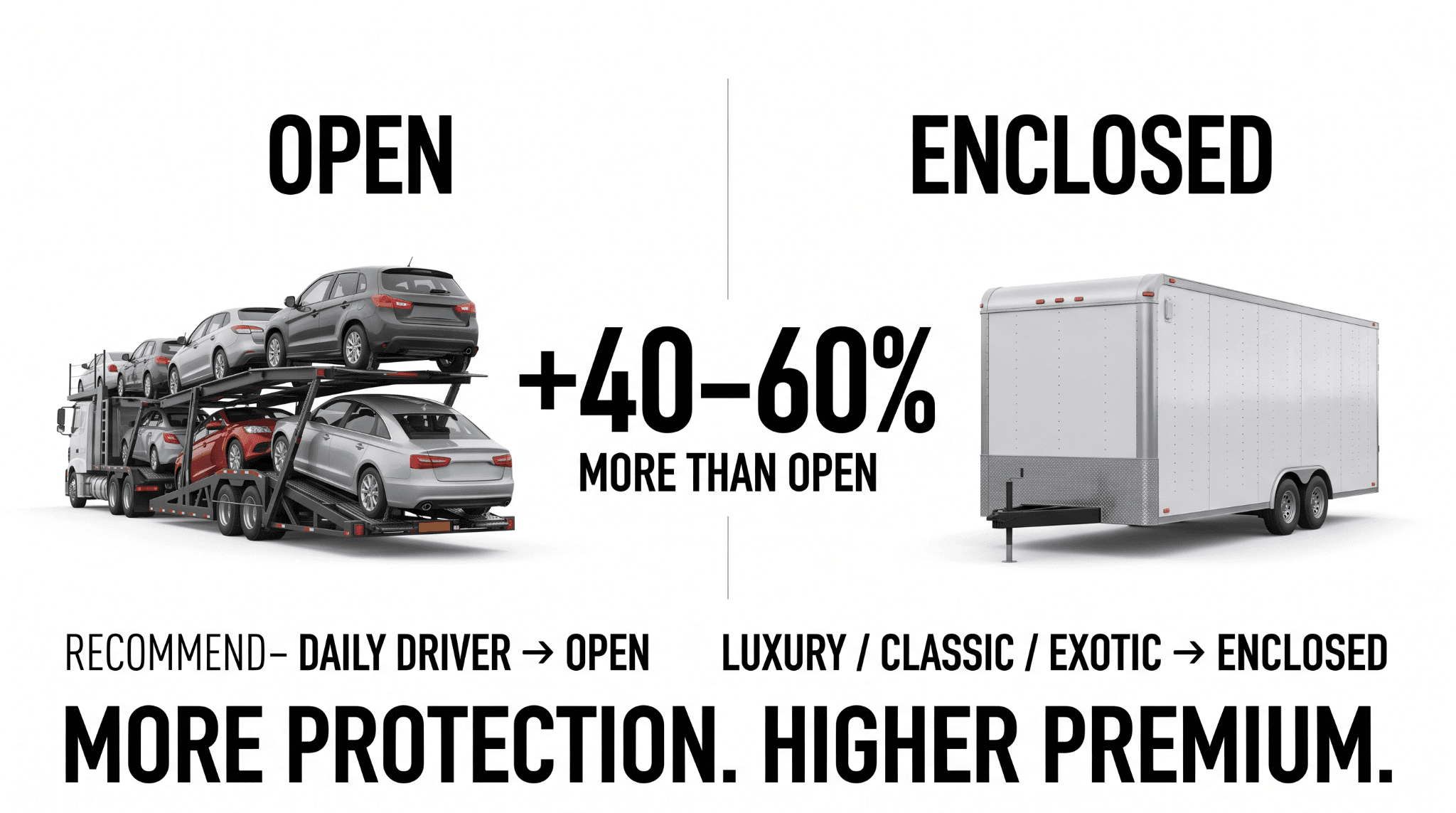
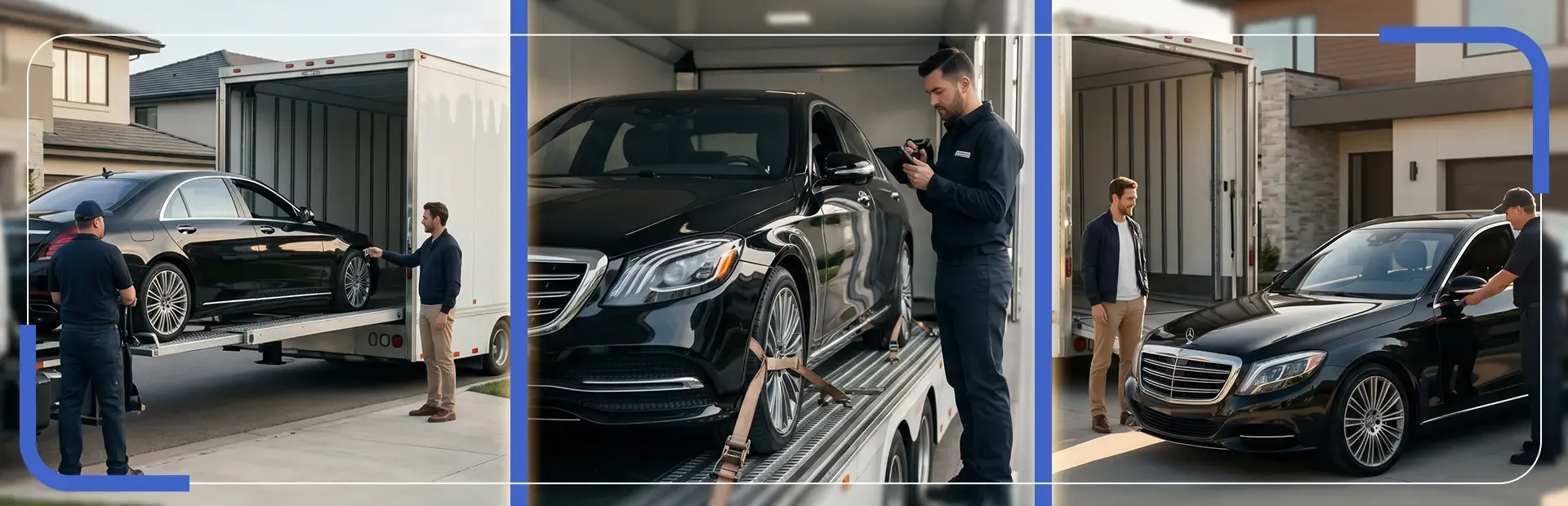
Enclosed transport adds 40 to 60 percent to the base open-transport rate on the same route, reflecting the smaller vehicle capacity per trailer and the added weather and debris protection. This premium holds fairly consistently across every distance band.
Enclosed transport accounts for roughly 10 percent of all shipments and is the standard recommendation for luxury, classic, or exotic vehicles where cosmetic condition matters most. Standard sedans and daily drivers rarely need it.
The consistency of this percentage is actually useful when comparing quotes: if a broker's enclosed rate falls well outside the 40-60 percent range above the open rate for the same route, that's worth a second look before booking. A genuine car shipping cost guide service should explain this premium clearly at quote time, not bury it in fine print.
So how much car shipping cost guide figures shift once enclosed transport is factored in depends entirely on your base open-transport rate, since the percentage applies consistently regardless of distance.
How Do You Get an Accurate Quote for Your Route?
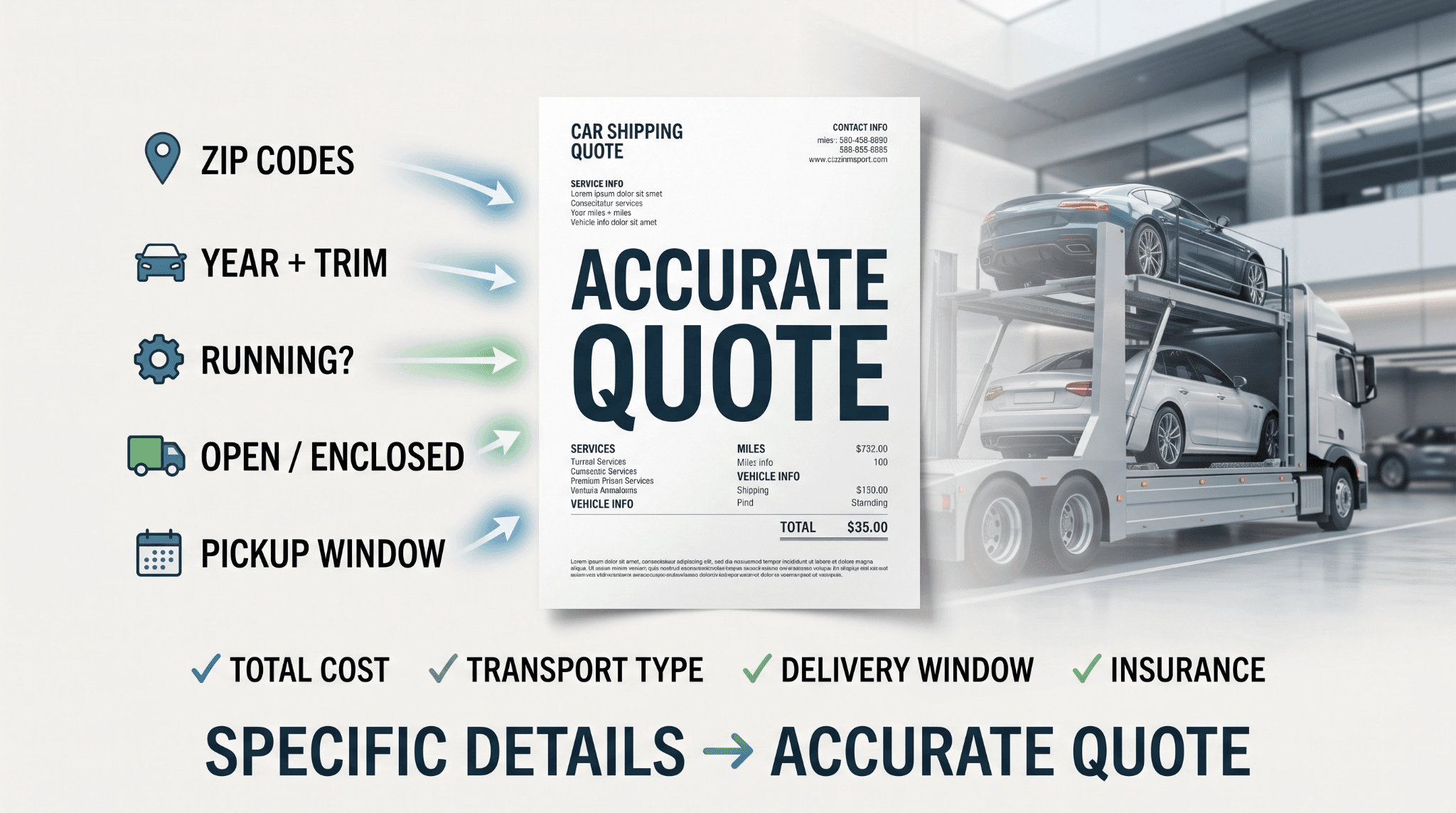
Get an accurate quote by providing exact ZIP codes, full vehicle details including year and trim, running condition, preferred transport type, and your ideal pickup window. Vague information produces vague, unreliable estimates.
A legitimate quote should clearly state:
Total transport cost, with no "estimated" language attached to the final figure.
Transport type, confirmed in writing as open or enclosed.
Pickup and delivery window, with a realistic transit time range.
Insurance coverage, included as standard, not offered as an add-on.
Missing any one of these details is a sign the quote may not hold up once a carrier is actually confirmed, since brokers who skip specifics upfront often have more room to adjust the price later.
Request a car shipping cost guide quote with these specifics included. Compare it against a couple of quotes from other providers using the same details, since coordination and transparency vary more than price alone.
An online car shipping cost guide calculator can offer a useful starting estimate, but a live quote will always be more accurate once your exact vehicle and route are factored in.
Common Queries About 2026 Car Shipping Costs
Pricing questions come up constantly, so here are direct answers to the ones we hear most often. Comparing car shipping cost guide quotes from a couple of providers before booking is one of the simplest ways to confirm any single answer holds up in practice.
How much does car shipping cost in 2026?
Between $550 and $1,900 depending on distance, vehicle type, and season. A standard sedan on a mid-range open transport route typically falls between $1,050 and $1,200.
What is the price for a 1,000-mile move?
Around $1,000 on average, typically ranging from $800 to $1,200 depending on the specific route and timing. Larger vehicles and enclosed transport push toward the higher end.
Which routes are the cheapest?
Short, high-density corridors like Atlanta to Miami tend to price lowest, often $650 to $925. Routes with heavy competing carrier traffic generally beat less-traveled ones of similar distance.
Have car shipping rates gone up this year?
Rates track fuel costs and demand rather than rising on a fixed schedule, so any year-over-year change depends on those underlying factors rather than the calendar alone.
How accurate are online quote calculators?
They're useful for a rough starting estimate but rarely account for your exact vehicle condition, specific route, or current carrier demand. A live quote is always more precise.
Sanity-Check Any Quote Against Real Numbers
This car shipping cost guide gives you real figures to compare against, from distance bands to named route pairs, so you can tell a fair quote from an inflated one.
A cheap car shipping cost guide number that skips these details is rarely the outcome you actually want once the real invoice arrives. The best way to judge any quote is against your own specific route and vehicle, not a generic average, which is exactly why the tables above are organized by real distance and city pairs rather than a single flat figure.
A few practical car shipping cost guide tips worth remembering: request itemized pricing, disclose your full vehicle details upfront, and confirm your transport type in writing before you commit.
Asking how long car shipping cost guide quotes stay locked once issued is one more detail worth confirming, since permit and demand pricing can shift if too much time passes between quote and pickup.
Reading car shipping cost guide reviews from other shippers who moved a similar route can also confirm whether a broker's numbers hold up once a carrier is actually assigned.
Following this car shipping cost guide process from quote to booking, rather than skipping straight to the lowest number on the page, is what actually protects you from a surprise invoice later. Get your free, price-locked quote today and see your exact rate before you commit to anything.