Open Vs Enclosed Car Shipping Cost Factors Every Driver Should Know

Safeeds
April 07, 2026
18 min read

Share post

When it comes to choosing between open vs enclosed car shipping, cost is often the first factor drivers consider, but it should never be the only one. Each transport method offers a different balance of affordability, protection, and convenience, which can significantly impact your overall experience. From route distance and vehicle size to seasonal demand and carrier availability, multiple factors influence pricing in ways that aren’t always obvious at first glance. 

Understanding these cost drivers not only helps you budget more accurately but also ensures you select the option that best fits your vehicle’s needs. Whether you're shipping a standard car or a high-value vehicle, making an informed decision can prevent unexpected expenses and unnecessary risks. At Safeeds Transport Inc., we guide customers through every step with transparency and expert insight. Get a quote today and discover the most cost-effective and reliable shipping solution for your vehicle.

Open vs Enclosed Car Shipping Overview for First-Time Shippers

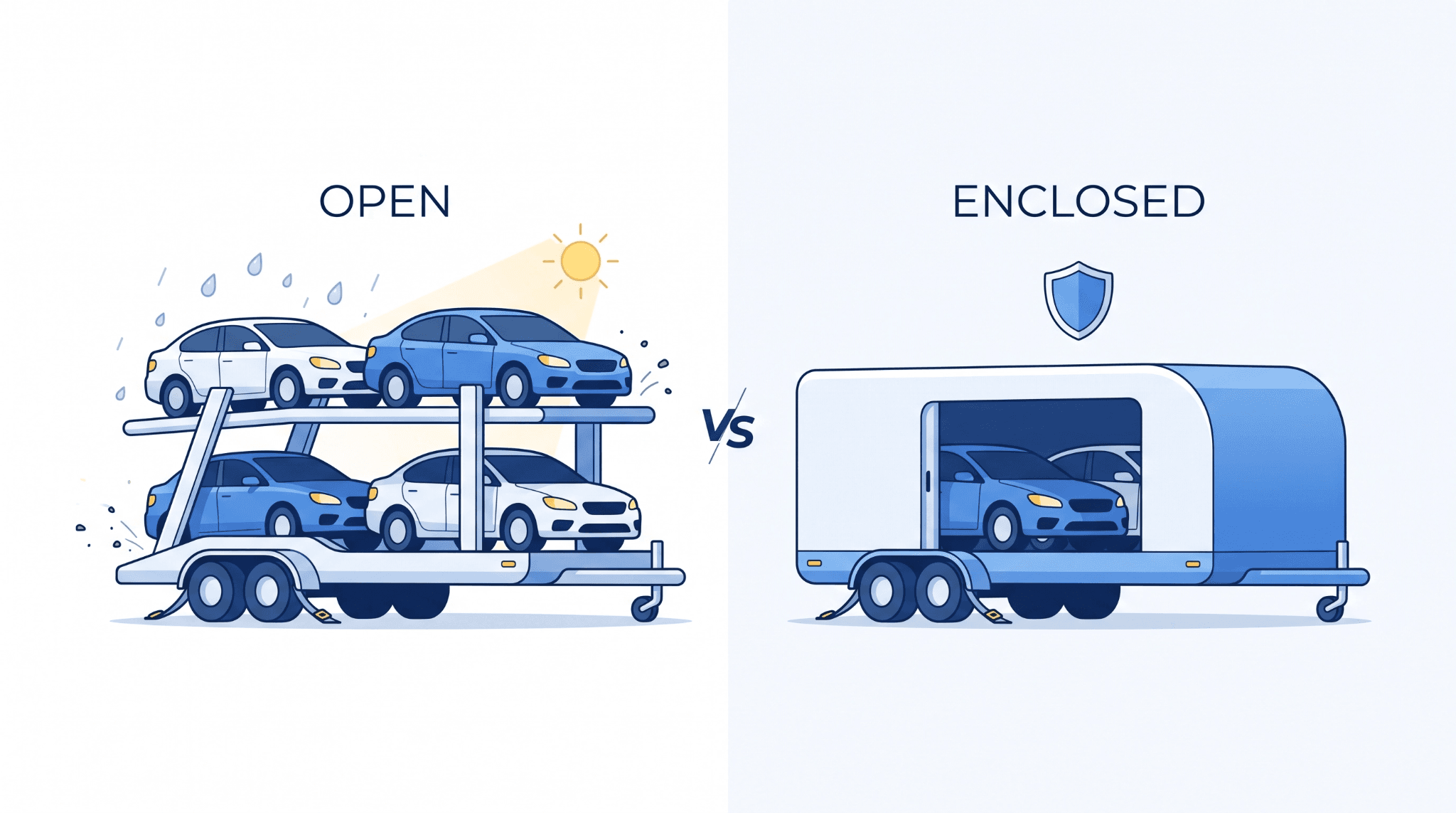
For those new to the logistics industry, the terminology can seem overlapping, but the mechanical differences are distinct. At its core, the industry is divided into two primary categories: open-air transport and containerized (enclosed) transport. Each serves a specific segment of the market, from daily commuters to high-end collectors.

What is Open Auto Transport, and How Does it Work?

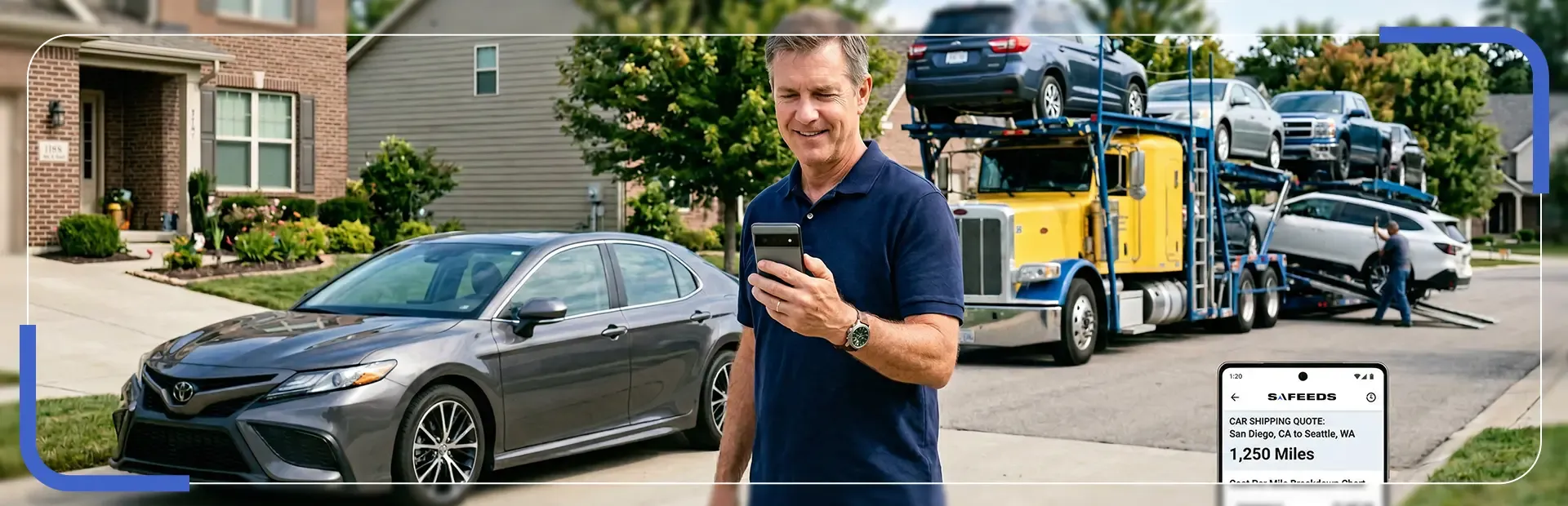
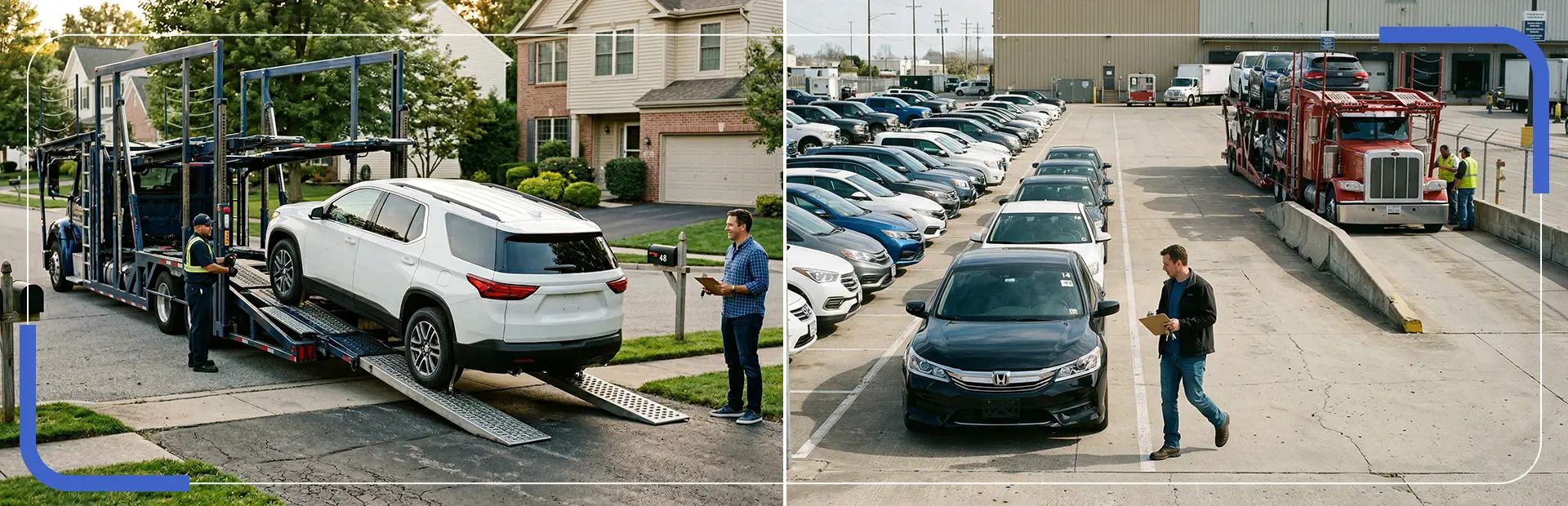
Open carrier auto transport is the most recognizable form of vehicle shipping. You have likely seen these massive, double-decker trailers on the highway, often carrying seven to ten vehicles at once. Because the trailers lack walls and a roof, they are lighter and more fuel-efficient to operate. Open auto transport services are the "standard" for the industry, utilized by manufacturers, dealerships, and individuals alike. While the vehicle is exposed to the elements, it remains safely secured to the structural frame of the trailer.

Feature

Open Auto Transport

Enclosed Auto Transport

Trailer Structure

Double-decker, open-air trailers

Fully shielded, "container on wheels."

Vehicle Protection

Exposed to weather and road debris

100% protected from external elements

Typical Capacity

High (7 to 10 vehicles per load)

Low (Smaller, specialized batches)

Efficiency

Lighter and more fuel-efficient

Heavier, specialized equipment

Best For

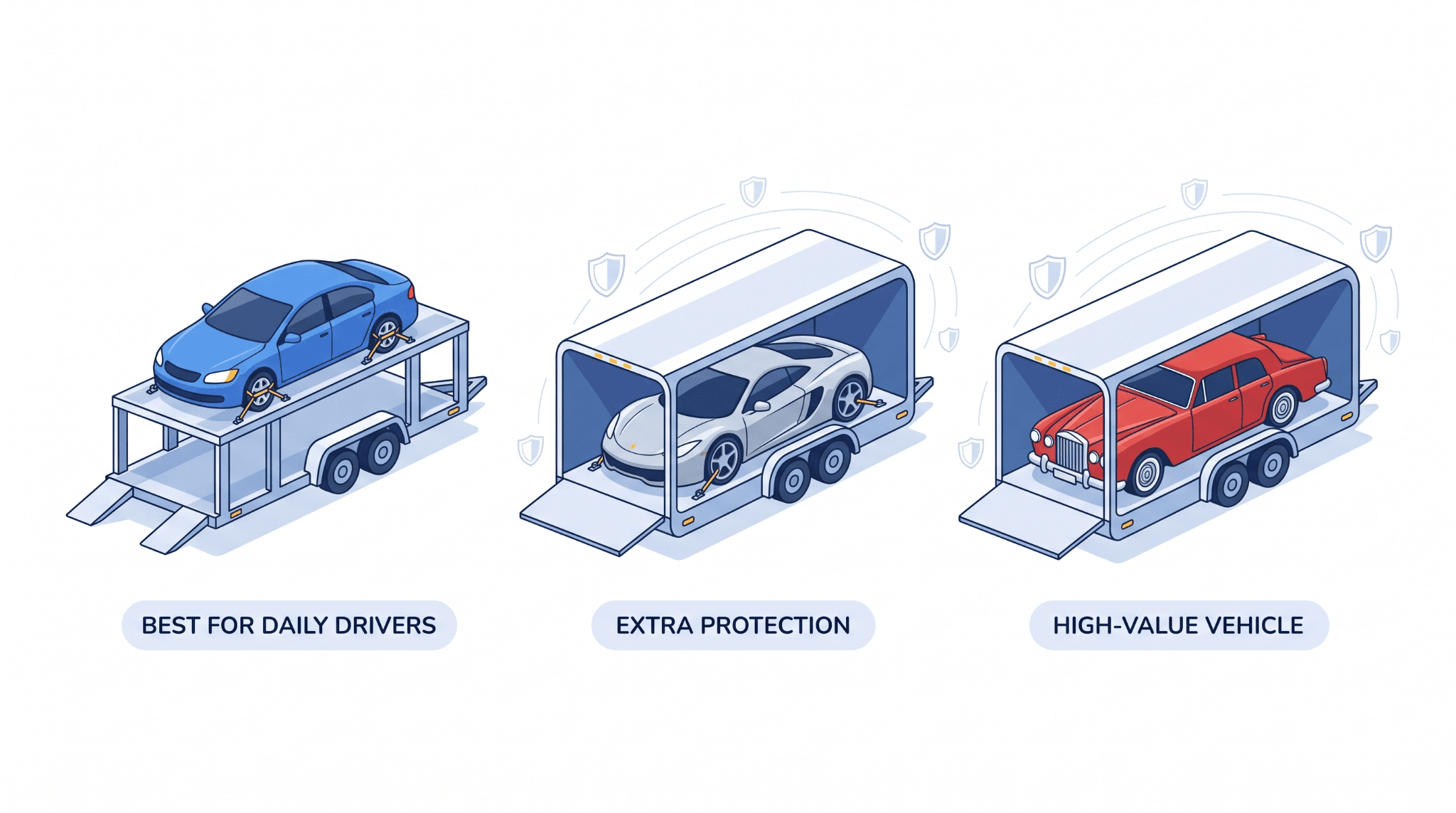
Daily drivers, dealerships, and standard moves

Luxury, antique, and exotic vehicles

Primary Benefit

Industry-standard affordability

"Mobile garage" for a pristine environment

What Is Enclosed Auto Transport, and When It Is Used?

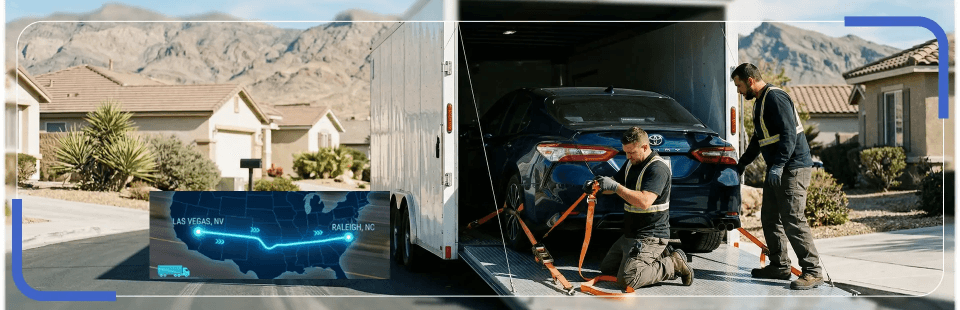
Conversely, enclosed auto transport services utilize fully shielded trailers. These "containers on wheels" protect the cargo from wind, rain, snow, and road debris. This method is the gold standard for luxury, antique, or exotic vehicles that require a pristine environment. By choosing an enclosed carrier, you are essentially paying for a mobile garage that eliminates the risks associated with external exposure.

Key Cost Factors in Open vs Enclosed Car Shipping

Understanding the price gap requires looking at the operational variables that carriers face. Shipping a car is not a flat-rate service; it is a complex calculation of weight, space, and timing.

Distance and Route Complexity

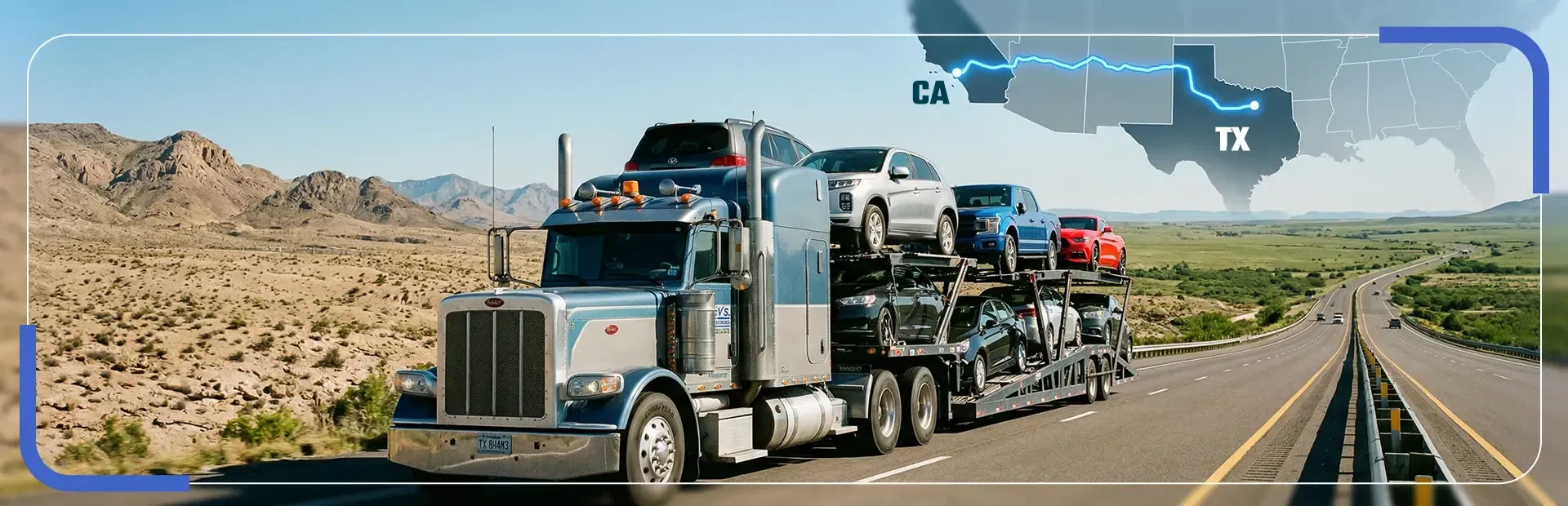
While mileage is the most significant driver of open transport auto shipping costs, the specific geography of your route matters just as much as the total distance. Navigating through remote areas or difficult terrain requires more resources than moving a vehicle along a major interstate.

  • Total Mileage: While distance is the primary driver for transport costs, the specific path taken is equally vital.

  • Hub Accessibility: Shipping between major metropolitan hubs (like Los Angeles to Dallas) is more affordable due to higher carrier availability.

  • Rural Surcharges: Routes involving rural diversions can cause enclosed shipping costs to rise sharply, as specialized trailers are less common and require more fuel to navigate tight locations.

Vehicle Size, Weight, and Condition

The physical footprint of your vehicle determines exactly how much "real estate" it occupies on a trailer, which directly influences the carrier's profit margin. Heavier or larger vehicles consume more fuel and limit the total number of cars a driver can legally transport at one time.

  • Trailer "Real Estate": The physical dimensions of your car determine the space it occupies; larger vehicles naturally command higher rates.

  • Weight Constraints: Heavy SUVs limit the total weight a driver can legally carry, directly impacting open vehicle transport pricing.

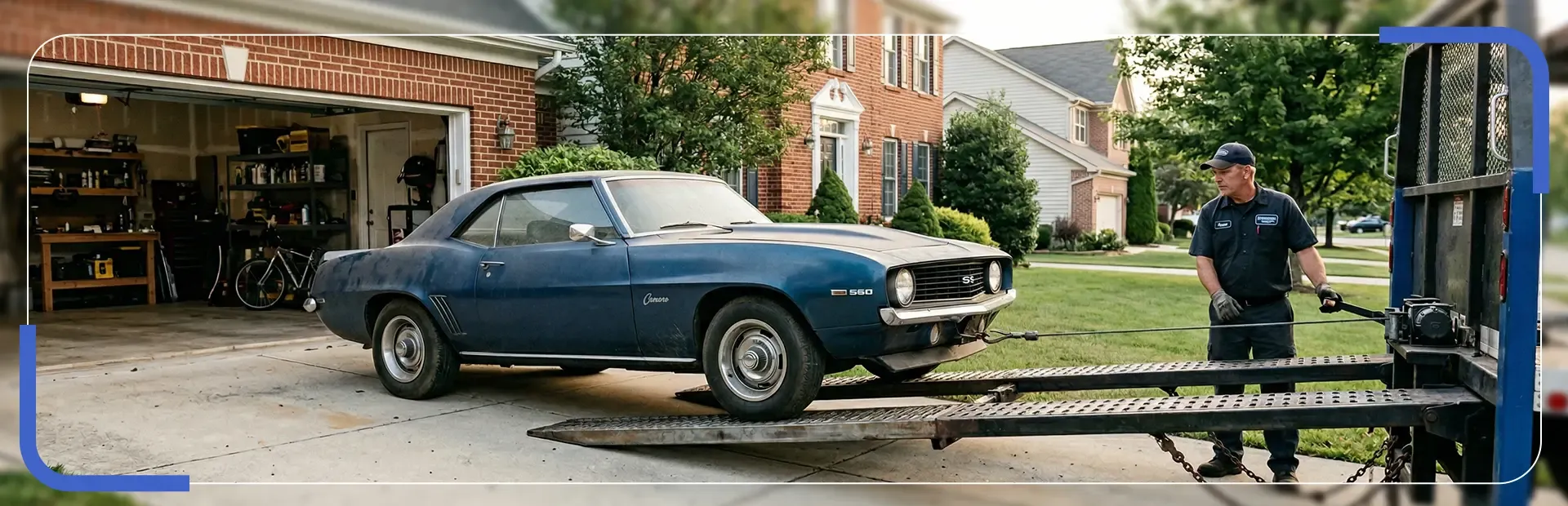
  • Operational Status: Inoperable or "non-running" vehicles require specialized winching equipment for loading and unloading, resulting in a surcharge on the base rate.

Seasonal Demand and Market Trends

The auto transport industry experiences peak "waves" that fluctuate throughout the year based on weather and migration patterns. Understanding these cycles can save you hundreds of dollars by helping you avoid the busiest times for carriers.

  • Peak "Waves": Seasonal shifts, such as the "Snowbird" migration to Florida, create massive spikes in demand that can inflate enclosed auto transport rates.

  • Limited Availability: High-demand periods often reduce the immediate availability of open car transport services, leading to higher premiums for remaining spots.

  • Off-Peak Savings: According to recent data on national freight and transport trends, booking during mid-winter or other "off-peak" months typically secures the most competitive pricing by avoiding these high-volume periods.

Feature

Open Auto Transport

Enclosed Auto Transport

Trailer Type

Multi-car, tiered open rack

Fully walled, hard or soft-sided

Vehicle Exposure

Exposed to weather & road debris

Fully protected from the elements

Typical Capacity

7–10 Vehicles

1–6 Vehicles

Availability

High (90% of all carriers)

Lower (Specialized niche)

Price Point

Budget-friendly / Standard

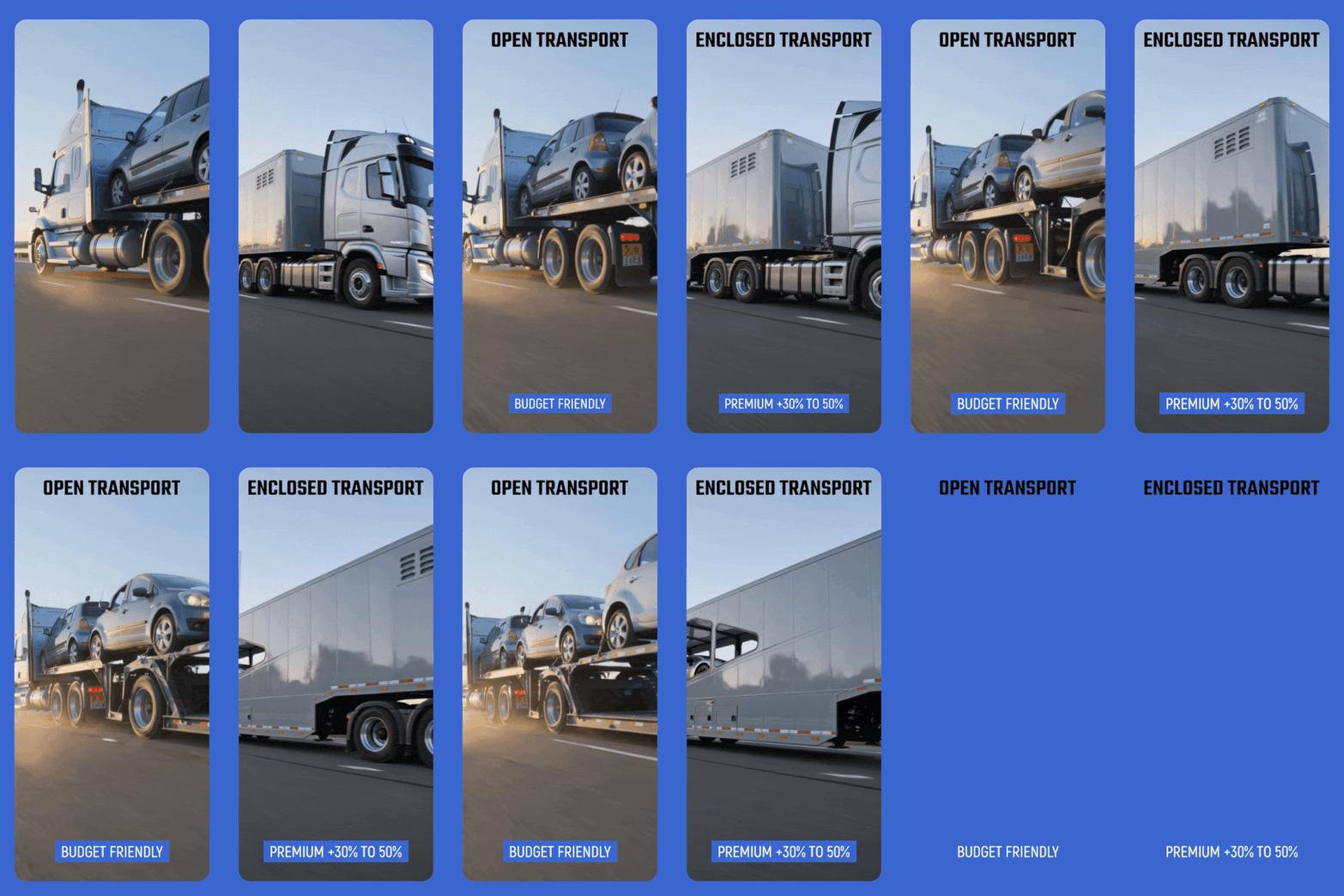
Premium (30-50% higher)

Comparing Open vs Enclosed Car Shipping Costs in Detail

To make an informed choice, you must weigh the immediate out-of-pocket expense against the long-term value of the vehicle's condition.

Average Cost of Open Car Transport

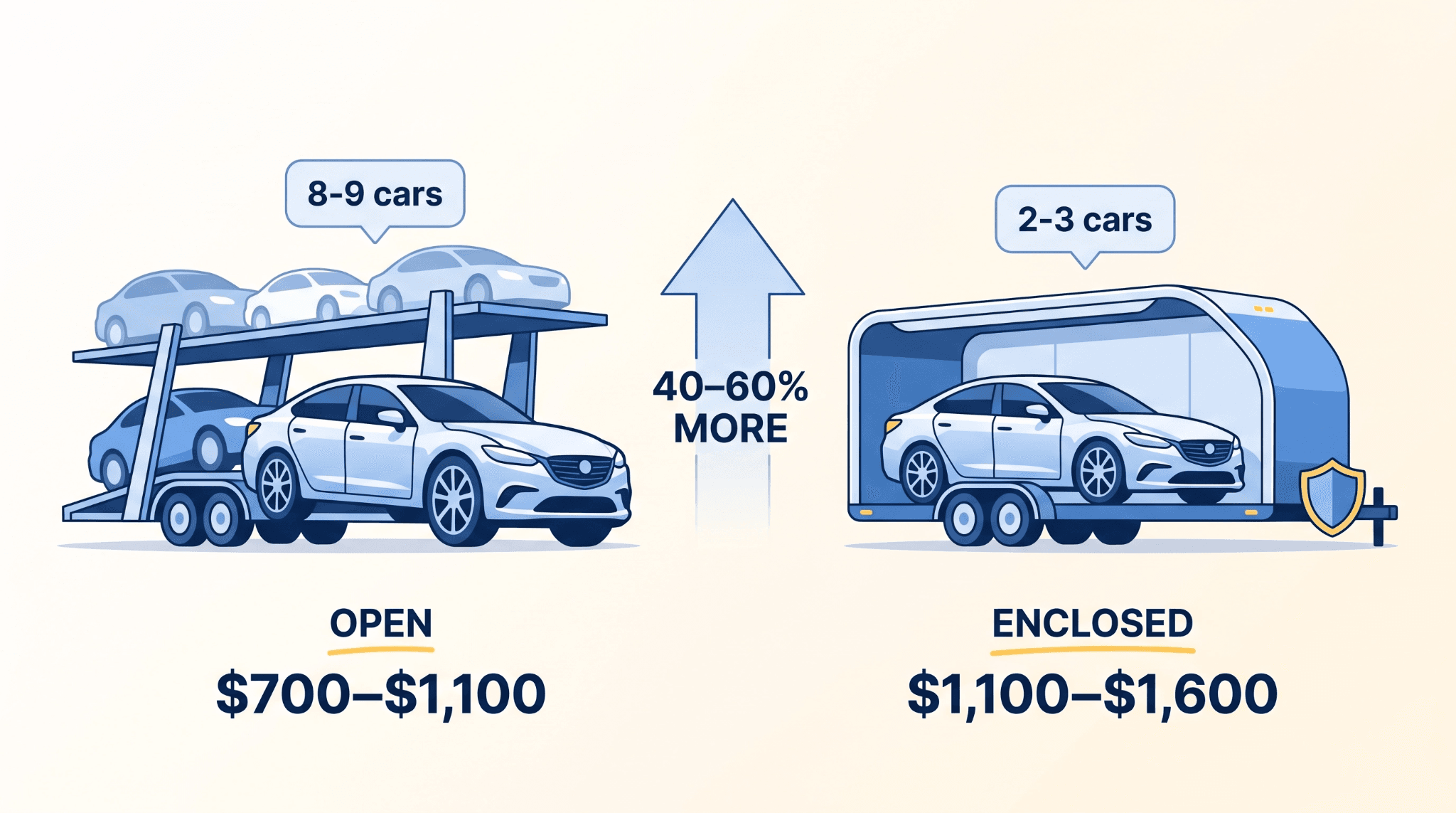
For a standard cross-country move, open car carrier transport remains the most economical choice. Because these carriers can distribute their overhead costs across a larger number of vehicles, the per-unit price is significantly lower. On average, shipping a sedan via open car transport over 1,000 miles typically ranges between $700 and $1,100, depending on the current fuel market.

Average Cost of Enclosed Auto Transport

The enclosed auto transport cost is higher because the trailers carry fewer cars, meaning the customer bears a larger share of the driver's operational expenses. For the same 1,000-mile journey, enclosed auto transport might range from $1,100 to $1,600. While the price is higher, the service often includes "white-glove" treatment and higher insurance limits.

Cost Difference and What It Means for Buyers

Generally, you can expect to pay a 30% to 50% premium for enclosed services. For a "daily driver", a car used for errands and commuting, this extra cost may not be justifiable. However, for a vehicle valued over $70,000, the premium is a small fraction of the total asset value, acting as a secondary form of "physical insurance."

Protection Levels and Risk Factors You Should Consider

Safety is the primary trade-off when choosing between these two tiers of service. Beyond the financial implications, your choice determines the level of defense your vehicle has against external hazards. Understanding these risk factors ensures that you select a method that aligns with your tolerance for potential road wear and environmental exposure.

Exposure Risks in Open Transport Car Shipping

In open transport car shipping, your vehicle is subject to the same conditions it would face if you were driving it yourself. This includes rain, sun exposure, and the occasional pebble kicked up by a passing truck. While major damage is rare, minor "road film" or dust is expected upon delivery. According to the Federal Motor Carrier Safety Administration (FMCSA), all interstate movers must maintain public liability insurance, but this typically covers transit accidents rather than minor cosmetic wear from the elements.

Added Protection with Enclosed Carrier Auto Transport

Choosing an enclosed carrier auto transport eliminates nearly all environmental variables. There is no risk of bird droppings, sap, or hail damage. Additionally, because enclosed trailers are often lower to the ground, they utilize specialized "lift-gate" loading systems. This is crucial for low-clearance sports cars that might otherwise scrape their undercarriage on the steeper ramps used by an open auto transport carrier.

When Open Auto Transport Is the Smart Choice

Practicality often trumps luxury in the shipping world. For the vast majority of moves, open transport is not just the cheaper option; it is the most logical one.

Best Use Cases for Open Car Transport Services

Choosing this method allows you to tap into a vast network of logistics providers who specialize in high-volume, reliable transport. It remains the most practical solution for the majority of consumer and commercial vehicle moves across the country.

  • Standard Passenger Vehicles: If you are moving a standard SUV, a used sedan, or a fleet of company vehicles, open car transport services are the industry standard.

  • Resilient Designs: These vehicles are engineered to withstand typical outdoor conditions and highway travel without specialized protection.

  • Time-Sensitive Logistics: If you are on a strict timeline, open carriers are significantly easier to book due to the sheer volume of these units currently on the road.

Advantages of Open Carrier Auto Transport

The combination of lower price points and higher frequency makes this the most agile choice for modern shipping needs. It is the go-to option for those who prioritize a fast, budget-friendly delivery without the need for specialized "white-glove" handling.

  • Financial Economy: The primary benefit of open carrier auto transport is its affordability, as costs are distributed across more vehicles per load.

  • Rapid Scheduling: Because the network is so expansive, you can often secure a pickup date within a 24 to 48-hour window.

  • Direct Routing: If you are relocating for work and need your vehicle quickly, the high frequency of open-air routes ensures your car avoids terminal delays.

When Enclosed Auto Transport Is Worth the Cost

There are specific scenarios where the higher enclosed auto transport rates are a necessary investment rather than a luxury.

Ideal Vehicles for Enclosed Auto Transport Services

Any vehicle that is considered an "investment" should be shipped enclosed. This includes:

  • Classic & Vintage Cars: Where original paint and parts are irreplaceable.

  • Exotic & Supercars: Where low ground clearance requires lift-gate loading.

  • Luxury EVs: To protect sensitive sensor arrays and high-end finishes from heavy debris.

Benefits of Enclosed Auto Transport Trailer Options

This method offers a level of technical precision that standard trailers simply cannot match. It is the definitive choice for owners who view their vehicle as an irreplaceable investment rather than a utilitarian tool.

  • Heightened Privacy: Beyond basic weather protection, an enclosed auto transport trailer rental or booking provides a discreet environment. If you are transporting a high-value asset, keeping it out of public view prevents unwanted attention during overnight rest stops or fuel breaks.

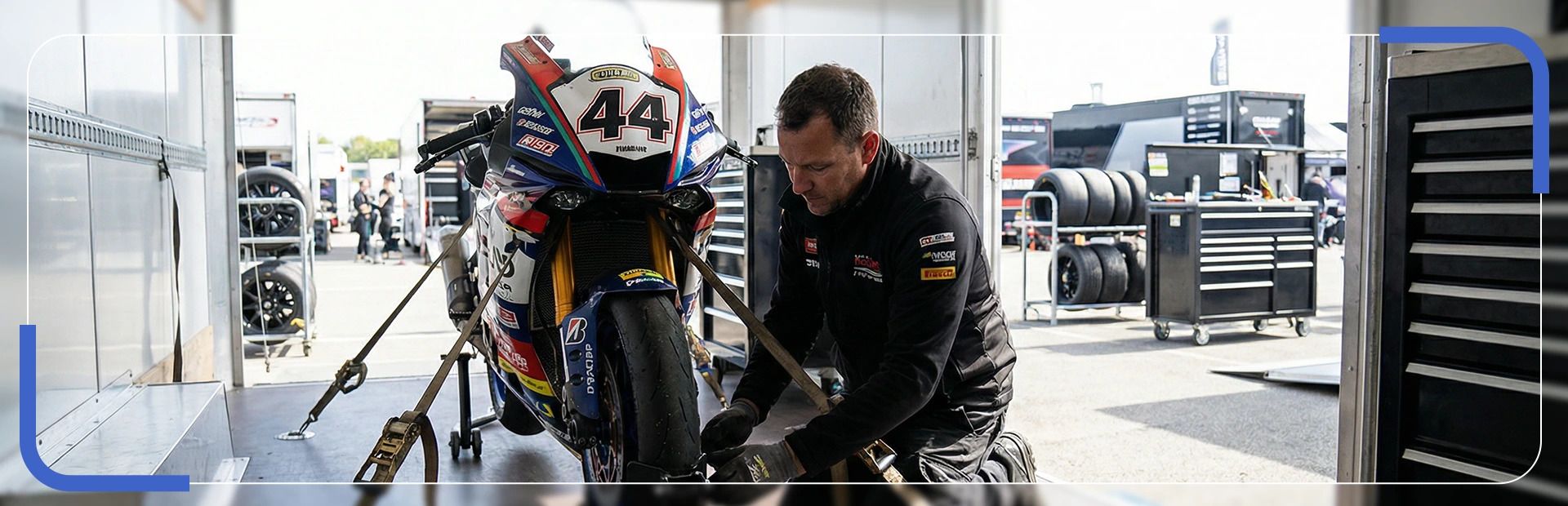
  • Specialized Securement: Most enclosed trailers utilize advanced "soft-tie" systems. These straps secure the vehicle by the tires rather than the metal chassis, preventing any structural strain or tension on the suspension during long-distance hauls.

  • Dust and Debris Mitigation: The fully sealed environment ensures that even the smallest particles, such as brake dust or road salt, never come into contact with your car’s exterior.

Hidden Costs and Pricing Mistakes to Avoid

The most common frustration for shippers in 2026 isn’t the price itself, but the unexpected adjustments that occur after a contract is signed. Avoiding these traps requires a keen eye for "too-good-to-be-true" estimates.

Low Quotes and Last-Minute Price Changes

In the transport industry, some brokers utilize "bait-and-switch" pricing. They provide a low-ball quote to secure your booking, only to inform you days later that no carrier will accept the job at that rate. To move your vehicle, they then demand an additional $200 to $500. A reputable provider of open auto transport services will provide a quote based on current dispatch data, ensuring the price is high enough to attract a reliable driver without overcharging you.

Insurance Coverage and What It Includes

While all carriers must have cargo insurance, the limits vary significantly. Standard open carrier auto transport typically carries between $100,000 and $250,000 in coverage. This is ample for a standard SUV, but potentially insufficient for a high-end luxury vehicle. Enclosed carriers, by contrast, often carry policies ranging from $1 million to $3 million. Always ask for a copy of the carrier’s insurance certificate to verify that your vehicle's full value is protected during enclosed transport auto shipping.

Additional Fees in Open and Enclosed Transport

Beyond the base rate, several variables can trigger surcharges:

  • Fuel Surcharges: Most quotes include fuel, but extreme spikes in diesel prices can lead to "surcharge" clauses.

  • Inoperable Fees: If your vehicle does not start, expect a fee of $150–$300 for the extra labor and equipment required.

  • Expedited Delivery: Selecting a guaranteed pickup date rather than a window typically adds 20% to 30% to the total.

How to Choose the Right Transport Option for Your Needs

Selecting between open and enclosed car shipping should be a calculated decision based on the intersection of your budget and the vehicle’s replacement value.

Budget vs. Vehicle Value Considerations

A helpful industry rule of thumb is the "investment threshold." If your vehicle is valued at $70,000 or more, or if it has a custom paint job that would cost thousands to repair, the premium for enclosed auto transport services is a logical investment. For vehicles under this threshold, especially daily-use cars with existing "road wear," open car transport offers the best ROI by saving you hundreds of dollars with minimal additional risk.

Delivery Timeline and Flexibility

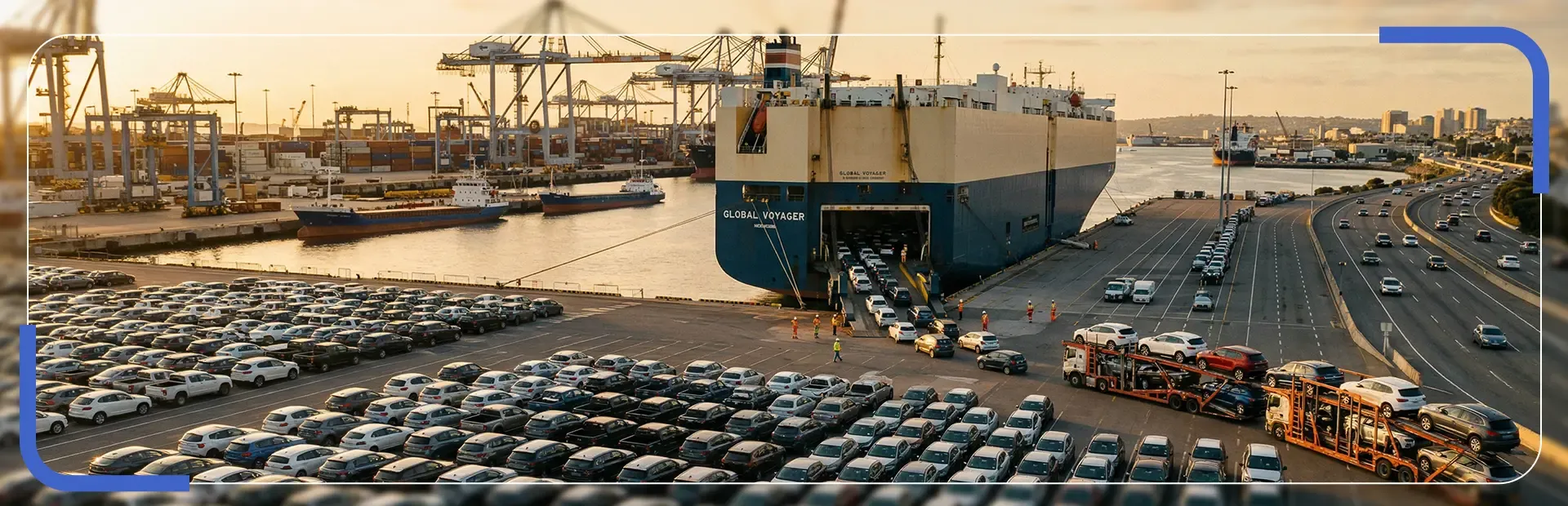
If you are on a tight deadline, open auto transport is almost always the faster choice. Because open trailers represent roughly 90% of the trucks on the road, dispatchers can find a slot for your car much more quickly. Enclosed trailers are fewer in number and often book up weeks in advance, particularly during peak summer months or major auto show seasons.

Comparing Open vs Enclosed Car Shipping for Your Situation

To decide, ask yourself: If my car arrived with a layer of dust or experienced a minor rock chip, would I be devastated? If the answer is yes, either because the car is a showpiece or a brand-new luxury purchase, choose enclosed. If you just need your car to get to your new home so you can commute to work, open transport is the industry’s most proven and efficient solution.

Real-World Insights from Auto Transport Industry Experts

Industry veterans often look beyond the trailer type to the "driver profile." Specialists in enclosed carrier auto transport are frequently more experienced in handling high-value assets and are trained in advanced securement techniques, such as over-the-tire strapping, which avoids tension on the vehicle's frame.

How Professionals Recommend Choosing Transport Type

By assessing environmental risks and the specific timing of your move, you can make a more strategic choice. This proactive approach ensures that your decision is based on current road conditions rather than just the vehicle's market value.

  • Weather Forecasting: Experts suggest checking the forecast for your specific route before booking. If you are shipping across the "Salt Belt" during a heavy winter storm, highway salt can be as damaging as a rock chip.

  • Corrosion Prevention: In these specific seasonal windows, even "standard" vehicle owners might consider enclosed auto transport a worthwhile investment to prevent undercarriage corrosion.

  • Asset Valuation: Professionals often recommend calculating the cost of a potential specialized detail or paint correction versus the premium of a protected carrier.

Common Mistakes First-Time Shippers Make

Taking these precautions creates a transparent "paper trail" that protects both you and the driver. Ensuring every detail is accurately noted during both pickup and delivery is the only way to make potential insurance claims seamless and stress-free.

  • Inadequate Inspection: The most frequent error is failing to perform a meticulous pre-shipment inspection. Regardless of the carrier type, you must document every existing scratch, chip, and dent.

  • Documentation Neglect: If you choose open transport car shipping, remember that the Bill of Lading (BOL) is your most vital legal document.

  • Poor Visual Records: Failing to take high-resolution photos in natural, clear lighting can make it difficult to prove when new damage occurred during transit.

Clarifying Common Doubts About Car Shipping

Navigating the logistics of vehicle transport often brings up specific technical and financial questions. Below are the most frequent inquiries from our clients regarding the nuances of the shipping process.

Is open auto transport safe for brand-new cars?

Yes. In fact, the majority of new cars delivered to dealerships arrive via open carrier auto transport. While there is a small risk of exposure to the elements, professional drivers are highly skilled at securing vehicles to minimize movement and potential damage.

How much more does enclosed auto transport cost on average?

You can generally expect to pay 30% to 50% more for enclosed auto transport services. This premium covers the specialized equipment, higher insurance limits, and the fact that these trailers carry fewer vehicles per trip.

Can I ship personal items inside my car during transport?

Most open auto transport carrier companies discourage this. Items left in the car are not covered by the carrier's insurance and add weight to the shipment, which could lead to additional fees or legal issues at weigh stations.

Does enclosed shipping take longer than open shipping?

Typically, yes. Because there are fewer enclosed auto transport companies compared to open carriers, it may take longer to find a driver assigned to your specific route. We recommend booking enclosed services at least two weeks in advance.

What is AFTA GAP Protection, and do I need it for open shipping?

AFTA GAP Protection covers the "gaps" in a carrier's standard insurance, such as high deductibles or specific exclusions like weather damage. While not mandatory, it is highly recommended for open vehicle transport to provide total financial peace of mind.

Making a Confident Shipping Decision Based on Cost and Value

Ultimately, the choice between open vs enclosed car shipping comes down to your personal priorities. If efficiency and cost-effectiveness are your primary drivers, the open car transport services used by millions of Americans every year will serve you well. Your vehicle will be handled by licensed professionals and delivered according to industry-standard safety protocols.

However, if your vehicle is an irreplaceable asset, a classic passed down through generations or a modern engineering marvel, the added protection of an enclosed auto transport trailer is a small price to pay for its preservation. By understanding the cost factors and protection levels outlined in this guide, you can book your shipment with the confidence that your vehicle is in the right hands for its specific needs. Get an instant car shipping quote from Safeeds Transport Inc. today.

1
Destination
2
Vehicle
3
Date
By checking this box, I acknowledge that I have read and agree to the Terms and Conditions and Privacy Policy and consent to be contacted by call, SMS, or email regarding my quote request.

Share post

Recent Posts

Safe and Reliable South Carolina Car Shipping from Nevada blog post image

Safe and Reliable South Carolina Car Shipping from Nevada

Relocating a vehicle across states can feel overwhelming, especially when you’re planning a long-distance move from Nevada to the East Coast. With South Carolin...

01 Apr 2026

Car Shipping Cost Guide for Dealerships and Bulk Shipping blog post image

Car Shipping Cost Guide for Dealerships and Bulk Shipping

Shipping multiple vehicles across states isn’t just about moving inventory; it’s about making smart, cost-effective decisions that protect your bottom line. For...

31 Mar 2026

Ford F-150 Lightning Ownership Guide for First-Time EV Drivers blog post image

Ford F-150 Lightning Ownership Guide for First-Time EV Drivers

The Ford F-150 Lightning is changing how truck owners think about power, performance, and everyday driving. As the electric version of the iconic Ford F-150, th...

10 Mar 2026

How Fuel Surcharge in Car Shipping Instantly Changes Transport Rates blog post image

How Fuel Surcharge in Car Shipping Instantly Changes Transport Rates

Fuel surcharge car shipping directly ties your delivery quote to the national average cost of diesel. While gas prices vehicle transport fluctuate, many drivers...

27 Jan 2026

Car Shipping Contract Fees Exposed: Avoid Costly Hidden Charges blog post image

Car Shipping Contract Fees Exposed: Avoid Costly Hidden Charges

Most price shocks happen because the quoted rate does not match the final bill. That gap comes from car shipping contract fees, hidden fees car shipping, and un...

26 Jan 2026

Cheap Car Shipping 2026: Proven Ways to Cut Your Transport Costs blog post image

Cheap Car Shipping 2026: Proven Ways to Cut Your Transport Costs

Finding cheap car shipping 2026 depends on timing, carrier type, and knowing how to navigate current market shifts. Most drivers lose hundreds of dollars simply...

17 Jan 2026

6 Critical Car Shipping Tips Before Booking That Trigger Hidden Costs Later blog post image

6 Critical Car Shipping Tips Before Booking That Trigger Hidden Costs Later

Finding the best car shipping tips before booking helps you avoid unexpected bills that can double your initial quote. Most drivers assume the first price they...

14 Jan 2026

Smooth Car Shipping Pickup Process Explained: What to Expect at Pickup and Delivery blog post image

Smooth Car Shipping Pickup Process Explained: What to Expect at Pickup and Delivery

The car shipping pickup process begins with a scheduled driver meeting where you hand over your keys. Most owners do not realize that nearly 5% of shipping dela...

13 Jan 2026

How GPS Car Shipping Tracking Protects Your Vehicle in 2026 blog post image

How GPS Car Shipping Tracking Protects Your Vehicle in 2026

GPS car shipping tracking protects your vehicle by providing constant visibility and security during transit. In 2026, over 90% of transport theft is prevented...

12 Jan 2026

Smart Eco-Friendly Car Shipping Options for 2026 Explained blog post image

Smart Eco-Friendly Car Shipping Options for 2026 Explained

Finding eco-friendly car shipping options in 2026 is easier than ever as the industry moves toward a net-zero future. Did you know that transportation currently...

11 Jan 2026

Critical Car Shipping Myths That Could Ruin Your Transport blog post image

Critical Car Shipping Myths That Could Ruin Your Transport

Many car shipping myths lead to expensive mistakes and delays during vehicle relocation. You might believe that the lowest price quote always guarantees a safe...

06 Jan 2026

Car Shipping Glossary: Essential Terms You Need To Know blog post image

Car Shipping Glossary: Essential Terms You Need To Know

A car shipping glossary simplifies the complex language of moving vehicles. This car shipping glossary explains essential terms you need to know to avoid confus...

05 Jan 2026

Join our newsletter

Subscribe to our newsletter and get $50 off

Safeeds Transport logo

Safeeds Transport Inc U.S. Department of Transportation
MC-1606811
U.S DOT#: 4175566
Company address: 470 W BROAD ST COLUMBUS, OH 43215
Company main # 3153144337

Contact

Mon - Fri: 8am - 7pm EST
Sat - Sun: 9am - 5pm

© 2026 Safeeds Transport. All Rights Reserved.

FOLLOW US: