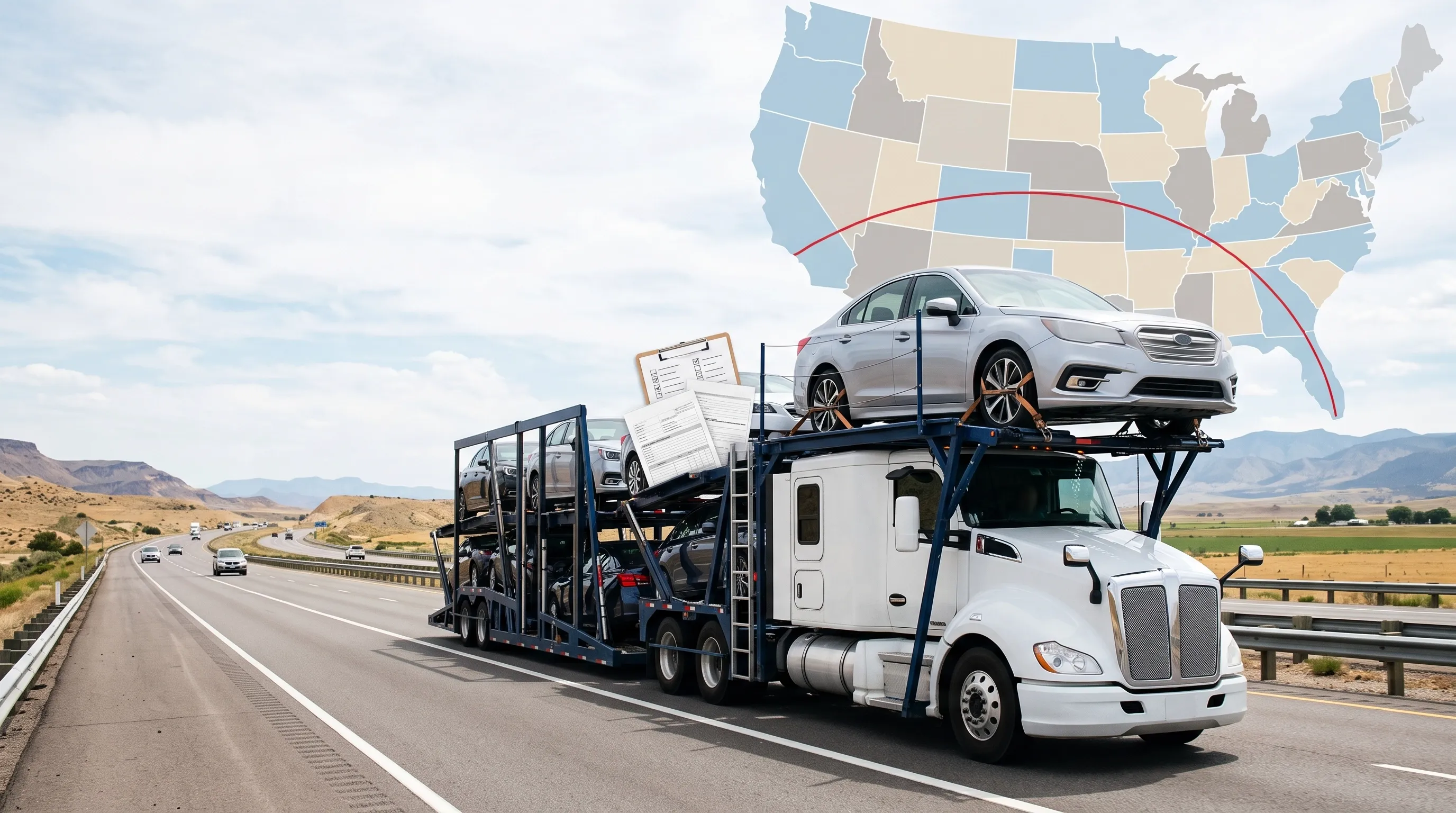
Learning how to ship a car comes down to seven steps: get quotes, choose open or enclosed transport, book a pickup window, prep your vehicle, and inspect it with the driver at pickup. Then track it in transit, inspect it again at delivery, and pay the balance. Most shipments take one to two weeks from booking.
Handing your car keys to a truck driver you met five minutes ago is a strange feeling. This guide covers how to ship a car, from your first quote comparison to the moment you sign for delivery, so you know what to check at every step. Get your free car shipping quote from Safeeds Transport. No upfront payment, and your price stays locked for 7 days.
Key Takeaways
Shipping a car involves seven steps: comparing quotes, choosing open or enclosed transport, booking a pickup window, preparing the vehicle, completing a pickup inspection, tracking transit, and finishing a delivery inspection before final payment.
Most car shipments take one to two weeks from booking to delivery, and cross-country transit alone usually takes 7 to 14 days because federal rules limit truck drivers to 11 hours of driving within a 14-hour workday.
Open car transport is the lower-cost option for everyday vehicles, while enclosed auto transport often costs 30 to 60 percent more but protects classic, luxury, and low-clearance cars from weather and road debris.
The bill of lading is the most important document in a car shipment, because its condition report records the vehicle's condition at pickup and delivery and serves as the main evidence in any damage claim.
A car shipping quote far below competing quotes, or one that requires a large deposit before a carrier is assigned, is a warning sign, and any broker's registration can be verified by a USDOT or MC number through the FMCSA.
How Does Car Shipping Work?
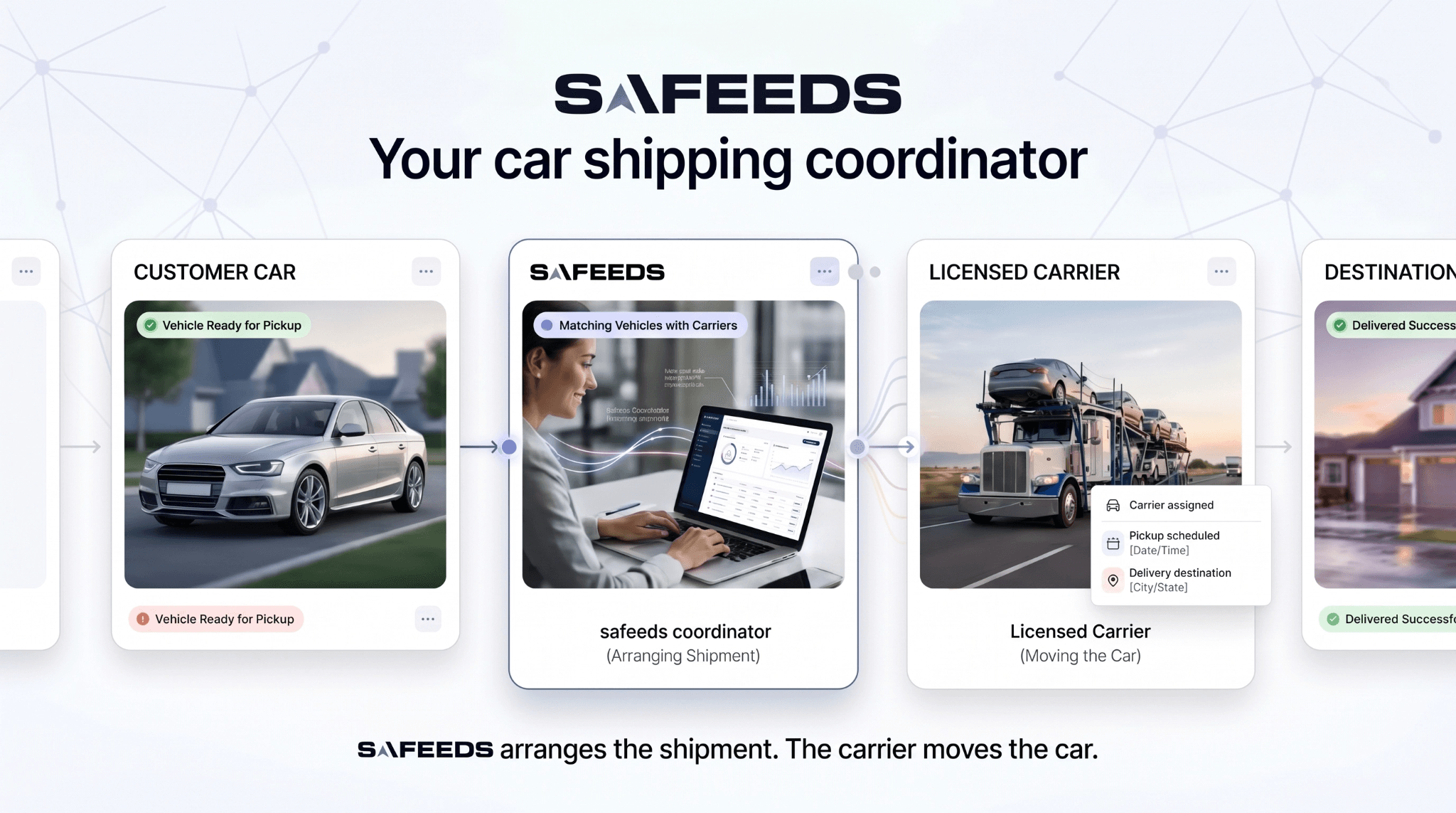
Car shipping works through two parties: a broker, who plans your shipment and finds a carrier, and a licensed carrier, whose driver picks up, transports, and delivers your car.
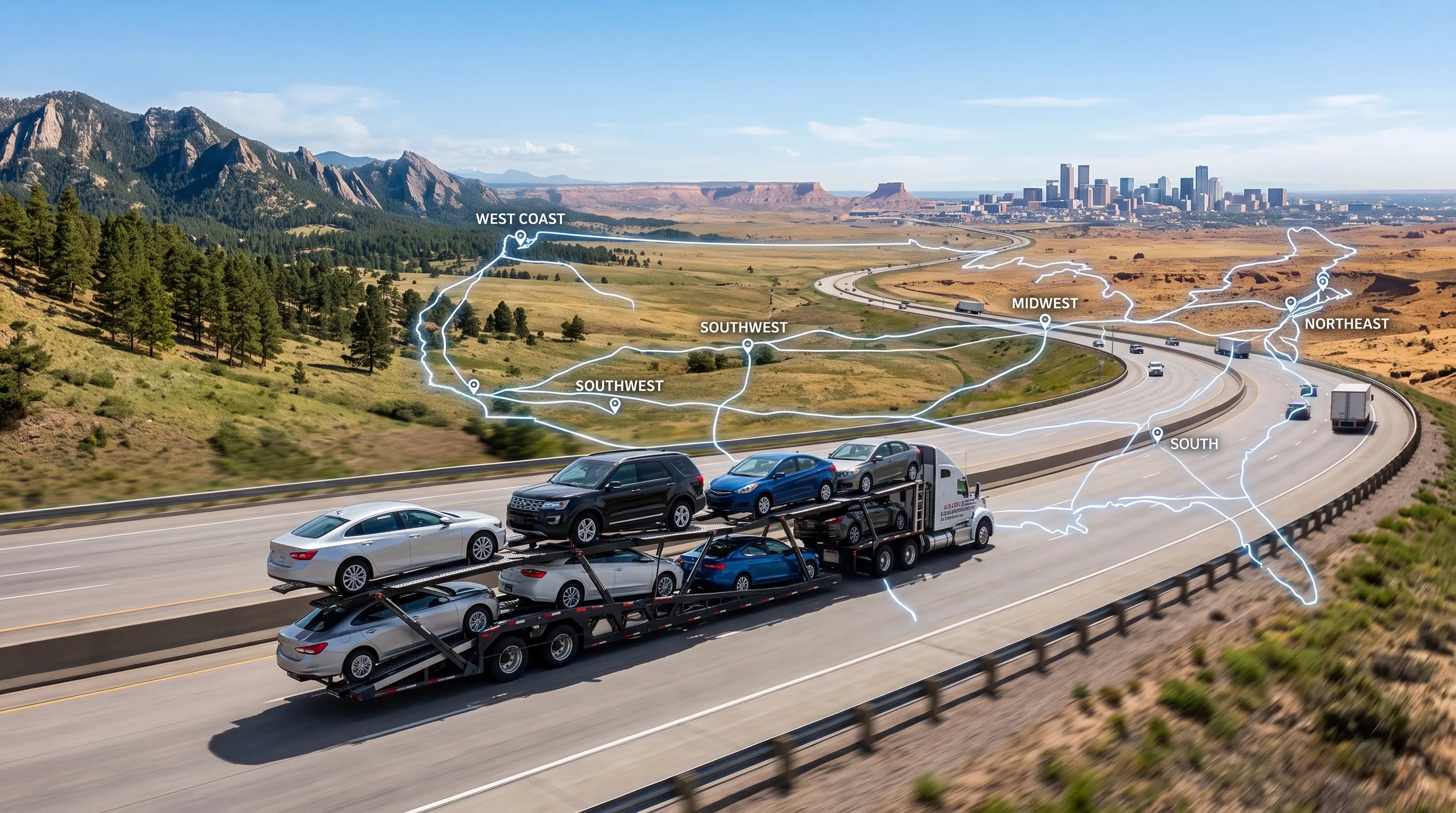
Can you ship a car to another state? Absolutely. Licensed carriers move vehicles between all 48 contiguous states every day.
The broker plans the shipment, finds a qualified carrier, sets the price, and supports you throughout. Brokers must register with the Federal Motor Carrier Safety Administration (FMCSA) and hold a $75,000 surety bond or trust fund.
The carrier owns the truck, employs the driver, and carries cargo insurance while your car is on board.
Think of a broker as a travel agent for your car. They don't fly the plane, but they book the right flight. Safeeds Transport is a broker that arranges your car transport with a licensed, insured carrier heading your way.
Step 1: Get and Compare Quotes
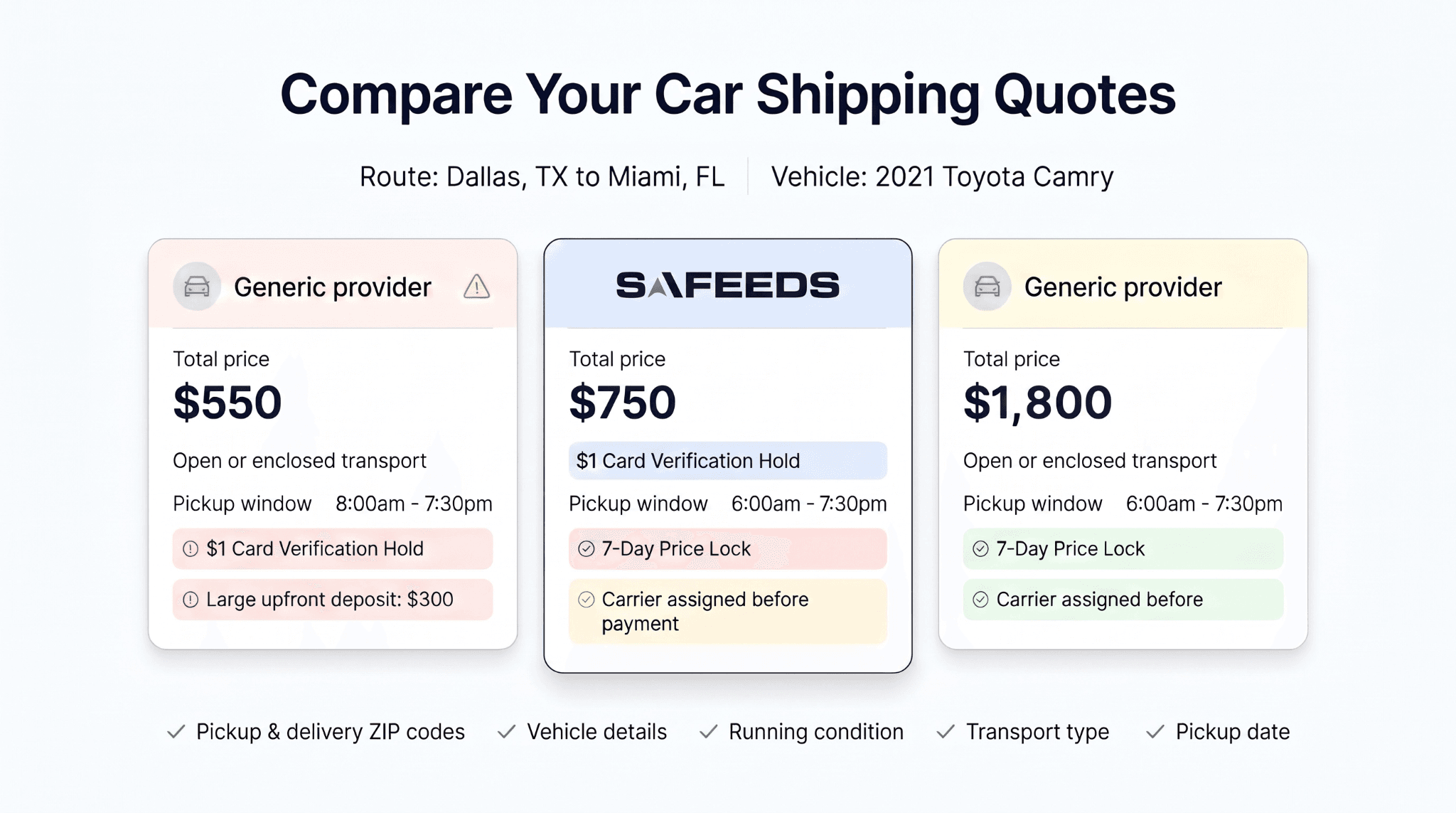
To get an accurate car shipping quote, share your route, vehicle details, running condition, transport type, and first available date. Then do a careful quote comparison before booking.
Whether you're figuring out how to ship a car to another state or just a few hundred miles away, a few details make your quote accurate. Start with your pickup and delivery ZIP codes, along with your vehicle's year, make, and model.
Next, mention any modifications, like lift kits or oversized tires, and whether the car runs. Both affect how the carrier loads your vehicle. Finally, share whether you want open or enclosed transport and the first date your car is ready for pickup.
What affects the cost of shipping a car from state to state?
If you're working out how to ship a car from state to state, the cost depends mainly on distance, route popularity, vehicle size, transport type, season, and date flexibility.
Distance: Longer trips cost more overall but less per mile.
Route popularity: Busy city-to-city routes attract more carriers. Rural pickups often cost more.
Vehicle size: Trucks and SUVs take up more trailer space.
Season: Summer and snowbird season push prices up.
Flexibility: A wider pickup window can lower your price.
See real route pricing in our car shipping cost guide.
How can you tell if a quote is too good to be true?
A car shipping quote is likely too good to be true if it's far below every other quote, requires a large deposit before a carrier is assigned, or comes from a company with no USDOT or MC number.
Carriers choose which loads they accept, so a lowball price often means your car sits unpicked. Verify any company with FMCSA's Company Snapshot tool. At Safeeds Transport, there's no upfront payment, just a $1 card verification hold, and your quote is locked for 7 days.
Step 2: Choose Open or Enclosed Transport
Open transport is the lower-cost standard for everyday cars. Enclosed transport costs more but fully protects classic, luxury, and low-clearance vehicles.
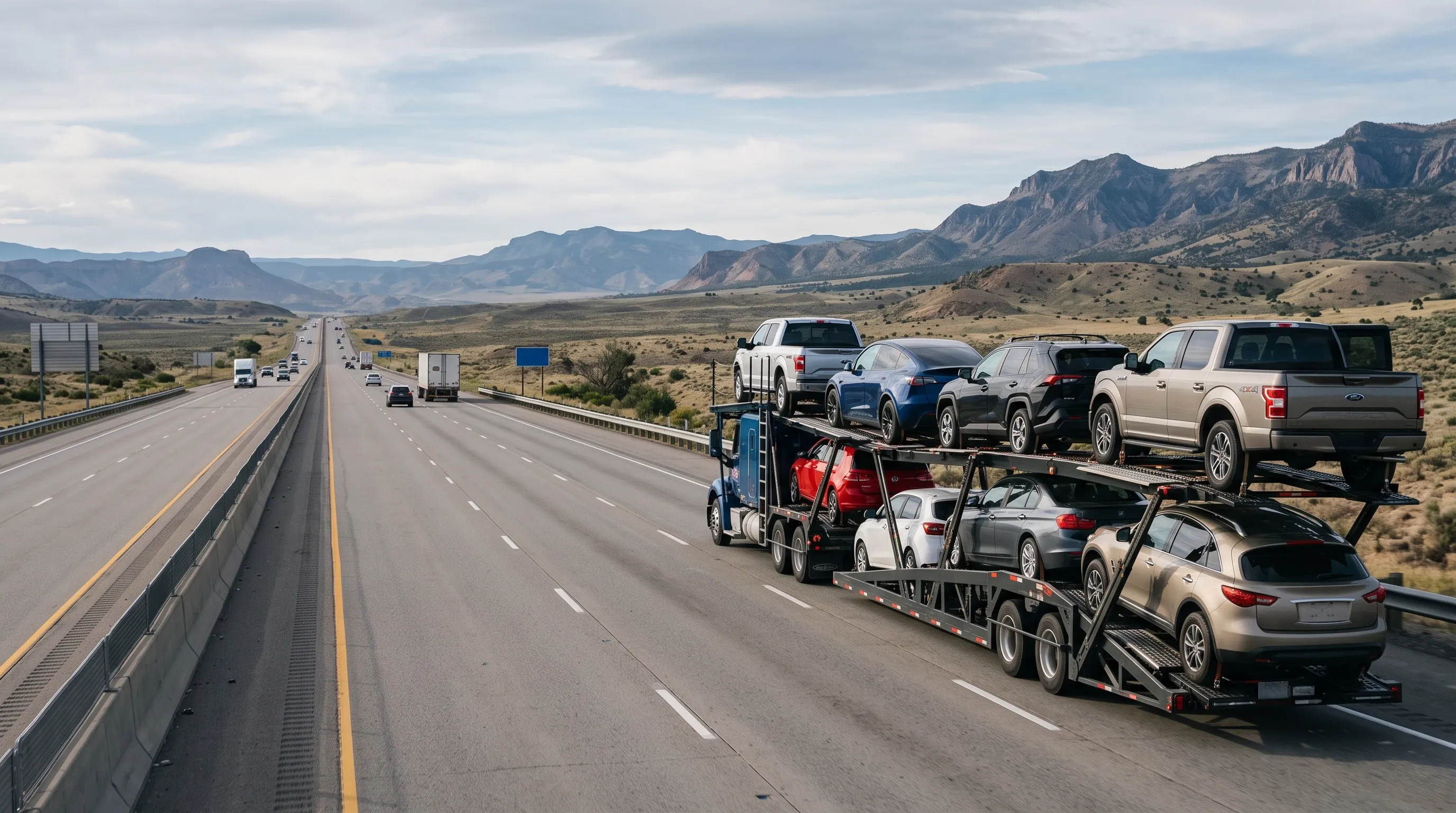
Open car transport uses the two-level trailers you see on highways. Enclosed auto transport uses a covered trailer that shields your car from weather and debris.
Feature | Open Transport | Enclosed Transport |
Protection | Exposed to weather and debris | Fully covered |
Typical capacity | About 7 to 10 vehicles | About 1 to 7 vehicles |
Cost | Lower | Often 30 to 60 percent more |
Scheduling | More trucks, faster pickup | Fewer trucks, more lead time |
Best for | Daily drivers, sedans, SUVs | Classic, luxury, low-clearance cars |
For most people researching how to ship a car cross country, open transport is the practical pick.
Pro tip: Would a small rock chip ruin your week? If yes, go enclosed.
Step 3: Book and Confirm Your Pickup Window
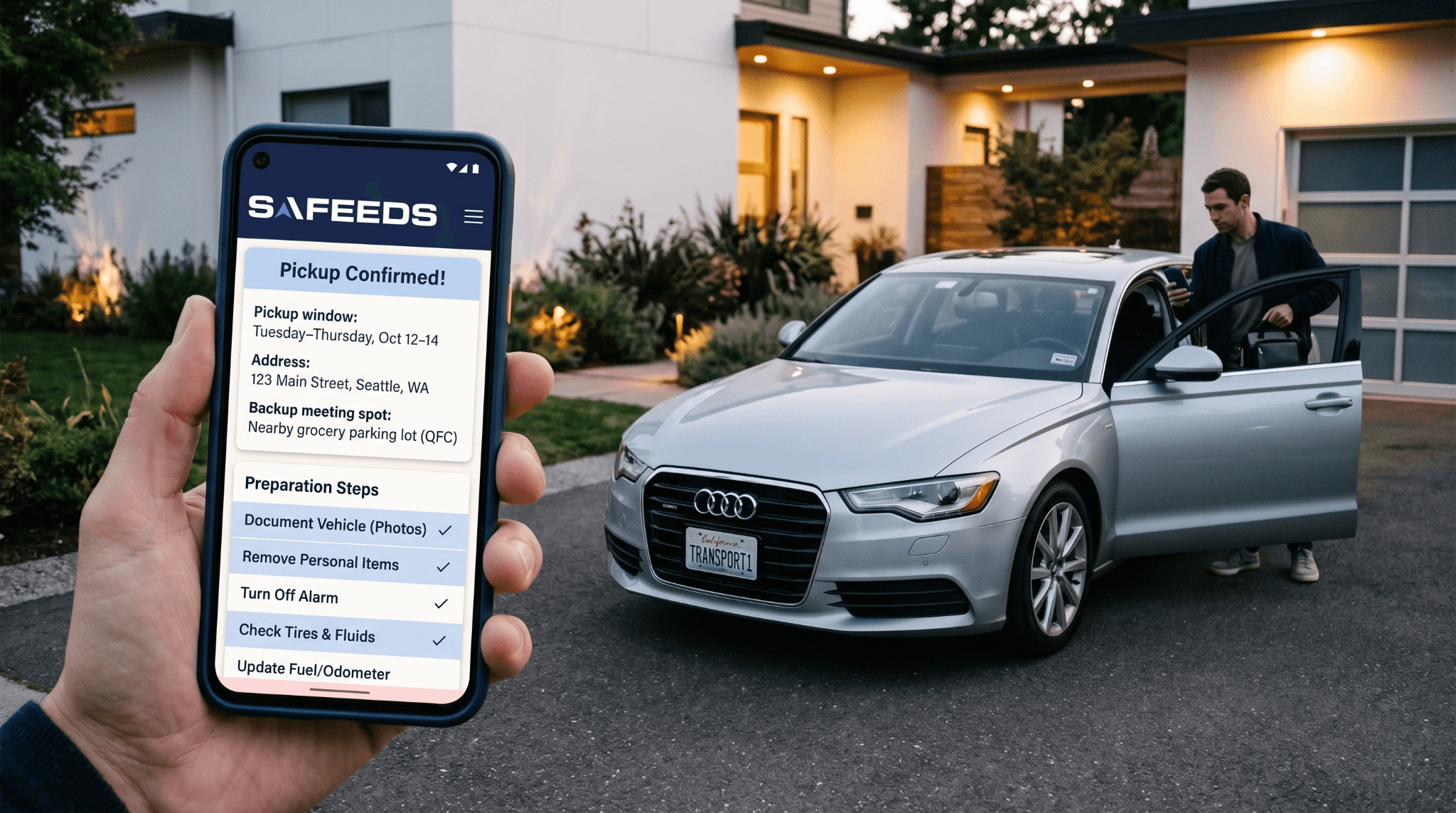
Booking gives you a pickup window, usually one to five business days, rather than an exact appointment. Carriers run multi-stop routes, so one delay can shift everyone's schedule.
Anyone learning how to ship a car from state to state should plan around a window, not a single date. Flexible dates usually mean faster carrier assignment and a better price. On a tight deadline? Ask about expedited options, which typically cost more.
Before your booking is final, confirm these in writing:
Contact names and phone numbers at both ends
The total price and what it includes
When the balance is due and accepted payment methods
Whether a full-size carrier, roughly 75 to 80 feet long, can reach your street
If a full-size truck can't reach your street, pick a nearby parking lot, like a grocery store lot, as a backup meeting spot. It saves a scramble on pickup day.
Step 4: Prepare Your Vehicle
To prepare your car for shipping, wash it, photograph it, check the battery and tires, disable the alarm, remove your toll transponder, and secure any loose parts. A little prep now saves headaches later. A clean, well-documented car makes the vehicle inspection accurate and gives you solid proof if something goes wrong.
Wash the car. Dirt hides scratches and dents.
Take dated photos of every side, the roof, wheels, interior, and odometer.
Check the battery and tire pressure.
Flag any leaks. Heavy leaks can drip onto vehicles below.
Turn off the alarm.
Remove your toll transponder so you aren't charged for tolls along the truck's route.
Secure loose parts like mirrors, bike racks, and spoilers.
Pro tip: Record a slow video walkaround and say the date out loud at the start. It takes two minutes and makes your photos much harder to dispute.
Also clear out personal items and keep the fuel tank low. Both are covered in the FAQs below.
Step 5: The Pickup Inspection and Bill of Lading
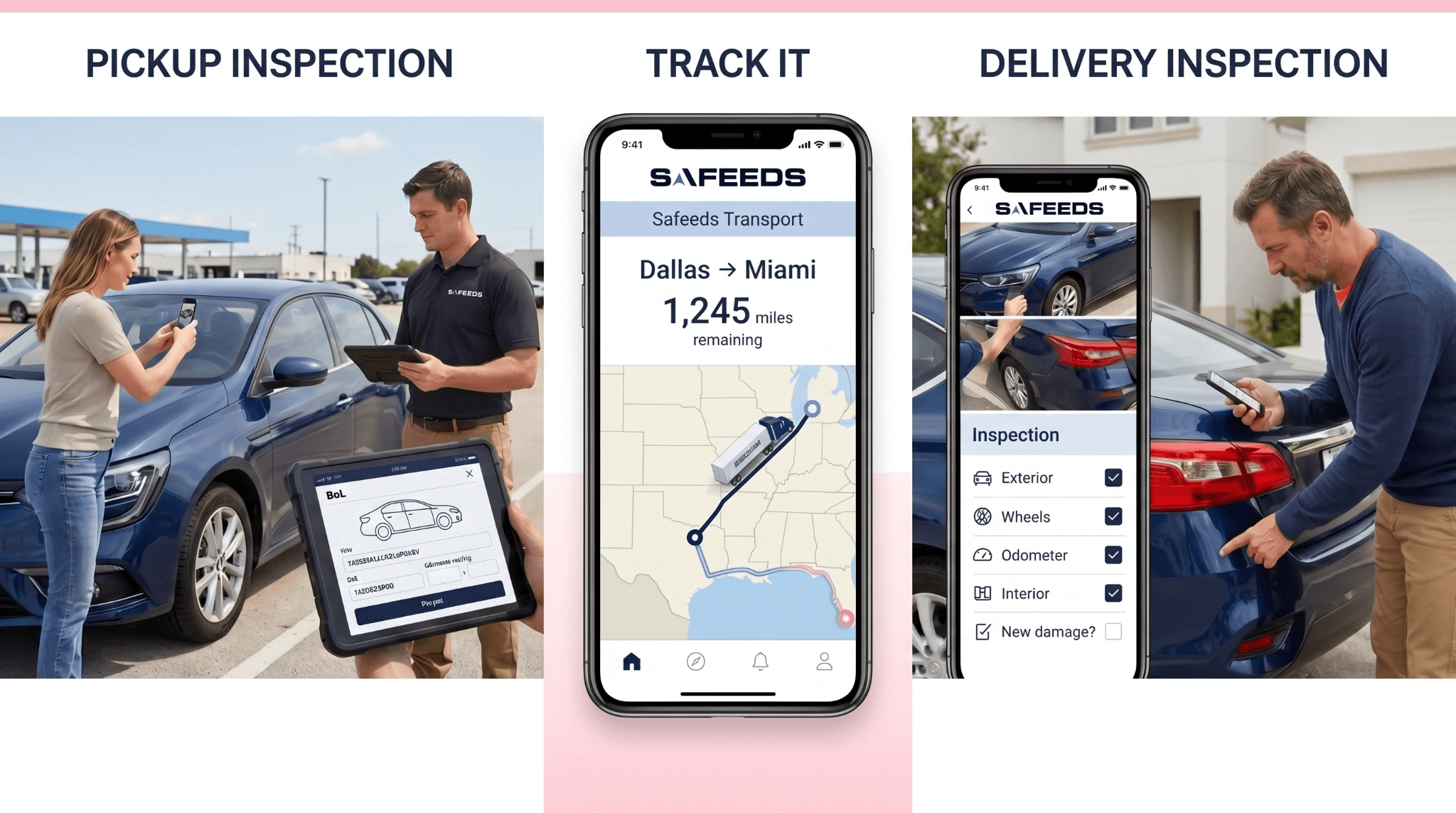
At pickup, you and the driver complete a vehicle inspection and record the car's condition on the bill of lading (BOL). Its condition report becomes the official record of how your car looked before shipping. The driver marks existing scratches, dents, and chips on the condition report diagram.
What should you check before signing the bill of lading?
Before signing the bill of lading, confirm that every existing mark appears on the diagram, nothing extra is marked, and the VIN, addresses, and odometer reading are correct.
Never sign a blank or rushed BOL. If the car is dirty or it's dark, the driver may note that, which can weaken a later claim.
Pro tip: Photograph the signed BOL before the truck drives off.
Step 6: Transit and Tracking
While your car is in transit, updates come from the driver, the carrier's dispatcher, or your broker. Delays of a day or so from weather or traffic are normal, and Safeeds Transport can contact the carrier for a status update anytime.
How long does it take to ship a car cross country?
Shipping a car cross country usually takes 7 to 14 days in transit, plus a pickup window of one to five business days. Most carriers cover 400 to 500 miles a day because of federal driving limits.
Under FMCSA hours-of-service rules, drivers may drive up to 11 hours within a 14-hour workday after 10 consecutive hours off duty. When planning how to ship a car cross-country, add the pickup window to these times.
Distance | Typical Transit Time |
Under 500 miles | 1 to 3 days |
500 to 1,000 miles | 2 to 5 days |
1,000 to 1,500 miles | 3 to 7 days |
1,500 to 2,500 miles | 5 to 9 days |
Over 2,500 miles | 7 to 14 days |
Step 7: Delivery Inspection and Final Payment
At delivery, complete a delivery inspection against the pickup bill of lading and your photos, note any new damage on the condition report before signing, and then make your final payment.
Inspect the car in good light, checking the roof, bumpers, wheels, lower panels, interior, and odometer. Start the engine too. Signing a clean BOL tells the carrier your car arrived in acceptable condition, so write down any new damage first and photograph it while the driver is there.
For final payment, Safeeds Transport requires no upfront payment at booking, only a $1 card verification hold. The balance is due at pickup or delivery, depending on your terms. When it's due at delivery, it's often called COD, short for cash on delivery, so confirm in advance which payment methods are accepted. Having payment ready keeps the handoff quick.
What to Do If Something Goes Wrong
If something goes wrong during a car shipment, document the problem on the bill of lading, photograph it, and contact your broker right away.
What should you do if your car arrives damaged?
If your car arrives damaged, note the damage on the BOL before signing, photograph it with the driver present, and report it to your broker immediately.
Record the carrier's name and USDOT number, then email support@safeedsautotransport.com. Claims go through the carrier's cargo insurance, and under the Carmack Amendment, interstate carriers are generally liable for damage that happens in their care.
What happens if pickup or delivery is delayed?
If pickup or delivery is delayed, ask your broker for an updated arrival estimate. Delays of a day or two usually come from weather, traffic, or earlier stops. Never pay fees that aren't in your written agreement.
What People Also Ask About How to Ship a Car?
Here are quick answers to the questions people ask most about how to ship a car.
How do I ship a car step by step?
Get quotes, choose open or enclosed transport, and book a pickup window. Prep your car, inspect it with the driver, and sign the bill of lading. Track it in transit, then inspect it at delivery. Whether you're learning how to ship a car to another state or across the country, Safeeds Transport guides every step.
How long does the whole process take?
Most shipments take one to two weeks from booking to delivery. That covers a pickup window of one to five business days plus transit time. Regional moves can finish within a week, while coast-to-coast trips may take up to three weeks in peak season. Safeeds Transport's wide carrier network helps keep pickup windows short.
What is a bill of lading and why does it matter?
A bill of lading is the inspection report and shipping receipt completed at pickup and delivery. It records your car's condition, addresses, and vehicle details, and it's your main evidence if damage occurs. Safeeds Transport recommends reviewing it line by line and photographing the signed copy.
What should I remove from my car before shipping?
Remove personal items, valuables, electronics, garage door openers, your toll transponder, and loose accessories. Carrier insurance covers the car, not its contents. Some carriers allow up to about 100 pounds in the trunk, at your own risk. Ask Safeeds Transport before pickup, and we'll confirm your carrier's rules.
Do I need to be there for pickup and delivery?
Someone must be present at both ends to hand over the keys, complete the inspection, and sign the bill of lading. It doesn't have to be you. Any trusted adult can stand in. Just share their name and number with Safeeds Transport, and we'll pass it along to the carrier.
Can someone else receive the vehicle?
Yes. A friend, family member, coworker, or dealership can receive your car. Give them your pickup photos and a copy of the BOL so they can complete the delivery inspection with confidence. Safeeds Transport coordinates the handoff with the carrier, so your stand-in knows what to expect.
How much fuel should be in the tank?
Keep about a quarter tank or less. That's enough to drive on and off the truck and reach a gas station after delivery. Gasoline weighs roughly six pounds per gallon, so a full tank adds weight carriers must manage. Safeeds Transport includes prep reminders like this when you book.
What if my car arrives with damage?
Write the damage on the delivery BOL before signing, photograph it with the driver present, and contact your broker right away. The claim goes through the carrier's cargo insurance. Safeeds Transport customers can email support@safeedsautotransport.com, and we'll help gather the documents your claim needs.
Do I hand over my keys?
Yes. The driver needs one full set to load, unload, and move your car on the trailer. That includes ignition, door, and trunk keys, plus any locking gas cap or wheel lock key. Keep your spares at home. Safeeds Transport lists key reminders in your booking details.
Can I change my pickup date after booking?
Usually, yes, especially with early notice. Contact your broker as soon as plans change, since changes get harder once a carrier is dispatched. Because Safeeds Transport requires no upfront payment and locks your quote for 7 days, you have room to settle your dates before anything is final.
Your Next Step to Ship a Car Without Surprises
Knowing how to ship a car before you book helps you avoid the three most common problems: lowball quotes, unrecorded damage, and lost paperwork.
If you started out asking "can you ship a car to another state," you now know the answer is yes, and what each stage asks of you. Once you understand how does car shipping work, most of your protection comes down to a careful quote comparison, two thorough inspections, and keeping your paperwork until everything is settled.
When you're ready, request your free quote from Safeeds Transport. There's no upfront payment, your price stays locked for 7 days, and code SAFE25 takes $25 off your shipment.