Most people booking auto transport for the first time assume all car shipping works the same way. The reality is more nuanced, and the choice between open and enclosed transport is one of the most important decisions you will make before confirming a booking.
Open vs enclosed car shipping refers to two distinct trailer types. Open transport loads your vehicle onto an uncovered multi-car trailer, the method used for roughly 90% of all US vehicle shipments. Enclosed transport places your vehicle inside a fully covered trailer, protecting it from weather, debris, and road exposure throughout the journey.
Both are legitimate options. The difference lies in the level of protection, the cost involved, and the type of vehicle being moved. Let’s break down five real, practical differences so you can make a confident decision before booking. Get your free quote today with Safeeds Transport that provides instant, locked-in quotes in 30 seconds; no upfront payment, no obligation.
What Is the Difference Between Open and Enclosed Car Shipping?
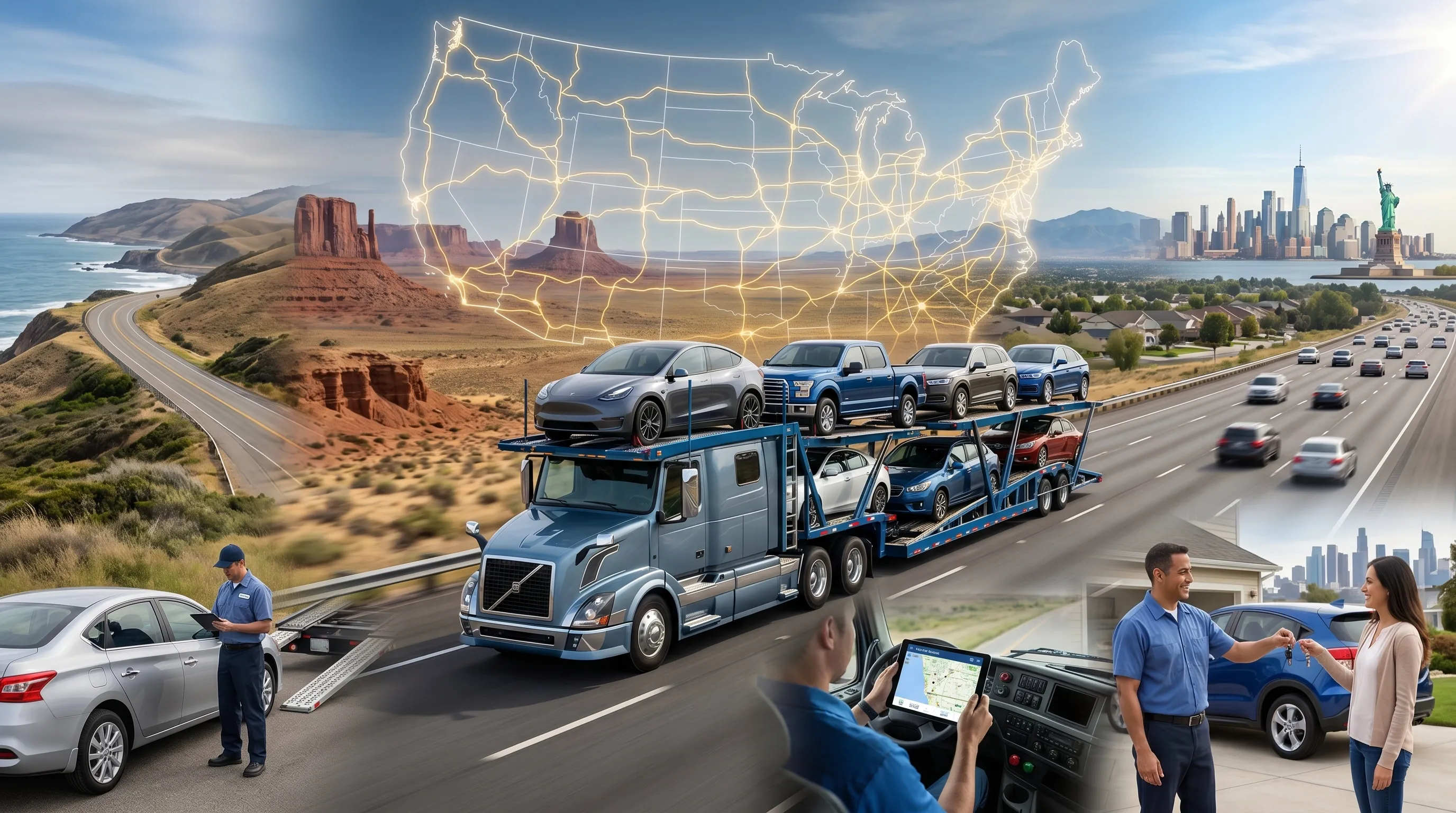
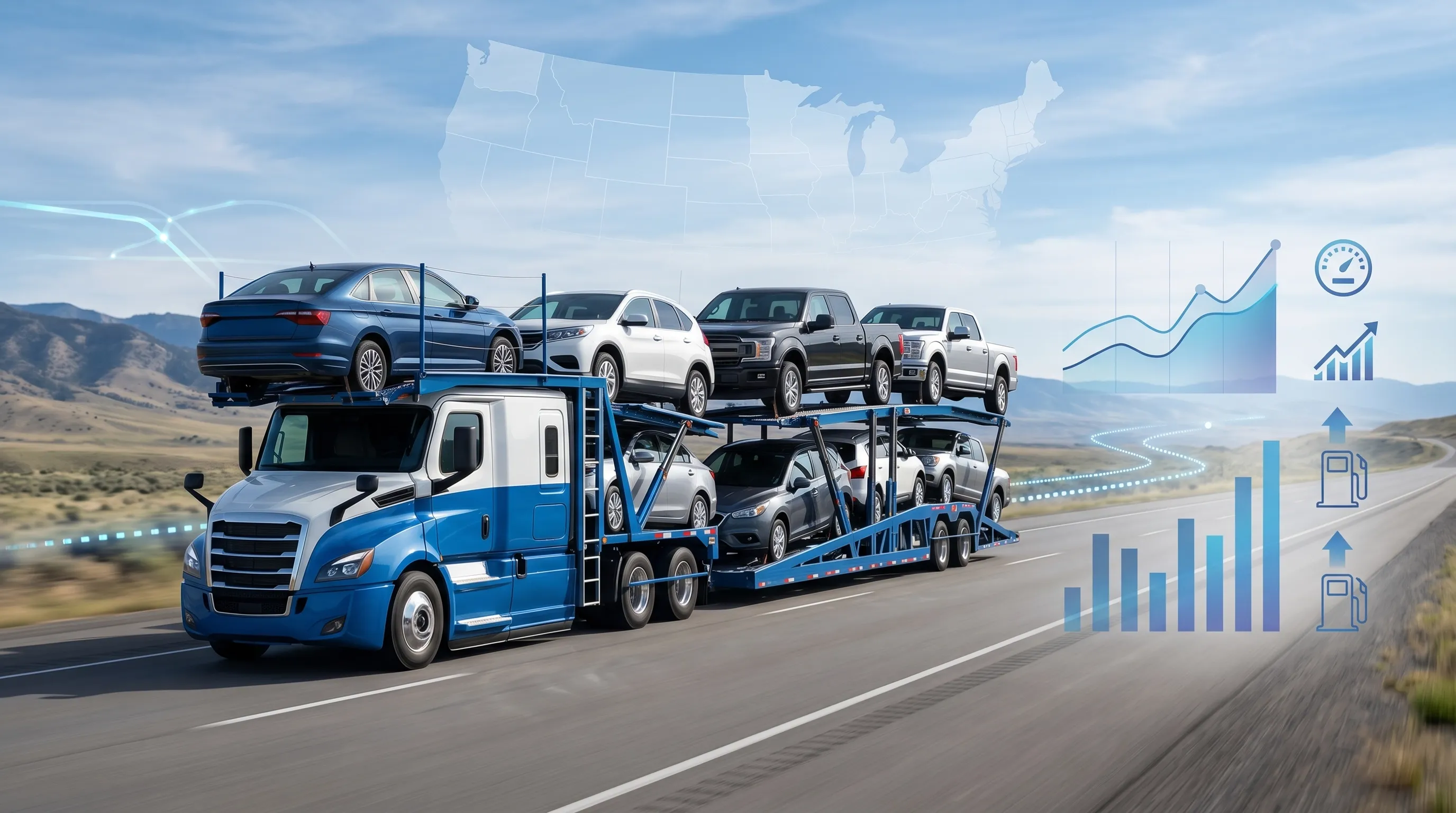
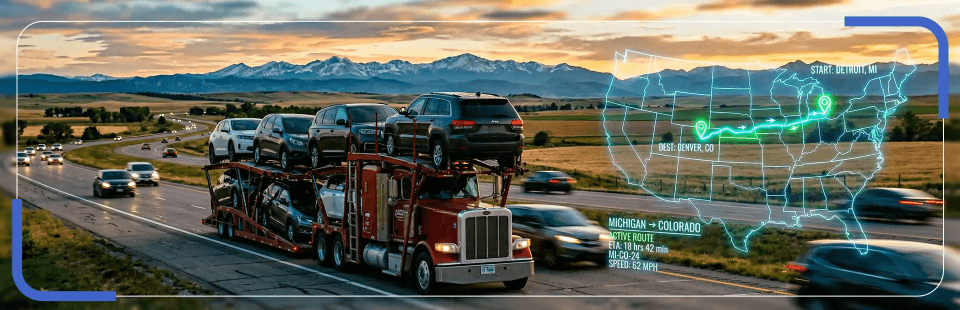
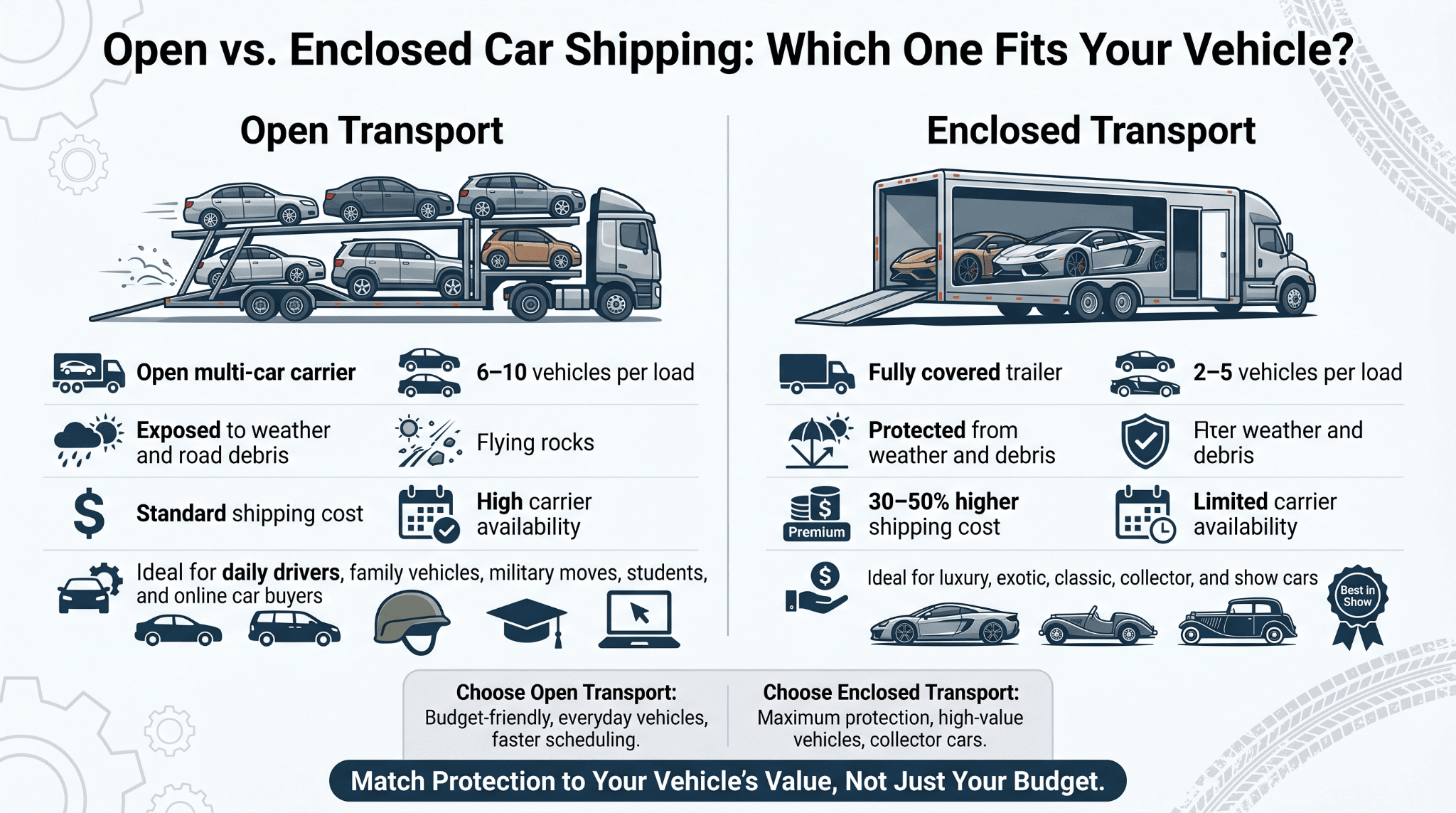
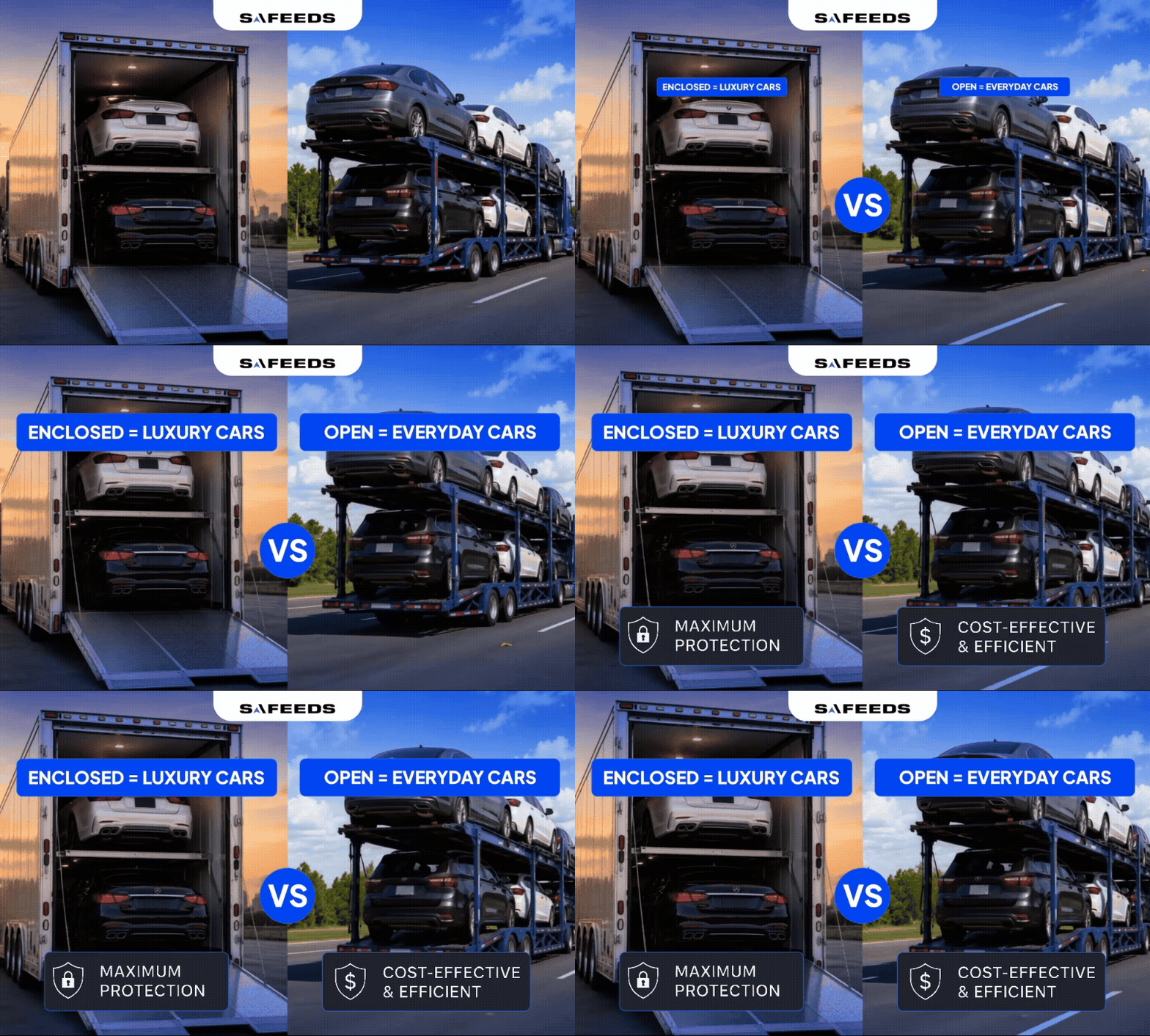
Open car transport is the industry standard. Vehicles are loaded onto a multi-level trailer that carries six to ten cars at once. There are no walls or roof; vehicles are exposed to the elements during transit. It is efficient, widely available, and cost-effective.
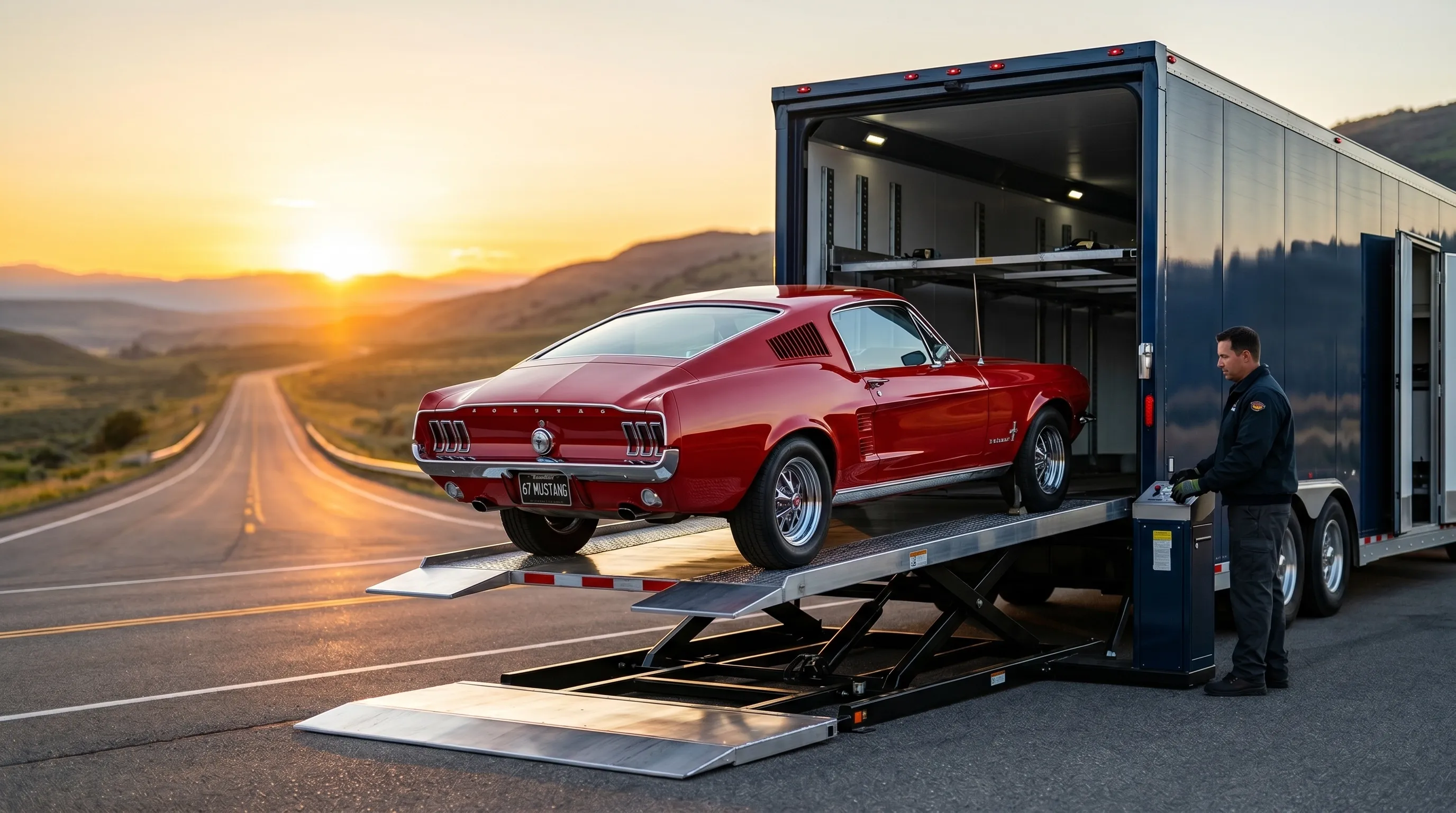
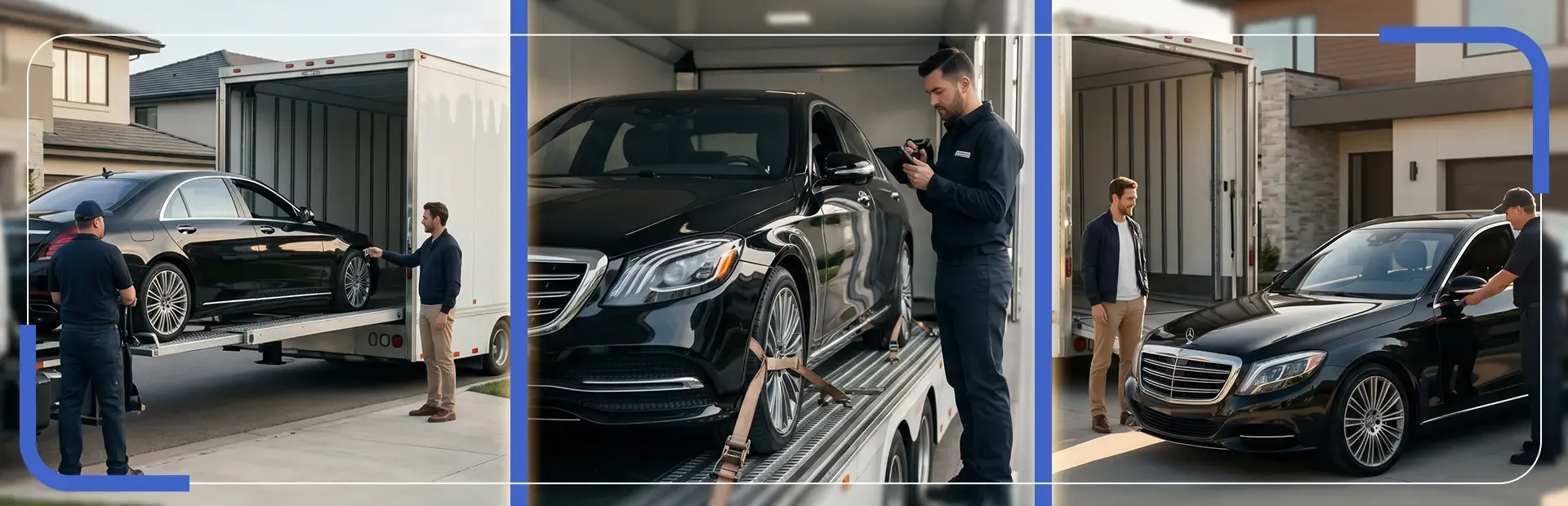
Enclosed car shipping works differently. Vehicles load into a trailer with solid walls and a roof, shielding them from rain, wind, road debris, and temperature shifts. Enclosed trailers carry fewer vehicles, typically two to five per load, which drives up the cost per shipment.
Neither option is superior across the board. The right choice depends on:
What you are shipping
How much the vehicle is worth
What level of exposure risk are you comfortable with
Feature | Open Transport | Enclosed Transport |
Trailer type | Open multi-car carrier | Fully covered trailer |
Vehicles per load | 6–10 | 2–5 |
Weather exposure | Yes | No |
Avg. cost premium | Standard | 30–50% higher |
Best for | Standard vehicles | Luxury, classic, exotic cars |
Carrier availability | High | Limited |
Who Uses Each Type of Transport?
Open car transport is the go-to for:
Everyday drivers and families relocating
Military personnel on PCS orders
College students moving across the country
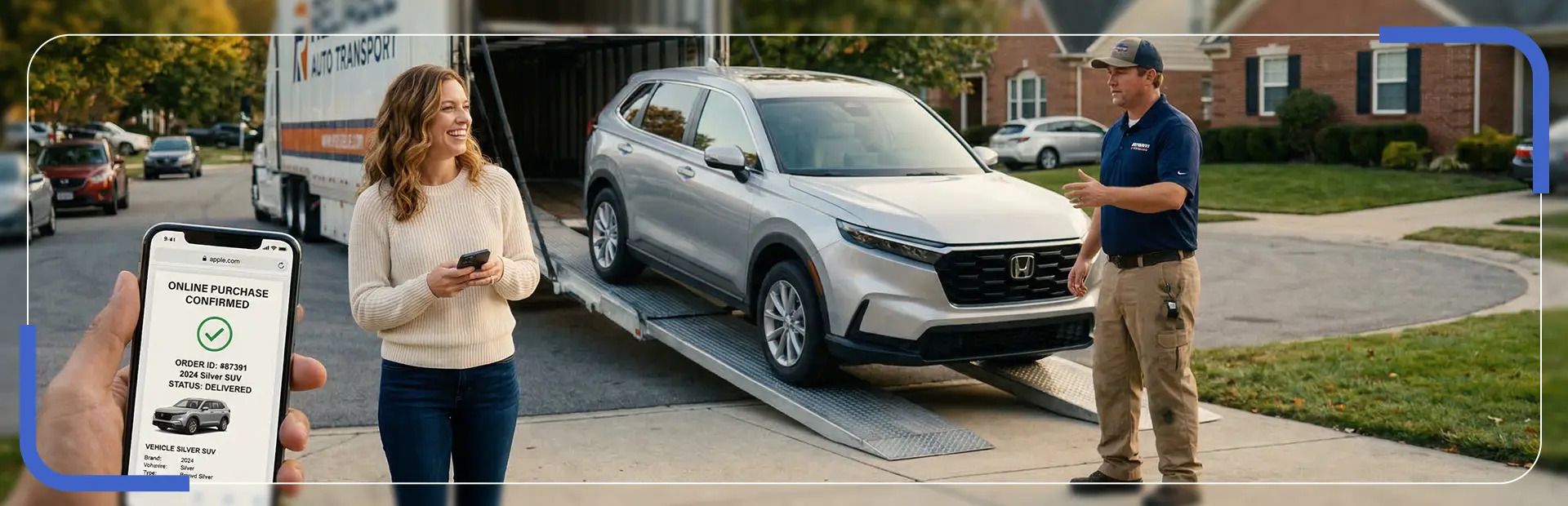
Online car buyers receiving a purchase from a distant seller
Enclosed transport is typically chosen by:
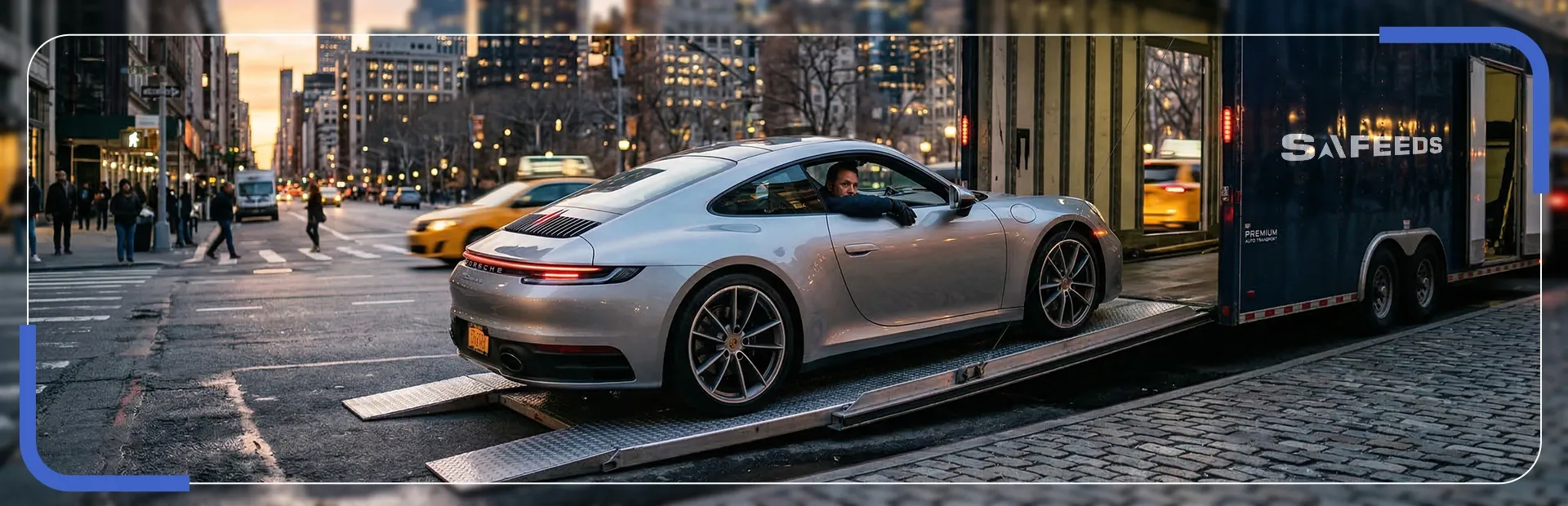
Owners of luxury, exotic, or classic collector vehicles
Dealers moving high-value inventory
Auction buyers transporting rare or show-condition cars
What Are the 5 Real Differences Between Open and Enclosed Car Shipping?
Understanding enclosed vs open auto transport goes well beyond price. These five differences cover what actually affects your vehicle, your schedule, and your decision.
How Does Weather and Road Exposure Compare?
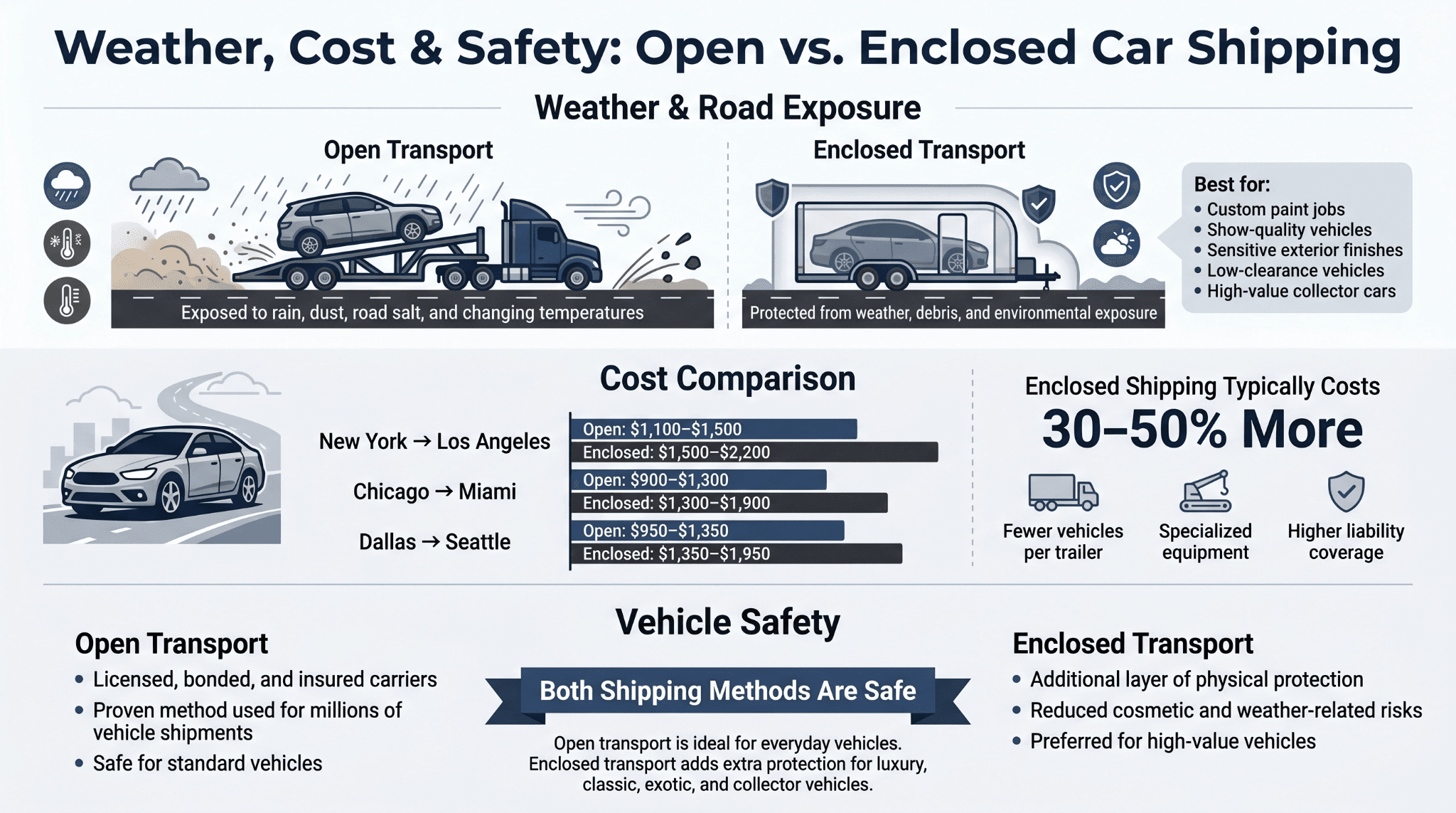
Open carriers provide no barrier between your vehicle and the outside environment. On a cross-country route, your car may pass through rain, dust, road salt spray, and shifting temperatures.
For most standard vehicles, this causes no lasting damage. Vehicles are built to handle road conditions, and transit exposure is comparable to driving in poor weather.
Enclosed transport eliminates this. Your vehicle travels in a weather-sealed environment from pickup to delivery, a meaningful difference for vehicles with:
Custom or show-quality paint
Sensitive exterior finishes
Low ground clearance
High resale or auction value
How Much More Does Enclosed Car Transport Cost?
Enclosed car transport costs run 30 to 50 percent higher than open transport on the same route.
Route Example | Open Transport | Enclosed Transport |
New York to Los Angeles | $1,100 – $1,500 | $1,500 – $2,200 |
Chicago to Miami | $900 – $1,300 | $1,300 – $1,900 |
Dallas to Seattle | $950 – $1,350 | $1,350 – $1,950 |
The premium reflects real cost drivers:
Fewer vehicles per trailer load
Higher carrier liability exposure
Specialized equipment and driver certification
The cost is not arbitrary; it reflects a genuinely higher level of service.
Is One Option Safer for Your Vehicle Than the Other?
Open transport is not unsafe. Carriers operating open trailers are licensed, bonded, and insured. The method has moved millions of vehicles reliably for decades.
Enclosed transport adds a measurable layer of physical protection, but it does not guarantee a damage-free delivery. Loading errors, mechanical incidents, and accidents can occur with any trailer type.
The practical distinction:
Open transport: Safe for standard vehicles under normal conditions
Enclosed transport: Reduces cosmetic and weather-related risk for high-value vehicles where that risk has real financial consequences
Does Carrier Availability Differ Between the Two Options?
Open car transport has significantly greater carrier availability nationwide. On most routes, shippers secure pickup within two to five business days.
Enclosed carriers are fewer and operate on tighter schedules. On less-traveled routes or during peak seasons, wait times can run one to two weeks longer than an equivalent open booking.
According to the Federal Motor Carrier Safety Administration (FMCSA), enclosed equipment operators represent a small fraction of the total registered carrier pool in the US.
If your shipment has a fixed timeline, confirm enclosed carrier availability on your specific route before committing.
How Does Insurance Coverage Work for Each Method?
All FMCSA-licensed carriers, open and enclosed, are required by federal law to carry cargo insurance. The trailer type does not determine your coverage level; the carrier's individual policy does.
That said, enclosed carriers often carry higher liability limits because the vehicles they haul tend to be higher in value.
Before confirming any booking, open or enclosed, take these steps:
Request a copy of the carrier's certificate of insurance
Verify the cargo coverage limit
Confirm your vehicle's declared value falls within that limit
The American Trucking Associations (ATA) recommends reviewing carrier insurance documentation as standard practice before any vehicle transport booking.
Is Enclosed Transport Worth It for Your Vehicle?
The answer comes down to three factors: vehicle value, replacement cost, and the consequence of cosmetic damage.
Enclosed transport is worth it if:
Your vehicle is valued at $50,000 or more
Any exterior damage would be costly or impossible to repair correctly
The vehicle has a show, collector, or auction value tied to its condition
The added cost is less than 1% of the vehicle's total value
Open car transport is the smarter choice if:
Your vehicle is a standard daily driver in good condition
Cosmetic wear during transit would not affect its value significantly
Cost efficiency is a priority
A practical example: shipping a $120,000 luxury vehicle on an enclosed carrier at a $600 premium costs less than 0.5% of the vehicle's value. For a $14,000 sedan, that same $600 represents over 4% of the car's worth, and open transport poses no meaningful risk to justify it.
What Most Shippers Get Wrong About This Choice
A few persistent misconceptions lead shippers to either overpay for protection they do not need or underprepare for a shipment that genuinely warrants more care. Knowing where these myths come from and why they are inaccurate puts you in a stronger position before you book.
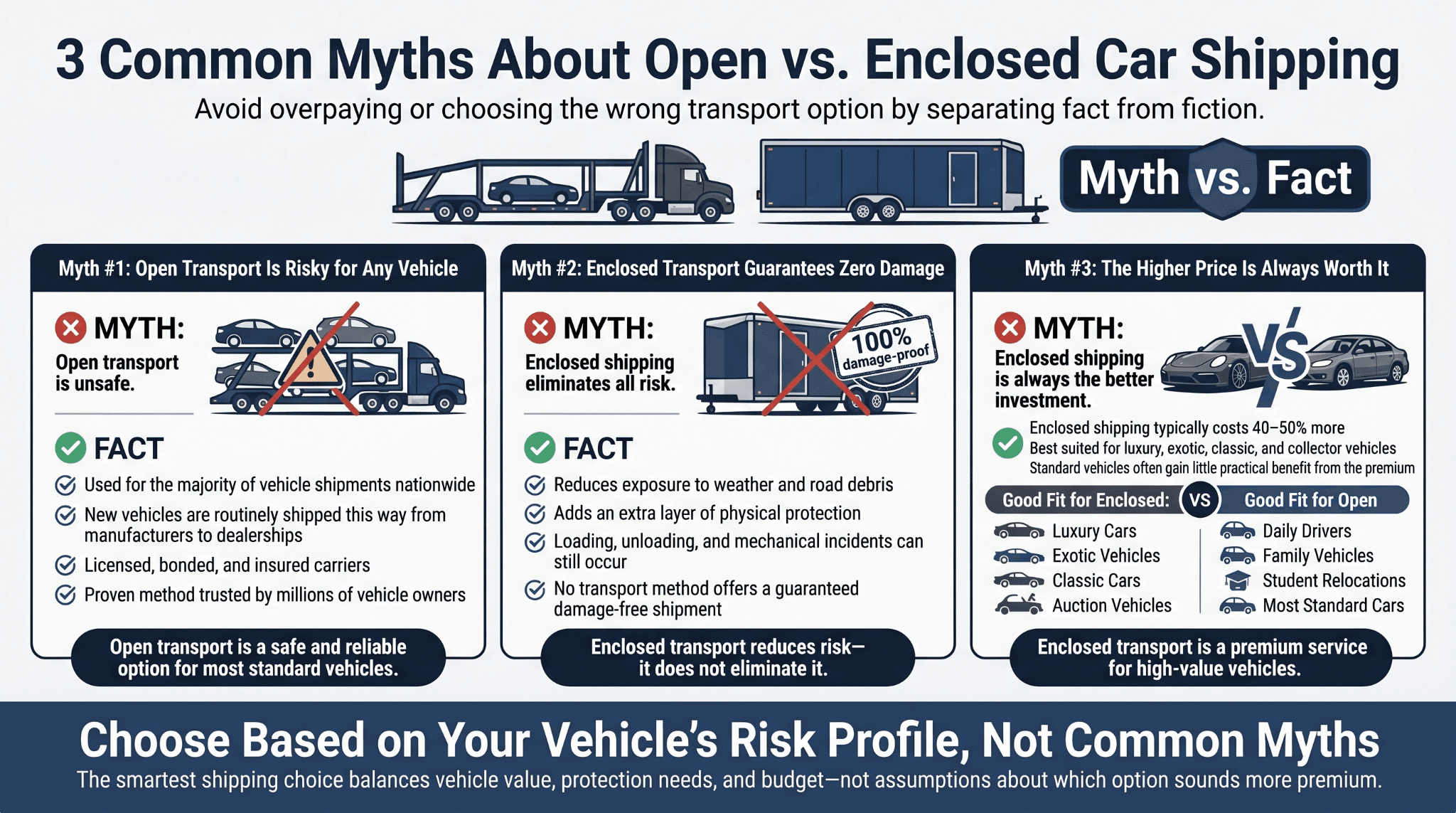
Myth 1: Open transport is risky for any vehicle
This is not supported by industry data. Open transport is the method used for the vast majority of all vehicle shipments in the United States, including new cars delivered directly from manufacturers to dealerships across the country.
Carriers operating open trailers are licensed, bonded, and insured by federal requirement. For standard vehicles in good condition, open car transport is a proven, reliable method that has served millions of customers without incident.
Myth 2: Enclosed transport guarantees zero damage
Enclosed trailers significantly reduce exposure to weather and road debris, but they do not eliminate all risk. Damage can still occur during loading, unloading, or in the event of a mechanical incident on the road. No transport method, regardless of trailer type, offers an unconditional damage-free guarantee. The value of enclosed transport lies in risk reduction, not risk elimination.
Myth 3: The price difference is always justified
Enclosed car transport cost is only a sound investment when the vehicle's value, condition, or purpose makes the added protection financially sensible. Paying a 40 to 50 percent premium to ship a standard $12,000 vehicle introduces unnecessary cost with little practical benefit. The decision should be driven by the vehicle's actual risk profile, not by assumptions about which option sounds more premium.
What Should You Ask Before Booking Either Option?
Choosing the right trailer type is only half the decision. The other half is knowing what to verify before you hand over your vehicle. These five questions protect you from avoidable problems and help you identify whether the company you are booking with operates with the transparency and accountability your shipment deserves.
Can you confirm the trailer type in writing?
Some brokers list a transport type at booking and quietly switch it later without informing the customer. Before signing anything, request written confirmation that your vehicle will be loaded onto the specific trailer type you selected. A reputable transport company will have no hesitation in providing this. At Safeeds, trailer type is confirmed at booking and documented before pickup, no surprises.
What are the carrier's insurance coverage limits?
Do not accept a general assurance that the carrier is insured. Ask specifically for the cargo insurance limit and request a copy of the certificate of insurance. Verify that your vehicle's declared value falls within that limit. If it does not, ask whether supplemental coverage is available before proceeding.
What is the pickup window for my chosen trailer type?
Open transport typically offers a two to five-day pickup window on most routes. Enclosed transport may require a longer lead time depending on carrier availability in your area. Confirm this upfront, particularly if your move has a fixed date. Knowing your window in advance allows you to plan around it rather than scramble at the last minute.
Will a vehicle inspection report be completed at pickup?
A Bill of Lading with a documented vehicle condition report is your primary evidence in any damage claim. Confirm it will be completed thoroughly before the carrier loads your vehicle. Review every detail carefully before signing, and keep a copy for your records. Skipping this step is one of the most common and costly mistakes first-time shippers make.
Does the company offer a price lock guarantee?
Shipping quotes can shift between booking and pickup if a broker does not lock in your rate. Ask whether the price you are quoted today is the price you will pay, and whether that guarantee is documented. Safeeds provides a 7-day price lock on every shipment, meaning the rate confirmed at booking will not change regardless of market fluctuations before your pickup date.
The Smarter Way to Book Open or Enclosed Car Shipping
The decision between open vs enclosed car shipping is straightforward once you apply the right framework. Match the protection level to your vehicle's value and condition. Use open car transport for standard vehicles where cost efficiency matters, and use enclosed transport when your vehicle's value or condition makes the premium a sound investment.
Work with a licensed, insured broker who confirms trailer type in writing, provides carrier documentation upfront, and locks in your price before pickup. Those basics matter more than the trailer type itself.
Safeeds Transport offers both open and enclosed car shipping nationwide, with verified carriers, a 7-day price lock, and zero upfront payment required. Get your free quote in 30 seconds and ship with confidence.