Most shippers assume boat transport cost comes down to one thing: how far the vessel is going. In 2026, that assumption is costing people money.
Boat transport cost in 2026 ranges from $600 to $15,000 or more, depending on vessel size, route, and transport method. Five trends, fuel surcharges, carrier availability, vessel type premiums, seasonal demand, and new regulatory costs, are actively reshaping what shippers pay before they even get to the distance. Know what your shipment actually costs before you book. Contact Safeeds for a no-obligation shipping quote, itemized pricing, verified carriers, and a 7-day rate lock included.
What Is the Average Boat Transport Cost in 2026?
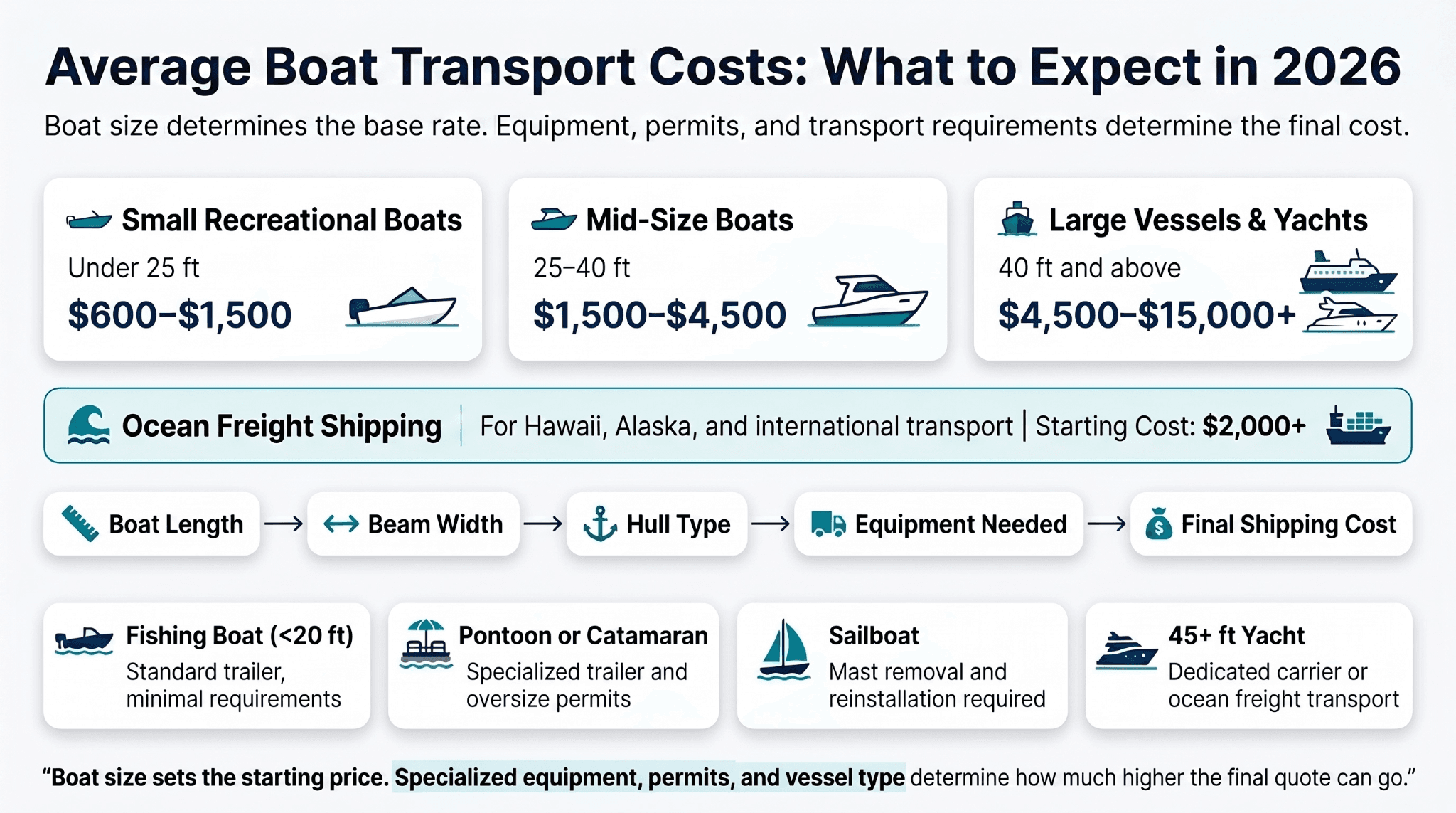
For shippers asking how much to transport a boat, the answer starts with vessel size. Here is what the current market looks like across three categories:
Vessel Category | Size Range | Typical Overland Cost |
Small recreational boats | Under 25 ft | $600 – $1,500 |
Mid-size boats | 25 – 40 ft | $1,500 – $4,500 |
Large vessels and yachts | 40 ft and above | $4,500 – $15,000+ |
Ocean freight, used for Hawaii, Alaska, and international shipments, is priced separately and starts at above $2,000 even for smaller vessels.
These are baseline figures. Every trend in this article can push the final quote above these averages. Understanding what drives those increases is the point of everything that follows.
How Does Boat Size and Type Affect the Base Rate?
Vessel length, beam width, and hull type determine what equipment a carrier needs, and that directly sets the starting price.
A fishing boat under 20 ft ships on a standard trailer with no special requirements
A wide-beam pontoon or catamaran may need a specialized rig and oversize permits
A sailboat with a tall mast adds mast removal and reinstallation labor to the quote
A yacht over 45 ft may require a dedicated single-vessel carrier or ocean freight
Size and type set the floor. The five trends below determine how far above that floor the final cost lands.
Trend 1: Why Are Fuel Surcharges Pushing Boat Hauling Rates Per Mile Higher in 2026?
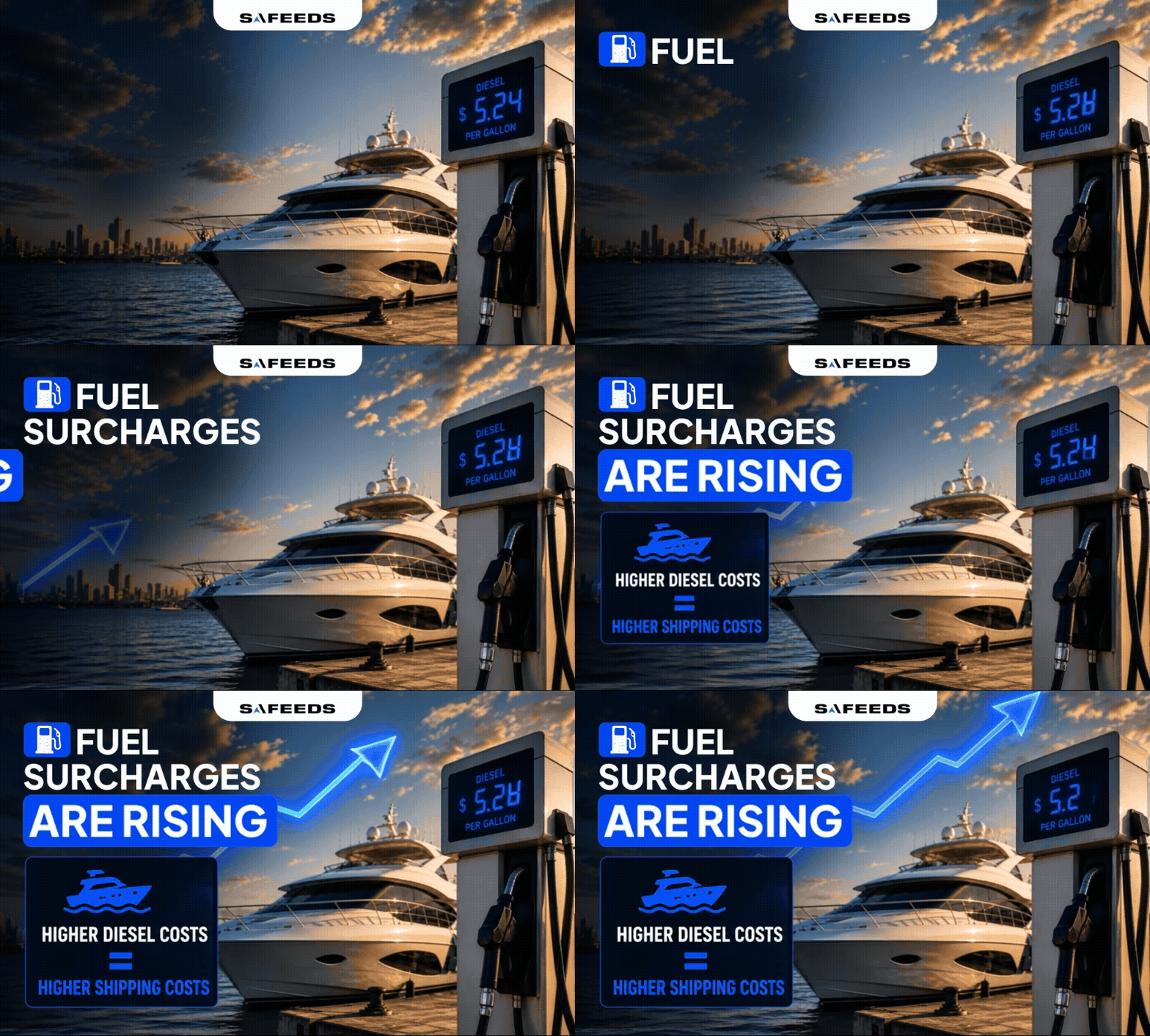
A fuel surcharge is an additional fee carriers apply to offset diesel costs during transport. It is not new, but diesel price volatility in 2026 has made it a less predictable part of any quote than it has been in previous years.
Two things shippers need to know:
Carriers are now separating base rate from fuel adjustment on itemized quotes
A competitive per-mile base rate can carry a surcharge large enough to erase that advantage entirely
Long-haul moves carry the most exposure. On cross-country routes, the fuel surcharge can represent 12–18% of the total boat transport cost. On a 400-mile regional move, the impact is far smaller.
What to do: Always request an itemized quote that separates base rate, fuel surcharge, and accessorial fees before comparing carriers.
What Is a Typical Boat Hauling Rate Per Mile Right Now?
Route Length | Typical Rate Per Mile |
Short-haul (under 500 miles) | $3.50 – $6.00 per mile |
Long-haul (500+ miles) | $1.50 – $3.50 per mile |
Per-mile rates decrease on longer routes, but total cost increases with distance. Oversized vessels and yachts are typically quoted as flat project rates rather than per-mile figures.
These are pre-surcharge baselines. Always confirm the all-in rate before accepting any quote.
Trend 2: How Is Carrier Availability Affecting Boat Shipping Cost in 2026?
Boat transport is a specialty freight category. Not every carrier is qualified; certified haulers must maintain specific equipment, carry adequate cargo insurance, and demonstrate experience with the vessel types they accept.
In 2026, demand for boat shipping has grown while the qualified carrier pool has stayed flat in most regions. That imbalance is pushing boat shipping costs higher, particularly in:
Inland states and rural corridors with fewer active carriers
Specialty vessel categories like catamarans, houseboats, and commercial vessels
Routes where only one or two carriers are regularly bidding
What to do: Get at least three itemized quotes, verify carrier credentials, and book three to six weeks ahead of your target pickup date. Boat transport cost is consistently lower for shippers who are not in a rush.
Does Route Popularity Change What Shippers Pay?
Yes, and it is one of the most overlooked pricing variables in boat shipping.
High-volume corridors (Midwest to Florida, Great Lakes to Gulf Coast) carry stronger carrier competition and more competitive quotes
Low-demand or rural routes have fewer carriers bidding, which pushes prices up regardless of distance
Seasonal surges, particularly snowbird season, temporarily spike pricing even on popular corridors
A 600-mile shipment on a quiet inland route can cost more than an 800-mile shipment on a high-volume corridor. Ask your broker which direction on your route is more competitively priced.
Trend 3: What Is Driving Yacht Transport Cost Up for High-Value Vessels?
Yacht transport costs operate on a different scale than standard boat shipping. In 2026, three specific factors are pushing this segment's pricing above historical norms:
Enclosed transport demand
More yacht owners are requesting enclosed trailers for weather and debris protection. Enclosed transport typically runs 30–50% higher than open transport on comparable routes, and demand for it has increased as average vessel values have risen.
Specialized rigging and handling
Vessels over 40 ft often require crane lifts, custom cradle fabrication, and professional handlers at both ends of the shipment. These services add $500–$2,500, depending on vessel size and port access.
Insurance premium increases
Carriers insuring vessels valued above $250,000 face higher underwriting costs in 2026. Those costs are passed through to shippers in the form of higher base rates.
Yacht transport quotes are almost always custom-built. For any vessel over 40 ft, request a site inspection quote rather than a phone estimate.
Is Enclosed Transport Worth the Extra Boat Transport Cost for Yachts?
Enclosed transport protects against four risks that open transport does not:
Road debris impact on hull and hardware
UV degradation on high-gloss finishes during multi-day hauls
Weather exposure on long-distance routes
Visibility-related theft risk on high-value vessels
Worth the premium for: Cross-country moves, new builds, recently restored vessels, and yachts with custom exterior finishes.
Open transport is acceptable for: Short regional moves, older working vessels, and budget-constrained situations where maintenance is already scheduled.
For most yacht owners moving a vessel over 500 miles, enclosed transport is the lower-risk choice.
Trend 4: How Is Seasonal Demand Reshaping Boat Transport Pricing in 2026?
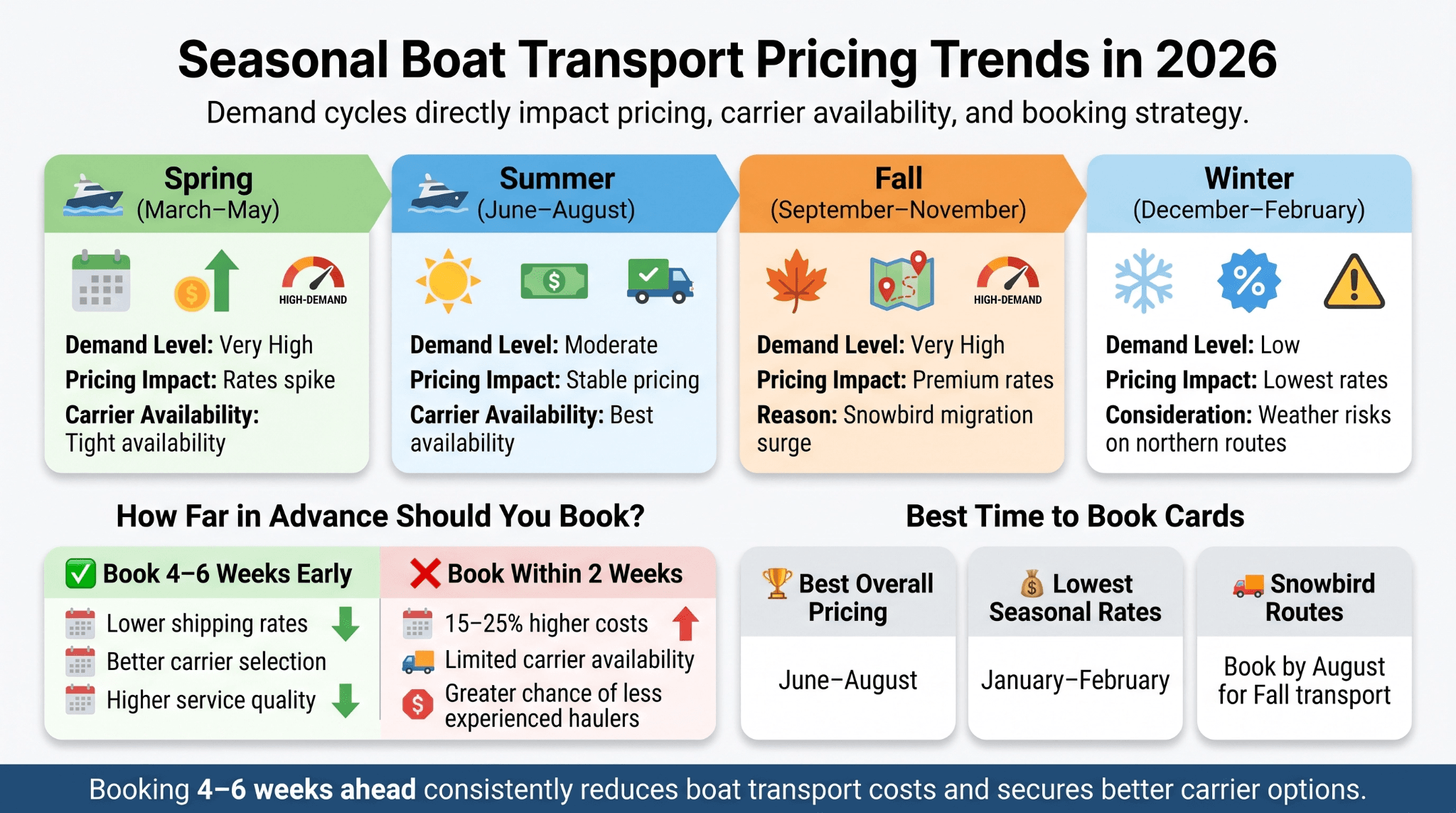
Boat transport has always followed seasonal patterns, but the 2026 demand cycle has intensified at both peaks, creating sharper pricing spikes than in prior years.
Season | Demand Level | Pricing Impact |
Spring (Mar–May) | Very High | Rates spike; carrier availability tightens |
Summer (Jun–Aug) | Moderate | Better availability; stable pricing |
Fall (Sep–Nov) | Very High | Snowbird surge overwhelms southern routes |
Winter (Dec–Feb) | Low | Lowest rates; weather risk on northern routes |
Booking four to six weeks before a peak-season window consistently produces lower boat shipping costs than booking when most shippers do. Last-minute peak bookings carry a dual penalty: higher rates and a narrower carrier pool, which means less experienced haulers are more likely to be assigned.
When Is the Best Time to Book Boat Transport for the Lowest Rate?
Lowest-rate windows: June through August for standard routes; January through February for snowbird corridors
Peak season lead time: Book four to six weeks before target pickup
Off-peak lead time: Two to three weeks is generally sufficient
Snowbird routes specifically: Lock in by August to secure both price and carrier quality for a fall departure
Booking within two weeks of a peak-season pickup routinely results in rates 15–25% above what advance shippers pay.
Trend 5: How Are New Regulations Changing Boat Shipping Costs on Certain Routes?
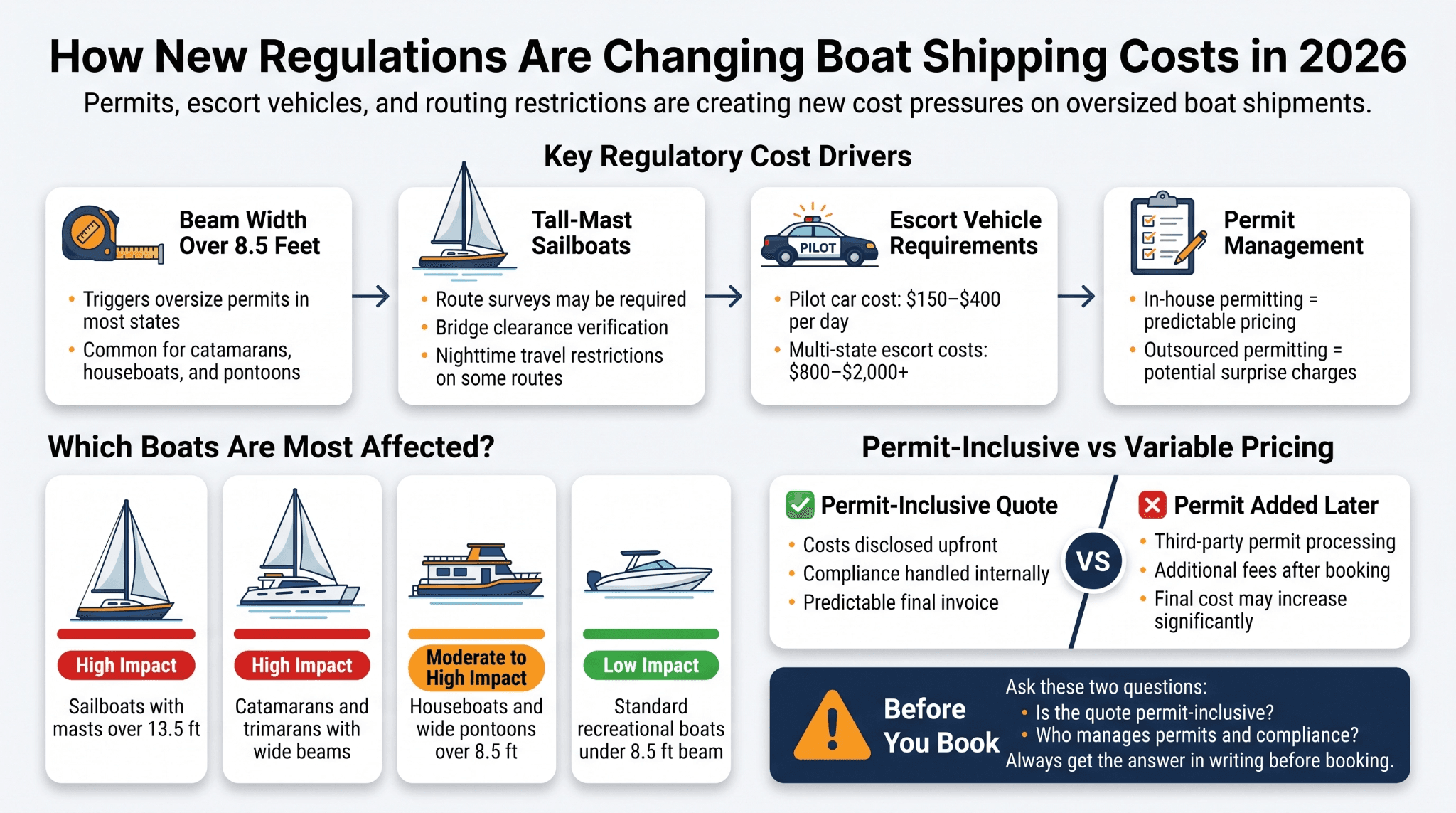
Oversized transport is regulated at the state level, and those rules vary significantly across jurisdictions. In 2026, several states have tightened enforcement, adding permit costs, escort requirements, and routing restrictions that directly affect boat shipping costs on certain corridors.
Key regulatory cost drivers:
Beam width over 8.5 ft triggers oversize permits in most states, required for wide catamarans, houseboats, and pontoons
Tall-mast sailboats may require route surveys, bridge clearance verification, or nighttime-only travel windows
Escort vehicles are mandated in some states for vessels over certain dimensions, a single pilot car adds $150–$400 per day; multi-state hauls can add $800–$2,000 in escort costs alone
The critical distinction: carriers who handle permitting in-house build it into the quote upfront. Carriers who outsource it add it as a variable after booking, meaning the final invoice can differ significantly from what was accepted.
What to do: Ask specifically whether the quote is permit-inclusive and who manages the compliance process.
Which Vessel Types Are Most Affected by Permit and Compliance Costs?
Sailboats with masts over approximately 13.5 ft: mast removal or specialized routing required
Catamarans and trimarans with wide beams: oversize permits in most states; escort requirements on many routes
Houseboats and wide pontoons over 8.5 ft beam: permit and escort requirements on interstate routes
Standard single-hull recreational boats under 8.5 ft beam: typically unaffected by oversize regulations
If your vessel falls into the first three categories, request a permit-inclusive quote from the first conversation, and confirm in writing that compliance is handled internally.
What Should Shippers Ask Before Accepting a Boat Transport Quote?
A low quote is only valuable if it covers everything the shipment actually requires. Before accepting any quote, ask these five questions:
Is the fuel surcharge included, or added separately?
A reliable carrier will provide a fixed or maximum surcharge figure in writing, not add it at invoicing.Does this quote include all permits and compliance costs?
For any vessel over 8.5 ft in beam or with mast height concerns, this must be a confirmed yes with documentation.What insurance coverage applies, and what are the limits?
Standard cargo insurance covers carrier liability, not full vessel replacement value. Shippers can review minimum carrier insurance requirements directly through the Federal Motor Carrier Safety Administration (FMCSA) to understand what protection standards apply before booking. Verify limits for any vessel valued above $100,000.Is your carrier certified and experienced with my vessel type?
Experience with standard recreational boats does not qualify a carrier for a 45-ft yacht or wide-beam catamaran. Ask for comparable prior shipments.Is this price locked, and for how long?
Safeeds offers a seven-day price lock on confirmed quotes. Confirm equivalent protection before accepting any quote.
Shippers who ask these five questions before booking report far fewer surprises on final invoices.
Quick Answers on Boat Transport Cost in 2026
Shippers often arrive with the same core questions before booking. The answers below address the most common ones directly, based on current 2026 market conditions and carrier pricing patterns.
How much does it cost to transport a boat across the country?
Cross-country transport costs $1,800–$5,500 for mid-size vessels and $5,000–$15,000+ for yachts and large boats over 40 ft. Fuel surcharges and permits can add 15–25% during peak season.
Is the boat transport cost negotiable?
Yes, off-peak timing, flexible pickup windows, and multi-vessel bookings are the three most reliable leverage points for a lower rate.
Does boat transport cost include insurance?
Standard carrier cargo insurance is included in most quotes but covers carrier liability only, not full replacement value. Verify coverage limits for vessels valued above $100,000.
How far in advance should I book boat shipping?
Four to six weeks ahead during peak season; two to three weeks off-peak. For snowbird routes, book by August to secure both pricing and carrier quality.
Can I ship personal belongings inside my boat during transport?
Most carriers allow small, secured items inside the cabin, but weight limits apply, typically 100 lbs or less. Loose or unsecured items are not covered under carrier cargo insurance, and overpacking can affect trailer weight compliance on permitted routes.
What 2026 Is Actually Telling Boat Shippers About Cost
Boat transport cost in 2026 is not a distance equation; it is a preparation equation. Shippers who book early, ask the right questions, and avoid peak windows consistently pay less and experience fewer problems. Industry credentialing standards set by the American Boat and Yacht Council (ABYC) provide a reliable benchmark for evaluating whether a carrier is genuinely qualified for your vessel type, not just licensed to haul freight.
Safeeds Transport provides itemized, price-locked quotes across all 50 states, backed by a verified network of credentialed carriers, so shippers know exactly what they are paying for before the truck is assigned. Get a free quote from Safeeds today and lock in your rate before the next pricing window opens.