Peak season car shipping, roughly May through September and again in October for snowbird routes, costs 20 to 40 percent more than off-peak. The three tactics that actually reduce that premium are booking 4 to 6 weeks ahead, keeping a flexible 3- to 5-day pickup window, and choosing open transport.
This guide to shipping a car during peak season covers all eight tactics worth knowing, not just the three biggest ones, so you can combine them for the best possible outcome on your specific route.
Tips for shipping a car during peak season matter most when your dates aren't flexible, since that's exactly when carriers have the least leverage to work with your timeline.
Reviewing these tactics before you request a quote helps you spot which ones apply to your specific situation. Get your free, price-locked quote today and see how much of the seasonal premium you can avoid on your route.
What are 8 Tactics That Actually Cut Peak-Season Costs
Here are all eight, in order of impact. This shipping a car during peak season guide covers the first four in more depth further down; all eight are explained briefly here first.
1. Book 4 to 6 weeks ahead
Carrier schedules fill up fastest during peak months, so early booking gives you access to more carriers and better pricing. This holds for shipping a car during peak season 2026 the same way it has in prior years.
2. Keep a flexible 3 to 5 day pickup window
A wider window lets your carrier slot your vehicle into a route they're already running instead of making a special trip. This alone can meaningfully lower your quote compared to a single fixed date.
3. Choose open transport over enclosed
Open transport typically costs 30 to 50 percent less than enclosed, and it's the right choice for the vast majority of standard vehicles, even during peak season. Save enclosed for luxury, classic, or high-value cars where the extra protection genuinely matters.
4. Use terminal drop-off where available
Dropping off and picking up at a staffed terminal instead of your driveway often saves $50 to $150, since it removes a residential detour from the carrier's route. Ask for a shipping a car during peak season quote that itemizes both options so you can compare them directly.
5. Disclose your full vehicle details upfront
A quote built on incomplete information, missing modifications, wrong running condition, an unlisted address issue, is the most common reason a price changes after booking. Giving your broker everything upfront keeps your quote accurate through pickup day.
6. Compare quotes from more than one provider
Peak-season pricing varies more between brokers than off-peak pricing does, since some quietly build in a bigger buffer than others. A second or third quote is worth the extra ten minutes.
7. Avoid last-minute, rush booking requests
Booking inside the final week before your target pickup date narrows your carrier pool the most during already-tight peak months. This often adds its own separate premium on top of the seasonal one.
8. Choose a carrier with a track record of proactive communication
A broker who updates you without being asked is far less likely to leave you guessing if a peak-season delay does happen. Capacity constraints make weather and traffic disruptions more consequential during busy months.
What Counts as Shipping a Car During Peak Season?
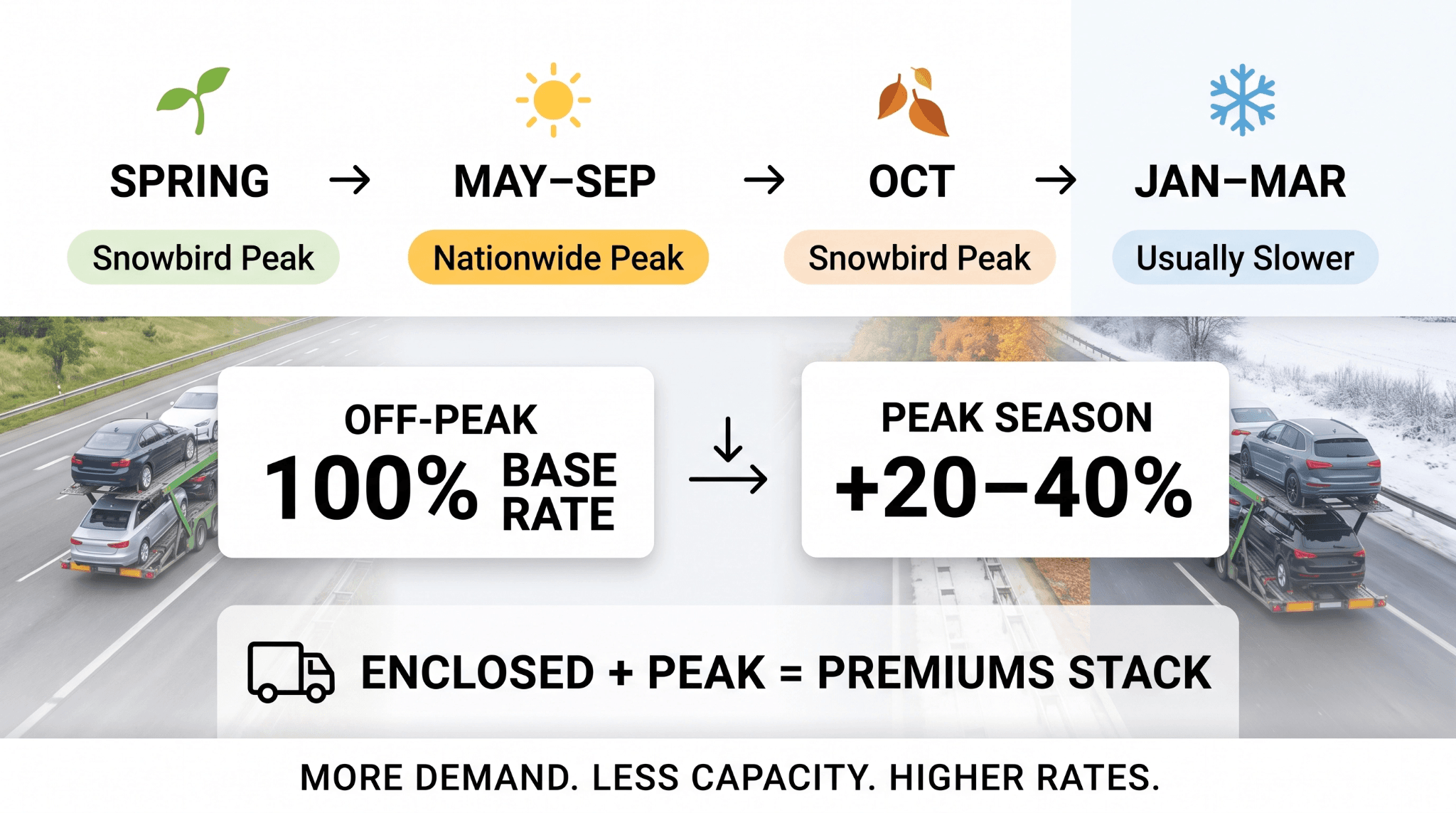
Peak season runs roughly May through September, driven by summer relocations and school-year moves, with a second surge in October and again in spring tied to snowbird migration between the Midwest or Northeast and Florida or Arizona.
A few patterns define this window:
Summer demand is nationwide, driven by families relocating before the new school year.
Snowbird season is corridor-specific, concentrated on routes running north-south along the East Coast and into the Southwest.
January through March is typically the slowest period, outside the snowbird corridors.
This section focuses on the summer and snowbird windows specifically, since they account for the vast majority of premium pricing across the industry. The same underlying patterns are expected to hold in future years as they have in the past, since demand cycles are structural, not tied to a specific calendar year.
How Much More Does Peak Season Cost?
Peak season typically adds 20 to 40 percent to the base transport rate on the same route, driven by demand outpacing available carrier capacity rather than any arbitrary markup.
The shipping a car during peak season cost breaks down differently depending on which peak window applies:
Summer relocation demand tends to push prices up steadily across most nationwide routes.
Snowbird corridors see a sharper, more concentrated spike in October and again in spring.
Anyone researching shipping a car during peak season cost 2026 figures should expect this same 20-40 percent range to hold, since it reflects capacity constraints that repeat every year regardless of fuel prices or other year-specific factors.
The shipping a car during peak season price you're quoted also depends on vehicle type and transport method layered on top of the seasonal premium. Shipping a car during peak season rates for enclosed transport, for example, stack the enclosed premium on top of the seasonal one, which is why luxury and classic vehicle owners often see the steepest total increase.
So how much shipping a car during peak season actually costs you in dollar terms depends on your specific route, vehicle, and how far ahead you book, more than any single factor alone.
How Far Ahead Should You Book in Summer?
Book 4 to 6 weeks ahead of your target pickup date during summer, compared to the standard 2 to 3 weeks recommended in off-peak months. This extra lead time matters because carrier schedules fill up faster when demand is high.
A few reasons this window matters so much in summer specifically:
Carriers plan routes days or weeks ahead, and popular summer corridors book out faster than any other time of year.
Waiting until the final two weeks before pickup significantly narrows which carriers can still accommodate your load.
Early booking also gives you more room to negotiate on price, since carriers have more flexibility to work with your timeline.
If you're searching for a shipping a car during peak season near me option, assuming local pricing differs from national trends, know that peak-season premiums apply consistently across the country, since they're driven by nationwide demand rather than regional pricing quirks.
Real differences do exist among shipping a car during peak season companies in how transparently they price the seasonal premium.
A well-run shipping a car during peak season company will explain that markup clearly at quote time rather than folding it in without comment.
Does a Flexible Pickup Window Save Money?
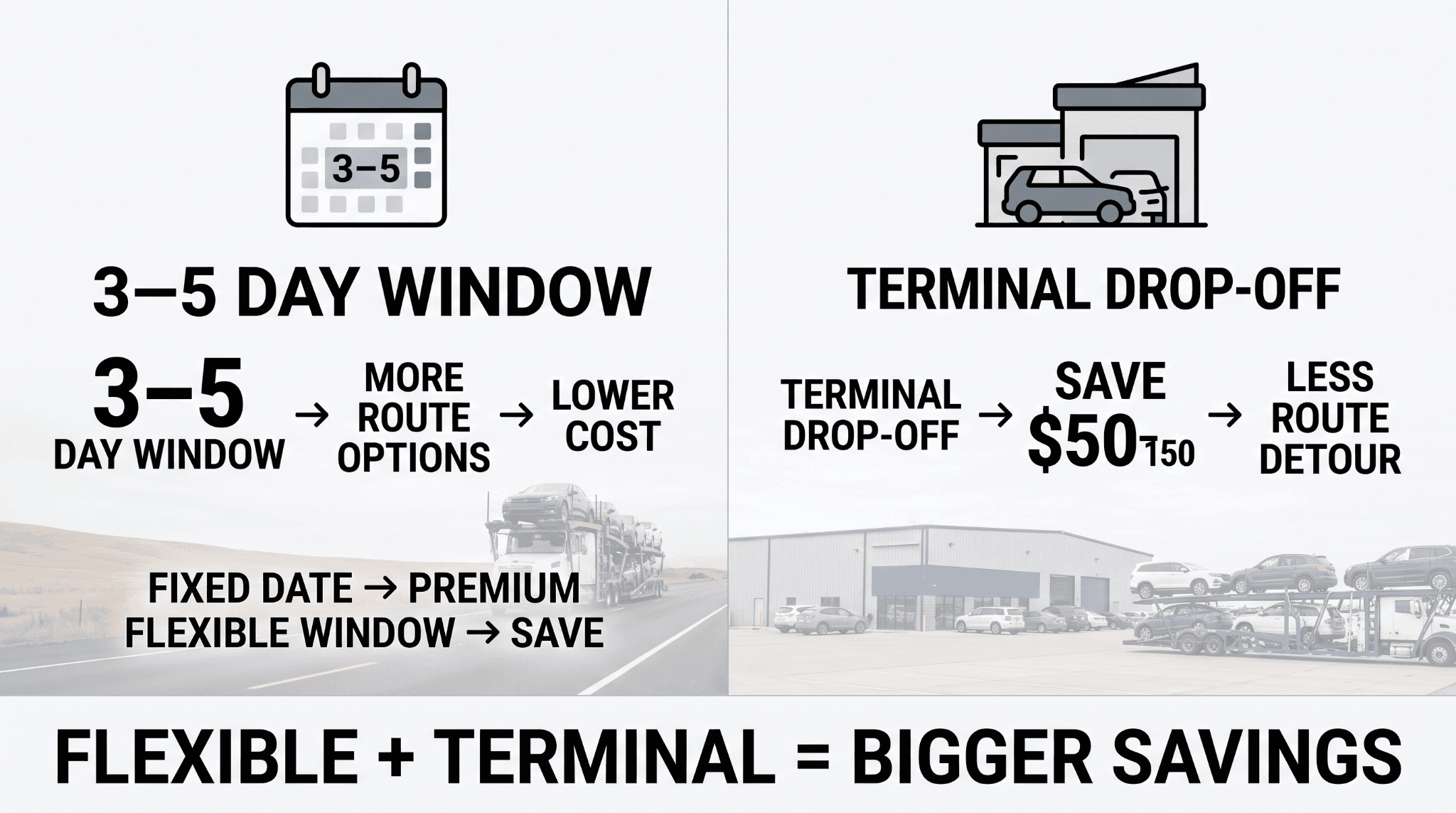
Yes, a flexible 3- to 5-day pickup window typically saves meaningfully compared to insisting on one fixed date, since it gives your carrier more routing options during the busiest months. A rigid single-day request during peak season often comes with its own premium.
Here's why flexibility helps so much:
A wider window lets your carrier slot your vehicle into a route they're already running, rather than making a special trip just for you.
Guaranteed exact-date service is typically offered as a paid add-on, since it requires carriers to prioritize your load over others.
Even a modest 3-day window opens up significantly more carrier options than a single fixed date.
A trustworthy shipping a car during peak season service will explain this tradeoff clearly rather than pushing you toward an unnecessary guaranteed-date upgrade. Tips for shipping a car across the country during any busy month all circle back to this same principle: flexibility is the cheapest lever you have, and it costs you nothing but a few days of patience.
Is Terminal Drop-Off Cheaper in Peak Season?
Yes, terminal drop-off is typically cheaper than direct home delivery during peak season, often saving $50 to $150, since it removes the need for a carrier to detour off a busy route to reach a residential address.
A few things worth knowing about this option:
You drop off and pick up your vehicle at a staffed terminal rather than your driveway.
This works best when you're near a major metro area with an established terminal location.
Combining terminal drop-off with a flexible pickup window stacks two savings tactics at once.
Comparing both direct delivery and terminal drop-off pricing side by side is worth doing before you commit.
Comparing shipping a car during peak season quotes this way, rather than assuming one option is always better, is the simplest way to see which tactic saves more on your specific route.
An online shipping a car during peak season calculator can give a rough sense of the difference, though a live quote will always reflect current terminal availability more accurately.
What Shippers Ask Most About Peak Season Timing
Peak season raises a specific set of questions every year. Here are direct answers to the ones we hear most.
When is the busiest time for car shipping?
May through September for general relocation demand, with an additional spike in October and again in spring for snowbird routes between the Midwest or Northeast and Florida or Arizona.
How much extra does summer shipping cost?
Typically 20 to 40 percent above off-peak rates on the same route. The exact premium depends on how popular your specific corridor is during the summer months.
How do I avoid peak season prices?
Book 4 to 6 weeks ahead, keep a flexible 3 to 5 day pickup window, choose open transport over enclosed, and consider terminal drop-off if you're near a major metro area.
Is October expensive for shipping to Florida?
Yes, October is one of the most expensive months on Midwest-to-Florida and Northeast-to-Florida routes specifically, driven by the start of snowbird season heading south.
Does flexibility really lower the price?
Yes. A flexible pickup window gives carriers more routing options, which often results in a lower rate than insisting on one fixed date during a busy month.
Ship Smart This Peak Season
Shipping a car during peak season comes down to combining a few proven tactics rather than relying on just one: book early, stay flexible, choose the right transport type, and consider terminal drop-off where it makes sense for your route.
Most of the frustration shippers run into during busy months comes down to skipping one of these tactics, not bad luck. A rushed booking with a fixed pickup date and no flexibility is the single most expensive combination during peak season, while stacking two or three tactics together often makes a meaningful difference in your final price.
A cheap shipping a car during peak season quote that skips these tactics is rarely the outcome you actually want once the seasonal premium is fully factored in. The best approach combines several of these tactics at once, rather than relying on any single one alone.
Reading shipping a car during peak season reviews from other customers who shipped during a similarly busy month can also confirm whether a broker's advice actually matches how they operate in practice. Get your free, price-locked quote today and lock in your rate before peak-season demand pushes prices higher.