Shipping a car from a dealership or auction needs three things ready before a truck can be assigned: cleared payment, a gate pass or release authorisation, and a named contact at the lot. Auction sites usually allow only 3 to 5 free storage days, after which daily fees begin, so book transport the day you win.
Whether you purchased from a traditional dealer, a salvage auction such as Copart or IAAI, or an online seller, the required paperwork looks largely similar across all three. The sections that follow outline exactly what your carrier needs and when they need it. Get your free, price-locked quote today and arrange pickup before storage fees have a chance to start.
What Do You Need Before a Carrier Can Collect?
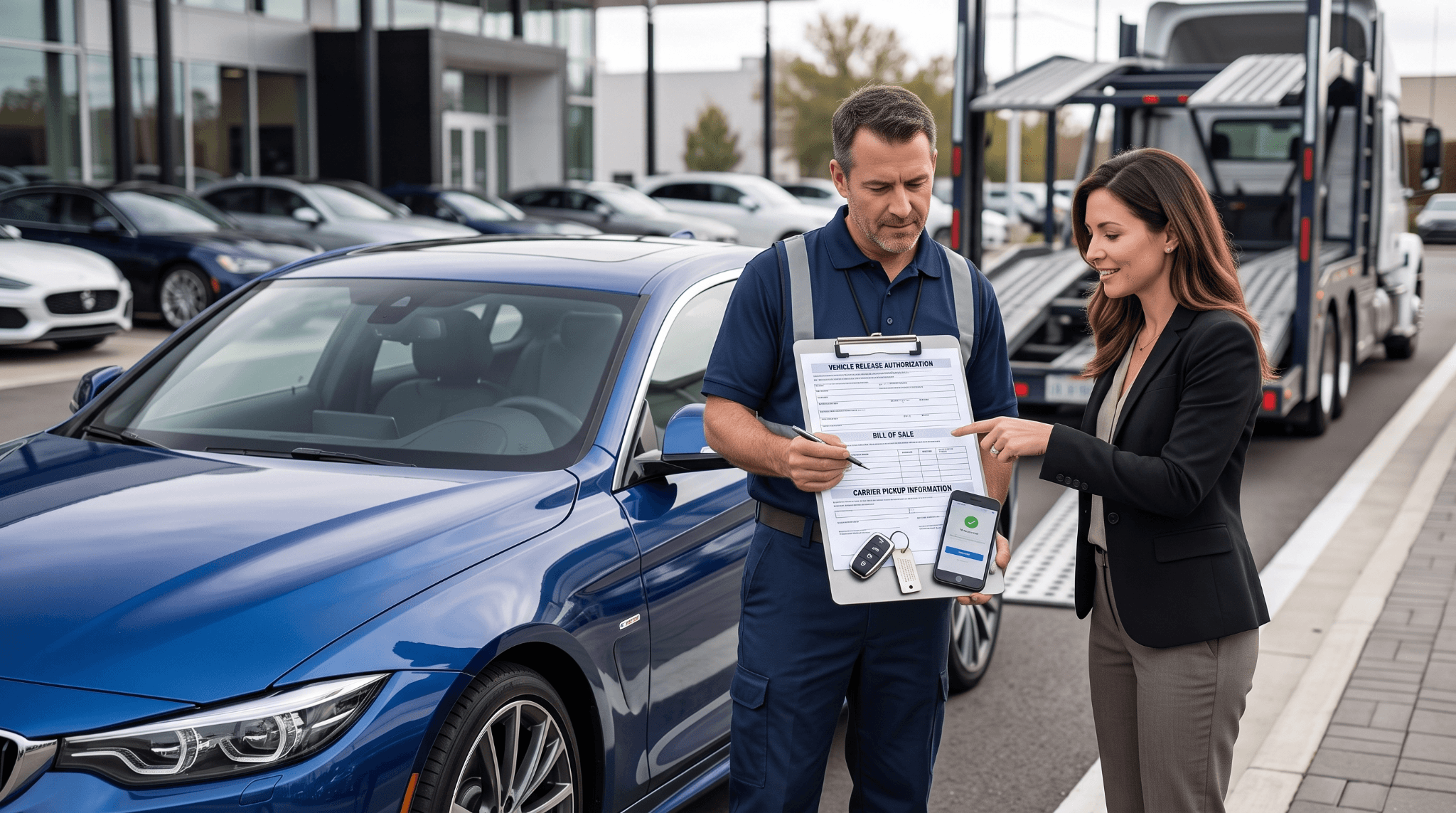
A carrier needs three things before they can collect your vehicle: proof of ownership or release authorization, the exact pickup address and hours, and confirmation that payment has cleared. Missing any one of these causes a delayed pickup, since drivers cannot legally remove a vehicle without proper documentation.
What each seller type typically requires:
Dealership: a signed bill of sale or purchase agreement, handed to your transport company as proof of ownership.
Auction (Copart or IAAI): a signed release form or gate pass, plus your buyer ID number and the lot number.
Private seller: a bill of sale and the seller's confirmed availability for the pickup window.
Whether you simply want to ship a car from dealership lots or arrange more complex auction pickup, gathering this paperwork before you contact a carrier saves real time. Shipping a car from a dealership typically costs less than an auction pickup, largely because the paperwork above is simpler and the vehicle is usually running and ready to load. For example, arranging to ship a car from Florida to NY after a dealership purchase generally prices out lower per mile than the same route from a salvage auction, where winch fees and gate charges add up separately. If you're unsure what counts as sufficient documentation for your specific situation, our guide on how auto shipping works covers the standard requirements in more detail.
How Many Free Storage Days Do Auctions Allow?
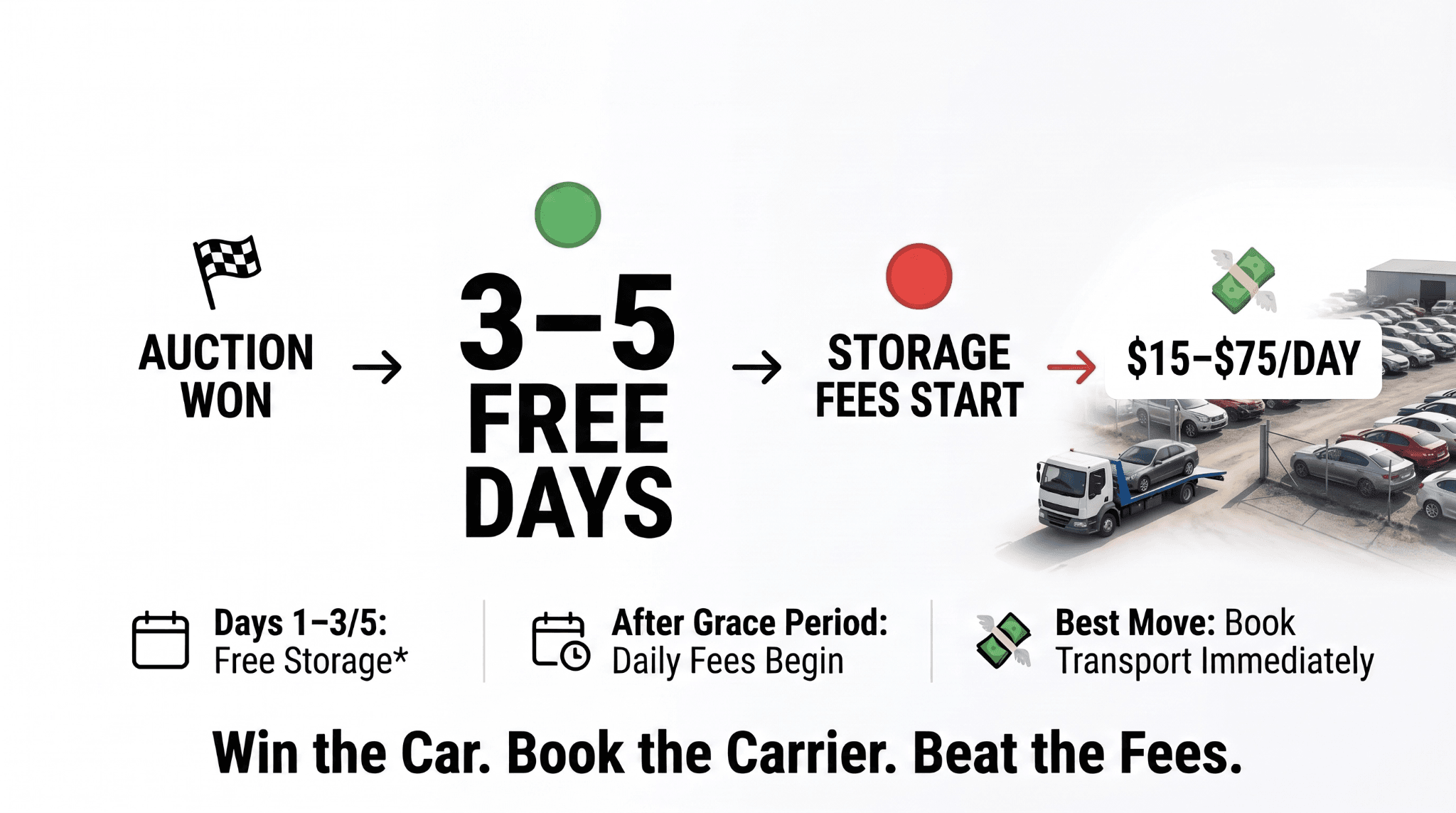
Most auction platforms allow 3 to 5 free storage days after you win, after which daily storage fees begin accruing automatically. Copart and IAAI both operate this way, and the exact grace period can vary slightly by location and lot.
This window exists to give buyers reasonable time to arrange transport, not to serve as extended free parking. Auctions process a high volume of vehicles daily, so lots have limited space and expect winners to move quickly.
These fees add up quickly once the grace period ends:
Days 1 through 3-5: no storage charge, depending on the specific lot's policy.
After the grace period: daily fees typically begin, often $15-$75 per day.
Extended delays: some lots increase the daily rate the longer a vehicle remains uncollected.
Booking your carrier the same day you win the auction is the simplest way to avoid these charges entirely. A carrier scheduling a pickup within the free window rarely runs into any storage fee at all, since most transport companies can dispatch a driver within a day or two of confirmation.
Who Releases the Vehicle at the Lot?
The seller controls the release, and their staff verifies your paperwork before your carrier is allowed to load the vehicle. This holds true whether you are working with a dealership, an auction, or a private individual.
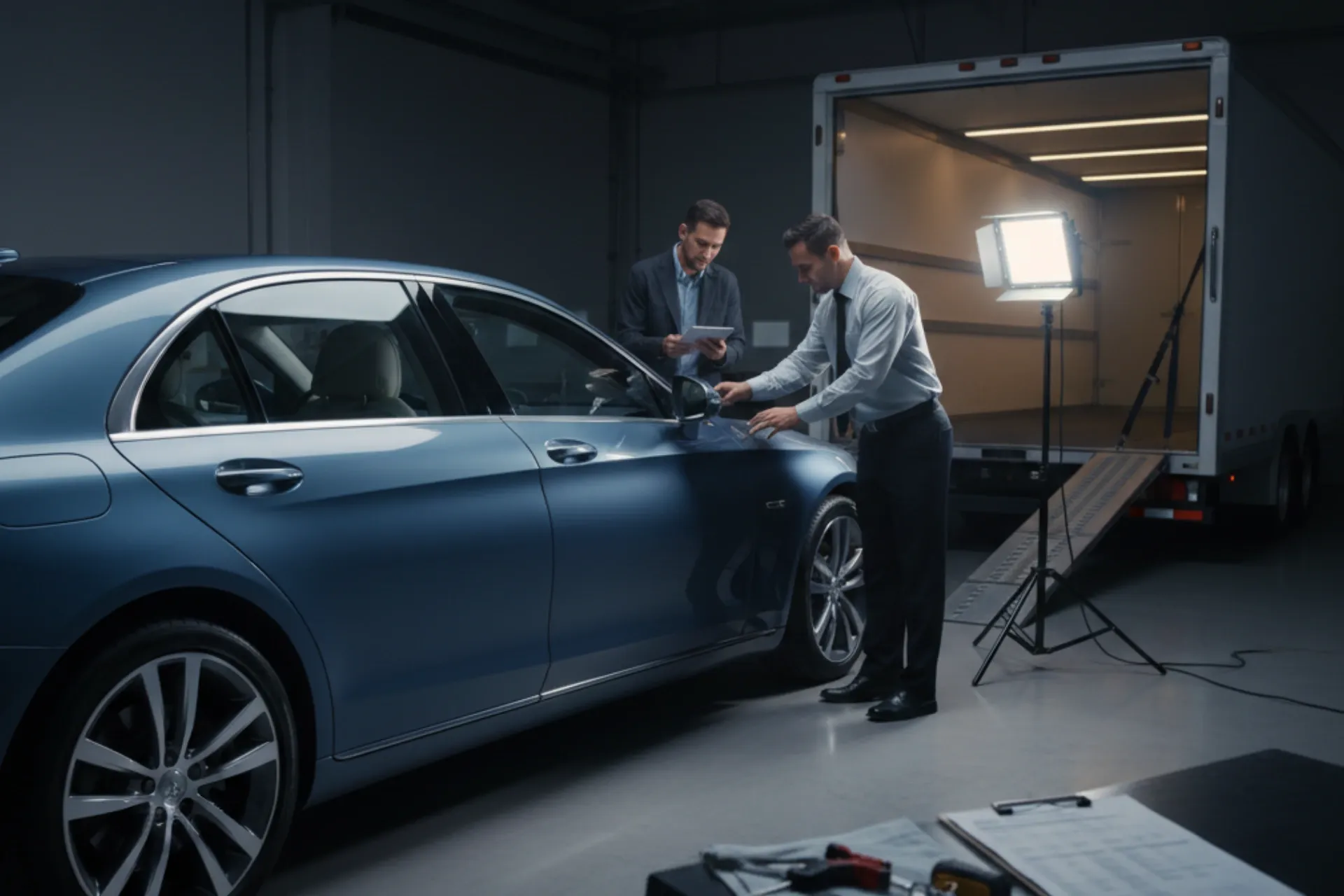
At a dealership, a staff member confirms the bill of sale and checks your carrier's insurance certificate before releasing the car. Larger dealerships often have a specific employee assigned to transport releases, so asking for that contact by name at booking can speed things up considerably.
At an auction, a yard employee checks your gate pass or release form against your buyer ID before allowing the carrier onto the lot. This process tends to be stricter than a dealership release, since auction yards handle a much higher volume of vehicles and cannot verify ownership informally.
With a private seller, there is no formal staff process, so clear communication between the seller and your carrier substitutes for it. Confirming a specific pickup time and having the seller available by phone reduces the risk of a missed appointment.
Naming a specific point of contact at booking, rather than leaving your carrier to figure out who is in charge on arrival, prevents most release delays across all three seller types.
What Happens If Payment Has Not Cleared?
If payment has not cleared, the seller will not release the vehicle, and your carrier's trip becomes a wasted one. Auctions in particular enforce this strictly, since a released vehicle without cleared funds creates a liability the auction house will not accept.
Payment clearance times vary by method. Wire transfers often clear within a day, while other payment types can take longer, so it's worth confirming with the auction or dealership exactly when your specific payment method is expected to finalize.
This is one of the most common causes of a dry run fee. If your carrier arrives and the vehicle cannot be released for any reason, including unpaid balances, the auction charges a dry run fee, and that cost is typically passed on to you rather than absorbed by the carrier or the broker.
Confirming your payment has fully cleared, not just been submitted, before you schedule pickup is the simplest way to avoid this entirely. A quick call or account check on the morning of pickup is a small step that prevents a costly, avoidable mistake.
How Soon Should You Book After Buying?
You should book transport the same day you win an auction or finalize a dealership purchase, since storage fees and dry run risk both increase with delay. Waiting even a day or two can meaningfully change your total cost.
Timing is really the one variable you have full control over in this process. Distance, vehicle condition, and seller type are all fixed once you've bought the car, but how quickly you act afterward is entirely up to you.
A useful gut check: if you already have your paperwork gathered, as covered earlier, there's rarely a good reason to wait. Delay only adds risk without adding any real benefit, whether that risk shows up as a storage fee, a dry run charge, or simply a longer wait before your vehicle is on the road.
What Buyers Also Ask About
A few related questions come up often enough that they're worth addressing here directly.
Packing personal items: many buyers ask whether you ship your car with things in it after a dealership purchase. Our guide on shipping a car with items inside covers the weight limits and placement rules that apply.
Belongings left by a previous owner: if you ship a car with belongings you didn't pack yourself, such as forgotten items from a trade-in, the same rules apply as if you had packed them. It's worth clearing the car out before pickup rather than assuming ship car and belongings works differently in that case.
Car seats: a common question is how to ship car seats left in a vehicle; the safest approach is removing them entirely rather than leaving them installed for transport.
Non-running vehicles: if you're wondering, can I ship an inoperable car purchased at auction, the answer is yes, though it requires a winch and typically adds $150-$300 to the total.
Electric vehicles: buyers researching how to ship an electric car from a dealership should check our EV shipping cost guide for charge-level requirements specific to battery vehicles.
Packing question, reframed: if you ship a car, can you pack it the same way regardless of where you bought it? Largely yes, the weight and placement rules stay consistent whether the vehicle came from a dealership, an auction, or a private seller.
Common Queries About Dealership and Auction Shipping
Buyers finalizing a purchase tend to ask the same handful of practical questions. Here are direct answers to the ones we hear most.
How do I ship a car I bought at auction?
Obtain your release form or gate pass along with your buyer ID, then hire a carrier experienced with Copart or IAAI pickups. Book the same day you win to stay within the free storage window.
What is a gate pass and who provides it?
A gate pass is the release document auction platforms issue once your payment clears, authorizing a specific carrier to remove the vehicle. The auction platform, such as Copart or IAAI, issues it directly to the buyer.
How long can a car sit at an auction lot?
Most lots allow 3 to 5 free days before daily storage fees begin. Exact grace periods vary by location, so confirm the specific policy for your lot.
Can a car be collected before payment clears?
No. Sellers will not release a vehicle until payment has fully cleared, and attempting an early pickup typically results in a wasted trip and a dry run fee.
Do dealerships handle shipping themselves?
Some offer shipping as an add-on, but most buyers arrange transport independently through a broker for more control over price. Comparing shipping a car from a dealership price and shipping a car from a dealership rates across providers, including shipping a car from a dealership cost 2026 figures, is easier this way.
Book Transport the Day You Buy
Shipping a car from a dealership or auction comes down to having the right paperwork ready and booking quickly, before storage fees or dry run charges have a chance to apply. A little preparation on your end saves real money once the carrier is dispatched.
Most delays and unexpected fees trace back to the same handful of preventable issues: paperwork gathered too late, payment confirmed but not yet cleared, or a pickup scheduled without a clear point of contact at the lot. Addressing these three details before you ever contact a carrier removes nearly all of the risk from the process.
If you're searching for shipping a car from a dealership near me hoping to find a locally based option, know that most brokers operate nationally and coordinate carriers wherever your vehicle happens to be, so location rarely limits your choices. A reputable shipping a car from a dealership company will ask about your specific pickup timeline upfront, since that affects both price and how quickly they need to dispatch a driver. So how much shipping a car from a dealership actually ends up costing you often comes down to booking speed more than which company you choose. Get your free, price-locked quote today and book your pickup before the clock starts on storage fees.