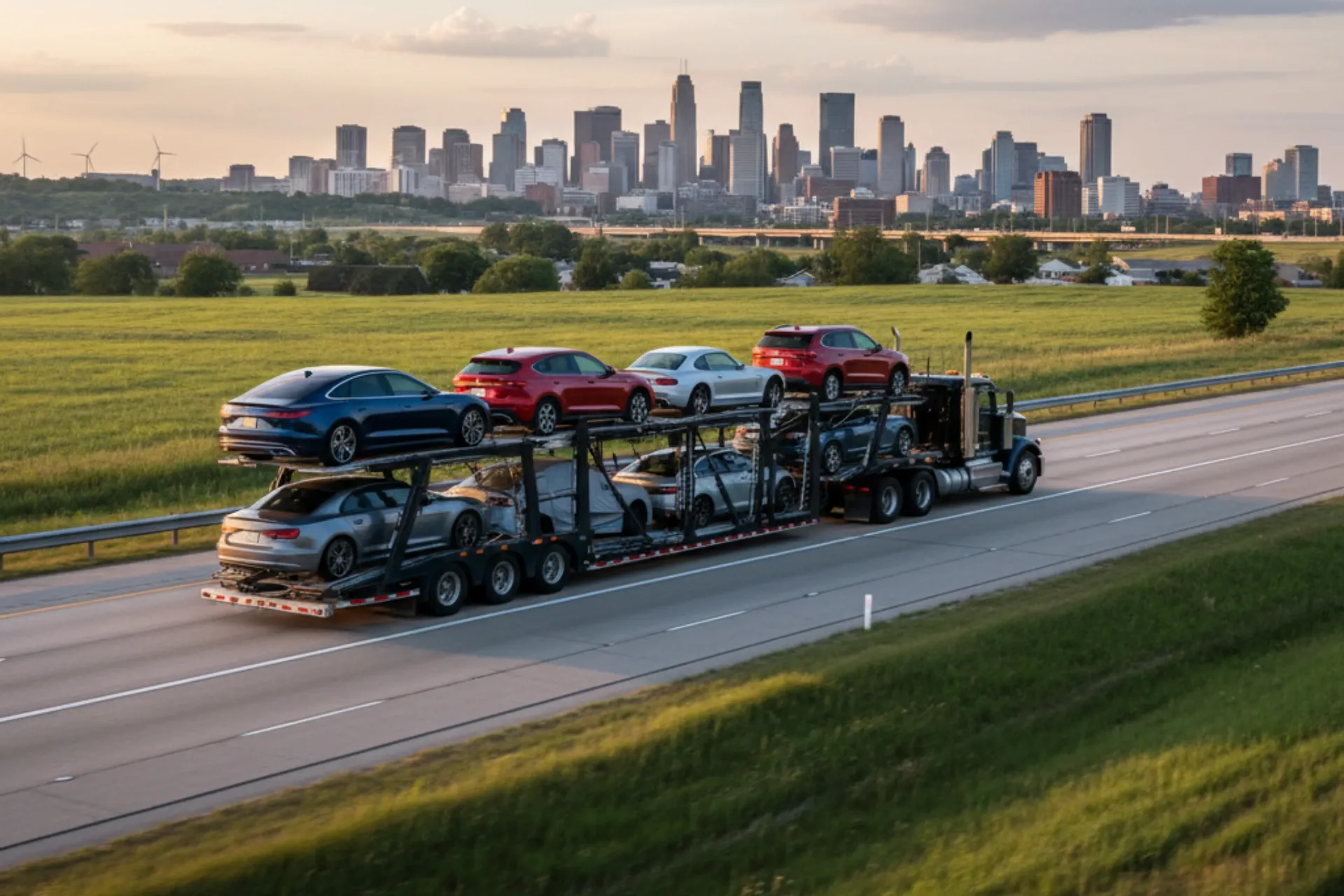
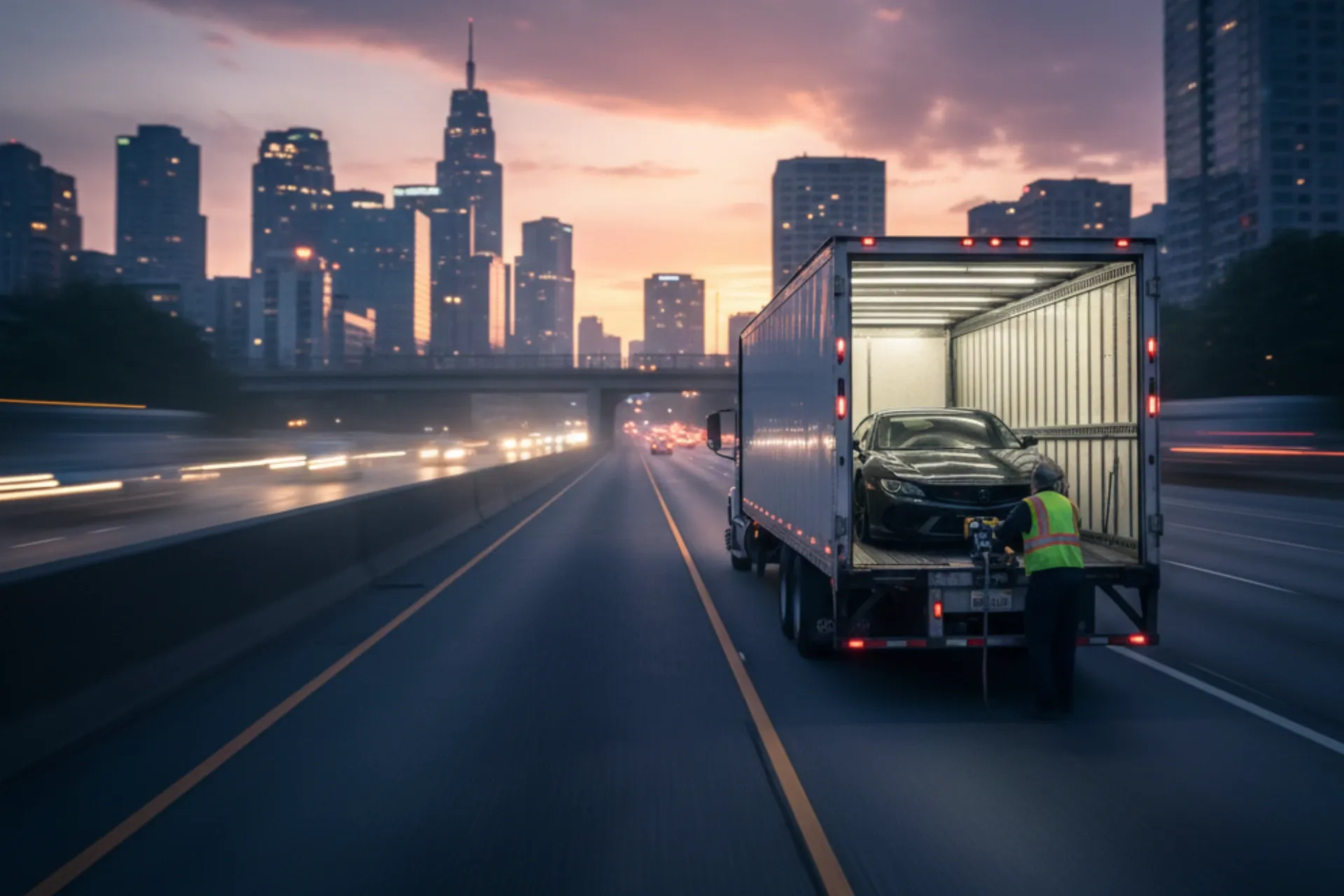
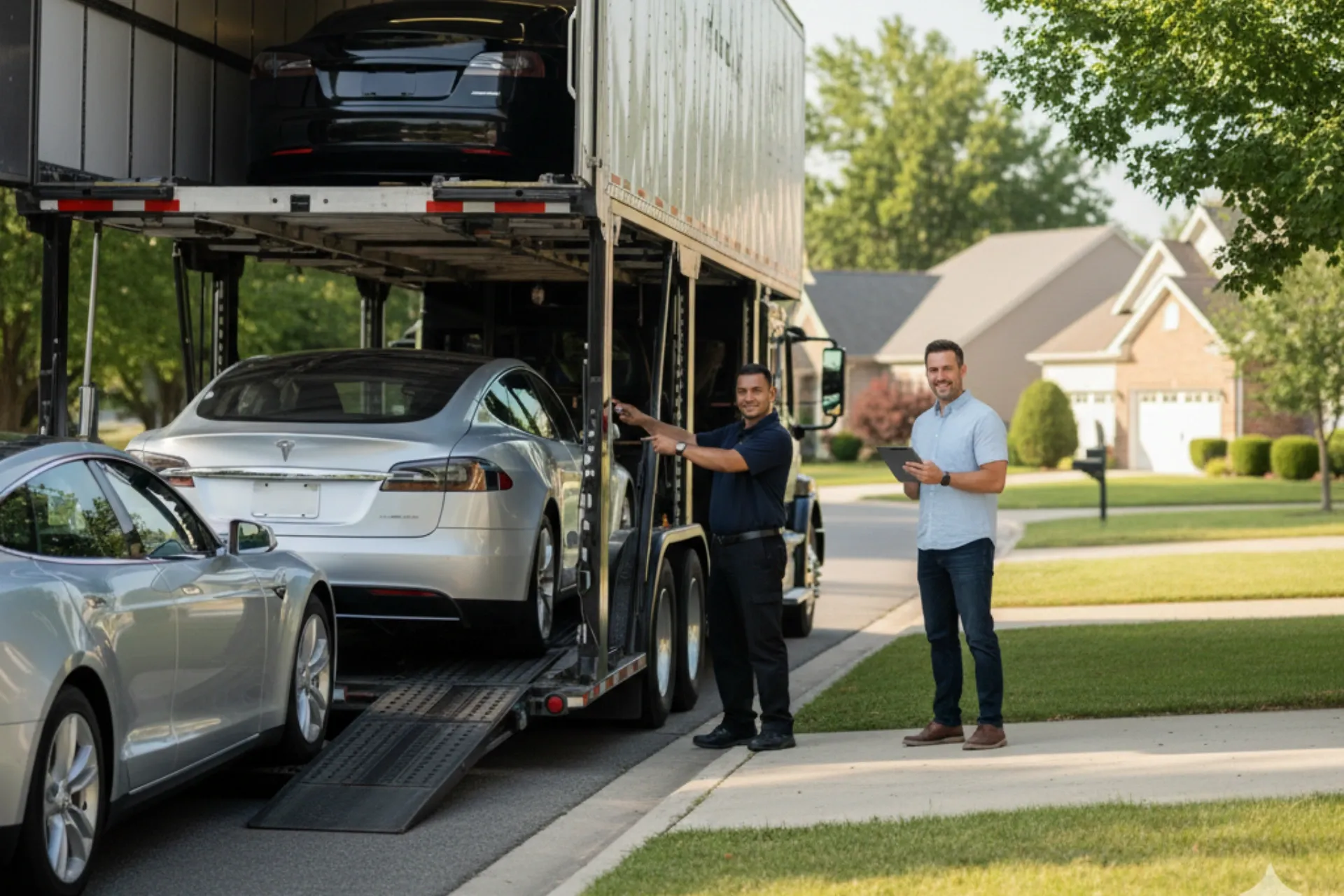
Enclosed auto transport costs $1.00 to $2.50 per mile, with the total for a high-value vehicle typically landing between $1,500 and $4,000. The exact rate depends on distance, since short trips are priced higher per mile than cross-country routes. Vehicle value also plays a role in the final number.
The following sections break down enclosed auto transport by the numbers: what drives the price, when it's worth the investment, and what extra fees to expect for luxury, exotic, or classic vehicles. Get your free, price-locked quote today and see exactly what enclosed transport costs for your specific vehicle.
Key Takeaways
Enclosed auto transport costs $1.00 to $2.50 per mile, with a typical 1,000-mile shipment totaling $1,300 to $1,900 for a standard luxury vehicle.
Enclosed transport is worth it for vehicles valued above roughly $75,000, or for classic and exotic cars where cosmetic condition and original parts matter more than the added cost.
Enclosed transport typically costs $400 to $800 more than open transport for the same cross-country route, reflecting the smaller number of vehicles an enclosed trailer can carry per trip.
Extra fees can apply on top of the base rate, including $150 to $300 for a non-running vehicle, a liftgate fee for low-clearance cars, and sometimes a single-car-load premium.
Luxury and exotic cars typically need hydraulic liftgates and soft-tie wheel-net securing systems, since standard ramps and chain tie-downs can damage low-clearance bodies and delicate suspension components.
How Much Does Enclosed Auto Transport Cost?
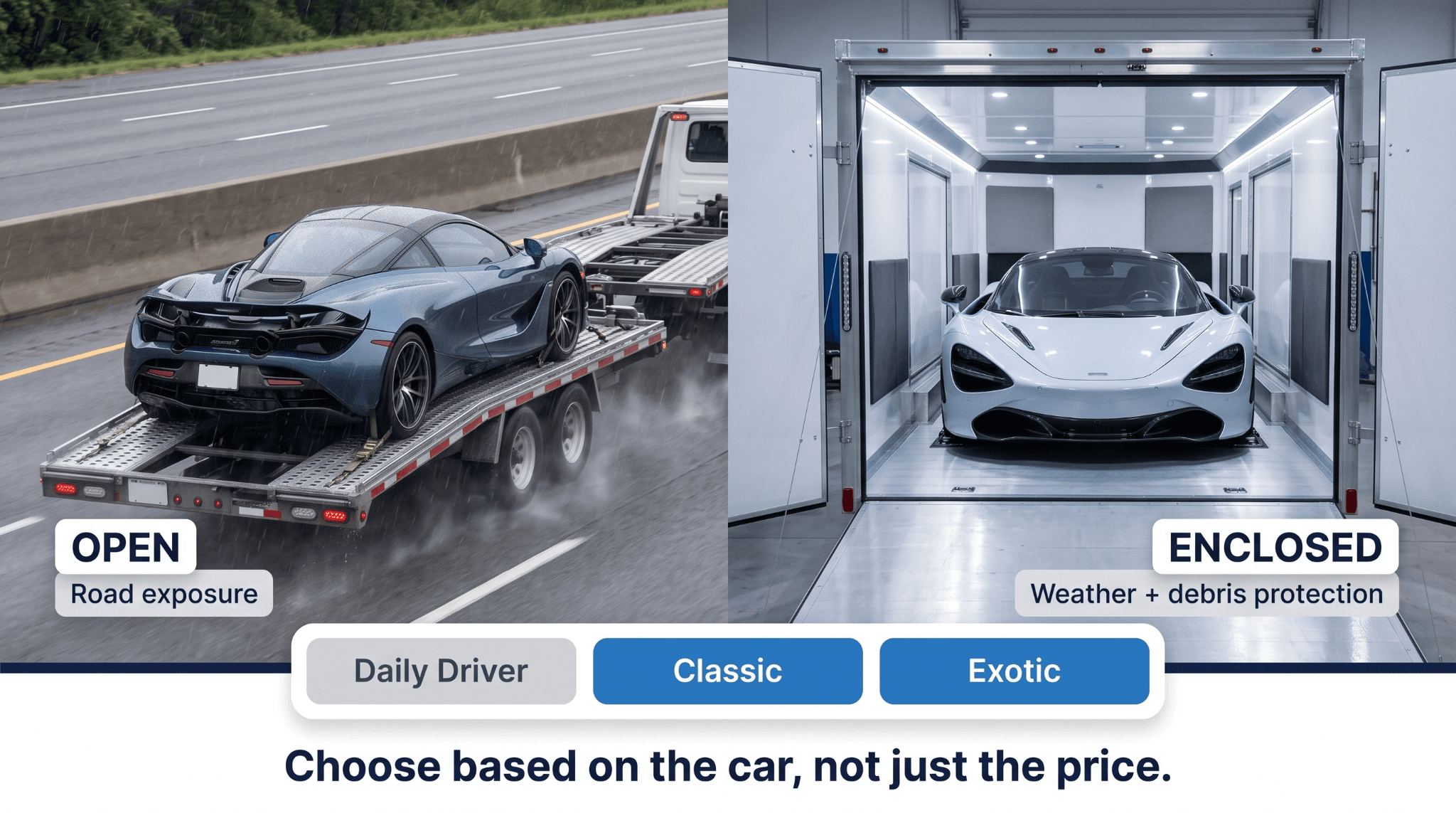
Enclosed auto transport costs run $1.00 to $2.50 per mile, with short regional trips landing at the higher end and cross-country moves settling closer to $0.75 to $1.00 per mile. A typical 1,000-mile shipment totals $1,300 to $1,900 for a standard luxury vehicle.
How much enclosed auto transport costs applies to your specific move depends mainly on where your route falls within this per-mile range.
A few things that shape the final number:
Distance sets the baseline, the same way it does for open transport.
Vehicle value adds a premium, since higher-value cars require higher insurance coverage.
Route popularity affects availability, since fewer carriers specialize in enclosed hauling.
The enclosed auto transport cost price you're quoted should reflect all three factors combined, not distance alone.
Enclosed auto transport cost rates published by different brokers tend to sit within this same general range for comparable vehicles and routes.
Is Enclosed Auto Transport Worth It?
Enclosed auto transport is worth it for any vehicle valued above roughly $75,000, or for classic and exotic cars where cosmetic condition and original parts matter more than the added cost. Below that threshold, open transport is usually the more practical choice.
This threshold is a guideline, not a strict rule. A well-preserved classic worth less than $75,000 can still justify enclosed transport if the parts are rare or hard to replace.
Benefits of enclosed auto transport include:
Full protection from rain, road debris, and sun exposure during the entire trip.
Higher-limit cargo insurance, matched to the vehicle's actual value.
Gentler loading equipment, like hydraulic liftgates, for low-clearance vehicles.
Enclosed vehicle transport makes the most sense when a single stone chip or a layer of road grime would meaningfully bother you. For a daily driver, that threshold rarely applies, but for a restored classic or a low-mileage collector car, it usually does.
How Does Open vs Enclosed Auto Transport Compare?
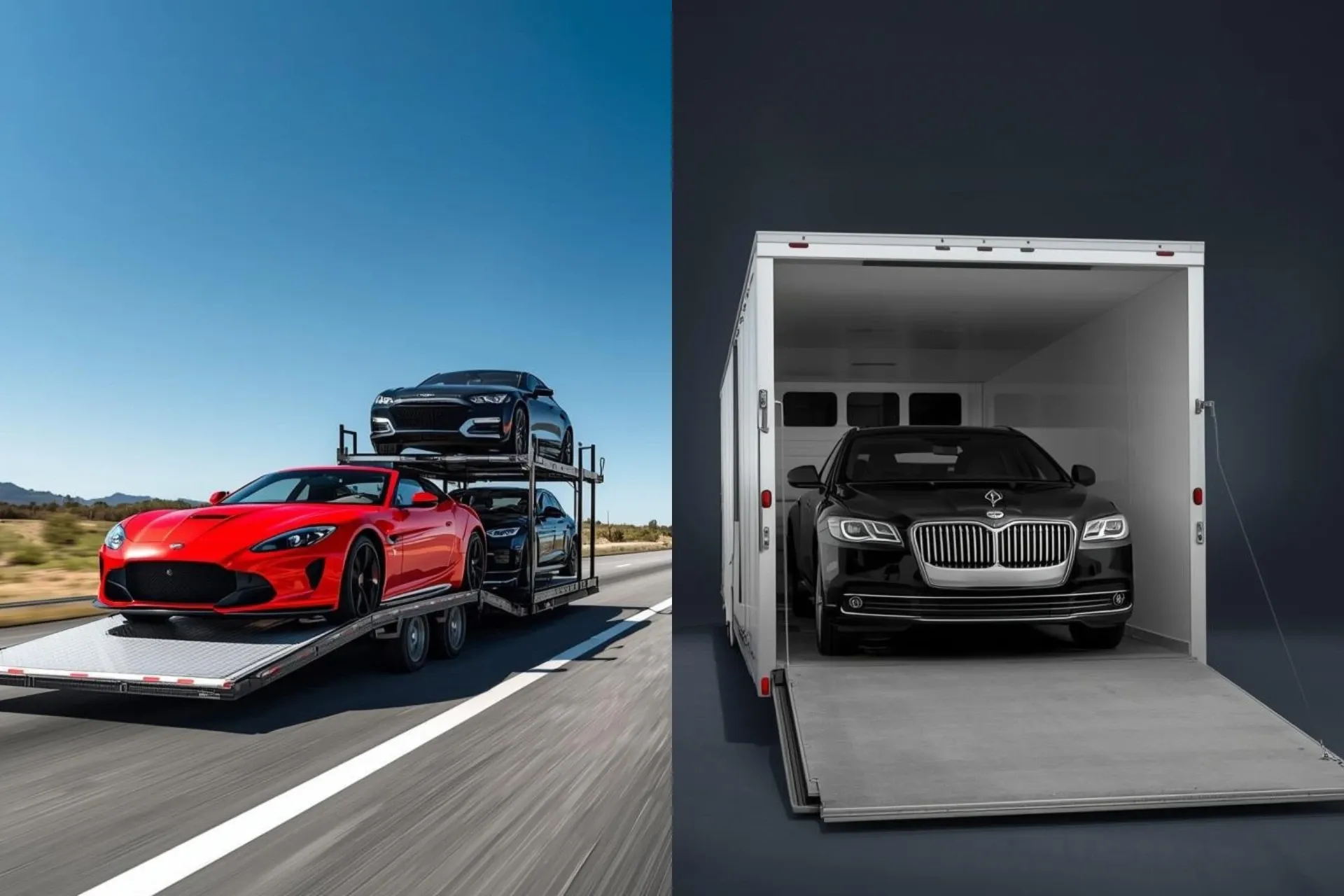
Open vs enclosed auto transport differs mainly in protection and price. Open transport exposes the vehicle to weather and debris but costs less, while enclosed transport shields the car completely and typically costs $400 to $800 more for the same cross-country route.
This price gap holds fairly steady across most routes, since it reflects the smaller number of vehicles an enclosed trailer can carry per trip, not anything specific to one corridor.
Feature | Open Transport | Enclosed Transport |
Average cost (1,000 miles) | $800-$1,200 | $1,300-$1,900 |
Protection | None from weather or debris | Full enclosure |
Recommended for | Daily drivers, standard vehicles | Classic, luxury, exotic vehicles |
Enclosed vs open auto transport also differs in loading method. Open trailers use standard ramps, while enclosed carriers often use hydraulic liftgates for a gentler, level loading process suited to low-clearance vehicles.
Enclosed transport insurance typically carries a higher coverage limit than standard open-carrier policies, since it's built around protecting higher-value cargo specifically.
What Extra Fees Apply to Enclosed Auto Transport?
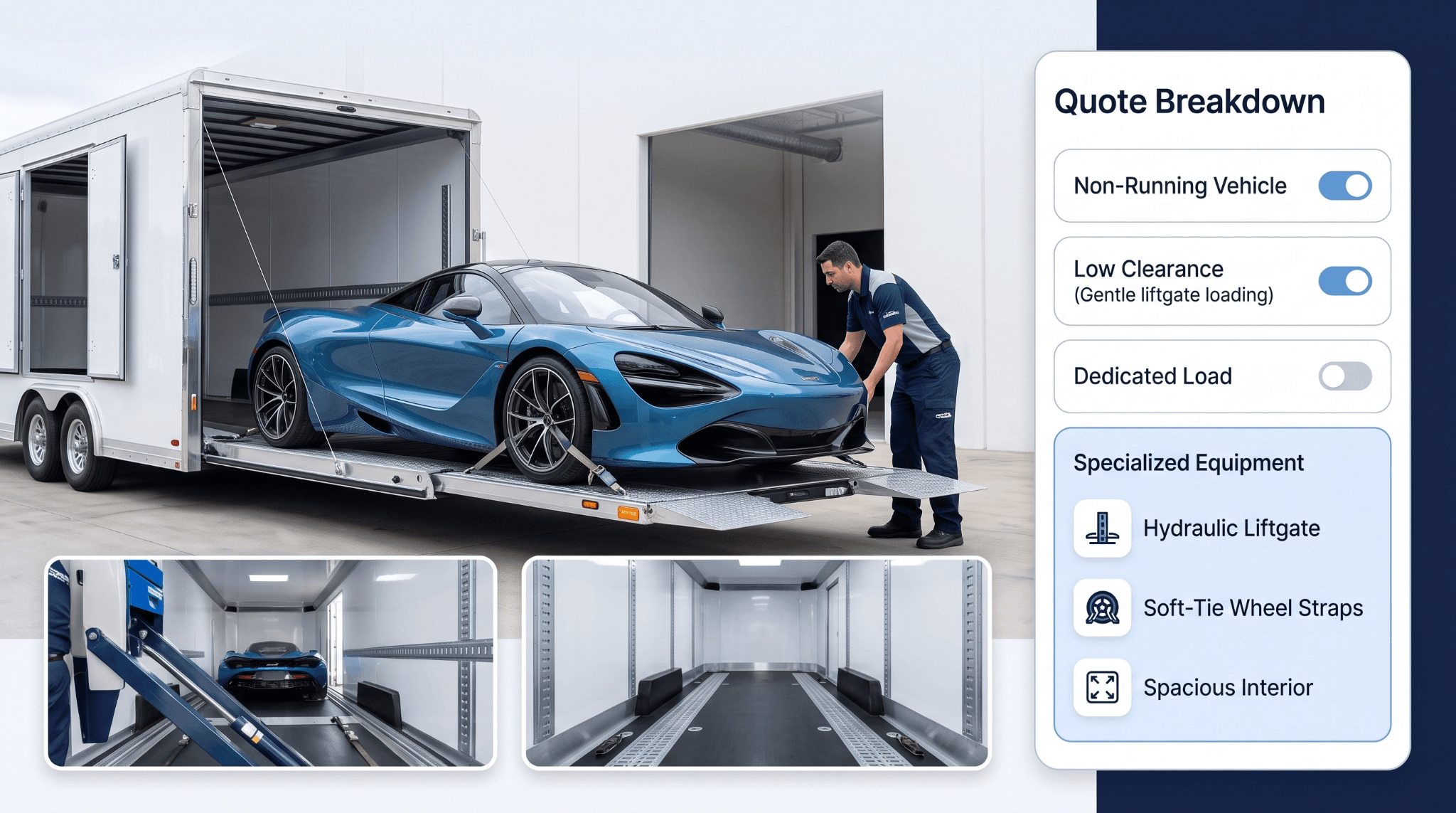
Extra fees for enclosed auto transport include a non-running vehicle surcharge, a liftgate fee for low-clearance cars, and sometimes a single-car-load premium for the highest-value vehicles. None of these apply to every shipment.
Knowing which of these fees might apply to your specific vehicle before you request a quote helps you avoid a surprise number once a carrier is actually assigned.
A closer look at each:
A non-running vehicle adds $150 to $300, since it requires a winch instead of driving on and off the trailer.
A liftgate surcharge applies when a vehicle's low ground clearance requires gentler loading equipment than a standard ramp.
A single-car-load arrangement, used for the highest-value or most fragile vehicles, costs more since no other vehicles share the trailer.
Real differences exist among enclosed auto transport cost companies in how clearly they itemize these fees upfront.
A transparent enclosed auto transport cost company will explain each one before you book, not add it to the invoice afterward.
What Equipment Do Luxury and Exotic Cars Need?
Luxury and exotic cars need hydraulic liftgates, soft-tie wheel-net securing systems, and sometimes a dedicated single-car trailer, since standard ramps and chain tie-downs can damage low-clearance bodies and delicate suspension components.
Why this equipment matters:
Hydraulic liftgates load the vehicle level, avoiding the steep ramp angle that can scrape a front splitter or low bumper.
Soft-tie systems secure the wheels with padded straps instead of chains attached to the frame or suspension.
A dedicated single-car trailer removes any risk of shared-load contact damage from a neighboring vehicle.
Enclosed auto transport USA carriers who specialize in this segment typically charge more, but the specialized handling is exactly what protects a vehicle with irreplaceable original parts. Whether you're shipping within enclosed auto transport PA routes or coast to coast, this equipment standard should stay the same regardless of distance. The same applies to enclosed auto transport Hawaii shipments, which add an ocean leg on top of standard mainland handling.
Before booking, verify the carrier's authority through the FMCSA's SAFER system, which confirms active operating status and required insurance.
What Shippers Want to Know
Enclosed transport raises a specific set of questions for most shippers. Here are direct answers to the ones we hear most.
How much does enclosed auto transport typically cost?
Between $1.00 and $2.50 per mile, with a typical 1,000-mile shipment totaling $1,300 to $1,900. Short trips are priced higher per mile than long-distance routes.
Is enclosed transport required for classic cars?
Not required, but strongly recommended for classic, exotic, or high-value vehicles where cosmetic condition and original parts matter most.
Does a non-running vehicle cost more to ship enclosed?
Yes, typically $150 to $300 more, since it requires a winch and extra loading time regardless of transport type.
Can I get an enclosed auto transport instant quote online?
Most brokers can give a rough estimate instantly, though a live quote from a person will always be more accurate once your vehicle's specific details are confirmed.
How do I request an enclosed auto transport quote?
Provide your exact pickup and delivery locations, vehicle details, and preferred timeline. Compare that quote against at least one other provider before booking.
Protect What's Worth Protecting
Enclosed auto transport cost near me searches often assume local pricing differs significantly by region, but the national rate structure applies fairly consistently, since it's driven by distance and vehicle value rather than geography. Carrier availability, not location, is what actually shapes your specific quote.
Enclosed auto transport is a straightforward decision once you know the real numbers: pay $400 to $800 more for full protection on a vehicle where that protection genuinely matters. For everything else, open transport remains the practical, cost-effective choice.
Most shippers who regret their choice either paid for enclosed protection a daily driver never needed, or skipped it on a vehicle that genuinely deserved the extra care. Matching the transport type to the vehicle's actual value avoids both mistakes. Get your free, price-locked quote today and see exactly what enclosed transport costs for your specific vehicle.