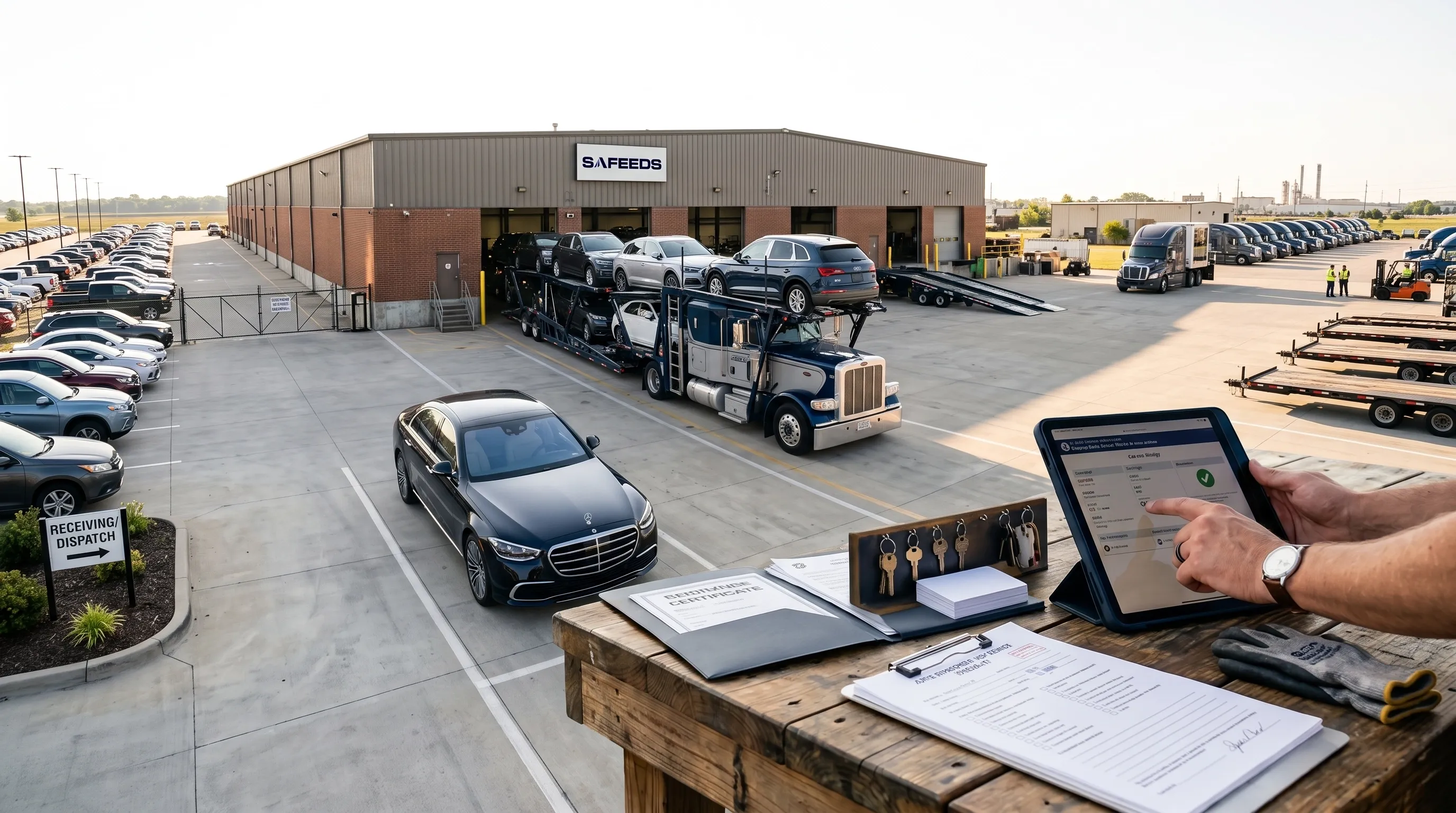
Car shipping insurance is the carrier’s cargo policy, which pays for physical damage the carrier causes while your car is loaded, hauled, and unloaded. It often excludes pre-existing damage, mechanical failure, personal items, and acts of nature. Your own auto policy may add backup coverage, so confirm both before your car ships.
A car can leave pickup spotless and arrive with a dented door, and the first question most owners ask is who pays for it. The answer depends on three things: the carrier’s cargo policy, what that policy leaves out, and the paperwork you sign. This guide breaks down car shipping insurance in plain terms, from who covers your car to how to file a claim that gets paid. Get a free quote from Safeeds Transport and ask about carrier coverage before you book.
Key Takeaways
During transport, the trucking company’s cargo coverage is the primary source of protection, and it applies only while the vehicle remains in that company’s custody.
Common gaps in cargo coverage include scratches or dents present before pickup, routine wear, breakdowns the driver did not cause, belongings left inside, and hail or flood losses under an act of God exclusion.
Shippers can verify protection in advance by requesting a certificate of insurance, calling the listed insurer, and comparing the per-vehicle limit with the car’s market value.
A delivery receipt signed without noting new damage weakens any later claim, so every fresh dent or scratch belongs on the bill of lading before the driver leaves.
For interstate shipments, carriers cannot set a damage claim window shorter than nine months after delivery, yet written notice within 24 to 48 hours keeps the evidence strongest.
Who Insures Your Car in Transit
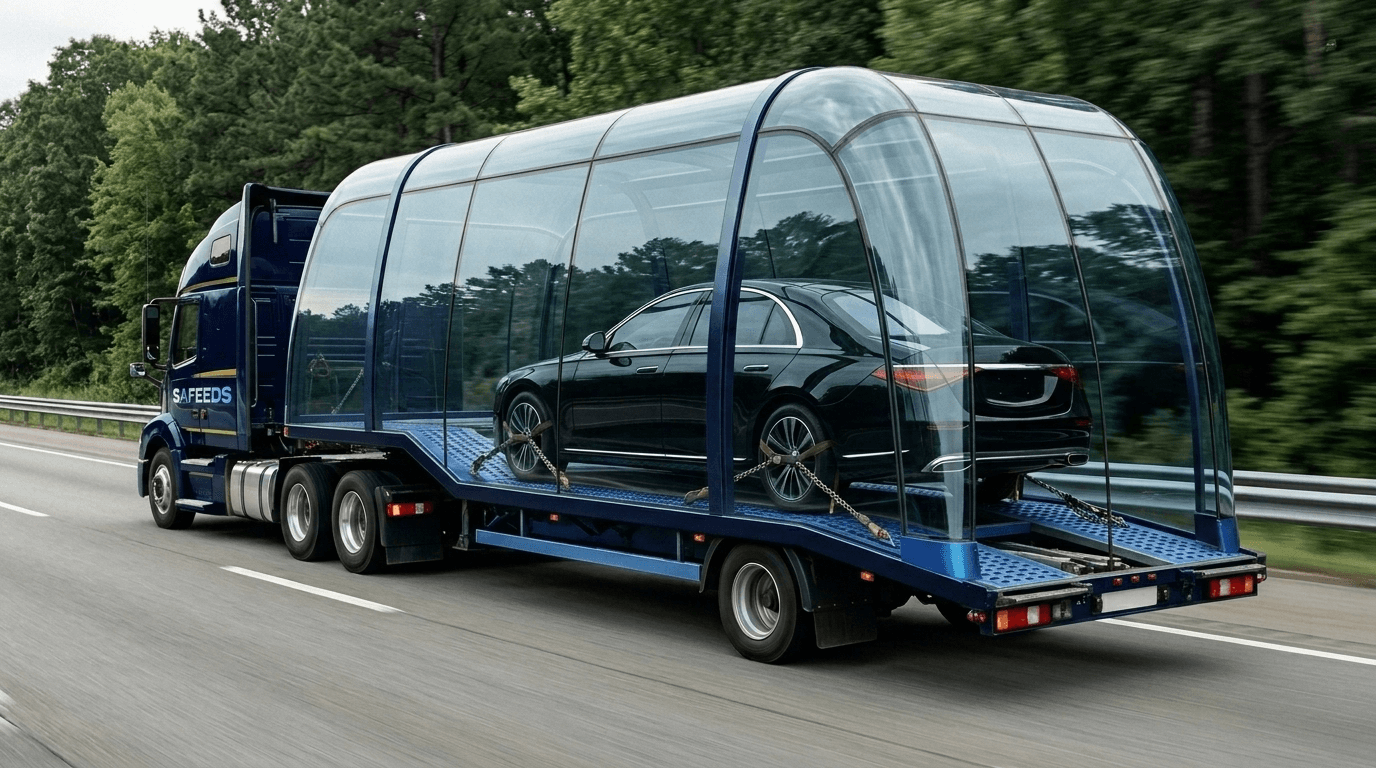
Car shipping insurance comes mainly from the carrier, through its cargo insurance. Brokers and your personal auto policy play supporting roles, but neither replaces the carrier’s coverage.
So if you’re asking, “Is my car insured during shipping?”, the answer is yes. Here’s who covers what.
The Carrier’s Cargo Policy
The carrier’s cargo policy is your primary protection. It covers physical damage from the moment the driver signs for your car at pickup until you sign for it at delivery.
Carriers also hold liability coverage, which protects other people and their property if the truck causes an accident. Under FMCSA’s insurance filing requirements, every motor carrier must keep at least $750,000 in public liability insurance. Cargo coverage works differently. Federal rules don’t require carriers to file it, although many brokers and shippers expect it.
The Broker’s Role
A broker arranges your shipment but doesn’t insure your car. Brokers like Safeeds Transport match you with a licensed carrier and don’t haul vehicles themselves.
Brokers must keep a $75,000 surety bond or trust fund on file with FMCSA. That bond covers the broker’s financial obligations, such as paying carriers. It isn’t damage coverage for your vehicle.
A broker’s value often shows up when something goes wrong before pickup. If a carrier cancels or another booking falls through, the broker can line up a different licensed carrier and keep you informed until your car is delivered. One customer shared how quickly that turnaround happened for him.

Your Personal Auto Policy
Your own policy may act as backup coverage. Some comprehensive plans cover a car on a carrier’s truck, while others exclude transport entirely. Call your insurer before booking and ask whether transit damage is covered and which deductible would apply.
Coverage Type | Who Holds It | What It Protects | Covers Damage to Your Car? |
|---|---|---|---|
Cargo insurance | Carrier | Vehicles on the trailer | Yes, as primary coverage |
Liability coverage | Carrier | Other people and property | No |
Surety bond ($75,000) | Broker | Broker’s financial obligations | No |
Personal auto policy | You | Your car, per policy terms | Sometimes, as secondary coverage |
What Carrier Cargo Coverage Includes
Carrier cargo coverage pays for physical damage that the carrier, its driver, or its equipment causes during the shipment. It is the core of vehicle transport damage insurance.
Covered damage typically includes:
Scrapes and dents during loading or unloading
Damage from tie-down straps or wheel chains
Collisions and rollovers involving the truck
Fluid leaks from vehicles loaded above yours
Road debris strikes, depending on the policy wording
Coverage only applies while your car is in the carrier’s care. Damage that happens before pickup or after you sign for delivery falls outside the policy.
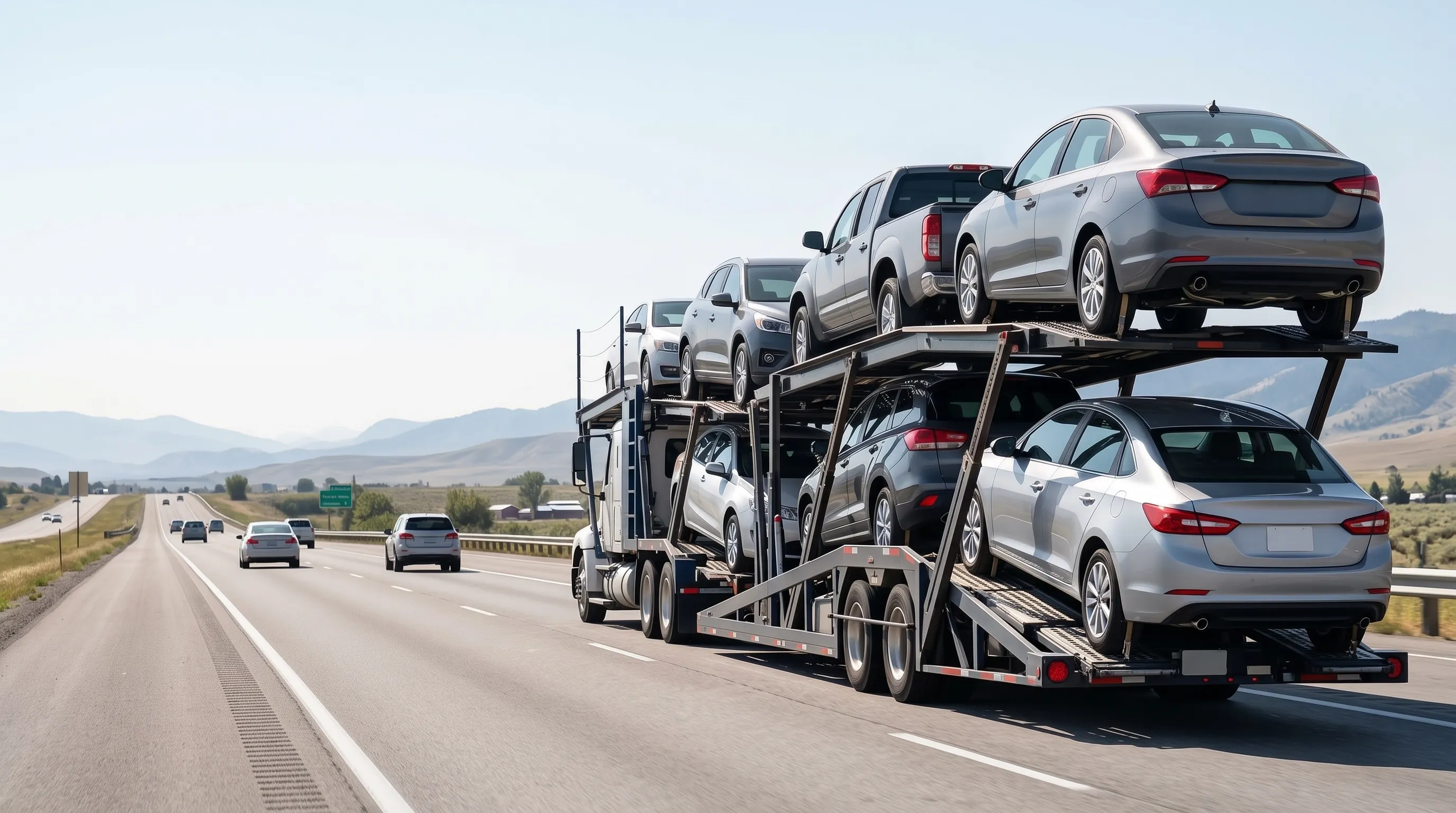
How much will the policy pay? Every policy has a per-vehicle limit and a per-load limit. An open carrier often hauls 7 to 10 cars, so one accident can stretch the per-load limit across several vehicles. Most cargo policies pay either the repair cost or the actual cash value, which is the market value minus depreciation. Agreed value, where the car’s worth is set in advance, is more common with classic car policies.
Who pays the deductible? Usually the carrier. Confirm it in writing, since some contracts shift that cost to you.
What It Does Not Cover
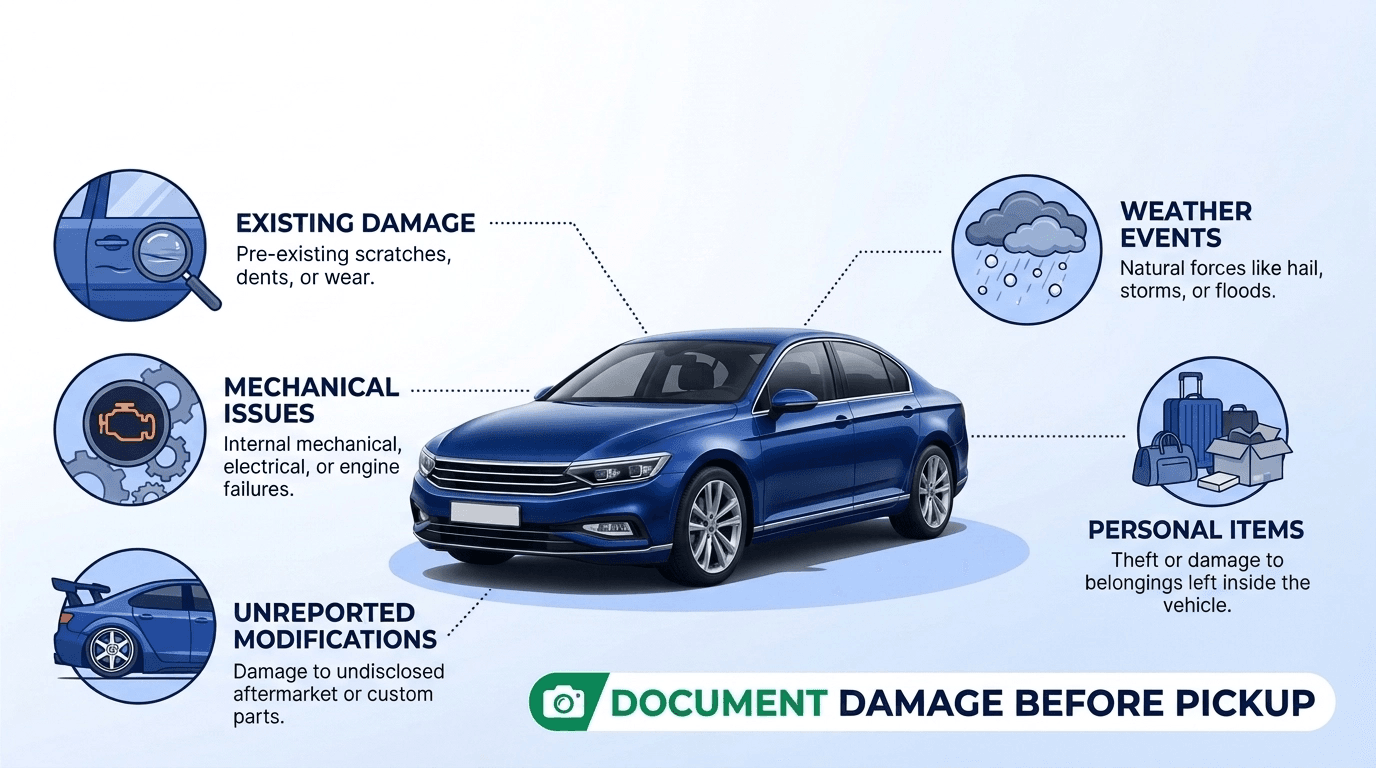
Cargo insurance only pays for damage the carrier causes, so anything outside that scope is excluded. Most claim disputes come from these exclusions, not from carriers refusing to pay for clear damage.
Like most auto transport insurance, cargo policies commonly exclude:
Pre-existing damage: chips, dents, and scratches already on the car
Normal wear: road dust and, in many policies, minor rock chips
Mechanical issues: dead batteries, leaks, or warning lights the carrier didn’t cause
Natural events: hail, floods, and storms under the act of God exclusion
Personal belongings: anything left inside the vehicle
Undisclosed modifications: lowered suspensions or custom parts not reported at booking
The act of God exclusion catches many shippers off guard. Some carriers buy broader policies that include weather damage, but never assume yours does.
The bigger risk is missing proof. If a scratch wasn’t recorded at pickup, the carrier can argue it was already there. That’s why verification and documentation matter so much.
How to Verify a Carrier’s Coverage Before Dispatch
To verify coverage, get the carrier’s certificate of insurance, confirm it with the insurer, and check the carrier’s federal record. The whole process takes about 15 minutes and should happen a few days before pickup.
Ask for the Certificate of Insurance
Start with the certificate of insurance (COI), a one-page summary of the carrier’s active coverage. Request a current copy and check these details:
What to Check | What to Look For |
|---|---|
Named insured | Matches the carrier’s legal name and USDOT number |
Insurance company | A real insurer you can call |
Policy dates | Active through your delivery date |
Cargo limit | Per-vehicle limit at or above your car’s value |
Deductible | The amount and who pays it |
Issue date | Recent, not an old reused copy |
Confirm It Independently
A certificate can be outdated, so verify it two ways:
Call the insurer listed on the COI to confirm the policy is active and the cargo limit is accurate.
Search the carrier’s USDOT or MC number using FMCSA’s Licensing and Insurance carrier search to confirm active authority and insurance on file.
FMCSA records mainly show liability filings. The call to the insurer is still the most reliable way to confirm the cargo limit.
Questions to Ask Before You Sign
Get clear answers to these questions, ideally in writing, before you approve the shipment:
What is the cargo limit per vehicle and per load?
What is the deductible, and who pays it?
Does the policy include an act of God exclusion?
Does the limit fully cover my car’s value?
Who is my contact if I need to file a claim?
The last question on that list is easy to overlook. A single point of contact who manages your shipment from booking to delivery keeps details from slipping through the cracks, and it gives you someone to call if a claim becomes necessary. Business clients who ship regularly tend to value this the most.

The Bill of Lading and Your Claim
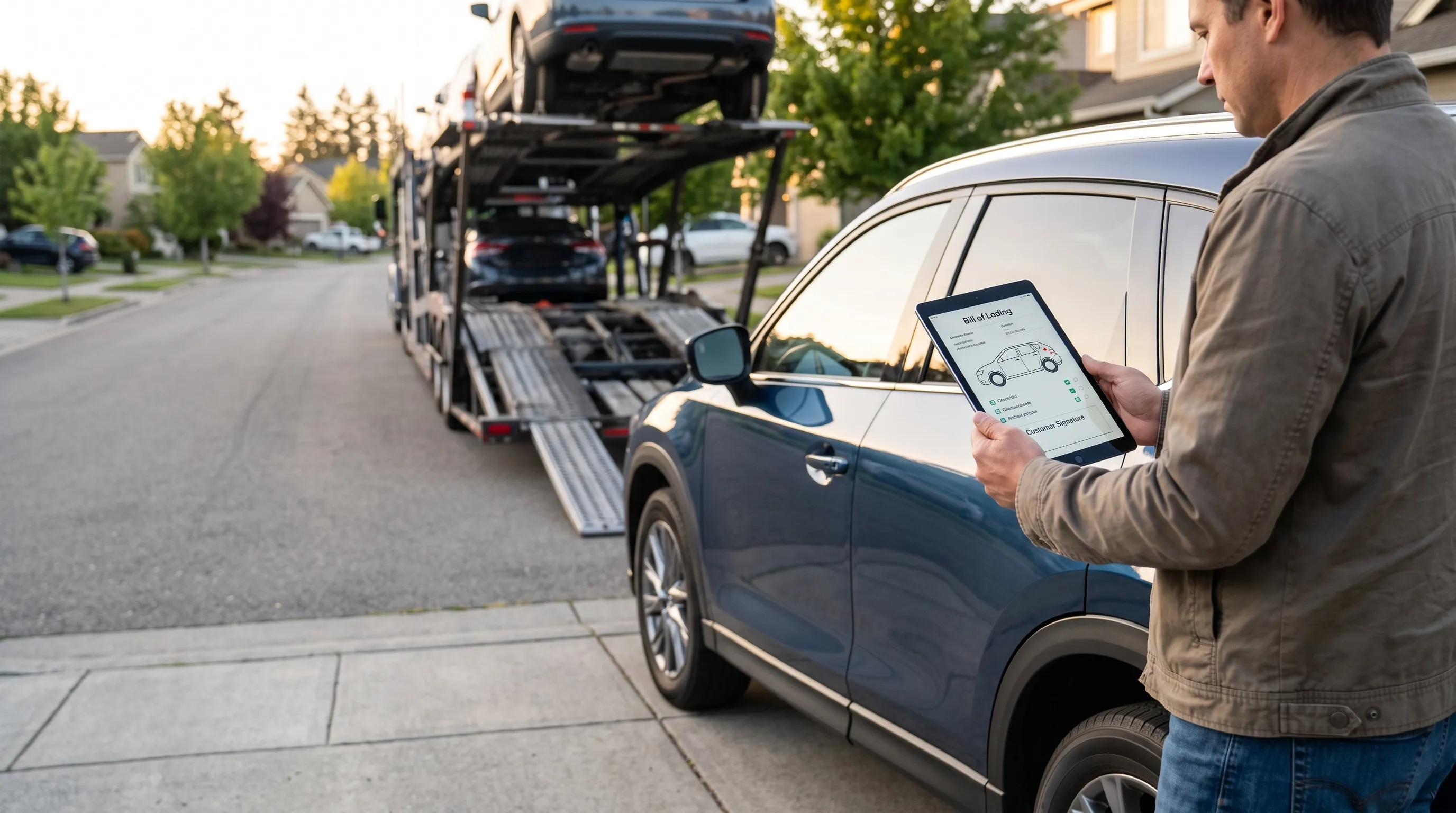
The bill of lading (BOL) is the most important document in any car shipping damage claim. It’s a receipt and condition report you sign at pickup and at delivery, and it records your car’s condition at both ends of the trip.
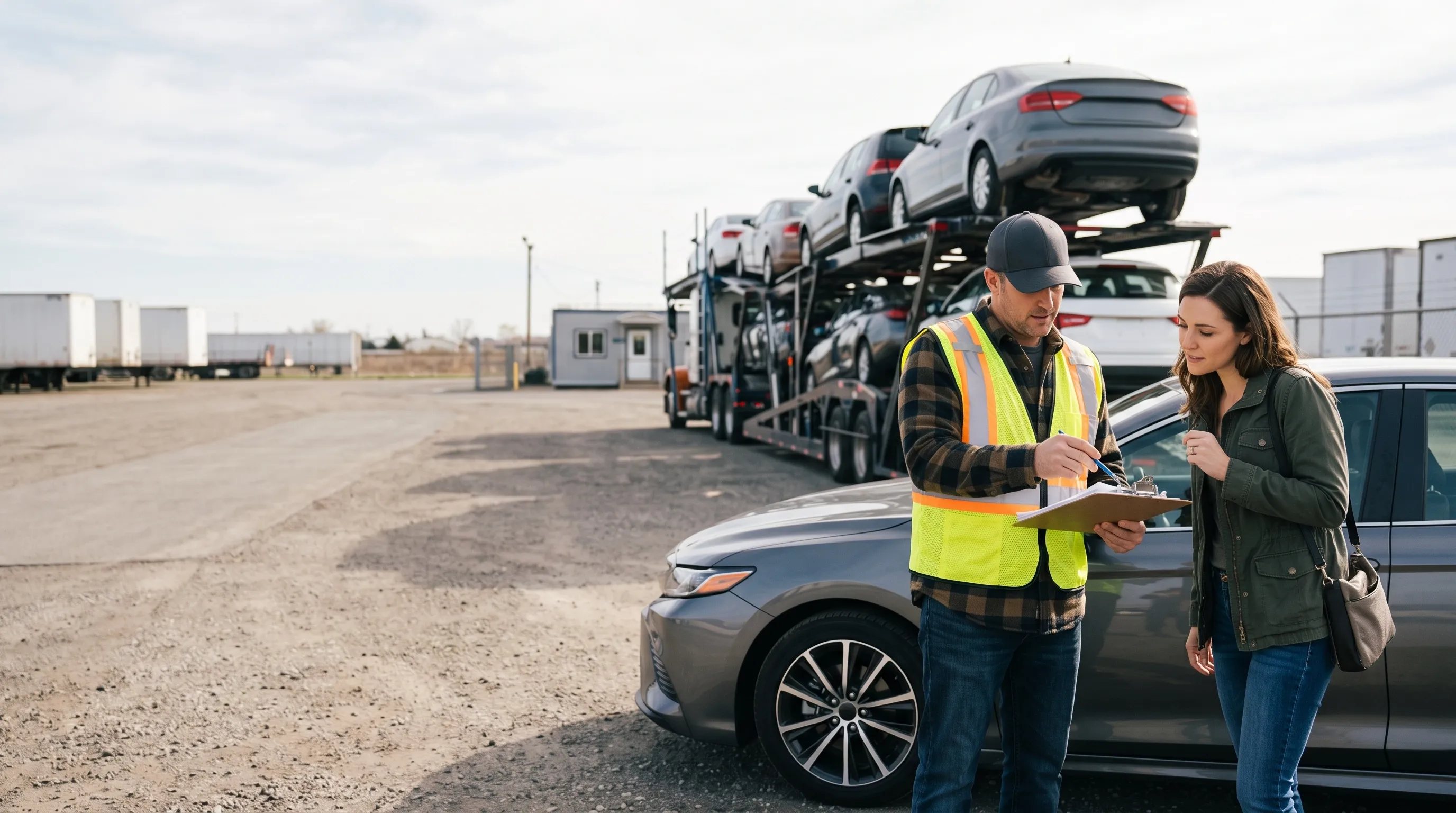
At pickup: Walk around the car with the driver in good light. Make sure every chip, dent, and scratch is marked on the BOL. Then take timestamped photos of every side, the roof, the wheels, and the odometer.
At delivery: Inspect the car before you sign, even if it’s dark or the driver is rushed. Compare it against your pickup photos, and check the bumpers, lower panels, and roof closely.
If you find new damage, write it on the BOL and ask the driver to initial your notes. A clean signature tells the carrier your car arrived in good condition. Under most auto transport insurance terms, that signature weakens your bill of lading evidence and makes transit damage much harder to prove.
Filing a Damage Claim Step by Step
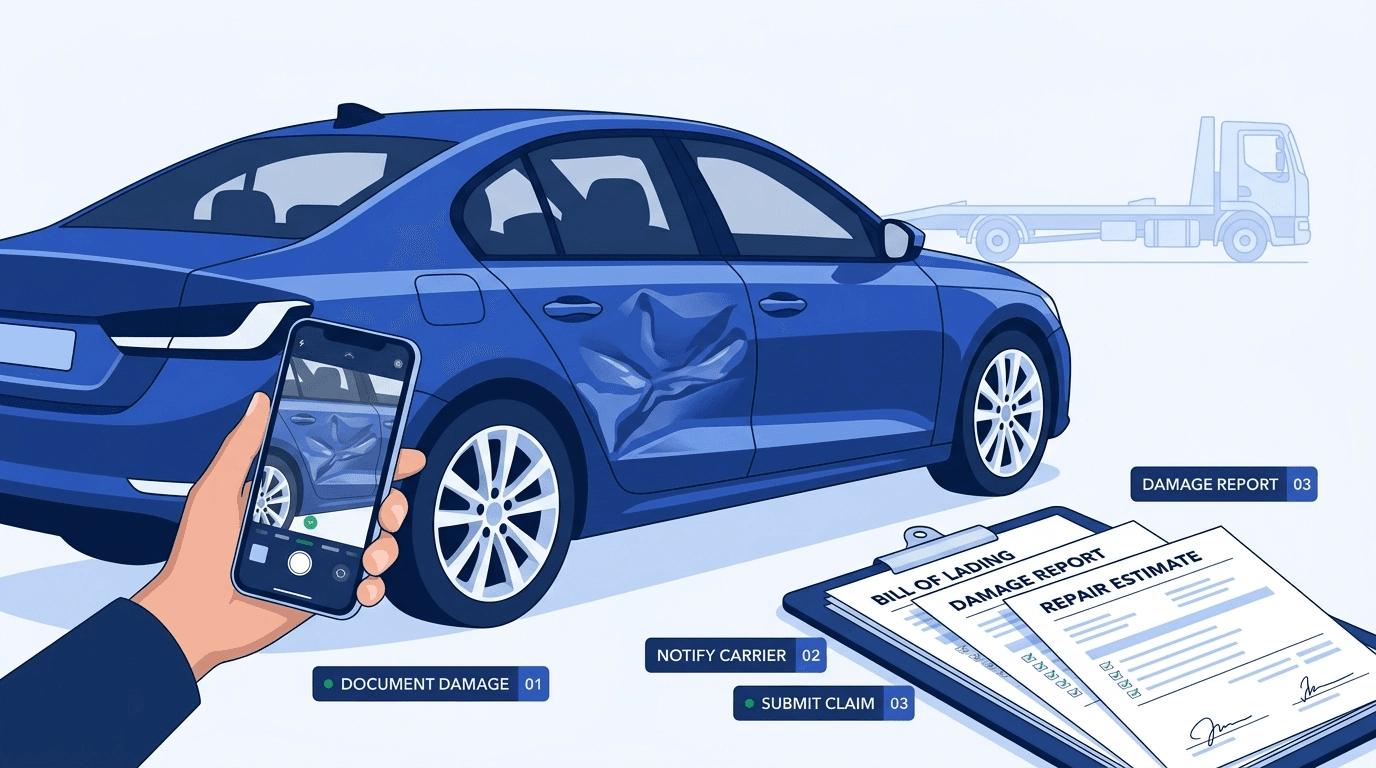
To file a car shipping damage claim, note the damage on the BOL, document it, notify the carrier in writing, gather repair estimates, submit the claim, and follow up. Acting quickly keeps your evidence strong.
Note the damage on the BOL. Describe each issue simply, such as “new dent, rear passenger door,” and get the driver’s initials.
Photograph everything. Take close-ups and wide shots before you drive the car anywhere.
Notify the carrier and broker in writing. Email your BOL copy and photos the same day to create a dated record.
Get repair estimates. Collect written estimates from one or two licensed body shops, and hold off on repairs until the insurer has inspected or approved them.
Submit the formal claim. Send everything in one package and ask for a claim number.
Follow up. Log every call and email, and contact the carrier’s insurer directly if the claim stalls.
Know the response deadlines. Interstate carriers must acknowledge a written claim within 30 days and must pay, decline, or offer a settlement within 120 days.
Common Questions About Car Shipping Insurance
Shipping a car raises practical questions about coverage, claims, and who is responsible if something goes wrong on the road. The answers below cover the concerns shippers raise most often, so you can book your transport with clear expectations.
Is my car insured during shipping?
Yes. The carrier’s cargo insurance covers damage it causes from loading to unloading, subject to a per-vehicle limit, a deductible, and exclusions. Your personal policy may add backup protection. When you book through an experienced broker, you can request the carrier’s certificate of insurance before pickup and ship knowing exactly how your car is covered.
Who pays if my car is damaged in transit?
The carrier’s cargo insurance pays for covered damage the carrier caused, as long as the damage is noted on the bill of lading and backed by evidence. Carriers typically cover their own deductible. A broker who stays involved after delivery also gives you an extra point of contact if your claim needs a push.
How do I verify a carrier’s insurance?
Request the certificate of insurance and check the carrier’s name, USDOT number, policy dates, and cargo limit. Then call the listed insurer to confirm the policy is active, and review FMCSA’s public records. Safeeds Transport customers can ask for carrier coverage details before dispatch, so there are no surprises on pickup day.
Does my own auto policy cover shipping?
It depends on your policy. Some comprehensive plans cover a car during transport, while others exclude it or apply only after the carrier’s insurance. Call your insurer before booking. Combine that check with a carrier whose cargo coverage you’ve already confirmed, and your vehicle has two layers of protection instead of one.
What is not covered by cargo insurance?
Cargo insurance usually excludes pre-existing damage, normal wear, mechanical problems the carrier didn’t cause, and personal items. Many policies also carry an act of God exclusion for hail and floods. If weather exposure concerns you, enclosed transport adds a layer of protection that open carriers can’t match.
How long do I have to file a damage claim?
For interstate shipments, carriers can’t set a claim window shorter than nine months after delivery. Still, don’t wait. Note the damage on the bill of lading at delivery and notify the carrier in writing within 24 to 48 hours. Fast reporting, backed by clear photos, gives your claim the strongest start.
How much coverage does a typical carrier hold?
Cargo coverage varies by carrier and trailer type, and enclosed carriers generally hold higher limits than open carriers because they move higher-value vehicles. Most auto carriers have no federal cargo minimum, so limits are set by each company and its insurer. Before you book, check the per-vehicle limit on the certificate of insurance so you know your car’s full value is protected.
Do I need extra insurance for a high-value car?
Possibly. If your car’s value is close to the carrier’s per-vehicle limit, ask about higher limits or supplemental vehicle transport damage insurance. For luxury, exotic, or classic vehicles, enclosed transport paired with an agreed value policy offers stronger protection. You can request enclosed options when you get your quote.
Are my personal belongings covered?
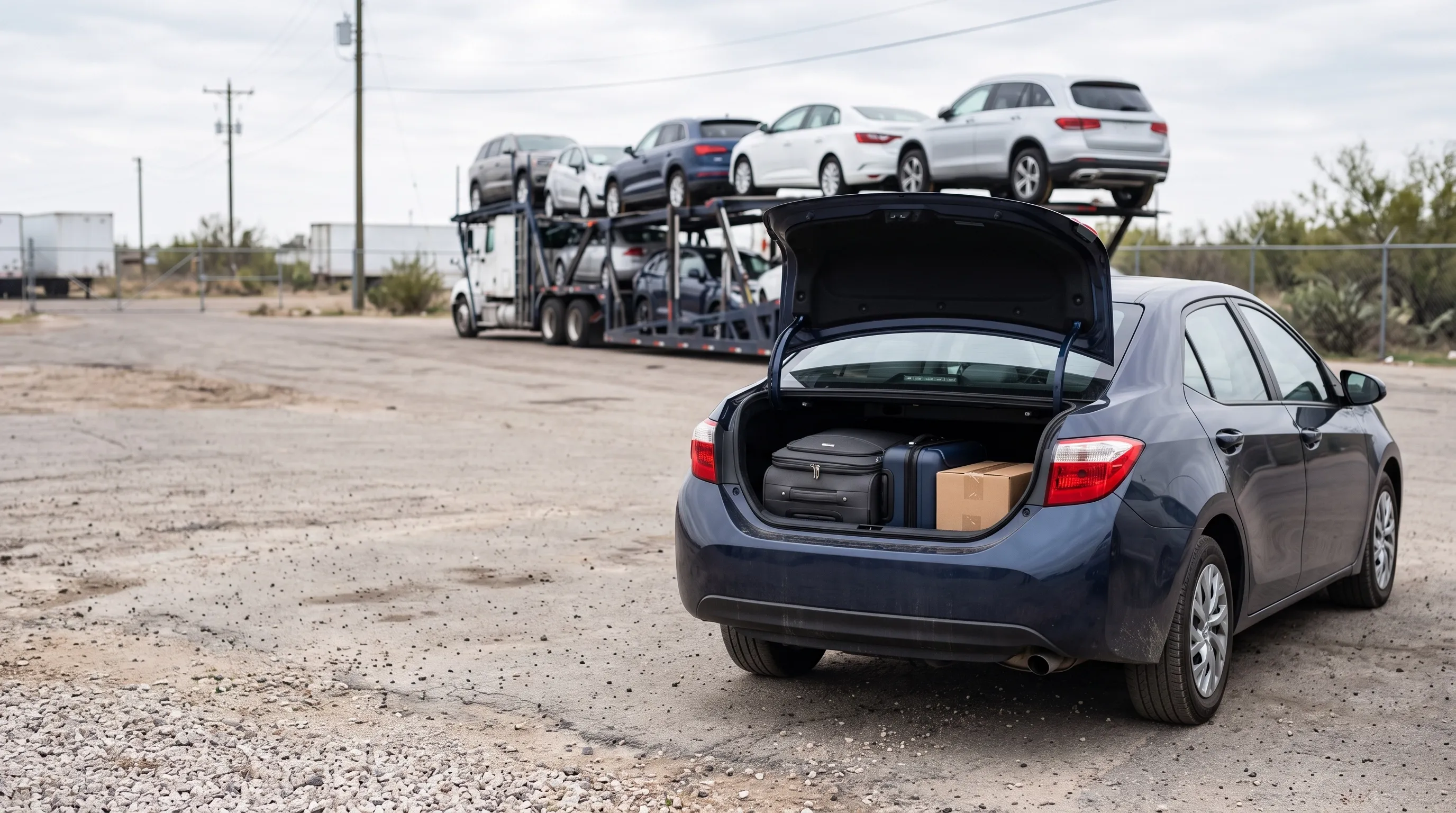
Usually not. Cargo insurance covers the vehicle, not what’s inside it. Some carriers allow a small amount of luggage in the trunk, but limits vary, and anything left inside travels at your own risk. For a faster inspection and a smoother delivery, remove valuables, documents, and electronics before pickup.
What evidence do I need for a claim?
Your strongest evidence is a bill of lading with the damage noted at delivery. Add timestamped photos from pickup and delivery, your written notice to the carrier, and repair estimates from licensed shops. Organized records lead to faster decisions, and a responsive broker can help keep your claim on track.
Car Shipping Insurance Starts Before You Hand Over the Keys
Your car’s protection depends as much on preparation as on the policy itself. Cargo insurance pays for damage the carrier causes, but only when your paperwork supports the claim and the damage falls within the policy’s terms.
That’s why car shipping insurance works hardest for you when you check it early. Confirm the certificate of insurance, call the insurer, and understand the deductible and exclusions before the truck arrives. Then document your car’s condition at pickup and again at delivery, because those records are what turn coverage on paper into a claim that gets paid.
When you’re ready to ship, request a free quote from Safeeds Transport. Share your vehicle details and route, and ask for the carrier’s coverage information so you can book with confidence.