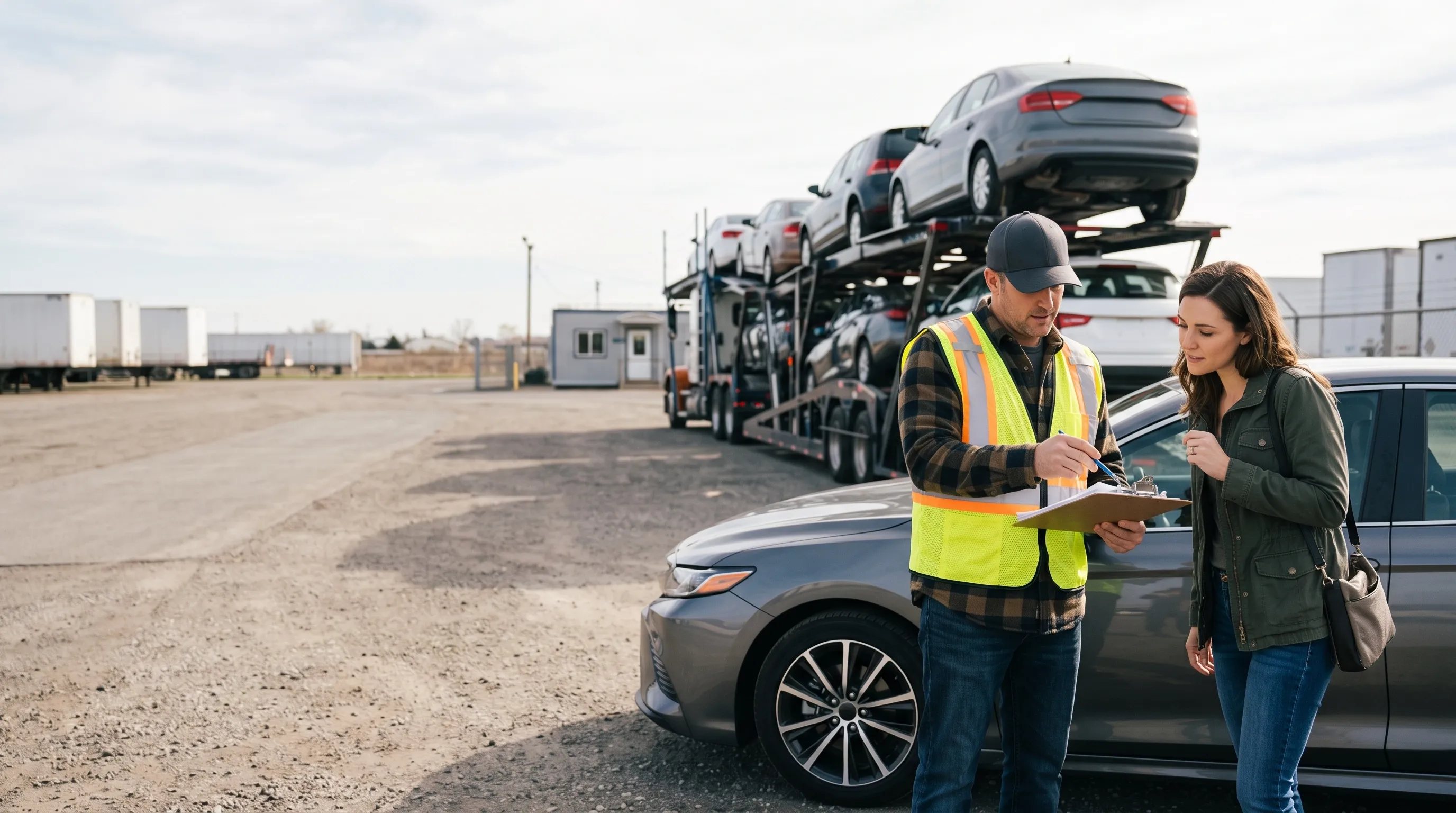
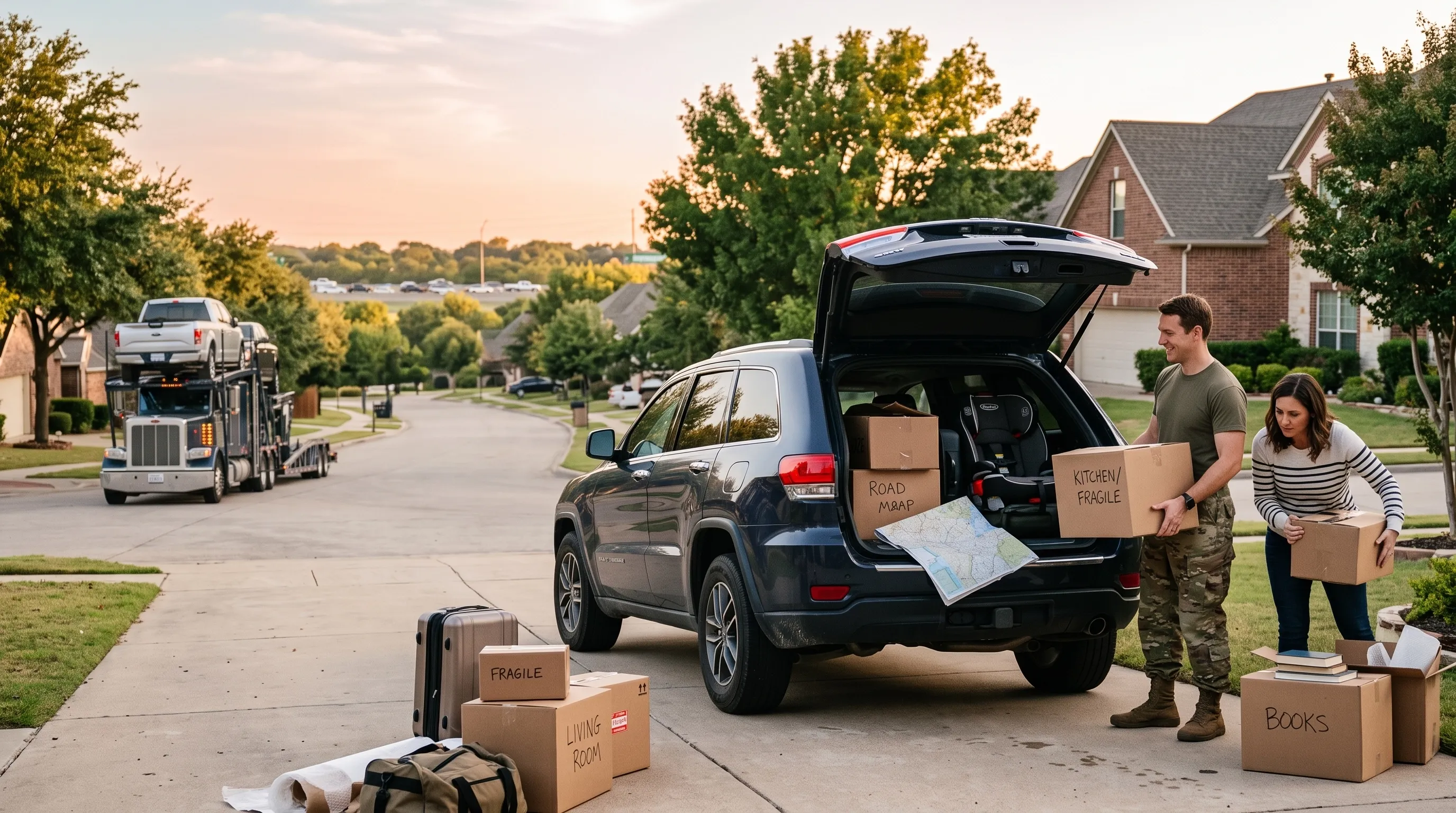
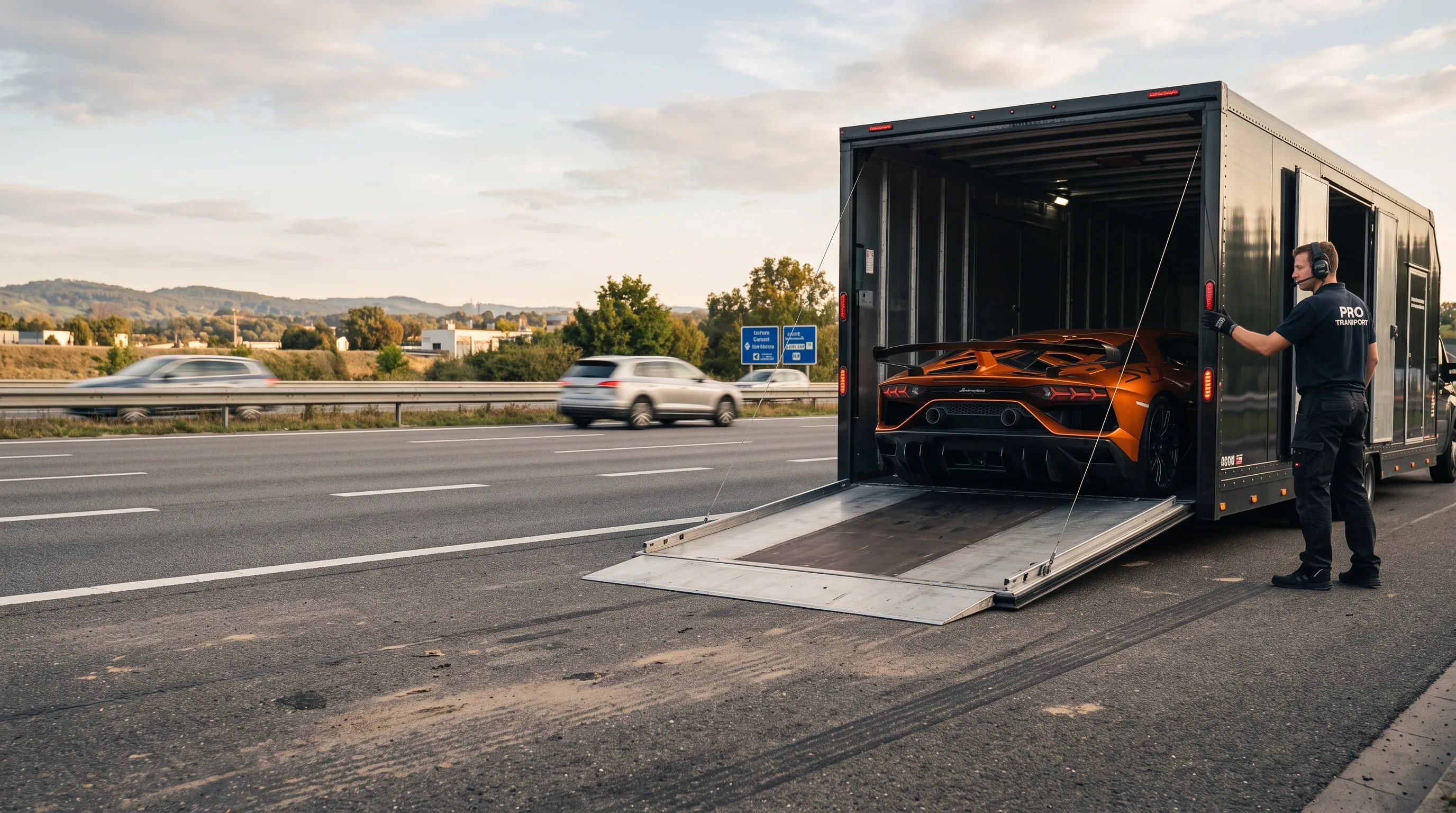
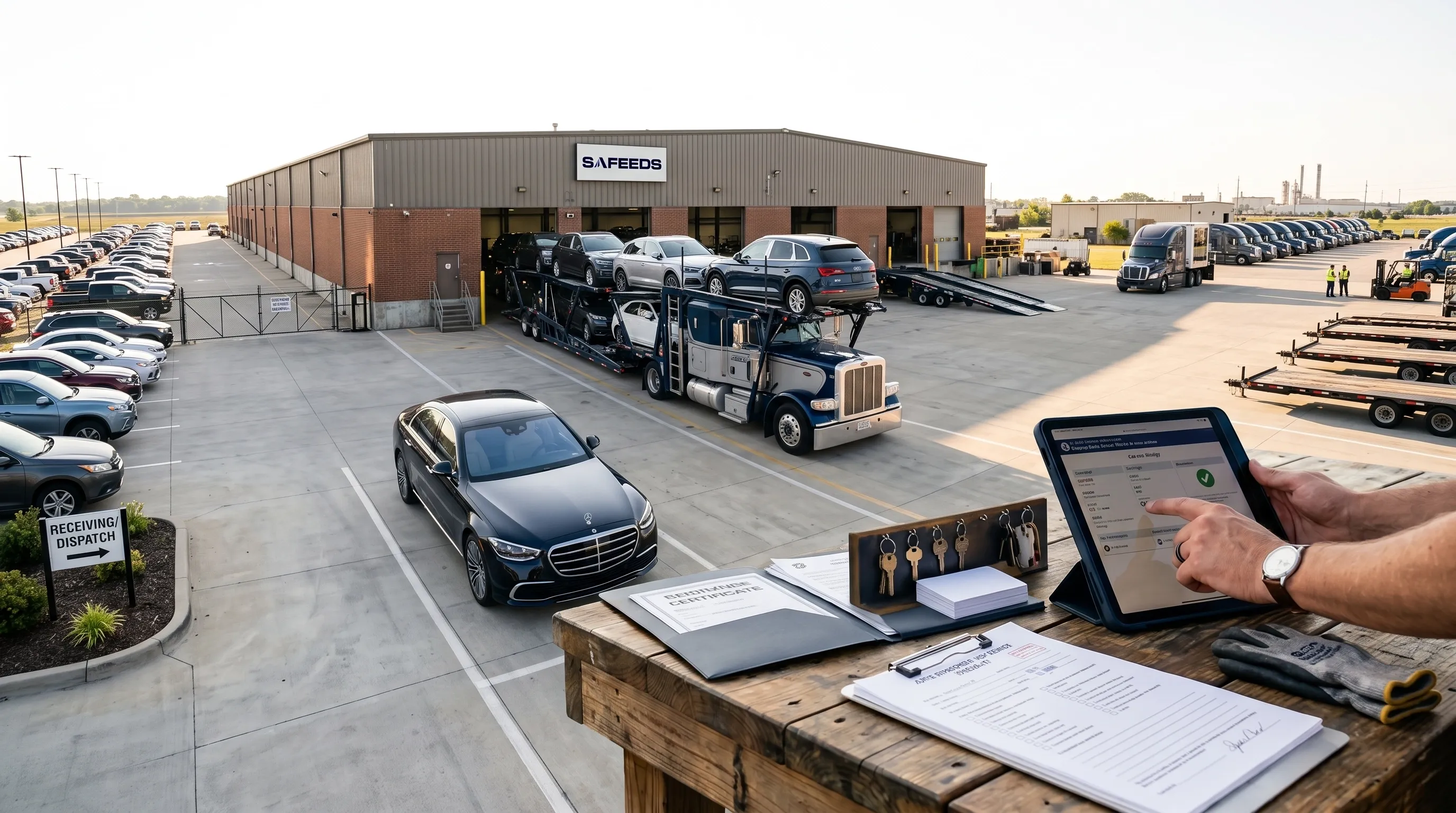
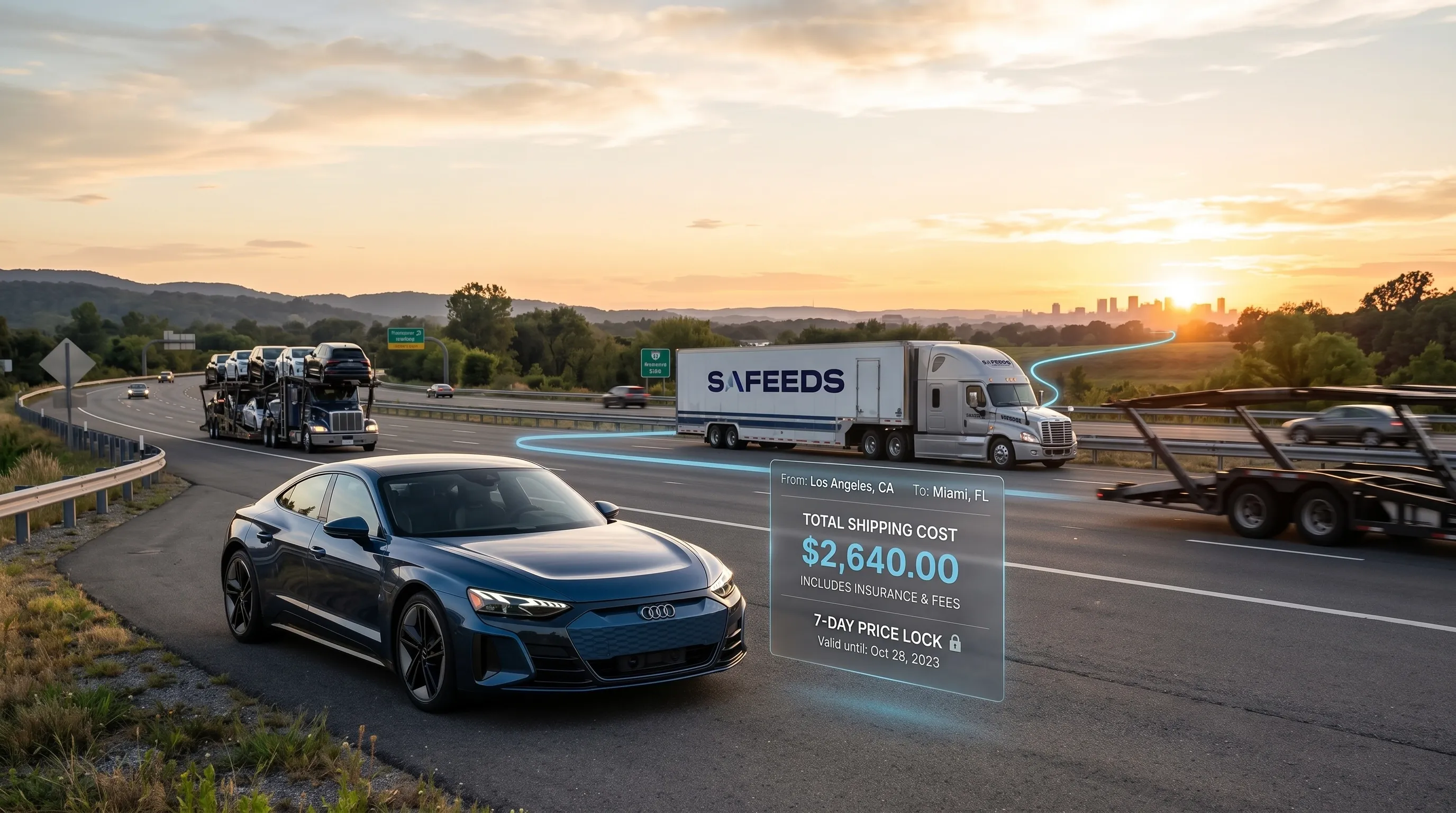
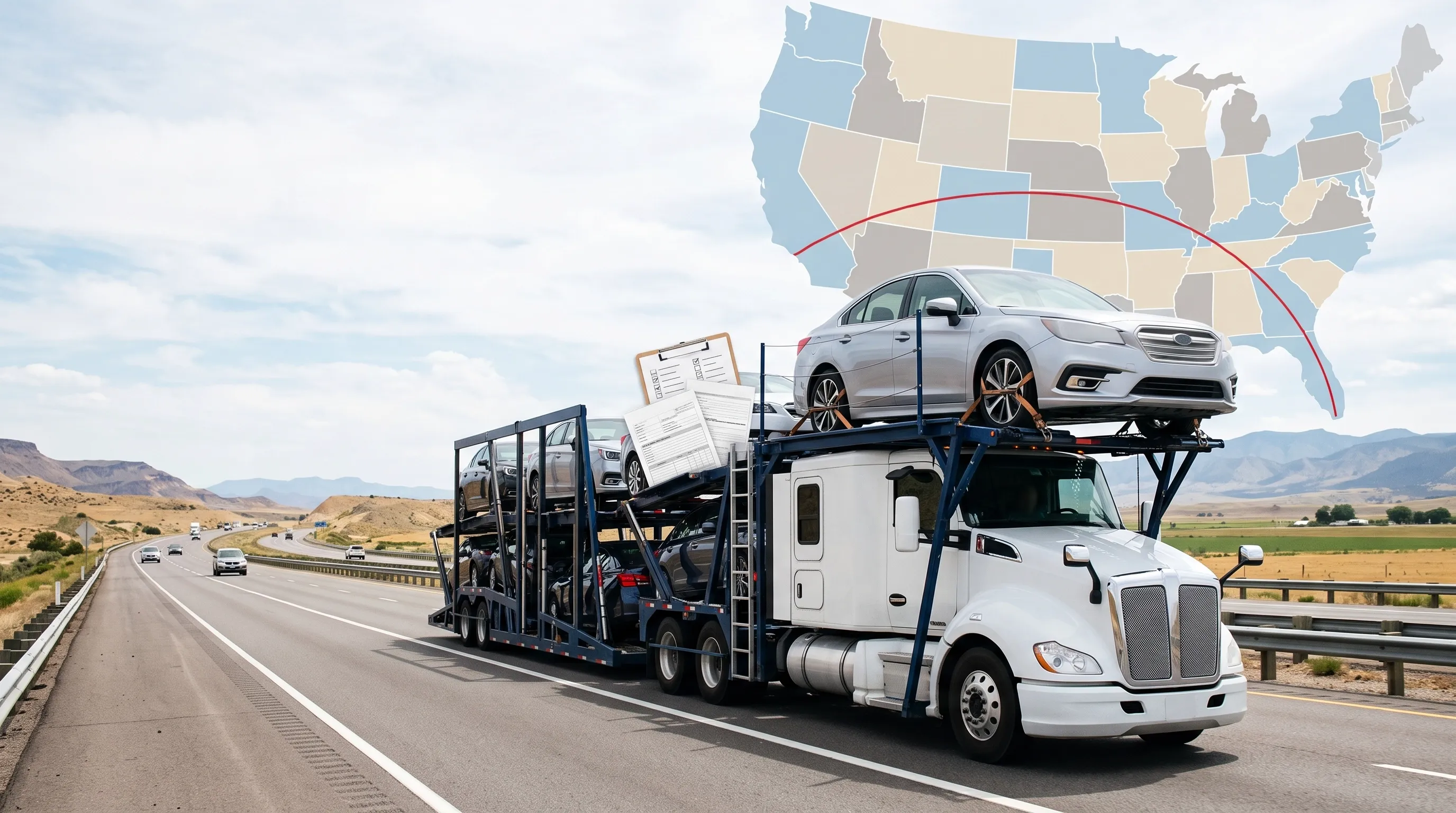
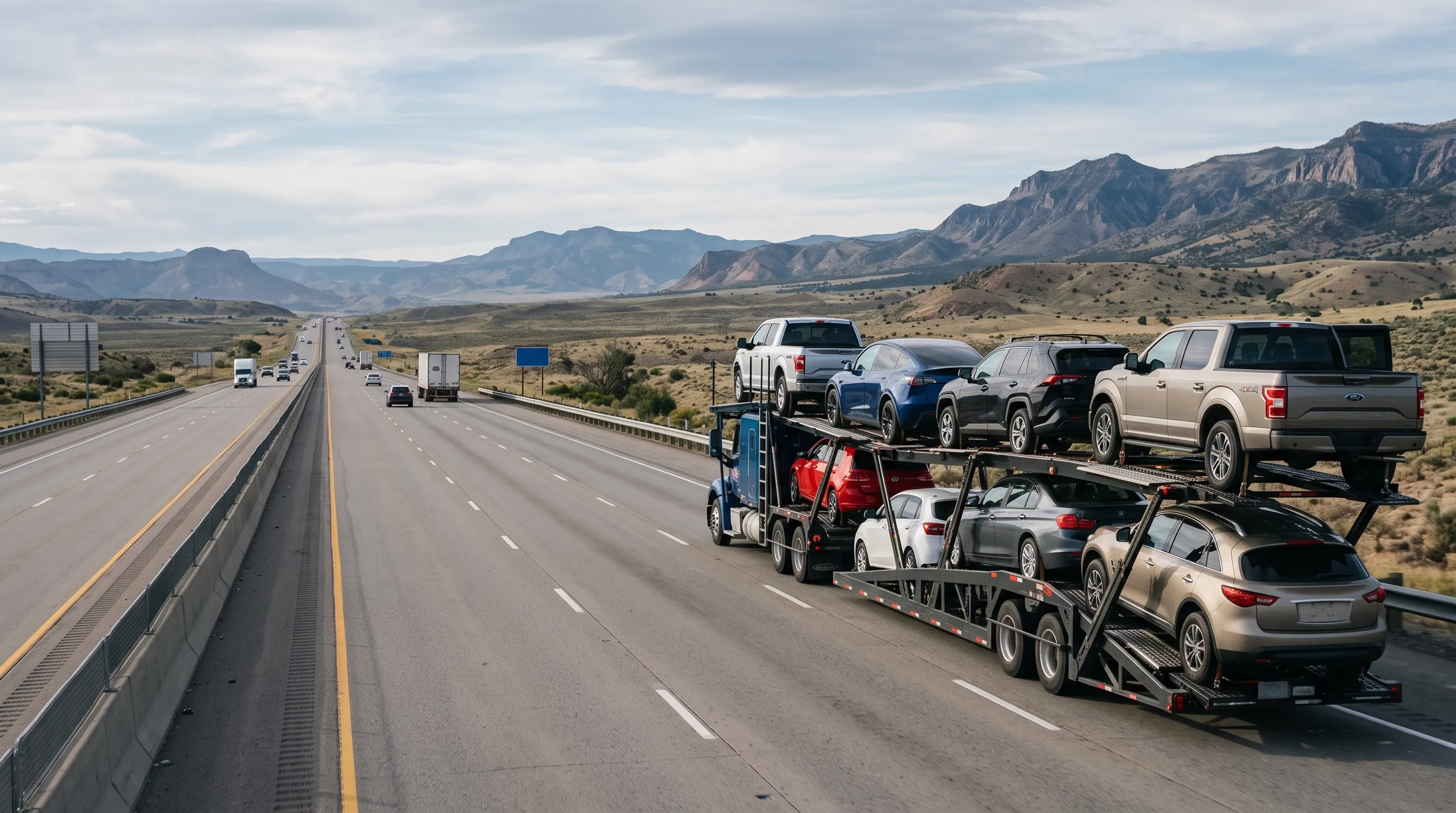
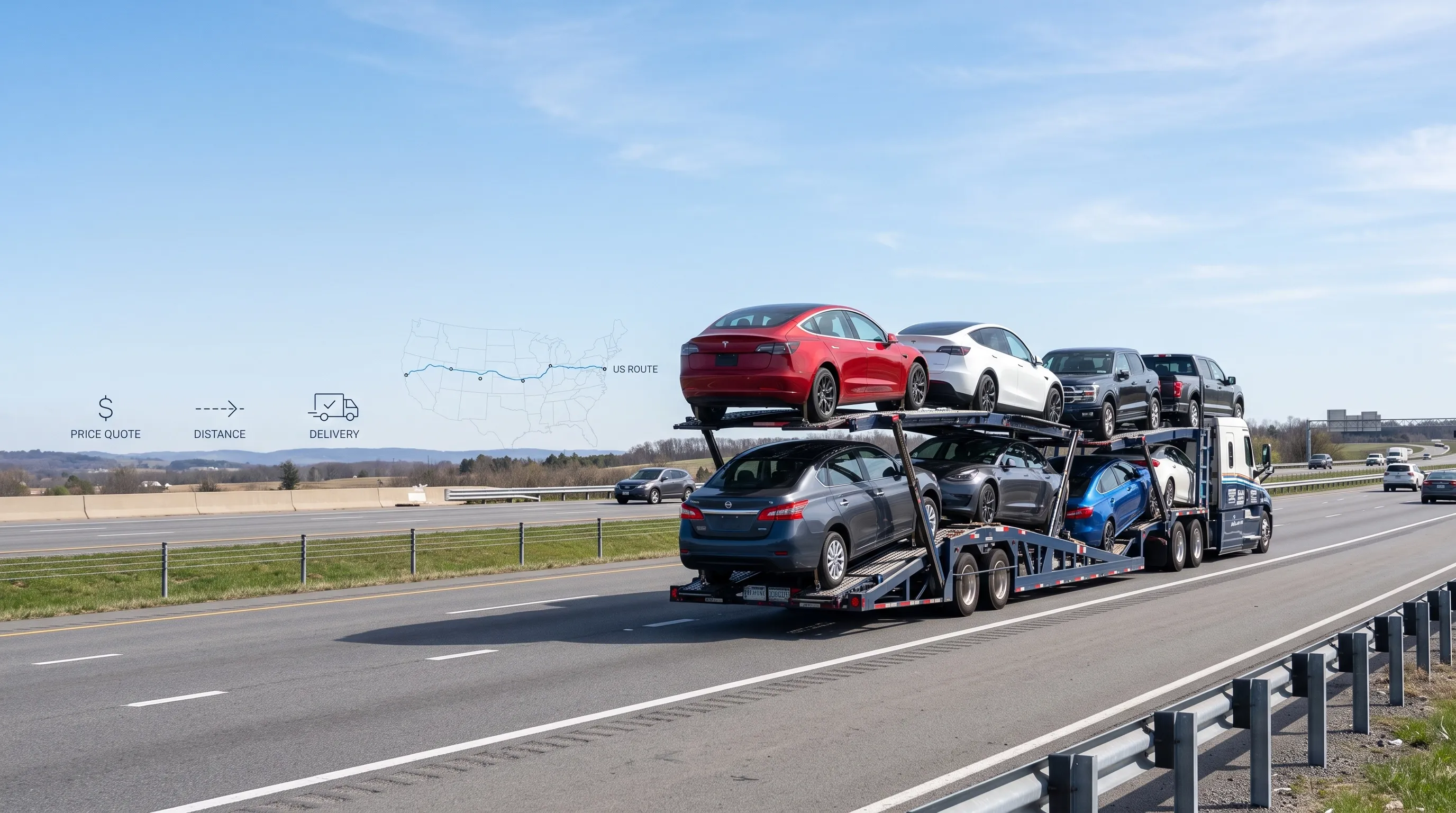
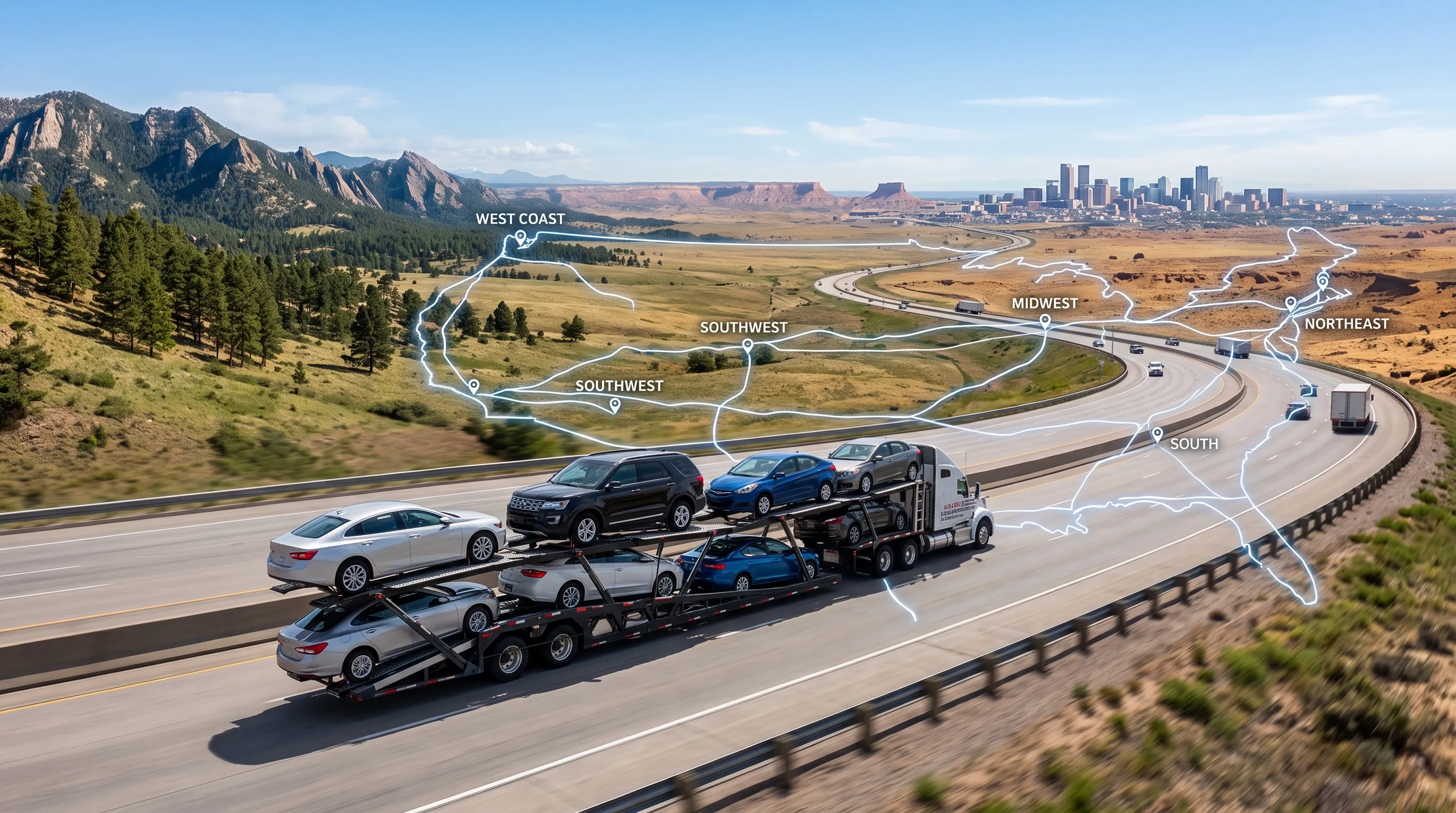
Door-to-door car transport means the carrier’s driver gets as close to your address as safely and legally possible. On open, wide streets, that is usually your curb. When narrow streets, low bridges, or gated community rules block a large truck, the driver arranges a nearby meeting point, such as a store parking lot, instead.
You booked door-to-door car transport, cleared the driveway, and you’re watching from the window. Then your phone rings. “Hey, I can’t get the truck down your street. Can you meet me at the grocery store on Main?”
A driver asking to meet somewhere else happens more often than most people expect. Truck access problems are easy to plan around, though, once you know how car carriers work.
In this guide, we’ll walk you through how close the truck actually gets, what stops it, and how to choose a meeting point that works. We’ll also compare car shipping delivery options, including terminal-to-terminal car shipping, so you can pick the setup that fits your schedule.
Planning a shipment? Request a free quote from Safeeds Transport and mention any street limits upfront so your driver can plan the route.
Key Takeaways
Door-to-door car transport means the carrier’s driver delivers your vehicle curbside at your address, or at the closest point a large truck can safely and legally reach.
Stinger-steered car carriers can measure up to 80 feet long under the FAST Act, so they rarely fit into driveways, tight cul-de-sacs, or narrow residential streets.
When a narrow street, low bridge, or gated community rule blocks truck access, the driver arranges a nearby meeting point, such as a large store or shopping center parking lot.
Door-to-door delivery usually costs slightly more than terminal-to-terminal car shipping, but terminal storage charges and your own travel to each terminal often narrow the difference.
Telling your broker about street limits at booking and keeping a backup meeting point ready helps a car delivery stay on schedule.
What Door-to-Door Car Transport Actually Means
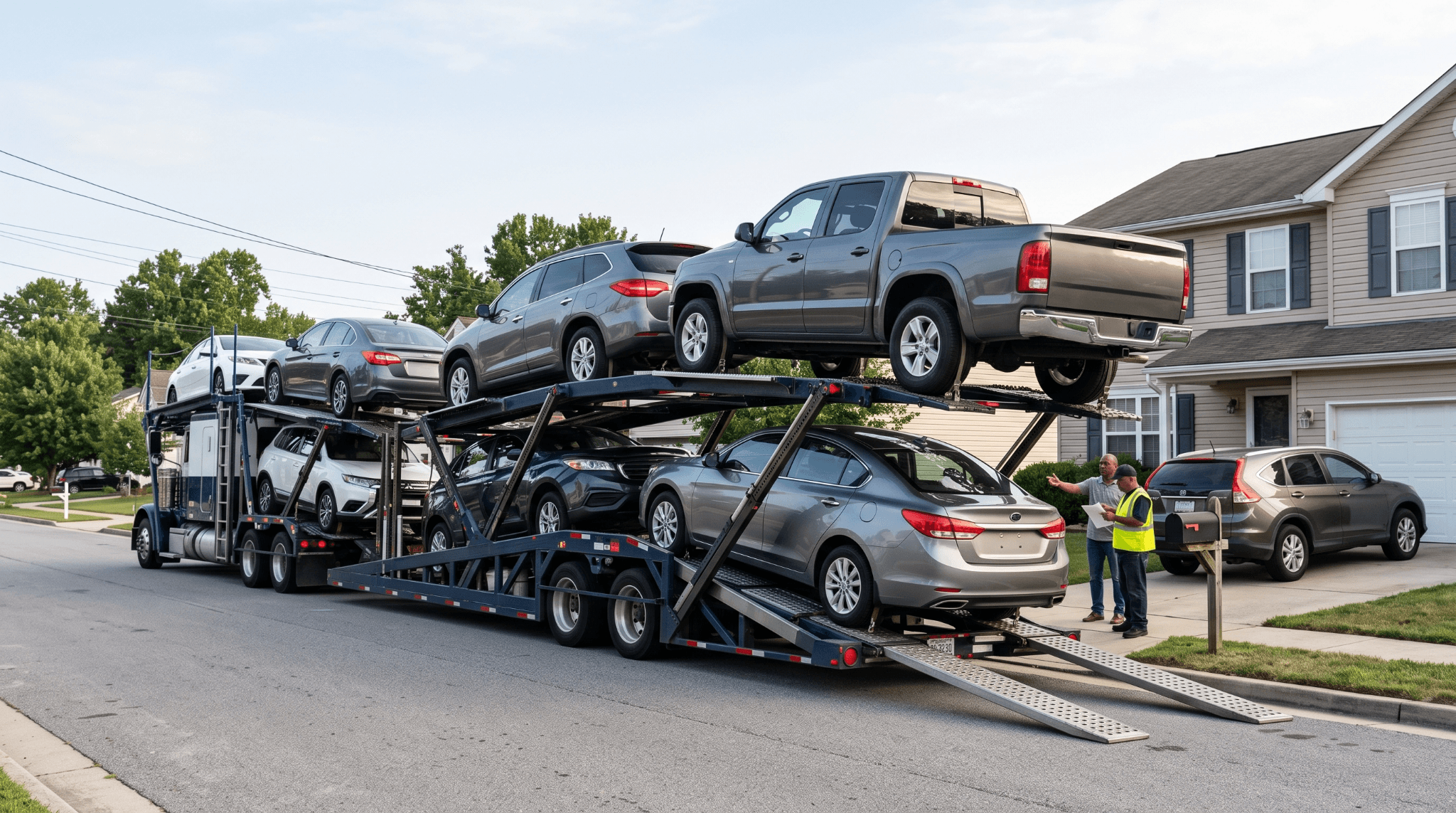
Door-to-door car transport means the driver picks up and delivers your car at your address, or at the closest spot the truck can safely and legally reach. For most homes, that’s curbside, right in front of your house. It rarely means your driveway.
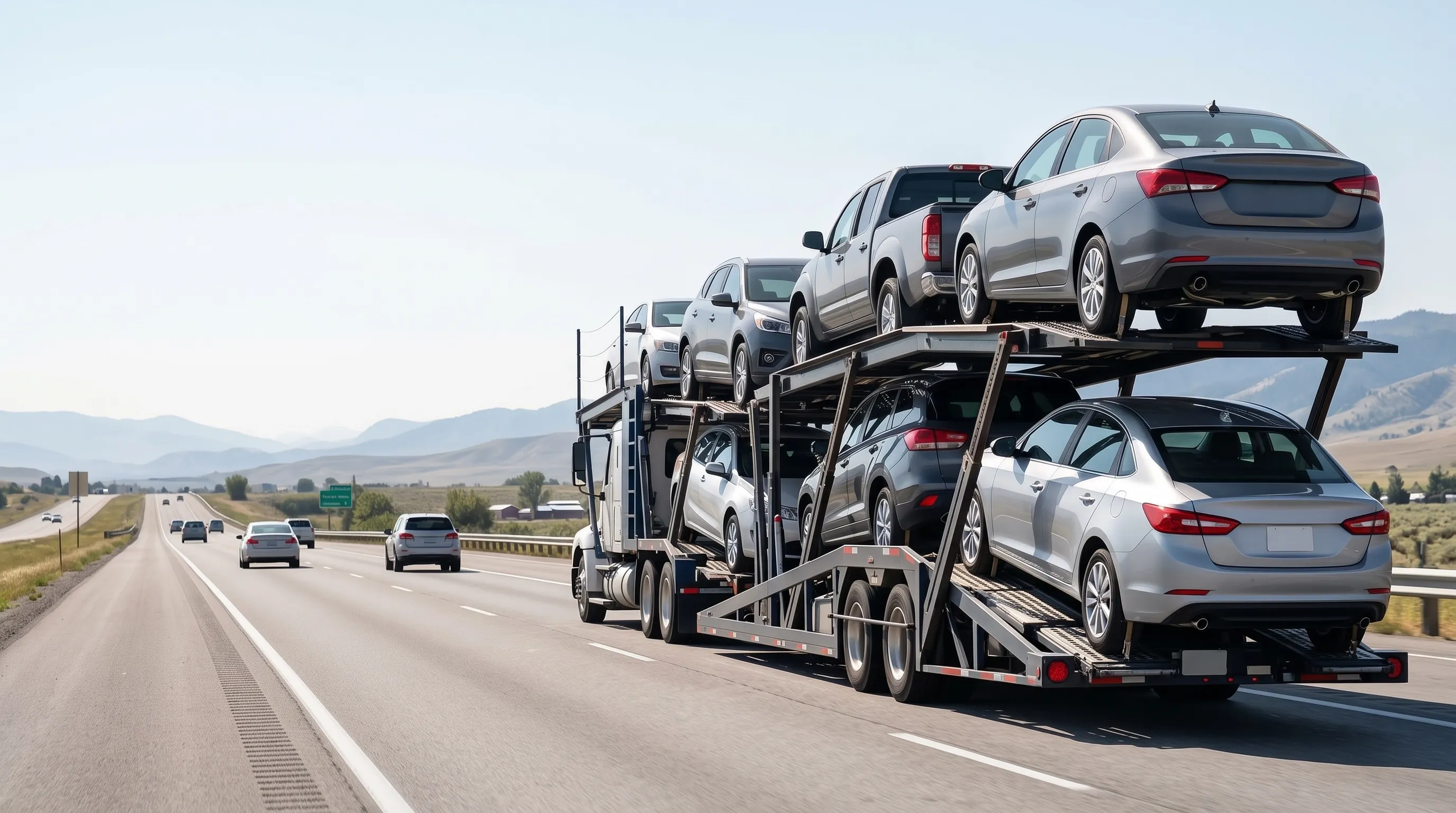
Car carriers rarely reach driveways because of their size. Under the FAST Act, states cannot set a length limit below 80 feet for stinger-steered auto transporters, as the Federal Highway Administration’s FAST Act guidance explains. Federal rules in 23 CFR Part 658 also set the standard trailer width at 102 inches.
An 80-foot car carrier is about twice the length of a city bus. A truck that size can’t back into a typical driveway or turn around in a small cul-de-sac.
Truck access decides how close the driver gets. If the driver can enter your street, park legally, and leave without blocking traffic or hitting anything, you get curbside service. If not, the driver will suggest a nearby spot instead.
Door-to-door auto transport usually includes:
Pickup from your home, office, dealership, or another address you choose
Delivery to your destination address, or the closest safe point to it
A phone call from the driver before arrival
A joint vehicle inspection at pickup and delivery, recorded on the Bill of Lading
Safeeds Transport is a licensed broker, not a carrier. Safeeds Transport arranges your shipment and assigns a licensed carrier, whose driver handles pickup and delivery. The FMCSA advises car owners to understand the difference between brokers and carriers, and both must be registered with the agency to operate across state lines.
Pro tip: Some carriers run smaller single-car or two-car trailers that fit tighter streets. Smaller trailers cost more per vehicle and aren’t available on every route. If your street is tight, ask about this option when you request a quote.
When the Truck Cannot Reach Your Street
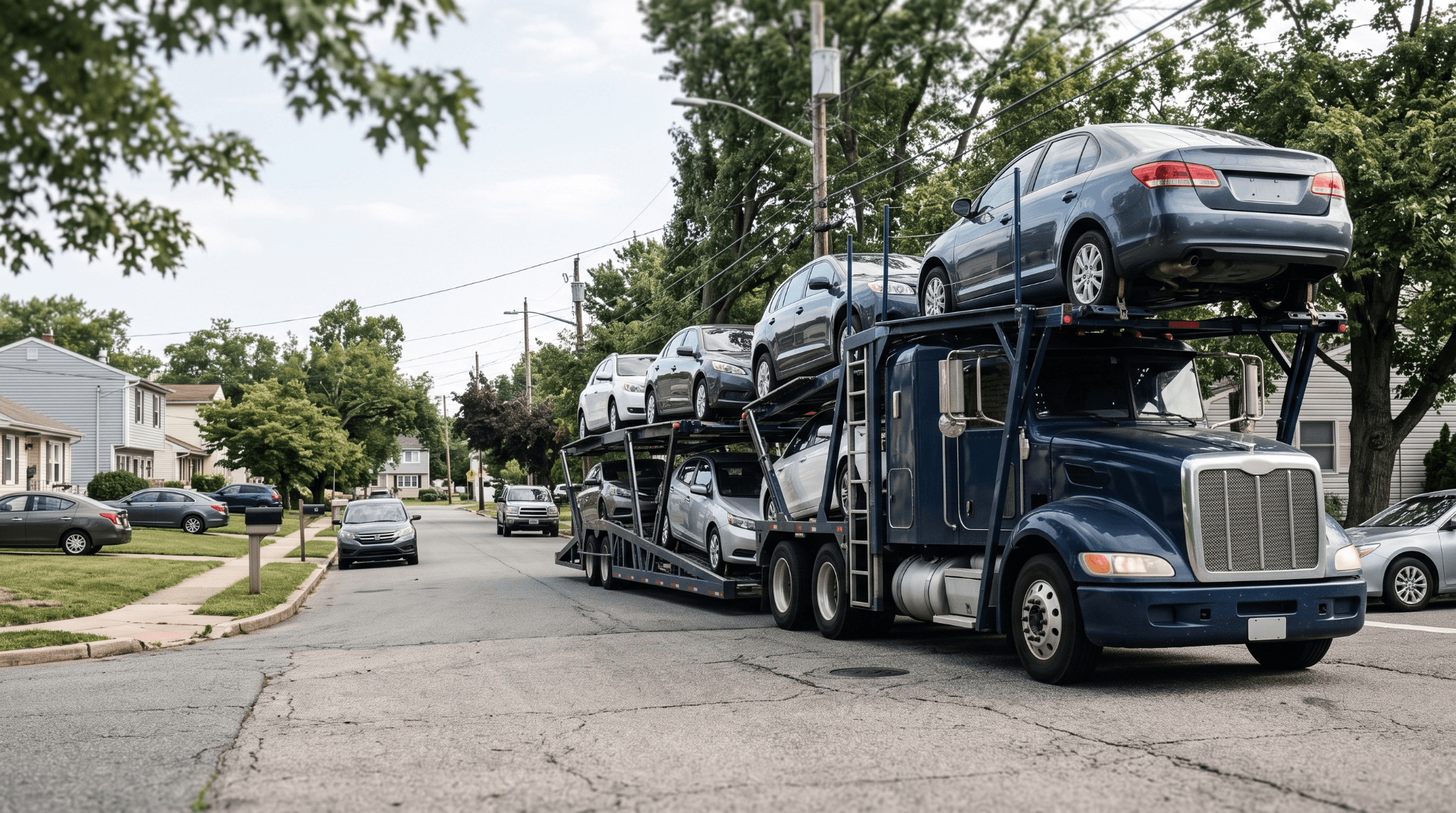
If the truck can’t safely enter your street, the driver will call and arrange to meet you at a nearby spot, usually a large parking lot a few minutes away. Narrow streets, low bridges, tight cul-de-sacs, and gated community rules are the usual reasons.
Most car deliveries go smoothly at the curb. Some streets and local rules, however, make it unsafe or even illegal for a large carrier to enter. Knowing these limits ahead of time saves you a last-minute scramble.
Which streets are hardest for a car carrier to reach?
Streets that are narrow, low-clearance, tightly curved, or restricted by local rules give car carriers the most trouble. The obstacles drivers run into most often are:
Narrow street: Older neighborhoods and city blocks with cars parked on both sides may leave too little room for a 102-inch-wide trailer.
Low bridge or overpass: Florida law (Florida Statutes Section 316.515), for example, caps most vehicles at 13 feet 6 inches but allows auto transporters up to 14 feet. Any bridge, tunnel, or overpass posted below a loaded carrier’s height is a hard stop.
Overhanging trees and wires: Low branches and cables can scrape the cars riding on a carrier’s upper deck.
Tight cul-de-sacs and dead ends: A car carrier needs room to turn around without backing up a long way.
Steep hills and soft ground: Steep grades make loading unsafe, and gravel or grass can trap a heavy trailer.
Gated community rules: Many associations limit commercial truck size or entry hours.
Local truck restrictions: Some cities ban large trucks from residential streets and fine drivers who enter.
How can I tell if my address will be a problem?
You can usually spot truck access problems in about 10 minutes by checking a map, looking for posted signs, and asking your HOA. Use this checklist:
Pull up your street on a satellite or street-view map. Picture an 80-foot truck entering, parking, and leaving.
Look for posted signs near your home, such as “No Trucks” or bridge height limits.
Ask your HOA or building manager about truck size and delivery rules.
Share what you find with your broker when you book. A short note like “narrow street, low bridge on Oak Avenue” goes a long way.
Pick a backup meeting point now, so you’re ready if the driver calls.
Pro tip: Telling your broker about access limits at booking gives the carrier time to plan the route and, where possible, send a truck that fits your street. Mentioning it at booking beats mentioning it on delivery day.
Choosing a Meeting Point
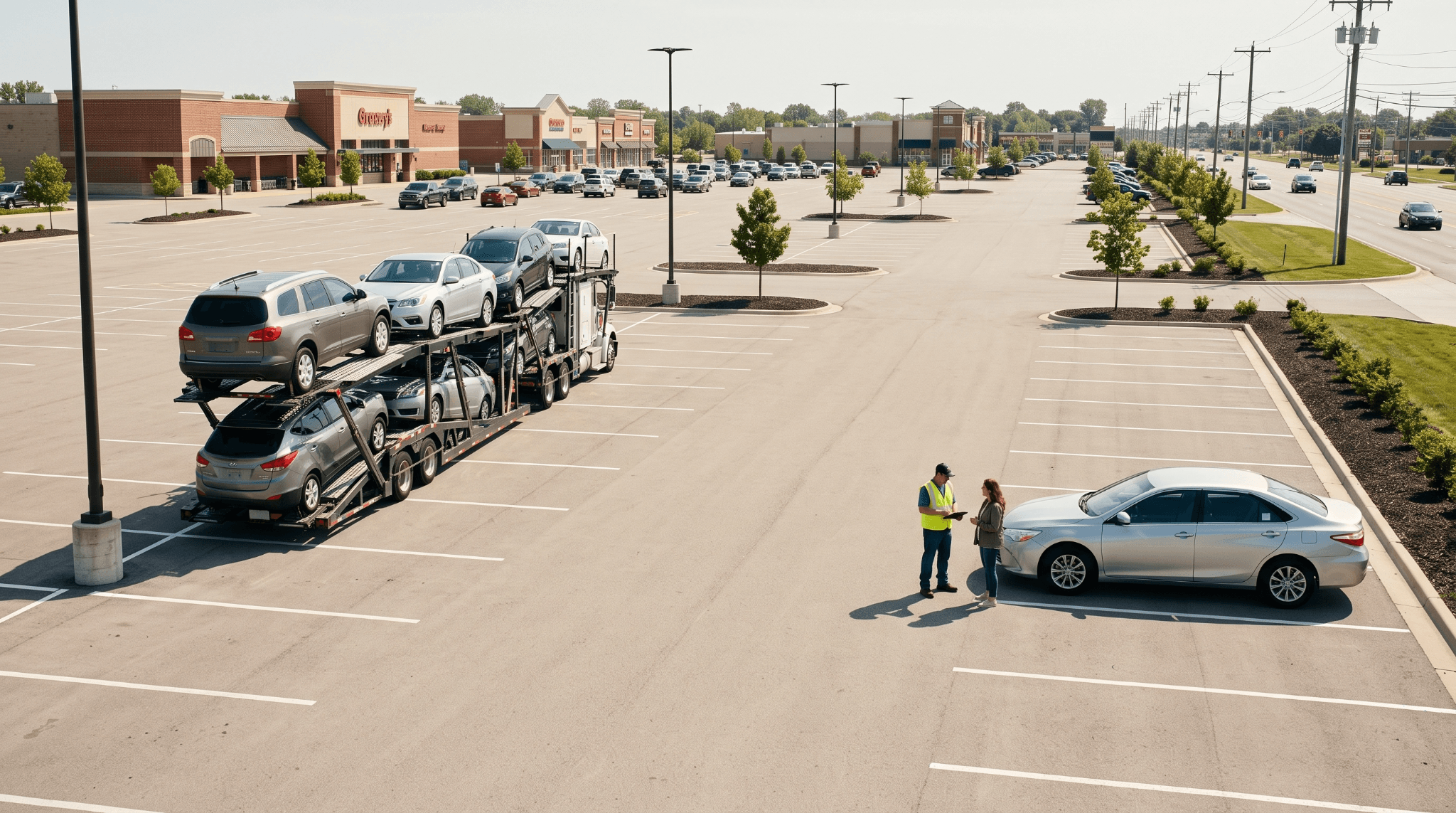
A good meeting point is a large, flat, well-lit lot near a main road, where an 80-foot truck can enter, turn, and leave easily. Big-box store lots, shopping centers, and park-and-ride lots work well for most deliveries.
When the truck can’t reach your door, a meeting point keeps door-to-door car shipping simple. The driver still comes to your area, and you meet a short drive away, usually within a few miles of home.
A suitable meeting point has:
A large, flat, paved surface with room for the truck to enter, turn, and exit
Easy access from a main road or highway exit
Good lighting, so you can inspect the car clearly
Permission from the property owner, or a public space where trucks may park
Lots to avoid as meeting points include small strip malls, busy gas stations, and any lot with a height barrier at the entrance.
Coordinating a meeting point with the driver takes just a few minutes. When the driver calls before arrival, confirm the exact spot. If the lot belongs to a business, ask the manager beforehand and plan to meet near the back edge, away from customer traffic.
A nearby meeting point rarely adds cost to a car shipment. Meeting the driver off your street often saves the driver time, which keeps the schedule on track for you and for the other customers on the same truck.
Pro tip: Text the driver a pinned map location, not just an address. Keep a second spot in mind too. If the first lot is full or closed, you can redirect the driver in seconds instead of losing your delivery slot.
Door-to-Door Car Transport vs Terminal-to-Terminal
Door-to-door delivers your car to your address or a nearby meeting point. Terminal-to-terminal car shipping means you drop off and collect your car at storage lots near each city. Door-to-door saves you time, while terminals suit flexible schedules near a terminal.
With terminal-to-terminal service, you drive your car to a storage lot, called a terminal, near your starting point. The car moves to a second terminal near your destination, and you pick it up there.
Car shipping terminals sit mostly near major cities and ports. Fewer terminal locations mean a longer drive at both ends for many people.
Here’s how the two options compare side by side:
Factor | Door-to-door | Terminal-to-terminal |
|---|---|---|
Pickup and delivery spot | Your address or a nearby meeting point | A storage lot you travel to |
Your effort | Low; the driver comes to you | Higher; you handle travel both ways |
Timing | Set by a delivery window and a driver call | Set by terminal business hours |
Waiting | Car is handed over on arrival | Car waits at the terminal until you collect it |
Storage fees | None | Possible, depending on the terminal’s policy |
Coverage | Nationwide, including rural areas | Mostly large metro areas and ports |
Of the two car shipping delivery options, door-to-door auto transport is the standard choice for most households because it removes the extra travel. Terminal-to-terminal service still suits certain schedules and locations.
Which delivery option fits my situation?
Choose door-to-door if convenience and timing matter most. Choose terminal-to-terminal if you live near a terminal at both ends and don’t mind waiting.
Door-to-door is a good fit if you:
Work set hours and can’t travel to a terminal
Bought a car online or from an out-of-state dealer
Live in a suburb or town with no terminal nearby
Want the car inspected and handed over in one step
Terminal-to-terminal car shipping may fit if you:
Live close to a terminal at both ends of the route
Have a flexible schedule and can wait for your car
Need the car held for a few days, for example during a home move
What Each Option Costs
Door-to-door usually costs a little more than terminal shipping because the driver spends extra time reaching residential streets. But once you add any terminal storage charges and your own travel, the gap often shrinks.
Door-to-door car transport means the driver leaves the highway, navigates local roads, and finds a safe place to park. That extra driving time is part of the price, and dense city blocks and remote rural roads add more of it.
Terminal shipping can look cheaper at first, but its base price doesn’t include your travel to the terminals or any storage charges. Storage policies vary by terminal operator, so ask how long your car can sit free of charge before you book.
Cost factor | Door-to-door | Terminal-to-terminal |
|---|---|---|
Base transport price | Slightly higher | Slightly lower |
Your travel to and from terminals | None | Fuel, rideshare, or time off work |
Storage charges | None | Set by each terminal operator |
Time spent | One handover at your address | Two trips, plus waiting |
Delivery method is only one piece of a car shipping price. Distance, vehicle size, season, and open or enclosed trailers move the total more. Safeeds Transport’s published route estimates show the range. Los Angeles to Phoenix runs $417 to $652 in 1 to 2 days, while New York to Los Angeles runs $1,275 to $1,500 in 7 to 10 days.
You can lower door-to-door delivery costs with a few simple moves:
Offer flexible pickup dates so the carrier can fit your car into an existing route
Suggest a meeting point near a highway exit if your street is hard to reach
Choose open transport unless your car needs enclosed protection
Book early during busy periods, such as snowbird season and summer
Safeeds Transport also locks your quoted price for 7 days and requires no upfront payment. Booking needs only a $1 card verification hold, and the balance is due at pickup or delivery.
Common Questions About Door-to-Door Delivery
Still have questions? Here are quick answers to the ones people ask most before booking.
Does the carrier deliver to my exact address?
Usually, yes. Door-to-door car shipping is built around convenience, so the driver aims for your exact address and parks curbside in front of it. If your street is unsafe or restricted for a large truck, the driver calls ahead and suggests a nearby spot, so you still get your car without a trip across town.
What happens if my street is too narrow for the truck?
You simply meet the driver at a nearby spot, such as a store parking lot or shopping center. It’s usually a short drive, and the inspection and Bill of Lading signing happen right there. When you book with Safeeds Transport, mentioning your narrow street upfront lets the carrier plan around it before delivery day.
Is door-to-door more expensive than terminal delivery?
Door-to-door often costs slightly more because the driver spends extra time reaching residential streets. For most people, that small difference pays for itself in avoided costs: no storage charges, no rides to and from a terminal, and no time off work. You get your car delivered close to home and handed over in one step.
Can I meet the driver somewhere else?
Yes, and many people prefer it. You can request a meeting point near work, a highway exit, or anywhere that suits your day, either at booking or when the driver calls ahead. Just choose a spot with room for a large truck, and the driver will confirm it before arrival.
How much notice do I get before delivery?
Safeeds Transport keeps you informed from booking to handover. You first receive an estimated delivery window, often one to three days. As the truck gets closer, driver notice comes by phone, usually 12 to 24 hours ahead and again a few hours before arrival, so you can plan your day.
Who needs to be present at delivery?
You or a trusted adult you name can receive the car. That person inspects the vehicle with the driver, notes any new damage on the Bill of Lading, signs it, and takes the keys. Share their contact details at booking, and the handover runs smoothly even if your schedule is packed.
Can the driver deliver at night or on a weekend?
Weekend delivery is often possible, since carriers run on set routes rather than office hours. That makes it easier to fit delivery around your week. Night delivery depends on the driver’s schedule and local rules. Daylight is better when you can arrange it, because it makes the vehicle inspection far more accurate.
What if I live in a gated community?
Gated communities are routine for door-to-door delivery. Let your broker and the gate office know ahead of time, and add the driver to the guest list or arrange a gate code. If the community limits large trucks, the driver can meet you just outside the gate, so your delivery stays on track.
Is door-to-door available everywhere?
Yes. Safeeds Transport arranges door-to-door service in every state on the US mainland, from major cities to rural towns. Remote addresses may get a wider delivery window because fewer carriers run those routes, and a meeting point in the nearest town is common. Hawaii shipments involve ocean freight, so part of that trip runs port to port.
Can pickup and delivery use different methods?
Yes, and that flexibility is a real advantage of door-to-door service. Pickup and delivery can each use the setup that suits that address. For example, the driver might collect your car curbside at your current home and deliver it to a meeting point near your new one. Just describe each end at booking.
What Experienced Shippers Do Before Delivery Day
Experienced car shippers plan for truck access before they book, keep a backup meeting point ready, and stay reachable during the delivery window. That simple routine is what separates a smooth handover from a stressful one.
People who ship cars regularly don’t treat truck access as a delivery-day surprise. They look at their street the way a driver would, and they tell their broker about any narrow street, low bridge, or gate rule they find. Checking takes a few minutes and saves hours of back-and-forth later.
Experienced shippers also keep a backup meeting point in mind, even when they expect curbside service, because a large, well-lit lot nearby turns a possible delay into a short drive. During the delivery window, they keep their phone close, since the driver notice call is where the final timing gets set.
Planning for truck access isn’t complicated, but it shapes the whole delivery experience. Door-to-door car transport runs smoothly when the carrier knows what to expect at both ends of the trip. When you’re ready to plan your shipment, Safeeds Transport can give you a free quote and help match the right delivery setup to your address.