Car shipping scams usually follow the same pattern: a quote far below the market, pressure to book today, and a request for an upfront deposit by wire transfer or gift card. Before you pay anything, check the company’s MC number on the FMCSA snapshot, get every price in writing, and never pay before a carrier is assigned.
Most car shipping scams don’t look like scams at first. They look like the best deal you found all week. That’s exactly what makes them work. A low price, a friendly agent, and a promise of fast pickup can hide a company with no license, no trucks, and no plan to move your car.
In this guide, you’ll learn why the auto transport industry attracts fraud, the nine warning signs that show up again and again, and what to do if something has already gone wrong.
Planning a shipment? Request a free quote from a licensed broker, with no upfront payment required.
Key Takeaways
Car shipping scams usually combine a very low quote, pressure to book quickly, and a request for payment before a carrier is assigned.
Legitimate auto transport companies do not ask for payment by wire transfer, gift card, or cryptocurrency.
Every broker and carrier moving vehicles between states must have active operating authority, which you can check for free on the FMCSA SAFER website.
A signed Bill of Lading and a written price are your strongest protection against a car shipping bait and switch.
Victims of car shipping fraud should contact their bank first, then report the company to the FTC, the FMCSA and their state attorney general.
Why This Industry Attracts Scams?
Think about it: most people ship a car only once or twice in their lives. They book online, pay a company they’ve never met and hand a valuable vehicle to a stranger.
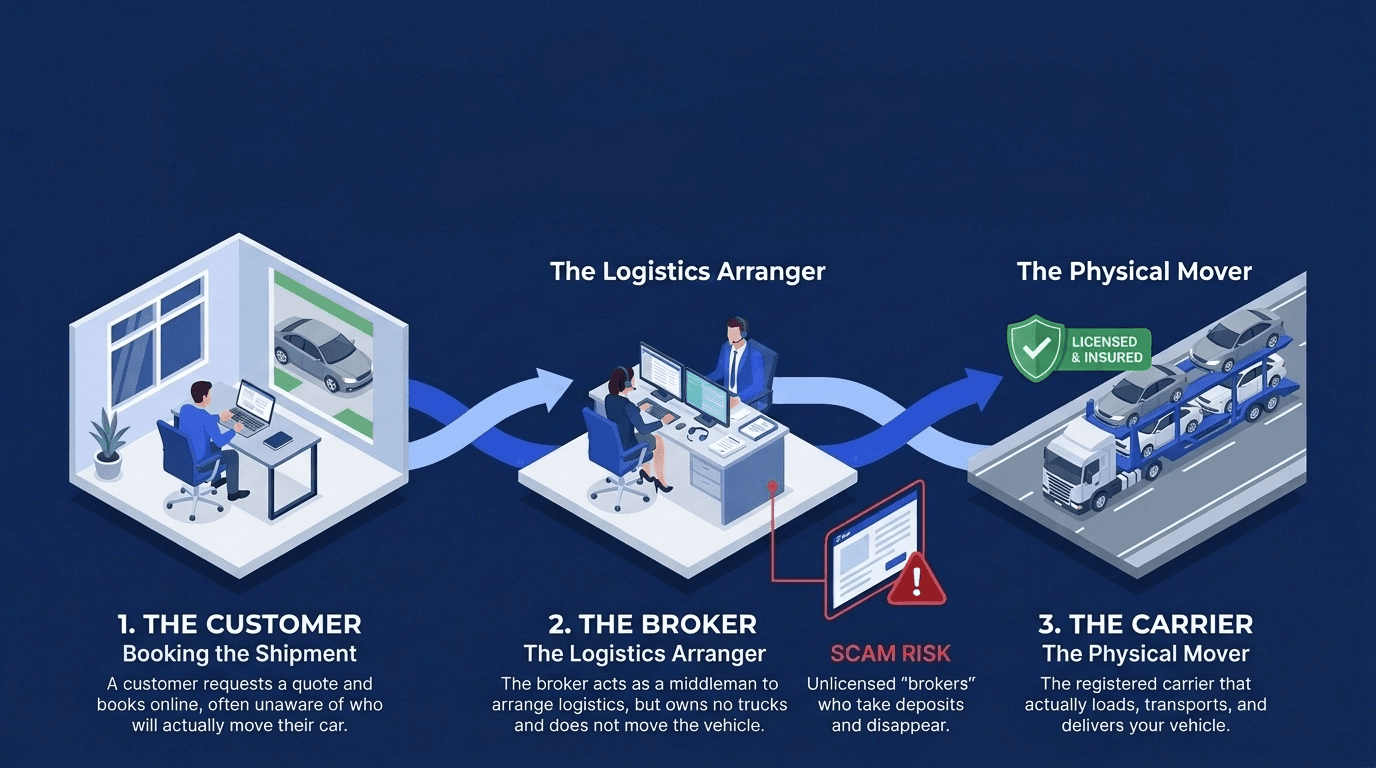
That mix of low experience and high trust makes auto transport scams easier to pull off than in many other industries. The way the industry is set up adds to the confusion. Many customers don’t realize that the company they book with often isn’t the company that moves their car.
What is the difference between a broker and a carrier?
A broker arranges your shipment. It finds a truck, sets the schedule and handles paperwork. A carrier owns the truck and physically moves your car. Both must hold active operating authority from the Federal Motor Carrier Safety Administration (FMCSA) to work across state lines.
Scammers use this setup to their advantage. An unlicensed broker can build a website, collect deposits and disappear without ever booking a truck. Because the customer expects a “middleman” to be involved, the warning signs are easy to miss.
Here’s the good news: every legitimate company leaves a paper trail. The nine warning signs below show you exactly where to look.
Warning Sign 1: A Deposit Before Carrier Assignment
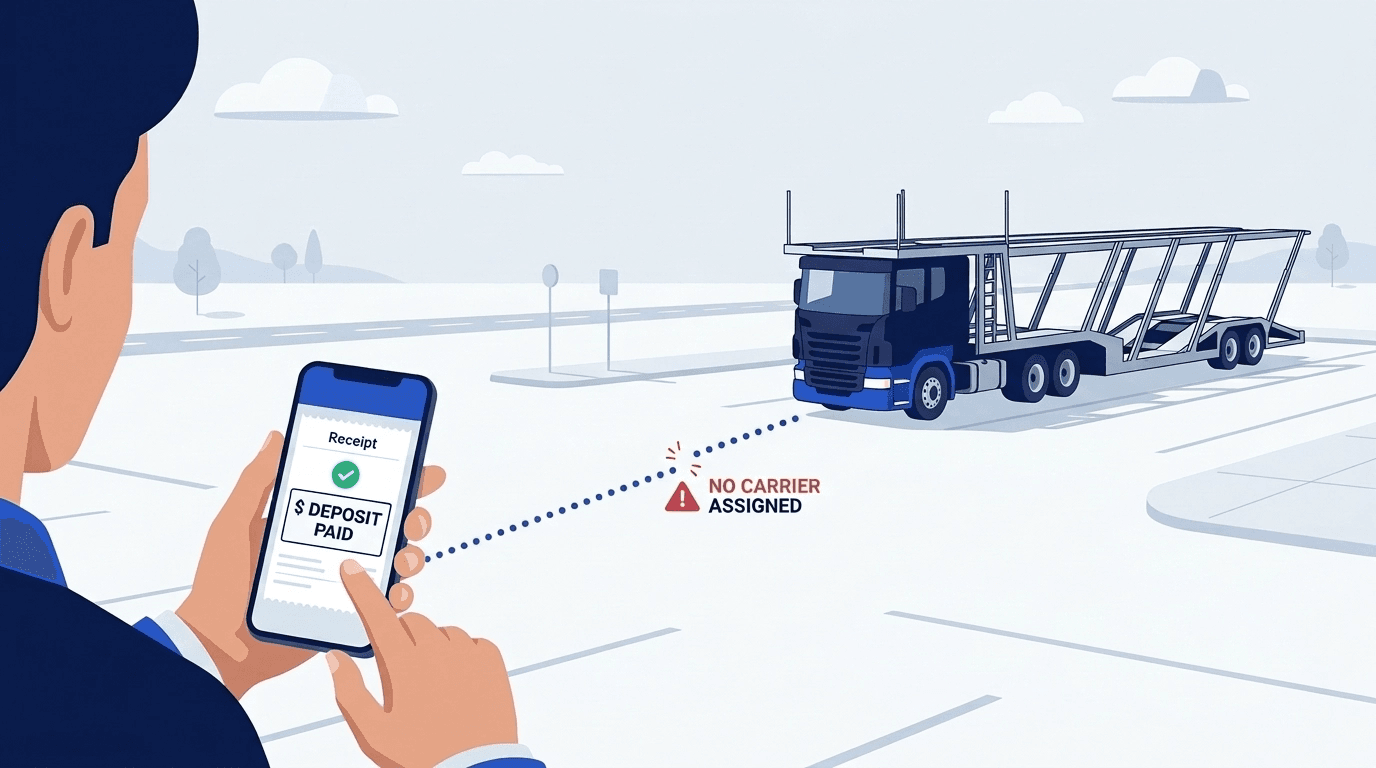
An upfront deposit taken before any truck is assigned is one of the most common risks in auto transport. Why? Because at that stage, nothing has actually been booked. You’re paying for a promise, not a shipment.
Some companies take a large deposit at booking, then struggle to find a carrier at the price they quoted. If they never find one, getting that money back can be slow or impossible.
A fair payment structure looks very different:
At booking: Nothing, or a very small verification hold.
After a carrier is assigned: A modest broker fee, if any.
At pickup or delivery: The remaining balance.
For example, Safeeds Transport places only a $1 card verification hold at booking. The full balance is due at pickup or delivery, after a carrier has been assigned and your car is ready to move.
Pro Tip: If a company asks for hundreds of dollars before it can name the carrier, ask why. If the answer is vague, look elsewhere.
Warning Sign 2: A Quote Far Below Every Other
When you compare quotes, most prices for the same route land in a similar range. So if one quote sits far below all the others, treat it as a warning, not a win.
Here’s why. Car shipping prices depend on real costs: fuel, distance, truck space and driver time. No company can make those costs disappear, so an unusually low number usually means something is missing from the deal.
What is a phantom quote?
A phantom quote is a price set so low that no carrier will accept the job. It exists only to win your booking.
Once you commit, one of two things tends to happen. Either no truck ever shows up, or the price rises later, which is covered in Warning Sign 7.
Pro Tip: To compare fairly, get at least three quotes for the same dates, vehicle and transport type. Ask each company what the price includes.
Understanding what determines car shipping cost in 2026 also makes it easier to spot a number that does not add up.
Warning Sign 3: Wire Transfer or Gift Card Payment
If a company asks you to pay by wire transfer, gift card, payment app or cryptocurrency, stop right there. It’s one of the clearest signs of car shipping fraud. These methods move money fast, and once it’s sent, it’s very hard to trace or get back.
The Federal Trade Commission doesn’t mince words on this point. According to the FTC’s guide to gift card scams, “No real business or government agency will ever tell you to buy a gift card to pay them.”
So what should you use instead? Safer payment methods give you a record and a way to dispute a charge:
Safer Payment Methods | Payment Methods to Avoid |
|---|---|
Credit card | Wire transfer |
Debit card through a secure online checkout | Gift cards |
Payment tied to a signed written contract | Cryptocurrency |
Certified check or cash to the driver at delivery, with a receipt | Payment apps sent to a personal account |
A credit card is usually the strongest choice for any deposit, because it gives you the right to dispute a charge if the service is never delivered.
Warning Sign 4: No Verifiable MC Number
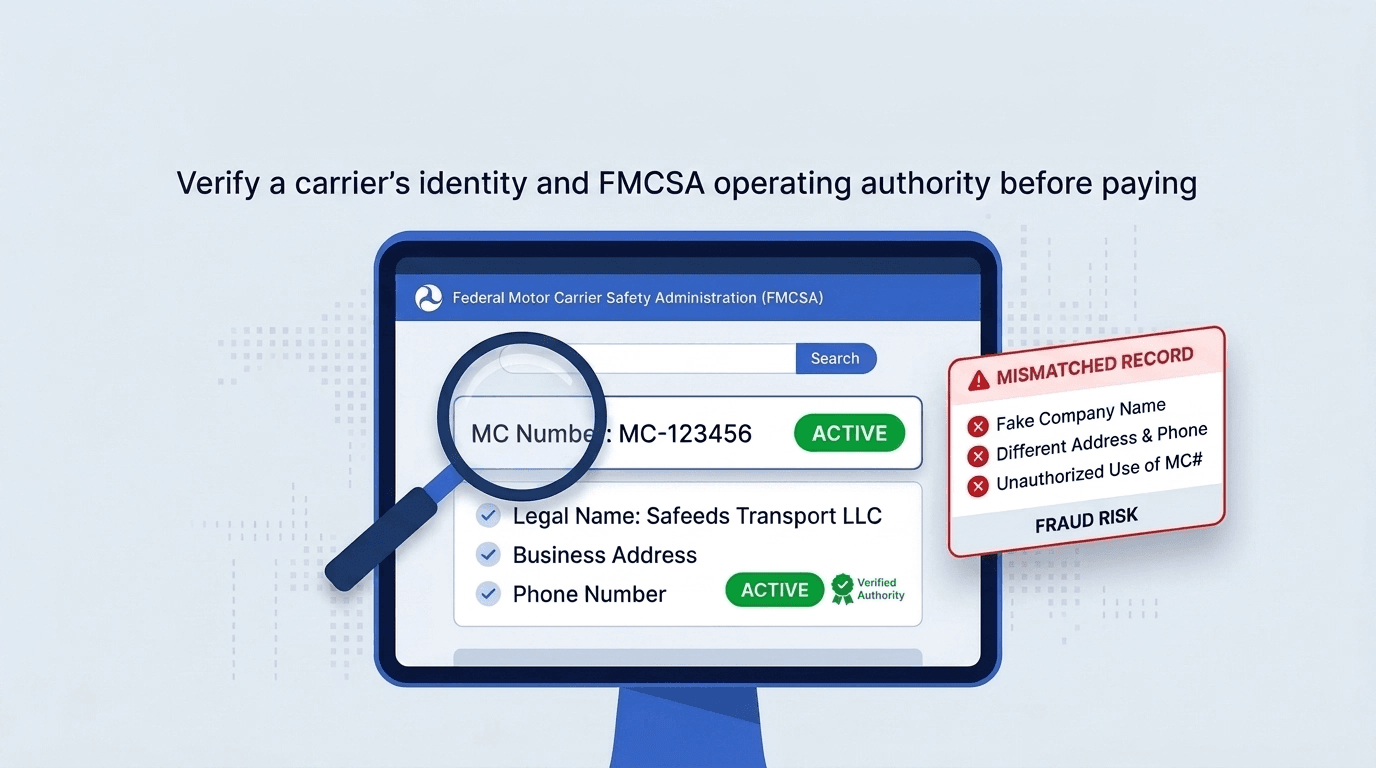
Every legitimate broker and carrier moving vehicles across state lines has a USDOT number and, in most cases, an MC number. The MC number shows that the company holds operating authority from the FMCSA.
A fake car shipping company often dodges this question. It may give you a number that belongs to another business, or claim it’s “still being processed.” Any of these answers is a reason to stop.
How do you check an MC number on the FMCSA snapshot?
Checking an MC number is free, takes only a few minutes and doesn’t require an account. Follow these four steps before you share any payment details with a car shipping company.
Ask for the number: Request the company’s MC or USDOT number in writing.
Search it on the FMCSA SAFER website: Enter the number in the FMCSA company snapshot search tool.
Match the details: The legal name, address, and phone number should match the company you are talking to.
Check the status: The operating status should show as active and authorized for the type of service the company sells, such as broker or carrier.
Pro Tip: This is the single most useful step you can take before paying anyone. Do it before you share a card number.
Warning Sign 5: Pressure to Book Today
Pressure tactics have one goal: to stop you from thinking clearly. A scammer wants you to commit before you compare quotes, read the contract or look up the company.
Sound familiar? Common pressure tactics include:
“This price is only good for the next hour.”
“We have one spot left on this truck.”
Repeated calls, texts and emails within minutes of a quote request.
Discounts that disappear if you do not pay immediately.
Here’s the thing: a legitimate quote doesn’t vanish in an hour. Most reputable companies give you a clear, written holding period so you can confirm your plans. Safeeds Transport, for example, locks its quoted price for 7 days.
If an agent won’t give you time to verify the company, that’s your answer. Real carrier space does fill up during busy seasons, such as the fall snowbird car shipping rush, but a trustworthy company will explain the timeline in writing rather than push you to pay on the spot.
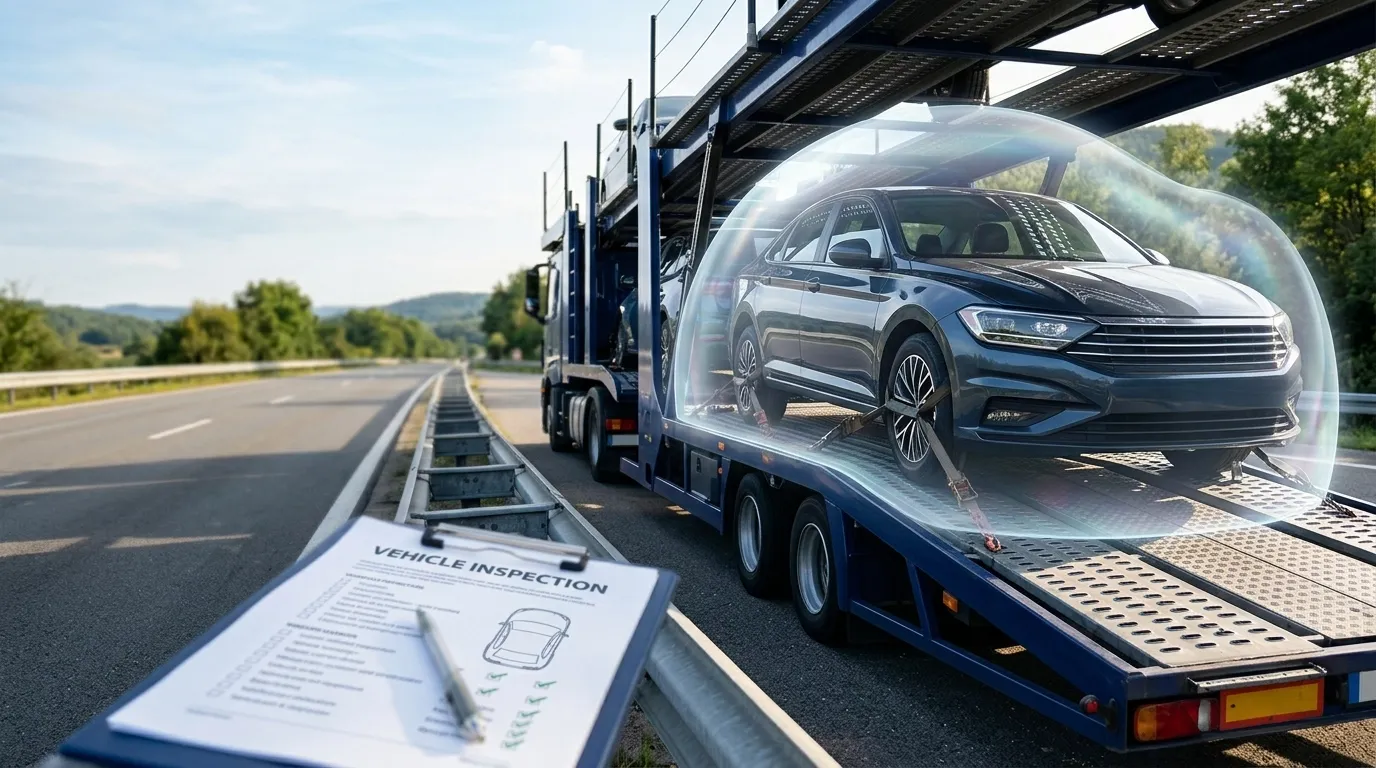
Warning Sign 6: No Written Bill of Lading
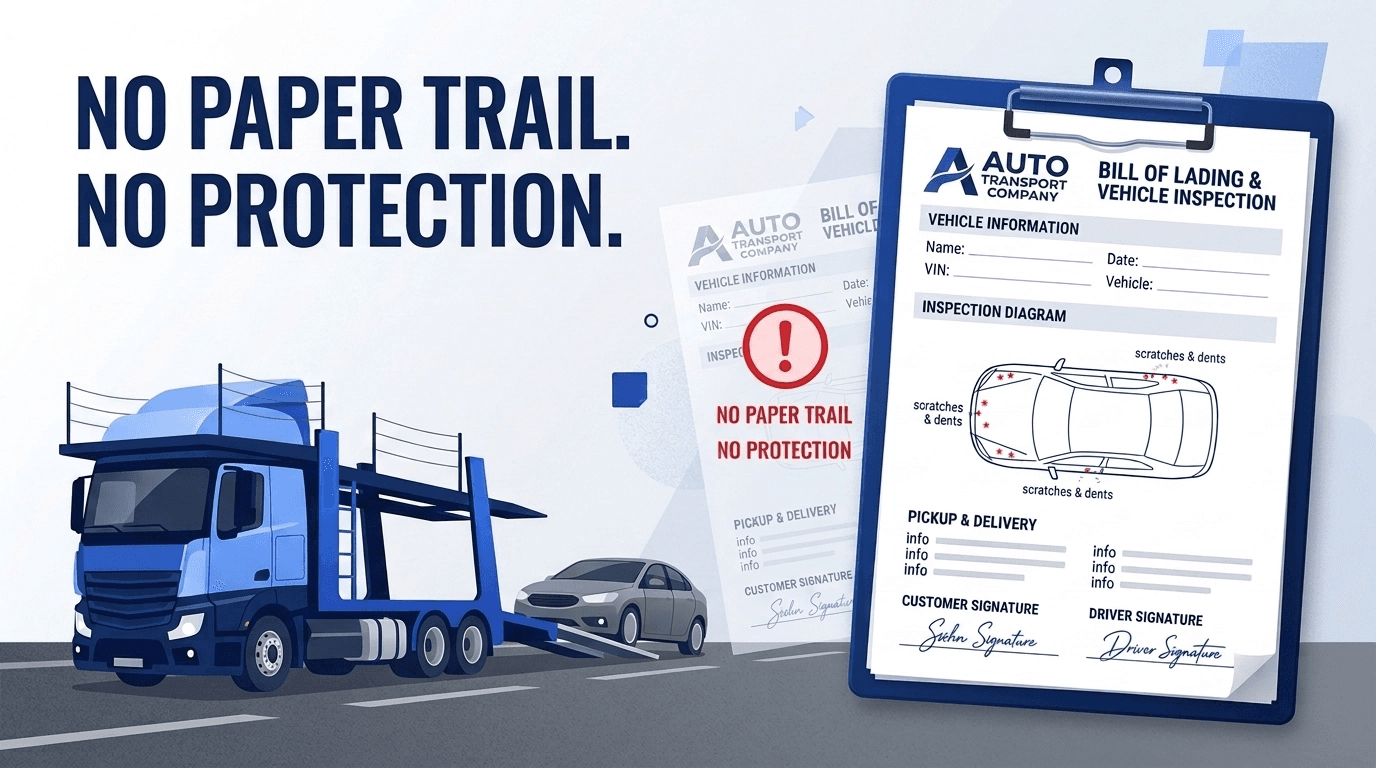
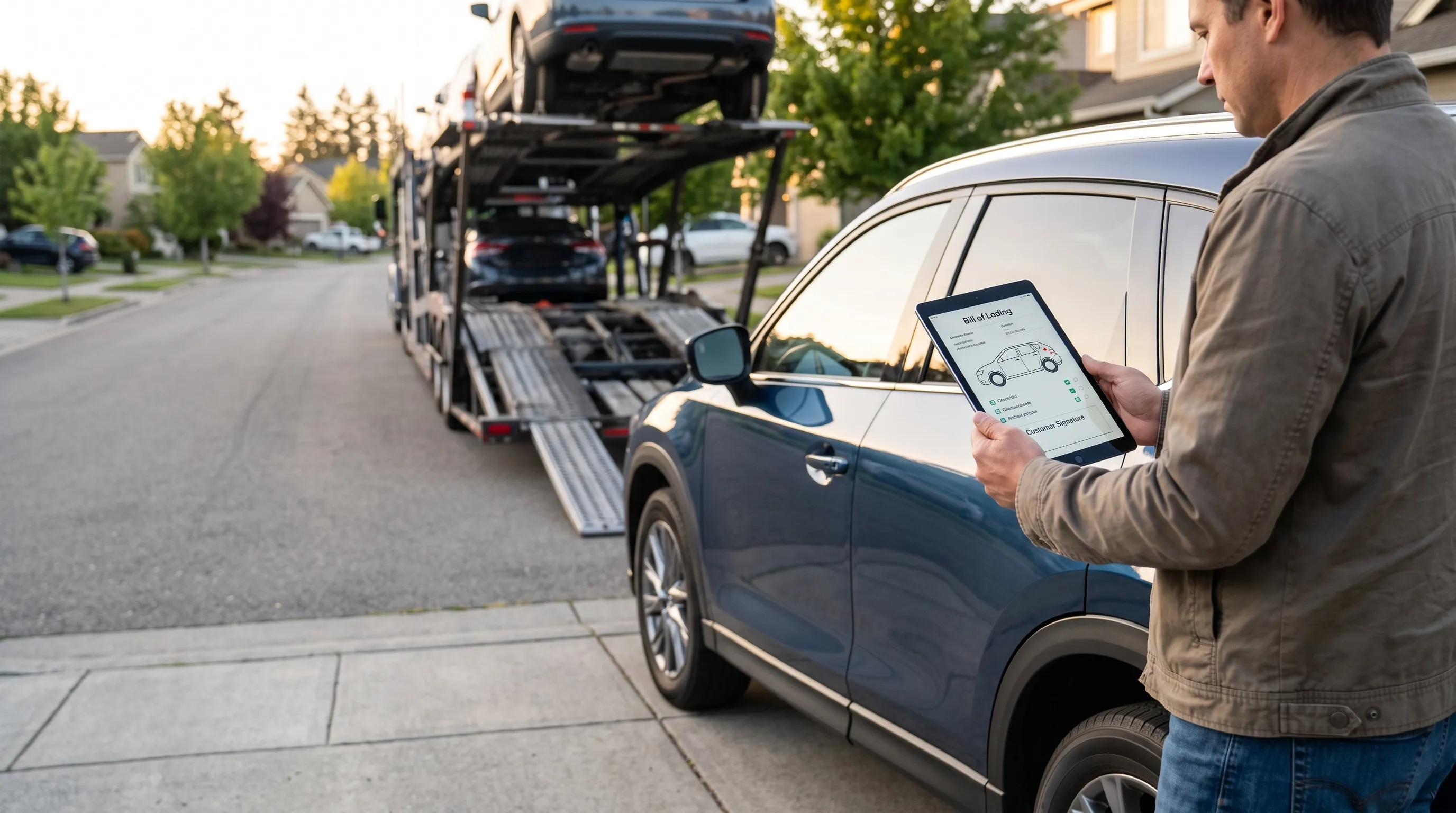
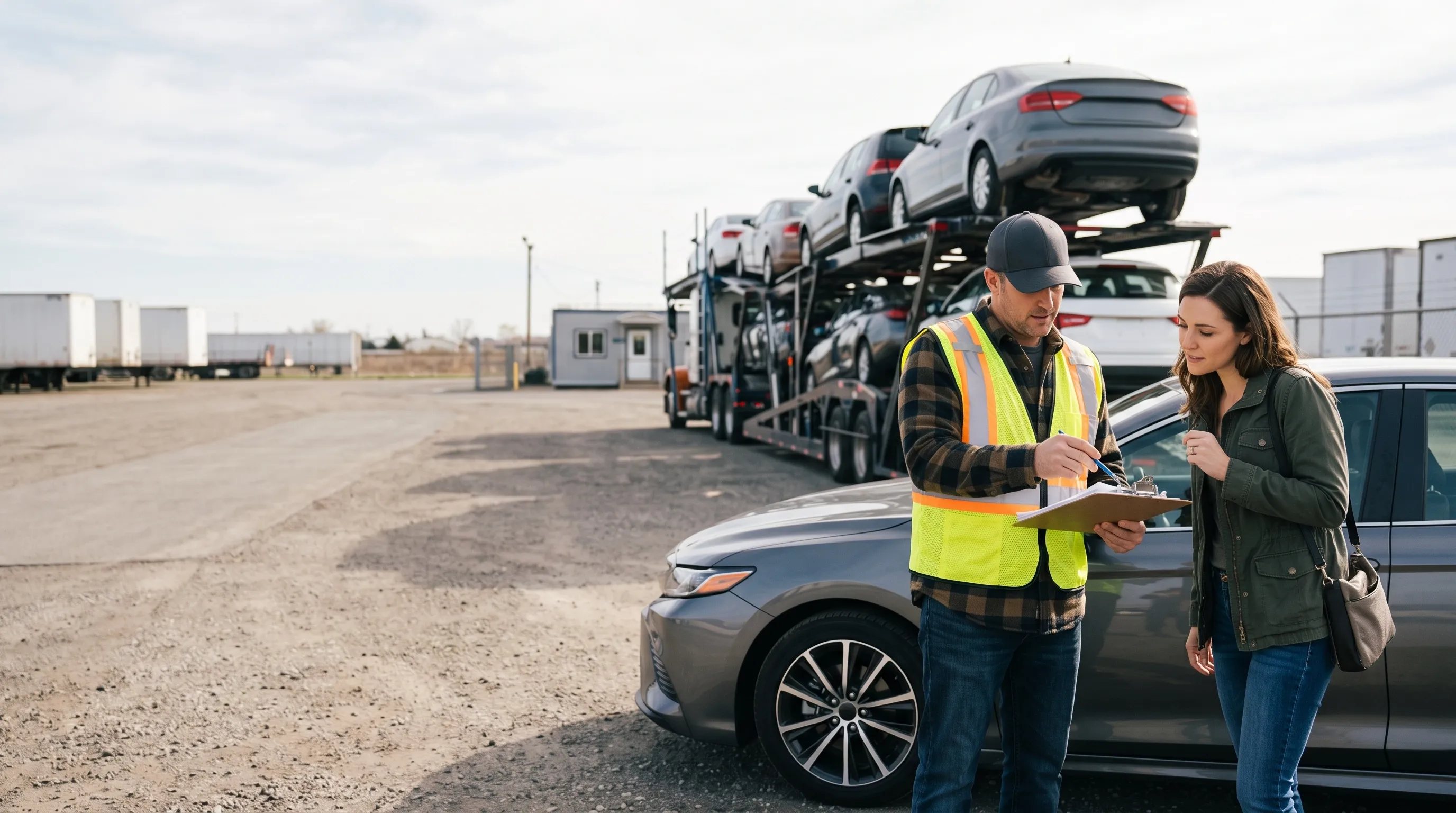
The Bill of Lading is the most important document in any car shipment. It records your car’s condition at pickup, the agreed terms and the signatures of both you and the driver.
Skip it, and you’re left with no proof of what your car looked like before transport. You also have no record of what you agreed to pay. Without it, any damage claim or price dispute becomes your word against theirs. It also affects what you can recover, so learn what car shipping insurance actually covers.
What should a Bill of Lading include?
A complete Bill of Lading protects you at both ends of the trip. Before you sign at pickup, make sure the document includes each of the following details.
Your vehicle’s year, make, model and VIN
A condition report with existing scratches, dents and damage marked
Pickup and delivery addresses
The agreed price and payment terms
Signatures from you and the driver at pickup and again at delivery
Pro Tip: Take your own dated photos of every side of the car at pickup, and keep a copy of the signed document.
The Bill of Lading car shipping guide explains what to check before you sign.
Warning Sign 7: The Price Changes After Pickup
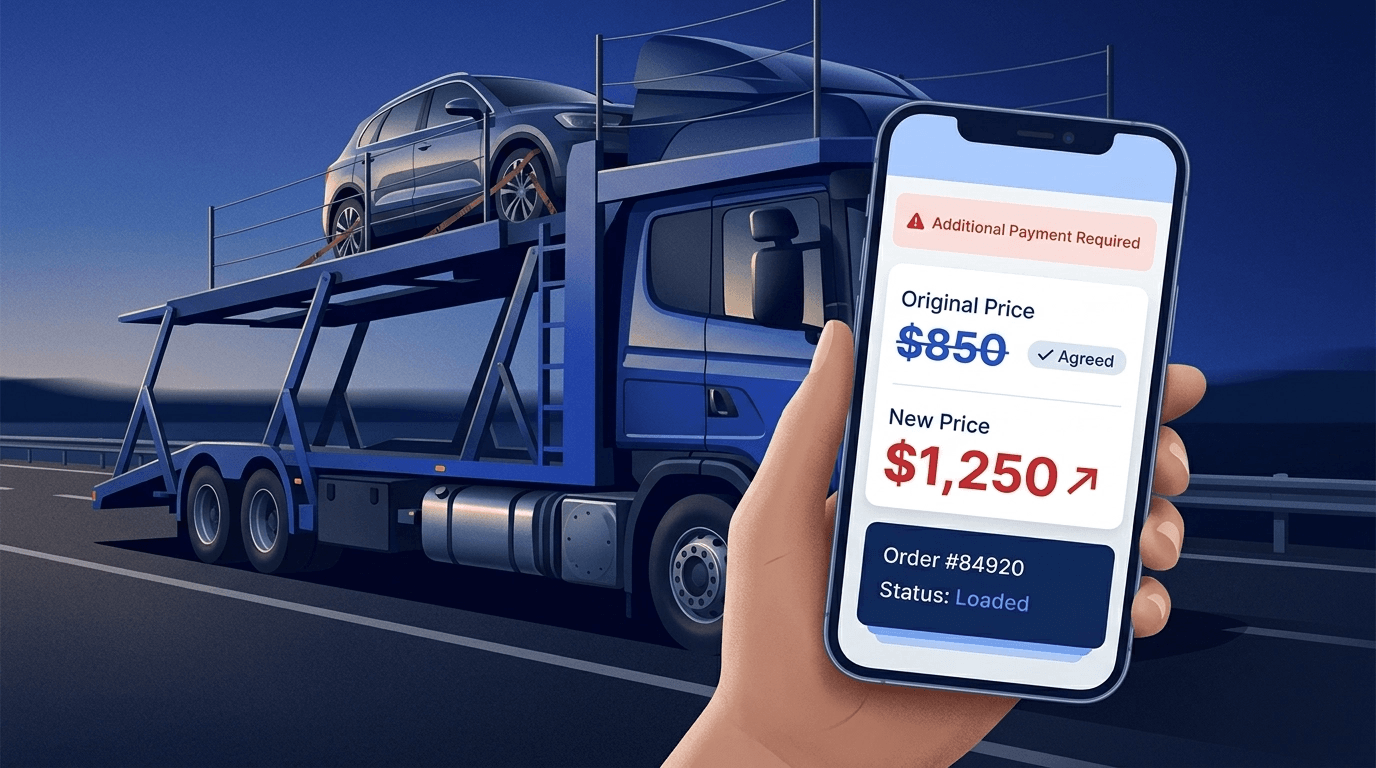
The car shipping bait and switch usually happens after your car is already on the truck. The company or driver suddenly demands more money, then refuses to deliver the car until you pay.
Why does this work? Because at that point, you have very little leverage. Your car is in someone else’s hands, often hundreds of miles away.
Is a price change ever legitimate?
Sometimes, yes. The key is timing. Here’s how to tell the difference:
Usually Legitimate | Red Flag |
|---|---|
A price update before pickup because the vehicle size, condition or address changed | A new price after pickup with no written reason |
A change you agree to in writing before the car is loaded | A driver holding the car until you pay more |
An extra fee listed clearly in the original contract | Fees that never appeared in any document you signed |
The best protection is a written price that matches your Bill of Lading, along with a confirmed pickup date, such as the one offered through Safeeds Transport’s Guaranteed Pick-Up. If the numbers change after pickup and you never agreed in writing, do not pay extra on the spot. Document everything, contact the broker in writing, and see the reporting steps below.
Warning Sign 8: Untraceable Contact Details
A real company is easy to find. A fake one usually isn’t. Before you book, take a few minutes to check whether the company’s contact details actually lead somewhere.
Watch out for:
No physical business address, or only a P.O. box
A mobile number as the only phone contact
A free email address instead of a company domain
A website that was created very recently
A company name that does not match its FMCSA record
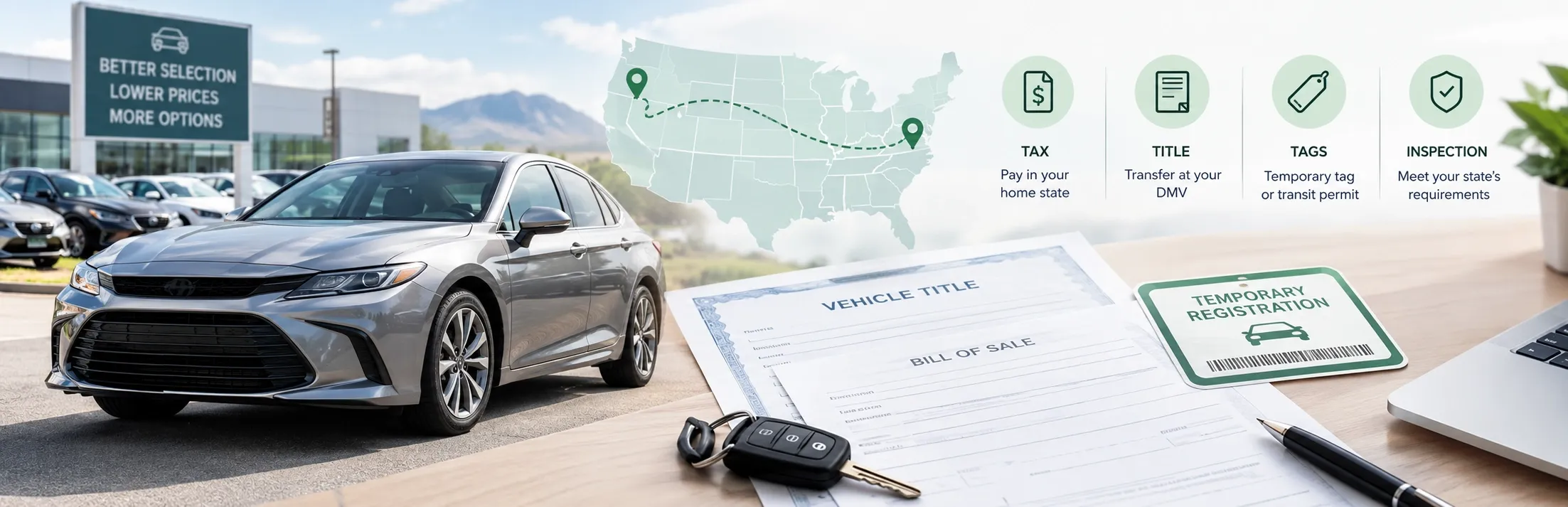
A traceable company provides a business address, a company phone line, an email address on its own domain, and a legal name that matches its registration. This matters even more when you are buying a car out of state and arranging transport from a distance.
Pro Tip: You can test this in a few minutes. Call the main number during business hours, search the address on a map, and compare the name on the website with the name on the FMCSA snapshot. A fake car shipping company often fails at least one of these checks.
Warning Sign 9: Reviews That All Arrived in One Week
Online reviews can help, but only if they’re real. Fake reviews are a known problem across many industries, and auto transport scams often rely on them to look trustworthy.
In August 2024, the FTC announced a final rule banning fake reviews and testimonials, including the buying and selling of fake consumer reviews. Even so, it pays to read reviews with a careful eye.
Here are the patterns to watch for:
Many five-star reviews posted within a few days
Short, vague praise with no route, date or vehicle details
Reviewers who have posted only one review ever
The same agent’s name repeated in nearly every review
Look at the company’s complaint history across several platforms, not just one star rating. You can see how Safeeds Transport presents its own customer reviews and ratings. Read the negative reviews too, and notice how the company responds. A business that addresses complaints openly is usually more trustworthy than one with a perfect score and no criticism at all.
What to Do If You Have Been Scammed
If you think you’ve been caught by car shipping fraud, don’t panic, but do act quickly. The sooner you move, the better your chances of getting your money or your vehicle back.
Stop all further payments. Do not send more money, even if the company promises to fix the problem.
Collect your evidence. Save contracts, receipts, emails, texts, call logs, ads and photos of your car.
Contact your bank or card issuer. Ask about disputing the charge. Credit card disputes usually have the best chance of success.
Report the company. File reports with the agencies listed below.
Warn others. Leave a factual review that describes what happened, without exaggeration.
Where do you report a car shipping scam?
Reporting a scam helps protect other customers and creates an official record of what happened. Each agency below handles a different part of the problem, so filing with more than one gives your case the best chance of being reviewed.
Where to Report | What It Handles |
|---|---|
FTC at ReportFraud.ftc.gov | Fraud and scam reports used in national investigations |
FMCSA National Consumer Complaint Database | Complaints against brokers and carriers |
BBB Scam Tracker | Public scam warnings for other consumers |
Your state attorney general | Consumer protection cases in your state |
Local police | Cases where a vehicle is being held or was not delivered |
If a driver is holding your car for extra payment, contact local police in the area where the car is located, and bring your signed contract and Bill of Lading.
What People Also Ask About Car Shipping Scams
Still have questions? You’re not alone. Here are clear answers to the ones customers ask most often before they pay.
How do I avoid car shipping scams?
Avoid car shipping scams by checking the company’s MC number on the FMCSA snapshot, comparing at least three quotes and getting every price in writing. Never pay by wire transfer or gift card, and do not pay a large deposit before a carrier is assigned. If an agent pressures you to book immediately, step back and verify first.
Should I ever pay a deposit upfront?
A small deposit can be normal, but a large upfront deposit before a carrier is assigned is risky. Ask exactly what the deposit covers and when it becomes non-refundable. Pay by credit card so you can dispute the charge if needed. Some companies, including Safeeds Transport, require only a $1 verification hold at booking.
How do I check a company’s MC number?
Ask the company for its MC or USDOT number in writing, then search it on the FMCSA SAFER website using the company snapshot tool. Check that the legal name, address and phone number match the company you are dealing with, and that its operating status is active and authorized for broker or carrier work.
What is a bait-and-switch car shipping quote?
A bait-and-switch quote starts with a low price that wins your booking, then rises later, often after pickup. The company may claim fuel costs or carrier demand changed. Protect yourself by getting a written price, matching it to your Bill of Lading and refusing any increase you did not agree to in writing.
What should I do if a carrier demands more money at delivery?
Stay calm and do not pay extra on the spot unless the fee appears in your signed contract. Contact the broker in writing and ask for an explanation. Keep copies of your contract and Bill of Lading. If the driver refuses to release your car, contact local police and file complaints with the FMCSA and FTC.
Where do I report a car shipping scam?
Report car shipping scams to the FTC at ReportFraud.ftc.gov and to the FMCSA National Consumer Complaint Database. You can also file a complaint with your state attorney general and post a warning on BBB Scam Tracker. Contact your bank or card issuer first, since a quick dispute gives you the best chance of recovering money.
Are fake reviews common in this industry?
Fake reviews appear in many industries, including auto transport. Watch for bursts of five-star reviews posted within a few days, vague praise with no route or date, and reviewers with only one review. Compare a company’s complaint history across several platforms, and read how it responds to negative feedback before you trust its rating.
What payment methods should I never use?
Never pay a car shipping company by wire transfer, gift card, cryptocurrency or a payment app sent to a personal account. These methods are very hard to trace or reverse. A credit card is usually the safest choice for deposits, and payment at delivery should always be tied to a signed contract and receipt.
Is a very low quote always a scam?
Not always, but it deserves a closer look. A quote far below every other may be a phantom quote meant to win your booking, followed by no pickup or a later price increase. Ask what the price includes, check the company’s MC number, and compare at least three quotes for the same dates and vehicle.
How do I verify a company is real before I pay anything?
Check the MC or USDOT number on the FMCSA snapshot and confirm the name and address match. Call the company’s main phone line, search its business address, and read reviews across several platforms. Ask for a written contract that lists the price, payment terms, and cancellation policy. A legitimate company will provide all of this without pressure.
Booking With Confidence and Avoiding Car Shipping Scams
Most car shipping scams depend on speed and trust. They work best when a customer feels rushed, sees a price that seems too good to pass up, and pays before checking who is on the other end. The fix is simple: slow down for a few minutes. Verifying an MC number, getting the price in writing, and paying through a method you can dispute removes most of the risk before it starts.
When you are ready to ship, choose a licensed broker that is open about its registration, pricing, and payment terms. Request a free quote from Safeeds Transport to see a clear price for your route, locked for 7 days, with no upfront payment beyond a $1 card verification hold.