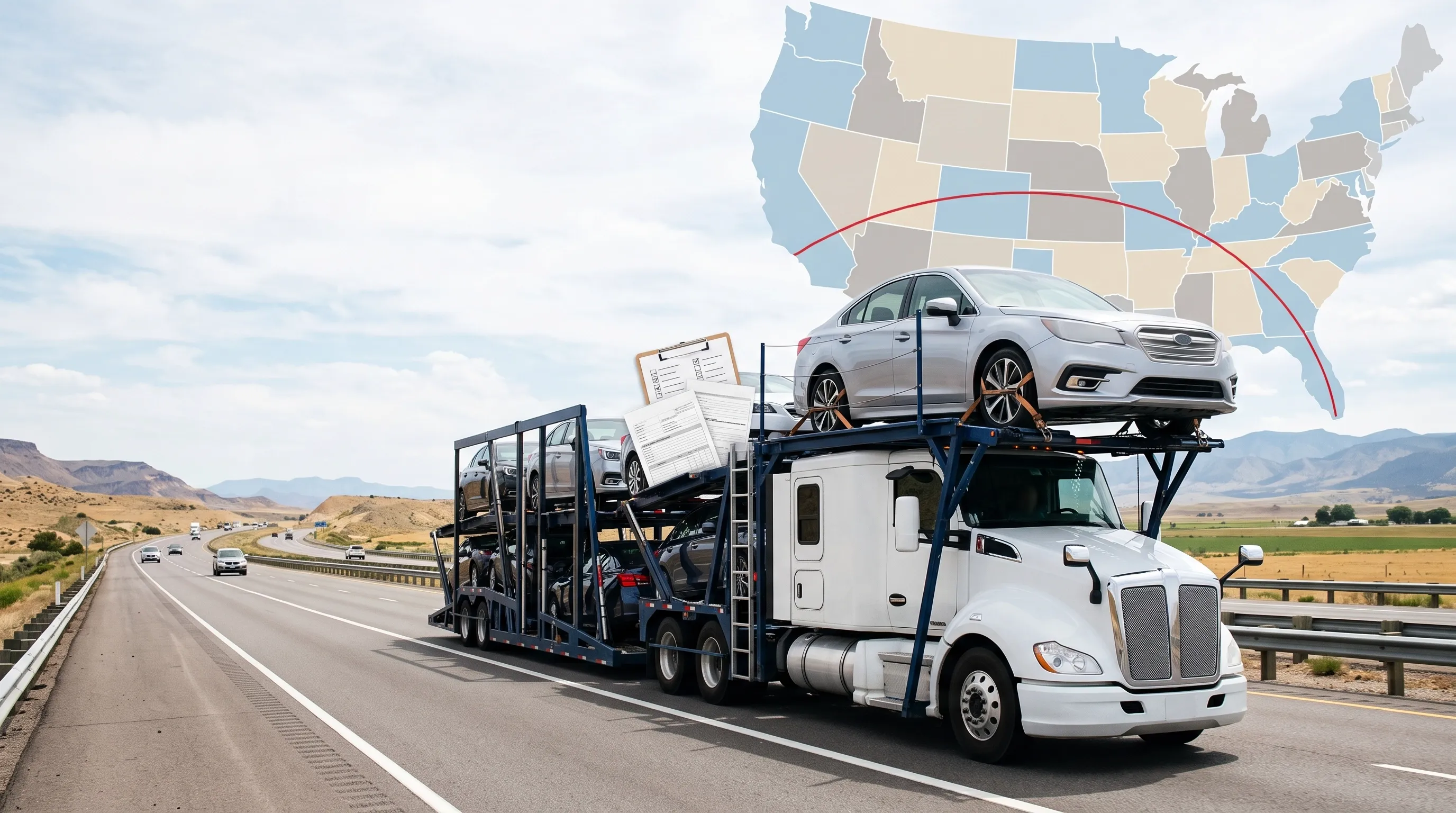
A bill of lading in car shipping is the inspection report and receipt the driver fills out at pickup and delivery. Before you sign, check that every scratch, dent, and chip is marked on the vehicle diagram, the mileage and contact details are correct, and you have photos. Your signature confirms the car’s condition.
Your car arrives after a 1,200-mile trip, the driver hands you a tablet, and the light is fading. You are tired, the driver is behind schedule, and the screen just says "Sign here." Many people sign within seconds.
That moment matters more than almost any other part of the shipment. In bill of lading car shipping, your signature decides whether a new dent is the carrier’s responsibility or your own expense. Many damage disputes are lost not because of the damage, but because of a form nobody read carefully.
Planning a move? Get a free car shipping quote from Safeeds Transport in about 30 seconds, with no upfront payment.
Key Takeaways
A bill of lading in car shipping is the document a carrier issues at pickup and delivery, serving as a receipt, a condition report, and a record of the transport terms.
Before signing a car shipping bill of lading at pickup, every scratch, dent, chip, and crack should be marked on the inspection diagram, and the VIN and odometer reading should match the vehicle.
Taking 20 to 30 timestamped photos of a vehicle before transport creates independent evidence of its condition if the carrier’s records are incomplete or unclear.
Signing a clean bill of lading at delivery confirms the car arrived with no new damage, which makes a later damage claim very difficult to prove.
Under the Carmack Amendment, interstate carriers are liable for transit damage and must give shippers at least nine months to file a claim, but noting damage on the delivery BOL and reporting it promptly gives a claim a much stronger footing.
What a Bill of Lading Is
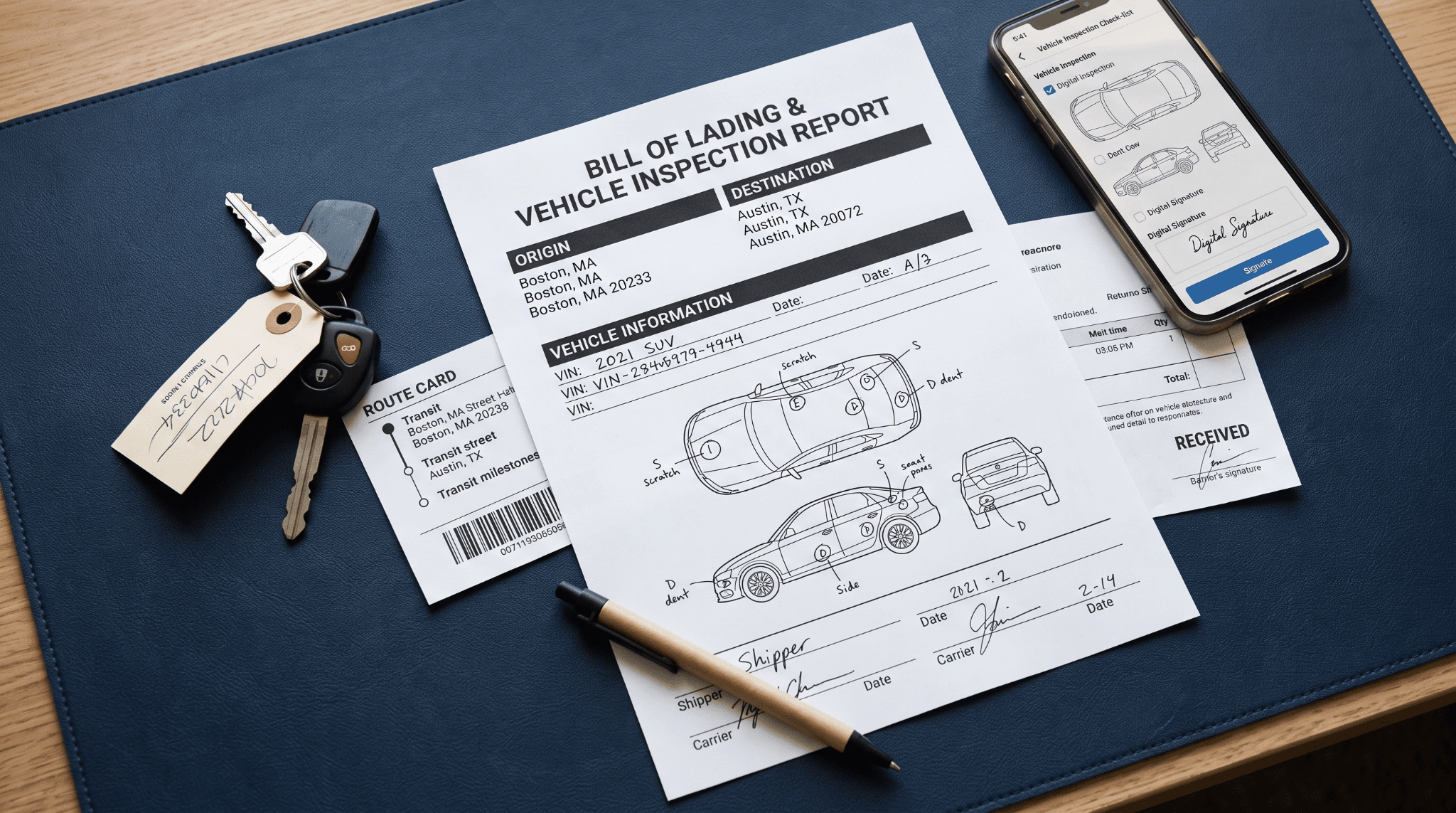
Bill of lading (BOL): The document a carrier issues when it takes possession of your vehicle. It serves as a receipt, a condition report, and a record of the transport terms, and it is signed at both pickup and delivery.
If you have ever wondered what a bill of lading is, think of it as your car’s travel passport. It goes with the vehicle from the first handoff to the last, and it records the car’s story along the way.
A BOL does three jobs at once:
Receipt. It proves the carrier has your vehicle.
Condition report. It records how the car looked at pickup, including any pre-existing damage.
Transport record. It lists the shipper, the receiver, the origin, the destination, and the key terms of the move.
This isn’t optional paperwork. The federal bill of lading requirements in 49 CFR 373.101 require motor carriers to issue a receipt or bill of lading for property they move across state lines. That document must name both parties, list the origin and destination, and describe what is being shipped.
Here’s a point that often confuses first-time shippers. Your booking and your BOL are two different documents. When you book with Safeeds Transport, you receive a booking confirmation with your price, dates, and route. Safeeds Transport is a broker that connects you with a licensed, insured carrier, so the car shipping bill of lading comes from that carrier, and the carrier’s driver fills it out.
Many carriers now use an electronic BOL (eBOL) on a phone or tablet. The driver taps damage onto a digital car outline, attaches photos, and captures your signature on screen. Paper or digital, you review it the same way.
What Gets Recorded at Pickup
Pickup is where your baseline is set. Everything you check at delivery is compared against what the driver writes down here, so this is the moment to slow down.
A typical car shipping bill of lading includes:
Shipper and receiver names, phone numbers, and addresses
Vehicle year, make, model, and color
The 17-character Vehicle Identification Number (VIN)
The odometer reading at pickup
The pickup date and time
The carrier’s company name, USDOT number, and contact details
The inspection diagram with existing damage marked
The driver's signature and your signature
Some carriers also note the fuel level, the number of keys, and whether the car runs and drives.
How Does The Vehicle Condition Diagram Work?
The inspection diagram is a simple outline of a car, usually drawn from the top, front, rear, and both sides. The driver marks each area of damage on the outline and labels it with a short letter code. Together, those marks form the vehicle inspection report transport carriers rely on to show the car’s condition before loading.
Codes vary a little between carriers, but here are the ones you will see most often:
Code | Meaning | What it usually describes |
S | Scratch | A line in the paint or clear coat |
D | Dent | A pushed-in area of a panel |
C | Chip | A small spot where paint has flaked off |
CR | Cracked | A crack in glass, a light, or plastic trim |
B | Broken | A part that is snapped or not working |
M | Missing | A part that should be there but is not |
R | Rust | Corrosion on the body or trim |
G | Gouge | A deep scratch that reaches the metal |
Size notes matter too. “S, 2 in, rear bumper” is clear evidence, while “small scratch” leaves room for debate.
Your pickup sign-off checklist:
Every dent, scratch, chip, and crack you know about is marked in the right spot.
The VIN and odometer reading match the vehicle.
Your contact details and the delivery address are correct.
You have a copy, paper or digital, before the car leaves.
Pro tip: On an eBOL, ask the driver to show you the full diagram screen before you sign. Signature pages often appear separately from the damage notes, which makes it easy to sign without seeing what was recorded.
Photographing Your Vehicle Before It Leaves
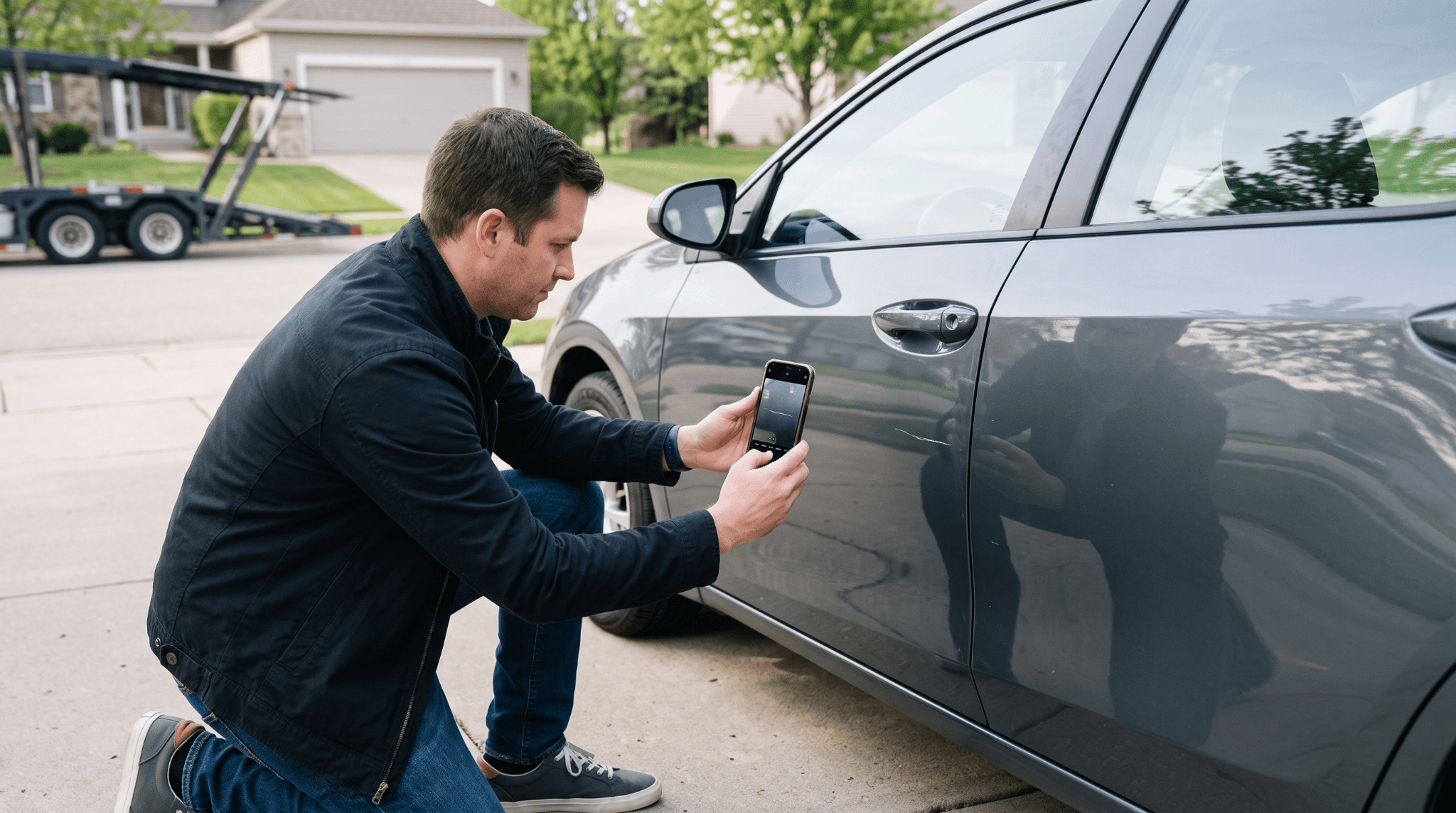
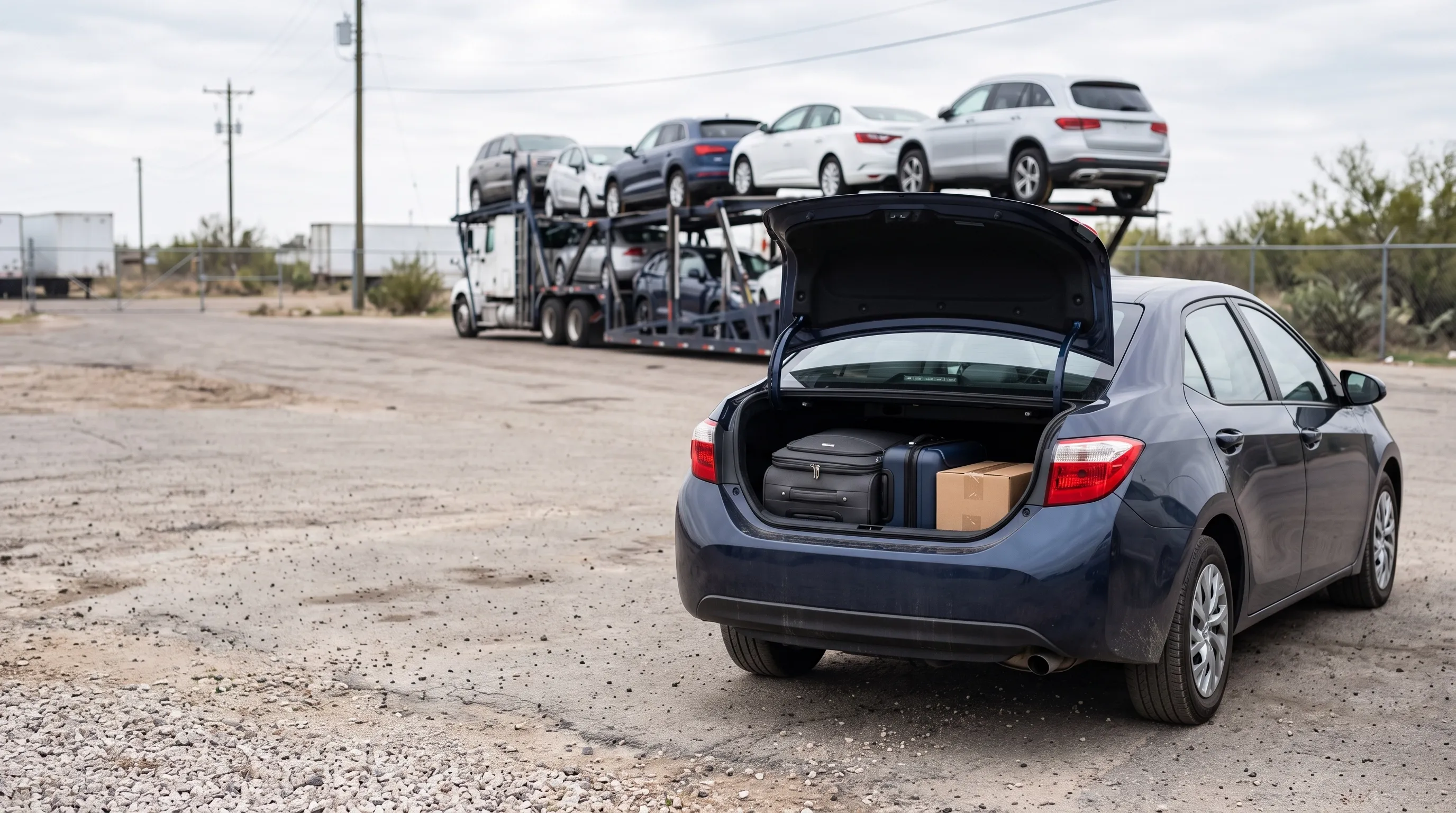
The BOL is the carrier’s record. Your photos are yours. If a mark is missed, misplaced, or written too vaguely, timestamped photos are often the clearest proof of how your car looked at pickup.
Think of photos as a backup to the vehicle inspection report transport companies prepare. They also make delivery faster, because you can compare the car side by side with images taken days earlier instead of relying on memory.
What to capture (aim for 20 to 30 photos):
The front, rear, and both sides from a few steps back
All four corners, angled to show the bumpers and fenders
The roof and hood
Each wheel and tire
Close-ups of every area of pre-existing damage, with a coin or key for scale
The odometer and dashboard, with the engine running if possible
The seats, floor, and cargo area
How to prepare:
Wash the car one or two days before pickup. Dirt hides scratches and makes new ones harder to prove.
Shoot in daylight or bright, even light. Shadows and dim garages hide fine marks.
Keep your phone’s timestamp and location settings on. That data shows when and where each image was taken.
Remove personal items and loose accessories. This keeps every panel and seat visible.
Back everything up to cloud storage the same day. A lost phone should not mean lost evidence.
Pro tip: Record a slow walk-around video and say each panel’s name out loud as you film (“driver side front door, no damage”). It creates one continuous record that is hard to dispute.
Take your final set right before the driver arrives, or with the driver present, so there is no gap between your photos and the BOL.
The Delivery Inspection
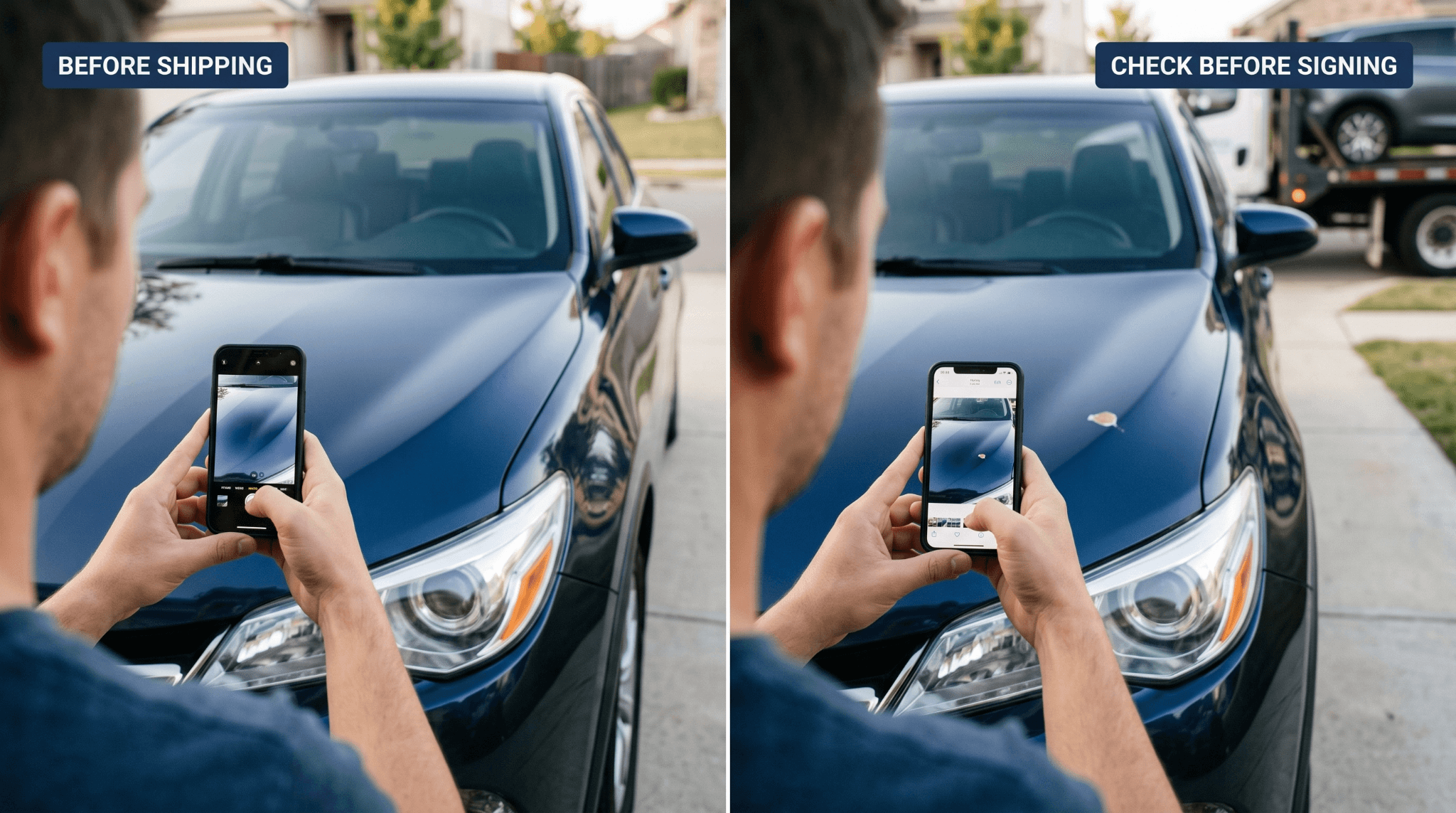
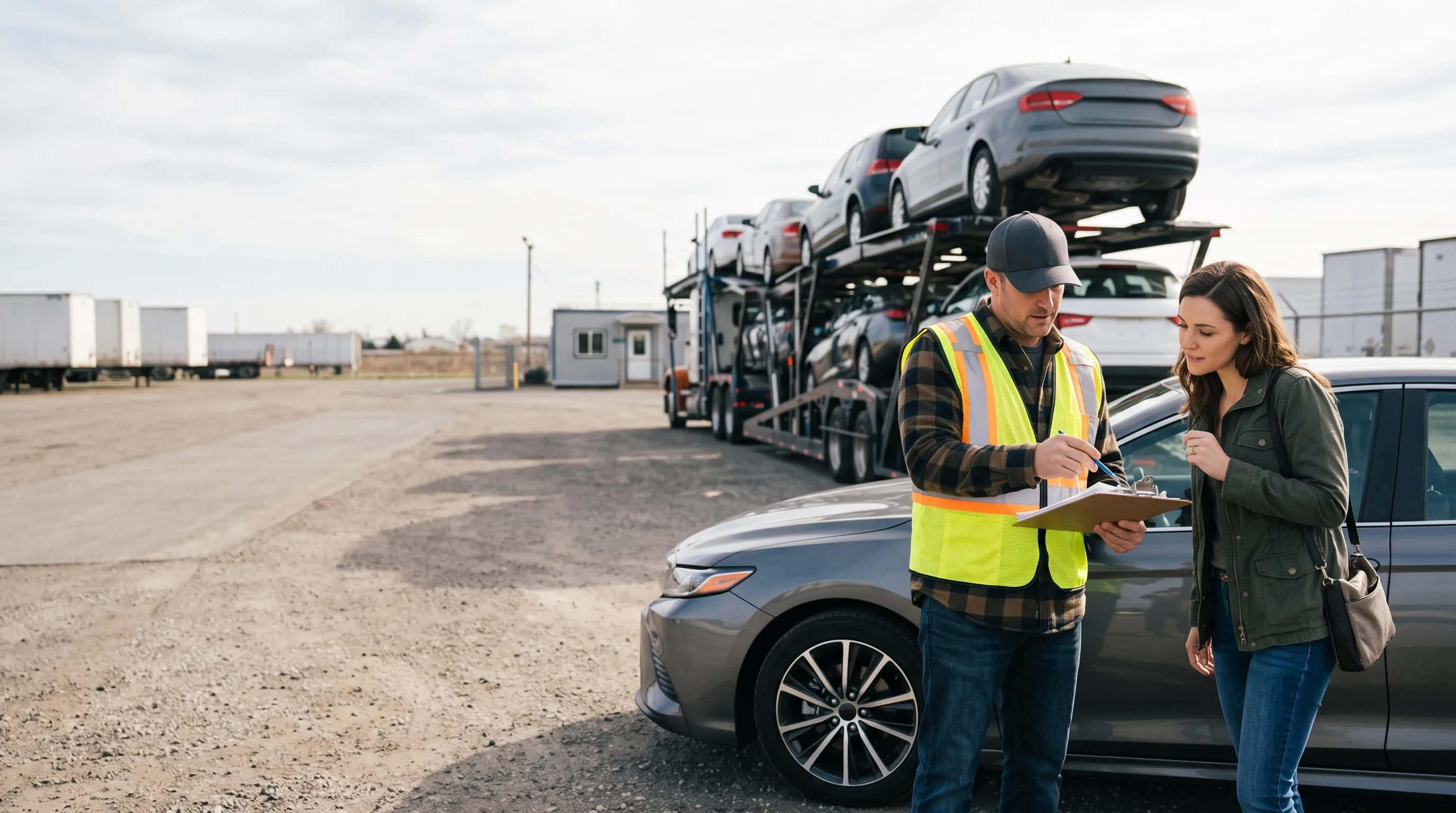
Delivery is your second checkpoint, and it matters just as much as the first. The delivery inspection car shipping customers complete is their one chance to compare the car against the pickup record before signing.
A careful check takes about 10 to 15 minutes. Here’s how to do it:
Have your pickup BOL copy and photos open before the truck arrives.
Walk around the car in the same order you used at pickup.
Compare each panel with the inspection diagram and your photos.
Look closely at the glass, mirrors, lights, and bumpers.
Compare the odometer with the pickup reading. A few miles from loading is normal, but a big jump is worth asking about.
Check the interior for stains, tears, or missing items, and confirm you have every key.
Start the car and make sure the dashboard warning lights look the same as before.
If it is safe, look under the front and rear for fresh leaks or scrapes.
Sign only after you finish. Anything new belongs on the BOL before your signature does.
Example: Say your SUV arrives and you spot a fresh chip on the hood that isn’t on the pickup diagram or in your photos. Instead of signing, you mark it on the diagram, write “New chip, 0.5 in, center of hood,” ask the driver to initial it, and photograph it. Those 3 minutes create a record that supports a claim later.
What If Your Car Arrives At Night Or In Bad Weather?
Carriers plan around traffic, weather, and other stops, so evening and rainy deliveries happen. Shine a strong flashlight across each panel at an angle, which makes dents and scratches easier to spot. Rain hides fine scratches, so dry a few panels with a towel.
If you still can’t check everything, write a clear note beside your signature, such as “Delivered after dark in rain, full inspection not possible.” Photograph the car right away, inspect it again in daylight, and report anything new to the carrier and your broker the same day. This doesn’t guarantee a claim will be approved, but it gives you much more to work with than a clean signature.
Pro tip: Keep a small delivery kit by the door: a flashlight, a microfiber towel, and your pickup photos saved offline on your phone.
Never Sign a Clean BOL Before You Look
A clean BOL is one signed at delivery with no new damage noted. Your signature says the car arrived in the same condition it left, and once it is signed, that statement is very hard to undo.
Here’s why. When a claim is reviewed, the carrier’s insurer compares the pickup and delivery records. If the delivery record shows no new damage and carries your signature, the insurer has written confirmation from you that the damage didn’t happen in transit. Your photos can still help, but now they have to argue against your own signed statement.
Factor | Clean BOL (no new damage noted) | Noted BOL (new damage written down) |
What your signature confirms | No new damage on arrival | Specific new damage on arrival |
Effect on a later claim | Weakens it, often seriously | Supports it from the start |
Burden on you | You must disprove your own signature | The record already shows the problem |
Typical next step | Request a review with limited leverage | File a claim with the carrier’s insurer |
Rushing the delivery inspection car shipping customers are asked to complete is a common reason people sign clean. The driver is running late, it is cold outside, or the paperwork just looks routine. None of those is a good reason to skip the check.
How Do You Write New Damage On The Delivery Bol?
Clear, specific notes are easier for an insurance adjuster to act on. Follow these five steps:
Mark the spot on the inspection diagram using the same codes from pickup.
Describe it in a few words: what it is, where it is, and how large it is. For example, “New 3 in dent, driver side rear door.”
Ask the driver to initial or sign beside the note. The driver signature confirms they saw it at delivery.
Photograph the damage with the driver present, ideally with the truck in the background, plus a photo of the completed BOL.
Get a copy of the final BOL before the driver leaves.
Stick to facts. Calm, measured wording reads as reliable evidence.
Using the BOL in a Damage Claim
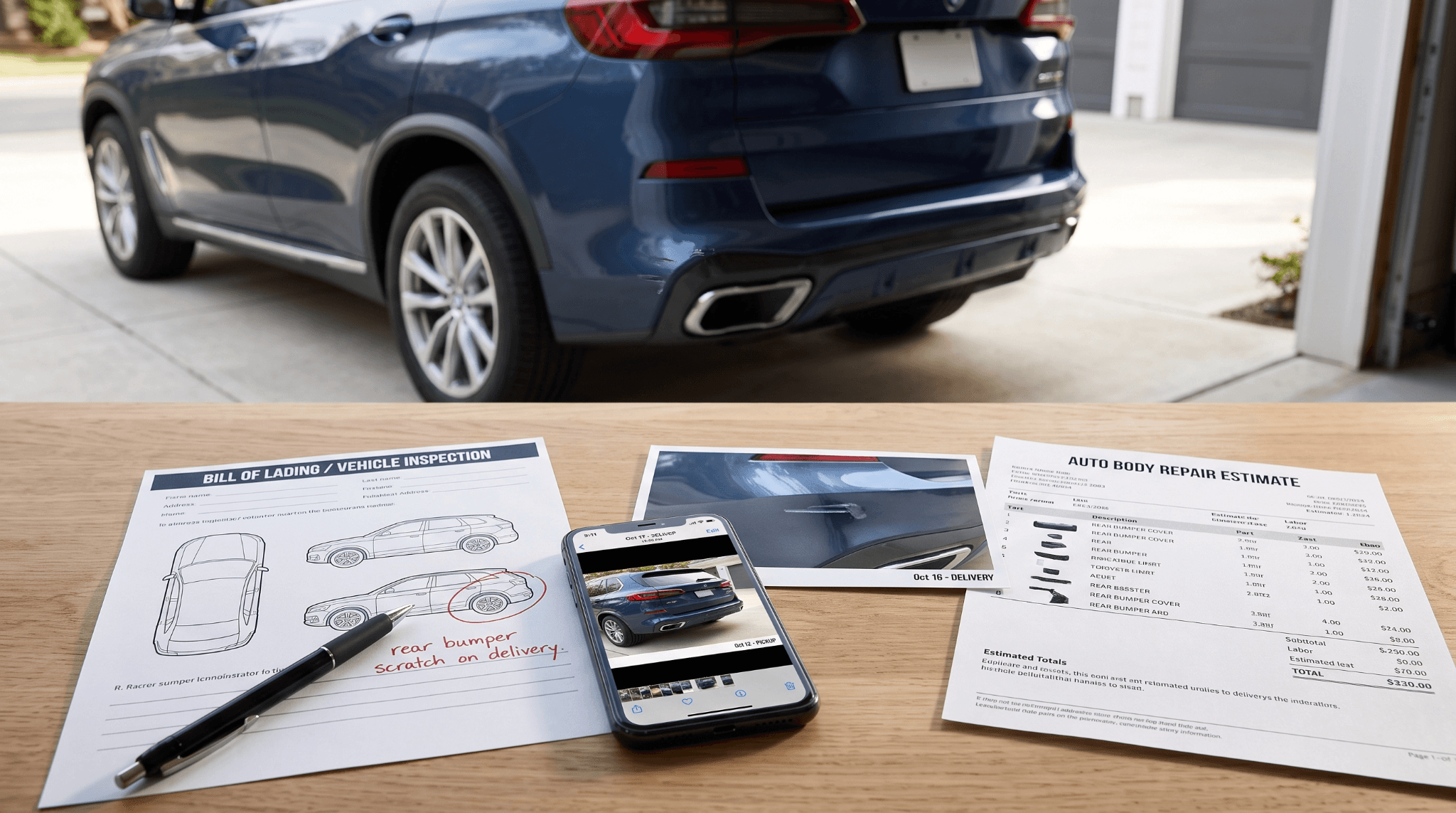
Transit damage is uncommon, but in bill of lading car shipping, the document proves its real value when something does go wrong. It connects how the car looked at pickup with how it looked on arrival.
If you find new damage, follow these steps:
Note the damage on the delivery BOL before signing.
Take timestamped photos at delivery.
Notify the carrier and your broker in writing, ideally within 24 hours. Some carrier agreements set short reporting windows, so check your terms.
Get a written repair estimate from a licensed body shop.
File the claim with the carrier, which sends it to its cargo insurance provider.
Save every message, form, and receipt.
Federal law sets a minimum framework. Under the Carmack Amendment, 49 U.S.C. § 14706 , interstate carriers are liable for actual loss or damage to the property they transport. Carriers also can’t give shippers less than nine months to file a claim, or less than two years to sue after a claim is denied in writing. Reporting quickly still helps, because evidence is clearer when it’s fresh.
Damage claim evidence adjusters typically review:
The pickup BOL with the original inspection diagram
The delivery BOL with new damage noted and signed
Timestamped photos from pickup and delivery
A repair estimate or invoice
Written communication with the carrier and broker
When these records line up, the story is clear. Damage that appears on the delivery record but not the pickup record, and in delivery photos but not pickup photos, shows the insurer what happened in transit.
Pro tip: Name your photo files by date and panel (for example, “2026-10-14_rear-bumper”) before sending them. Organized evidence is faster for an adjuster to review.
How Does Your Broker Help With A Carrier Claim?
Safeeds Transport is a broker, so it doesn’t haul your vehicle and isn’t the insurer. The carrier’s cargo insurance covers transit damage, and the carrier and its insurer make the final decision.
What a broker can do is coordinate. Safeeds Transport works with licensed carriers that hold cargo insurance, and it can share the carrier’s insurance details, help you organize your evidence, communicate with the carrier, and follow up on progress. If you need help after delivery, start with the Safeeds Transport Help Center.
Bill of Lading Car Shipping: What Else Do Shippers Ask?
A bill of lading can feel unfamiliar until you have signed one yourself. These short answers cover the points shippers most often want clarified before pickup and delivery day.
What is a bill of lading in car shipping?
A bill of lading is the document a carrier issues when it takes possession of your vehicle. In car shipping, it works as a receipt, a condition report, and a record of the transport terms. The driver completes it at pickup, and it is updated and signed again at delivery to confirm the car’s condition on arrival.
What should I check on the bill of lading?
Check your name, both addresses, the vehicle’s make, model, and VIN, and the odometer reading. Then compare the inspection diagram with the car and make sure every mark of pre-existing damage is recorded. Finally, confirm the date and the carrier’s contact details, and make sure both you and the driver have signed.
What happens if I sign before inspecting my car?
Signing first usually means you’ve accepted the car as delivered in good condition. If you find damage later, the carrier can point to your signature as proof it wasn’t there at delivery. A claim may still be possible with strong timestamped photos, but it becomes much harder to win.
Can I dispute a bill of lading after delivery?
You can raise a concern after delivery, but a signed BOL with no damage noted works against you. Contact the carrier and your broker in writing as soon as possible, and include your pickup photos, delivery photos, and any repair estimate. Stronger evidence gives you a better chance of a fair review.
Do I get a copy of the bill of lading?
Yes. You should get a copy at pickup showing the condition report you signed, and a final copy at delivery. With an electronic BOL, copies usually arrive by email or text. If yours doesn’t, ask the driver before they leave, because a copy can be harder to get later.
What if the driver rushes the inspection?
Stay polite and take the time you need. Drivers work on tight schedules, but a careful inspection takes only 10 to 15 minutes, and it’s reasonable to finish it before signing. If you feel pressured, write “inspection rushed” beside your signature and photograph the car right away.
Who fills out the bill of lading?
The carrier’s driver fills out the bill of lading, recording the vehicle’s details and condition. You, or the person you name, review and sign it at pickup, and the receiver signs at delivery. When you book through a broker like Safeeds Transport, the broker arranges the shipment, but the carrier issues the BOL.
Is a bill of lading legally binding?
Yes. A bill of lading is a signed record of the shipment and its terms, and federal rules require carriers to issue one for interstate moves. Your signature carries weight because it confirms the vehicle’s condition at each handoff. For questions about your specific legal rights, a qualified attorney is the right person to ask.
What if existing damage is not recorded at pickup?
Point it out before the car leaves, ask the driver to add it to the inspection diagram, and check the correction before you sign. If the driver has already gone, your own timestamped photos become your record. Unrecorded old damage can cause confusion at delivery, so it’s worth getting right at the start.
How long should I keep the bill of lading?
Keep the bill of lading and all your photos until the shipment is complete and any claim is fully settled. Federal law gives shippers at least nine months to file a damage claim with an interstate carrier, so keeping records for at least a year is a sensible habit. Cloud storage makes this easy.
Ten Careful Minutes That Protect Every Car Shipment
Every shipment involves many people, schedules, and miles, yet any damage question comes down to two short moments: the signature at pickup and the signature at delivery. The bill of lading is the one document that follows your car from door to door, and it protects you only as well as you review it. A complete inspection diagram, a set of timestamped photos, and a few calm minutes on delivery day are what turn a routine form into evidence you can rely on.
The good news is that these habits are simple and repeatable. Check the details at pickup, photograph the car before it leaves, inspect it carefully when it arrives, and write down anything new before you sign. That small investment of time gives you a clear record if you ever need one, and peace of mind if you don’t.
When you’re ready to plan your shipment, Safeeds Transport connects you with licensed, insured carriers nationwide. Booking requires no upfront payment beyond a $1 card verification hold, and your quoted price stays locked for 7 days. You can request your free quote and see your price in about 30 seconds.