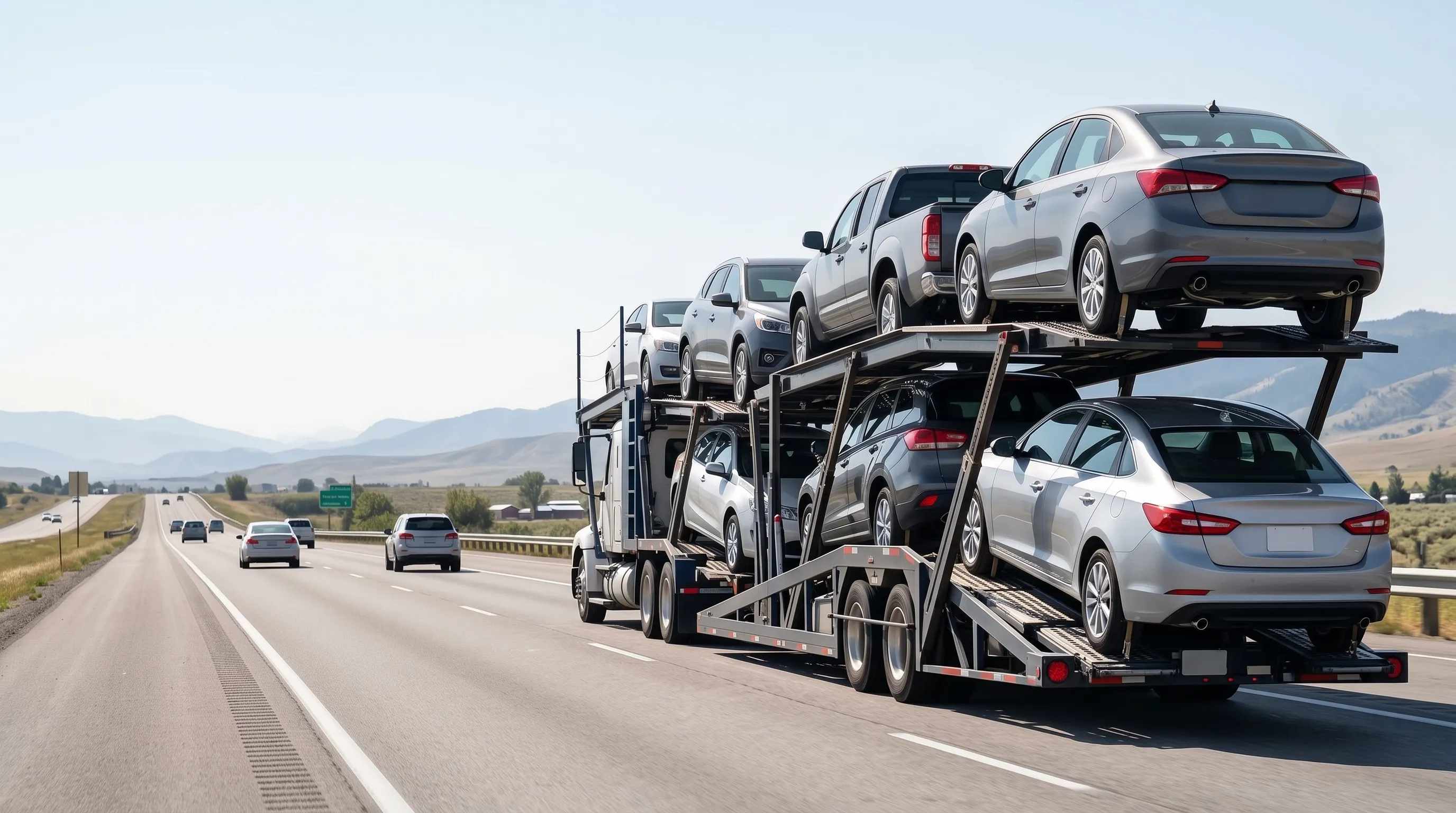
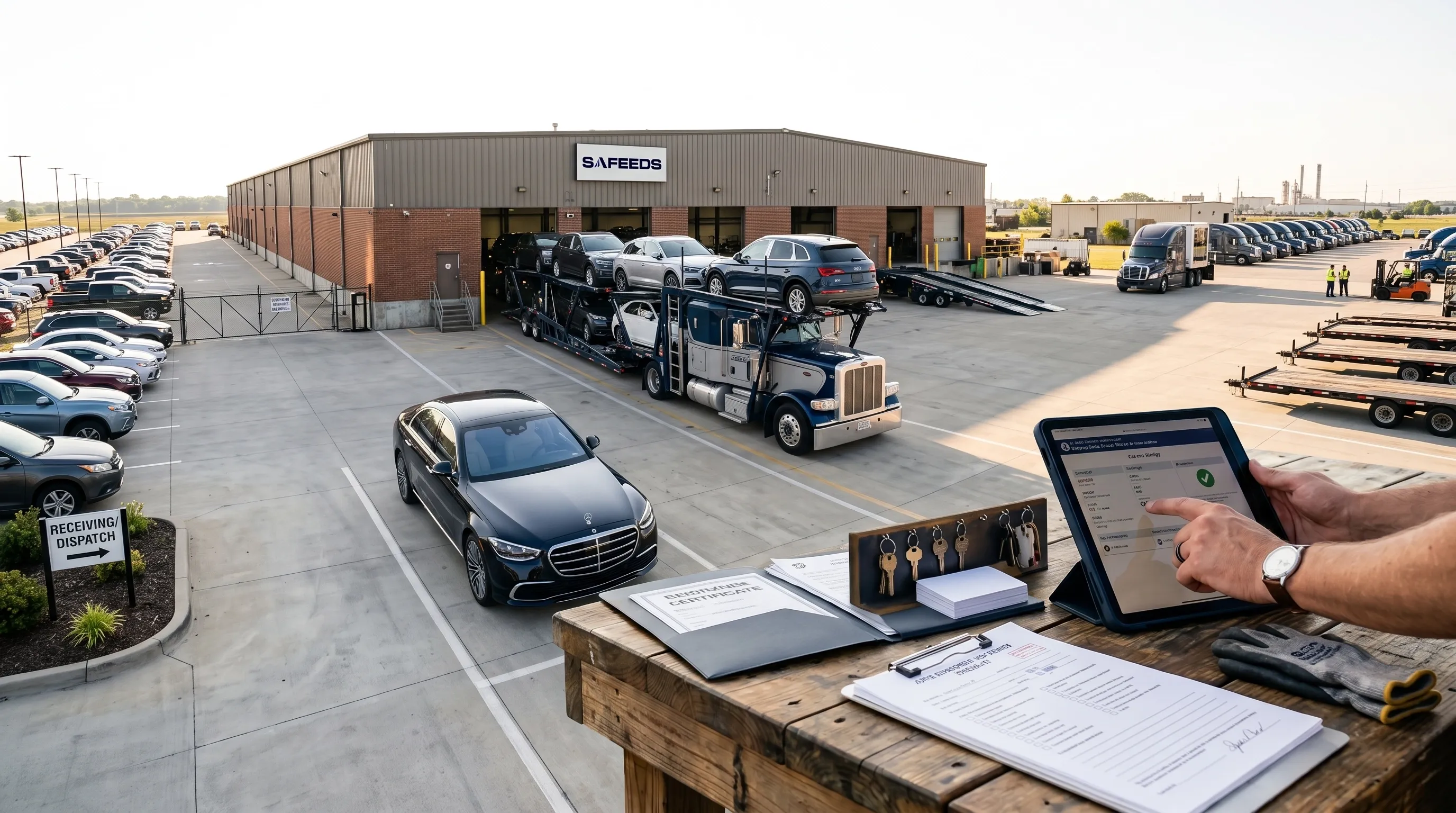
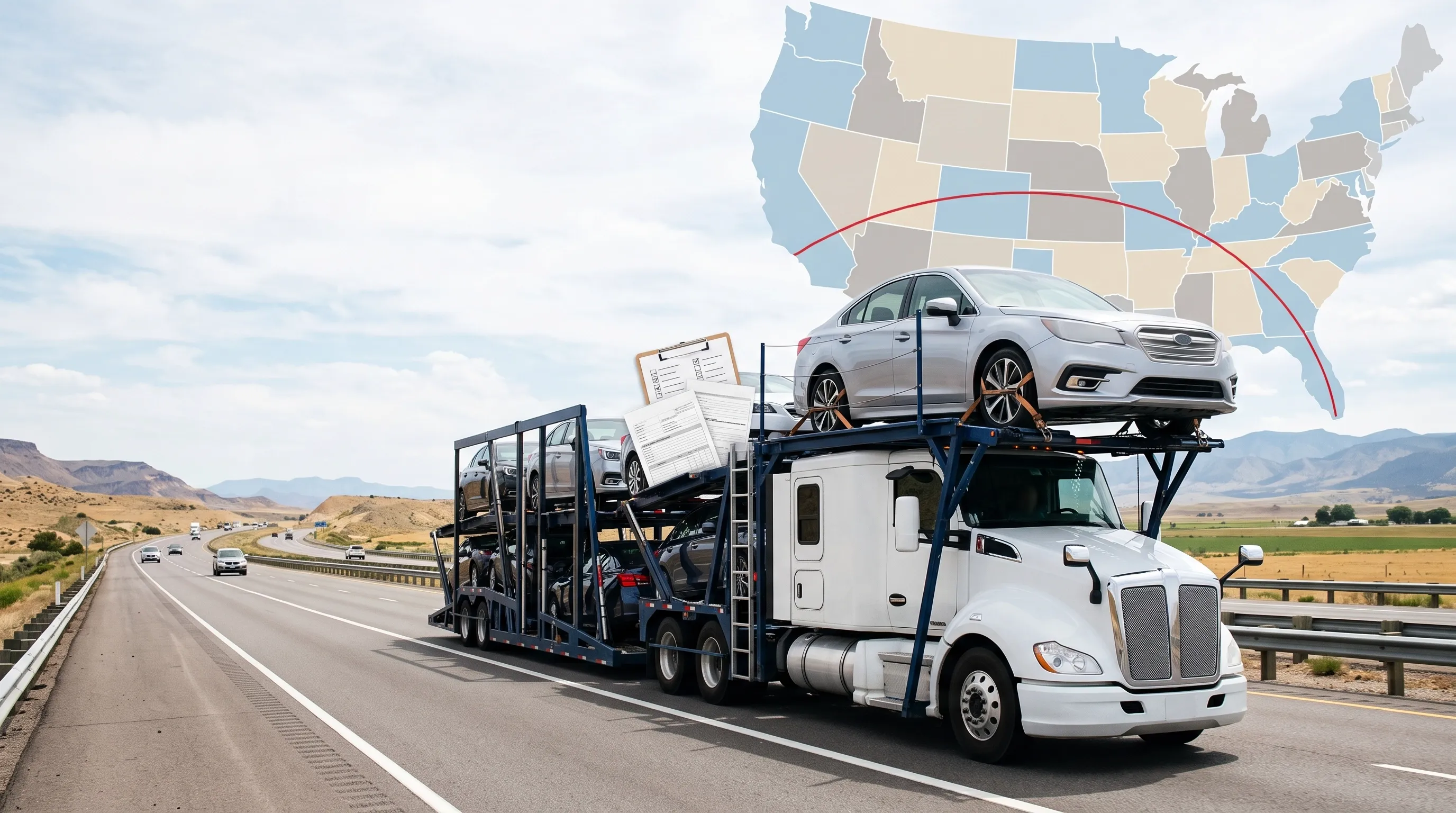
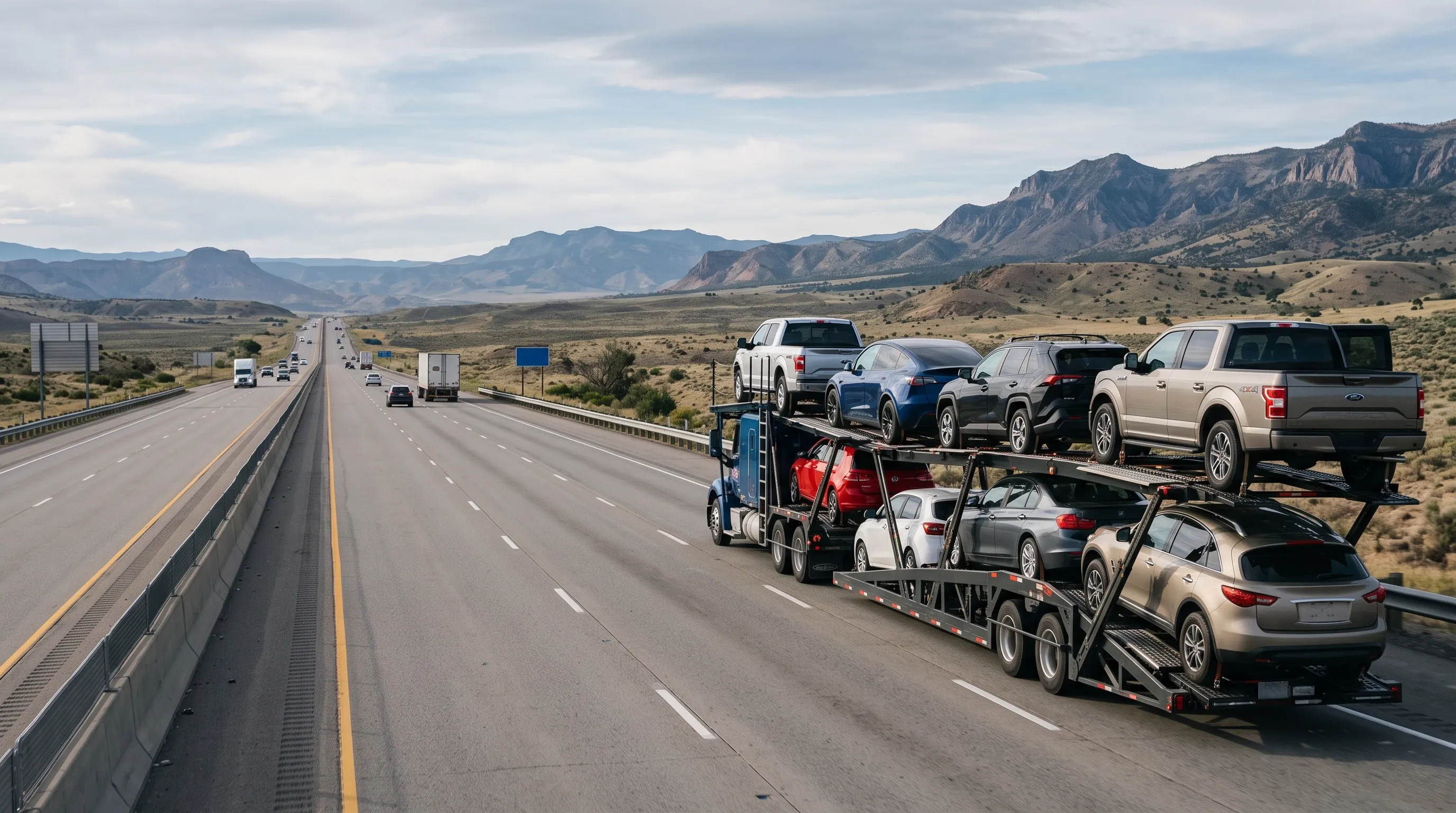
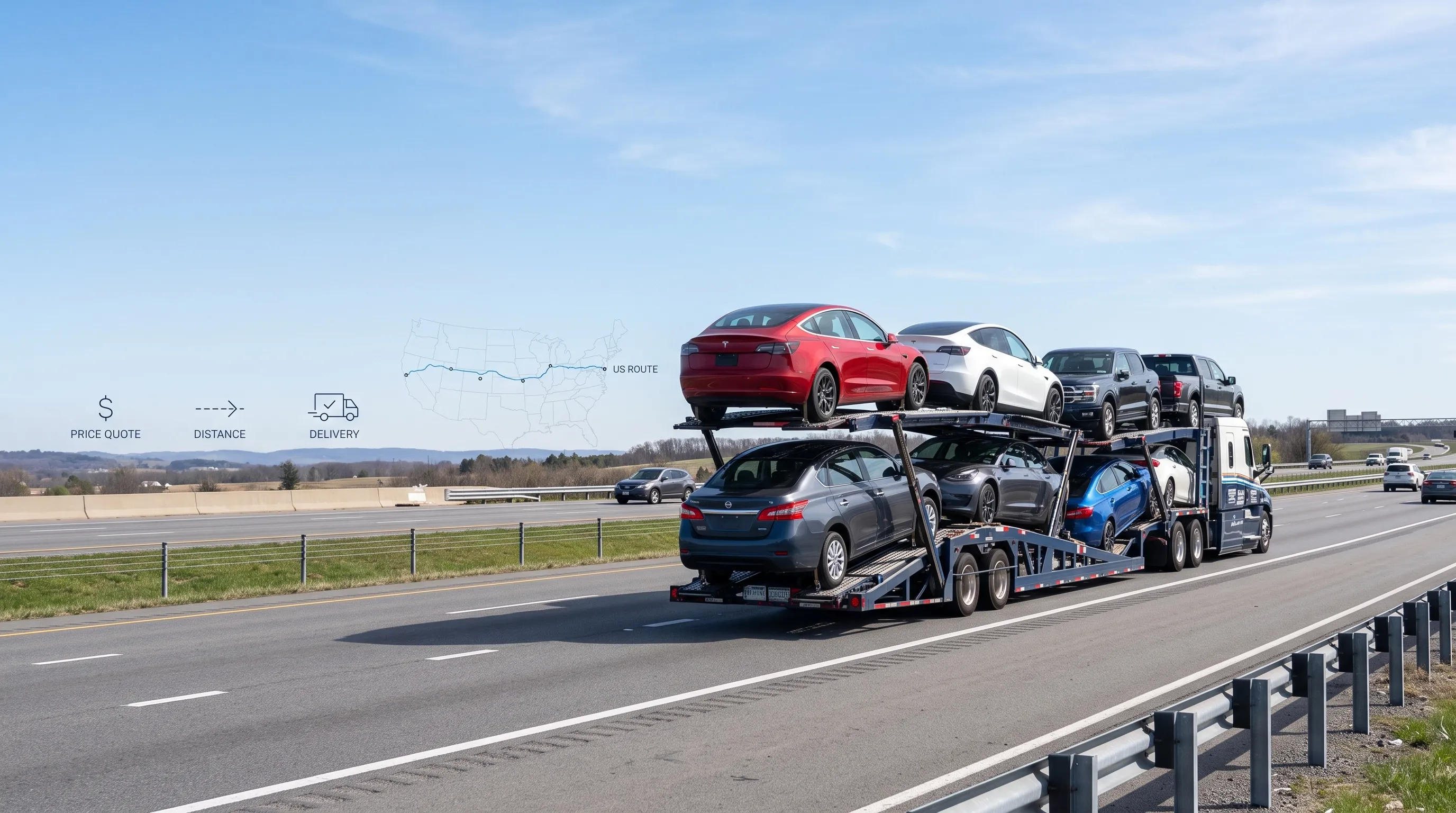
Yes, you can ship a car with stuff in it, but only within limits. Most carriers allow up to about 100 pounds of personal items, packed in the trunk or below the window line. Those items are not covered by the carrier’s insurance, and some, like hazardous materials, are never allowed.
Your car is booked for transport, the driver arrives tomorrow, and your trunk is sitting there empty. It feels like free moving space. Why not toss in a few boxes and save yourself a trip to the post office?
It’s a smart instinct, and plenty of people do it. Shipping car and belongings together can work well. But on a car carrier, every extra pound has a cost, and the rules are stricter than most owners expect.
So, can you ship a car with stuff in it? The short version is yes. The longer version, the one that keeps your pickup on schedule and your belongings safe, is what this guide covers.
Ready to plan your shipment? Request a free quote from Safeeds Transport and confirm the personal item policy before you book. No upfront payment required.
Key Takeaways
You can ship a car with stuff in it, but most carriers limit personal items to about 100 pounds, and some allow none at all.
The 100-pound limit is an industry convention rather than a federal law, so the allowance in your shipping agreement is the one that applies.
Personal items should go in the trunk or rear cargo area, below the window line, with the front seats and dashboard left clear.
A car carrier’s cargo insurance covers the vehicle but not the belongings inside it, so owners should check their homeowners or renters policy before pickup.
Fuel cans, propane, aerosols, loose batteries, firearms, ammunition, and fireworks are prohibited items that must be removed before a car is shipped.
The Short Answer and the Legal Reason
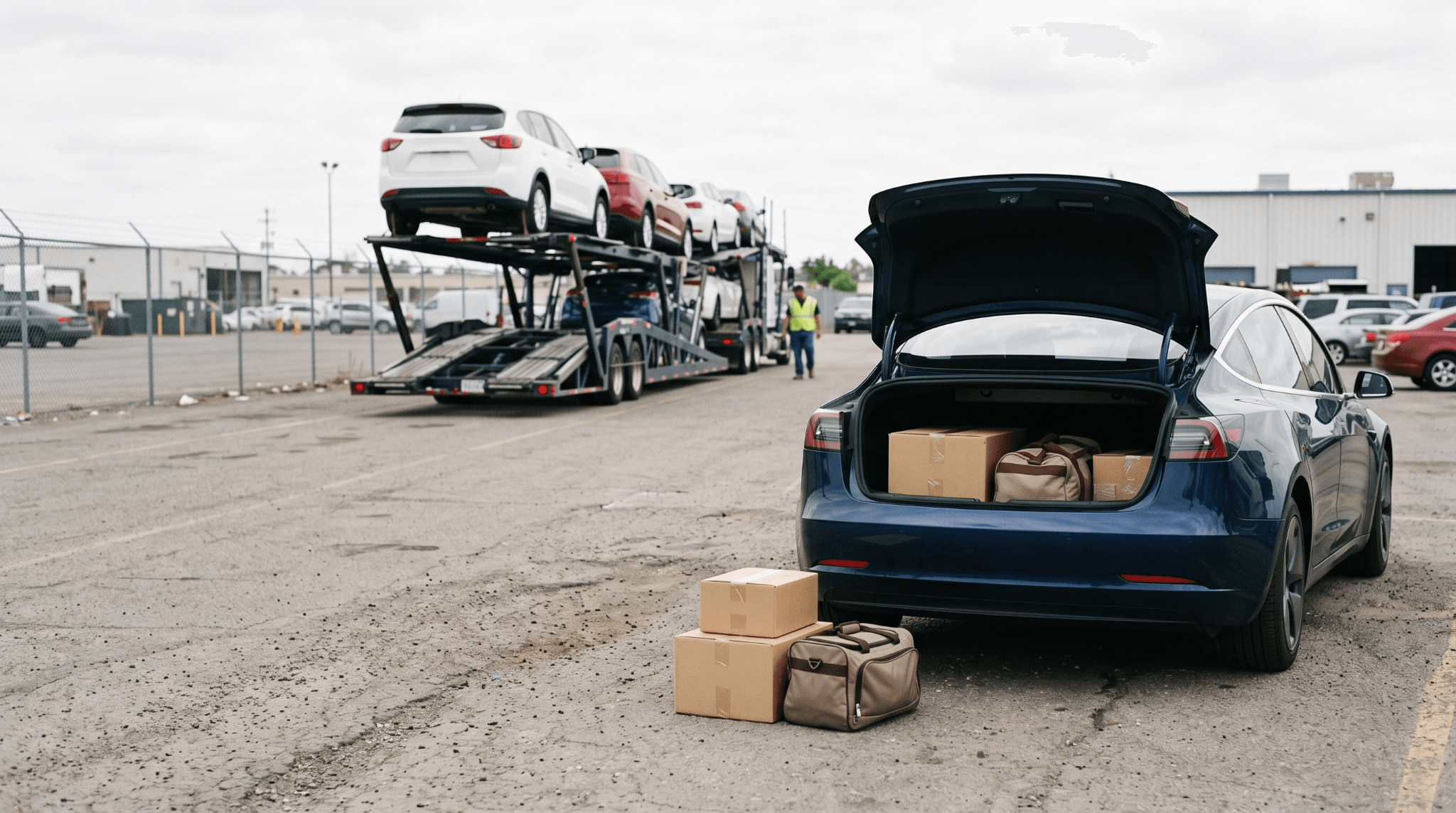
Can you ship a car with stuff in it? Yes, in most cases, as long as you stay within the carrier’s limit. Here’s the part most people don’t know: that limit isn’t about a driver being difficult. It comes straight from how car carriers are licensed.
Car Carriers And Movers Are Licensed Differently
The Federal Motor Carrier Safety Administration (FMCSA) issues different types of operating authority to trucking companies. A company that hauls vehicles normally holds authority as a motor carrier of property. Moving household goods, like furniture, boxes, and clothing, is a separate category entirely.
According to the FMCSA’s guide to types of operating authority, household goods carriers must file proof of cargo insurance with the agency before they can operate. They also follow extra consumer protection rules that don’t apply to a standard car carrier.
Think of it this way: a car carrier is a taxi for cars, not a moving van. When a trunk is packed with boxes, the shipment starts to look like a household move. And that’s a job the carrier may not be licensed or insured to handle.
Where The Rules On Personal Items Come From
So, can I put stuff in my car when I ship it? Usually, yes, within the carrier’s written policy. Rules on car transport personal items come from three places:
Licensing. The carrier’s authority covers vehicles, not household moves.
Insurance. The carrier’s cargo policy is written for the car, not for what’s inside it.
Safety. Heavy or loose items can shift during loading and damage the vehicle.
A few bags in the trunk are treated as part of the vehicle. A car packed to the roof is treated as something else.
Pro tip: Every carrier sets its own policy, so the rule that applies to you is the one in your shipping agreement. Ask before you book, and get the answer in writing.
The 100 Pound Convention Explained
Most carriers set a 100-pound limit on personal items. But here’s the thing: that number is an industry habit, not a federal law. No federal rule names a weight for items inside a shipped car, so each company decides its own allowance.
In practice, carrier policies usually land in one of four groups:
Many open carriers allow up to about 100 pounds in the trunk.
Some carriers allow no personal items at all.
Some allow extra weight for an added fee.
Enclosed carriers may set separate rules of their own.
What 100 Pounds Actually Looks Like
So, how much can you pack in a shipped car? It’s easier to answer when you can picture it. The weights below are approximate and depend on what’s inside.
Common item | Approximate weight |
Carry-on suitcase, packed | 20 to 25 lbs |
Large checked suitcase, packed | 45 to 50 lbs |
Medium moving box of clothes | 15 to 25 lbs |
Medium moving box of books | 35 to 50 lbs |
Small roadside emergency kit | 5 to 10 lbs |
Two large suitcases, or one suitcase and a couple of light boxes, and you’re already there.
Why a few pounds matter so much
It all comes down to road weight. Under the federal truck weight rule, 23 CFR 658.17, most trucks on the Interstate System can’t exceed 80,000 pounds gross vehicle weight.
Now consider the load. A full open carrier holds 7 to 10 cars, and many passenger vehicles weigh 3,000 to 5,000 pounds each. A loaded truck can run close to that cap before anyone packs a single bag.
Let’s do the math:
9 cars × 100 extra pounds = 900 extra pounds
9 cars × 300 extra pounds = 2,700 extra pounds, about the weight of a small car
That’s also why carriers often ask for a quarter tank of fuel or less. A gallon of gasoline weighs about 6 pounds, so a full 15-gallon tank adds roughly 90 pounds.
Where Items Must Be Placed
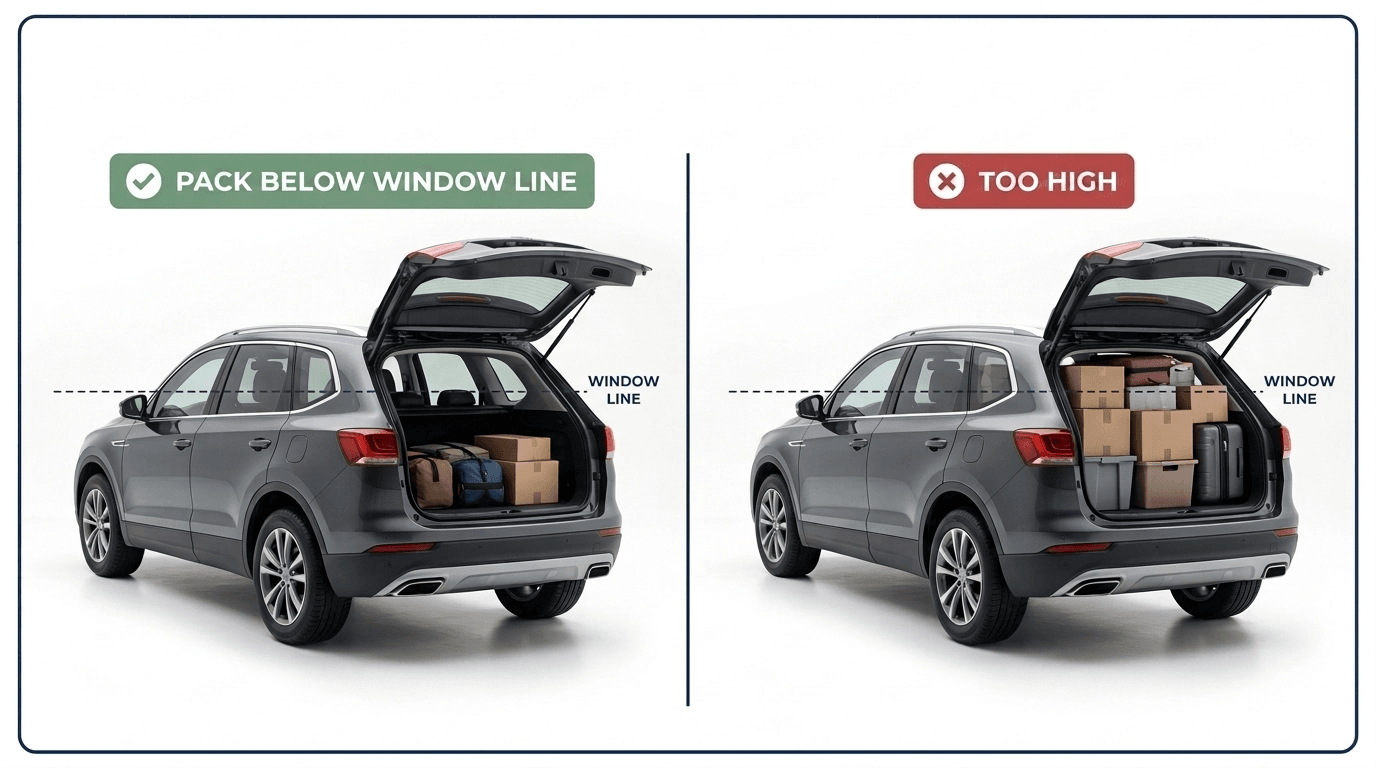
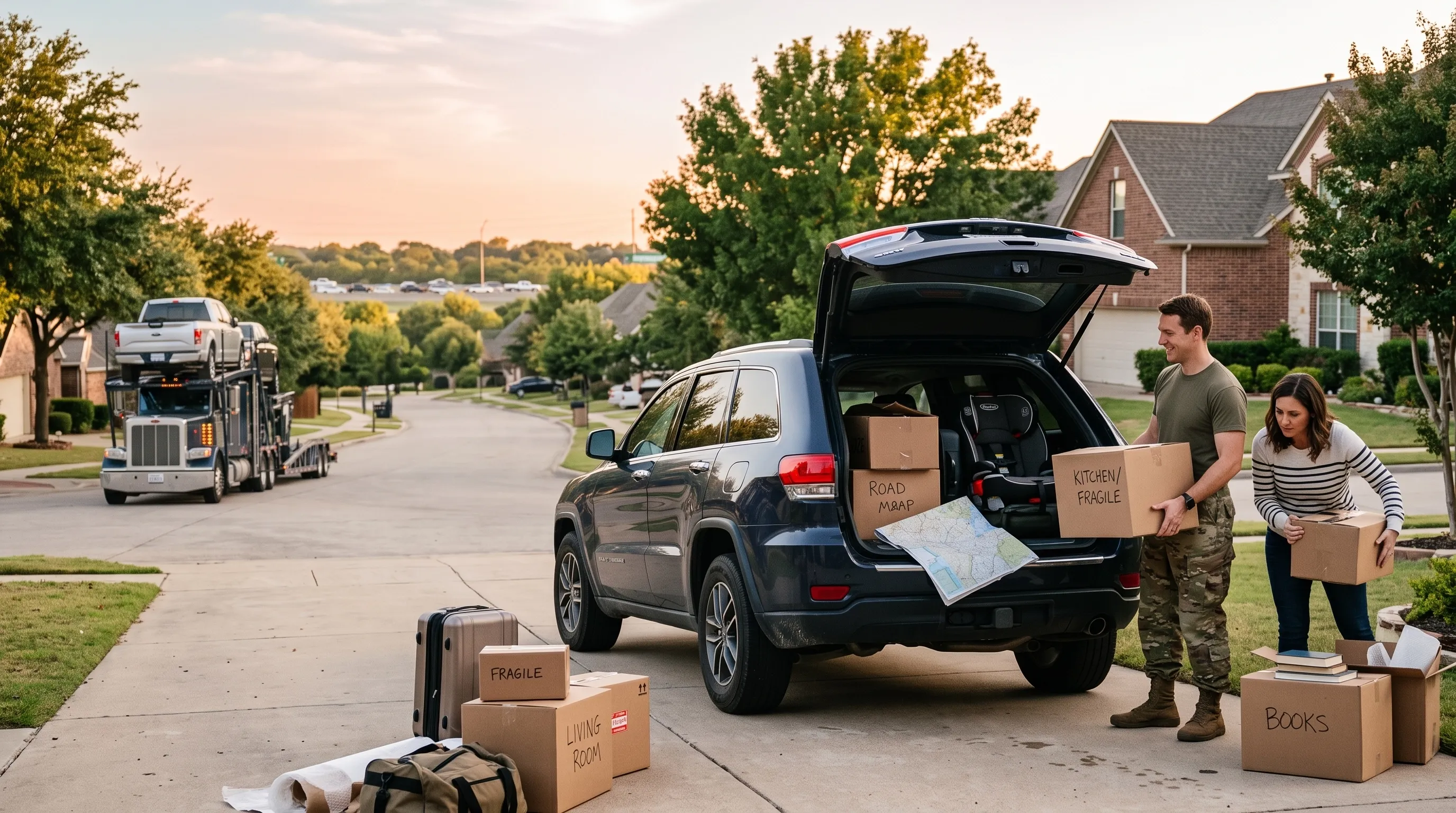
Trunk placement is the standard rule. Your items belong in the trunk or, in an SUV, hatchback, or minivan, the rear cargo area behind the back seats.
Carriers call this the below window line rule: nothing should rise above the bottom edge of the windows.
Why Placement Matters
There are three solid reasons behind this rule:
Visibility. Drivers move each car onto and off the trailer themselves, often up steep ramps. They need a clear view through every window.
Theft prevention. Car carriers park overnight at truck stops and rest areas. Bags and boxes visible through the glass attract the wrong kind of attention.
Damage prevention. Cars sit at an angle on many trailer decks. Loose items slide, press against glass, and scratch trim and upholstery.
The Zones That Must Stay Clear
Some areas need to be empty. Keep the front seats, the driver’s floor, and the dashboard clear. An item that rolls under the brake pedal during loading is a real safety risk. Clear the rear window shelf, too.
Exterior items are another concern. Most carriers ask owners to remove roof boxes, bike racks, and anything in an open pickup bed. These add height, catch wind at highway speed, and can come loose.
Pro tip: Drive a pickup? Ask the carrier before leaving anything in the bed, even under a tonneau cover.
How To Pack Your Trunk The Right Way
A few simple habits make a big difference:
Use soft bags or small boxes that fit snugly in the trunk.
Place the heaviest items low and toward the back seat.
Fill gaps with soft items, like towels, so nothing can slide.
Close the trunk and make sure it latches without force.
Photograph the packed trunk before the driver arrives.
What Is Never Covered by Insurance
This is the part that catches most owners off guard. The carrier’s cargo insurance covers your vehicle, not the items inside it.
This cargo insurance exclusion is standard in auto transport, and you’ll find it in most shipping agreements.
Why Your Belongings Aren’t Covered
The reason is simple. The policy protects the vehicle listed on the bill of lading, which is the inspection document you sign at pickup and delivery. Your personal items aren’t listed with a value, so the policy has nothing to measure a loss against.
Here’s where coverage usually comes from:
Situation | Carrier cargo insurance | Where to check instead |
Carrier damages the vehicle in transit | Usually covered | File a claim with the carrier |
Personal items are lost or broken | Not covered | Your homeowners or renters policy |
Personal items are stolen | Not covered | Your homeowners or renters policy |
Packed items damage the car’s interior | Often disputed or denied | Your personal auto policy |
The row that surprises people
Look at that last row again. If a box shifts and cracks a window, the carrier may argue the damage came from items you packed. In other words, car transport personal items can turn a simple damage claim into a dispute.
Protect Yourself Before Pickup
Take these four steps before the driver arrives:
Call your insurer. Ask whether your policy covers belongings riding in a vehicle on a commercial carrier, and what the deductible is.
Make a list. Write down what you packed and photograph each item.
Document the car. Take dated photos of the interior and exterior from every side.
Ask for a note on the bill of lading. This records that your items were there, though it doesn’t make them insured.
Items You Must Remove
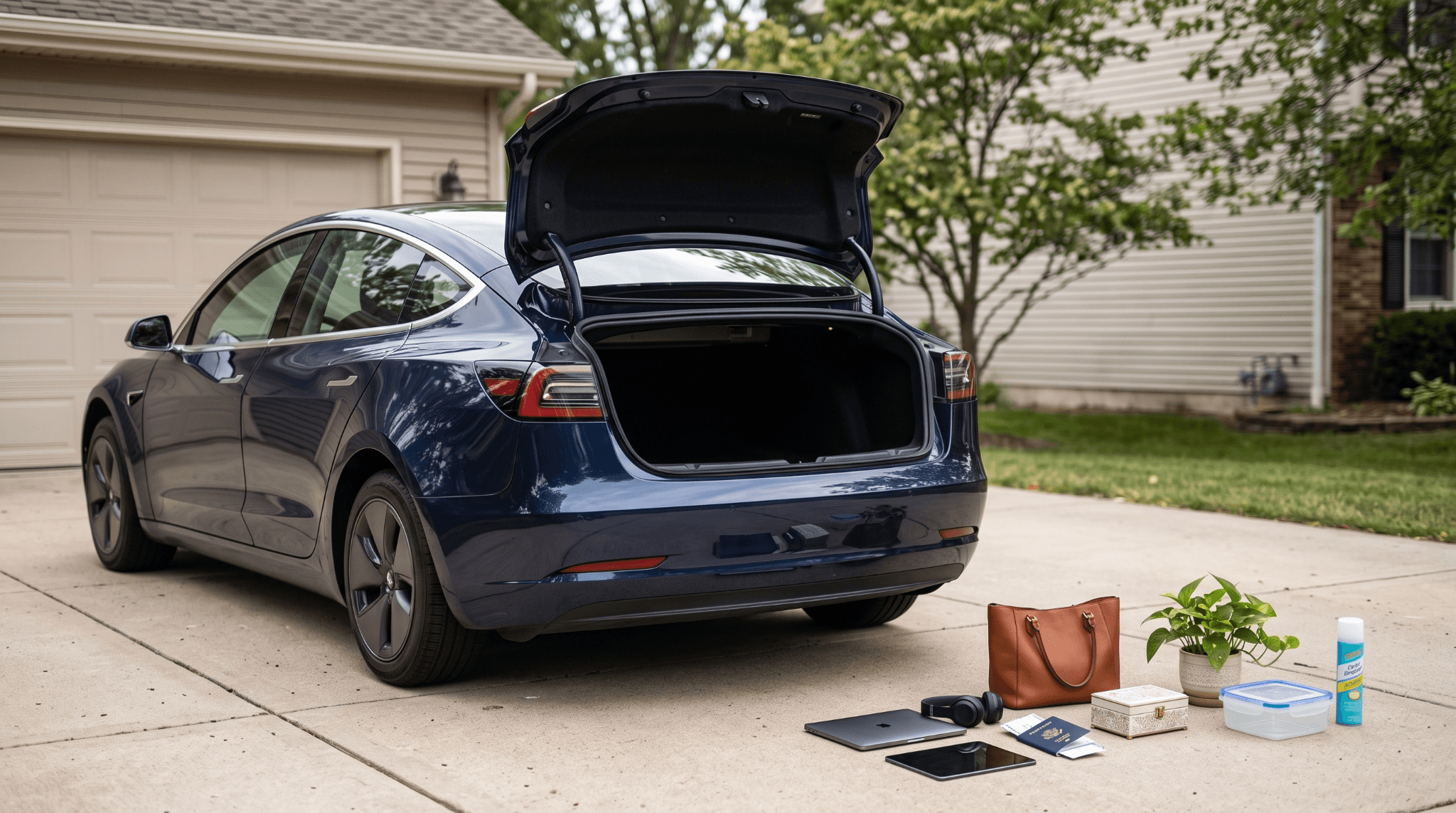
Not everything can ride along. Prohibited items fall into three groups. Some are refused by every carrier. Others are allowed by a few but carry risks that just aren’t worth it.
1. Dangerous Items (Never Allowed)
Gas cans, propane tanks, kerosene, and lighter fluid
Aerosol cans, paint, and household chemicals
Loose car batteries (the installed battery stays put)
Firearms, ammunition, and fireworks
Why it matters: Hazardous materials are tightly regulated in commercial trucking, and a car carrier isn’t set up to haul them. A leak or fire on one car can spread to every vehicle on the trailer.
2. Valuables (Remove For Your Own Protection)
Cash, jewelry, and watches
Passports, IDs, and personal documents
Laptops, tablets, cameras, and gaming systems
Prescription medications and family keepsakes
Why it matters: None of these are insured by the carrier, and all of them are easy to steal and hard to replace.
3. Items That Cause Trouble On The Road
Plants and food, which can spoil and attract pests
Open liquids, which can spill and stain
Live animals of any kind
Why it matters: Transit can take one to two weeks on long routes. Some states, like California, also run agricultural inspection stations that check for plants and produce.
The Easy-To-Forget List
These small items cause big headaches later:
Toll transponders. They can register charges as the truck rolls through toll lanes.
Garage door openers, parking permits, and gate cards. They’re security risks if lost.
Dash cams and phone chargers. Unplug and remove them.
Glove box and door pocket clutter. Empty both before pickup.
What Happens at a Weigh Station
Here’s a step most car owners never see. A weigh station is a roadside checkpoint where state officers confirm that trucks follow DOT weight rules. A carrier on a cross-country route may pass several of them, and the extra pounds in your trunk become part of the truck’s total weight.
What The Process Looks Like
Screening. Many stations check trucks with sensors in the road or electronic bypass systems. Trucks that look fine may be waved through.
The scale. Trucks that get called in drive onto a scale. Officers check the total weight against the 80,000 pound federal cap, plus each axle group. Federal rules limit a single axle to 20,000 pounds and a tandem axle pair to 34,000 pounds.
The result. A truck within limits keeps moving. An overweight truck can face a fine, and the driver may have to shift or remove weight before continuing.
A closer look. Officers may also inspect the load. A trunk full of boxes can raise questions about whether the carrier is hauling household goods without the right authority.
Why One Heavy Trunk Affects Everyone
Fines vary by state, and the delay often costs more than the fine. A stopped truck holds up every car on the trailer, not just the one with the heavy trunk. One owner’s extra boxes can push back delivery for nine other customers.
That’s the risk your driver is weighing at pickup. If they open your trunk and ask you to take something out, it’s about keeping the whole load legal. It’s not personal.
And that makes the answer to can you ship a car with stuff in it much clearer: yes, but only as much as the truck can legally carry.
Can You Ship a Car With Stuff in It? Your Other Questions Answered
Still have questions? Here are quick answers to the ones car owners ask most before packing a vehicle for transport.
Can you put stuff in a car when shipping it?
Yes. Most carriers allow a small amount of personal items, usually up to 100 pounds in the trunk. If you’re wondering, can I put stuff in my car when I ship it, the smartest move is getting the item policy in writing before you book. When you request a quote with Safeeds Transport, you can ask about it upfront, so there are no surprises at pickup.
How much weight can I pack in a shipped car?
Most open carriers allow about 100 pounds, while enclosed carriers may set their own limits. The real answer to how much you can pack in a shipped car is whatever your agreement states. A clear, itemized quote makes this easy to check, so ask for the allowance in writing and pack a little below it to stay safe.
Are my belongings insured during transport?
Not by the carrier. Cargo insurance protects the vehicle, so car transport personal items are left uncovered. The good news? Your car itself is covered by the carrier’s cargo insurance while it’s on the trailer. A quick call to your homeowners or renters insurer can tell you whether your belongings are covered too, which gives you real peace of mind.
Where do items need to be placed in the car?
Keep items in the trunk or rear cargo area, below the window line, with the cabin and dashboard clear. Don’t bury the spare tire and jack. A well-packed trunk helps the driver load your car quickly and safely, which keeps your shipment on schedule from pickup to delivery.
What items are prohibited?
Prohibited items include fuel cans, propane, aerosols, loose batteries, firearms, ammunition, fireworks, and anything flammable. Live animals and plants are refused, too. Valuables like cash, jewelry, and documents should travel with you. Not sure about something? The Safeeds Transport team can help you check with the carrier before pickup day.
Will the carrier refuse my vehicle if it is overloaded?
It can. Drivers inspect each vehicle at pickup and may ask you to remove items on the spot, or decline the car if you can’t. Some carriers also charge a dry run fee. Following the item policy from the start is the easiest way to keep your pickup smooth and your delivery date on track.
Does packing items cost extra?
Usually not, as long as you stay within the carrier’s stated allowance. Some carriers accept extra weight for a fee, so ask for any item charge to appear on your quote. With Safeeds Transport, there’s no upfront payment, and your quoted price is locked for 7 days, giving you time to plan your packing with confidence.
Can I leave a child seat in the car?
Usually, yes. A child seat installed with the seat belt or LATCH anchors is treated as part of the vehicle, not loose cargo. Mention it when you book so it’s noted on your order, and clear away loose cushions, toys, and bags. That way, your family’s car arrives ready for the road.
What about tools in the trunk?
A small roadside kit with jumper cables, a tire gauge, and a flashlight is normally fine. Full toolboxes are a different story. A loaded toolbox can weigh 50 pounds or more, using half your allowance in one item. Packing light keeps your trunk within limits and your shipment moving without delays.
Why do carriers limit personal items at all?
Carriers are licensed to haul vehicles, not household moves, and their cargo insurance covers cars, not contents. Every truck also has to stay within DOT weight rules. Shipping car and belongings together works best when you keep the extras light. With the right planning, it’s a simple way to make your move a little easier.
So, Can You Ship a Car With Stuff in It? Packing Smart Before Pickup
Shipping car and belongings together can save you a trip to the post office or the cost of renting a moving truck. But it only works when the belongings stay small. The carrier is there to move your car, and everything inside it rides along at your own risk.
If you remember just one rule, make it this one: pack light, pack low, and keep anything valuable or irreplaceable with you. Stay under the carrier’s stated allowance, keep your items in the trunk and out of sight, and take out anything flammable before the driver shows up. Snap photos of what you pack, give your insurer a quick call, and leave the cabin clear so your car can be loaded safely.
The most important step, though, happens before pickup day. Ask the shipping company for its personal item policy, confirm the weight limit and any fees, and make sure the answer is in your agreement. When the rules are clear from the start, pickup goes faster, the truck stays within its legal limits, and your car arrives the way it left. Safeeds Transport can help you compare carrier options and confirm item policies before you commit to a shipment. Get a free car shipping quote in just a few minutes.