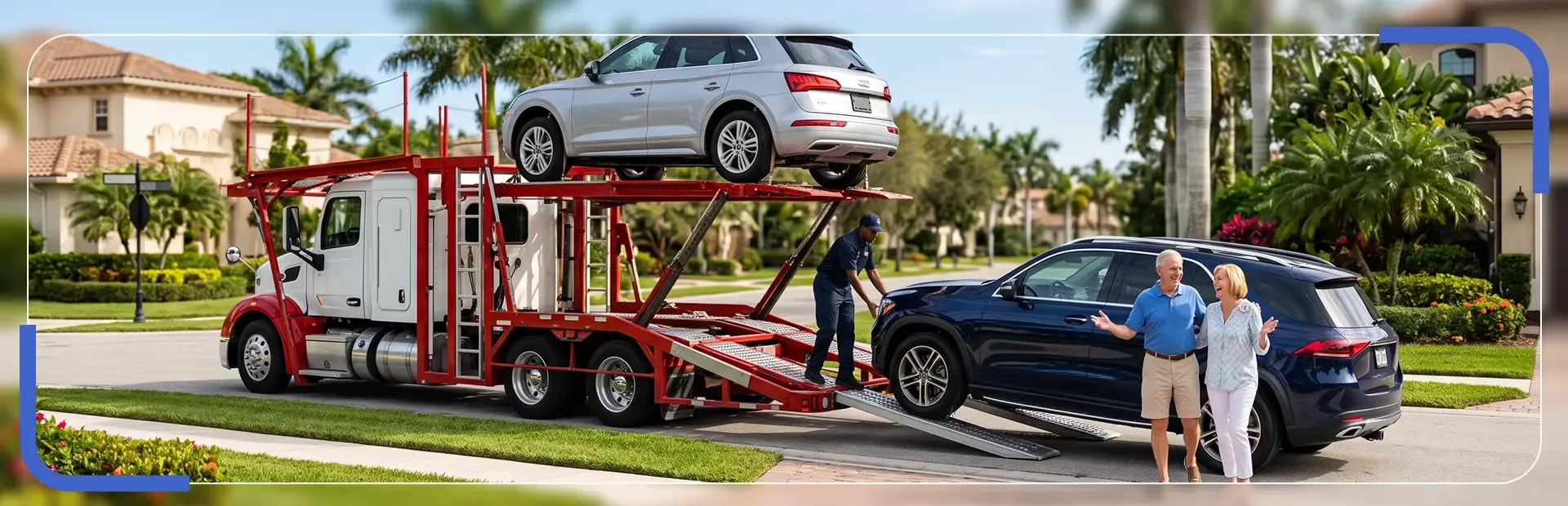
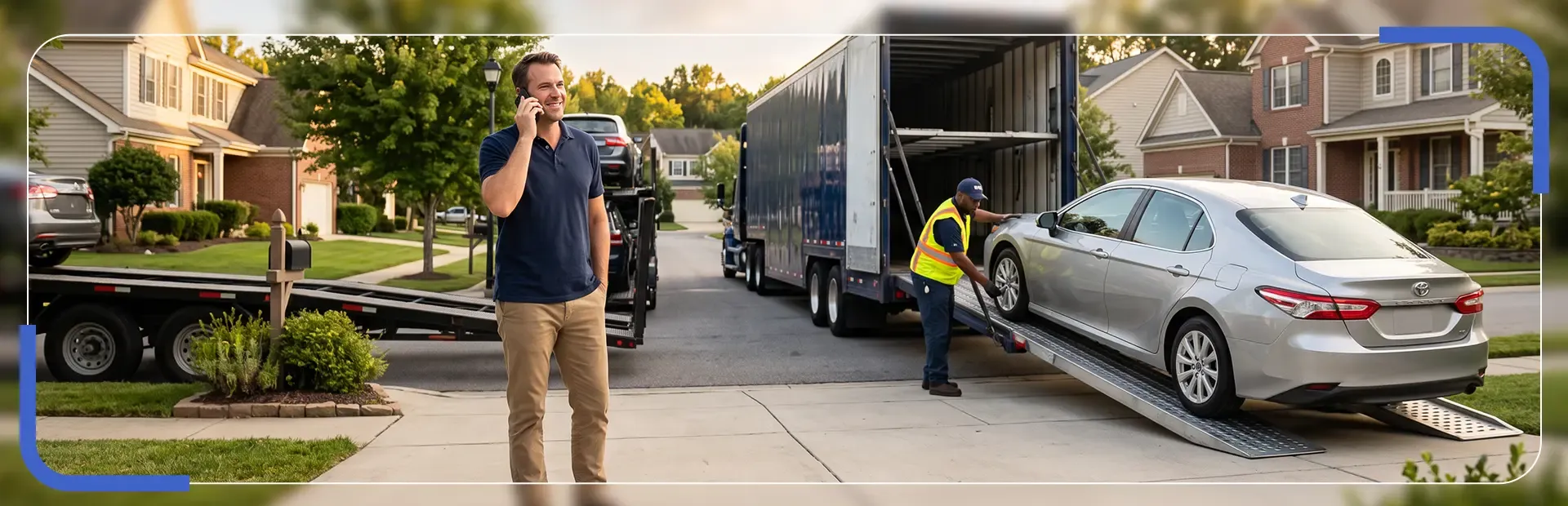
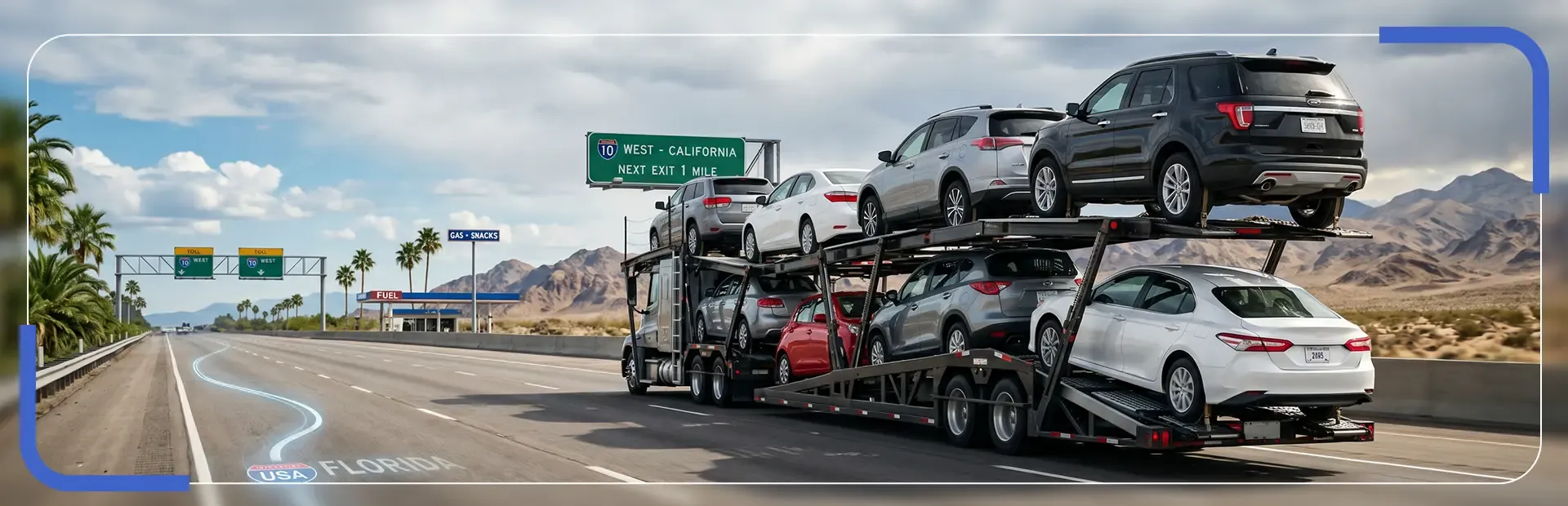
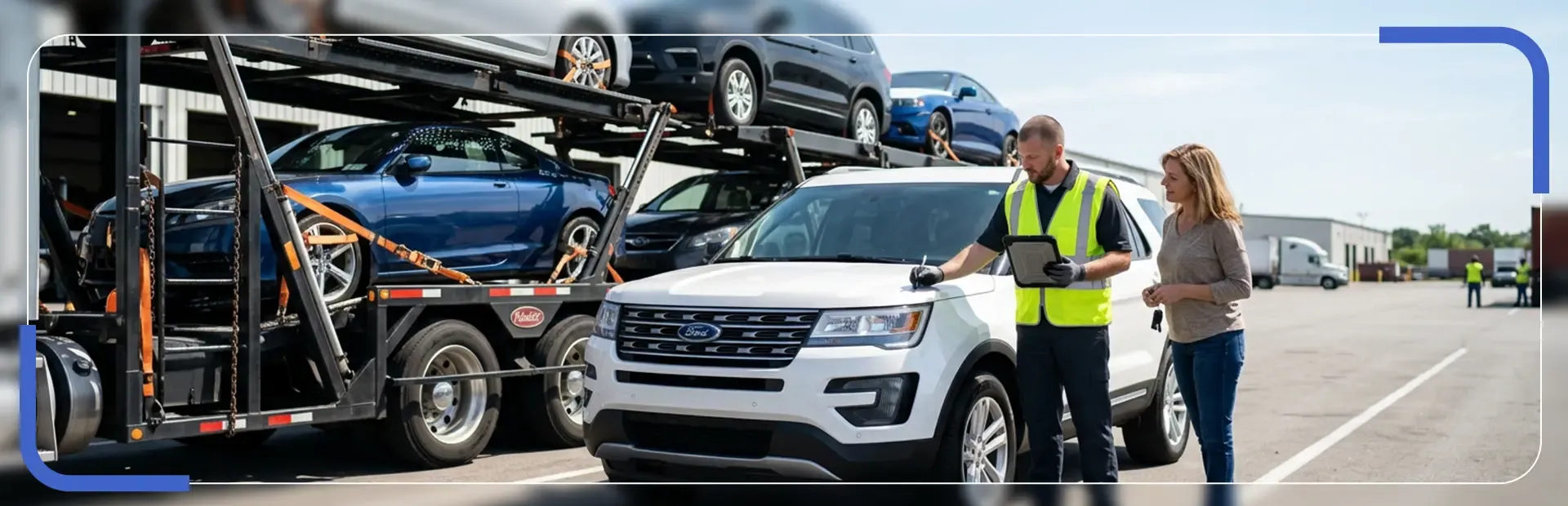
A car headed cross-country on an open trailer looks empty from the outside, but what's packed inside it can determine whether pickup day goes smoothly or turns into an unexpected delay.
Can you put stuff in your car when shipping it? Yes, but most carriers cap this at around 100 pounds, kept below the window line. Anything heavier or higher can lead to added fees, refused pickup, or a shift in your quoted price. Carriers also do not insure these items the way they insure the vehicle itself, so it pays to know the rules before your carrier ever shows up.
This distinction between "the car" and "everything inside the car" trips up more first-time shippers than almost any other part of the process. The good news is that once you understand the standard limits and a few simple packing habits, staying within the rules is straightforward. Get an instant, no-obligation quote and ask your assigned carrier about their exact packing policy before pickup day.
What Are the Rules for Putting Stuff in Your Car During Shipping?
Many first-time customers assume shipping a car works like shipping a suitcase. It does not. Auto transport companies move vehicles, not household goods, and the trailers used to haul them are built and regulated with vehicle weight in mind, not extra cargo.
Every carrier sets its own house policy, but nearly all of them land on similar terms because they are working within the same federal trailer weight framework. The Federal Motor Carrier Safety Administration enforces strict limits on how much a loaded trailer can weigh, and those rules trickle down into what an individual carrier will allow inside any single vehicle.
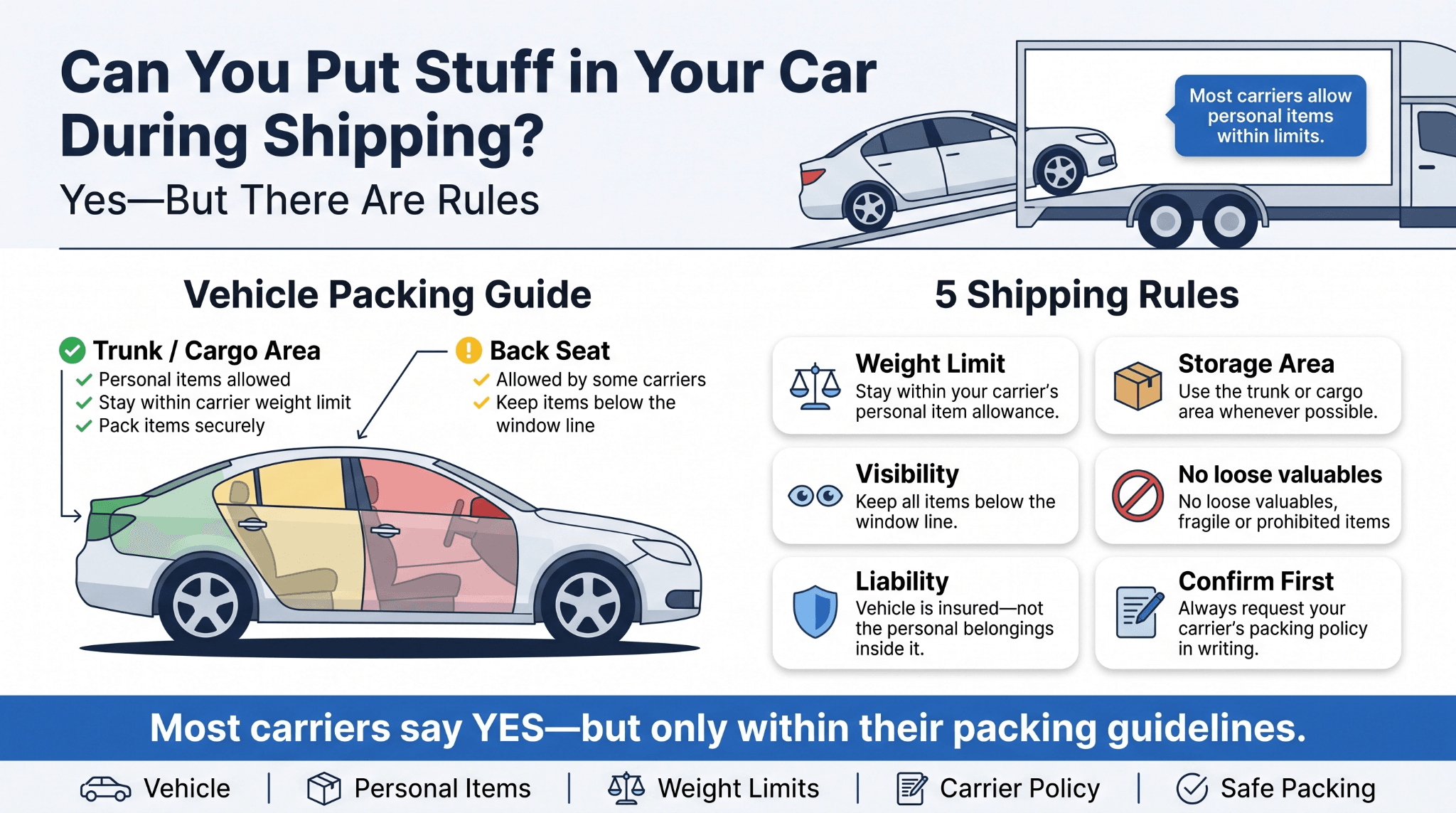
A few basics apply across nearly every carrier, regardless of route or trailer type:
Personal items are allowed, but only within a set weight allowance
Items must stay below the window line for driver visibility and load safety
Only the trunk or cargo area is considered acceptable storage space
Carriers are not liable for items left inside, only for the vehicle itself
Policies can vary slightly by carrier, so written confirmation is always worth requesting
Because of this shared foundation, the answer to can you put stuff in your car when shipping it is almost always "yes, within limits," rather than a flat yes or no. The details, though, are worth confirming with your specific carrier in writing, since enforcement varies from one company to the next and even from one driver to the next on pickup day.
How Much Weight Can You Leave in a Car When Shipping It?
This is the single most common question customers ask before booking, and it has a fairly consistent answer across the industry. Most carriers allow up to 100 pounds of personal items inside the vehicle, a threshold that has become the unofficial industry standard for open and enclosed transport alike.
That 100-pound allowance is not just a round number. It reflects how much extra weight a fully loaded car-carrying trailer can safely absorb without pushing the total load over federal axle weight limits. Carriers who consistently ignore this threshold risk fines, delays at weigh stations, and added strain on their equipment.
Here is how the general guidance breaks down:
Packing Detail | Typical Carrier Standard |
|---|---|
Maximum weight allowed | Around 100 lbs |
Item placement | Below the window line |
Location | Trunk or cargo area only |
Fragile or valuable items | Not recommended |
Confirmation needed | Always verify with your carrier |
Knowing how much weight you can leave in a car before your pickup date helps you avoid a rushed repacking session in your driveway while a driver waits.
Why Do Carriers Enforce a 100-Pound Limit?
The limit exists for practical, legal reasons rather than arbitrary caution. Loaded auto transport trailers are already carrying multiple vehicles, and every extra pound shifts how that weight is distributed across the axles.
Federal weight regulations exist to keep trailers safe on the road, and carriers that exceed them face fines at weigh stations, according to guidance published by the Federal Motor Carrier Safety Administration. Uneven or excess weight can also affect fuel efficiency and put additional mechanical strain on suspension and tires over long routes.
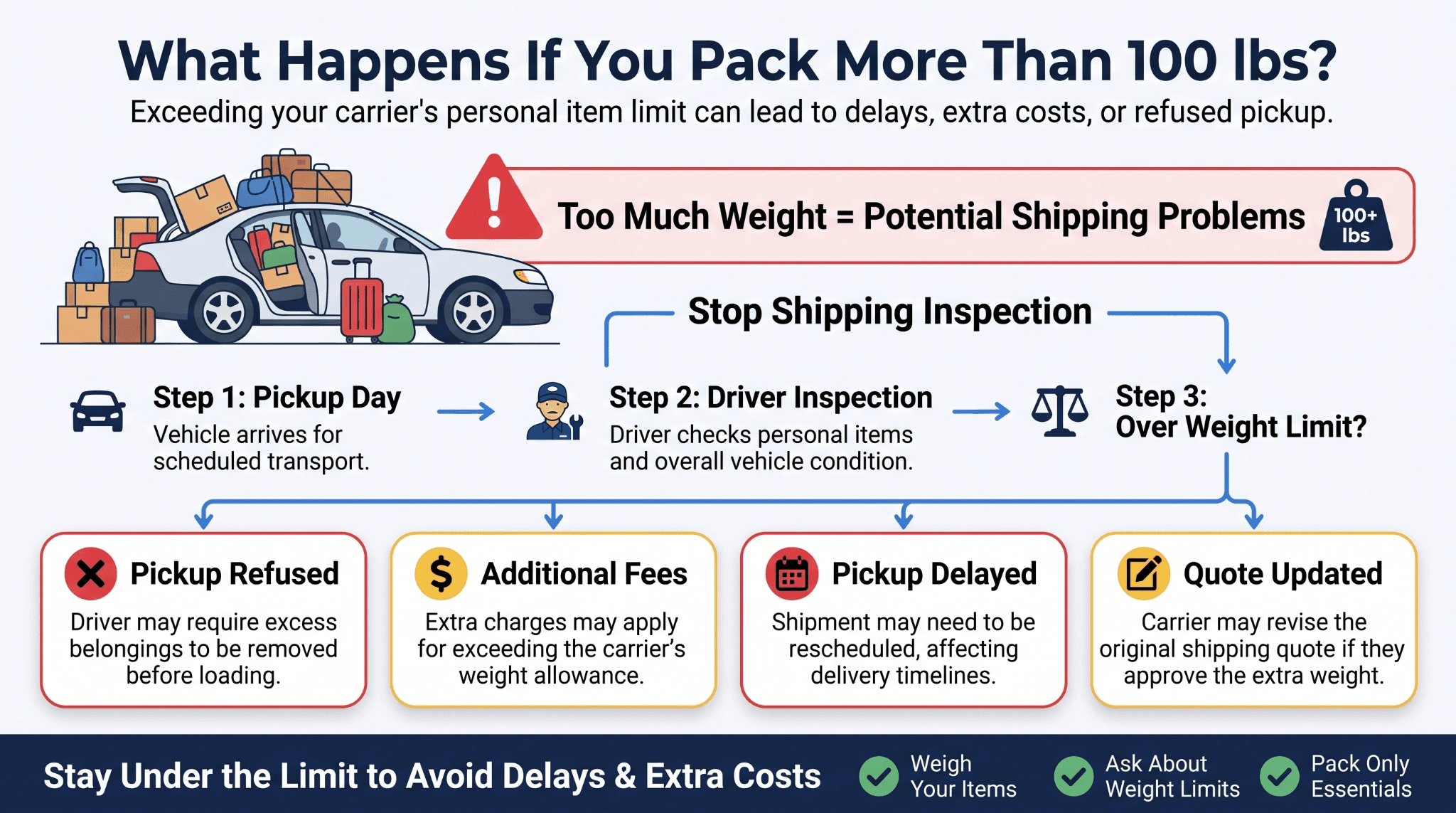
What Happens If You Pack More Than 100 Lbs of Personal Items?
Packing beyond the standard allowance rarely ends the way customers expect. Drivers are trained to check for excess weight at pickup, and when a car is loaded beyond policy, they have a few standard responses.
Some of the most common outcomes include:
Refused pickup until the excess items are removed on the spot
Additional fees charged to cover the added weight and liability
Rescheduled pickup, which can push back your entire delivery window
A price adjustment to your original quote if the carrier agrees to make an exception
This is one of the more avoidable causes of shipping delays. A customer who assumed shipping car with stuff inside when shipping a car simply meant "pack it like a moving truck" often discovers the hard way that transport carriers work under very different expectations than moving companies do.
What Items Are Safe to Pack Inside Your Car for Transport?
Once you know the weight ceiling, the next question is what actually makes sense to pack. Soft-sided, lightweight items generally cause the fewest problems during transit, since they will not shift dangerously or damage window glass if the vehicle experiences normal road vibration.
Reasonable items to consider include:
Soft duffel bags or backpacks
Boxed clothing, kept below window height
Lightweight, non-fragile household items
Books or paperwork with no sentimental or legal urgency
Small, securely closed containers
The safest approach when you can you pack it car transport personal items over 100 lbs in your head as a hard ceiling, then pack noticeably under that number to leave a safety margin for the driver's own judgment at pickup.
What Items Should You Never Leave Inside?
Certain categories of items should stay out of the vehicle entirely, regardless of how much weight allowance remains. This is partly a liability question and partly a legal one, since carriers are not authorized or insured to transport every category of goods.
Avoid packing:
Firearms, ammunition, or weapons of any kind
Hazardous materials, flammable liquids, or aerosols
Cash, jewelry, or other high-value valuables
Electronics such as laptops or tablets
Passports, titles, or other essential documents
If an item would be difficult to replace or explain to an insurance adjuster, it belongs with you, not in the vehicle being shipped.
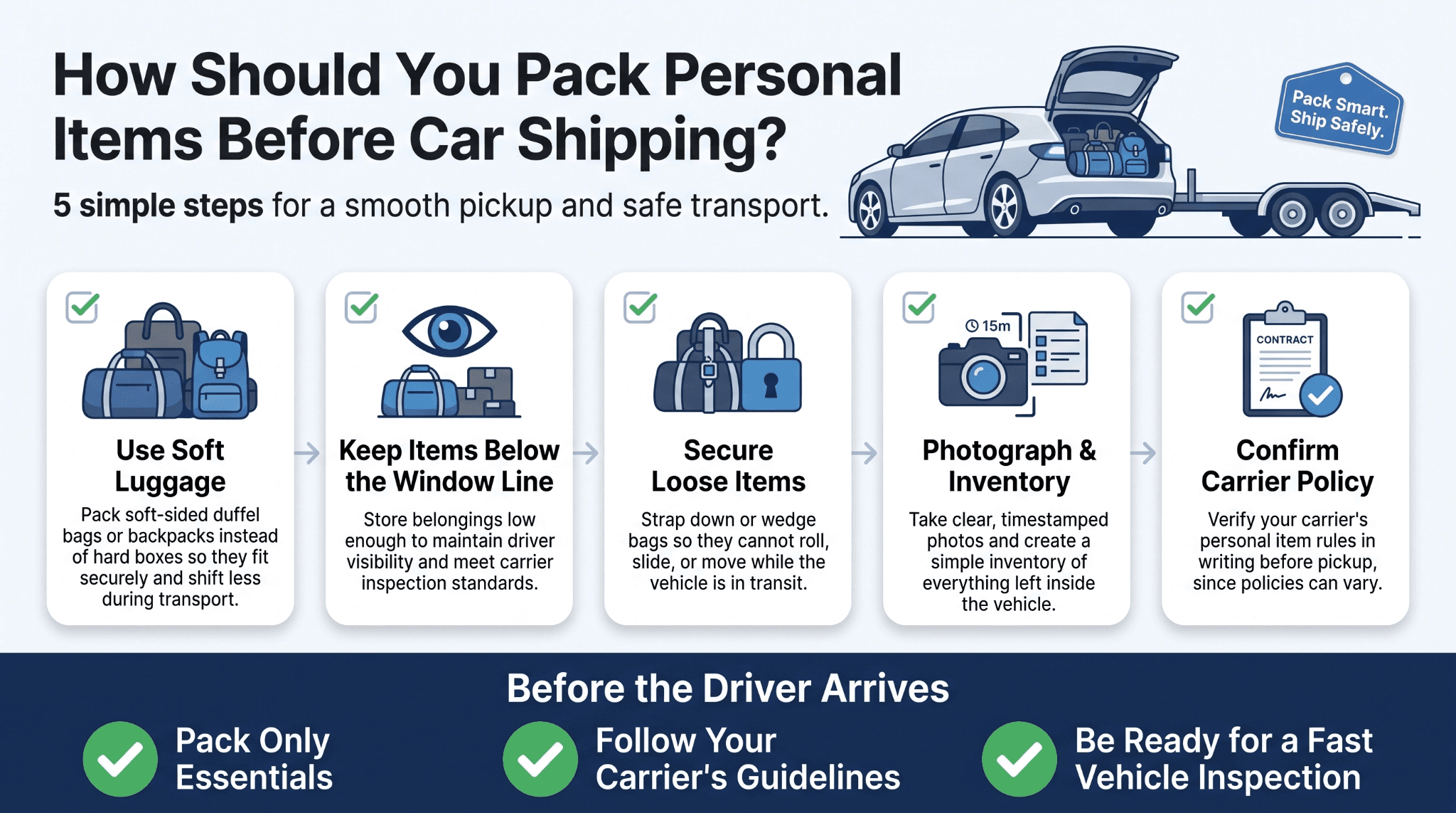
How Should You Pack Personal Items Before Car Shipping?
Good packing habits reduce risk and keep the pickup process quick. A few simple steps make the difference between a smooth handoff and a frustrating one.
Use soft luggage instead of hard boxes, since duffel bags flex with the car's movement instead of shifting sharply
Keep everything below the window line so the driver has a clear sightline and the load stays within visual inspection standards
Secure loose items with straps or by wedging them so they cannot roll or slide during transit
Photograph and inventory what you are leaving inside, including a timestamp, before the carrier arrives
Confirm the carrier's specific policy in writing ahead of pickup day, since enforcement can vary
This kind of preparation matters most for anyone planning shipping car with stuff inside when shipping a car over a long interstate route, where the vehicle may sit loaded for several days before delivery.
Is Your Car Insurance Coverage Affected by Items Inside?
This is where many customers are caught off guard. Carrier cargo insurance is built to cover the vehicle itself: its body, mechanical condition, and finish. It is not designed to cover personal belongings placed inside the car.
That means if a bag goes missing or an item is damaged in transit, most carriers will point to the same clause: personal items are transported at the owner's own risk. According to general guidance from the Insurance Information Institute, auto policies and cargo policies are typically structured around the vehicle as an asset, not incidental cargo placed inside it.
Coverage Type | What It Typically Covers | What It Does Not Cover |
|---|---|---|
Carrier cargo insurance | The vehicle itself | Personal items inside |
Standard auto insurance | Vehicle damage, liability | Belongings left in the car |
Homeowners or renters policy | May cover personal property | Varies by provider and claim type |
Because of this gap, it is worth checking whether your own homeowners or renters policy extends any protection to personal property in transit, rather than assuming the auto transport company's insurance will step in.
What Do Experienced Auto Transport Companies Recommend?
Reputable carriers tend to give the same advice, refined over thousands of shipments. Their guidance is less about following rules for their own sake and more about avoiding entirely preventable problems.
Established best practices include:
Confirming the exact weight policy with your assigned carrier in writing before pickup
Treating the vehicle as a car being shipped, not a moving truck substitute
Avoiding valuables and irreplaceable documents entirely, regardless of available weight allowance
Asking about enclosed versus open transport policies separately, since some enclosed carriers apply stricter limits
Confirming any packing questions during the quote stage rather than the morning of pickup
This kind of proactive communication is what separates a shipment that goes smoothly from one that starts with an argument in the driveway. Customers who ask these questions early tend to report fewer delays, fewer surprise fees, and a noticeably smoother pickup experience overall.

What Else Do People Ask About Packing a Car for Shipping?
Beyond the core rules, a handful of specific questions come up again and again from customers preparing for their first shipment. Here are straightforward answers to the ones we hear most.
Does the trunk count differently than the back seat?
Not really. Most carriers apply the 100-pound guideline to the vehicle's interior as a whole, not to specific compartments. Safeeds recommends keeping everything in the trunk or cargo area when possible, since it keeps items out of the driver's sightline and off the seats.
Does enclosed transport allow more personal items than open transport?
Generally no. Enclosed carriers protect the vehicle from weather and road debris, but the same federal weight considerations still apply, so the 100-pound standard typically carries over regardless of transport type.
Do you need to declare packed items when booking a quote?
It is not always required, but it is a smart habit. Letting your Safeeds representative know what you plan to leave in the car helps confirm expectations early and avoids surprises for the driver at pickup.
Can moving boxes be stacked on the back seat instead of the trunk?
Technically some carriers allow it, but stacking above the window line is one of the fastest ways to trigger a pickup delay. Keeping boxes low and out of sightlines is the safer bet every time.
Will packing under the 100-pound limit guarantee no issues at pickup?
It significantly reduces the odds of a problem, but the final call always belongs to the driver inspecting the vehicle. Staying well under the limit and packing neatly gives you the best chance of a fast, uneventful handoff.
The Bottom Line: Packing Smart for a Safe Car Shipment
The short answer to whether you can leave items in your car during shipping is yes, with clear boundaries. Staying near or under the standard 100-pound allowance, keeping items below the window line, and avoiding valuables entirely will keep your shipment on schedule and free of unnecessary fees.
The most reliable step any shipper can take is a simple one: confirm the exact packing policy with your assigned carrier before pickup day, rather than assuming every company follows identical rules. Get your free, instant quote today and ask our team any packing questions before your vehicle ships.