A car shipping broker beats booking a carrier because it gives you access to a nationwide network of vetted carriers, pricing shaped by competition rather than a single quote, and licensed accountability if something goes wrong. A carrier can only offer its own truck and its own schedule. A broker matches your vehicle to the right carrier at the right price, without the guesswork.
Most first-time shippers assume going straight to a carrier saves money by "cutting out the middleman." In practice, the opposite is often true. A broker shops your shipment across a network of carriers, verifies their credentials, and stands behind the transaction if a problem comes up. Get an instant, locked-in quote from Safeeds Transport in under 30 seconds, with no deposit required to book.
What Is a Car Shipping Broker?
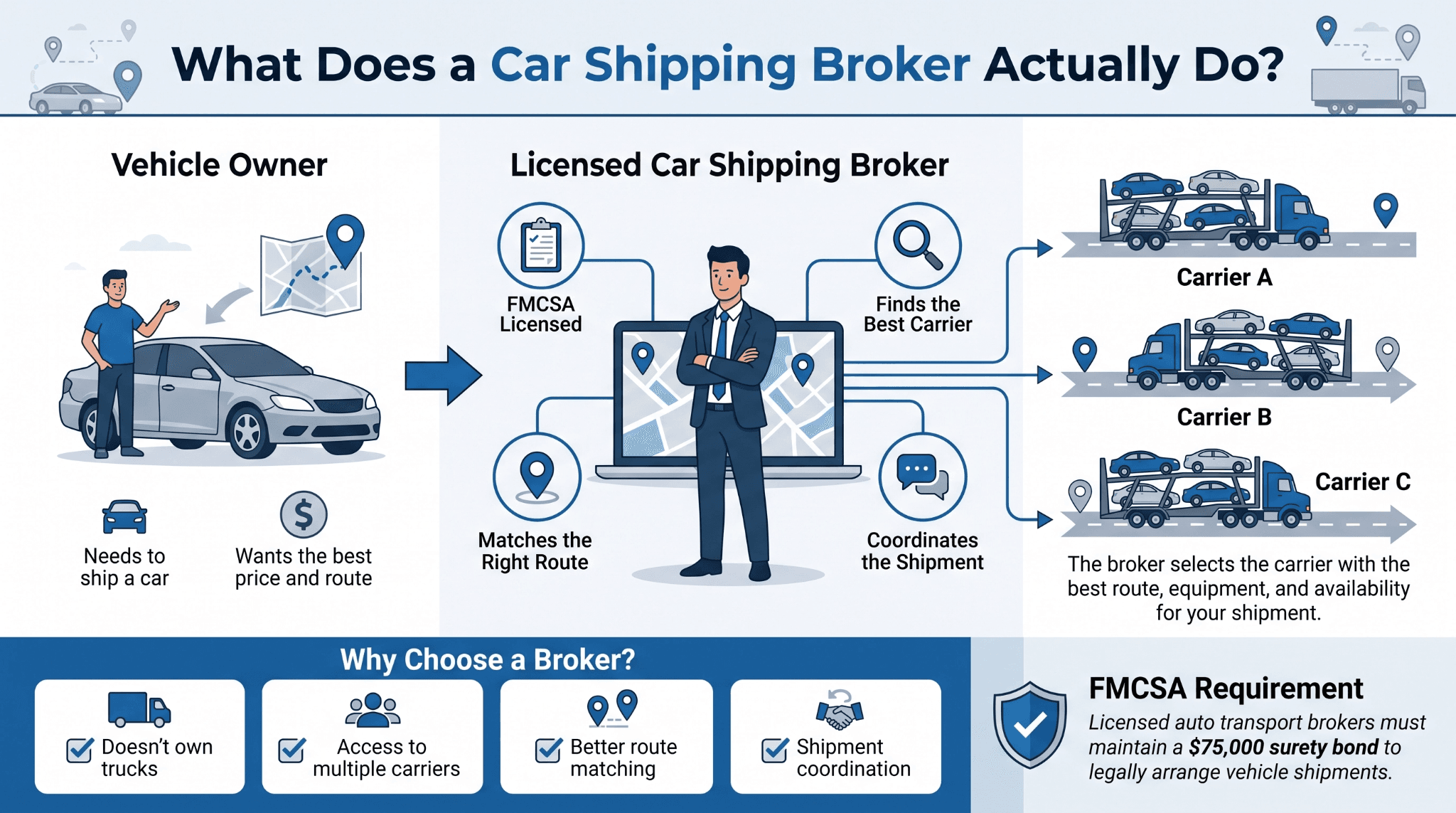
If you're asking what is an auto transport broker, the short answer is this: a broker is a licensed company that connects vehicle owners with carriers, without owning or operating any trucks itself. A car shipping broker's core job is matchmaking. It pairs your shipment with a carrier that has the right route, equipment, and availability.
To operate legally, a broker must hold active operating authority from the Federal Motor Carrier Safety Administration and maintain a financial security bond. According to the FMCSA's official broker registration guidance, property brokers must file a surety bond or trust fund agreement worth $75,000 before they can legally arrange shipments. That bond protects carriers, and by extension customers, if a broker fails to meet its financial obligations.
This licensing requirement is the foundation on which every other advantage is built:
A broker doesn't own the truck moving your car, so its incentive is to find the best available match, not to fill its own limited fleet
Its revenue depends on repeat business and referrals, not on keeping one piece of equipment busy
A carrier, by comparison, has an incentive to fill its own truck first, even if another carrier would suit your route better
The easiest way to understand a broker vs carrier auto transport comparison is to think of it like booking a flight. A travel agent doesn't own a plane; they compare airlines and prices to find the best fit. A carrier is the airline. A car shipping broker is the agent.
A carrier owns the trucks, employs the drivers, and loads and unloads vehicles. Its business is limited to the routes its trucks already run. If a carrier's truck is full or delayed, there's often little flexibility to offer.
Car Shipping Broker | Carrier | |
Owns trucks | No | Yes |
Access to other companies' equipment | Yes, across a network | No, own fleet only |
Sets price through competition | Yes | No, fixed to one company |
Can reassign a shipment if delayed | Yes | Limited to own resources |
Licensing requirement | FMCSA broker authority + bond | FMCSA carrier authority + insurance |
4 Reasons Why You Should Book a Broker Instead of a Carrier
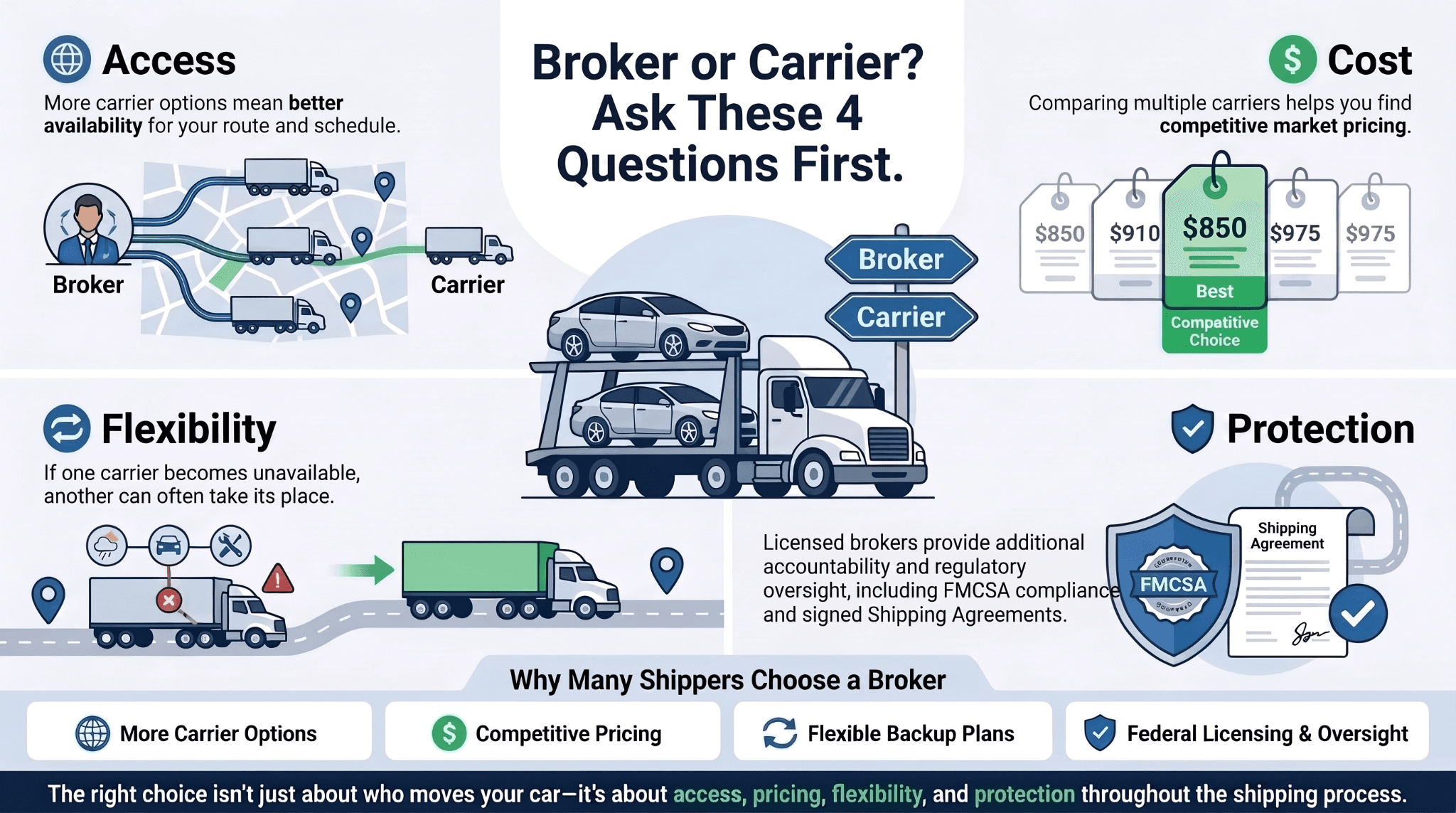
If you're weighing whether to use a car shipping broker against booking a carrier, it comes down to four factors:
Access: A broker widens your pool of available carriers
Cost: Competition among carriers shapes the price you're quoted
Flexibility: A broker can adjust quickly if a carrier falls through
Protection: Brokers operate under federal licensing requirements, which carriers alone don't share
Each of these factors solves a different problem you're likely to run into during a real shipment. Access determines whether your vehicle can even be matched to a truck heading your direction on your timeline. Cost determines whether you're paying a fair market rate or a single company's asking price with no comparison point.
Flexibility determines what happens the moment something doesn't go as planned, which is common in an industry that depends on weather, traffic, and mechanical reliability. Protection determines what recourse you actually have if a dispute comes up after booking.
Booking a carrier means accepting whatever that one company offers on all four fronts, with no built-in comparison or backup plan. A broker is structured to give you leverage on every one of them at once. The four reasons below walk through each of these factors in order, starting with access.
Reason 1: A Broker Gives You Access to More Carriers
A single carrier can only cover the routes its own trucks are already running. A broker works across a large network of vetted, FMCSA-registered carriers instead, so your vehicle isn't limited to one company's schedule or coverage area. This matters most on less common routes, where a single carrier may not have a truck heading your direction at all, and during high-demand seasons like snowbird migration in the fall and spring, when demand for certain lanes spikes fast.
Access also affects pickup speed. If one carrier in a broker's network isn't available on your preferred date, another can often be slotted in within the same network, rather than forcing you to start your search over. This kind of backup option simply doesn't exist when you've booked one carrier and that carrier can't come through.
Reason 2: A Broker Is Usually Cheaper Than a Carrier
Whether a broker is cheaper than a carrier is one of the most common questions first-time shippers ask. The honest answer: usually yes, though not automatically. A broker's pricing model relies on competition; instead of accepting whatever single number one carrier quotes, a broker compares bids across its network and passes along a more competitive rate.
A single carrier has no competing bid to weigh against its own price, and during high-demand periods that often means less room to negotiate, since the carrier isn't under pressure from an alternative offer. A well-run broker builds on this advantage with a 7-day price lock and no upfront payment required to book, so the number you're quoted stays firm while you finalize your plans.
Reason 3: A Broker Handles Scheduling and Delays Better
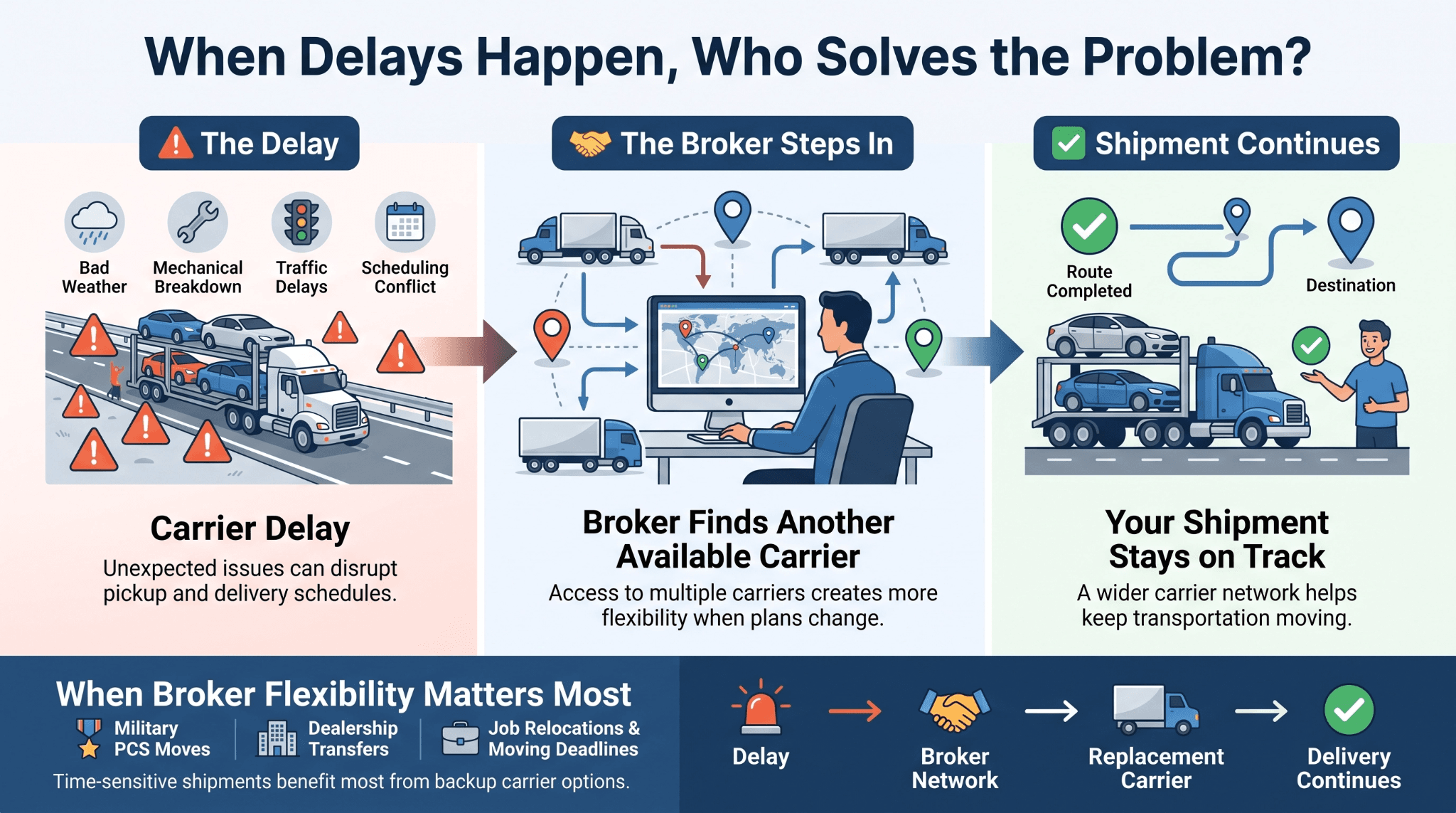
Even well-run carriers occasionally face breakdowns, weather delays, or scheduling conflicts. Book a carrier, and a delay on their end becomes your problem to solve. Book through a broker, and it's a problem the broker is positioned to fix. A broker with relationships across multiple carriers can typically reassign a shipment to another available truck without starting the search over. This matters most for:
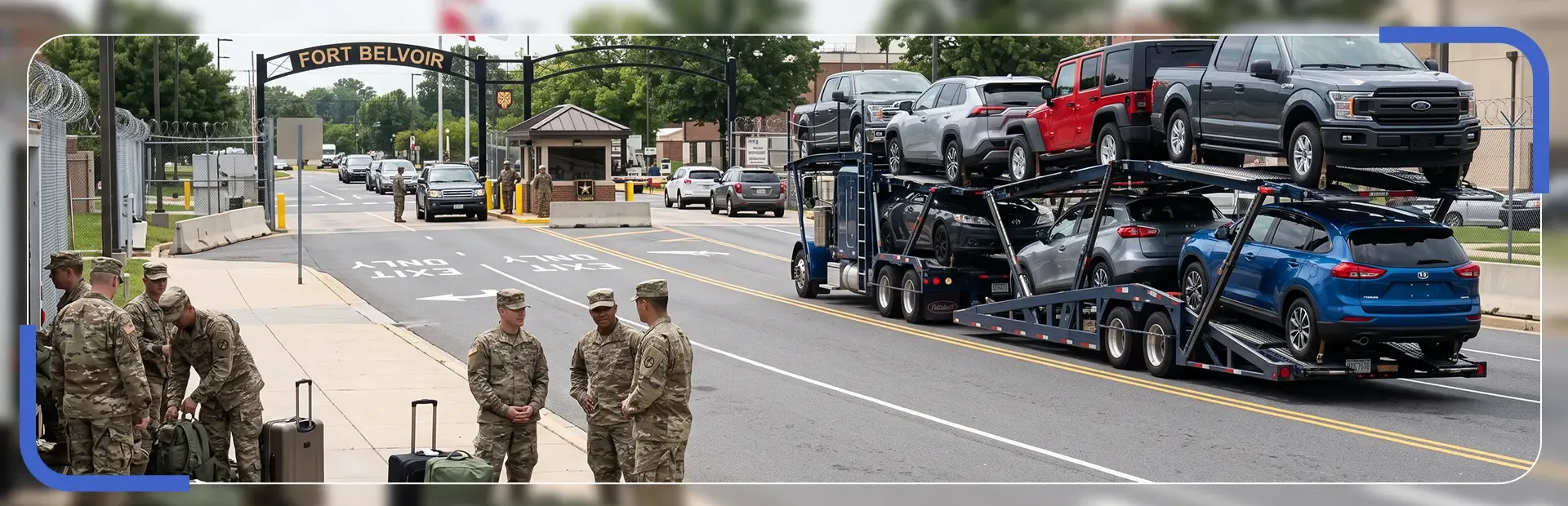
Time-sensitive moves like military PCS relocations
Dealership transfers on tight timelines
Shipments tied to a closing date or a new job start date
A single carrier that misses its pickup window may not have another truck available for days. A broker working across a wider network usually has more room to adjust the plan, a difference that matters most during peak moving months, when trucks fill up quickly, and last-minute availability becomes harder to find.
Reason 4: A Licensed Broker Provides Real Protection

Licensing is where the practical benefits of using a broker turn into real accountability. FMCSA requires property brokers to carry a $75,000 bond or trust fund before they can legally operate, giving customers and carriers a documented path for recourse if a broker fails to meet its obligations. This oversight doesn't stop once a shipment is booked; a broker stays responsible for verifying that the carrier it assigns is properly licensed and insured, adding a second checkpoint a carrier booking doesn't include.
Safeeds strengthens this further with:
Fully insured shipments from pickup to delivery
AFTA GAP Protection, covering beyond the federal minimum
A documented point of contact if a payment dispute, missed pickup, or damage claim comes up
Together, these safeguards mean you're never left managing a problem alone, since a licensed broker has both the obligation and the resources to help resolve it.
What Should You Look for When Choosing a Car Shipping Broker?
Not every broker operates the same way, so a bit of due diligence goes a long way. The vehicle shipping industry is a sizeable market, valued at $10.5 billion in the United States in 2026 according to IBISWorld's industry data, so shoppers have plenty of room to compare before committing to one.
Look for a broker with active FMCSA operating authority and a bond on file, transparent pricing with no hidden fees, and verified reviews spread across multiple independent platforms rather than only its own site. A trustworthy broker also gives clear, specific answers about how it vets carriers and confirms their insurance, and backs its quotes with written price-lock or guarantee terms.
Confirming these details takes only a few minutes but can prevent the most common complaints in the auto transport industry, from surprise fees to unreachable support after a deposit is paid.
What Do Customers Usually Ask About Car Shipping Brokers?
Before booking, most shippers want the same handful of questions answered. Here are the ones that come up most often and what they mean for your shipment.
Is it better to use a car shipping broker or book a carrier myself?
For most routes, a broker is the stronger choice. You get access to a full network of vetted carriers instead of one company's limited schedule, plus pricing shaped by competition. Our network model is built specifically to give customers that flexibility, without the risk of relying on a single carrier's availability.
How do I know if a car shipping broker is legitimate?
Check for an active FMCSA operating authority, a bond on file, and reviews across multiple independent platforms, not just the company's own site. Safeeds is FMCSA licensed, bonded, and insured, with over 10,000 verified reviews across Google, Trustpilot, and the BBB.
Will a broker give me a locked-in price, or can it change later?
A trustworthy broker should offer price certainty in writing. We back every quote with a 7-day price lock, so the number you're quoted at booking is the number you pay.
Do I need to pay a deposit to book through a broker?
Some brokers require money down before a carrier is even assigned. There's no upfront payment required, so you're never paying before a carrier is confirmed.
What happens if my assigned carrier cancels or is delayed?
This is exactly where a broker earns its value. Because we work across a nationwide carrier network, a delayed or unavailable carrier can typically be swapped for another one quickly, backed by 24/7 support if you need an update.
Making the Right Call for Your Vehicle
Choosing between a broker and a carrier booking comes down to how much you value access, pricing leverage, flexibility, and accountability. A car shipping broker offers all four by design: a wider carrier network than any single company can match, pricing shaped by real competition, the ability to adapt quickly if a carrier falls through, and federal licensing requirements that create a documented path for recourse. A carrier booking offers none of that built-in flexibility, since you're limited to one company's trucks, schedule, and terms from the start. For most shippers, that difference is the deciding factor. Request your free, no-deposit quote from Safeeds Transport today and lock in your rate for 7 days.