Every year, hundreds of thousands of vehicles cross the highways connecting California and Texas, moving for jobs, family, retirement, and business expansion. In 2026, the way this route works is changing in ways that matter to anyone planning a shipment.
California ↔ Texas car shipping in 2026 is shaped by five key shifts: rising demand on specific city routes, faster average transit times, growing interest in enclosed transport, seasonal price swings, and stricter carrier vetting standards. Understanding these trends, in both directions, helps you plan a smarter, safer shipment. Get a free quote and compare pricing before you book.
What Does California ↔ Texas Car Shipping Cost in 2026?
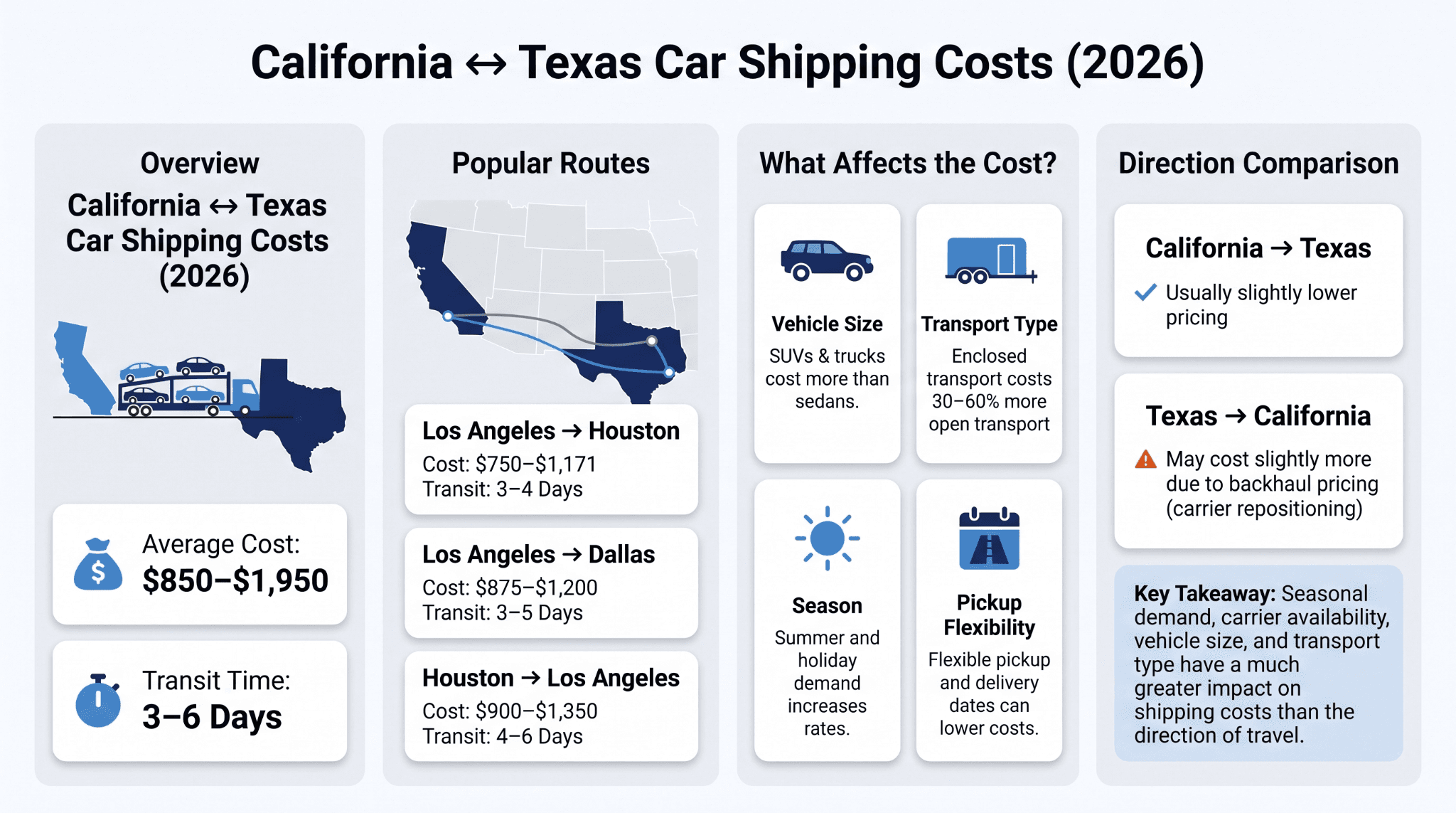
Cost is usually the first question anyone asks before booking a shipment. For California ↔ Texas car shipping, the average price in 2026 typically falls between $850 and $1,950 for standard open-carrier transport, depending on the exact cities, vehicle size, and time of year.
Los Angeles to Houston, for example, typically runs $750–$1,171 and takes 3–4 days, while Los Angeles to Dallas averages $875–$1,200 over 3–5 days, according to Safeeds Transport's current route pricing data. Longer distances generally mean higher fuel and labor costs, but this corridor benefits from heavy carrier traffic along major interstates like I-10, I-20, and I-40, which helps keep pricing competitive compared to less-traveled routes.
A few factors consistently drive the final number:
Vehicle size: SUVs and trucks cost more to ship than sedans or coupes.
Transport type: Enclosed trailers typically run 30–60% higher than open trailers.
Season: Summer and holiday periods see the highest demand.
Pickup/delivery flexibility: A wider scheduling window often lowers your rate.
Is Texas to California Car Shipping More Expensive Than the Reverse?
Many people assume shipping is priced the same no matter which direction the car travels, but that's not always accurate. Texas-to-California car shipping can sometimes run slightly higher than the reverse route, Houston to Los Angeles, for instance, runs $900–$1,350 over 4–6 days, a somewhat wider range than the outbound LA-to-Houston lane. This is largely a "backhaul" effect; carriers price routes differently depending on which direction trucks need to be repositioned after a full load.
In practice, the price difference between directions is usually modest and driven more by seasonal demand and current carrier availability than by which state the car starts in. If you're comparing quotes, ask specifically about car shipping from CA to TX cost versus the reverse rate; a transparent broker should be able to explain the difference clearly.
Why Is Route Demand Like LA to Dallas Car Transport Rising in 2026?
The first major trend shaping this corridor in 2026 is a sharp rise in demand along specific city-to-city routes. LA to Dallas car transport has become one of the busiest lanes in the country, driven by continued relocation from California to Texas metro areas, remote work flexibility that lets people move without changing employers, and expanding business operations in North Texas. Safeeds Transport currently lists both LA-to-Dallas and San Diego-to-Dallas among its "hot" routes, each averaging $875–$1,200 over 3–5 days.
This matters for anyone booking a shipment because high-demand routes tend to behave differently from average ones:
More carrier availability on busy routes attracts more trucks, which can mean faster pickup times.
More competitive pricing and carrier competition on popular lanes often keep rates from spiking as much as on rural or less-traveled routes.
With faster booking-to-pickup windows, carriers are more likely to already be running the route when you need them.
If your route follows one of these established corridors, you're likely to get quicker service and more consistent pricing than someone shipping between two smaller, less-connected cities.
How Has Transit Time Changed for California to Texas Car Shipping?
The second trend is improved speed. Better route optimization and larger carrier networks have shortened average delivery windows for California ↔ Texas car shipping compared to just a few years ago.
What's a Realistic Delivery Window in Both Directions?
Delivery windows vary by exact route, but a few of the most-traveled California-Texas lanes give a clear picture of what to expect. Here's a breakdown of current pricing and typical transit times across both directions.
Route | Average Price | Typical Transit Time |
Los Angeles → Houston | $750–$1,171 | 3–4 days |
Los Angeles → Dallas | $875–$1,200 | 3–5 days |
San Diego → Dallas | $875–$1,200 | 3–5 days |
Houston → Los Angeles | $900–$1,350 | 4–6 days |
Delays can still happen. Weather events, holiday traffic, and last-minute scheduling changes are the most common causes. Booking with a flexible pickup window, rather than a fixed single date, is one of the simplest ways to avoid unnecessary delays on either direction of the route.
Are More People Choosing Enclosed Transport in 2026?
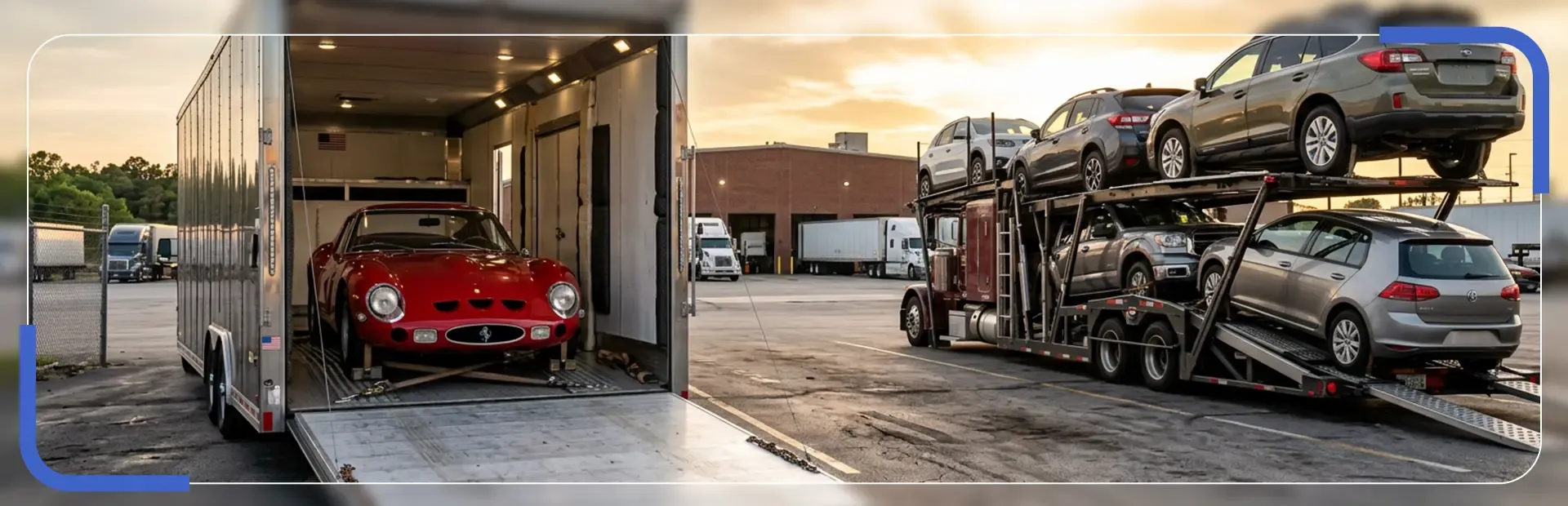
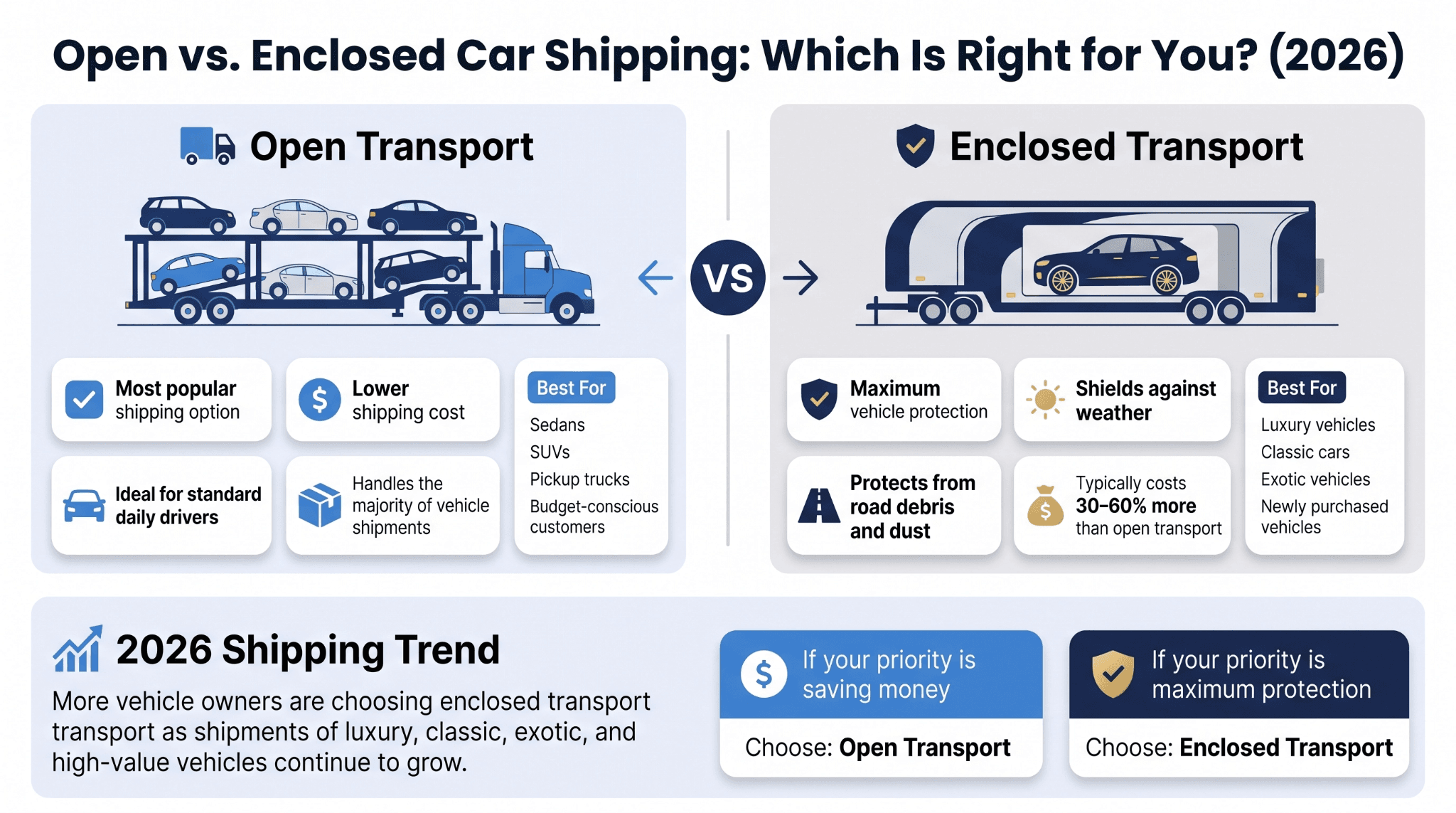
The third trend is a steady shift toward enclosed and hybrid transport options. As vehicle values rise and more people ship newer, higher-value, or specialty vehicles, enclosed trailers have become a more common choice, even for buyers who might have picked open transport a few years ago. Open transport still handles the large majority of shipments, but enclosed bookings are climbing steadily for luxury, classic, and exotic vehicles.
Enclosed transport protects a vehicle from weather, road debris, and dust, worth considering on a long southern route that can pass through summer heat and sudden storms. The tradeoff is cost: enclosed shipping generally runs 30–60% higher than open transport.
Here's a simple way to think about which option fits your situation:
Choose open transport if your vehicle is a standard daily driver and budget is the priority.
Choose enclosed transport if you're shipping a luxury, classic, exotic, or newly purchased vehicle where extra protection is worth the added cost.
Does the Time of Year Affect California to Texas Car Shipping Rates?
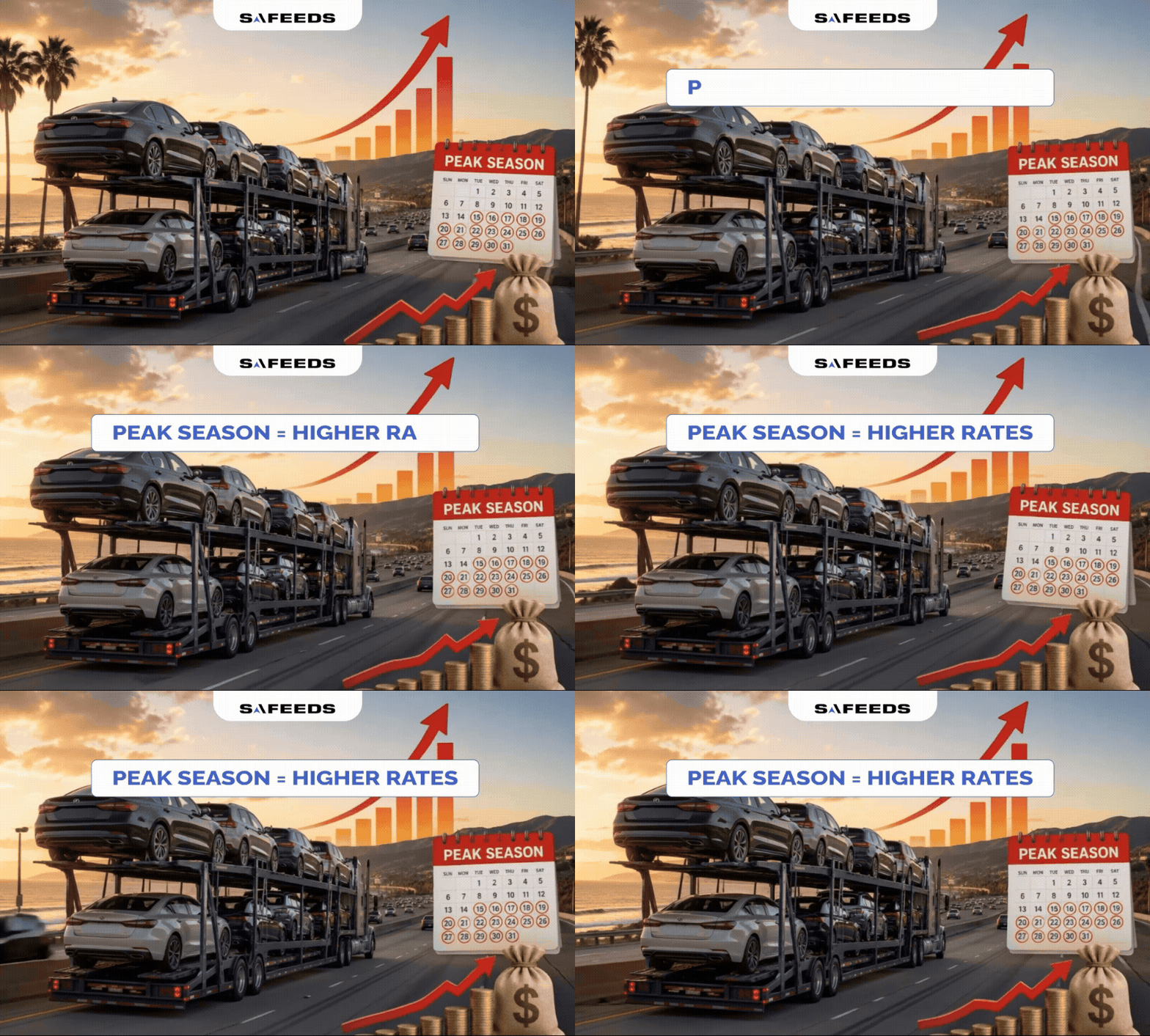
Yes, and this is the fourth trend worth planning around. Seasonal demand has a real, measurable effect on both price and carrier availability for this route. Planning your shipment around these seasonal shifts can make a noticeable difference in both what you pay and how quickly your vehicle arrives.
Summer (May–August): Highest demand due to relocations, college moves, and school-year transitions. Expect higher prices and possibly longer waits for carrier assignment.
Snowbird season (October–November and March–April): Increased demand from seasonal residents moving vehicles between winter and summer homes. Safeeds Transport currently runs a seasonal snowbird discount for this reason.
Winter holidays (mid-December–early January): Often the slowest period, which can mean lower prices but occasionally longer transit times due to reduced carrier staffing.
If your move date is flexible, shipping just outside peak season, late spring or early fall, often provides the best balance of fair pricing and reliable scheduling.
What's Changing With Insurance and Carrier Vetting in 2026?
The fifth trend is greater buyer awareness around insurance coverage and carrier legitimacy. As more people ship higher-value vehicles, they're asking sharper questions before booking, and that's a good thing.
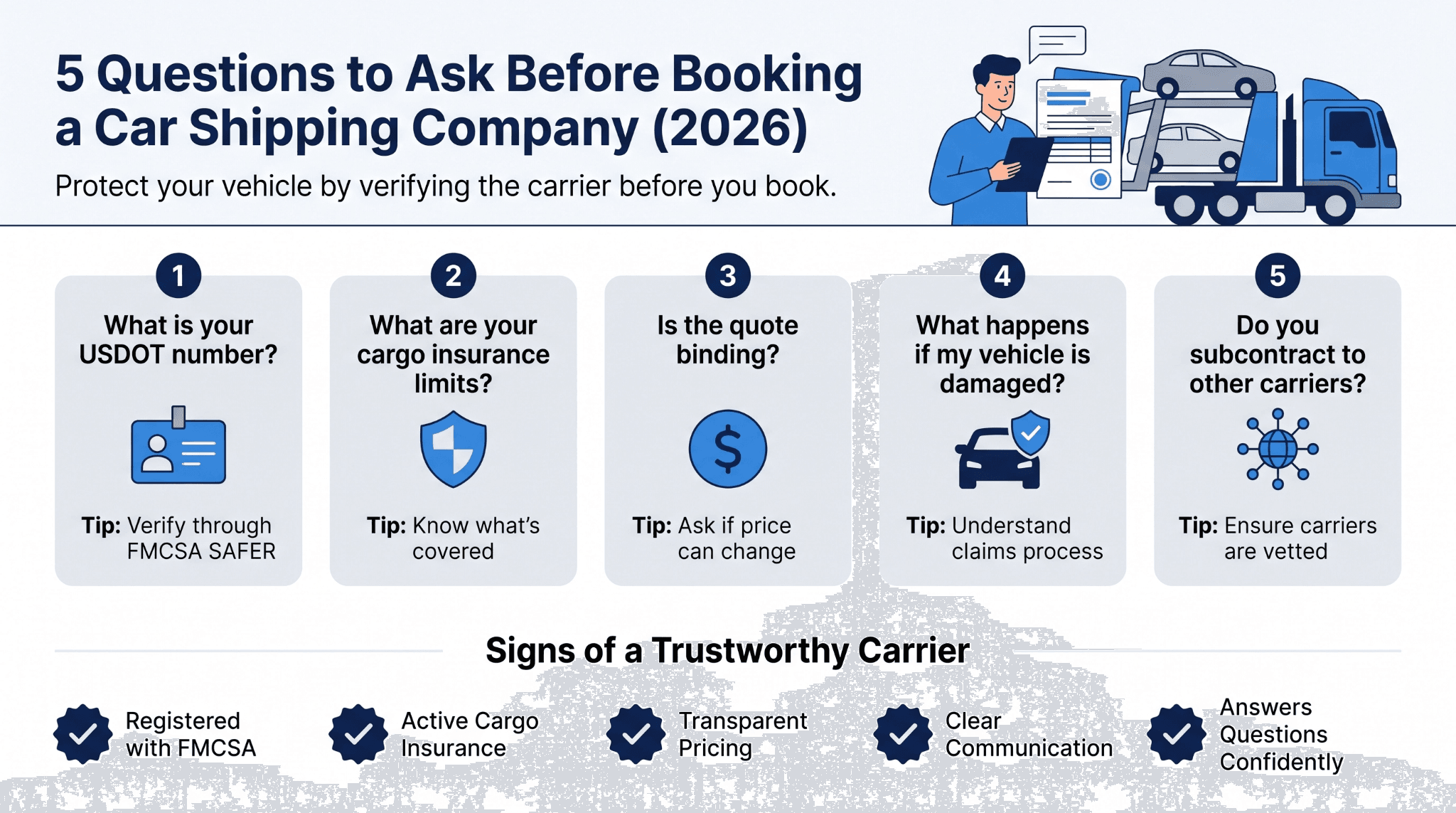
Every legally operating auto carrier in the U.S. must be registered with the Federal Motor Carrier Safety Administration and carry valid cargo insurance. You can verify a carrier's registration and safety record directly through the FMCSA's SAFER system, which is one of the simplest ways to confirm a company is legitimate before handing over your keys.
What Should You Ask a Carrier Before Booking?
Before booking any shipment, it's worth asking:
What is your USDOT number, and can I verify it?
What are your cargo insurance limits, and what's excluded?
Is the quote binding, or can the price change on pickup day?
What happens if my vehicle is damaged in transit?
Do you subcontract to other carriers, and if so, are they vetted the same way?
A transparent company will answer all five clearly and without hesitation.
How Do You Choose Between Open and Terminal-to-Door Shipping?
Beyond open versus enclosed, there's a second decision that affects both cost and convenience: door-to-door versus terminal-to-terminal service.
Service Type | Cost | Convenience | Best For |
Door-to-door | Slightly higher | Highest, pickup/delivery at your address | Most residential moves |
Terminal-to-terminal | Lower | Requires drop-off/pickup at a facility | Budget-conscious shippers near a terminal |
Open transport | Lower | Standard | Everyday vehicles |
Enclosed transport | Higher | Added protection | Luxury, classic, or high-value vehicles |
For most people relocating between California and Texas, door-to-door open transport offers the best balance of convenience and cost, but if you live near a major terminal hub in a city like Los Angeles, Dallas, or Houston, terminal service can shave a meaningful amount off your total price.
What Should You Do Before Booking Car Shipping from California to Texas?
Bringing everything together, here's a simple checklist to follow before you commit to a carrier. Working through these steps in order takes only a few minutes but can save you from unexpected costs, scheduling conflicts, or dealing with an unreliable carrier later on:
Get at least three quotes to compare pricing for your specific route.
Confirm the carrier's USDOT number through FMCSA's SAFER system.
Ask whether the quote is binding or subject to change on pickup day.
Review insurance coverage limits and ask what's excluded.
Choose open or enclosed transport based on your vehicle's value.
Book 1–2 weeks ahead during peak season for better availability.
Photograph your vehicle before pickup to document its condition.
Following these steps applies equally whether you're handling California ↔ Texas car shipping or managing a Texas-to-California car shipping move in the other direction.
Reader Queries on California-Texas Car Shipping
Before you book, it helps to have quick, straight answers to the questions people ask most. Here's what you need to know, in plain terms.
Does direction affect the price?
Slightly. Backhaul routes can occasionally shift prices in one direction, but the gap is usually modest and driven more by season and demand than by which state you're starting from.
How far in advance should I book?
One to two weeks is generally enough for most routes, but during peak summer months, booking two to three weeks ahead gives you more carrier options and better pricing.
What documents do I need?
You'll typically need your vehicle registration, a valid ID, and a signed bill of lading at both pickup and delivery, the document that records your vehicle's condition before and after transport.
Is open transport safe for a standard vehicle?
Yes. Open transport is used for the large majority of interstate shipments, including most LA to Dallas car transport routes.
The Bottom Line on Shipping a Car Between California and Texas in 2026
The California-Texas corridor remains one of the busiest and most competitively priced long-distance shipping routes in the country, and 2026 is shaping it further: faster average transit times, rising demand on specific city routes, more interest in enclosed protection, real seasonal pricing swings, and sharper buyer awareness around carrier vetting.
Whether you're shipping in either direction, the fundamentals stay the same: compare multiple quotes, verify your carrier's credentials, understand your insurance coverage, and time your booking around seasonal demand when you can. Those steps, more than anything else, determine whether your shipment goes smoothly. Get a free quote from Safeeds Transport and see current pricing for your exact route.