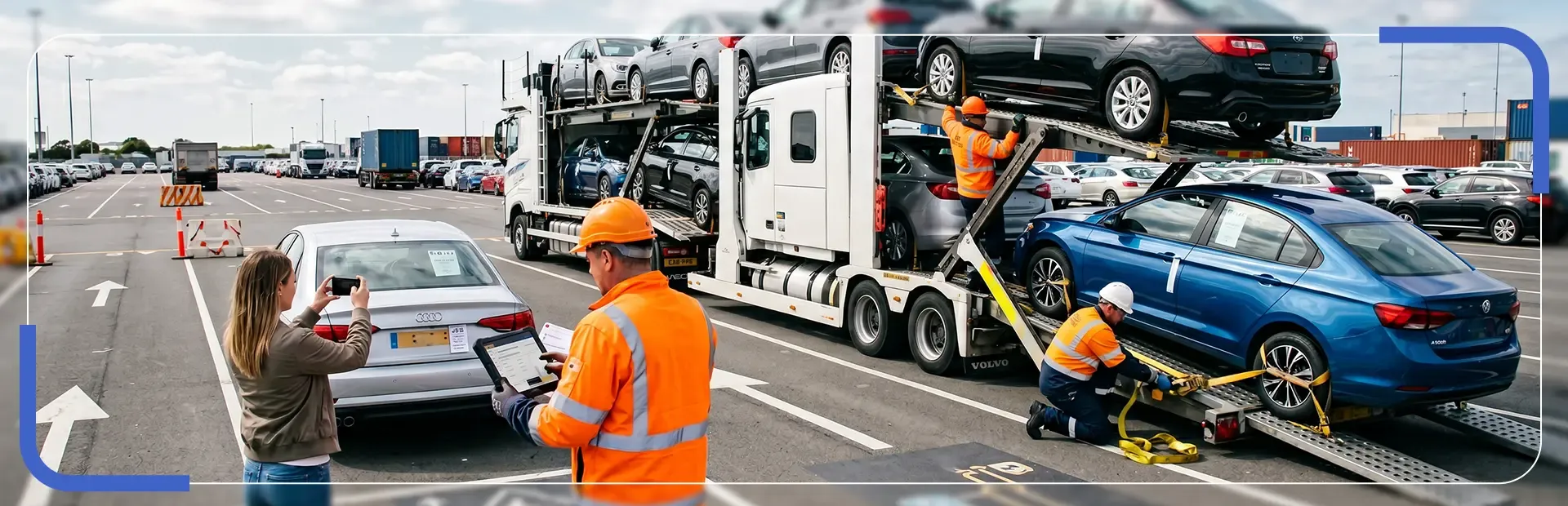
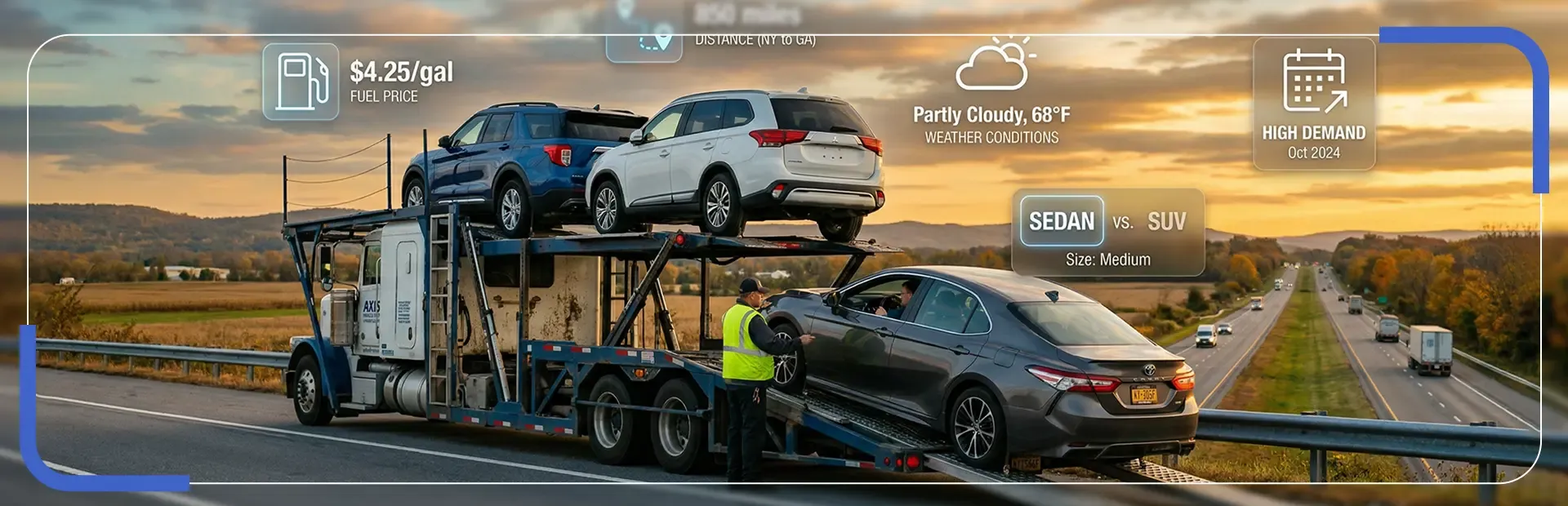
Most vehicle owners only ship a car once or twice in their lifetime, which means most have no reliable way to tell a trustworthy enclosed auto transport company from one that will leave them with damage, delays, and unanswered calls.
The vehicles being shipped this way, luxury cars, classic collectibles, exotic imports, and high-value custom builds, cannot afford a careless provider. This guide identifies the five concrete signs that separate reliable enclosed auto transport services from the ones that fall short. Request a free auto transport quote from Safeeds Transport and get a locked price with no hidden fees.
What Sets Enclosed Auto Transport Apart
Before evaluating providers, it helps to understand exactly what it involves and why it exists as a distinct service from standard open shipping.
How Enclosed Auto Transport Works
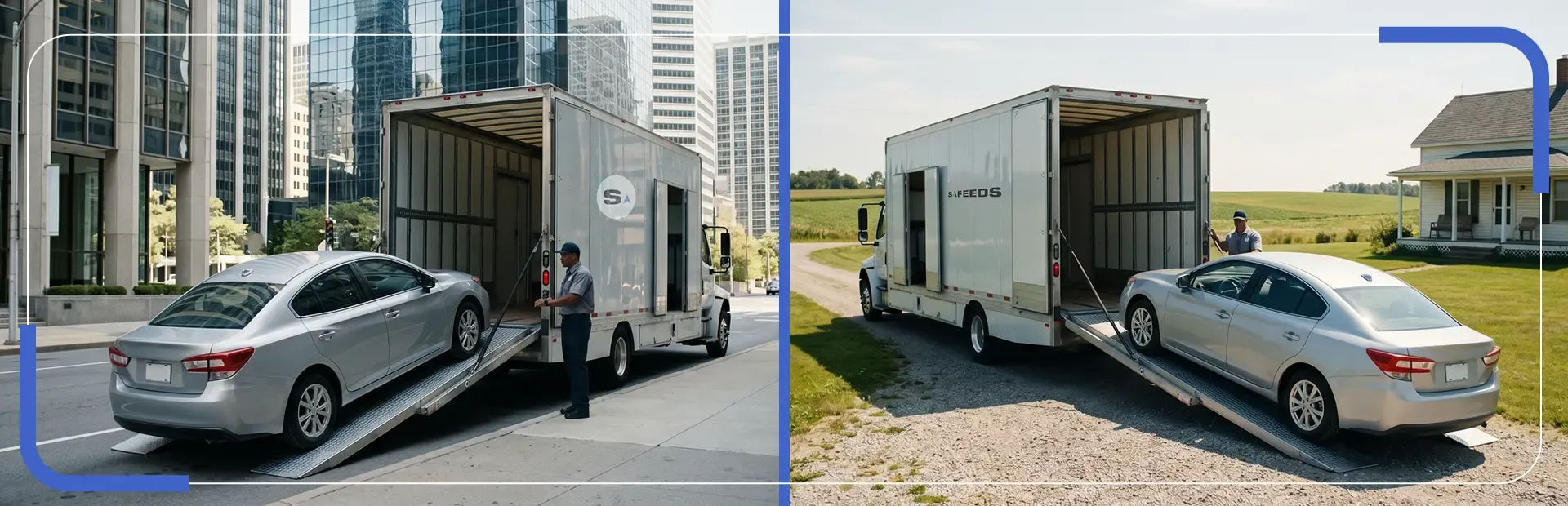
Enclosed auto transportation uses fully covered trailers to shield vehicles from the external environment during transit. Unlike open carriers, where vehicles are exposed to weather, road debris, and public visibility, enclosed trailers create a controlled environment around your vehicle from pickup to delivery.
There are two primary trailer types used in enclosed auto transport:
Hard-sided trailers: Solid walls and a sealed roof provide the highest level of protection. Preferred for the most valuable or delicate vehicles.
Soft-sided trailers: Heavy-duty fabric panels offer strong protection at a slightly lower cost. More common on shorter regional routes.
Both options provide substantially more protection than open transport.
Why People Choose Enclosed Auto Transport Services
The decision to use it is almost always driven by the nature of the vehicle being shipped. Common use cases include:
Luxury and exotic vehicles: Brands like Ferrari, Lamborghini, and Bentley require handling that open carriers cannot guarantee
Classic and collector cars: Vehicles with irreplaceable parts or custom paintwork that cannot risk road debris or weather exposure
Modified or show vehicles: Cars prepared for competition or exhibition that require precise handling and zero cosmetic risk
High-value purchases: Buyers who have invested significantly in a vehicle and cannot afford damage during transit
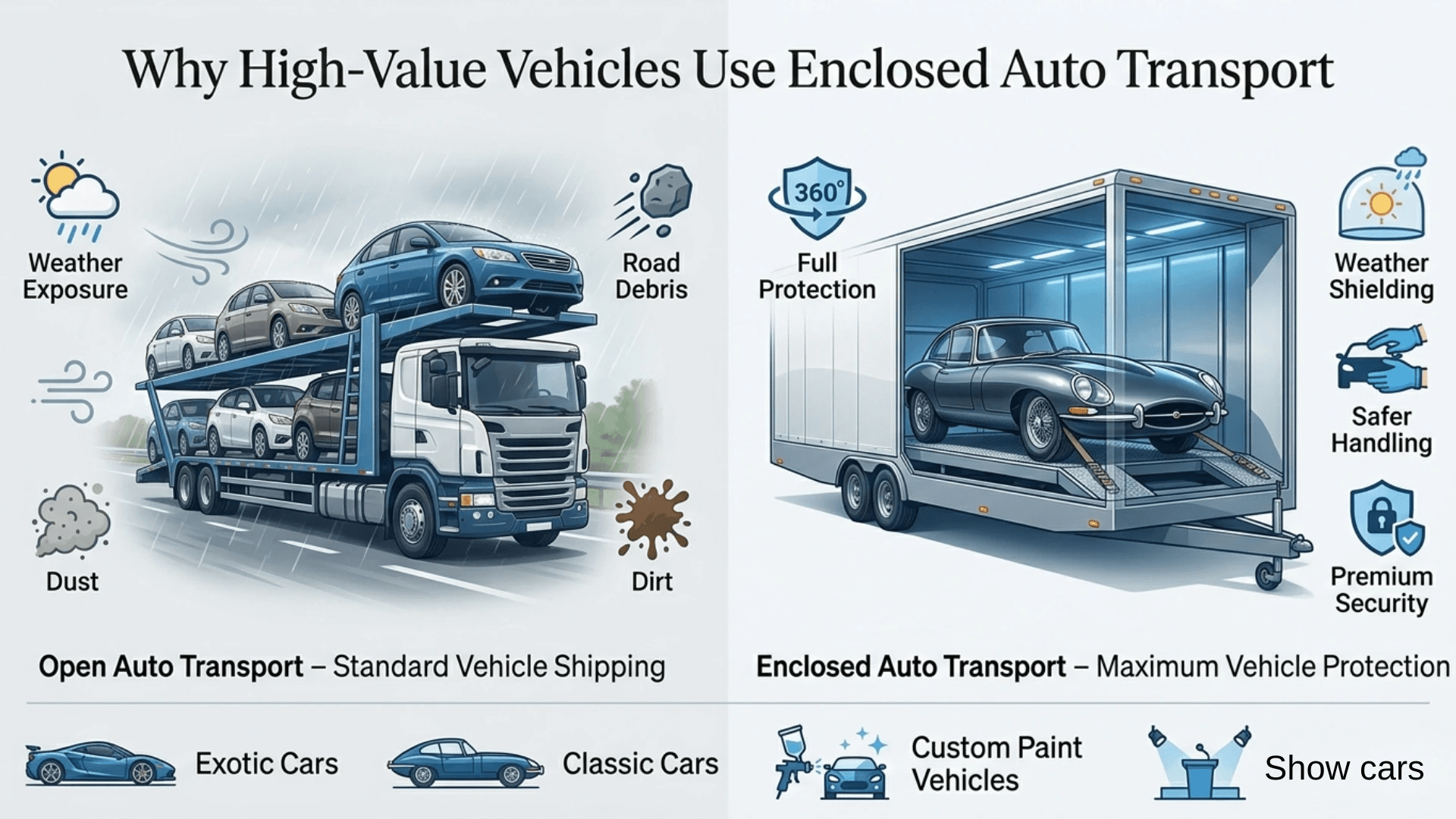
Enclosed vs. Open Auto Transport (Quick Comparison)
The table below summarizes the key differences between the two transport methods.
Feature | Enclosed Transport | Open Transport |
Weather protection | Full | None |
Visibility to the public | Hidden | Fully visible |
Ideal for | Luxury, classic, and exotic vehicles | Standard passenger vehicles |
Typical cost premium | 30–60% above open rates | Baseline pricing |
Carrier capacity | 1–6 vehicles | Up to 10 vehicles |
Sign #1: Licensed and Verified Enclosed Auto Transport Carriers
The single most important sign of a reliable enclosed auto transport company is verifiable federal licensing, and it is also the easiest thing for a dishonest provider to obscure.
FMCSA Registration and Why It Matters
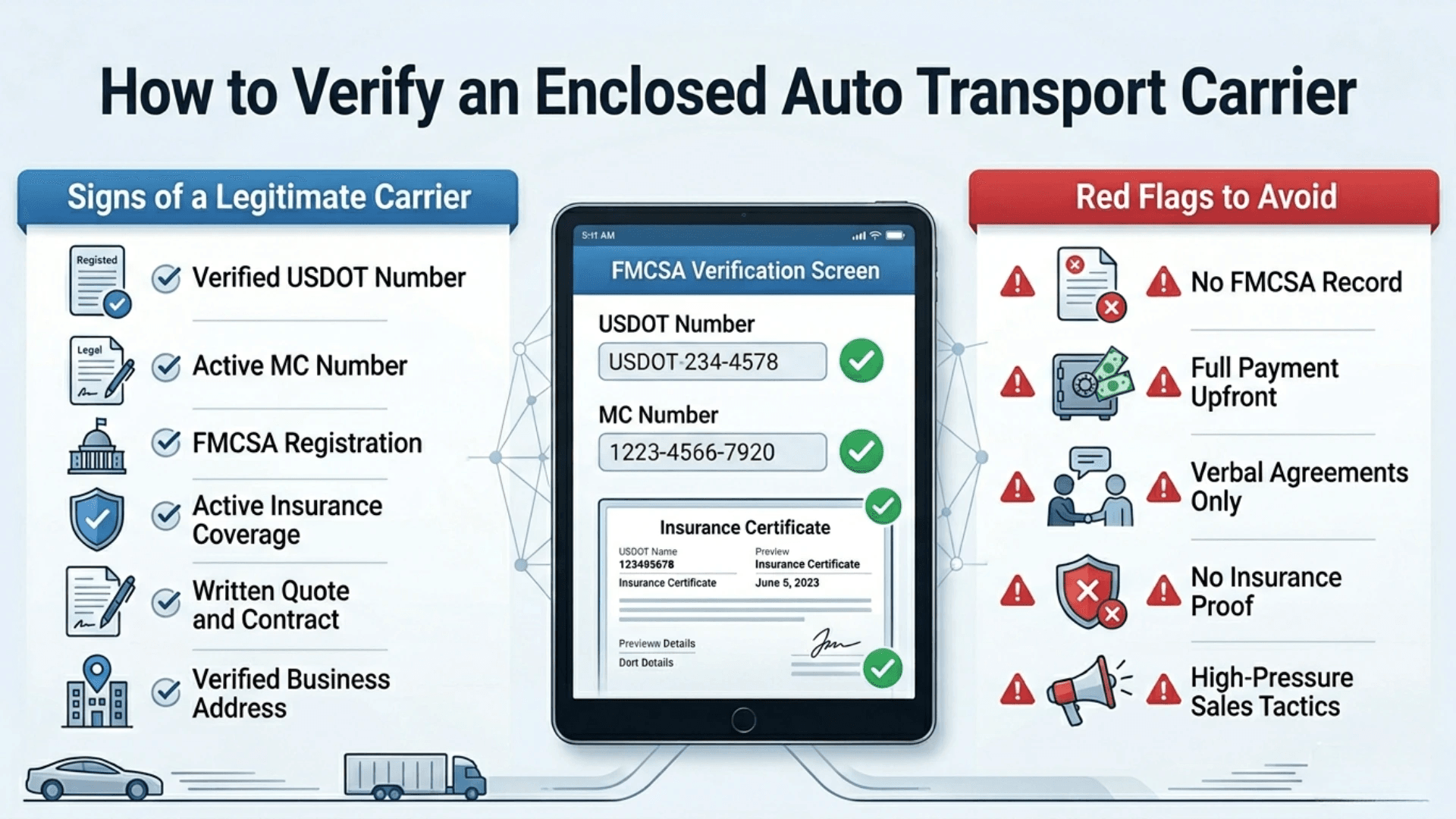
All legitimate enclosed auto transport carriers operating in the United States must register with the Federal Motor Carrier Safety Administration (FMCSA). This assigns each carrier a USDOT number and, for brokers, an MC number, both verifiable instantly through the FMCSA's public database.
Any company that cannot provide these numbers on request, or whose numbers return no active records, should be disqualified immediately.
Insurance Coverage for Enclosed Auto Transportation
Licensing alone is not sufficient. Before booking, request a certificate of insurance and confirm the following:
The policy is active and current
Cargo coverage limits reflect your vehicle's actual market value
The deductible structure is clearly stated
Coverage applies throughout the full transit period
Safeeds Transport validates carrier insurance on every shipment and provides AFTA GAP Protection as an additional layer of coverage above the carrier's base policy.
Red Flags in Unlicensed Transport Companies
Watch for these warning signs when evaluating enclosed auto transport companies:
No USDOT or MC number provided, or numbers that return no FMCSA results
Requests for full payment upfront before a carrier is confirmed
No written quote or contract, verbal agreements offer no consumer protection
No verifiable physical business address
High-pressure tactics designed to prevent you from doing due diligence
Sign #2: Transparent Enclosed Auto Transport Quotes and Pricing
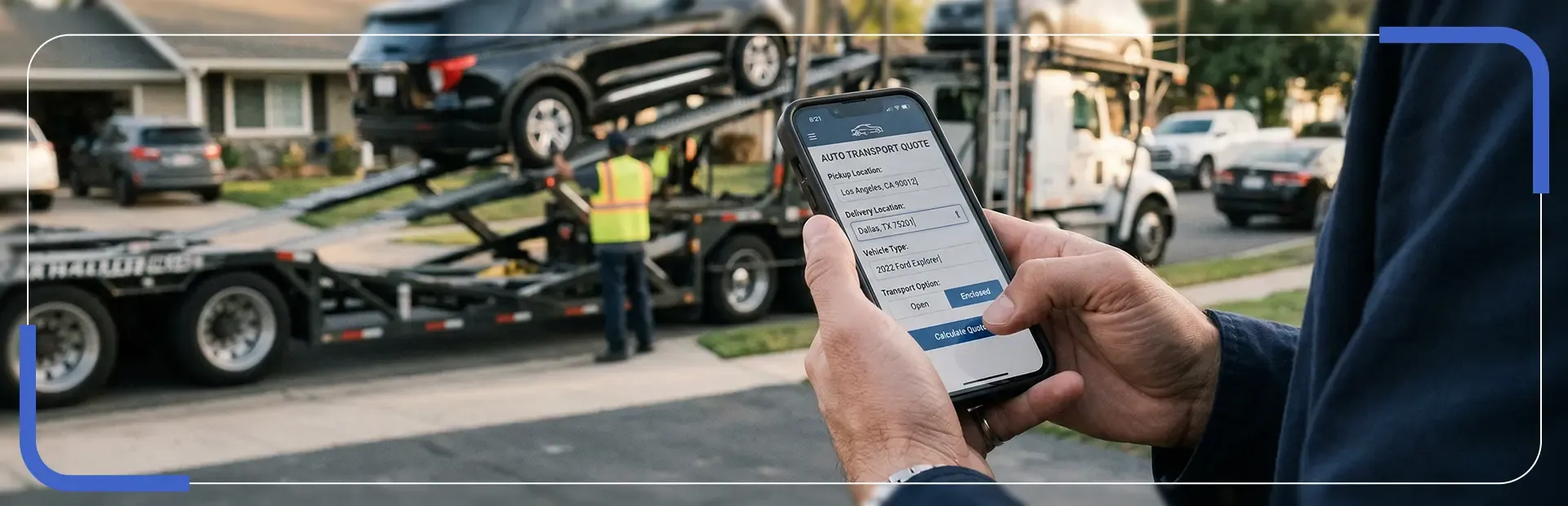
Pricing transparency is the second major sign of a reliable provider. The best companies deliver clear, itemized quotes with no room for last-minute surprises.
What a Proper Enclosed Auto Transport Quote Includes
A professional quote should break down every component of the price. At minimum, look for:
Base transport rate: Calculated by distance, route demand, and trailer type
Vehicle specifications: How your car's size, weight, and condition affect pricing
Transport method: Single-car vs. multi-car enclosed trailer, with cost differences explained
Fuel surcharge disclosure: Whether the price is all-inclusive or subject to adjustment
Price-lock period: How long the rate is guaranteed before it expires
Any quote that arrives as a single lump sum with no supporting detail is worth questioning.
Understanding Enclosed Auto Transport Rates in 2026
Enclosed auto transport rates in 2026 typically run 30% to 60% above open transport pricing for the same route. For cross-country shipments, this generally places enclosed transport between $1,400 and $2,500 for a standard luxury or classic vehicle.
The key factors that influence enclosed auto transport cost are straightforward:
Route and distance: High-demand corridors are priced more competitively
Vehicle dimensions: Oversized or modified vehicles may require single-car trailers
Trailer type: Hard-sided enclosed trailers carry a premium over soft-sided options
Seasonality: Peak shipping periods push rates higher across all transport types
Booking lead time: Early bookings consistently attract better pricing
Warning Signs of Fake or Low-Ball Pricing
According to the Better Business Bureau (BBB), auto transport scams frequently begin with an unusually low quote designed to secure a deposit before the real price is revealed.
Be cautious of any enclosed auto transport quote that sits more than 25–30% below the market average for your route. At that price point, coverage is likely missing, or the company has no intention of honoring the original number.
Sign #3: High-Quality Enclosed Auto Transport Trailers and Equipment
A company's licensing and pricing tell you whether they are legitimate. Their equipment tells you whether they are actually capable of protecting your vehicle.
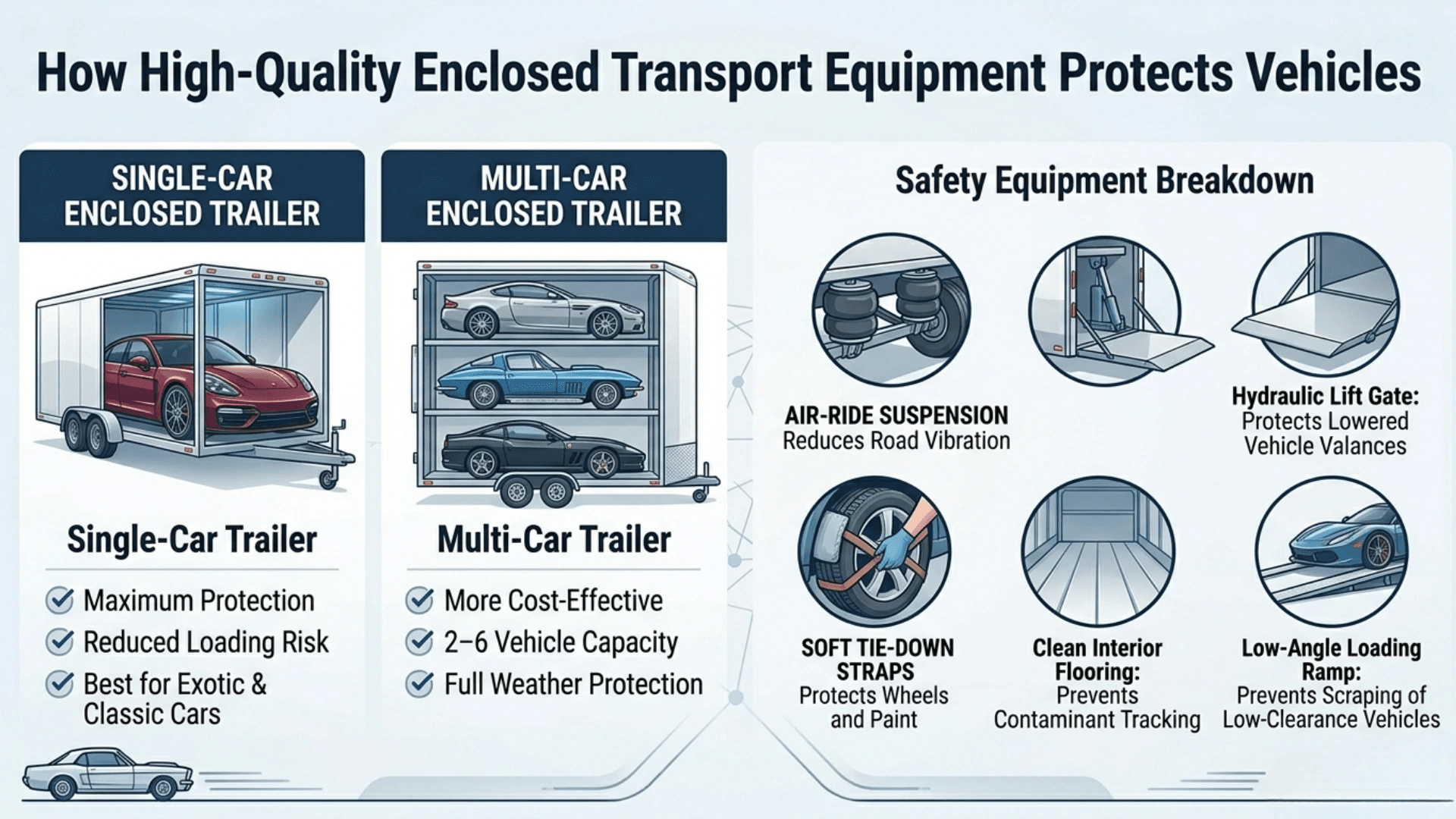
Types of Enclosed Auto Transport Trailers
There are two primary trailer configurations used in enclosed transportation.
Single-car enclosed trailers: Used for one vehicle only. Offers maximum control, reduced loading risk, and complete isolation. Preferred for the highest-value or most delicate vehicles.
Multi-car enclosed trailers: Carry 2–6 vehicles in a fully enclosed environment. More cost-effective while still providing full weather and debris protection.
A reliable enclosed auto transporter will walk you through this decision rather than defaulting to the cheaper option without explanation.
Why Trailer Condition Impacts Vehicle Safety
Even the right trailer type becomes a liability if poorly maintained. Key indicators of trailer quality include:
Suspension systems: Absorb road vibration that can shift unsecured vehicles during transit
Soft tie-down systems: Prevent paint and body damage by avoiding contact with hard metal restraints
Floor and ramp condition: Worn loading surfaces create unnecessary risk at pickup and delivery
Interior cleanliness: Debris inside an enclosed trailer can cause scratches during transit
Specialized Equipment for Luxury and Classic Cars
The best companies invest in equipment built specifically for high-value vehicles. This includes hydraulic lift gates for cars with extremely low ground clearance, air-ride suspension trailers that minimize road shock, and soft strap systems that secure the vehicle without contacting painted surfaces or body panels. If a carrier cannot describe the specific equipment they will use, that is a meaningful gap in their capability.
Sign #4: Strong Customer Reviews and Proven Transport Experience
Licensing and equipment establish capability. Customer reviews establish whether that capability is consistently delivered.
How to Read Real Customer Reviews
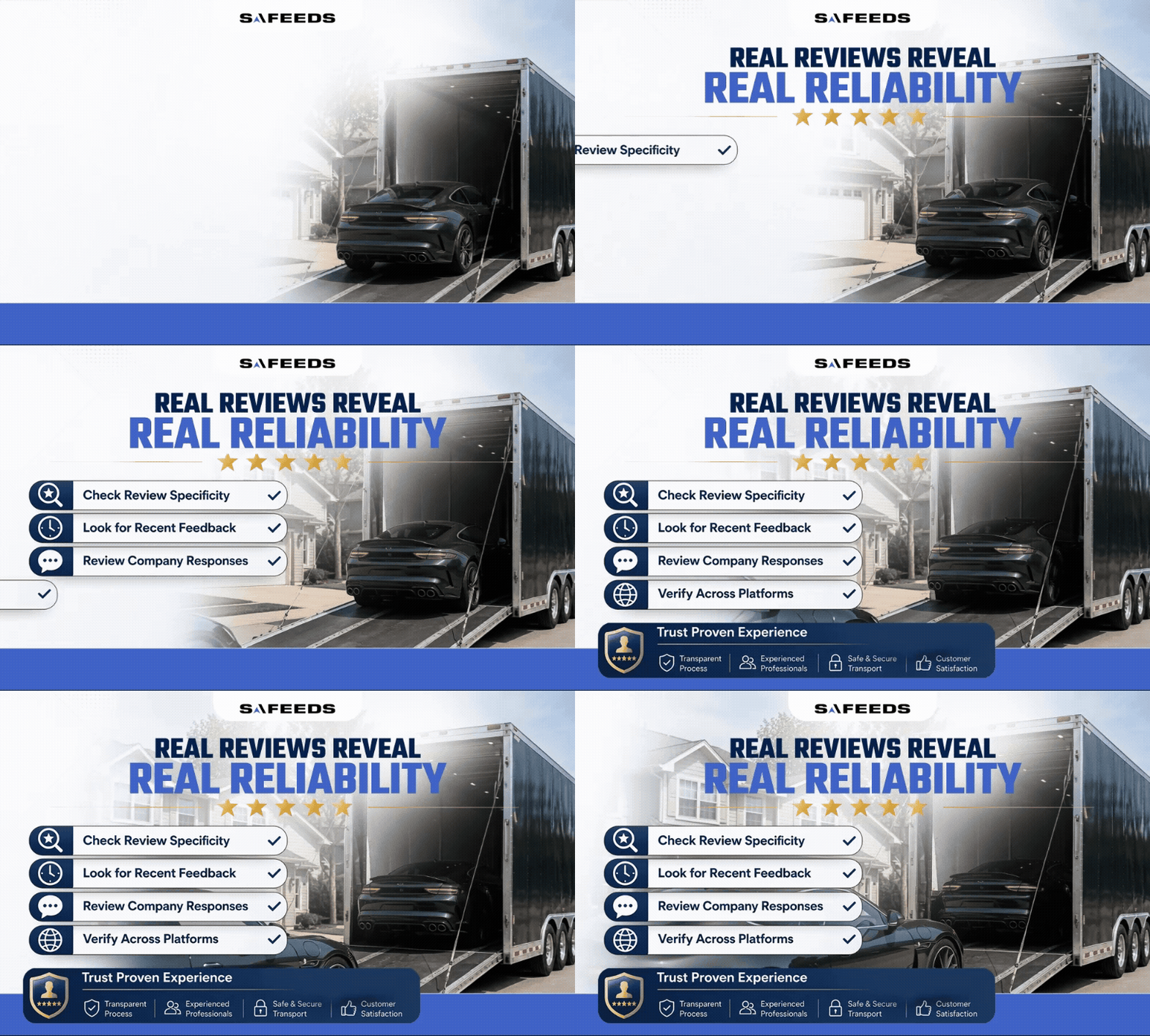
Not all reviews carry equal weight. When evaluating enclosed auto transport companies, look beyond the star rating:
Specificity: genuine reviews mention vehicle type, route, and specific interactions; vague five-star reviews are easy to fabricate
Recency: a consistent pattern of recent feedback matters more than older reviews
Response to criticism: how a company handles negative reviews reveals more than how they handle praise
Platform diversity: consistent ratings across Google, Trustpilot, Transport Reviews, and BBB carry more credibility than a single platform
Signs of a Trusted Enclosed Auto Transport Company
Patterns that consistently appear in reviews of the best companies:
Vehicles delivered on time and in the exact condition they were picked up
Proactive communication throughout the shipment, not just at pickup and delivery
Issues, when they arise, are addressed promptly and fairly
Clear, professional documentation provided at every stage
Sign #5: Clear Communication and Real-Time Shipment Updates
The fifth sign of a reliable enclosed auto transport service is one many customers overlook until it is absent: consistent, clear communication from booking through delivery.
Pickup Coordination and Scheduling Transparency
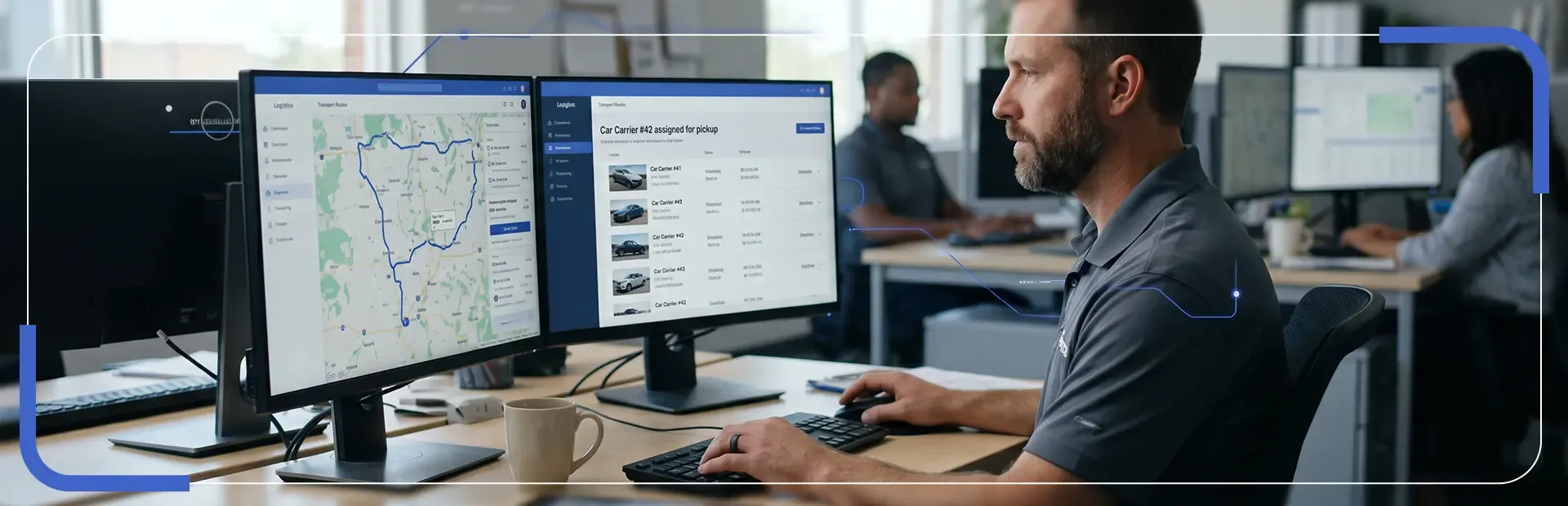
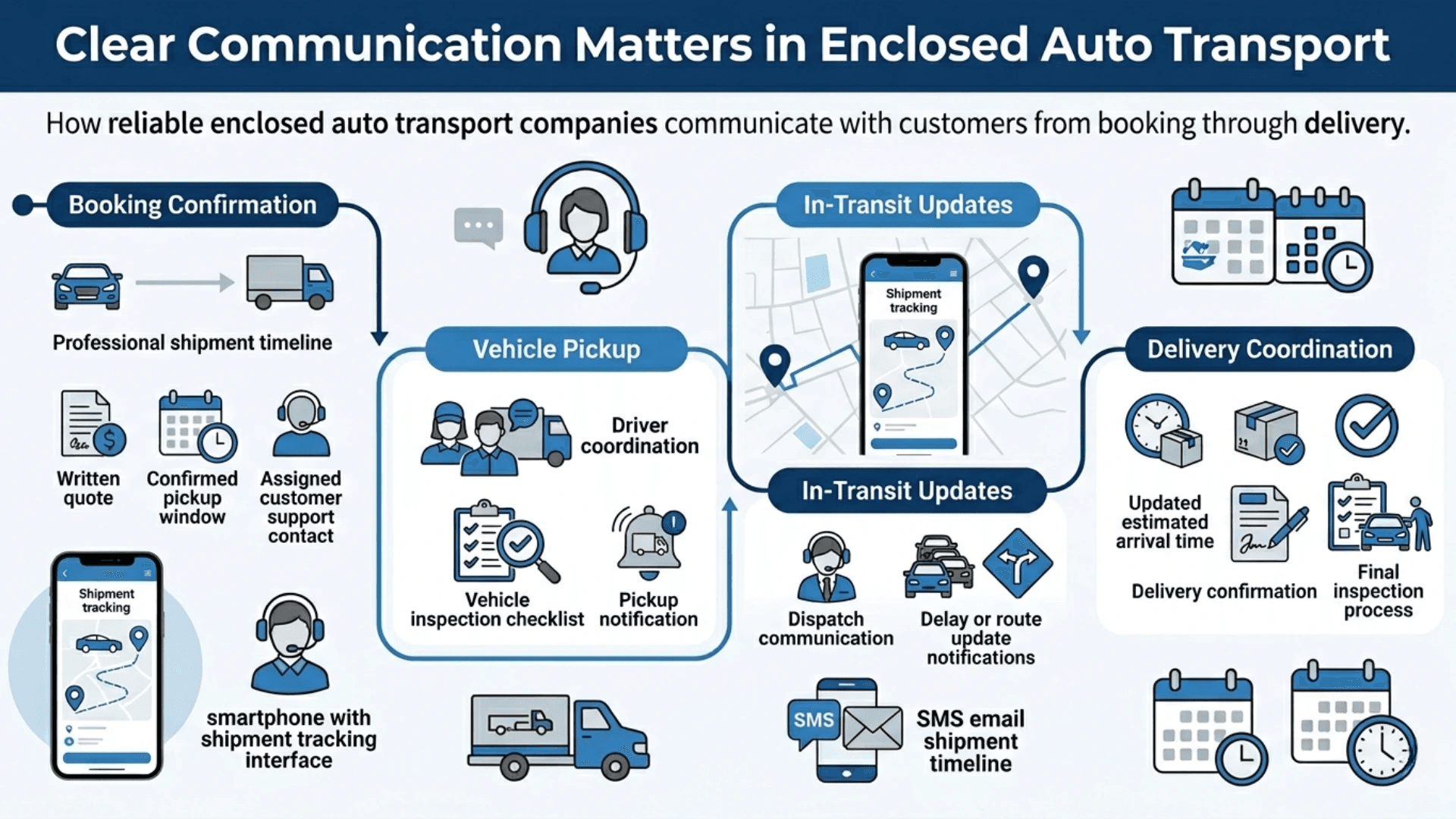
A professional company establishes clear expectations at the time of booking, a confirmed pickup window, a named point of contact, and written documentation of agreed terms. Vague scheduling and difficulty reaching anyone before pickup are early indicators of how the rest of the shipment will go.
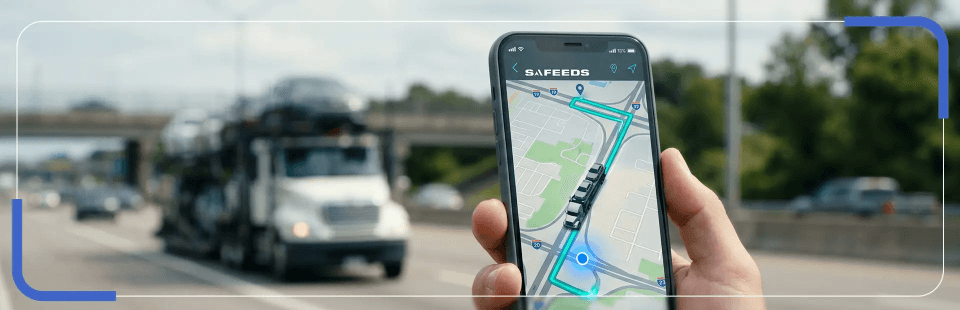
Tracking and Status Updates During Transit
For long-distance enclosed auto transportation, real-time updates are a reasonable expectation, not a premium add-on. Reliable providers offer:
Regular check-ins at key transit milestones
A direct contact number for the driver or dispatch team
Estimated delivery windows are updated if conditions change
Prompt notification of any delays or route changes
Customer Support Responsiveness
The quality of support before you book is a reliable preview of what you will receive during and after your shipment. Call with a specific question about insurance or trailer type. Send an email and measure the response time. A company that responds promptly and accurately before taking your money is far more likely to maintain that standard once your vehicle is in transit.
Benefits of Choosing Enclosed Auto Transport for Maximum Protection
Choosing enclosed auto transport for maximum protection is not simply about premium pricing; it is about matching the level of care to the value of the asset. For the right vehicles, the benefits are concrete and measurable.
Protection From Weather and Road Debris
Open carriers expose vehicles to rain, snow, hail, UV radiation, and road debris for the entire duration of transit. On a cross-country shipment, that exposure adds up. Enclosed trailers eliminate this risk entirely; your vehicle arrives in the same condition it left.
The vehicles most at risk on open carriers:
Custom paint and bodywork: debris impact can chip a finish that costs thousands to restore
Polished chrome and trim: UV exposure and road salt cause oxidation over time
Original factory finishes: any paint correction affects authenticity and resale value
Low-ground-clearance vehicles: road debris poses a direct risk to underbody components
Ideal for Luxury, Exotic, and Classic Vehicles
The benefits of using an enclosed auto transporter become clearest when the vehicle in question is irreplaceable. A classic car with original factory paint, a limited-production exotic, or a fully restored collector vehicle has no adequate replacement if damaged in transit.
The carriers are equipped, physically and operationally, to handle these vehicles with the precision they require. From soft-strap restraints to hydraulic loading systems, every element of the process is designed to eliminate contact risk and preserve the vehicle exactly as loaded.
Reduced Risk of Damage During Transit
Statistically, enclosed transport produces fewer damage claims than open transport, a direct result of controlled loading environments, specialized equipment, and carriers who specialize in high-value shipments. For a vehicle where even a minor paint chip represents a significant repair cost, this risk reduction justifies the premium in full.
What You Should Know About Enclosed Auto Transport
It involves a higher level of service, stricter carrier standards, and more specialized equipment than standard open shipping. Here are the questions Safeeds' customers ask most often before booking.
What is the enclosed auto transport cost compared to open transport?
Enclosed auto transport rates typically run 30–60% above open transport pricing for the same route. For most cross-country shipments, this places enclosed transport between $1,400 and $2,500 depending on vehicle type, trailer configuration, and timing.
How do I find the best enclosed auto transport companies?
Start with FMCSA verification, then review insurance documentation, customer feedback across multiple platforms, and pricing transparency. The best enclosed auto transport companies combine all four, not just a low quote.
Is enclosed auto transport worth it for a luxury vehicle?
For any vehicle valued above $75,000, with custom paintwork, low ground clearance, or collector status, enclosed auto transportation is the appropriate choice. The cost difference relative to the vehicle's value is minimal, and the protection it provides is not available on open carriers.
What should an enclosed auto transport quote include?
A complete enclosed auto transport quote should itemize the base rate, vehicle specifications, trailer type, fuel surcharge terms, and the price-lock period. Any quote missing these details warrants follow-up before you commit.
Are there enclosed auto transport services available in specific regions like Grand Rapids?
Yes. Enclosed auto transport in Grand Rapids and other mid-sized markets is served through broker networks that connect customers with licensed enclosed carriers operating regional and national routes. Coverage availability depends on timing and route demand, which is why booking in advance is always recommended.
Making a Confident Choice in Enclosed Auto Transport Services
Choosing the right enclosed auto transport service comes down to five things: verified licensing, transparent pricing, quality equipment, a proven track record, and consistent communication. A provider that delivers on all five is one you can trust with a vehicle that matters.
The cheapest option is rarely the safest one in this industry. Carriers who undercut the market typically do so by trimming something: insurance limits, equipment quality, or the time they invest in your shipment. For standard vehicles, that tradeoff may be acceptable. For a high-value, irreplaceable vehicle, it is not.
Take the time to verify credentials, read recent reviews across multiple platforms, and ask direct questions about the equipment and insurance that will protect your vehicle. A reliable enclosed auto transport company will answer those questions without hesitation and provide documentation to back them up. Get a free auto transport quote from Safeeds Transport, with verified carriers, a 7-day price lock, and no deposit until your carrier is confirmed.