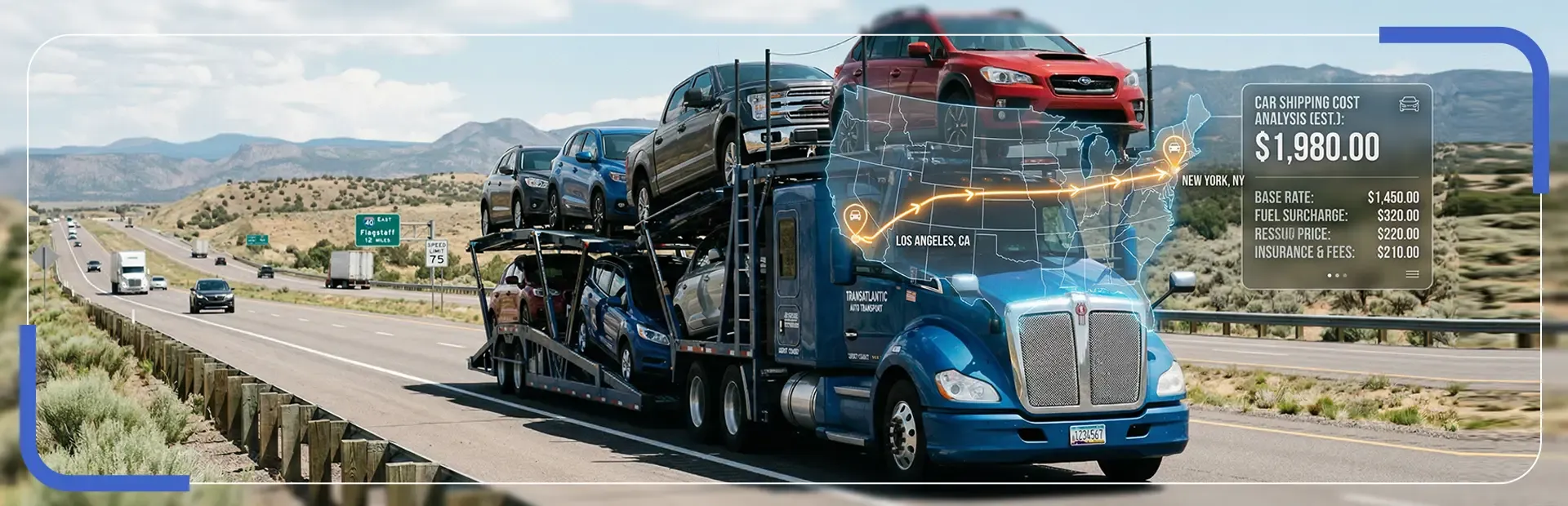
The highway looks straightforward until traffic hits, and then every decision you make behind the wheel carries real consequences. Highway driving during long-distance travel demands far more than basic car driving skills. At speed, with heavy traffic and fatigue building over hours, even experienced drivers can find themselves making poor decisions.
For many people planning a long-distance move, the physical and mental demands of a multi-day highway drive are precisely what lead them to weigh alternatives, including the driving vs shipping car question that more movers are asking every year.
Let’s uncover six practical, real-world strategies for managing highway traffic safely. Whether you're driving across two states or reconsidering whether the trip is worth making at all, these tips will help you make better decisions from the moment you pull onto the highway. Get a free, no-obligation quote from Safeeds Transport and lock in your price for 7 days, no deposit required.
Why Highway Traffic Is More Challenging Than City Driving
Most drivers develop their foundational skills in city environments, at moderate speeds, with stop signs, and familiar routes. Highways operate under entirely different conditions, and the gap is wider than most people appreciate until they're caught in fast-moving congestion.
The Physics and Psychology of High-Speed Driving
At 70 mph, a vehicle covers approximately 103 feet per second. A two-second lapse in attention means over 200 feet of road traveled without full awareness. According to the National Highway Traffic Safety Administration (NHTSA), speed-related factors contribute to a significant share of annual traffic fatalities, with highways carrying disproportionate risk due to high speeds and multi-lane complexity.
Key risk factors at highway speeds include:
Sudden braking from vehicles ahead with minimal warning
Unexpected lane merges from trucks and fast-moving traffic
Road debris with little time to avoid
Reduced stopping distances compared to city driving
Heavy highway congestion causes mental fatigue that builds over time, leading to slower reactions, frequent lane changes, and reduced following distance, all of which increase accident risk. Recognizing fatigue as a serious safety hazard, not just discomfort, is essential for safer long-distance driving.
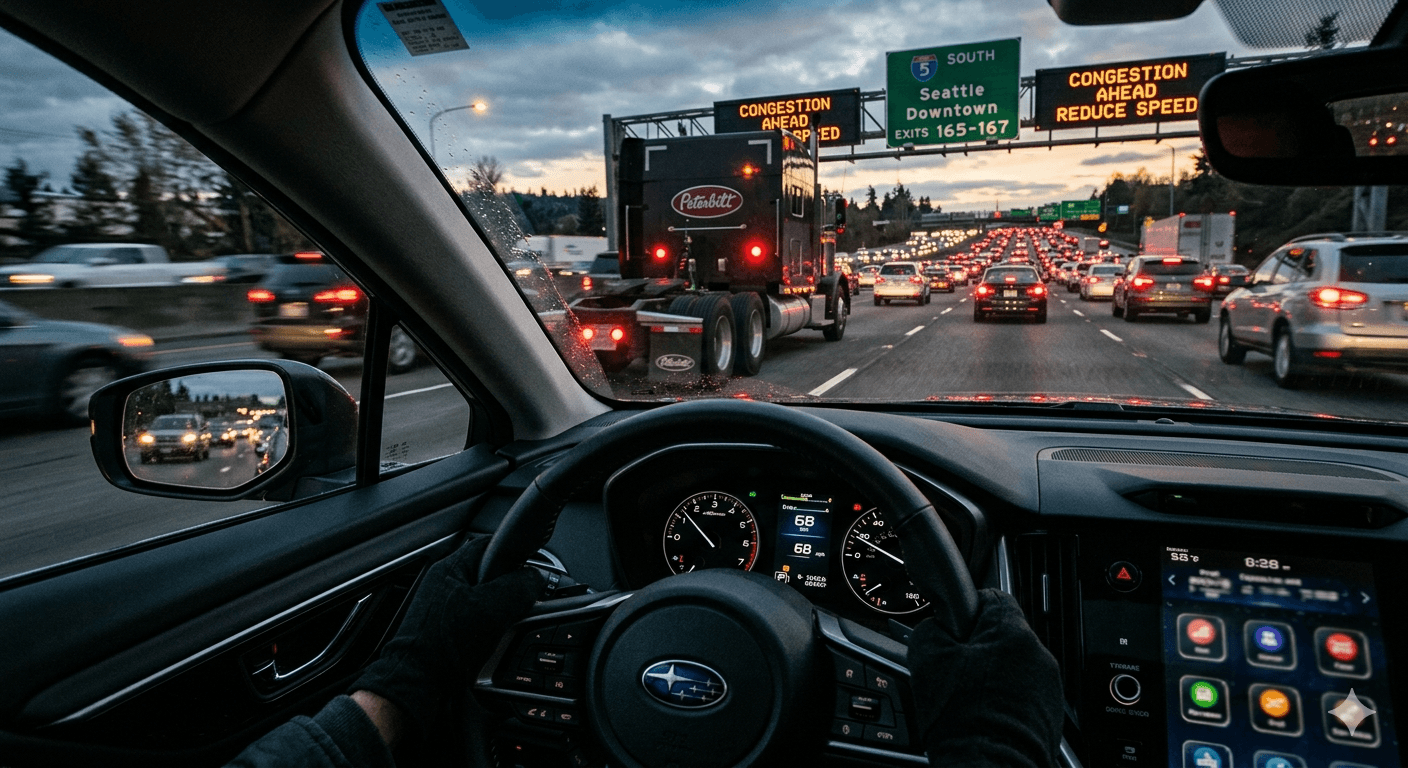
Tip #1: Maintain Safe Following Distance at All Times
Of all the car-driving habits that separate low-risk drivers from high-risk ones, following distance is arguably the most impactful and the most consistently ignored. How much space you maintain between your vehicle and the one ahead determines how much time you have to respond when conditions change.
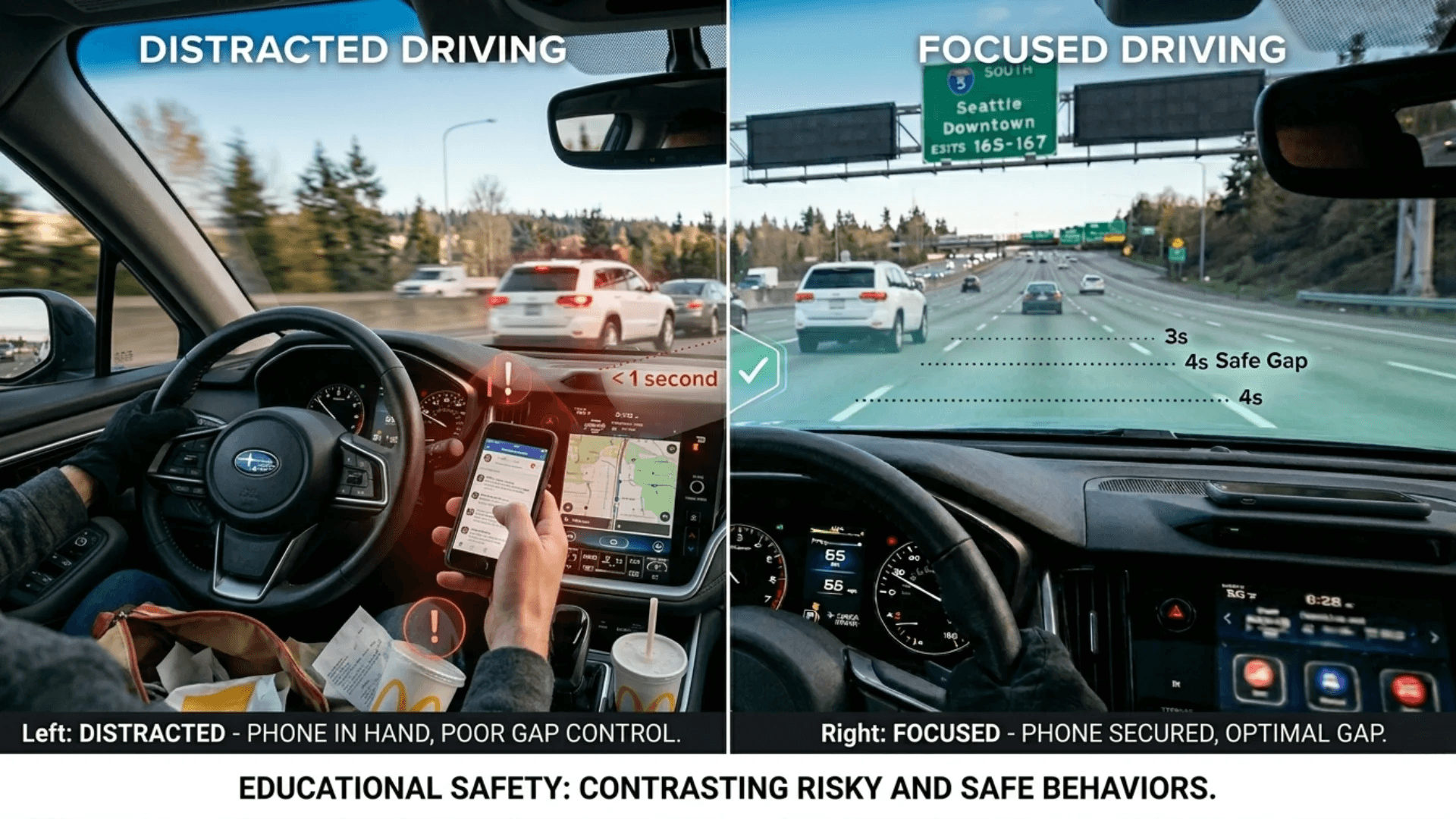
The 3–4 Second Rule Explained Simply
The standard guideline recommended by traffic safety authorities is the three-to-four second rule. The method is simple:
Choose a fixed point on the road, a sign, a bridge, or a road marking
When the vehicle ahead passes that point, begin counting
If you reach the same point before three seconds have elapsed, you are following too closely
In adverse conditions, rain, fog, or nighttime driving, extend that buffer to five or six seconds. The rule requires no equipment and works at any highway speed.
Why Tailgating Increases Accident Risk
Tailgating is one of the most common aggressive driving behaviors on highways, and one of the most dangerous. At 65 mph, the average driver needs approximately 300 feet to come to a complete stop, accounting for both reaction time and braking distance.
A vehicle following at one car length has a fraction of that space available. In heavy traffic where sudden braking is unpredictable, the consequences are severe. Rear-end collisions are among the most frequent highway accident types precisely because following distances are chronically underestimated.
Tip #2: Stay Focused and Avoid Distractions While Driving in Your Car
Distraction is one of the leading contributors to highway incidents. When driving in your car on a long highway stretch, the temptation to multitask increases with boredom and fatigue. Resisting that temptation requires deliberate habit-building, not just good intentions.
Common Distractions That Cause Highway Mistakes
Distractions fall into three categories: visual (eyes off the road), manual (hands off the wheel), and cognitive (mind off driving). The most dangerous ones combine all three simultaneously. The most common culprits include:
Mobile phone use: Texting at 55 mph is equivalent to driving a football field's length with your eyes closed, according to NHTSA.
GPS adjustments: Reprogramming navigation while moving should always be handled before departure or during a full stop.
Eating and drinking: Reduce manual control and divert attention from the road.
Passenger interaction: Turning to face a passenger or managing backseat activity while moving is a consistent distraction risk.
How to Maintain Focus During Long Trips
Sustained attention over a multi-hour highway drive requires active management. These practical habits make a measurable difference:
Set navigation, music, and climate controls before entering the highway
Schedule rest stops every 90 to 120 minutes to reset alertness
Keep the cabin temperature slightly cool; warmth accelerates drowsiness
Avoid heavy meals before long driving segments
Rotate driving responsibilities with a companion on extended trips
Tip #3: Master Lane Discipline and Smooth Lane Changes
Lane discipline is one of the clearest markers of an experienced highway driver. Vehicles that maintain consistent lane position and signal intentions clearly contribute to overall traffic flow predictability. Those who switch lanes frequently and without warning do the opposite, creating ripple effects of braking that extend far behind them.
Why Constant Lane Switching Is Dangerous
Research on highway traffic dynamics consistently shows that frequent lane changes in congested conditions do not meaningfully improve travel time. What they do create is:
Increased exposure to blind spot conflicts
Compressed the following distances for surrounding vehicles
Sudden braking events that cascade through traffic behind
Higher probability of sideswipe collisions
Safe Lane Change Technique for Highway Driving
A properly executed lane change follows a clear sequence. Skipping any step increases risk substantially:
Check the mirror for vehicles already in the target lane
Signal early, at least three to four seconds before moving
Check the blind spot with a direct shoulder glance, not just mirrors
Accelerate gently into the gap rather than drifting across
Cancel the signal once the lane change is complete
The shoulder check is non-negotiable. Mirrors have blind spot limitations, and this is particularly important when driving alongside larger vehicles, trucks, and vans, which create wider blind zones and take longer to decelerate.
Tip #4: Understand Vehicle Readiness Before Long Highway Driving
A vehicle that performs reliably in daily city driving may not be prepared for the sustained demands of highway travel. Higher sustained speeds, longer braking distances, and extended engine operation all place greater stress on mechanical systems. Vehicle readiness is the foundation on which every other driving tip depends.
Basic Vehicle Checks Before Long-Distance Car Driving
Before any extended highway journey, a systematic pre-trip inspection should cover the following:
Tires: Check inflation pressure and inspect tread depth and sidewall condition. Underinflated tires increase blowout risk at highway speeds.
Brakes: Listen for grinding or squealing during low-speed stops. Replace pads if wear is near the service limit.
Oil: Confirm the level is within range and the next change interval won't fall mid-trip.
Lights: Test headlights, brake lights, and turn signals before departure.
Fuel: Begin long segments with a full tank and plan refueling stops in advance on routes with limited services.
When Vehicle Condition Impacts Drive or Ship Car Decisions
Vehicle condition is a factor that frequently gets overlooked in the drive or ship car decision. A vehicle with unresolved mechanical issues, aging tires, or overdue service is not a reliable candidate for a 1,500-mile highway drive.
When a vehicle is not in highway-ready condition, the risk calculation changes significantly. Breakdowns mid-route carry real cost and safety implications. In these situations, shipping car vs driving becomes not just a convenience comparison but a practical safety consideration.
According to AAA, vehicle breakdowns cost American drivers billions annually, many of which occur on highway trips where deferred maintenance meets sustained mechanical demand.
Tip #5: How to Handle Heavy Traffic Without Stress or Aggression
Heavy highway traffic is a test of patience as much as it is a test of skill. The drivers who navigate congestion most safely are not necessarily the most technically skilled; they are the ones who manage their emotional state as deliberately as they manage their speed and following distance.
Staying Calm in Stop-and-Go Highway Conditions
Stop-and-go conditions are inherently frustrating, particularly during a long-distance trip when time pressure is a factor. Accepting that congestion is outside your control is the single most effective mental adjustment you can make.
Practically, this means:
Maintaining a consistent following distance even as speeds fluctuate
Resisting the urge to accelerate aggressively into gaps
Giving merging vehicles space rather than closing it
Using audiobooks or podcasts to reduce perceived stress without compromising attention
Avoiding Road Rage and Unsafe Driving Behavior
Road rage escalates quickly in congested environments where frustration is already elevated. The trigger is often minor, a cut-off, a slow merge, but the response can become genuinely dangerous.
Aggressive behaviors to avoid in heavy traffic include:
Tailgating as retaliation for being cut off
Accelerating hard to prevent another vehicle from merging
Honking repeatedly or making aggressive gestures
Following another driver after an incident on the road
The practical rule is simple: do not respond. Maintain your lane, your following distance, and your speed. If another driver's behavior feels threatening, increase the gap between your vehicles and exit the highway if necessary.
Tip #6: Know When Shipping a Car Becomes the Better Option
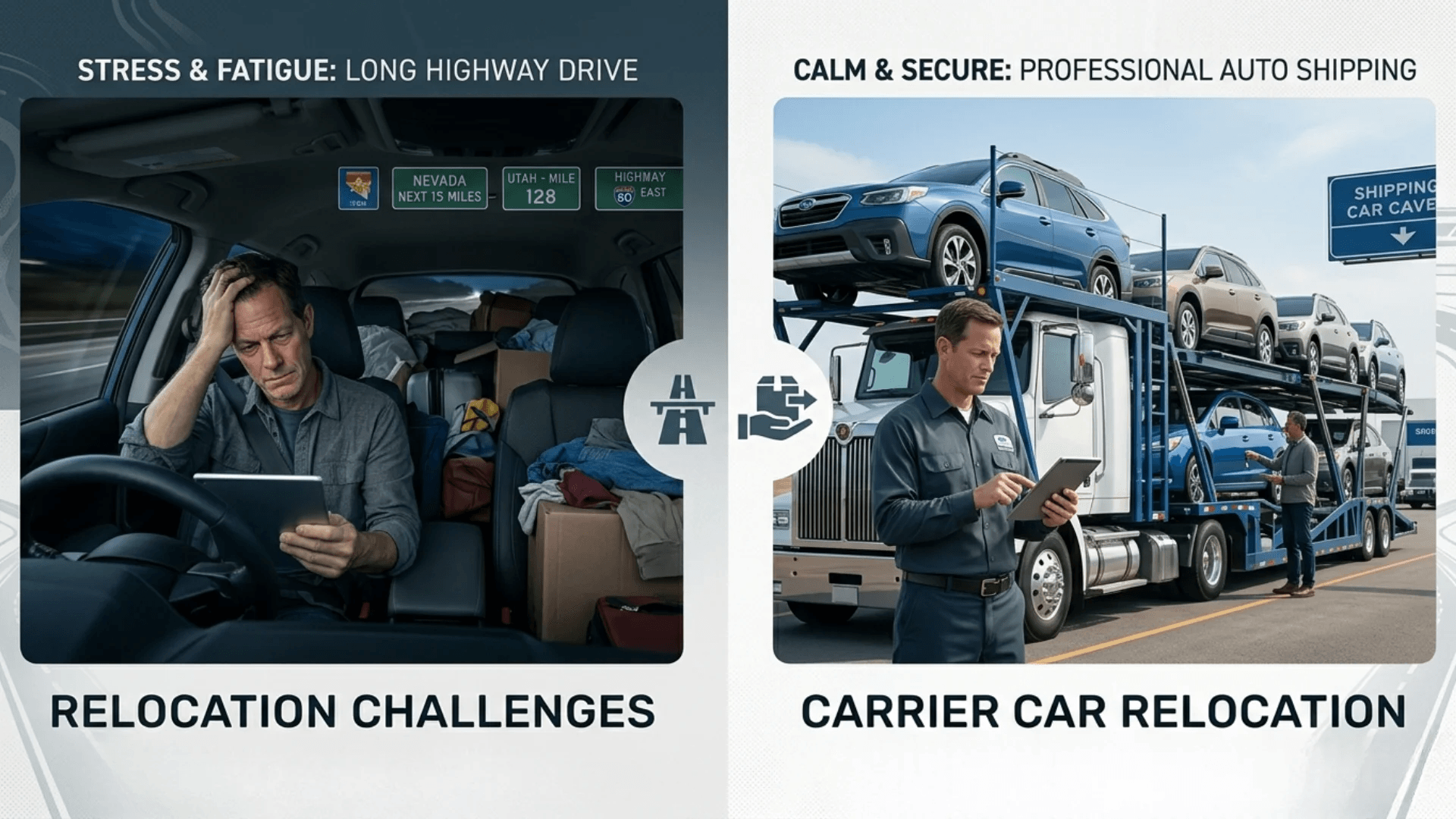
Safe car driving on highways is a skill worth developing, but part of that skill is knowing when driving is the wrong tool for the job. For long-distance relocations or situations involving vehicle condition concerns, the decision between driving and shipping deserves honest evaluation rather than a default assumption.
Long Distance Scenarios Where Driving Becomes Difficult
Extended highway driving introduces compounding challenges that don't always appear on a route map. These include:
Fatigue that accumulates across days rather than hours
Unpredictable weather systems along multi-state routes
Increased mechanical stress with every additional mile
Fixed arrival deadlines that leave little margin for delays or breakdowns
Shipping Car vs Driving: Practical Comparison for Movers
The question of whether you ship a car or drive it is best answered by comparing the full cost of each option. When evaluating driving vs shipping car choices for a move exceeding 1,000 miles, consider the following:
Factor | Driving | Shipping |
Fuel cost | $200–$400+ | Included in quote |
Lodging (2–3 nights) | $240–$480 | Not applicable |
Meals on the road | $120–$200 | Not applicable |
Vehicle mileage added | 1,000–3,000 miles | Zero |
Time required | 2–5 days | None from the driver |
Mechanical wear | Significant | None |
When time, vehicle preservation, and total cost are all factored in, shipping a car vs driving frequently delivers better overall value than the upfront quote comparison suggests.
How to Transport a Car Safely When You Choose Shipping
Understanding how to transport a car through a professional service begins with selecting a licensed, insured broker or carrier. Key steps include:
Verify FMCSA registration and request proof of cargo insurance
Confirm pricing is locked in before any deposit is made
Photograph the vehicle thoroughly before pickup
Remove all personal items from the interior
Reduce fuel to approximately one-quarter tank
Sign and retain a copy of the Bill of Lading at both pickup and delivery
Cost and Planning Considerations for Long-Distance Travel
Making the right call between driving and shipping comes down to more than instinct; it requires an honest look at what each option actually costs across every expense category. Most people compare fuel to a shipping quote and stop there. The full financial picture is considerably more detailed than that, and understanding it leads to better decisions.
Cheapest Car Shipping vs Driving Costs Explained
At first glance, driving appears to be the cheaper option. In reality, the costs of a long highway drive accumulate across multiple categories that rarely get added together before the trip, only after it.
The key expenses to compare honestly include:
Fuel: A 2,000-mile drive at average fuel efficiency costs $280–$400 depending on vehicle type and current gas prices
Lodging: Two to three overnight stops add $240–$480 to the total
Meals: Three days on the road run $120–$200 per person at minimum
Mechanical wear: Tires, brakes, and oil all absorb measurable stress over long distances
Mileage depreciation: Every mile added to the odometer reduces resale value
Lost income: Two to five days away from work carries a financial cost that varies widely but is rarely zero
When these figures are added together honestly, the gap between cheapest car shipping and driving closes significantly, and often reverses entirely.
When Shipping a Car to Another State Makes Financial Sense
The financial case for professional transport strengthens as distance increases. For moves requiring you to ship a car to another state, particularly those exceeding 1,000 miles, the combined driving costs frequently meet or exceed a standard open carrier quote.
Shipping a car to another state makes clear financial sense when:
The trip would require two or more nights of lodging
The driver would need to take unpaid time off work
The vehicle is high-value, low-mileage, or due for service
Multiple vehicles need to be relocated at the same time
The route involves difficult terrain, mountain passes, or adverse weather
For those needing to ship a car to a different state on a tighter budget, open carrier transport remains the most cost-effective professional option, and reputable brokers like Safeeds provide locked-in quotes with no deposit required upfront.
Planning Ahead for Better Travel Decisions
Timing is one of the most overlooked variables in the driving vs shipping car decision. Last-minute choices, in either direction, consistently produce worse outcomes than decisions made two to four weeks in advance.
Planning ahead allows you to:
Compare real shipping quotes against actual driving costs before committing
Secure better carrier availability and pricing during peak moving seasons
Allow time for pre-trip vehicle inspection and any necessary repairs
Build contingency time into the schedule for weather or route disruptions
Whether you choose to drive or ship, the decision made earliest is almost always the one that costs the least and causes the fewest complications.
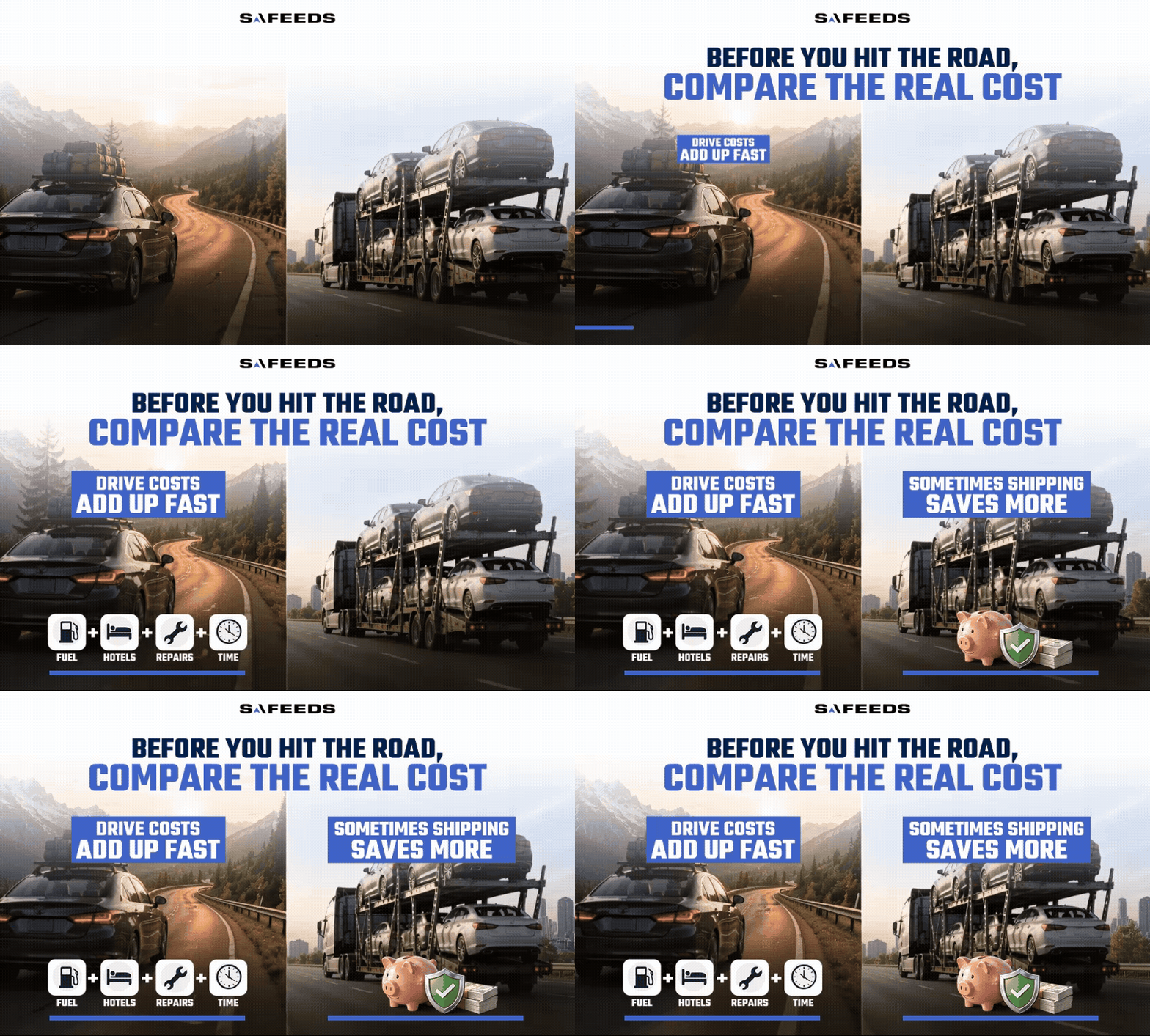
What Most People Ask Before Shipping or Driving
Most people arrive at the shipping vs driving decision with a handful of practical questions that need straightforward answers. The following covers the most common ones and what the honest answer looks like for each.
Is it always cheaper to drive than to ship?
Not when all costs are accurately calculated. For moves exceeding 1,000 miles, the combined cost of fuel, lodging, meals, mileage depreciation, and lost work time frequently matches or exceeds the cost of open carrier transport. The perception that driving is cheaper persists largely because the costs are spread across multiple categories rather than appearing as a single upfront figure.
How far in advance should I book car shipping?
Two to four weeks ahead is the standard recommendation for most moves. During peak season, typically May through August, booking earlier secures better carrier availability and more competitive pricing. Last-minute bookings are possible but come with limited flexibility on scheduling and sometimes higher costs.
Is classic car shipping different from standard transport?
Yes. Classic car shipping almost always warrants enclosed carrier transport rather than open carrier. Classic and collector vehicles carry heightened cosmetic and mechanical sensitivity that makes road and weather exposure during transit an unacceptable risk. The cost premium for enclosed transport is consistently justified for vehicles where condition and originality directly affect value.
What happens if my vehicle is damaged during shipping?
Licensed carriers are required to carry cargo insurance covering your vehicle during transit. Any damage is documented against the Bill of Lading signed at pickup. Safeeds also offers AFTA GAP Protection, which provides an additional coverage layer beyond the carrier's standard policy, particularly relevant for higher-value vehicles where standard carrier insurance limits may not fully cover a loss.
Can I ship personal items inside my vehicle?
Most carriers do not permit personal items inside the vehicle during transport and accept no liability for anything left inside. A small number of carriers allow a limited weight of personal items in the trunk, typically under 100 lbs, but this must be disclosed and confirmed at the time of booking. As a general rule, remove all valuables and personal property before shipping.
Building Safer Habits for Long-Distance Travel
Safe highway driving comes from consistent preparation and smart decisions before and during every trip. The key habits covered here- maintaining distance, staying focused, practicing lane discipline, preparing your vehicle, controlling stress, and knowing when to ship instead of drive, work together to reduce risk.
The safest drivers actively manage fatigue, prepare in advance, and honestly assess whether driving is the best option. Sometimes, professional car transport is the safer and more practical choice.
If shipping makes sense for your next trip, plan early for better pricing and availability. Get a free car shipping quote from Safeeds to explore your options.