A car shipping quote usually contains four charges: the carrier rate, the broker fee, a deposit, and sometimes a fuel surcharge. Deposits typically run $100 to $250 and are credited against the total, not added to it. Any fee that appears only after booking is a red flag worth challenging before you pay.
Understanding car shipping contract fees before you sign is the single best way to avoid a final bill that does not match your quote. The sections that follow break down each charge in plain terms, so nothing on your invoice comes as a surprise. Request your free, price-locked quote today and know exactly what you're paying for before you commit.
What Fees Appear in a Car Shipping Contract?
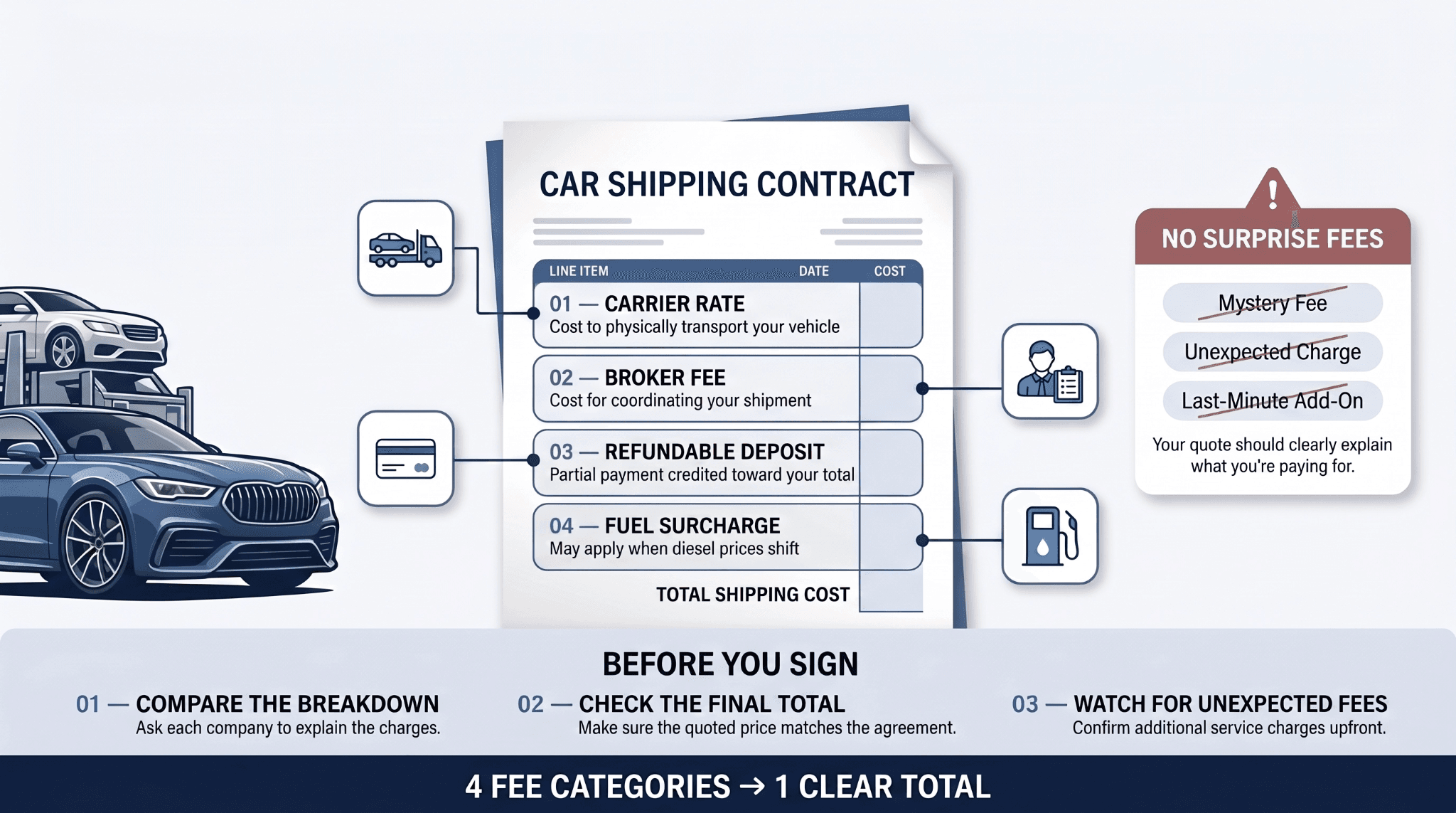
A standard car shipping contract includes four line items: the carrier rate, the broker fee, a refundable deposit, and, in some cases, a fuel surcharge tied to current diesel prices. Everything else you might see on a bill is either a legitimate service charge you agreed to upfront, or a fee that should not have appeared at all. Reading through your car shipping contract fees line by line before you sign is the easiest way to confirm nothing outside these four categories has been added in.
Carrier rate: what the trucking company charges to physically move your car.
Broker fee: payment for coordinating and dispatching the shipment.
Deposit: a partial payment collected at booking, credited toward your total.
Fuel surcharge: an optional add-on some carriers apply when fuel prices shift after booking.
Understanding the Cost Breakdown
Every quote should reflect the same four categories, no matter which company you call or when you're shopping. Whether you're checking car shipping fees 2026 estimates now or planning further ahead, the underlying structure of a quote does not change with the calendar.
A few things worth confirming before you compare numbers:
The car shipping fees price you're quoted should already combine the carrier rate and broker fee, not list them as separate line items later.
If you're pulling car shipping fees cost 2026 figures from an online calculator, treat that number as a starting point rather than a final answer, since it rarely accounts for your exact vehicle and route.
Reading car shipping fees reviews from past customers can reveal whether a company's actual invoices matched its original quotes.
If you are comparing car shipping fees rates across a few different companies, ask each one to break the number down into these categories before you book. So how much car shipping fees actually add up to, beyond the base transport rate, comes down almost entirely to whether a deposit and fuel surcharge apply to your specific shipment.
For a deeper look at how the underlying quote itself gets built, our guide on car shipping quotes covers that process in detail.
How Much Is a Normal Deposit?
A normal deposit runs $100 to $250 and is credited against your total price, not charged on top of it. This deposit secures a carrier for your shipment and is typically collected at booking, with the remaining balance due at pickup or delivery.
Think of the deposit as a placeholder, not an extra cost. It reserves your spot with a carrier and reduces what you owe later, rather than adding to your final total.
Watch for these signs that a deposit is being handled correctly:
The deposit amount is disclosed clearly before you agree to book.
It is described as credited toward the total, never an additional charge.
It is refundable under a clearly stated cancellation policy.
It is collected through a traceable payment method, not cash or an untracked transfer.
Any broker asking for a deposit well above this range, or one that cannot explain in writing how it applies to your final bill, is worth a second look before you commit. A deposit that feels unusually high for a routine shipment is often the first sign that other fees down the line will not be handled transparently either.
What Is the Broker Fee For?
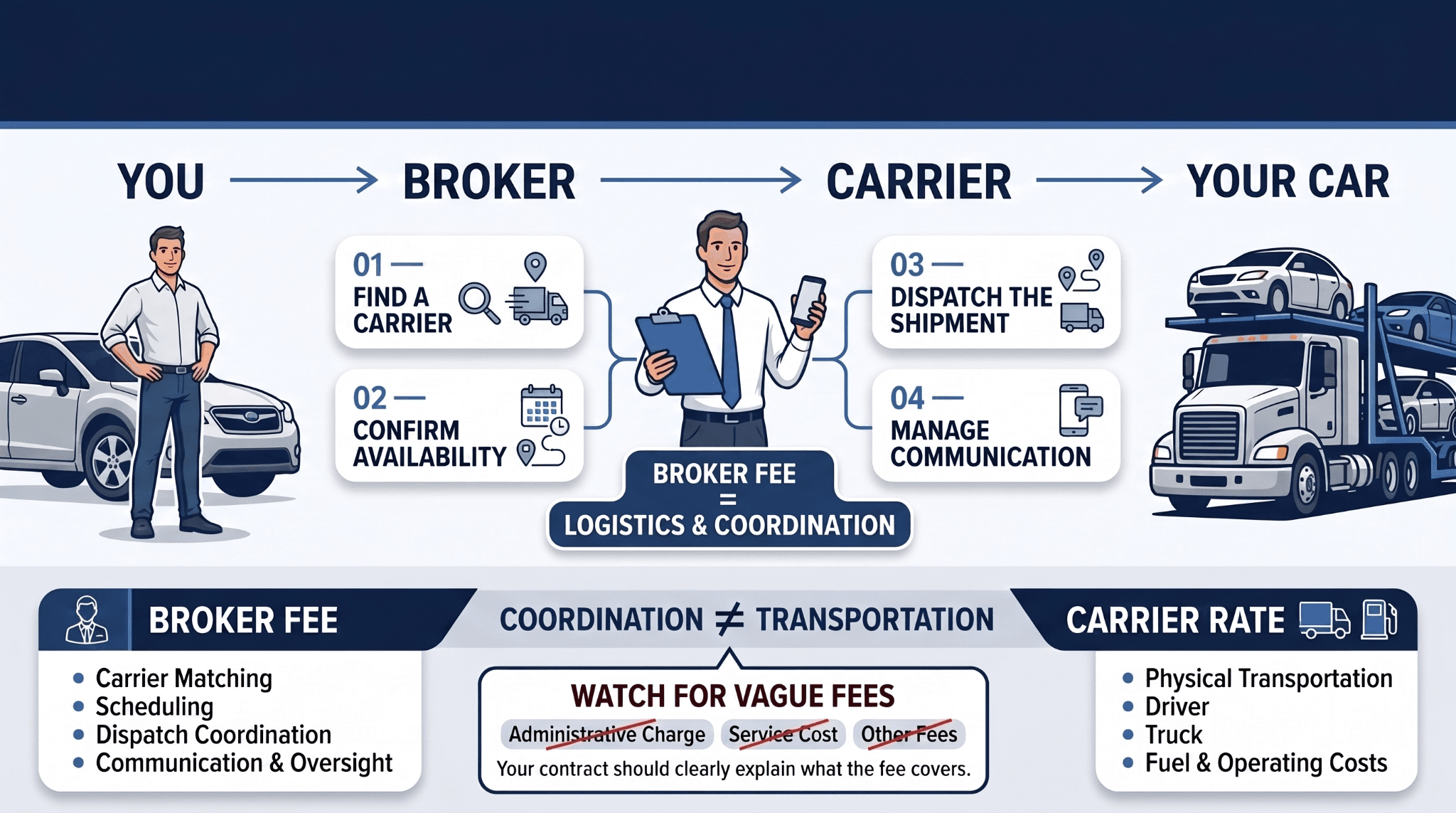
The broker fee covers the coordination work behind your shipment: finding a carrier, dispatching the job, and managing communication from booking through delivery. Brokers do not own trucks, so this fee is what pays for the matchmaking and oversight that gets your car onto the right truck.
Think of it as a service fee for logistics, not for the physical move itself. A broker's job is to find a reliable carrier at a fair rate, confirm availability, and stay involved if anything changes along the way.
This fee is a normal, expected part of working with a broker rather than booking directly with a carrier. Most shippers work with a broker because it saves time comparing individual carriers and gives them a single point of contact if something goes wrong mid-shipment.
Problems arise when a contract blurs the line between broker and carrier costs. Instead of naming the fee directly, some contracts bury it under a vague label like "administrative charge" or "service cost," which makes it harder to know exactly what you are paying for and why.
Which Fees Are Negotiable?
The broker fee and the fuel surcharge have real room for negotiation. The base carrier rate does not, since it reflects actual fuel, labor, and distance costs a carrier cannot absorb.
Often negotiable: the broker fee itself, especially during slower seasons when demand is lower.
Sometimes negotiable: fuel surcharges, if you lock your quote before a price swing.
Rarely negotiable: the base carrier rate, since it reflects real fuel, labor, and distance costs.
Shopping around matters here. If you are searching for car shipping fees near me hoping to find a locally priced deal, know that pricing is driven by national market conditions more than location. Casting a wider net among providers tends to be more useful than searching locally.
A common follow-up question is how long car shipping fees stay locked once a quote is issued. Most reputable brokers honor a written quote for at least a week.
Reputable car shipping fees companies will explain clearly which of your charges are open to negotiation and which are not. A transparent car shipping fees company will not pressure you to skip that conversation or rush you toward signing.
A carrier or broker offering genuine car shipping fees service will walk you through this breakdown unprompted, without you having to ask twice. A few habits make comparison shopping more effective:
Request a car shipping fees quote from two or three providers before booking.
Compare the car shipping fees quotes side by side rather than picking the lowest number at first sight.
Use an online car shipping fees calculator as a rough starting estimate, not a final number, since it will not reflect your specific route or season.
A cheap car shipping fees offer that skips this explanation is rarely the best car shipping fees deal once the real invoice arrives.
Which Fees Should Make You Walk Away?
Any fee that appears for the first time after you have already booked is the clearest signal to walk away or push back hard. Legitimate charges are disclosed in writing before you commit, not introduced once your car is already scheduled or on the truck.
Red flags worth taking seriously:
A cash-only demand at delivery that was not part of your original written quote
A broker who cannot explain a charge or point to where it appears in your contract
Pressure to pay immediately without time to review the breakdown
A deposit that is described as non-refundable with no clear cancellation terms
For a broader look at how these situations play out in practice, our guide on auto shipping hidden costs walks through real examples worth knowing before you book. Our bill of lading guide is also worth reading in advance, since that document becomes central if a fee dispute ever needs to be resolved after delivery.
Common Queries About Car Shipping Fees
Pricing questions come up on nearly every call we take, so here are direct answers to the ones asked most often. If you're looking for tips on reading a contract before you sign, these car shipping fees tips cover the essentials.
What fees are included in car shipping?
A standard quote includes the carrier rate, the broker fee, and a refundable deposit, with a fuel surcharge sometimes added depending on current diesel prices. Anything beyond these four should be explained clearly in writing before you book.
Is the deposit on top of the quoted price?
No. A properly structured deposit is credited against your total price, not added on top of it. If a company describes the deposit as an extra charge separate from the quote, that is worth questioning directly.
Why am I being charged a broker fee?
The broker fee pays for coordinating your shipment: finding a carrier, dispatching the job, and managing communication throughout. It is a standard part of working with a broker rather than booking a carrier directly.
Can extra fees be added after I book?
Legitimate fees are disclosed before you commit, not introduced afterward. Any charge that appears for the first time after booking, especially at pickup or delivery, is worth challenging before you pay it.
Do I pay the driver or the broker?
This depends on your contract, but most arrangements have the deposit going to the broker at booking and the remaining balance going to the driver or carrier at delivery. Confirm this split in writing before pickup day so there is no confusion when the truck arrives.
Understanding Car Shipping Contract Fees Before You Sign
Understanding car shipping contract fees comes down to knowing what four charges to expect, what a normal deposit looks like, and which fees have room to move. A little preparation before booking is what separates a quote that holds up from one that grows once your car is already on the truck.
Most disputes trace back to the same root cause: a fee that was never clearly disclosed before pickup day. Asking direct questions upfront, reading the full contract rather than skimming it, and comparing quotes from more than one provider all reduce that risk significantly.
Working with a broker that lists every charge clearly in writing, before you commit to anything, is the simplest way to avoid a fee dispute later. A transparent quote today is worth far more than a slightly lower number that grows once your vehicle is already scheduled. Request your free, price-locked quote today and see a full breakdown before you book.