Shipping multiple vehicles across states isn’t just about moving inventory; it’s about making smart, cost-effective decisions that protect your bottom line. For dealerships and businesses managing bulk transport, understanding car shipping costs is critical to avoiding unexpected expenses and operational delays. Pricing can vary widely based on distance, vehicle type, carrier availability, and seasonal demand, making it essential to approach every shipment with a clear strategy.
In this guide, we break down how bulk pricing works, what factors influence the cost to ship a car across the country, and how to use tools like a car shipping cost calculator to plan with confidence. You’ll also learn practical ways to reduce shipping expenses while maintaining reliability. Backed by real industry insights, Safeeds Transport Inc. helps simplify complex logistics so you can focus on growing your business. Get a quote today and move your inventory with confidence.
Breaking Down Car Shipping Cost for Dealership Inventory Moves
When analyzing car shipping cost structures, there is a fundamental distinction between retail consumer shipping and commercial dealership moves. While individual customers often face "spot market" pricing based on immediate availability, dealerships leverage contract logistics and bulk scaling to stabilize expenses through the U.S. Department of Transportation-regulated carrier networks.
Car shipping costs for dealerships are primarily driven by the following logistical factors:
The "Cost Per Hook": Carriers maximize profitability by filling an entire nine-car hauler from a single origin. A full "hook" reduces the administrative and physical labor of multiple individual pickups.
Reduction of "Deadhead" Miles: Moving inventory in bulk minimizes the miles a carrier drives with an empty trailer, significantly lowering the overall shipping cost.
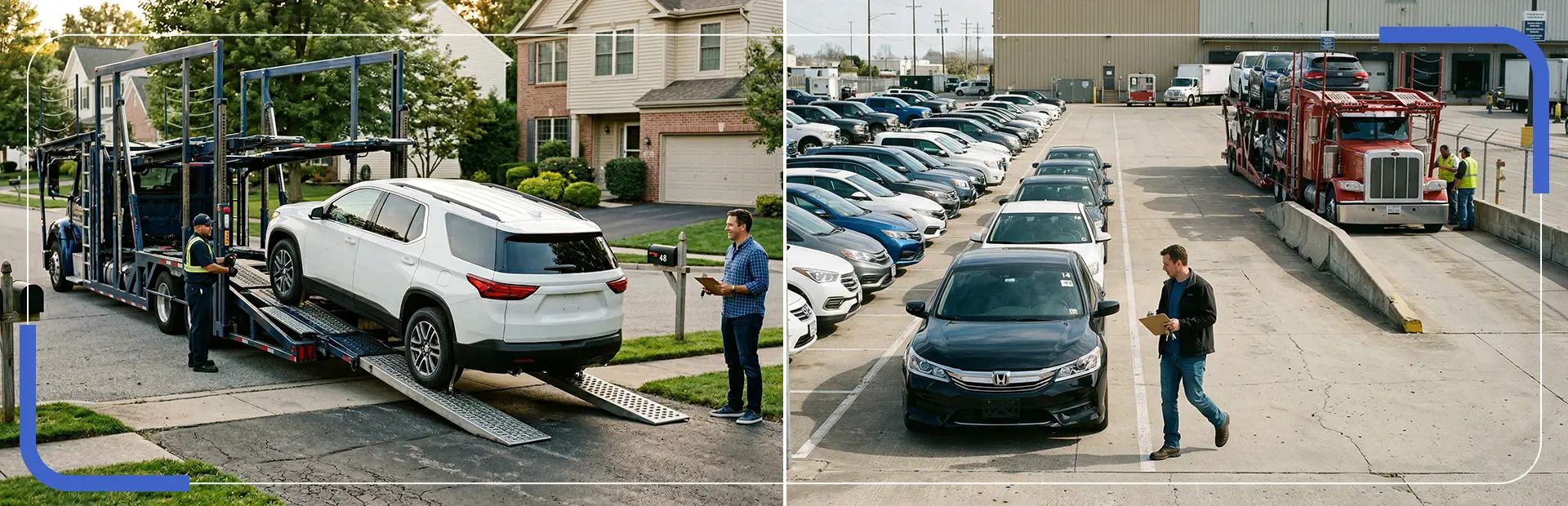
Elimination of Multi-Stop Delays: Single-point pickup and delivery streamline the timeline, allowing dealerships to negotiate a lower cost to ship a car than a private individual.
Capacity & Demand Management: While bulk moves offer per-unit discounts, rates are still subject to regional demand and high-volume peak seasons, which require strategic inventory planning.
Key Factors That Influence Car Shipping Costs in Bulk Transport
Several variables act as the primary levers for determining the final shipping cost. Understanding these allows dealership managers to forecast expenses more accurately.
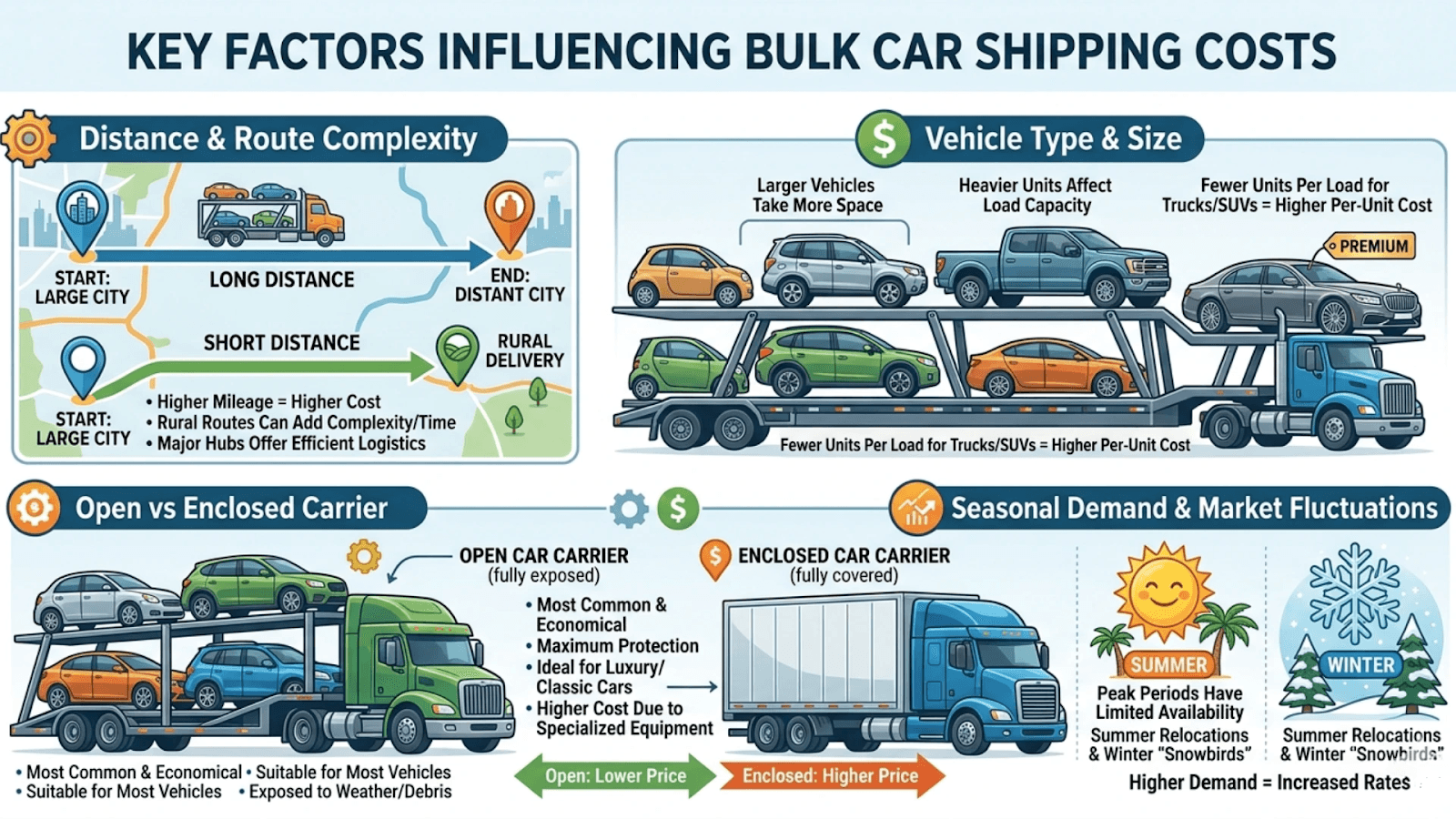
Distance and Route Complexity
While mileage is a primary driver of the cost to ship a car across the country, the specific route dictates the final rate. Major metropolitan hubs offer stable car shipping costs due to frequent "backhaul" opportunities for drivers. Conversely, rural or "off-grid" deliveries increase the shipping cost as drivers must deviate from interstates, consuming more fuel and time.
Vehicle Type and Size Variations
The physical dimensions and weight of inventory significantly impact the shipping cost because carriers must adhere to strict trailer length and weight limits. Moving a fleet of large SUVs or heavy trucks increases the per-unit cost of shipping a car because fewer vehicles can fit on a single trailer. Furthermore, luxury or low-clearance units may require specialized loading equipment, further influencing the price.
Open vs Enclosed Carrier Pricing
Open carriers remain the standard for low-cost car shipping, offering the most economical way to move large volumes of inventory. However, for high-value or classic units, enclosed transport is necessary to provide protection from road debris and weather. This premium service typically increases the cost to ship a car by 30% to 50% due to limited trailer capacity and higher insurance requirements.
Seasonal Demand and Market Fluctuations
The cost to ship a car is highly sensitive to annual cycles, such as the "Snowbird" season or summer relocation peaks. These high-demand periods can drain carrier capacity, causing car shipping costs to rise across the entire industry. Dealerships should strategically plan inventory refreshes outside of these peak windows to maintain a lower shipping car cost.
How Much Does It Cost to Ship a Car for Dealership Inventory?
For a dealership asking, "How much does it cost to ship a car in a commercial context?", the answer depends on volume. While a single-car move across 1,000 miles might cost between $900 and $1,200, a dealership moving a full load (8-9 cars) on the same route might see the cost to ship a car drop to $700–$850 per unit.
When evaluating how much it will cost to ship a car, dealerships should look at the "load rate" rather than the individual unit rate. By committing to a full trailer, you are essentially purchasing the carrier's time and fuel for the entire journey, which is almost always the most efficient way to achieve low-cost car shipping.
Transport Scenario | Estimated Distance | Avg. Cost Per Unit (Single) | Avg. Cost Per Unit (Bulk/Full Load) |
Regional / Short Haul | 100–500 miles | $400 – $600 | $250 – $350 |
Mid-Distance | 500–1,500 miles | $700 – $1,100 | $550 – $800 |
Long Haul / Cross Country | 1,500–2,800 miles | $1,200 – $1,800 | $950 – $1,300 |
Cost to Ship a Car Across Country for Bulk Shipments
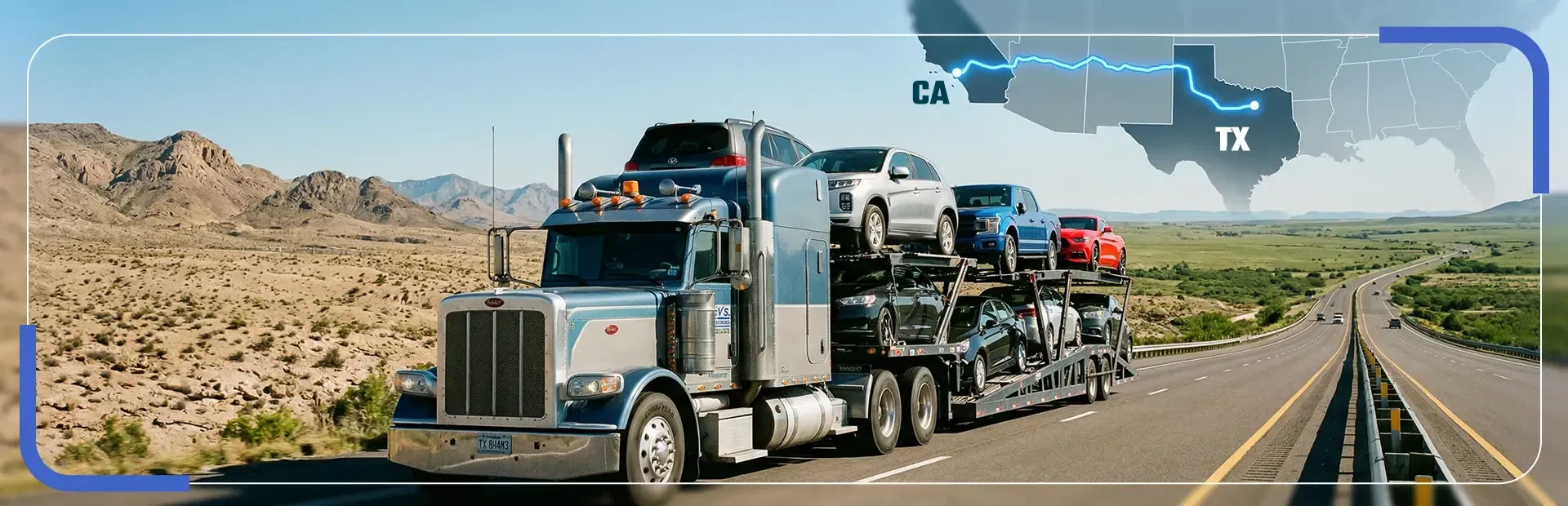
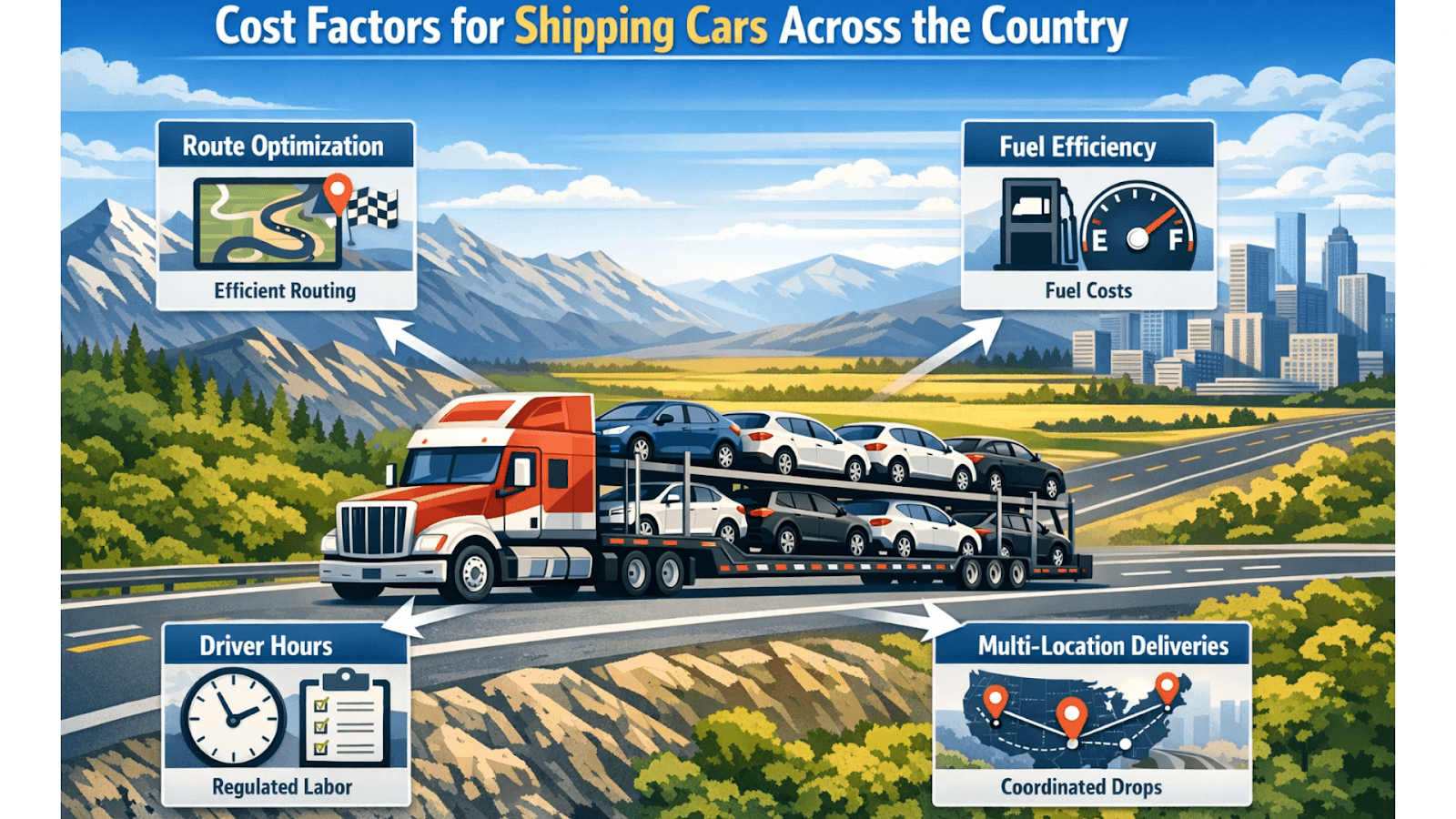
The cost to ship a car cross-country is primarily driven by three critical factors: fuel overhead, driver labor regulated by federal Hours of Service, and precision route optimization. When moving dealership inventory from coast to coast, determining the final cost to ship a car cross-country becomes a complex game of logistical math that must account for every mile traveled.
Leveraging Route Optimization and Fuel Efficiency
Professional transport partners use optimization software to identify the most fuel-efficient paths, reducing the shipping cost by avoiding mountainous terrain or traffic delays. These systems minimize unnecessary idling and course corrections, preventing the hidden surcharges that often inflate long-distance car shipping costs.
Coordinating Multi-Location Staggered Deliveries
For bulk shipments, the total expense includes the complex coordination of staggered deliveries if inventory is being split across multiple regional dealership locations. This strategy ensures that even when a single trailer serves several rooftops, the cost to ship a car remains partitioned and predictable for each site's specific budget.
Balancing Urgency with Flexible Scheduling
Managing the cost to ship a car cross-country requires balancing immediate inventory needs against the lower rates provided by flexible pickup and delivery windows. By consolidating multiple units onto one long-haul carrier, dealerships can effectively mitigate the high per-mile expenses typically associated with transcontinental logistics.
Using a Car Shipping Cost Calculator for Accurate Estimates
In the fast-paced environment of automotive sales, waiting 24 hours for a quote isn't always feasible. This is where a car shipping cost calculator becomes an essential tool for inventory managers.
How a Car Shipping Cost Calculator Works
A modern car shipping cost calculator uses real-time data from national dispatch boards to provide an estimate. By inputting the origin, destination, vehicle size, and operational status (operable vs. inoperable), the tool generates a baseline for how much it would cost to ship a car. This allows for immediate decision-making during auctions or trade negotiations.
When to Use a Car Shipping Cost Estimator for Bulk Orders
While a car shipping cost estimator is excellent for single units, dealerships should use it as a "ceiling" for their budget. If the car shipping cost estimator suggests $1,000 for one car, a logistics manager can reasonably expect that a bulk order will bring that per-unit price down. Using these tools helps in forecasting monthly "Floor Plan" costs and ensuring that transport fees don't erode the profit margins of the inventory.
Strategic Planning for Efficient, Low-Cost Car Shipping at Scale
Achieving low-cost car shipping is not about finding the cheapest, unverified driver; it is about shifting from a reactive "per-car" mindset to a proactive logistical framework. By implementing these strategic planning and budgeting strategies, dealerships can significantly reduce their overall shipping costs:
Advance Booking and Inventory Alignment: Last-minute "hot" loads always command a premium. Scheduling inventory moves 7–14 days in advance, and aligning those orders with your sales cycles, allows brokers to secure carriers already planning those routes, helping you avoid peak-season price surges.
Flexible Windows and Regional Hubbing: Providing a 3-to-5-day pickup window often drops the ship car cost, as carriers value the flexibility to ensure a full load. For multiple auction buys, moving units to a central regional "hub" allows for a single 9-car hauler pickup, which is significantly cheaper than nine separate individual stops.
Consolidation and Budget Auditing: Never ship a half-empty trailer if it can be avoided; consolidating shipments from the same region is key to lowering the car shipping cost. Furthermore, regularly auditing your actual invoices against a car shipping cost estimator ensures you are not overpaying for specific routes and keeps your logistics budget on track.
Common Pricing Mistakes That Increase the Cost of Shipping Cars
In the pursuit of low-cost car shipping, dealerships often fall into traps that ultimately inflate their total expenditure. Understanding these risks is essential for maintaining a healthy bottom line.
Ignoring Hidden Fees
Initial quotes for shipping car costs can be misleading without total contractual transparency regarding fuel surcharges and site-specific delivery fees. Failing to disclose that a vehicle is "inoperable" often triggers significant on-site surcharges for specialized winching equipment. To maintain a predictable budget, ensure your car shipping cost includes all terminal, insurance, and equipment fees upfront.
Choosing the Cheapest Option Without Verification
Selecting a carrier based solely on the lowest shipping cost often leads to inventory bottlenecks, as reputable drivers frequently bypass underpriced loads on dispatch boards. Low-cost carriers may also carry inadequate cargo insurance, meaning any damage to high-value inventory could instantly negate any initial savings. Verifying a carrier’s safety rating and insurance status is a non-negotiable step in protecting your investment.
Real-World Scenarios: What Dealerships Typically Pay
To visualize how much it would cost to ship a car in a professional capacity, consider these common commercial scenarios:
The Auction Sweep: A dealer buys 5 mid-sized sedans at an auction 400 miles away. By consolidating these onto one trailer, the car shipping cost might average $300 per unit, totaling $1,500.
The Cross-Country Inventory Move: Moving 10 SUVs from a coastal port to a Midwest dealership (approx. 2,000 miles). Using a car shipping cost calculator, the single-unit rate might be $1,400, but a bulk contract could bring the cost to ship a car cross-country down to $1,100 per unit.
The Luxury Trade-In: A single high-end electric vehicle needs enclosed transport over 800 miles. The cost to ship a car in this protected environment would likely range from $1,200 to $1,500 due to the specialized equipment and higher insurance.
Scenario Type | Volume | Avg. Distance | Estimated Total Shipping Car Cost |
Local Dealer Exchange | 2 Units | 150 miles | $500 - $700 |
Regional Auction Buy | 5 Units | 450 miles | $1,500 - $1,800 |
National Inventory Shift | 9 Units (Full Load) | 2,200 miles | $9,000 - $11,000 |
Choosing the Right Transport Partner for Cost Efficiency
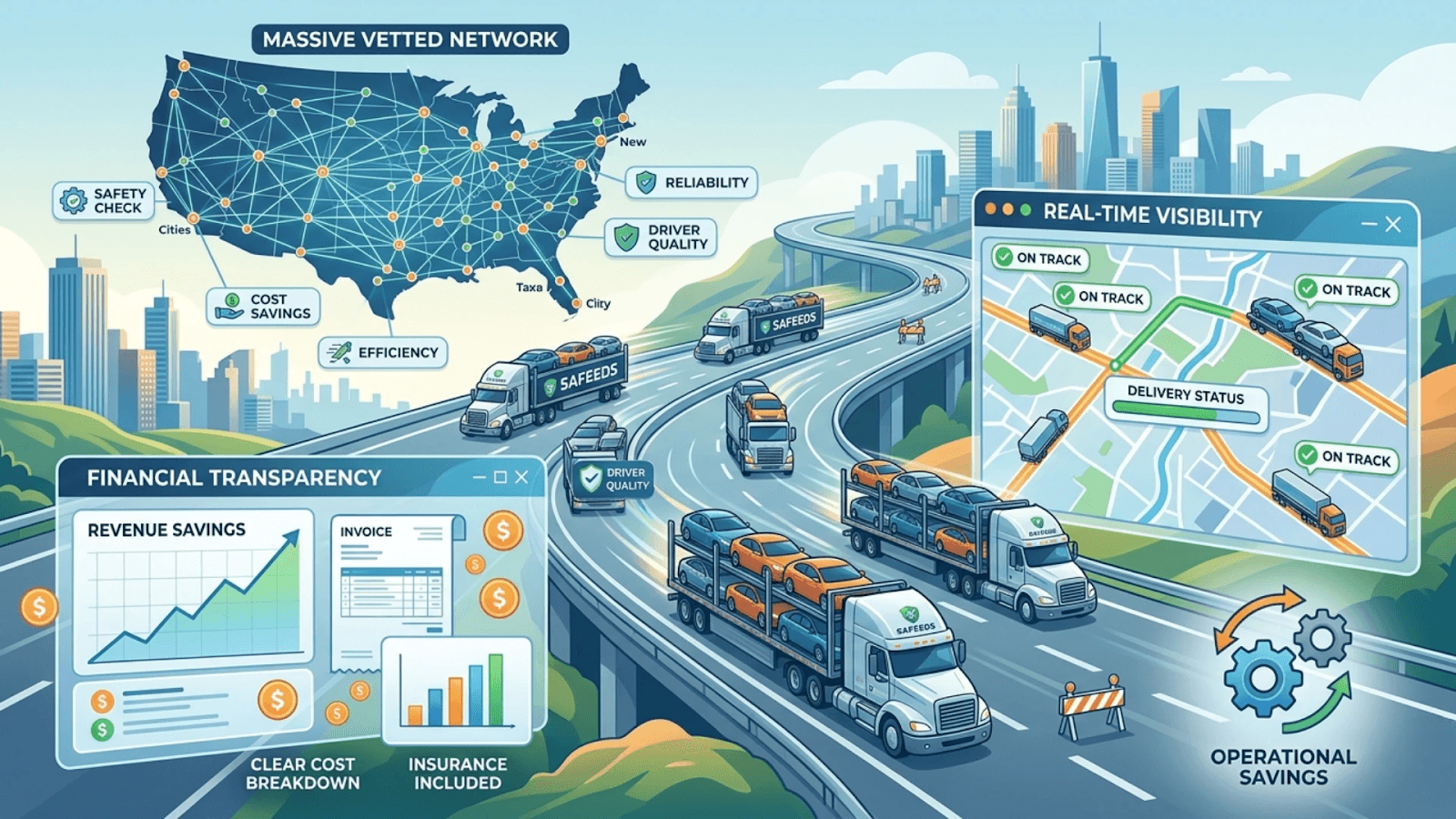
The most significant factor in controlling the cost to ship a car is the strategic selection of your broker or carrier partner. A partner with a massive, established network of vetted drivers can offer more competitive rates because they possess the logistical "buying power" required to keep trailers full and moving efficiently across the country.
Vetted Networks and Carrier Quality
A professional partner reduces the cost of shipping cars by utilizing a database of vetted, high-quality carriers with proven safety records. This vetting process avoids the delays and insurance risks often associated with cut-rate "budget" options. Ensuring inventory arrives in showroom condition is essential for maintaining low-cost car shipping standards.
Financial Transparency and Quote Accuracy
Transparent partners provide a comprehensive car shipping cost breakdown that includes insurance, fuel, and terminal fees. This clarity allows dealerships to accurately forecast profit margins without the "price creep" common among unreliable brokers. Such transparency is vital when calculating the cost to ship a car cross-country for large inventory shifts.
Real-Time Visibility and Operational Savings
Real-time tracking helps dealerships manage customer expectations and internal prep labor more efficiently. By pinpointing delivery times, service departments can align PDI schedules, reducing the operational shipping cost by minimizing idle labor. This synchronization turns vehicle logistics into a streamlined, cost-efficient component of the supply chain.
Essential Information for Dealership Shipping Decisions
Navigating the complexities of inventory logistics is simpler when you have clear, direct answers. Here is the essential information every dealership needs to ensure a high-efficiency, cost-effective transport experience.
How does bulk shipping impact my per-unit car shipping cost?
Shipping in volume is the most effective way to unlock significant savings. By consolidating your inventory into a single "full load" (typically 8–9 vehicles), we eliminate the logistical inefficiencies of multiple stops, allowing us to pass those savings directly to you. This approach transforms your shipping cost from a variable expense into a predictable, high-value investment.
Is my inventory protected against the "gaps" in standard carrier insurance?
We prioritize your peace of mind by only working with top-tier, vetted carriers. Beyond the standard carrier cargo insurance, we offer exclusive AFTA GAP Protection. This ensures that your high-value inventory is covered against the subtle damages and inconveniences that basic policies often overlook, providing a safety net that most "budget" shippers simply can't match.
Can I get a guaranteed price-lock for my monthly inventory budget?
Yes. Unlike many brokers who use "bait-and-switch" pricing, we offer a 7-day price lock on our quotes. This transparency allows your finance team to forecast car shipping costs with absolute certainty, ensuring that the price you see on your car shipping cost estimator is the price you pay when the carrier is secured.
What happens if I need to ship "inoperable" units from an auction?
Inoperable vehicles require specialized care, but they shouldn't break your budget. We maintain a network of carriers equipped with winches and specialized loading tools to handle non-running inventory efficiently. By disclosing these needs upfront, we integrate them into your low-cost car shipping strategy, avoiding the surprise on-site fees that occur with less experienced logistics partners.
How do no-deposit bookings benefit my dealership’s cash flow?
Our no-deposit policy is designed to keep your capital working for you. We believe you shouldn't pay until the work begins; therefore, we only process payment once a qualified carrier has been officially dispatched to your location. This commitment to professional integrity ensures that your shipping car cost aligns perfectly with your actual inventory movement.
Strategic Takeaways for Managing Car Shipping Costs at Scale
Successfully managing car shipping costs at a dealership level is a balance of volume, timing, and partnership. While the cost to ship a car cross-country will always be subject to fuel prices and market demand, dealerships that leverage bulk consolidation and advanced scheduling will consistently outperform those buying on the spot market.
By utilizing a reliable car shipping cost calculator and maintaining a relationship with a transparent transport provider, you can turn logistics from a mounting expense into a streamlined competitive advantage. Get a Quote from Safeeds Transport today and lock in your price for 7 days.