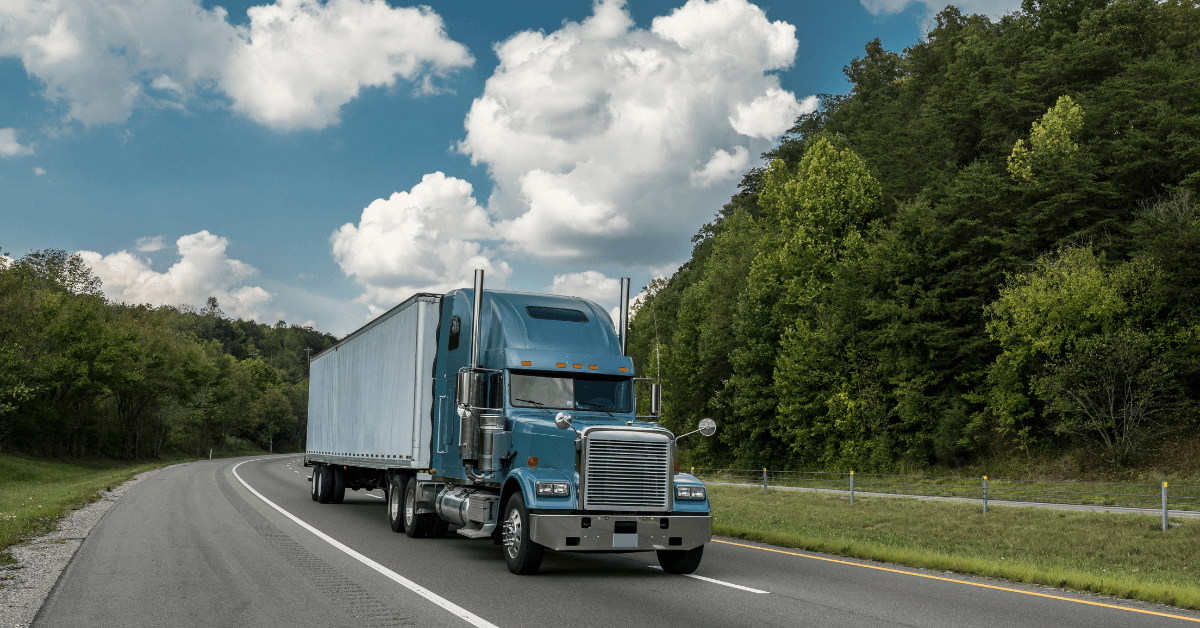
Most non-running cars can still be shipped, as long as the wheels turn and the steering works. A winch-equipped trailer handles this in most cases, adding $150 to $300 to the base rate. If the car cannot roll at all, a forklift or flatbed is needed instead, which raises the cost further.
The following sections cover everything involved in transporting a non-running vehicle: what carriers need to know, what it costs, and whether shipping is even the right choice for your specific car. Get your free, price-locked quote today and get an accurate number based on your vehicle's actual condition.
Key Takeaways
Most non-running cars can still be shipped, as long as the wheels turn and the steering works, since carriers use a winch to load the vehicle instead of driving it on.
If a car can't roll or steer at all, it needs a forklift or dollies instead of a standard winch, which raises the cost and narrows which carriers can take the job.
Shipping a non-running car typically costs $150 to $300 more than a running vehicle, covering the extra equipment and loading time involved.
Disclosing your car's exact condition at quote time, not at pickup, is the single most important step in avoiding a refused pickup or a surprise fee.
The 70 percent rule offers a quick way to decide whether shipping is worth it: if repair and transport costs stay under 70 percent of the car's market value, shipping usually makes sense.
Standard cargo insurance still applies to non-running vehicles, though it only covers new damage from transit, not pre-existing mechanical issues.
Most states allow a non-running car to move with a Non-Op title or bill of sale instead of full registration, though the exact rule depends on where you live.
A reliable auto transport company will discuss winch equipment, itemize the inoperable fee upfront, and answer detailed questions about your car's condition before quoting a price.
Can You Ship a Non-Running Car?
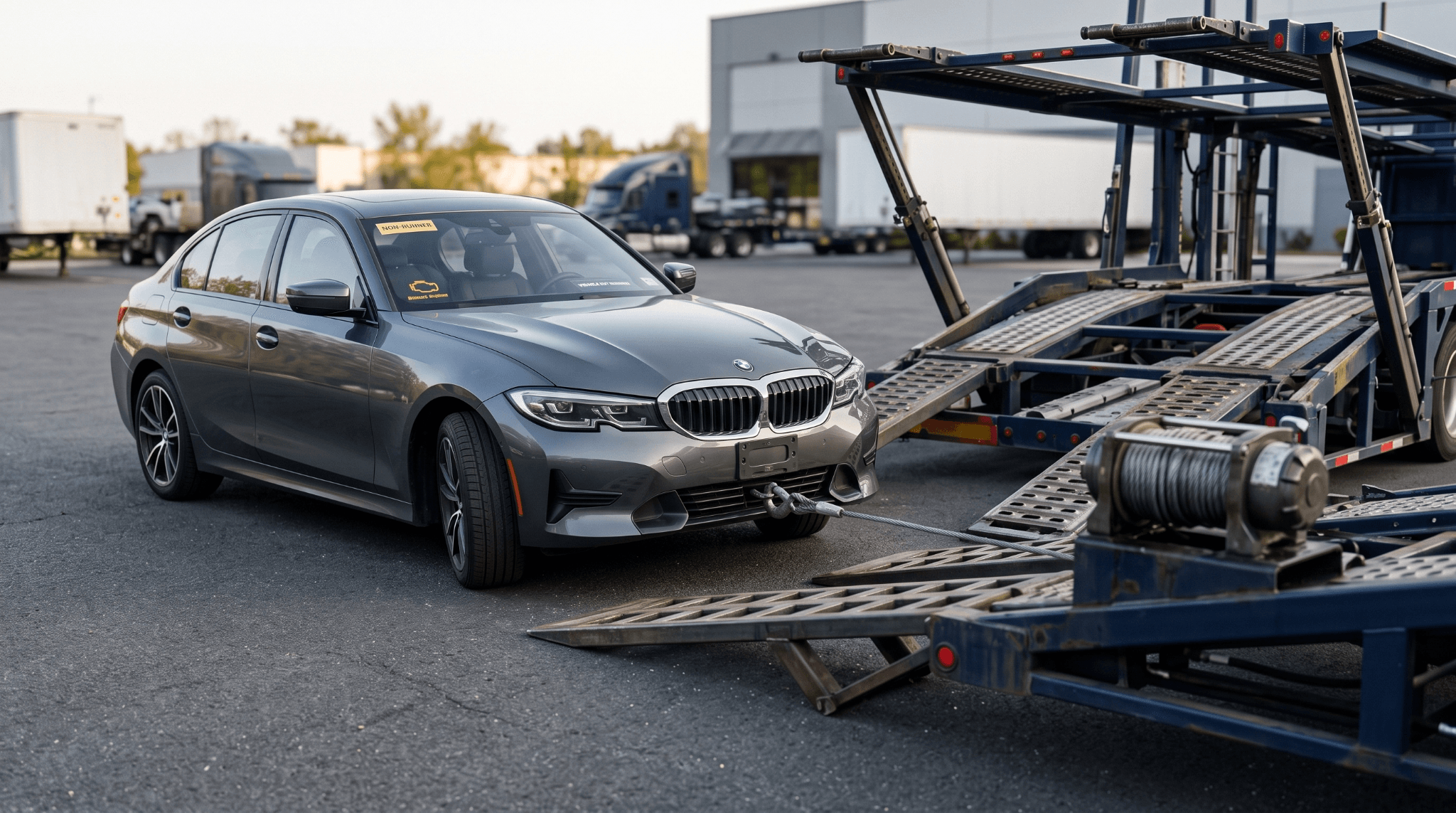
Yes, you can ship a non-running car in almost every case, as long as it can still roll and steer. Carriers use a winch to pull a car that will not start up onto the trailer, so a dead battery or a blown engine does not stop the shipment.
There are two conditions carriers look for:
Rolling: the wheels turn freely, and the tires hold air.
Steering: the steering wheel still turns the front wheels when pushed.
If both are true, a standard winch-equipped trailer can load your car. Shipping a non-running car this way is the most common and least expensive option. If either one is false, the carrier needs extra equipment, like dollies or a forklift, and the job takes more time.
Non-running car transport of this type is routine work for an experienced carrier. It is not a special favor, and most transport companies handle several of these shipments every week.
Non-running vehicle transport follows the same basic rules whether the car is a sedan, an SUV, or a truck, though larger vehicles may need a stronger winch.
How Do You Ship a Non-Running Car?
You ship a non-running car by booking a carrier with winch equipment, disclosing the car's exact condition at quote time, and preparing the vehicle the same way you would a running one. The main difference is how the car gets loaded, not how it travels once it is on the trailer.
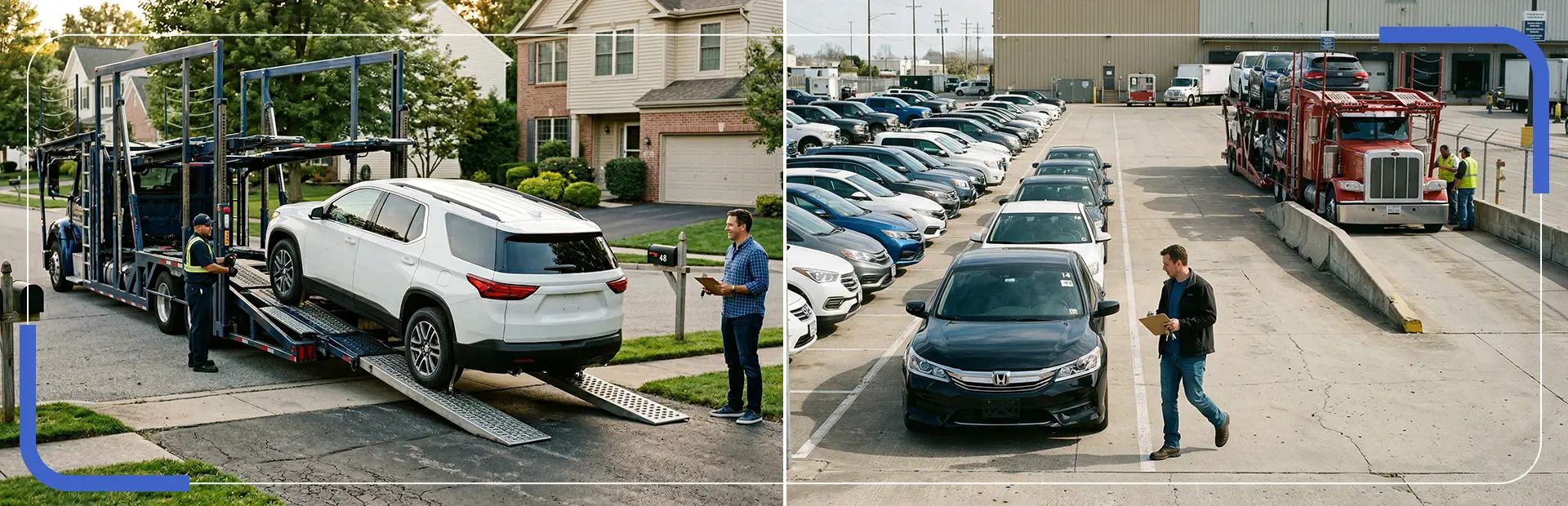
The loading steps carriers follow:
A cable from the winch attaches to a tow point on the frame, never the bumper.
The car is pulled up the ramp slowly and steadily.
Once on the trailer, it is locked in place with straps over the tires.
How to ship a non-running car safely comes down to one thing above all else: telling the carrier the truth about its condition before pickup day, not after the driver has already arrived.
Deciding to ship a non-running car this way, rather than towing it locally and hoping for the best, is usually the safer and cheaper option for any distance over a couple hundred miles.
What Does It Cost to Transport a Non-Running Car?
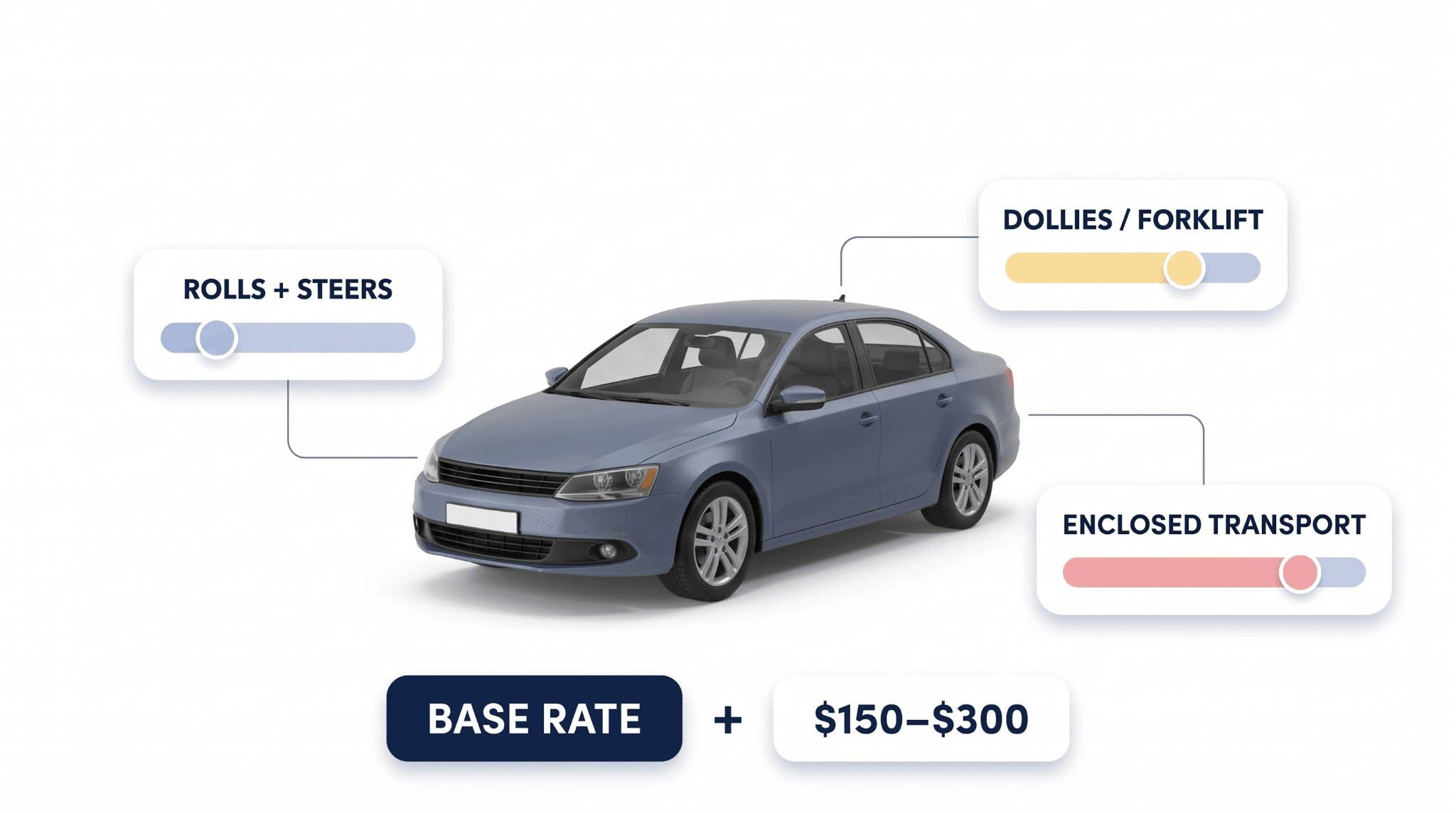
It typically costs $150 to $300 more to transport a non-running car than a running one, on top of the normal shipping rate for the route and vehicle size. This covers the extra time and equipment needed to load it safely.
A few things that shape the final number:
Cars that roll and steer sit at the lower end of this range.
Cars that need a forklift or dollies push toward the higher end.
Enclosed transport adds another 30 to 50 percent on top, mainly used for classic or high-value non-runners.
The transport non-running car price you receive should list this fee clearly, not bury it inside one combined number. The rates stay fairly close to this range across most brokers, since the fee reflects real labor and equipment costs rather than a random markup.
Transport non-running car cost 2026 figures should hold close to this same range.
So how much transport non-running car service actually adds depends mostly on whether the vehicle rolls, not on the carrier you choose, and this pattern is unlikely to shift much year to year.
If you are searching for transport non-running car near me expecting local pricing to differ, know that this fee is set nationally, since winch equipment and labor cost about the same no matter where you are.
Should You Ship, Sell, or Scrap a Car That's Not Running?
Ship the car if repair and transport costs stay under 70 percent of its market value; scrap or sell it if those costs go higher. This simple rule, sometimes called the 60 to 70 percent rule, helps owners decide quickly without guessing.
A few things worth weighing:
A car not running due to a simple issue, like a dead battery, is often still worth shipping and fixing.
A car with major engine or frame damage may cost more to repair than it is worth.
Scrap buyers often pay based on weight, while running or repairable cars hold more value as a whole vehicle.
If the car holds sentimental value or is a rare model worth restoring, shipping it usually makes sense even past the 70 percent mark. For everyday vehicles with heavy damage, selling to a local buyer or scrapyard, many of which offer free towing, is often the simpler choice.
How Do You Choose an Auto Transport Company for a Non-Running Car?
Choose an auto transport company that has winch-equipped trailers, discloses the inoperable fee upfront, and asks detailed questions about your car's condition before quoting a price. These signs point to a company that handles non-runners regularly, not occasionally.
A short checklist before booking:
Confirm the company has carriers with winch or lift-gate equipment.
Ask for the inoperable fee to be included in the written quote, not added later.
Check that the company's USDOT number is active using the FMCSA's public search tool.
A reliable transport non-running car company will answer these questions clearly without hesitation.
Request a transport non-running car quote that lists the inoperable fee as its own line item. Comparing a couple of quotes before you commit helps confirm you are getting a fair, itemized number rather than a vague estimate.
Auto transport non-running car companies vary in how clearly they explain this process. A company that answers your questions in detail before booking is a strong sign of how they will handle the actual pickup.
Before shipping, it also helps to check your state's rules on titling. Most states allow a non-running car to move with a Non-Op title or bill of sale rather than full registration, though requirements vary. The American Association of Motor Vehicle Administrators is a useful place to confirm your specific state's rule.
What Shippers Want to Know
Shipping a non-running vehicle raises a specific set of concerns for most owners. Here are direct answers to the ones we hear most.
Can a car with a dead battery be shipped?
Yes. As long as the wheels turn and the steering works, a dead battery does not stop a shipment. The carrier simply winches the car onto the trailer instead of driving it.
Do I need to disclose that my car does not run?
Yes, always. Not disclosing this can lead to a refused pickup or a surprise fee added on the spot once the driver sees the car cannot be driven.
Is a non-running car still covered by insurance during transport?
Yes, standard cargo insurance still applies. It covers new damage from the move itself, not any pre-existing mechanical issues the car already had.
What if the wheels are seized or missing?
The carrier will use dollies or a forklift instead of a standard winch. This adds cost and narrows which carriers can take the job, so mention it when you request a quote.
Do I need a running title to ship the car?
Not always. Most states allow a Non-Op title or bill of sale for a car being moved without being driven, though the exact rule depends on where you live.
Get the Right Equipment From the Start
Transporting a non-running car is a routine job for the right carrier, not a complicated one, as long as the vehicle's condition is disclosed honestly at booking. Knowing whether your car rolls and steers is the single detail that decides your price, your equipment needs, and how fast you can book.
Most delays and refused pickups come down to the same avoidable mistake: the carrier not knowing the car's real condition until the driver is already in the driveway. A short, honest conversation at booking prevents nearly all of this friction.
Before committing to shipping, weigh the cost against the car's value using the 70 percent rule, since not every non-runner is worth the expense of moving. For the ones worth keeping, a transparent carrier with the right winch setup makes the process simple. Get your free, price-locked quote today and get an accurate number based on your car's actual condition.