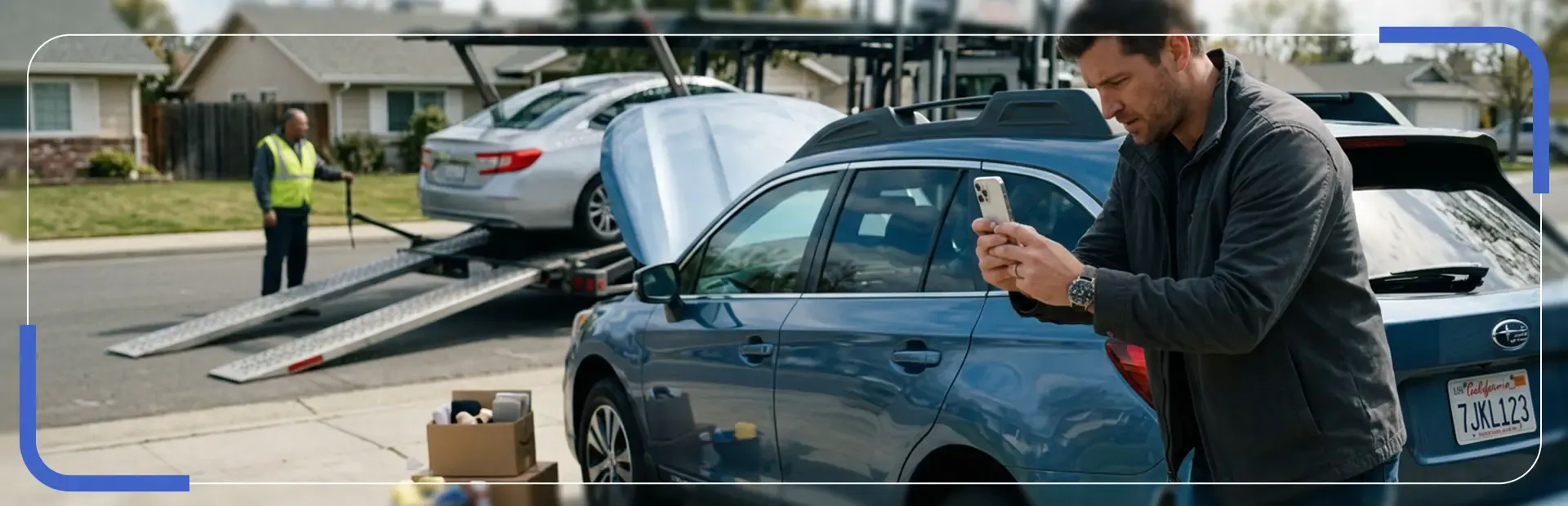
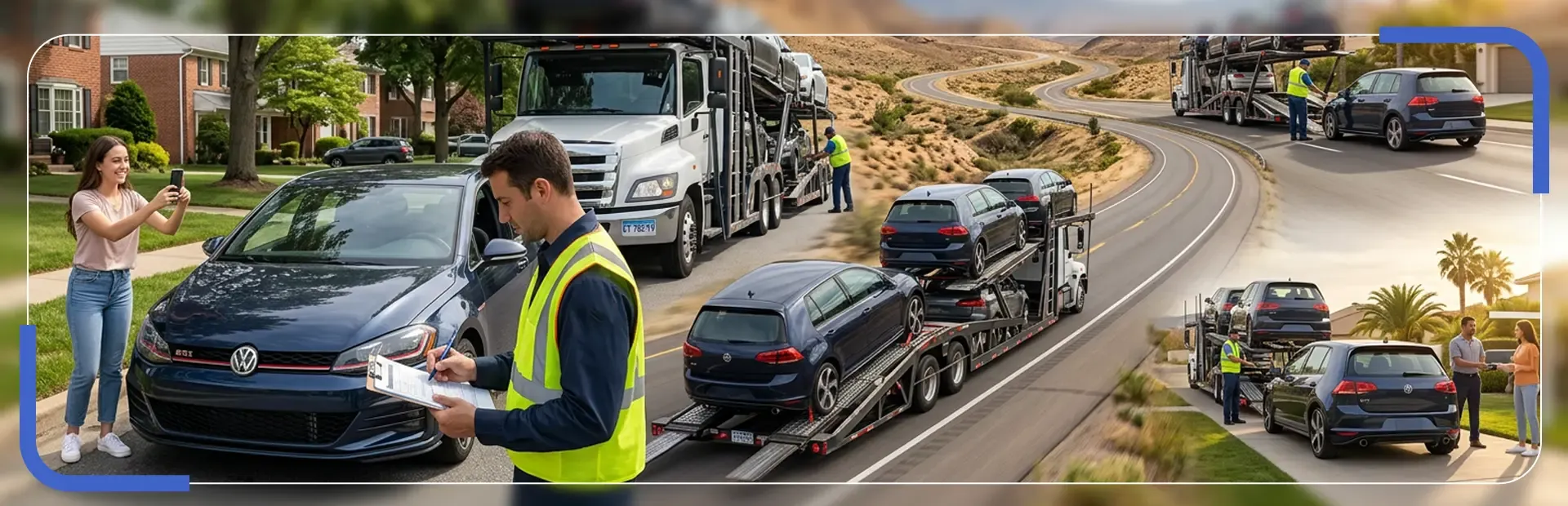
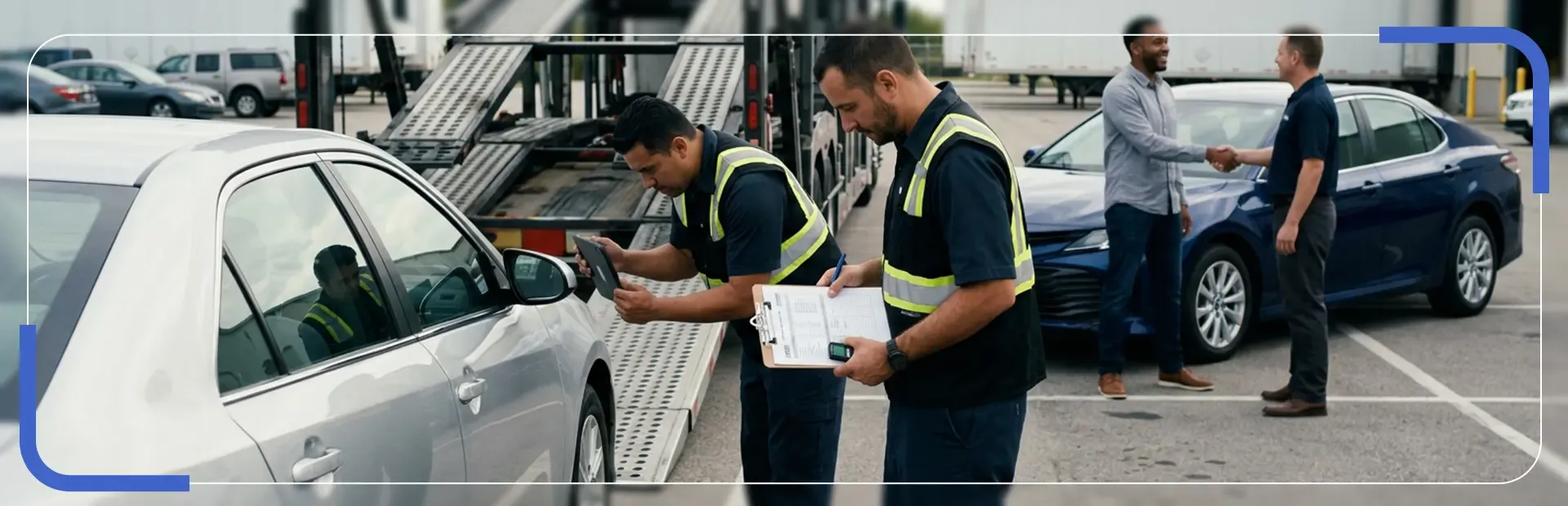
Ever notice how most people only think about their car after it’s already on the truck? That’s usually when the doubts start: Did I leave something inside? Was I supposed to take photos? What if the battery dies halfway across the country?
For first-time shippers, car transport feels simple on the surface and strangely stressful underneath. Not because shipping is risky, but because nobody really explains how to prepare your car for shipping in a way that prevents almost every problem. The truth is, a properly prepared vehicle rarely causes delays, disputes, or surprise charges.
At Safeeds Transport Inc., we’ve seen how a few smart checks before pickup make the entire experience smoother for both the owner and the carrier. So before handing over the keys, take a few minutes to learn the right way, and when you’re ready, get a quote and move forward with confidence. To begin your journey with a transparent and guaranteed rate, request an instant car shipping quote from Safeeds Transport Inc. today.
Understanding Car Shipping Logistics and Choosing Your Method
Once your transport is scheduled, the brokerage enters the dispatching phase. This involves matching your vehicle with a carrier that is already servicing your specific route. It is important to distinguish between the "pickup window" and the "transit time." The pickup window is the 1-to-5-day period during which a driver arrives at your location. Once the vehicle is loaded onto a multi-vehicle carrier, the actual journey begins.
Many first-time shippers ask, "How long is standard shipping?" Generally, standard shipping involves the carrier making several stops to pick up or drop off other vehicles. For a cross-country trip, how long should standard shipping take? You can typically expect a window of 7 to 10 days, while shorter regional moves may take 2 to 5 days. Several variables can influence how long the standard shipping duration is, including:
Route Distance: Naturally, coast-to-coast hauls require more time than regional state-to-state moves.
Driver Mandates: Federal safety regulations strictly limit how many hours a driver can be on the road per day.
Weather and Traffic: Seasonal storms or heavy metropolitan congestion can impact even the most efficient schedules.
Carrier Stops: Because carriers transport multiple vehicles, the loading and unloading of other cars on the route add to the total timeframe.
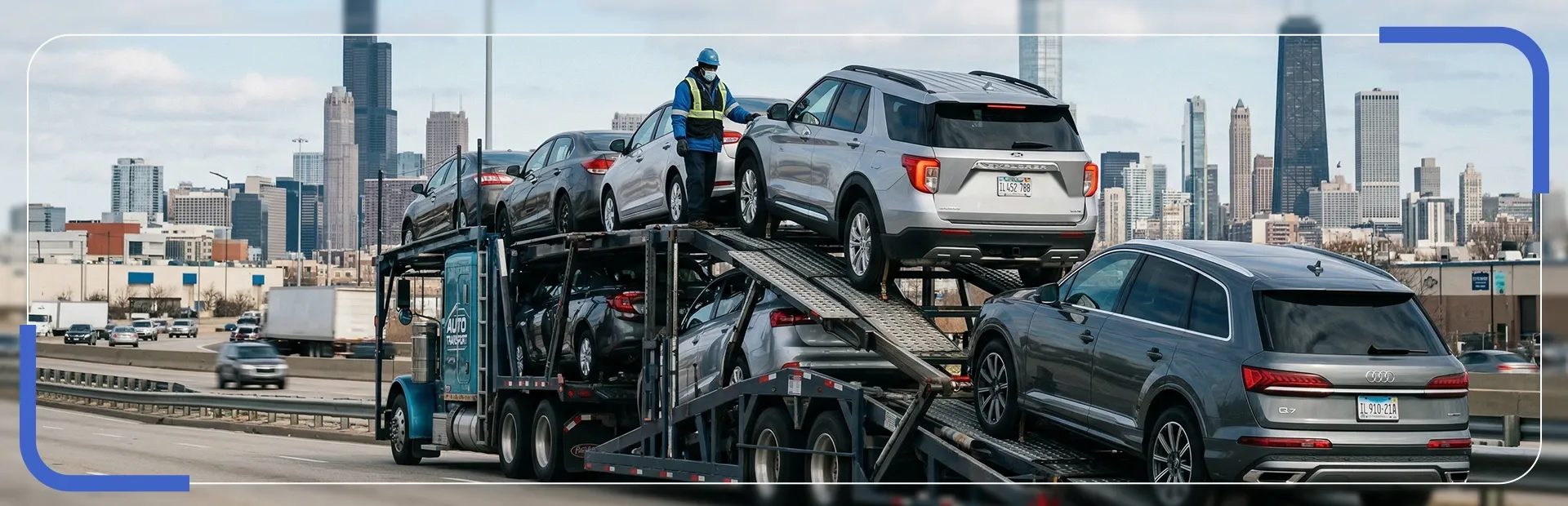
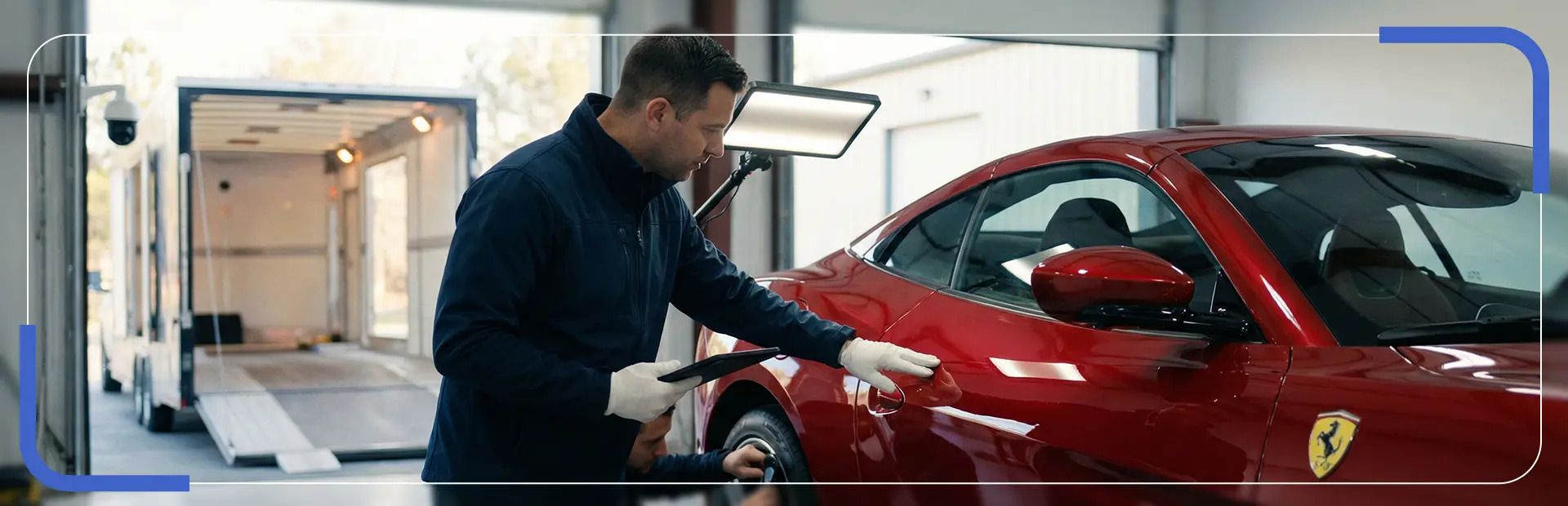
Before diving into mechanical details, you must decide how to ship a car based on your budget and the vehicle's value. The two primary methods are open and enclosed transport. Open transport is the industry standard, cost-effective, and reliable for daily drivers. However, if you are shipping a car cross-country that is a classic or luxury model, enclosed transport provides a shield against road debris and weather.
When calculating how much to ship a car cross-country or how much to ship a car to another state, prices fluctuate based on fuel costs and carrier availability. Generally, shipping a car across the US via an open carrier ranges from $1,000 to $1,600, whereas enclosed options can increase that cost by 40% to 60%. If you are looking at international logistics, you may wonder how much it costs to ship a car overseas. Ocean freight usually starts at $1,500 but can escalate significantly. Whether you have cars on a ship or a truck, your preparation steps remain largely the same, focusing on stability and documentation.
The Essential Car Shipping Checklist and Exterior Inspection
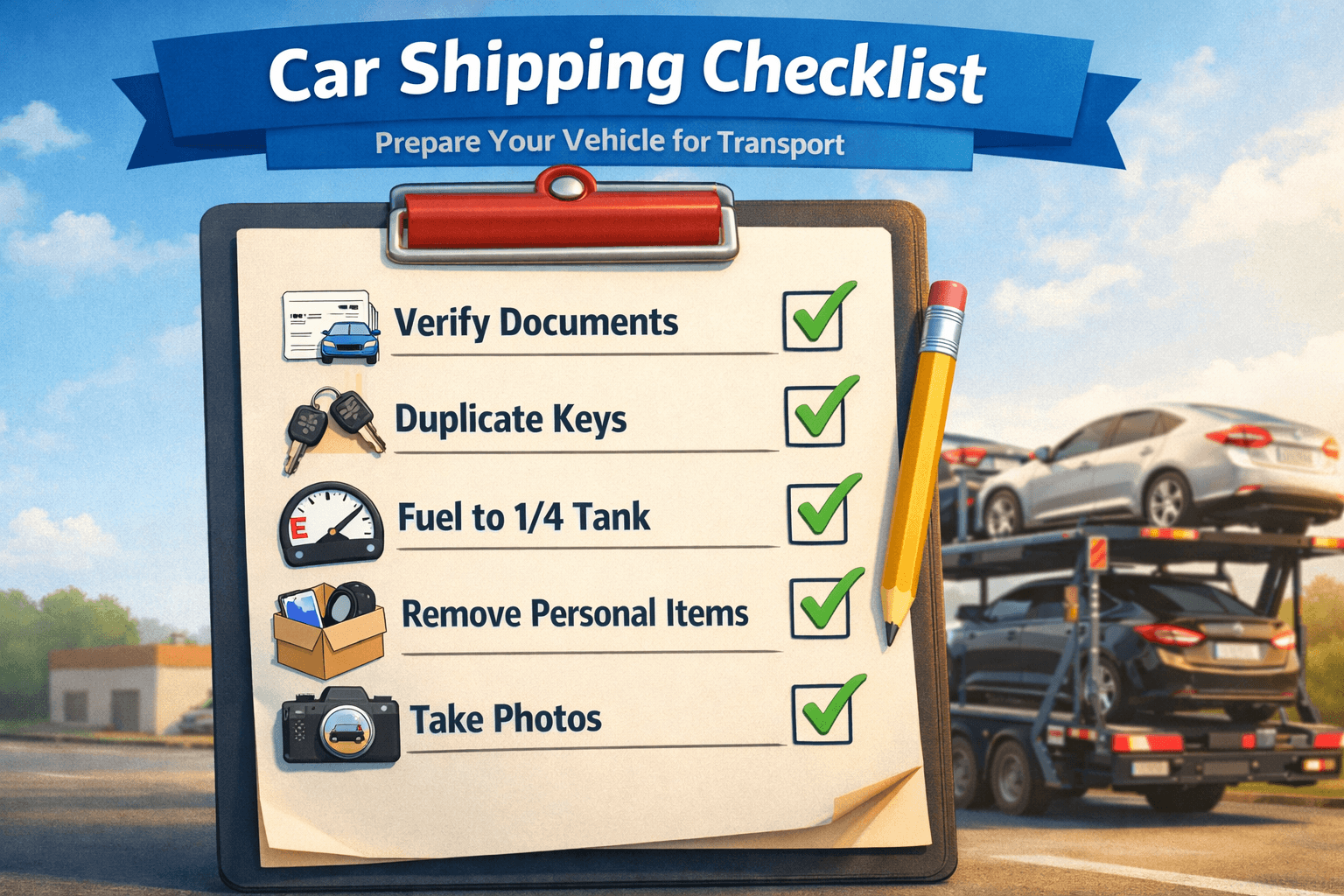
To manage the transition effectively, every owner should utilize a formal car shipping checklist. This organizational tool ensures that no small detail, like a forgotten toll tag or a low battery, causes a delay at the terminal or during loading. Your initial preparation should include verifying documentation (title, registration, and proof of insurance), fuel management (exactly 1/4 tank), and key duplication (one set for the driver, one for you).
Cleaning and Visual Documentation for the Bill of Lading
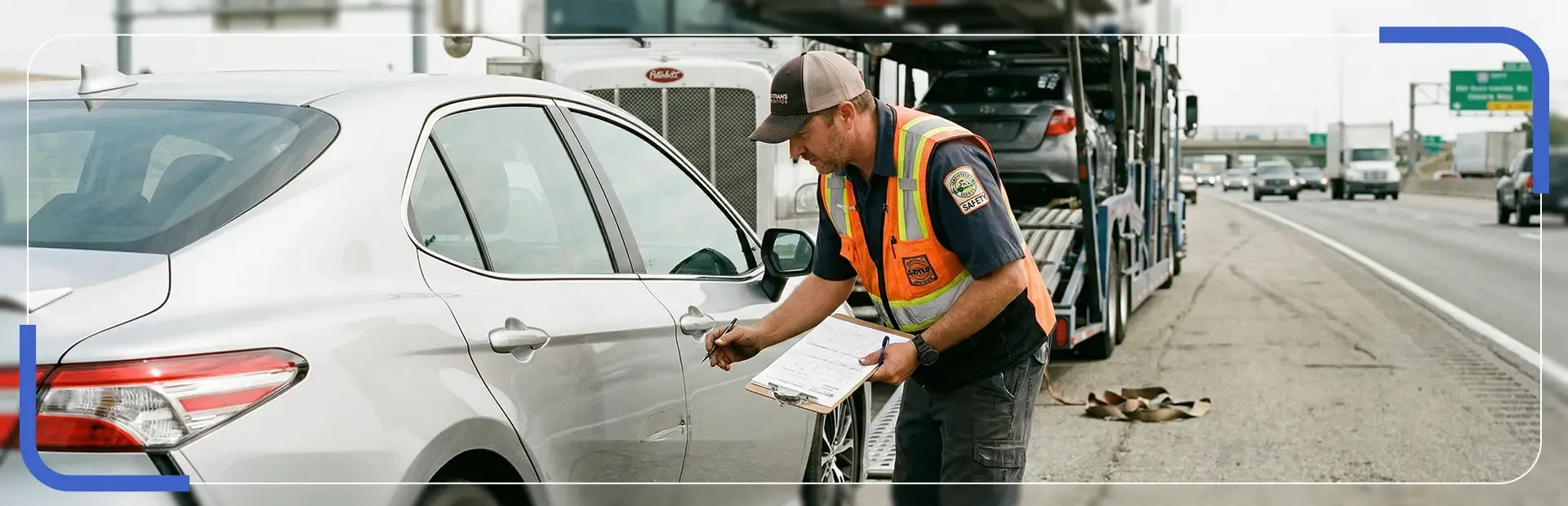
A clean car is not about aesthetics; it is about accuracy. A professional carrier will perform a physical inspection at the point of pickup, noting any pre-existing chips, dents, or scratches on the Bill of Lading (BOL). If the vehicle is covered in dirt or dust, small imperfections may be missed, leading to potential disputes later. Thoroughly wash the exterior and vacuum the interior.
Once clean, take high-resolution, dated photos of the vehicle from every angle, including the roof and lower bumpers. These photos serve as your primary evidence should you need to file a claim. Understanding the condition report process is vital; when the driver arrives, you will both sign the BOL to acknowledge the vehicle's state before it enters the carrier's custody. This documentation is your strongest protection against unforeseen damage during transit.
Mechanical and Seasonal Preparation for Secure Transit
Carriers require vehicles to be in a specific mechanical state to be loaded onto a trailer safely. Check for any active fluid leaks; a car dripping oil or transmission fluid can damage other vehicles parked below it on a multi-level rack. If your vehicle has a known leak, you must inform the broker so they can place it on the bottom row. Furthermore, the vehicle must be "operable," meaning it can start, steer, and brake under its own power. If you are researching how to ship a car that does not run, you must book a specialized "inoperable" service involving a winch or forklift. This adds to the labor cost and requires specific equipment. Ensure your battery is fully charged, as temperature fluctuations during long-distance shipping can drain an aging battery, leading to delivery delays.
Feature | Requirement for Standard Shipping | Reason |
Gas Level | 1/8 to 1/4 Tank | Reduces weight and fire hazard |
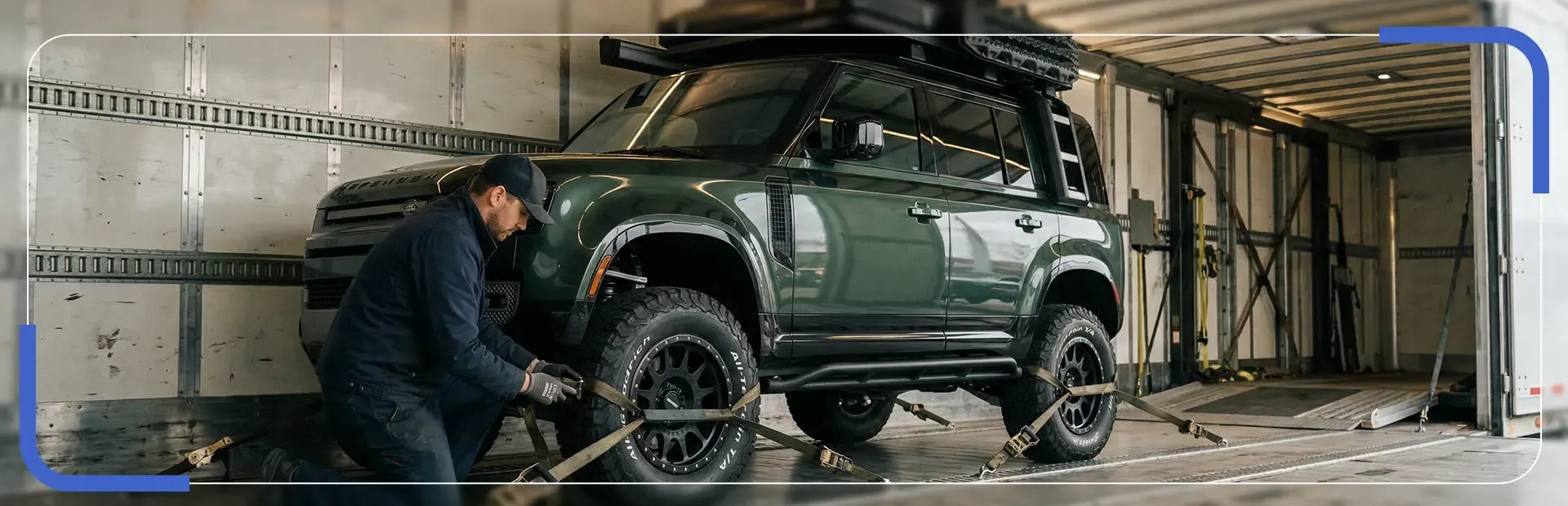
Tire Pressure | Fully Inflated | Prevents damage to rims during tie-down |
Fluid Leaks | None / Must be disclosed | Protects other vehicles on the carrier |
Battery | Fully Charged / Secured | Necessary for loading and unloading |
Ground Clearance | Minimum 4-6 inches | Prevents undercarriage damage on ramps |
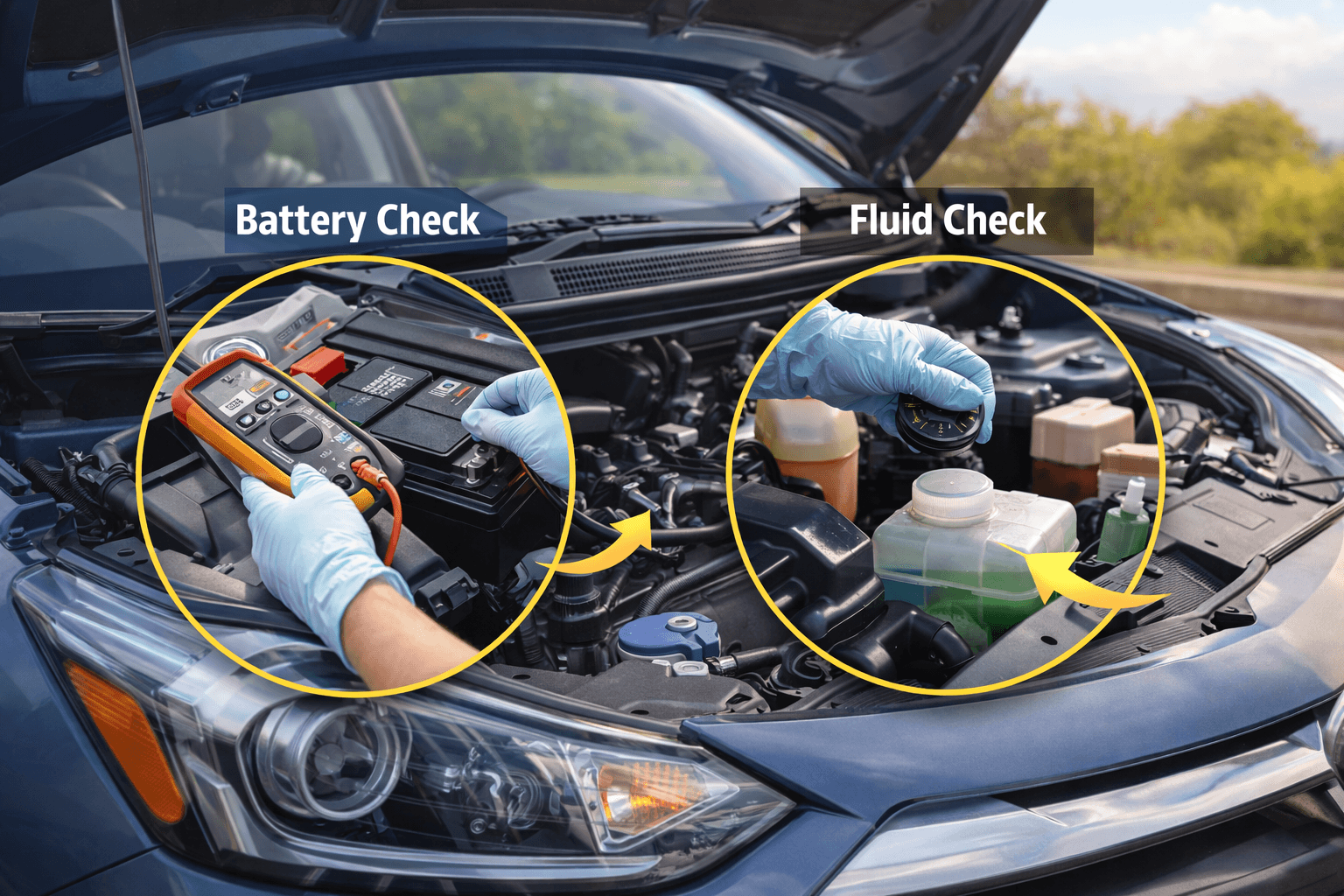
The time of year also impacts how to prepare your car for winter transport. If your vehicle is moving from a warm climate to a cold one in January, you must ensure your antifreeze levels are sufficient for sub-zero temperatures. A frozen engine block is a catastrophic and avoidable expense. Similarly, check your tire condition; while the car won't be driven long distances, it will be moved on and off metal ramps that can be slick with ice or rain. In the summer, ensure your cooling system is functional for the short periods the driver must run the engine during the loading sequence.
Interior Preparation and Disabling Safety Features
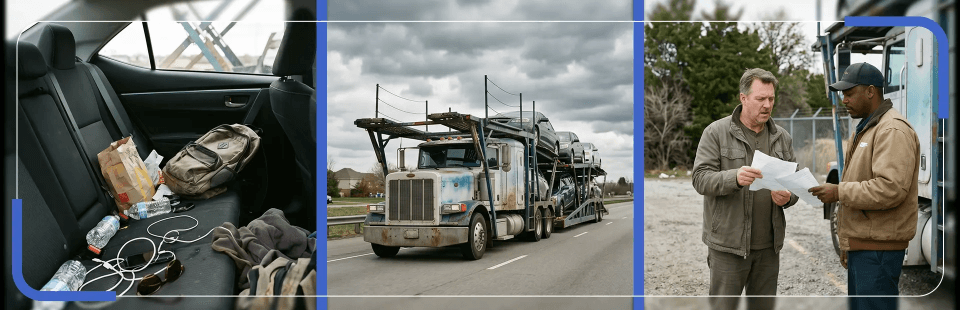
A common mistake in how to prepare car for long-distance shipping is treating the vehicle like a moving van. Department of Transportation regulations strictly prohibit auto carriers from transporting "household goods." This means your trunk and back seat should be empty. Beyond legalities, there are two major risks: weight and insurance. Carriers are weighed at state scales; an overweight truck can face heavy fines. More importantly, the carrier’s cargo insurance only covers the vehicle itself, not personal belongings. If a laptop or expensive tool kit is stolen or damaged during transit, you will have no recourse for reimbursement.
To ensure you are fully compliant with carrier liability limitations and safety standards, follow these interior preparation steps:
Remove Personal Items: Clear out all electronics, clothing, and valuables to avoid theft and weight penalties.
Clear Aftermarket Accessories: Detach dash cams, external GPS units, and car seats that could be jarred loose.
Check the Trunk: Ensure no heavy tools or household boxes are stored in the rear compartment.
Remove Loose Items: Secure or remove loose change, sunglasses, and garage door openers from the console.
Modern vehicle technology can also inadvertently cause issues. One of the most frequent questions from owners is, "How do I disable my car alarm?" An active alarm can be triggered by the vibrations of the truck or the movement of the trailer. If an alarm sounds repeatedly, it will drain the car battery, leaving the driver unable to start the vehicle.
In addition to the alarm, you must address several exterior and technological features:
Toll Tags and Parking Passes: Deactivate or remove tags (like E-ZPass or SunPass). Automated readers on highways may pick up your vehicle’s tag as the truck passes through gantries, resulting in unexpected charges.
Custom Accessories: Remove bike racks, luggage carriers, or wide spoilers to prevent damage and ensure the vehicle fits within height and width clearances.
Antennas: Ensure retractable antennas are fully retracted or unscrewed to prevent them from snapping during the loading process.
Insurance, Responsibility, and Damage Protection Explained
Understanding the layers of protection during transit is essential for peace of mind. Every authorized carrier must carry cargo insurance, which typically ranges from $100,000 to $250,000 for open trailers and significantly higher for enclosed transport. This coverage is intended to protect your vehicle from transit-related incidents or carrier negligence. However, it is important to note that carrier insurance rarely covers "Acts of God" (such as hail or floods) or damage caused by road debris on an open trailer.
Many shippers ask how to prepare for a car accident involving their transport carrier. While statistically rare, the first step is ensuring your personal auto insurance is active. Some personal policies cover your vehicle even when it is in the custody of a professional hauler. Before the driver arrives, call your provider to verify this. During the handover, the Bill of Lading (BOL) acts as your contract; ensuring every existing scratch is documented on this form is your primary defense.
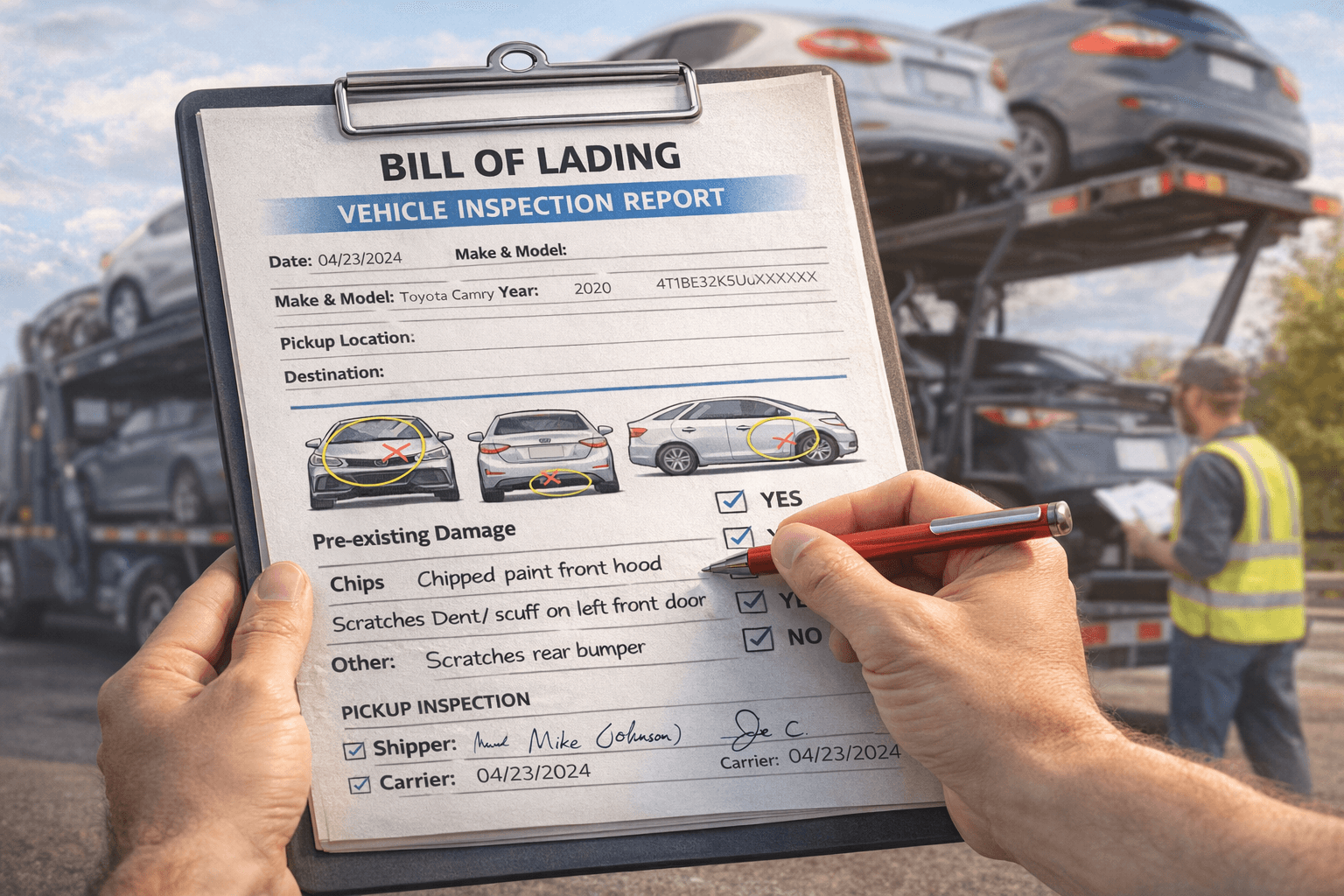
Without a clearly marked BOL from both pickup and delivery, filing a successful insurance claim becomes nearly impossible. This professional oversight ensures that the carrier is held accountable for the vehicle's condition from the moment of possession to the moment of release.
Managing the Logistics of Pickup and Delivery Day
Pickup day is the most critical phase of the process. The driver will typically call you 12 to 24 hours in advance to coordinate a specific meeting time. Because large multi-car carriers can be up to 80 feet long, they often cannot navigate narrow residential streets or areas with low-hanging trees. In these cases, you may be asked to meet the driver at a nearby large parking lot, such as a shopping center.
Before the Driver Arrives at the Pickup Location
Ensure the car is parked in a well-lit area so the inspection can be thorough. Have your car shipping checklist and a pen ready. When the driver arrives, they will walk around the vehicle with you to create the condition report. Do not feel rushed during this process; it is your right to ensure every mark is noted. Once the report is complete, you will sign the BOL, hand over one set of keys, and watch as the vehicle is loaded. It is common practice for the driver to take their own photos at this stage as well.
Right After the Vehicle Is Delivered
Upon arrival at the destination, the delivery process mirrors the pickup. You (or a designated representative) must be present to inspect the vehicle before it is unloaded. Check the undercarriage, the roof, and the interior. If you notice any new damage, it must be noted on the BOL before you sign it. Once the vehicle is off the trailer, perform a mechanical check. Start the engine and let it idle. If the car has undergone long-distance shipping, the battery might be slightly weak or the tires may have temporary "flat spots" from being strapped down; these usually disappear after a short drive. Compare your delivery-day photos with your initial photos. If there are discrepancies, take new photos immediately with the carrier’s truck still in the background.
Situations People Forget to Plan For: Accidents and Delays
In the world of logistics, unpredictability is a constant factor. A truck may break down, or a previous customer on the route may cause a delay. If your shipment is delayed, remain in contact with your broker. They have access to GPS tracking and can provide real-time updates that the driver, who must focus on the road, might not be able to give. Understanding these factors helps in maintaining a calm perspective throughout the process.
In the highly unlikely event of a collision, knowing how to prepare for a car accident as a cargo owner involves three specific steps. First, obtain the carrier’s insurance certificate from the broker. Second, file a police report if the incident occurred during a known traffic accident. Third, submit your pre-pickup and post-delivery BOLs to the insurance adjuster. Preparation acts as a safety net, ensuring that even if a "worst-case scenario" occurs, your financial interests are protected. Having these documents organized beforehand significantly speeds up the resolution of any claims.
Helpful Clarifications About Car Transport
Navigating the nuances of the transport industry often leads to specific logistical questions. To ensure you are fully prepared for your upcoming move, we have compiled the most common inquiries first-time shippers have regarding timelines, costs, and safety protocols.
How much does it cost to ship a car with Safeeds Transport Inc?
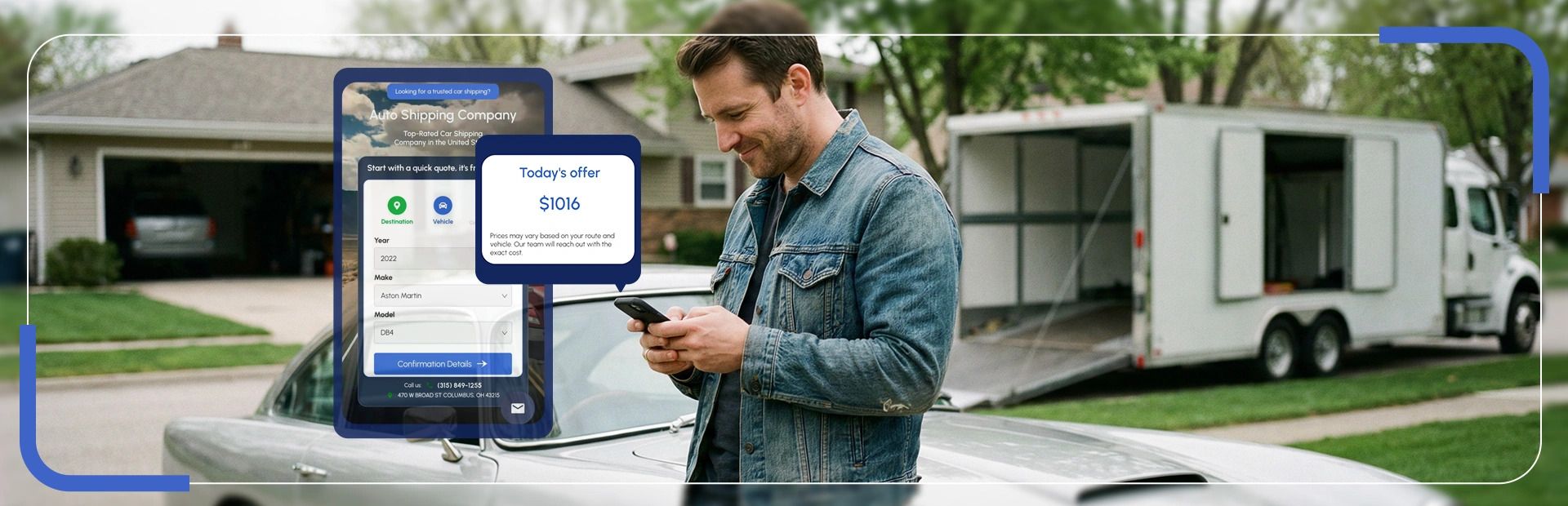
The cost is determined by several factors, including the total distance, the size and weight of your vehicle, and your choice of an open or enclosed carrier. Because market rates for fuel and carrier availability fluctuate, we recommend using our instant quote tool to get a precise, 7-day guaranteed price tailored to your specific route.
How long does it take to ship a car?
Shipping timelines are divided into the pickup window and the transit time. Generally, once the vehicle is loaded, a cross-country journey takes between 7 and 10 days, while shorter regional trips may take 2 to 5 days. Weather conditions and mandatory driver rest periods can influence the final delivery date.
How do I prepare my car for shipping?
Effective preparation involves washing the exterior for a clear inspection, removing all personal belongings to comply with DOT regulations, and maintaining a fuel level of approximately 1/4 tank. Additionally, you should ensure the battery is charged and the tires are properly inflated to facilitate safe loading.
What type of carriers do you use for auto transport?
We utilize a vetted network of licensed and insured motor carriers. Customers can choose between open-air trailers, which are the industry standard for affordability, and enclosed trailers, which provide a higher level of protection from road debris and weather for luxury or classic vehicles.
Is my vehicle insured during transport?
Yes, every carrier in our network is required to maintain a comprehensive cargo insurance policy. This covers transit-related damage or carrier negligence. For added security, we also offer AFTA GAP Protection, which provides an extra layer of coverage for deductibles and minor incidents not typically covered by a carrier’s primary policy.
The Value of Getting It Right the First Time
Preparation is not just a list of chores; it is an investment in the safety of your vehicle. Most shipping "nightmares" cited in online reviews are the result of poor preparation, leaving valuables in the car, failing to document pre-existing damage, or not checking mechanical vitals. By following this guide, you have moved from an uncertain first-time shipper to an informed client. When you take the time to prepare, you ensure that your vehicle's journey is as boring and uneventful as possible, which, in the shipping industry, is the highest compliment a service can receive.
Ready to put your preparation into practice? Get a transparent, instant quote from Safeeds Transport Inc. and lock in your price.