Safeeds Auto Transport logo

Menu

logo

Menu

HomeAbout Safeeds
BlogsContact us

Electric Vehicle Shipping Cost: A Comprehensive 2026 Price Guide

Safeeds
February 05, 2026
18 min read

Share post

In 2026, the average electric vehicle shipping cost generally ranges between $950 and $1,600 for most domestic routes. While standard sedans are cheaper, the heavy battery packs in EVs mean you’ll often pay a 20% premium compared to gas-powered cars. Moving your high-tech ride across the country isn't just about distance; it's about handling specialized EV car shipping 2026 logistics safely.

Whether you are looking for an open trailer or a more protective option, getting an accurate price is the first step toward a stress-free move.

Planning your electric vehicle relocation? Our team provides transparent, no-deposit pricing to ensure your EV arrives safely and on time. Get a quote from Safeeds Transport Inc. now to secure your 2026 shipping slot.

The Real Price Range Of EV Car Shipping In 2026

When you're ready to move, the first question is always about the bottom line. In 2026, EV auto transport rates typically fall into three brackets based on your needs:

  • Economy (Open): $950 – $1,300

  • Average (Standard): $1,300 – $1,600

  • Premium (Enclosed): $1,600 – $2,300+

Your electric vehicle shipping cost isn't just about the miles. Carriers now implement strict battery protocols and safety checks that add a slight premium over gas-powered cars.

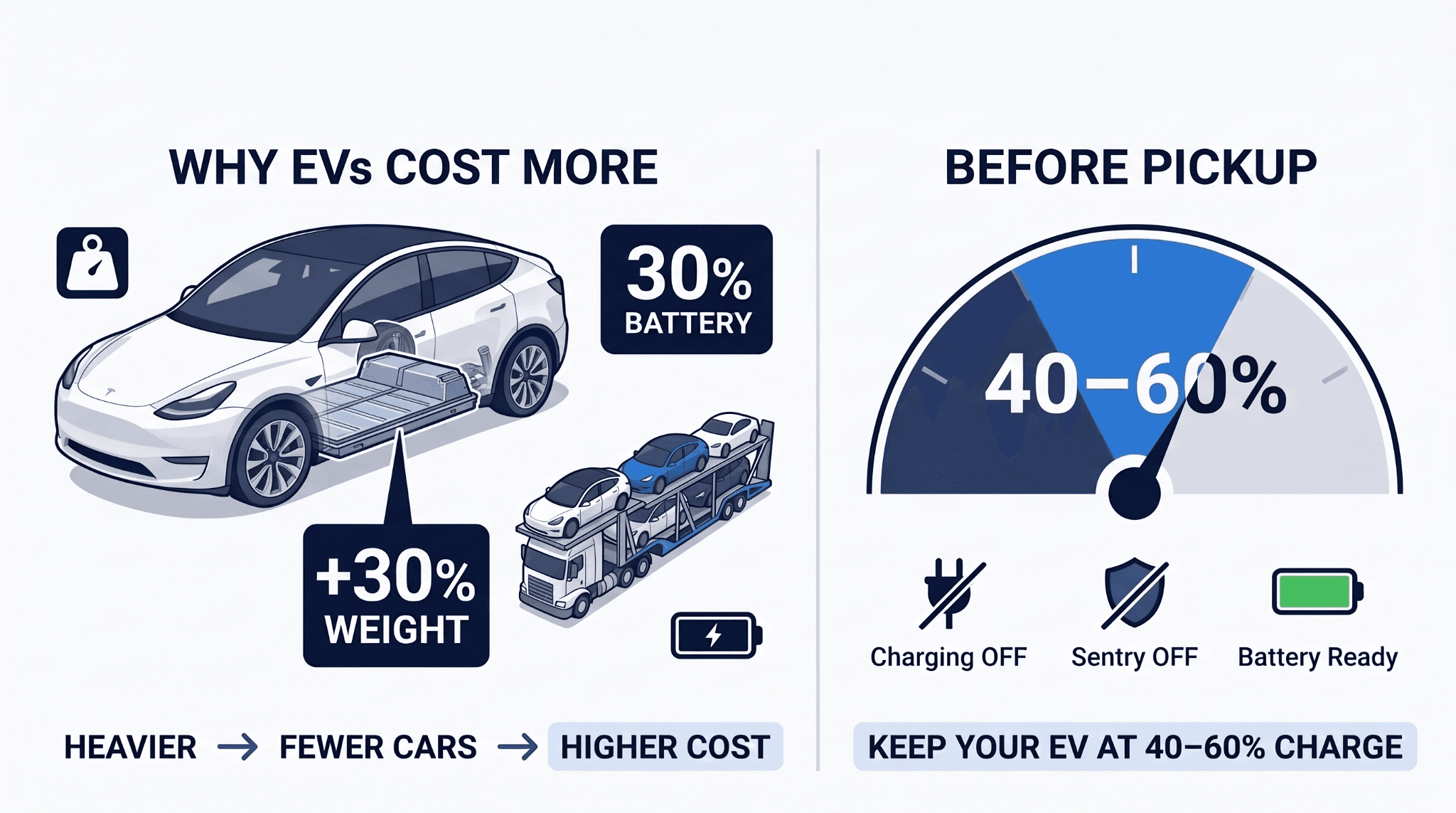
Because lithium batteries are heavy, EVs often weigh 30% more than internal combustion vehicles. This "weight penalty" affects how many cars a driver can legally haul, which is a major factor in how auto shipping works today.

affects how many cars a driver can legally haul, which is a major factor in how auto shipping works today.

Distance

Estimated Cost (Standard EV)

Cost to ship an electric car 300–500 miles

$550 – $950

Long-distance EV transport 1,000–2,500 miles

$1,200 – $2,100

If you’re moving a high-value model, your Tesla shipping cost might be slightly higher. These vehicles require specialized handling and software-safe securing methods to protect their sensitive sensors and battery health.

Before booking, you can Check DOT and an MC number to ensure your carrier is fully authorized for 2026 hauling. Now that you know the price range, let’s break down what actually controls the final quote.

EV Shipping Price Factors That Change The Quote

Getting an accurate quote isn't just about the distance; it’s about a specific set of EV shipping price factors that define the logistics of your move. Because electric cars are built differently, they are priced differently.

You should expect the following variables to impact your final total:

  • Vehicle Size & Weight: EVs are roughly 30% heavier than gas cars due to their battery packs. This extra weight often increases EV auto transport rates because it limits the total number of vehicles a carrier can legally haul.

  • Distance & Route Demand: Moving between major hubs like Los Angeles and Miami is cheaper than a rural electric vehicle relocation where drivers have to go out of their way.

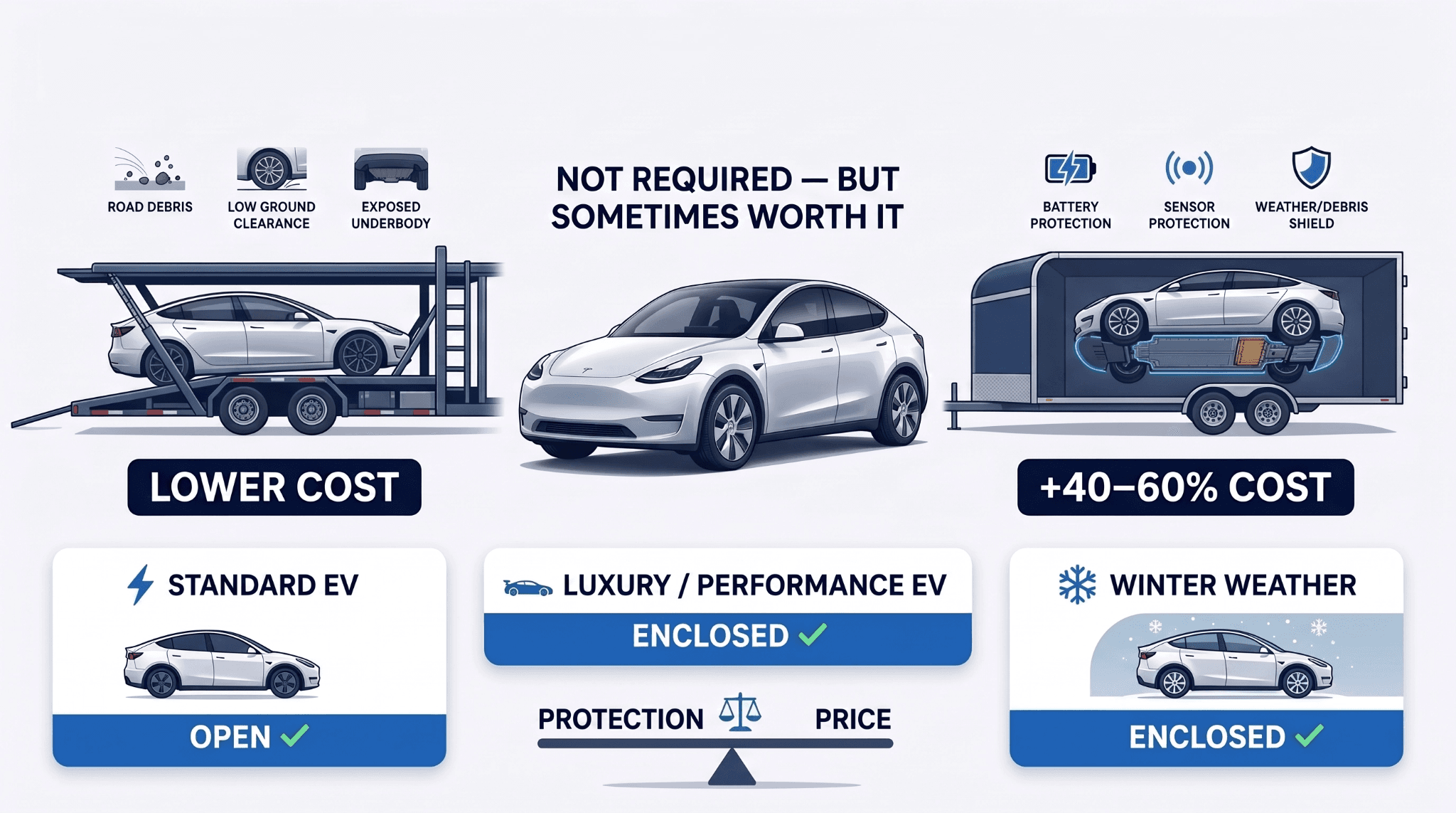
  • Transport Type: Choosing enclosed transport for EV provides maximum protection from road debris but generally costs 40% to 60% more than open shipping.

  • Timing & Seasonality:If you need expedited car shipping services, you’ll pay a premium. Additionally, winter storms or summer relocation peaks can cause rates to spike overnight.

  • Vehicle Value: High-end models require higher EV shipping insurance limits. Carriers often charge a risk premium for luxury electric car transport USA routes to cover the potential cost of high-tech repairs.

You also need to decide between door-to-door service or terminal-to-terminal pickups. While terminals seem cheaper, they often hit you with storage fees, making door-to-door the more reliable standard for modern EV car carrier services.

A real-world tip: if a quote looks too low, it’s likely a "bait and switch" scam. Always verify a carrier’s legitimacy through the FMCSA Company Data portal. Dishonest brokers often underquote just to get a deposit, then demand more money once your car is on the truck.

EVs aren’t just priced differently—they’re handled differently, which leads us to the critical safety protocols required for a successful move.

Why Shipping An EV Is Different From Standard Car Shipping

When you book EV car carrier services, you aren't just shipping a car; you're moving a high-voltage tech asset. Carriers prioritize these units because they present unique electric vehicle logistics challenges that standard internal combustion cars simply don't have.

One major difference is the physical structure. EVs are significantly heavier, which changes the loading angle and creates specific ramp risks. If a driver isn't experienced, the low ground clearance of an EV can lead to "bottoming out," potentially damaging the sensitive battery tray housed underneath.

You should also consider the following operational differences:

  • Repair Exposure: Minor scuffs that might be a simple fix on a gas car can trigger massive EV shipping insurance claims if sensors or battery housings are involved.

  • Charging Logistics: Unlike gas cars, you can't just bring a "gas can" to a dead EV. Carriers must ensure your battery has enough juice for loading and unloading, but not so much that it increases thermal risk.

  • System Management: You’ll need to adjust your shutdown settings, disabling features like "Sentry Mode" or "Summon" to prevent the 12V battery from dying during long distance EV transport.

Because of these complexities, many owners find that enclosed transport for EV is the safest bet to avoid road debris impacting the undercarriage. According to the FMCSA, specialized carriers must follow strict weight and safety protocols to operate legally.

Because EVs carry lithium batteries, shipping rules and safety requirements become non-negotiable for a successful move.

Lithium Battery Car Shipping Rules And EV Shipping Requirements In 2026

Shipping an electric vehicle involves more than just loading it onto a trailer. Because of the high-energy nature of power cells, EV shipping requirements have become quite strict in 2026. These rules exist to ensure the safety of the driver, the equipment, and your high-tech investment.

Compliance starts long before the truck arrives at your door. You’ll need to follow a specific checklist to meet current EV shipping regulations and avoid delays at pickup. Following these protocols also ensures your EV shipping insurance remains valid, as failing to prep your car properly could be seen as negligence.

Battery Charge Level Rules (And Why Carriers Ask For It)

One of the most critical lithium battery car shipping rules involves your "State of Charge" (SoC). In 2026, the industry standard for long distance EV transport is to have your battery between 30% and 50% at the time of pickup.

Why not 100%? Lithium-ion batteries are most stable at a mid-range charge. A fully charged battery carries a higher thermal risk, which is a major concern for electric car transport safety. Conversely, shipping with less than 20% is risky because EVs use a small amount of power even when parked. If the battery dies completely, the car might engage an "electronic parking brake" that makes it impossible to roll off the trailer, leading to expensive winching fees.

Planning your electric vehicle relocation around these levels ensures the carrier has enough juice to load and unload the car without the hazards of a "hot" battery. If you're moving a luxury model, specialized enclosed transport for EV services will often double-check these levels before they even lower the ramps. For more details on these logistics, check out our guide on how long it takes to deliver my vehicle.

Safety Prep Steps Most EV Owners Don’t Know About

Preparing for EV car carrier services requires a few steps that differ from gas-powered cars. First, you must disable "Sentry Mode" or any active security alarms. These features constantly drain the battery and can be triggered by the natural vibrations of the transport truck, potentially leaving you with a dead car upon arrival.

You should also follow this specific EV shipping requirements checklist:

  • Turn off Scheduled Charging:Ensure the car doesn't try to "wake up" to charge while in transit.

  • Provide Clear Access:Hand over the key card or fob with instructions on how to put the car into "Transport Mode."

  • Remove Accessories:Take out aftermarket battery monitoring tools or loose charging cables, as these aren't covered by standard EV shipping insurance.

  • Document Everything:Record your range estimate and battery health at pickup.

Carriers will generally refuse any vehicle showing battery warning lights or visible damage to the undercarriage. This is a non-negotiable safety standard for electric car transport USA routes. Since specialized handling is required, many owners prefer to prepare your car for shipping by following our expert checklist.

Safety compliance doesn't just protect the truck—it also keeps your insurance coverage intact, which leads directly into how you should choose your transport method.

EV Shipping Insurance In 2026: What’s Covered, What’s Not, And What You Must Confirm

Insurance is the area where most beginners get burned during their first move. In 2026, EV shipping insurance is mandatory for all carriers, but the level of coverage can vary wildly between companies. Because electric cars have such high market values and specialized components, relying on basic carrier liability might not be enough to protect your investment.

You must understand that carrier insurance is not the same as your personal auto policy. While your personal insurance might cover you while driving, it often excludes "vehicles in custody of a commercial transporter."

  • What Is Typically Covered: Most professional EV car carrier services provide coverage for transit damage, including accidents, fire, and incidents during the loading or unloading process.

  • Common Exclusions:Standard policies almost never cover pre-existing damage, "acts of God" (like hail on an open trailer), or mechanical and electronic faults that aren't caused by a specific impact.

  • The Battery Catch:This is vital for electric vehicle logistics. Most insurance won't cover "battery degradation" or internal electronics failures unless they are a direct result of physical transit damage.

Before you hand over your keys, you must request a Certificate of Insurance (COI) from the provider. Check the coverage limits per vehicle; if the truck is hauling eight Teslas worth $100k each but only has $250k in total cargo coverage, you are dangerously underinsured. You can verify a carrier's legal standing and insurance history through the FMCSA Company Data portal to ensure they are fully compliant.

To protect yourself, perform a high-resolution video walkaround and take clear photos of the battery casing and body panels at pickup. Make sure the driver notes the exact condition on the Bill of Lading. For more tips on documenting your car, see our guide on the car shipping checklist.

Once you know the cost, safety protocols, and insurance requirements, the last step is choosing the right company to handle the job.

Common Inquiries About Modern Electric Vehicle Logistics

Moving an electric car involves specific challenges. Here is a quick breakdown of the most common things owners ask us before scheduling their 2026 relocation.

What is the average electric vehicle shipping cost in 2026? 

The electric vehicle shipping cost usually lands between $950 and $1,600. Prices vary based on the total distance, the time of year, and current national fuel and electricity surcharges.

Is Tesla shipping cost higher than other EVs? 

Generally, yes. Tesla shipping cost can be higher because these vehicles are heavy and often require specialized handling or enclosed trailers to protect their sensitive autonomous sensors and high-tech cameras.

Can I ship my EV with a full battery? 

Actually, EV shipping requirements discourage a 100% charge. Keeping your battery between 30% and 50% is the safest way to reduce thermal risks while ensuring there is juice for loading.

Do EVs require enclosed transport? 

While not mandatory, enclosed transport for EV is highly recommended. It shields the low-hanging battery tray from road debris and protects the high-value electronics from harsh weather and highway grime.

Are lithium batteries dangerous to ship in cars? 

When handled correctly, no. However, lithium battery car shipping is strictly regulated. Professional carriers follow specific protocols to ensure stability, making the process very safe for long-distance hauls.

Does EV shipping insurance cover battery damage? 

Standard EV shipping insurance covers external transit damage. It usually excludes internal "software glitches" or battery degradation unless the damage was caused by a documented physical impact during the trip.

How long does electric car transport in the USA usually take? 

Cross-country electric car transport USA usually takes 7 to 10 days. Shorter regional moves might only take 2 to 4 days, depending on the specific route and driver availability.

What affects EV auto transport rates the most? 

Weight is the biggest factor. Because EVs are heavy, they impact EV auto transport rates more than gas cars. Distance, transport type, and seasonal demand also play major roles.

Can I ship a damaged EV battery or EV with warning lights? 

Most EV car carrier services will refuse vehicles with active battery warnings or compromised casings. Damaged batteries pose a fire risk and require specialized hazardous material transport instead of standard trailers.

Is door-to-door electric vehicle relocation more expensive? 

While it might have a higher upfront price, door-to-door electric vehicle relocation is often more cost-effective. You avoid terminal storage fees and the risk of your car sitting in an unmonitored lot.

Finding the Best EV Shipping Company for Your 2026 Move

Choosing a partner for your electric vehicle relocation shouldn't feel like a gamble. By understanding EV auto transport rates and the specific safety needs of shipping hybrid cars cost, you can move with total confidence. 

At Safeeds Transport Inc., we prioritize a "People First" approach, ensuring your high-tech investment is handled with specialized EV shipping insurance and expert care. We never require an upfront deposit, and our transparent pricing takes into account everything from EV shipping regulations to your vehicle's unique weight. Whether you need open or enclosed transport for EV, we are here to simplify your journey across the country.

Ready to get your EV car shipping 2026 price? Our team is standing by to provide a transparent, honest estimate for your move. Get a quote from Safeeds Transport Inc. and experience the difference of a carrier that actually cares.

1
Destination
2
Vehicle
3
Date

Share post

Recent Posts

How Fuel Surcharge in Car Shipping Instantly Changes Transport Rates blog post image

How Fuel Surcharge in Car Shipping Instantly Changes Transport Rates

Fuel surcharge car shipping directly ties your delivery quote to the national average cost of diesel. While gas prices vehicle transport fluctuate, many drivers...

27 Jan 2026

Car Shipping Contract Fees Exposed: Avoid Costly Hidden Charges blog post image

Car Shipping Contract Fees Exposed: Avoid Costly Hidden Charges

Most price shocks happen because the quoted rate does not match the final bill. That gap comes from car shipping contract fees, hidden fees car shipping, and un...

26 Jan 2026

Cheap Car Shipping 2026: Proven Ways to Cut Your Transport Costs blog post image

Cheap Car Shipping 2026: Proven Ways to Cut Your Transport Costs

Finding cheap car shipping 2026 depends on timing, carrier type, and knowing how to navigate current market shifts. Most drivers lose hundreds of dollars simply...

17 Jan 2026

6 Critical Car Shipping Tips Before Booking That Trigger Hidden Costs Later blog post image

6 Critical Car Shipping Tips Before Booking That Trigger Hidden Costs Later

Finding the best car shipping tips before booking helps you avoid unexpected bills that can double your initial quote. Most drivers assume the first price they...

14 Jan 2026

Smooth Car Shipping Pickup Process Explained: What to Expect at Pickup and Delivery blog post image

Smooth Car Shipping Pickup Process Explained: What to Expect at Pickup and Delivery

The car shipping pickup process begins with a scheduled driver meeting where you hand over your keys. Most owners do not realize that nearly 5% of shipping dela...

13 Jan 2026

How GPS Car Shipping Tracking Protects Your Vehicle in 2026 blog post image

How GPS Car Shipping Tracking Protects Your Vehicle in 2026

GPS car shipping tracking protects your vehicle by providing constant visibility and security during transit. In 2026, over 90% of transport theft is prevented...

12 Jan 2026

Smart Eco-Friendly Car Shipping Options for 2026 Explained blog post image

Smart Eco-Friendly Car Shipping Options for 2026 Explained

Finding eco-friendly car shipping options in 2026 is easier than ever as the industry moves toward a net-zero future. Did you know that transportation currently...

11 Jan 2026

Critical Car Shipping Myths That Could Ruin Your Transport blog post image

Critical Car Shipping Myths That Could Ruin Your Transport

Many car shipping myths lead to expensive mistakes and delays during vehicle relocation. You might believe that the lowest price quote always guarantees a safe...

06 Jan 2026

Car Shipping Glossary: Essential Terms You Need To Know blog post image

Car Shipping Glossary: Essential Terms You Need To Know

A car shipping glossary simplifies the complex language of moving vehicles. This car shipping glossary explains essential terms you need to know to avoid confus...

05 Jan 2026

Complete Auto Transport 101: The Beginner’s Guide To Shipping A Car blog post image

Complete Auto Transport 101: The Beginner’s Guide To Shipping A Car

Most people think driving is cheaper than hiring a company. In reality, fuel and hotels often cost more than a professional driver. Shipping a car starts with c...

29 Dec 2025

Cheapest Way to Ship a Car in 2025: Proven Tricks and State Comparisons blog post image

Cheapest Way to Ship a Car in 2025: Proven Tricks and State Comparisons

The cheapest way to ship a car is usually through open transport, booked off-peak and far in advance. You can achieve low-cost car shipping by understanding how...

16 Dec 2025

What Buyers Must Know To Ship A Car From Dealership Or Auction In 2025 blog post image

What Buyers Must Know To Ship A Car From Dealership Or Auction In 2025

Buying a new ride often means you need to ship a car from a dealership or figure out how to ship auction cars. This process takes planning, whether you bought a...

14 Dec 2025

logo

We're fully licensed and insured, with MC #1606811 and USDOT #4175566. Contact us today to learn more and get a quote.

Subscribe to our newsletter and get $50 off

Contacts

470 W BROAD ST COLUMBUS,
OH 43215
Mainline: (315) 314-4337
WhatsApp: (443) 388-3004
Mon - Fri: 8am - 7pm EST
Sat - Sun: 9am - 5pm

Quick Links

Open Auto ShippingEnclosed Auto ShippingDoor to Door Auto ShippingCompanyAbout SafeedsOur TeamCustomer ReviewsContact usBlogsPrivacy policy

Subscribe to our newsletter and get $50 off

© 2026 Safeeds Auto Transport. All Rights Reserved.