When you need to move a vehicle safely and efficiently, understanding how a car delivery service works can make all the difference, whether you’re relocating, buying a vehicle online, or planning to ship a car across the country. A structured process ensures your vehicle is handled with care from start to finish. From the moment you request a quote to the final delivery, every stage, pickup, transport, and drop-off is carefully coordinated to minimize delays and reduce risk.
Many people feel uncertain about how car delivery companies operate, especially when trusting someone else with their vehicle. That’s why having a clear understanding of timelines, inspections, and transport methods can help you avoid common mistakes and choose the right service with confidence. At Safeeds Transport Inc., the goal is to provide a smooth, transparent experience backed by professional coordination and reliable carriers. If you’re planning your next move, don’t leave it to chance. Get a quote today and take the first step toward hassle-free car delivery.
What Is a Car Delivery Service and Who Needs It
A car shipping service utilizes professional haulers and specialized equipment, like open or enclosed trailers, to transport vehicles according to strict DOT regulations. These companies manage the complex logistics, legalities, and risks of long-distance transport, acting as a vital bridge between owners and national highway infrastructure.
While primarily used for household relocations, these services also support dealerships, corporate fleets, and online buyers. By hiring a licensed motor carrier, clients avoid the fuel costs, wear and tear, and exhaustion of driving long distances, ensuring their vehicle is protected by professional expertise and insurance.
Common Use Cases for Car Shipping Services
Professional vehicle transport addresses a wide range of logistical challenges for both individuals and businesses. Understanding the most frequent scenarios can help you determine if a car delivery service is the right solution for your specific needs.
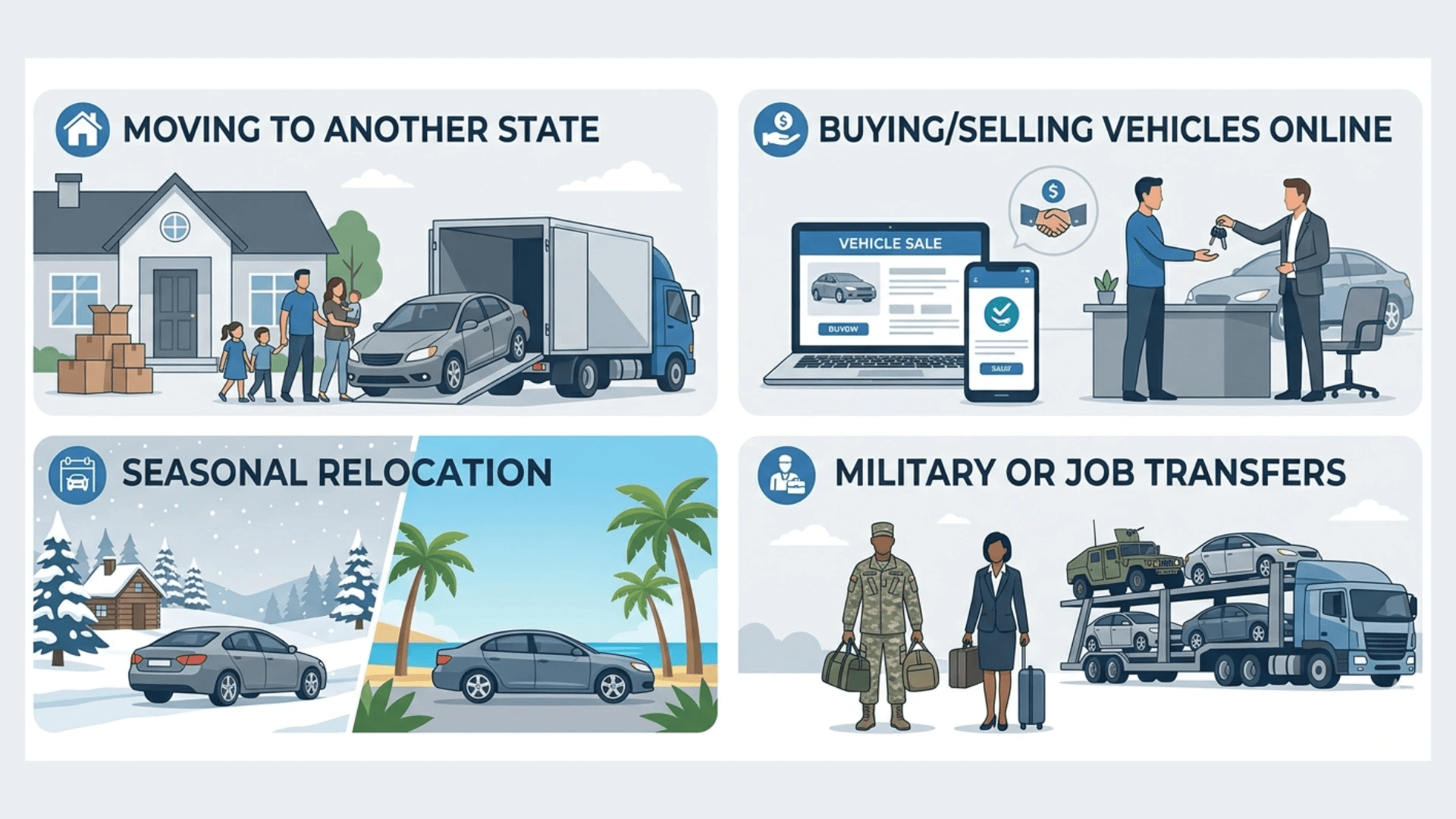
Moving to another state: Eliminates the need for multi-day road trips during a high-stress household move.
Buying/selling vehicles online: Facilitates secure transactions between parties in different geographic regions.
Seasonal relocation: Popular among "snowbirds" who move between northern and southern climates annually.
Military or job transfers: Provides a reliable method for government and corporate personnel to relocate their assets quickly.
Types of Vehicles Commonly Shipped
While standard sedans, SUVs, and pickup trucks constitute the majority of shipments, the industry accommodates a wide range of needs. This includes luxury, exotic, or classic cars that require specialized handling. Even smaller utility vehicles, such as a mini pickup car or specialized golf carts, can be integrated into a transport manifest, provided the carrier has the appropriate loading ramps and securing hardware.
Step 1: Booking and Scheduling
The journey of a car shipping service begins long before the trailer arrives at your door. The booking phase is critical, as it establishes the legal and financial framework for the entire shipment. To ensure a smooth process, customers should begin researching the best car shipping companies at least two to four weeks in advance. During this stage, you will provide details regarding your vehicle’s make, model, and operational condition, alongside the desired pickup and delivery windows.
Securing a quote involves more than just finding the lowest price; it requires a transparent breakdown of all potential costs. The best vehicle shipping services will provide a comprehensive contract that outlines the carrier's responsibilities, the estimated transit time, and the specific type of transport (Open or Enclosed). Once the terms are agreed upon and a deposit or booking fee is processed, the logistics team begins the task of assigning a qualified carrier who is already scheduled to travel your specific route.
How Pricing Works in Car Shipping Service
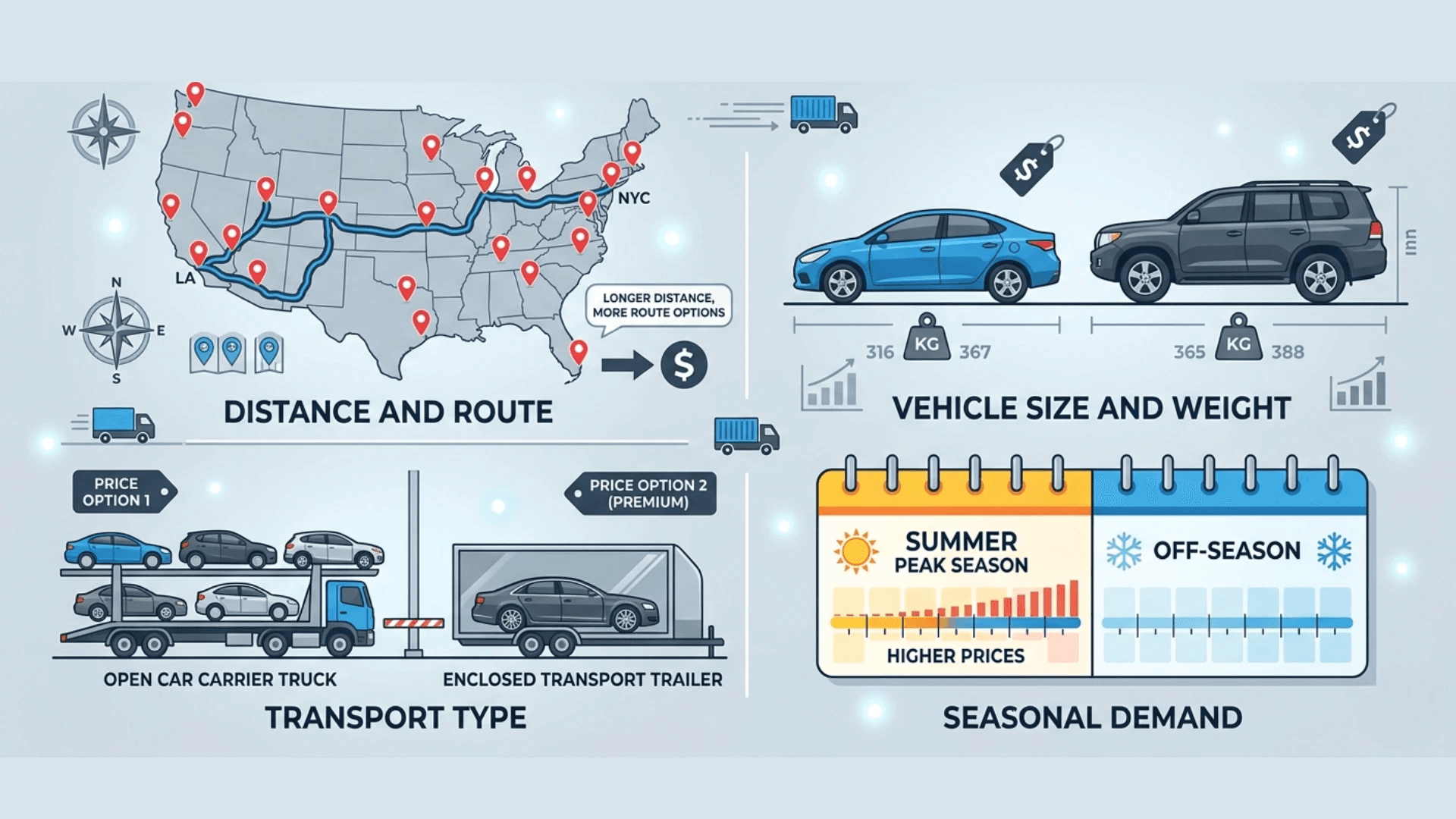
Several variables dictate the final cost of transport. Distance is the primary driver, but the size and weight of the vehicle also play significant roles. For example, a heavy SUV requires more fuel to transport than a compact sedan.
Distance and Route: Longer routes generally cost more, though major interstate paths may have more competitive rates due to higher carrier volume.
Transport Type: Open shipping is the industry standard and most affordable, while enclosed shipping carries a premium for added protection.
Seasonal Demand: Prices may fluctuate during "peak" moving seasons or due to severe weather patterns.
Choosing the Best Car Shipping Company
When vetting providers, focus on three pillars: licensing, insurance, and reputation. Every legitimate company must have an active Motor Carrier (MC) number and U.S. DOT number, which can be verified through the Federal Motor Carrier Safety Administration (FMCSA). Furthermore, distinguish between a broker, who coordinates the logistics, and a carrier, who physically moves the car. The best car shipping company is often a broker with a vast, vetted network that ensures your vehicle is placed only with high-rated, fully insured drivers.
Step 2: Vehicle Pickup Process
Once the booking is confirmed, the car pickup and delivery service enters the operational phase. The assigned driver will typically contact you 12 to 24 hours before the scheduled pickup to coordinate a specific time window. Because large transport carriers can be up to 80 feet long, they often require ample space for maneuvering. If your residential street is too narrow or restricted by local ordinances, the driver may request to meet at a nearby large parking lot or a wide-access commercial area.
The pickup is not merely a hand-off; it is a formal legal transfer of the vehicle. You or a designated representative must be present to witness the loading process and sign the necessary documentation. This ensures that both the owner and the carrier are in agreement regarding the vehicle's state before it enters the stream of commerce.
Preparing Your Vehicle for Pickup
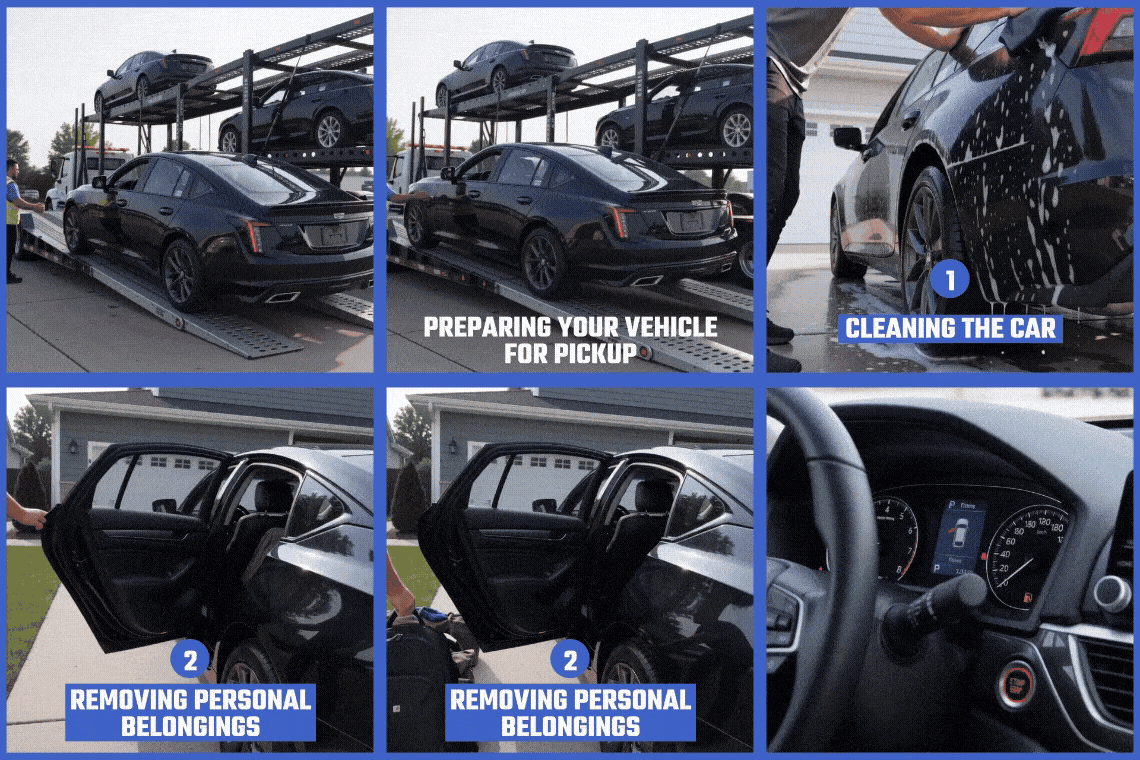
Correctly preparing your vehicle is essential for a seamless transition and protecting your investment during the loading process. Following a standard routine minimizes logistical delays and ensures the carrier can provide the safest, highest-quality transport possible.
Cleaning the car: A clean exterior allows for an accurate damage inspection.
Removing personal belongings: Most carriers are not licensed to transport household goods inside the car, and these items are typically not covered by the carrier's insurance.
Checking fuel level: It is recommended to keep the tank at approximately one-quarter full to reduce weight while ensuring the car can be driven on and off the trailer.
Inspection and Documentation at Pickup
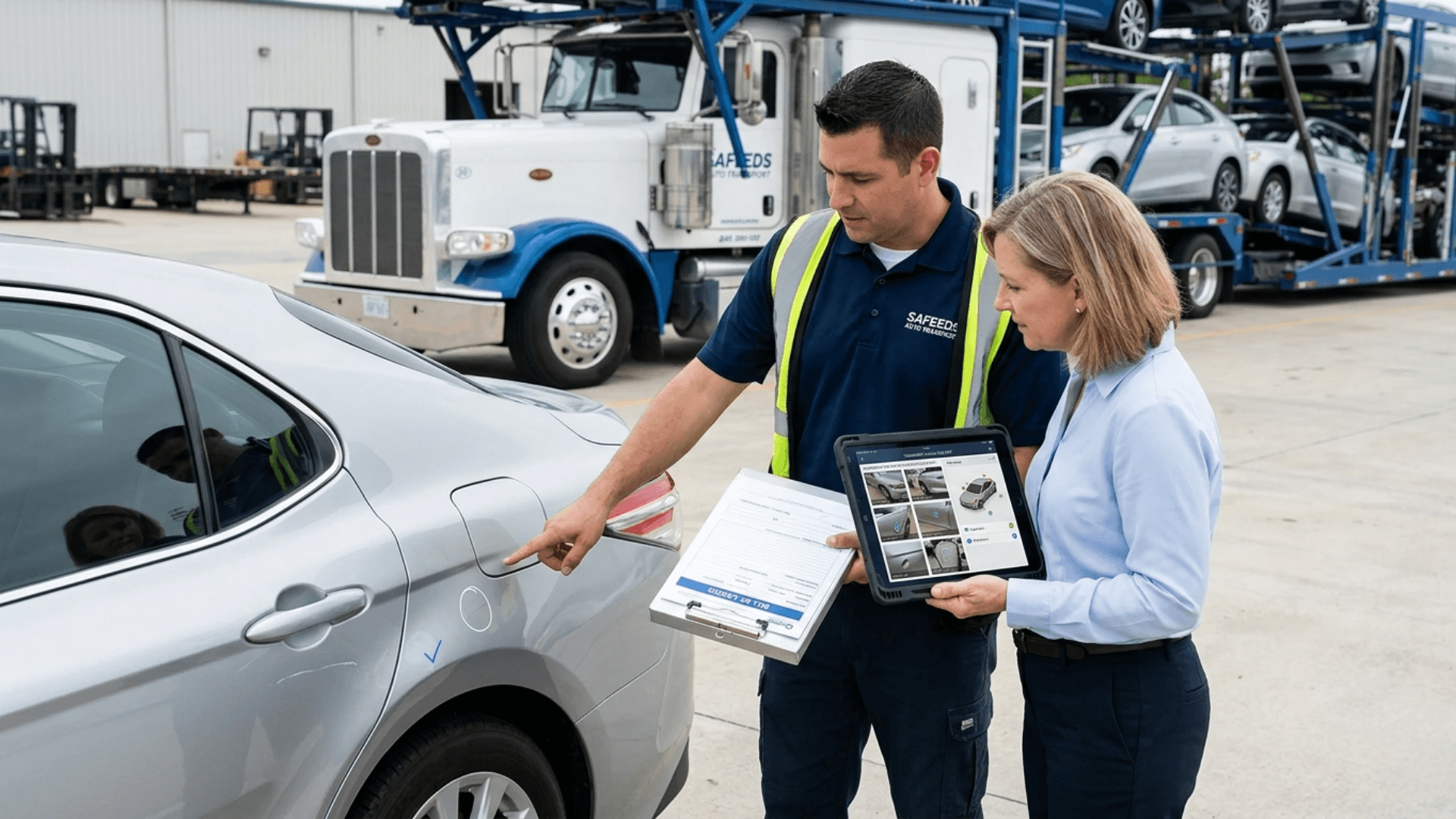
The most vital document in this process is the Bill of Lading (BOL). This serves as both a receipt for the vehicle and a detailed condition report.
Damage Recording: You and the driver will walk around the vehicle, noting any existing scratches, dents, or chips.
Documentation: In the modern industry, many drivers use digital apps to take timestamped photos of the vehicle from multiple angles.
Sign-off: Once the inspection is complete, you will sign the BOL. Retain a copy (digital or paper) as it is your primary evidence should a claim arise later.
Step 3: Transport Stage
After the vehicle is secured onto the trailer, the transit phase begins. For cross-country car shipping, this stage can last anywhere from 5 to 10 days, depending on the total mileage and the number of other stops the driver must make. Logistics providers use sophisticated route planning software to maximize efficiency, but factors such as weather, road construction, and mandatory driver rest periods (regulated by Electronic Logging Devices) can influence the exact arrival time.
During cross-country vehicle shipping, your vehicle is part of a larger manifest. Modern car delivery companies often provide tracking updates, either through a dedicated online portal or via direct communication with a dispatch coordinator. This transparency is a hallmark of the best vehicle shipping services, providing peace of mind as the asset moves across state lines.
Deciding between open and enclosed trailers is one of the most significant choices you will make when arranging a car delivery service. This decision typically balances the specific value and vulnerability of your vehicle against your allocated transport budget.
Feature | Open Transport | Enclosed Transport |
Protection | Exposed to weather/road debris | Fully shielded from the elements |
Cost | Most affordable (Standard) | 30%–50% higher premium |
Availability | High (90% of all carriers) | Lower (Specialized equipment) |
Best For | Daily drivers, SUVs, Trucks | Classics, Luxury, New Purchases |
How Cross Country Vehicle Shipping Works
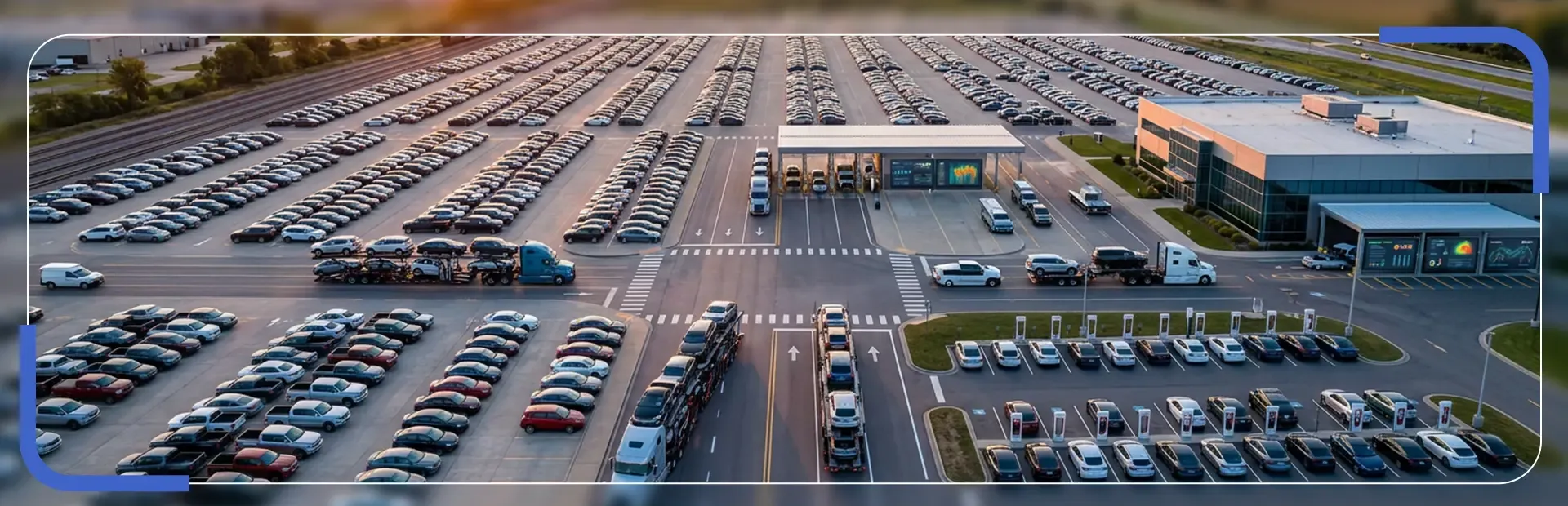
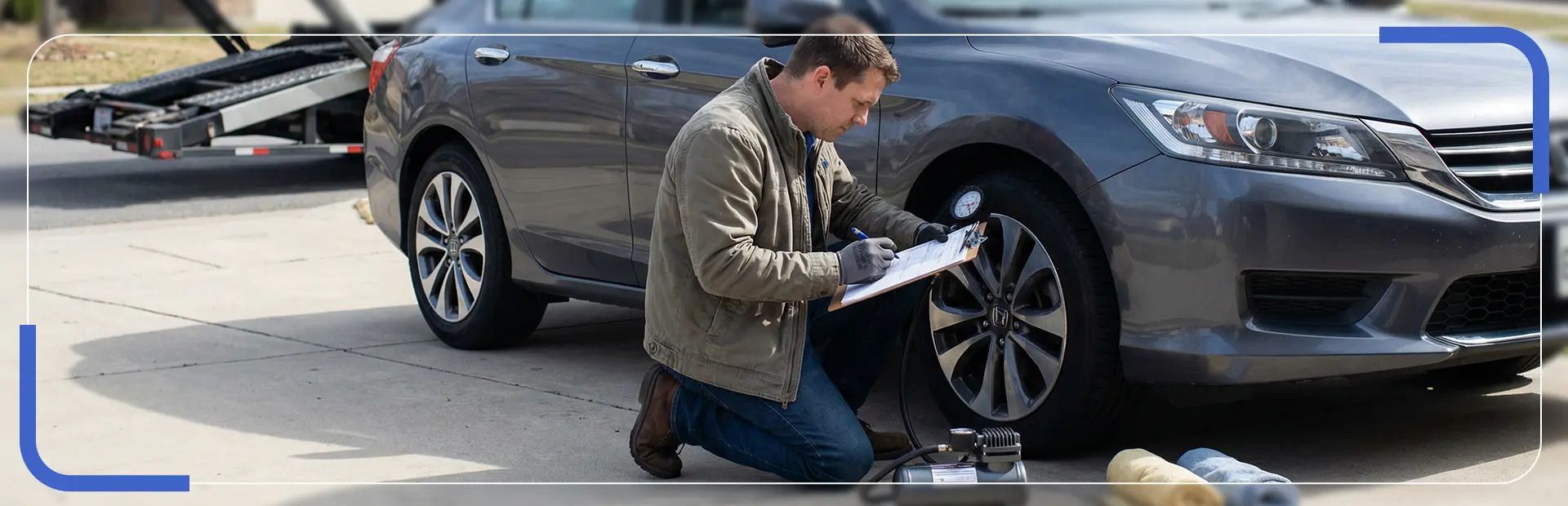
Shipping a vehicle over long distances is a feat of coordination. Carriers rarely travel from Point A to Point B with a single car. Instead, they "stack" loads to ensure the trailer is full, which keeps costs lower for the consumer. While this means the truck may make several stops along the way, the vehicle remains secured on the trailer throughout the journey. Expert drivers prioritize the safety of the load, frequently checking the tie-down straps and tire pressure of the vehicles being hauled to ensure nothing shifts during transit.
Step 4: Delivery and Final Inspection Process
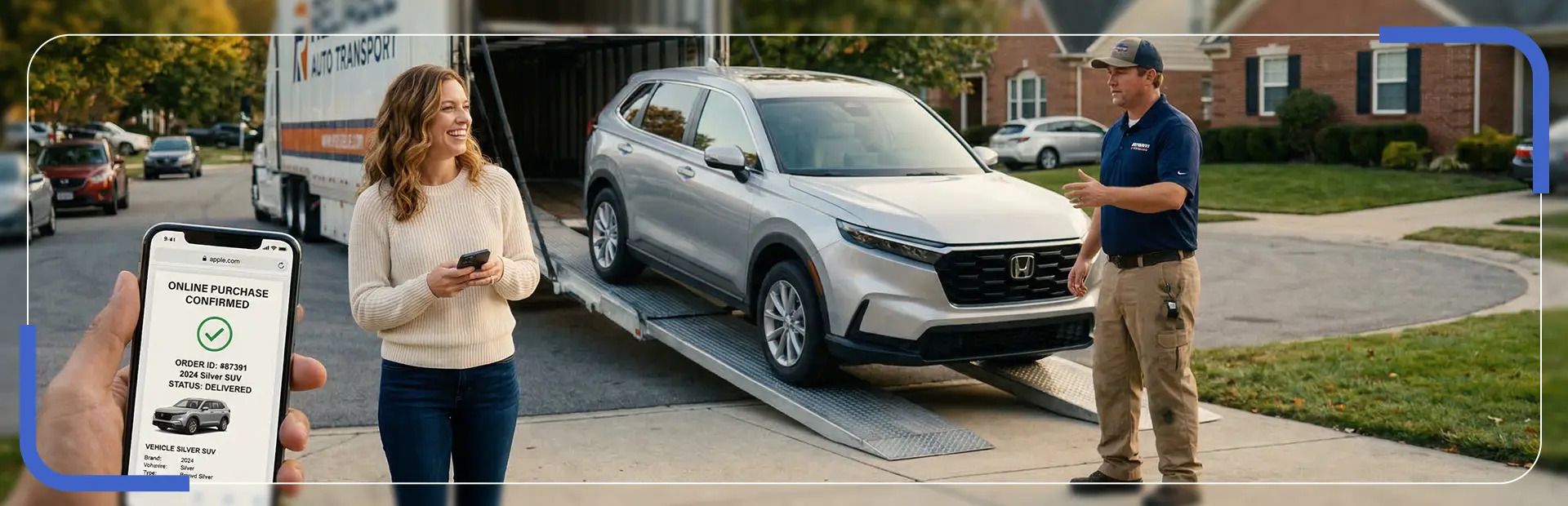
The final stage of a car shipping service is the arrival and offboarding of your vehicle. As the carrier nears the destination, the driver will typically provide a 24-hour notice, followed by a more precise two-hour window on the day of delivery. This stage is just as critical as the pickup, as it represents the official closing of the transport contract and the return of the asset to your possession.
When the truck arrives, the driver will carefully unload the vehicle. It is standard practice for car delivery companies to perform a final walkthrough with the recipient. Whether you are receiving a standard sedan or a mini pickup car, the goal is to confirm that the vehicle has arrived in the exact condition documented at the start of the journey. Once the inspection is complete and the final paperwork is signed, the transport process is officially concluded.
What Happens at Vehicle Drop-Off
The arrival of your vehicle requires careful coordination to ensure a successful hand-off. Understanding the timing and physical requirements of the transport truck helps guarantee a smooth conclusion to the process.
Scheduling the Window: Drivers strive for precision, but traffic and weather can impact the exact minute of arrival. Stay in close contact with the driver via phone or text.
Meeting Location: Just like at pickup, if the delivery address is in a restricted or narrow residential zone, you may need to meet the carrier at a nearby open area like a shopping center or grocery store parking lot.
Final Inspection and Acceptance Checklist
Do not rush this process. Use the original Bill of Lading (BOL) from the pickup to compare the vehicle's current state.
Check for New Damage: Look for any scratches, chips, or dents that were not noted during the initial inspection.
Verify the Undercarriage and Roof: These areas are often overlooked but are susceptible to road debris during cross-country car shipping.
Sign the BOL: If everything is in order, sign the document. If there is an issue, ensure it is clearly noted on the BOL before the driver leaves.
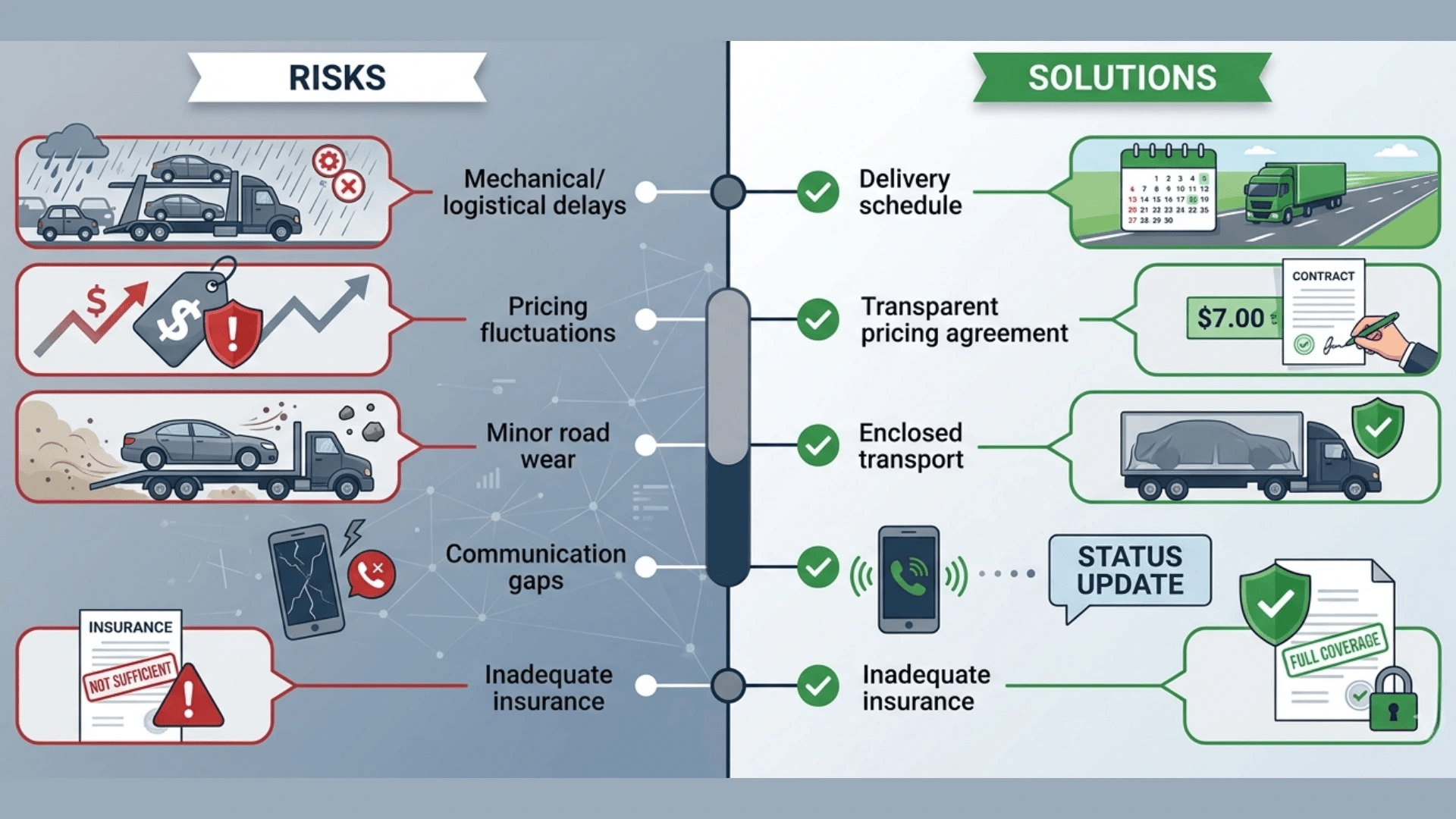
Common Risks in Car Shipping Service and How to Avoid Them
While the vast majority of vehicle shipments are completed without incident, it is important to acknowledge the potential challenges inherent in long-haul logistics. By identifying these common pitfalls early, you can take proactive steps to ensure your experience with a car shipping service remains secure and predictable.
Mechanical and Logistical Delays: Weather and road conditions can impact schedules. Choose providers known for realistic timelines rather than those that over-promise.
Pricing Fluctuations: Avoid "low-ball" quotes that are often bait-and-switch tactics. Stick with companies that offer transparent, industry-standard pricing.
Minor Road Wear: Open trailers expose vehicles to the elements. For high-value assets, utilize enclosed transport to eliminate the risk of debris or weather damage.
Communication Gaps: Poor coordination leads to missed windows. Prioritize companies that offer consistent updates and dedicated support throughout the transit.
Inadequate Insurance: Never assume coverage is sufficient. Verify that the carrier’s cargo insurance is active and understand the broker's process for handling potential claims.
Red Flags When Choosing Car Delivery Companies
Vetting your provider is the most critical step in ensuring vehicle safety and contract transparency. Identifying warning signs during the initial consultation can prevent the financial and logistical headaches associated with subpar operators.
Unrealistically Low Quotes: If a price seems too good to be true, it likely is. It may result in your car sitting at a terminal for weeks because no driver will accept the low pay.
Lack of Licensing: Always verify the MC and DOT numbers. A company that hesitates to provide these is not a legal operator.
Poor Communication: If you cannot reach a human representative during the booking phase, you will likely struggle to get updates during the cross-country vehicle shipping process.
How to Protect Your Vehicle During Shipping
The best protection is documentation. Beyond the carrier's insurance, taking high-resolution photos of your vehicle immediately before it is loaded provides an irrefutable record. Furthermore, ensure you understand the difference between the carrier’s primary insurance and any secondary gap protection offered by the broker. These layers of security ensure that even in the rare event of an incident, your financial interest is fully protected.
Cost Factors That Influence Car Delivery Service Pricing
Transparency in pricing is what separates a professional car shipping service from an unreliable one. When you ship a car across the country, the quote isn't just a random number; it is a calculation based on fuel costs, driver labor, insurance premiums, and equipment maintenance. Understanding these factors helps you budget accurately when you decide to ship a car to a new location.
Key Factors That Affect Shipping Costs
The following table provides a comparison of how different vehicle attributes and service choices impact the total investment required to ship a vehicle to another state.
Factor | Low Cost Impact | High Cost Impact |
Vehicle Size | Compact Sedan | Full-Size Van or Dually Truck |
Operability | Runs and Drives | Non-Running (Requires Winch) |
Location | Major City Hub (e.g., Dallas) | Remote/Rural Area |
Season | Mid-Winter (excluding holidays) | Summer (Peak Moving Season) |
Tips to Save Money in Car Shipping
Achieving a balance between high-quality service and a reasonable budget is possible with the right approach to logistics. By understanding how carriers manage their routes, you can utilize specific strategies to reduce your overall expenses when booking a car shipping service.
Be Flexible with Dates: Giving your provider a 5-day window for pickup rather than a specific date can lead to better rates.
Choose Open Transport: This remains the most cost-effective way to ship a car without sacrificing safety.
Book in Advance: Avoid "expedited" fees by scheduling your vehicle pickup and delivery service at least two weeks out.
Special Scenarios in Vehicle Pickup and Delivery Service
Not every transport involves a brand-new car or a standard relocation. Sometimes, the logistics involve specialized needs such as old car pickup or moving a vehicle that no longer runs. These scenarios require different equipment, such as a winch or a flatbed, and may involve different service providers, like cash for cars pickup specialists,s if the vehicle is being sold for scrap.
Shipping Non-Running or Old Vehicles
If you need to ship a car that doesn't start, you must inform the company upfront. This requires a carrier with specialized loading equipment. While this adds to the cost, it ensures the vehicle is handled safely without causing further mechanical damage.
When to Use Cash for Cars Pickup Services
For vehicles that have reached the end of their functional life, a cash for cars pickup service is often the most efficient route. These services focus on the quick removal of "junk" cars, often providing a flat fee to the owner and handling the towing logistics themselves. This is a distinct niche within the broader car shipping service industry, focused more on disposal than relocation.
Helpful Insights for Car Shipping Customers
Choosing the best vehicle shipping services often brings up specific questions. Below are some of the most common inquiries from customers planning to ship a vehicle to another state.
How long does it take to ship a car across the country?
For cross-country car shipping (approx. 2,500 miles), the transit time is typically 7 to 10 days. Shorter regional moves may only take 2 to 4 days.
Can I put personal items in my car during transport?
While some car delivery companies allow up to 100 lbs in the trunk, it is generally discouraged. Items are not insured, and extra weight can lead to DOT fines for the driver.
Is my vehicle insured during the car shipping service?
Yes, all licensed car delivery companies are required to carry cargo insurance. Professional brokers will verify these certificates before assigning your car to a driver.
What is the difference between a broker and a carrier?
A broker manages the logistics and finds the best driver for your route, while a carrier owns the trucks and physically performs the vehicle pickup and delivery service.
How do I pay for the car shipping service?
Most reputable companies require a small deposit upon booking, with the remaining "balance on delivery" paid to the driver via cash, money order, or certified check.
Making Smart Decisions When Choosing a Car Shipping Service
The key to a successful transport experience lies in moving beyond the price tag and evaluating the total value provided by the carrier. When you choose to ship a car across the country, you aren't just paying for a truck; you are paying for the security of your asset, the reliability of the timeline, and the expertise of the logistics team. The best car shipping company is one that views your vehicle as a priority, not just another VIN on a manifest.
By following the workflow outlined in this guide, from the initial booking through the meticulous final inspection, you can navigate the complexities of vehicle logistics with confidence. Whether you are using a car shipping service for a cross-country move or a local car pickup and delivery service, your focus should remain on clear communication and thorough documentation. Experience a seamless vehicle move with a provider that prioritizes safety and transparency at every mile. Get an instant, 7-day price lock quote from Safeeds Transport now.