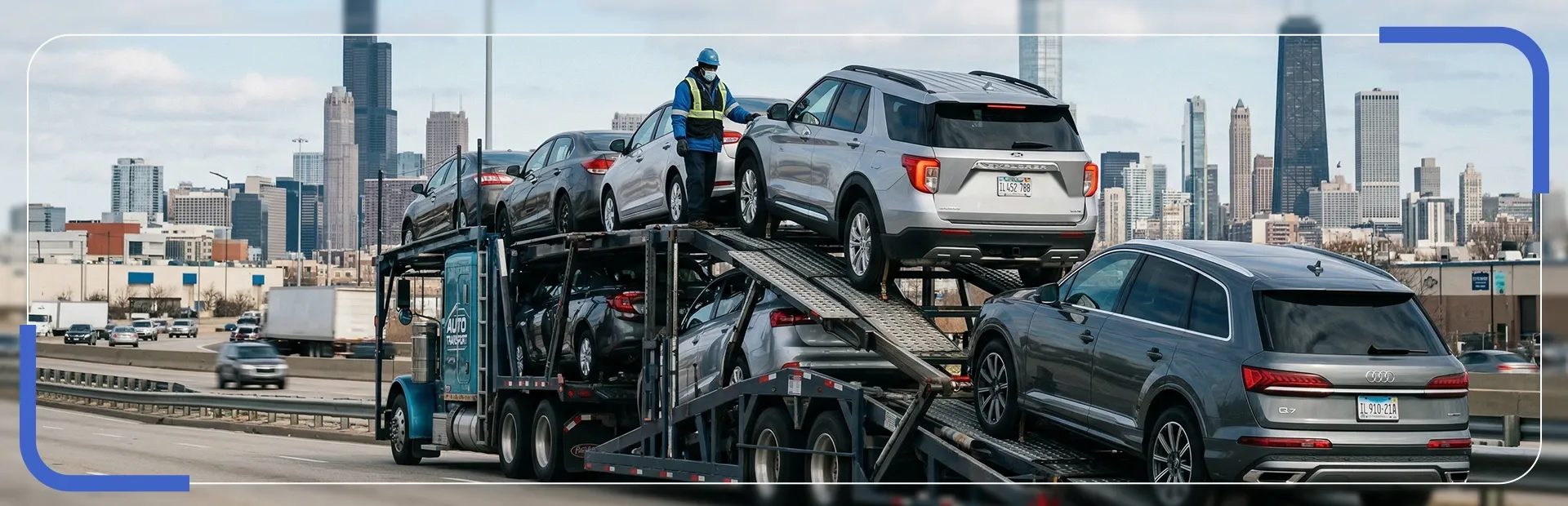
The way vehicles are shipped across America is changing, and 2026 is the year those changes become impossible to ignore.
Customer expectations are rising. New vehicle technology is demanding specialized handling. And the software running behind every shipment is smarter than ever. US auto logistics is no longer a slow-moving industry. It is adapting fast, and understanding how it works helps you make better decisions before you book transport. Whether you are shipping one vehicle or managing a fleet, staying informed about these shifts puts you ahead of most customers.
Here are six trends reshaping car shipping this year, and what each one means for you. Request a free quote from Safeeds before you book anywhere else.
Why US Auto Logistics Is Changing Faster Than Ever
The auto transport industry has historically been slow to modernize. That is no longer the case. A combination of rising customer expectations, smarter software, and increasingly complex vehicles has compressed years of change into a very short window.
Rising Customer Expectations for Faster Vehicle Delivery
Customers today expect more from vehicle transport than they did even three years ago. Instant quotes, flexible scheduling, and live delivery updates are no longer premium features; they are baseline expectations.
Proficient auto logistics providers are adapting by replacing outdated, phone-based workflows with faster, more transparent service models. Those who haven't are losing business to those who have.
Service Aspect | 2019 Standard | 2026 Expectation |
Quote turnaround | 24–48 hours | Instant or within minutes |
Booking method | Phone or email | Online self-service |
Shipment visibility | Periodic call-ins | Real-time GPS tracking |
Delivery window | 5–10 day range | 1–3-day predictive window |
Communication | Manual outreach | Automated milestone alerts |
The Growing Role of Digital Coordination in Shipping
Manual scheduling systems, spreadsheets, phone calls, and paper logs are being replaced by vehicle logistics software built specifically for modern auto transport. These platforms connect carrier databases, route planning tools, and customer dashboards into one coordinated system. The result:
Faster carrier assignment after booking
Fewer scheduling gaps and miscommunications
Better visibility for customers from pickup to delivery
When digital coordination works well, customers feel it in shorter wait times, more accurate ETAs, and fewer surprises.
Trend #1: Transportation Automation Is Streamlining Dispatch Operations
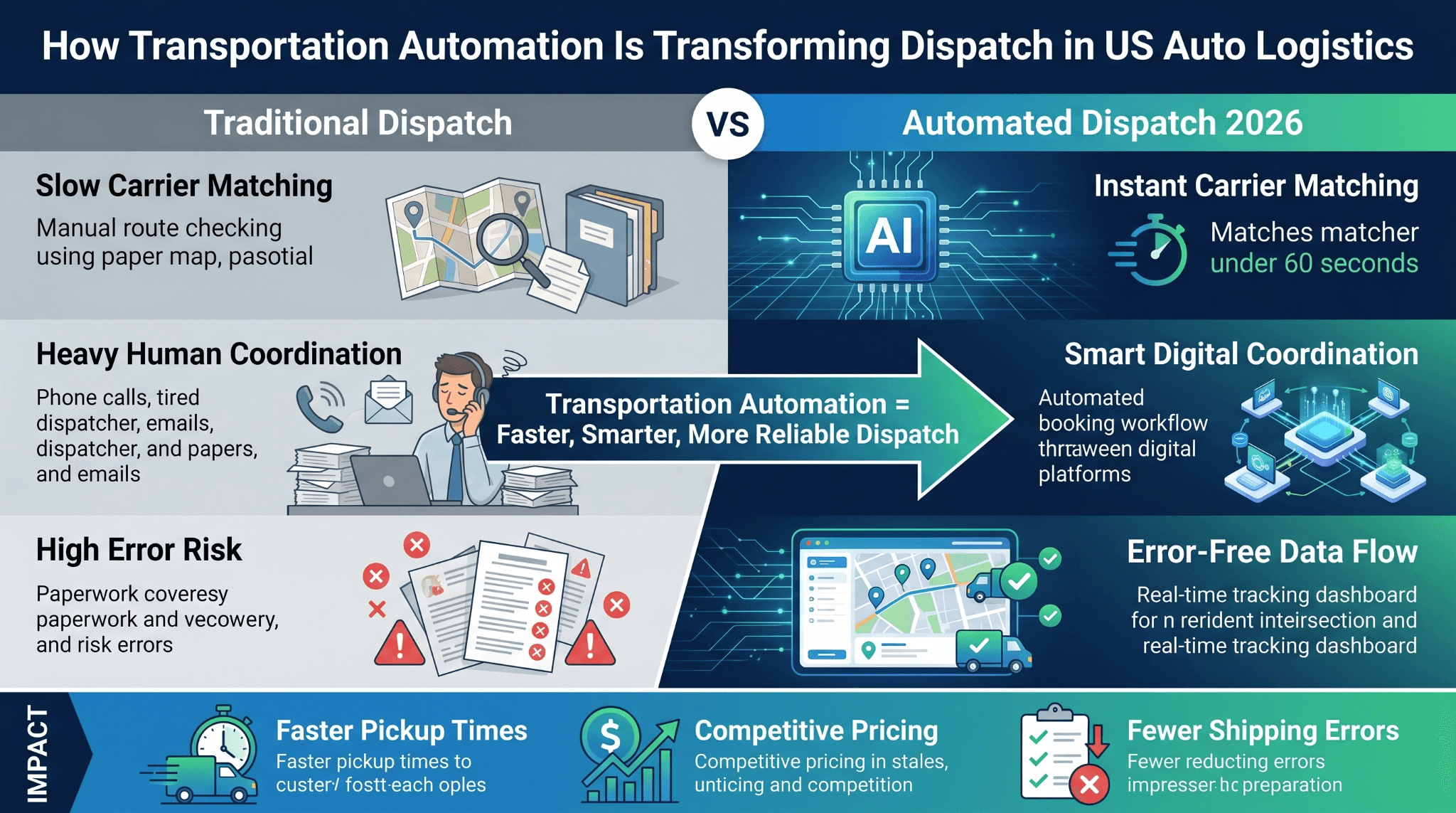
Dispatch has traditionally been one of the most labor-intensive parts of vehicle transport, and one of the most error-prone. Transportation automation is changing both of those realities at the same time.
How Transportation Automation Improves Carrier Matching
Matching a vehicle with the right carrier used to take hours. A broker would manually review schedules, check route availability, and negotiate pricing, all before a pickup date was even confirmed. Modern dispatch platforms now:
Scan carrier availability across active routes in real time
Factor in load capacity, location, and route efficiency simultaneously
Generate carrier matches in under a minute after booking
The outcome for customers is faster pickup windows and more competitive pricing, both driven by smarter backend matching.
Why Automated Dispatch Reduces Human Error
Manual dispatch creates predictable problems: double bookings, missed windows, incorrect vehicle details passed between teams. These aren't failures of individual staff; they are built-in risks of any system that depends on repeated manual handoffs.
Automation in transportation removes those handoffs. Vehicle details are entered at booking and travel through the entire shipment without re-entry. Alerts trigger automatically. Route changes are logged in real time. For customers, this means fewer delays caused by internal miscommunication and a more reliable experience overall.
Trend #2: Vehicle Logistics Software Is Creating Smarter Shipment Tracking
Shipment tracking in auto transport has come a long way from periodic phone-in updates. Today, vehicle logistics software has transformed visibility into a core part of the customer experience, not an afterthought.
Real-Time Tracking Is Becoming a Customer Standard
Advanced vehicle logistics software now gives customers access to live location data, automated status updates, and estimated arrival windows that adjust as conditions change. What that looks like in practice:
Live carrier location during transit
Automated notifications at key shipment milestones
Delivery window updates triggered by route or weather changes
For most customers, a vehicle isn't just cargo; it's a high-value asset they depend on. Real-time visibility reduces uncertainty and builds the kind of trust that keeps customers coming back.
Predictive Systems Help Prevent Delays
The best auto logistics solutions don't just track shipments; they anticipate problems before they occur. Predictive software analyzes conditions ahead of the route: incoming weather, traffic congestion, and historical delays on specific corridors. When a disruption is likely, the system alerts dispatchers and customers early, before a delay becomes a missed deadline.
According to the Federal Motor Carrier Safety Administration, weather-related disruptions are among the most common causes of late freight deliveries. Providers using predictive logistics tools are measurably better positioned to avoid them.
Trend #3: New Vehicle Technology Is Changing Transport Requirements
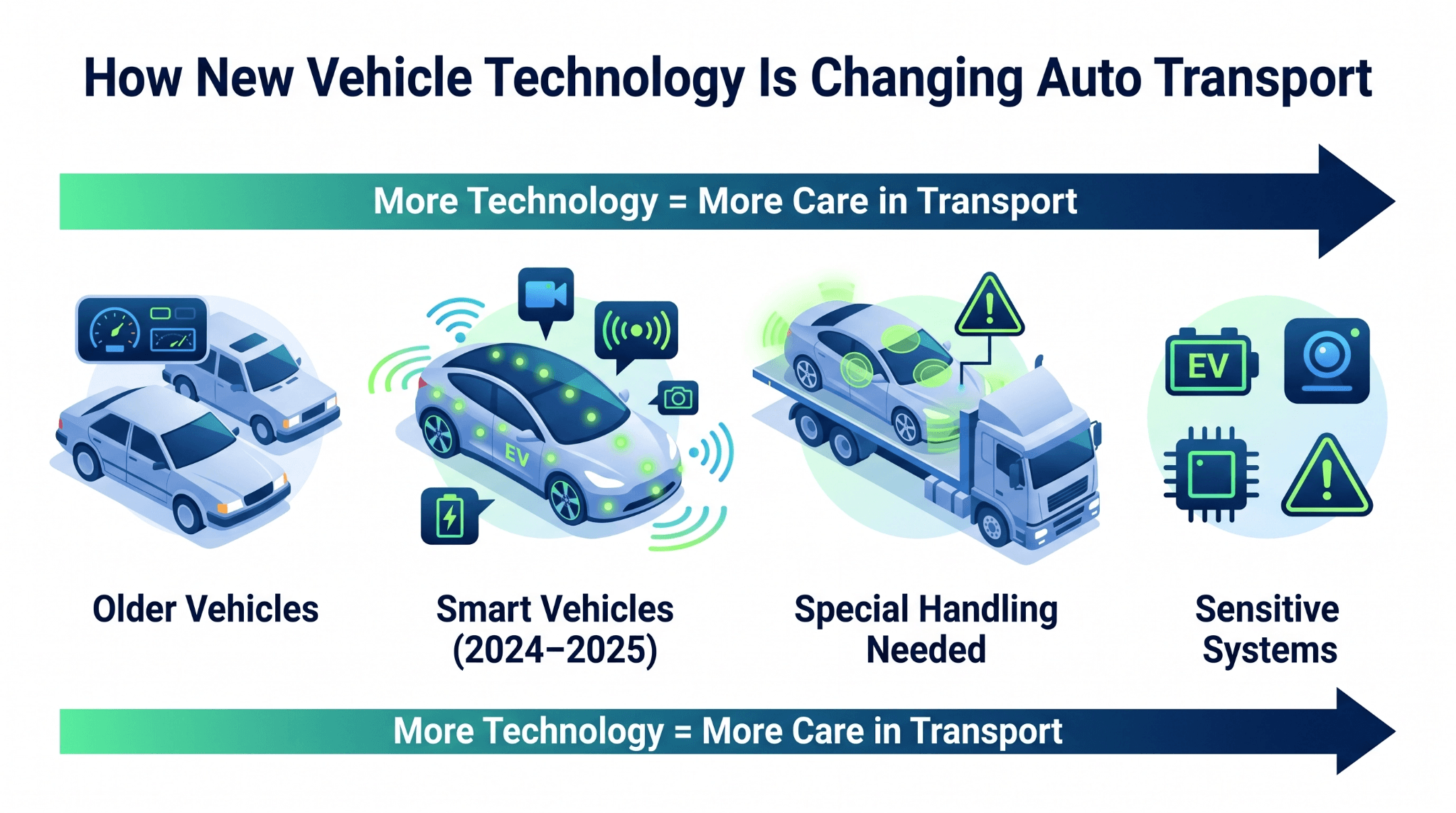
Vehicles rolling off production lines today are fundamentally different from those built a decade ago. The technology in cars has advanced to a point where transport providers can no longer treat every vehicle the same way.
What was once considered the best technology in a car, a rear-view camera or basic cruise control, now looks modest compared to the sensor arrays, battery systems, and software platforms standard in today's models.
Safety Technology in Cars Requires Specialized Handling
The safety technology in cars built in 2024 and 2025 typically includes:
Forward-collision warning sensors and radar units
Lane-departure and blind-spot camera systems
360-degree parking cameras mounted in bumpers and mirrors
ADAS components requiring precise factory calibration
These are among the best technology features in new cars, but they are also among the most vulnerable during loading and unloading. A sensor misaligned during transport can trigger warning lights or require dealership recalibration before the vehicle is safe to drive. Carriers must understand these components and apply appropriate loading procedures, a capability gap that not every provider has closed.
Why Most Technology in a Car Needs Extra Transport Awareness
Beyond safety sensors, the most technology in a car today includes battery management systems, high-voltage EV architecture, and software-driven connectivity modules. New technology in cars creates specific transport considerations:
EV batteries can discharge or trigger alerts if loaded or positioned incorrectly
Software systems may behave unexpectedly if the vehicle is powered on during transit
Connectivity modules may interfere with vehicle behavior under certain conditions
For customers shipping a newer vehicle, carrier selection matters more than it ever has. The right question isn't just whether a carrier is insured; it's whether they understand the specific requirements of the vehicle being shipped.
Trend #4: Auto Logistics Solutions Are Becoming More Data-Driven
The logistics industry has always dealt with variables, weather, traffic, carrier availability, and fuel costs. What has changed is the ability to process all of those variables simultaneously and act on them in real time.
Route Optimization Through Intelligent Analytics
Today's leading auto logistics solutions rely on continuous data analysis to determine the most efficient route for every shipment. The systems evaluate multiple factors simultaneously:
Fuel costs and consumption rates by route
Real-time and forecasted weather conditions
Regional traffic patterns and congestion windows
Carrier availability by geographic corridor
This isn't just operational efficiency for providers; it directly affects how quickly and reliably a customer's vehicle arrives.
Data Helps Reduce Costs and Improve Delivery Precision
When proficient auto logistics providers use data to optimize decisions, the benefits flow to the customer in two clear ways:
Lower pricing. Smarter route selection reduces fuel waste and carrier deadhead miles, savings that competitive providers pass on through more accurate, fair quotes.
Better timelines. Analytics-driven dispatch reduces the guesswork in ETAs. Instead of a wide delivery window, customers receive estimates built on actual route data and real carrier performance history.
The shift toward data-backed decision-making is one of the clearest separators between providers still operating on intuition and those building genuinely reliable operations.
Trend #5: Future Car Technology Is Influencing Shipping Standards Today
The vehicles being manufactured today are already straining the limits of conventional transport protocols. As car technology in the future moves from concept to production, the gap between what carriers currently know and what they will need to know is widening fast.
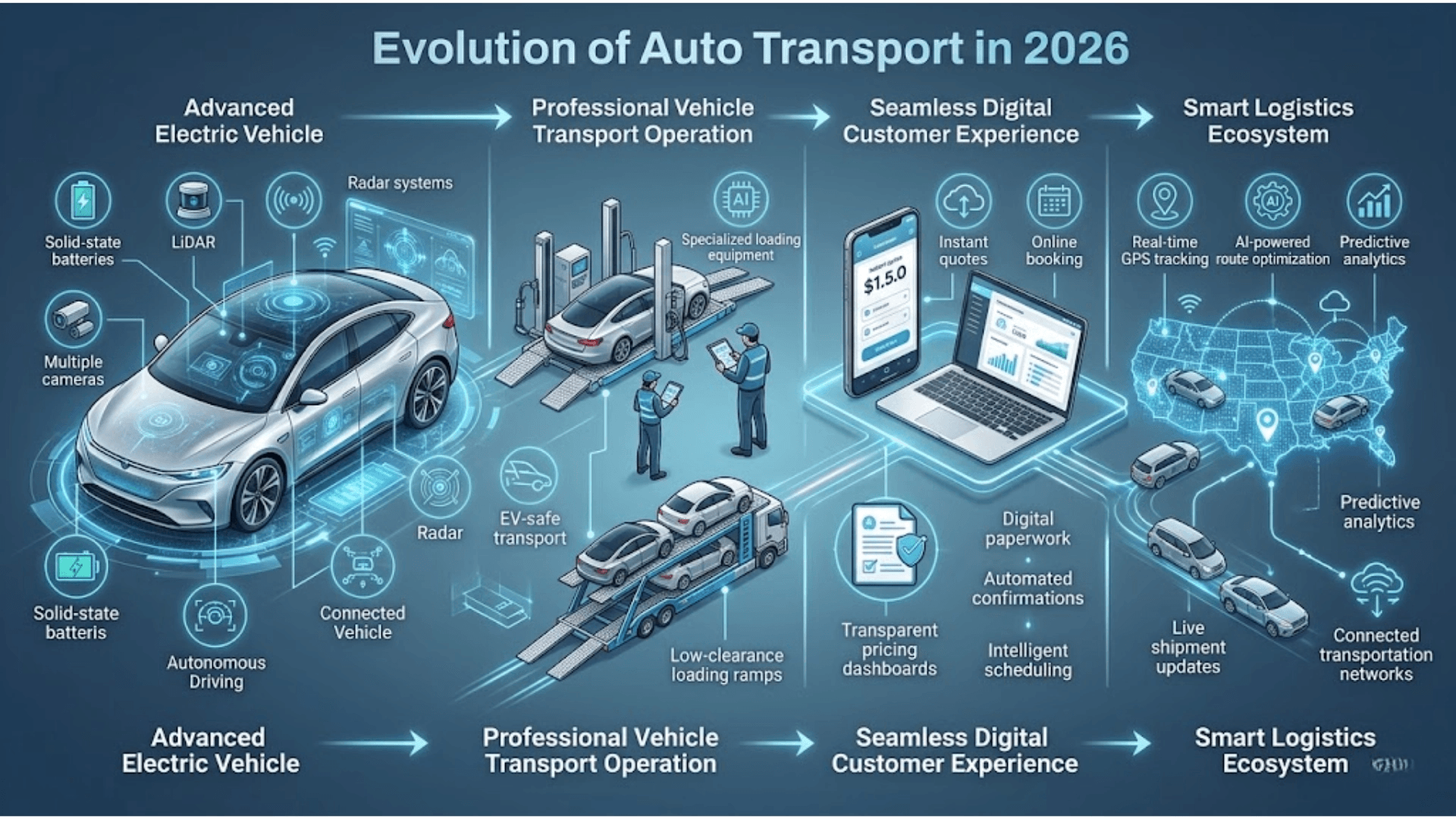
What we see in the technology in the future cars being developed today, from solid-state batteries to fully autonomous navigation stacks, makes it clear that transport protocols built for conventional vehicles will not be sufficient for long.
Technology in Future Cars Will Demand New Handling Protocols
The technology in future cars, currently in advanced development or limited production, will make transport requirements significantly more complex. Key developments shaping the next wave of challenges include:
Full EV architecture with larger battery packs requiring discharge-safe loading protocols
Autonomous driving hardware, roof-mounted LiDAR units, externally mounted sensors, and redundant camera arrays sensitive to physical contact
Software-defined vehicles, where core functionality is managed by updatable operating systems, not static hardware
Networked vehicle systems that behave differently depending on the power state during loading and transit
Providers investing in training and equipment now will be far better positioned as this technology reaches mainstream production volumes.
How Carriers Are Preparing for Advanced Vehicle Transport
Forward-thinking transport companies are not waiting for fully autonomous vehicles to arrive before updating their practices. Preparation is already underway through:
Specialized staff training on EV handling and ADAS-equipped vehicles
Equipment upgrades for carriers transporting low-clearance electric models
Updated intake processes that capture vehicle-specific technology details before pickup
For customers shipping vehicles with new technology in cars, choosing a provider that has invested in these areas is a practical safeguard against damage, software errors, and delivery complications.
Trend #6: Customer-Centered Automation Is Redefining the Booking Experience
For years, booking vehicle transport meant phone calls, vague timelines, and slow confirmations. That experience is being replaced, and the change is being driven by automation in transportation applied directly to the customer journey.
Instant Quotes and Digital Booking Simplicity
Modern booking platforms now offer a faster, cleaner experience from the first interaction:
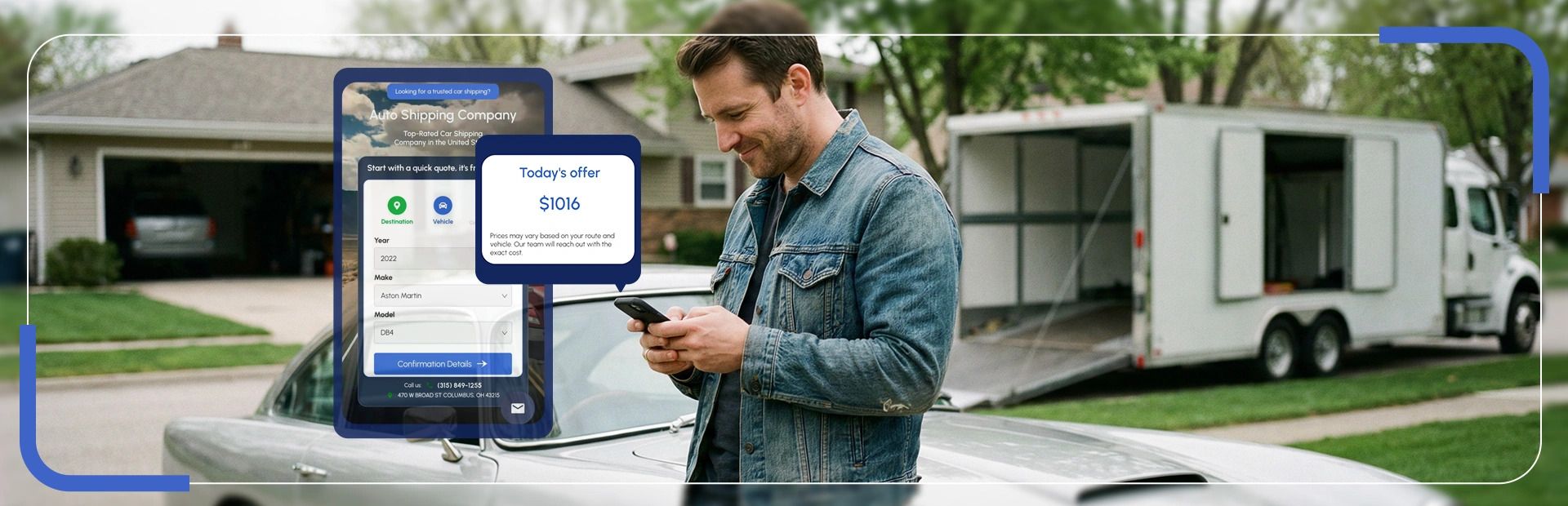
Instant online quotes based on route, vehicle type, and transport method
Self-service scheduling without requiring broker intervention
Transparent pricing breakdowns before any commitment is made
Digital confirmation and paperwork handled entirely online
This puts control in the customer's hands. Instead of waiting for a callback, customers can evaluate options, compare prices, and confirm a booking in a single session.
Smarter Communication Throughout Vehicle Transit
Customer-centered automation doesn't stop at booking. The best auto logistics solutions maintain proactive communication across the entire shipment lifecycle. What this looks like in practice:
Automated pickup reminders sent ahead of collection
Real-time notifications when the carrier is assigned and en route
Milestone alerts at key transit stages, loaded, in transit, approaching destination
Simplified support access if an issue arises mid-shipment
According to the American Trucking Associations, communication gaps between carriers and customers remain one of the top sources of service dissatisfaction in freight transport. Automated communication systems directly address that gap, and customers consistently notice the difference.
Important Information Before Booking Transport
Choosing a vehicle transport provider involves more than comparing prices. The details you confirm before booking, coverage, carrier qualifications, timing, have a direct impact on the experience you receive. Here are the questions customers are asking most frequently, with answers that help you move forward with confidence.
How far in advance should I book vehicle transport?
For standard moves, booking 7 to 14 days ahead is recommended. During peak seasons, summer and end-of-month periods, booking 2 to 3 weeks in advance improves carrier availability and gives you more flexibility on pickup windows.
Is open or enclosed transport better for my vehicle?
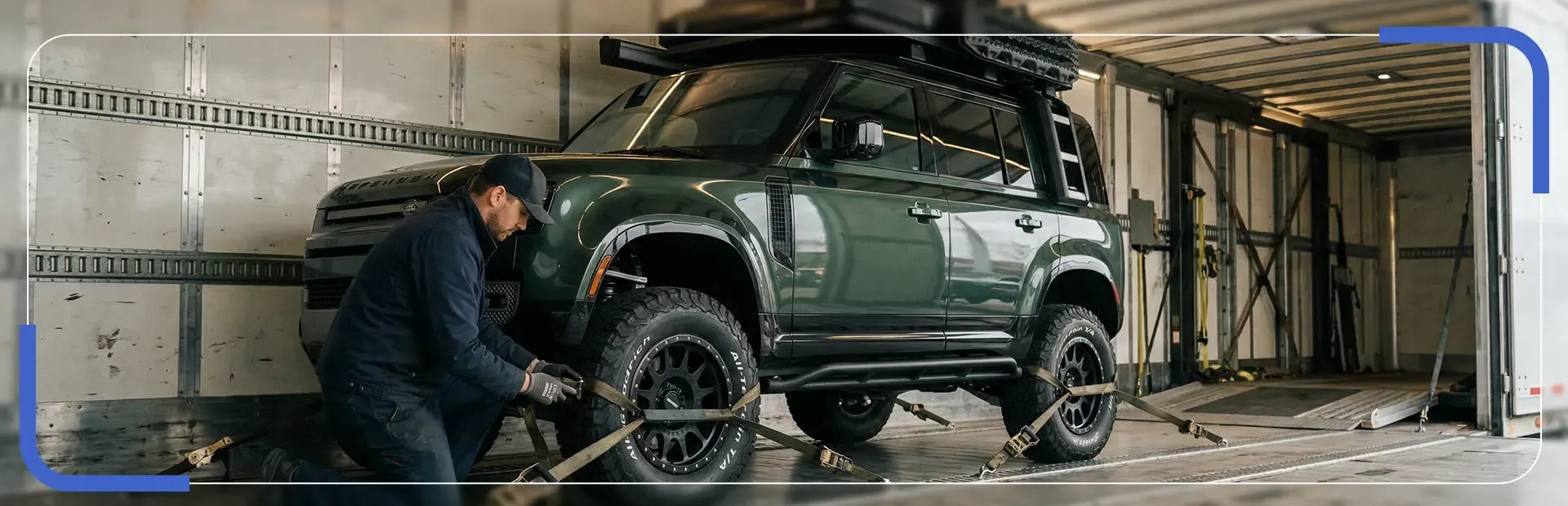
Open transport is the industry standard and handles the majority of shipments safely and cost-effectively. Enclosed transport is the right choice for luxury vehicles, classic cars, EVs with sensitive battery systems, or any vehicle with a factory finish you want fully protected from road exposure.
How is my vehicle protected if something happens during transport?
Reputable carriers carry cargo insurance that covers your vehicle while it is in their possession. Before booking, confirm the carrier's coverage limits and ask your provider for documentation. Safeeds works exclusively with insured, vetted carriers for every shipment.
Will new technology in my car affect how it needs to be shipped?
Yes, increasingly so. Vehicles with ADAS features, EV batteries, or advanced sensor systems require carriers trained in proper handling. Always disclose your vehicle's technology profile when booking so the provider can assign an appropriate carrier.
What information do I need ready when requesting a quote?
Have the following ready for an accurate quote: your vehicle's make, model, year, and operational status; pickup and delivery zip codes; preferred transport dates and any scheduling flexibility; and whether the vehicle has any modifications or oversized components.
Preparing for the Next Era of Smarter Vehicle Transport
US auto logistics in 2026 is not the same industry it was five years ago. The providers leading the field are investing in vehicle logistics software, building teams capable of handling the safety technology in cars rolling off production lines today, and using transportation automation to deliver faster, more reliable service at every stage.
For customers, this shift creates a real opportunity. Working with a provider that has embraced these changes means fewer surprises, better communication, and a shipping experience that matches the value of the vehicle being transported.
The trends covered in this article, from predictive tracking to EV-ready carriers, are not future possibilities. They are present realities separating proficient auto logistics providers from those still operating on outdated methods.
When you are ready to ship your vehicle, choose a provider built for where this industry is going, not where it has been. Get a quote from Safeeds today and experience vehicle transport designed for 2026.