A fuel surcharge is an extra fee added to a shipping quote when diesel prices rise above a set baseline. In 2026, this fee typically adds 8 to 15 percent to the base rate. It changes weekly based on national fuel data, not on any one company's choice.
This guide explains what a fuel surcharge is in plain terms, how it is calculated step by step, and how to verify whether the one on your quote is fair. Get your free, price-locked quote today and see your fuel surcharge broken down clearly before you book.
Key Takeaways
A fuel surcharge is a separate, variable fee added on top of the base shipping rate, typically 8 to 15 percent, and it isn't part of a company's flat pricing.
It's calculated by comparing the current national diesel price against a baseline (often around $2.50 per gallon) and applying that percentage difference to your base rate.
The surcharge updates weekly based on the EIA's public diesel price report, so it can rise or fall depending on current fuel costs, not a single carrier's discretion.
Route distance and vehicle weight influence the total fuel surcharge, since they affect how much diesel a shipment actually consumes.
A properly written quote always shows the fuel surcharge as its own line item, never folded into one combined total.
You can verify any quoted surcharge yourself by checking the current EIA diesel report and confirming the carrier's licensing through FMCSA's public database.
Most billing disputes trace back to a surcharge that was never explained clearly at quote time, so asking one direct question upfront can prevent most of that risk.
What Is a Fuel Surcharge Fee?
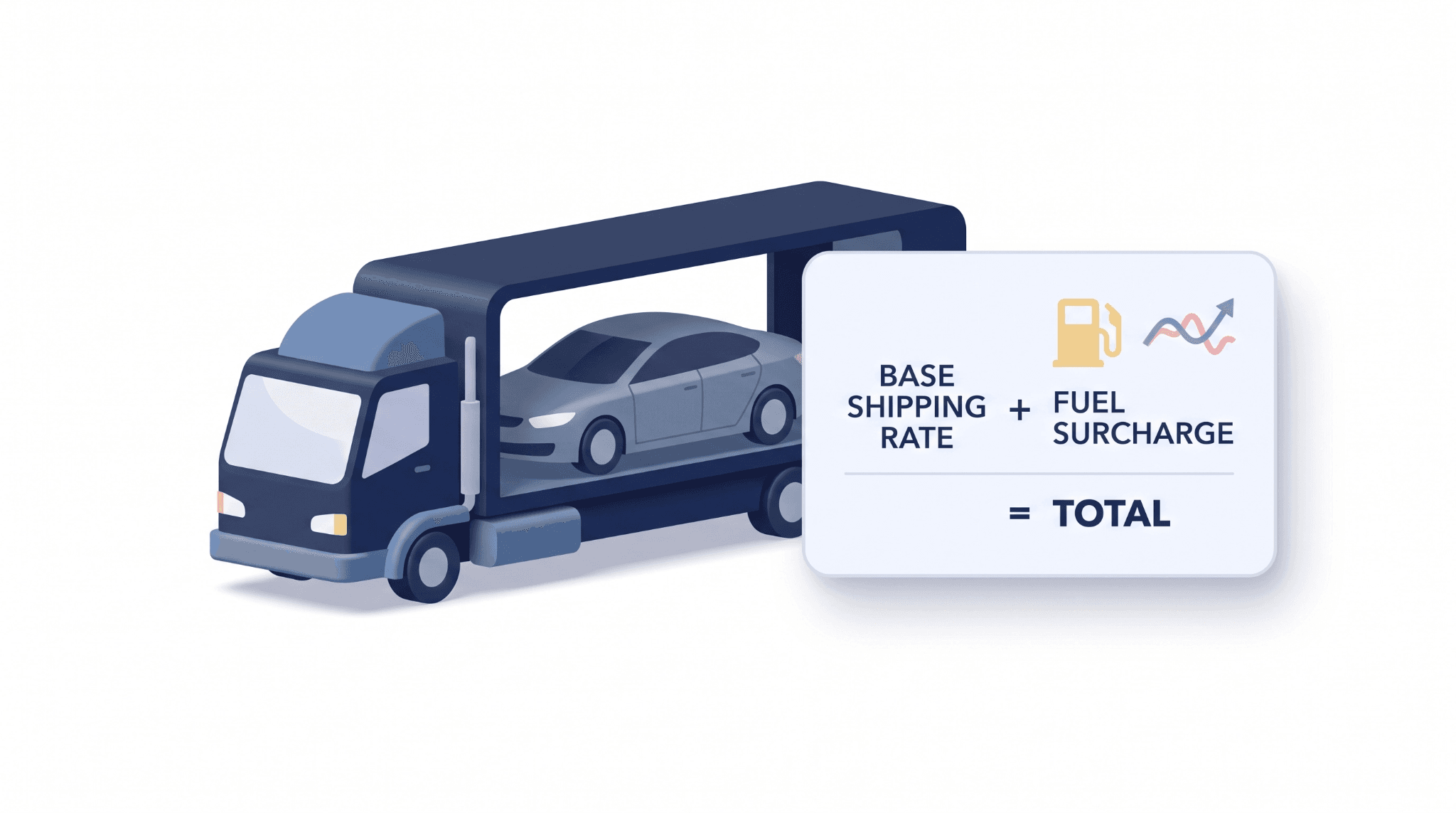
A fuel surcharge fee is a separate charge added on top of the base shipping rate to cover the cost of diesel used to move your vehicle. It is not part of the base price. It sits next to it as its own line item.
Transport companies add this fee because fuel prices change often, sometimes by a large amount in a single week. Locking in one flat price for every shipment would force carriers to either overcharge on days when fuel is cheap or lose money on days when it spikes.
A few basic facts worth knowing:
The fee is usually shown as a percentage of the base rate, not a flat dollar amount.
It applies to nearly every long-distance shipment, not just certain routes.
Figuring the fuel surcharge into your total early helps you avoid a higher-than-expected bill.
So what is fuel surcharge really doing for you as the customer? It protects you from paying an inflated flat rate that already assumes the worst-case fuel price.
In simple terms, a fuel surcharge comes down to this: a fair way to split fuel risk between you and the carrier.
Knowing how to determine fuel surcharge for your own shipment starts with checking the current diesel price against the baseline, which is covered in the next section.
How Do You Calculate a Fuel Surcharge?
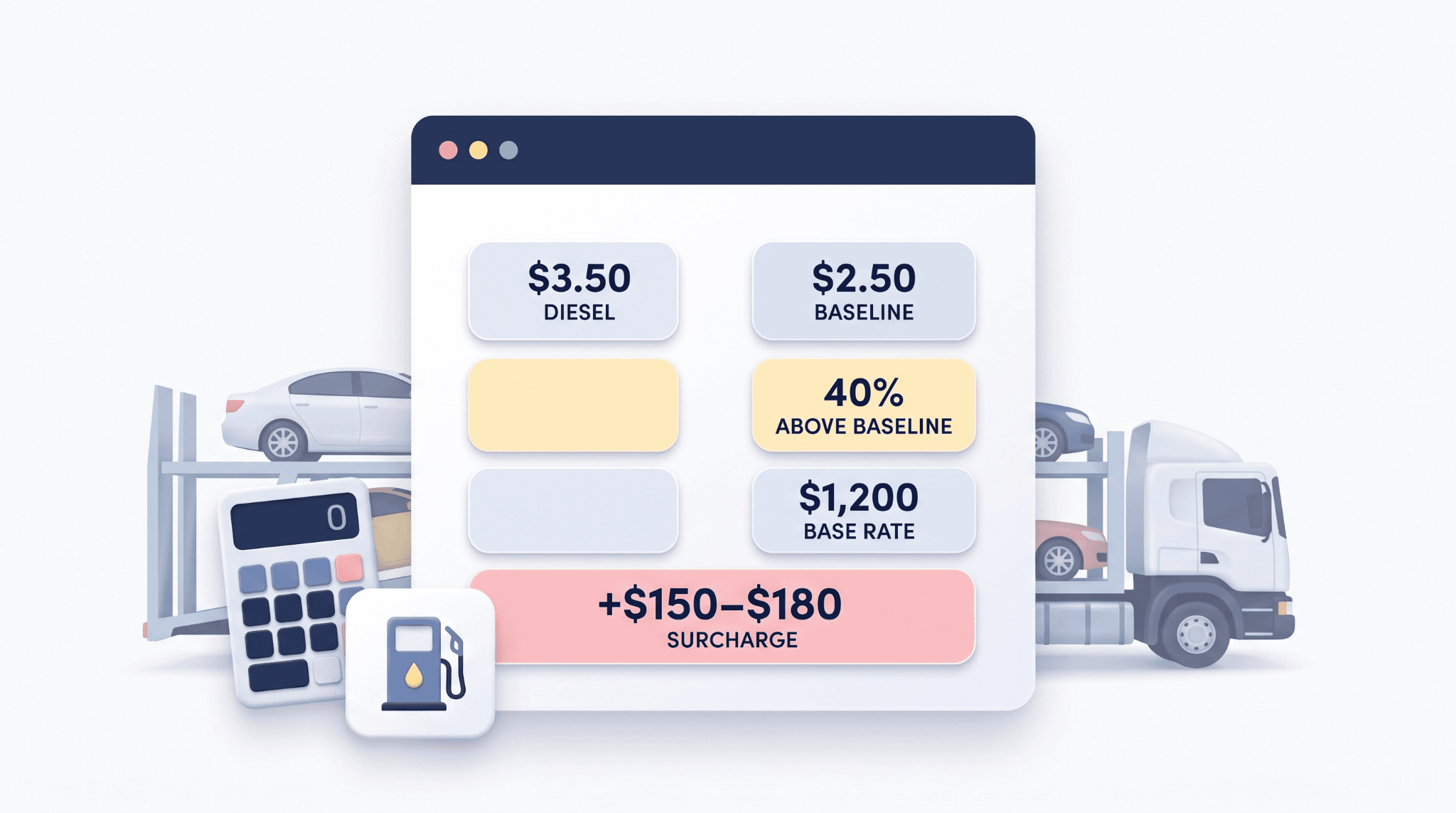
You calculate a fuel surcharge by comparing the current price of diesel to a set baseline price, then applying the percentage difference to the base shipping rate. The steps are simple once broken down.
Here is how to calculate fuel surcharge in four steps:
Find the current national average diesel price for that week.
Compare it to the baseline price the surcharge system uses, often around $2.50 per gallon.
Work out the percentage difference between the two prices.
Apply that percentage to the base shipping rate to get the surcharge amount.
For example, if diesel is priced at $3.50 and the baseline is $2.50, the difference is $1.00, or 40 percent above baseline. On a $1,200 base rate, a surcharge tied to that gap might add roughly $150 to $180 to the total.
This is how you calculate a fuel surcharge without needing special software. A basic calculator and the current diesel price are enough to check the math yourself. How do you figure fuel surcharge for your own move? It's really just this same formula applied to your specific base rate.
How Does a Fuel Surcharge Work?
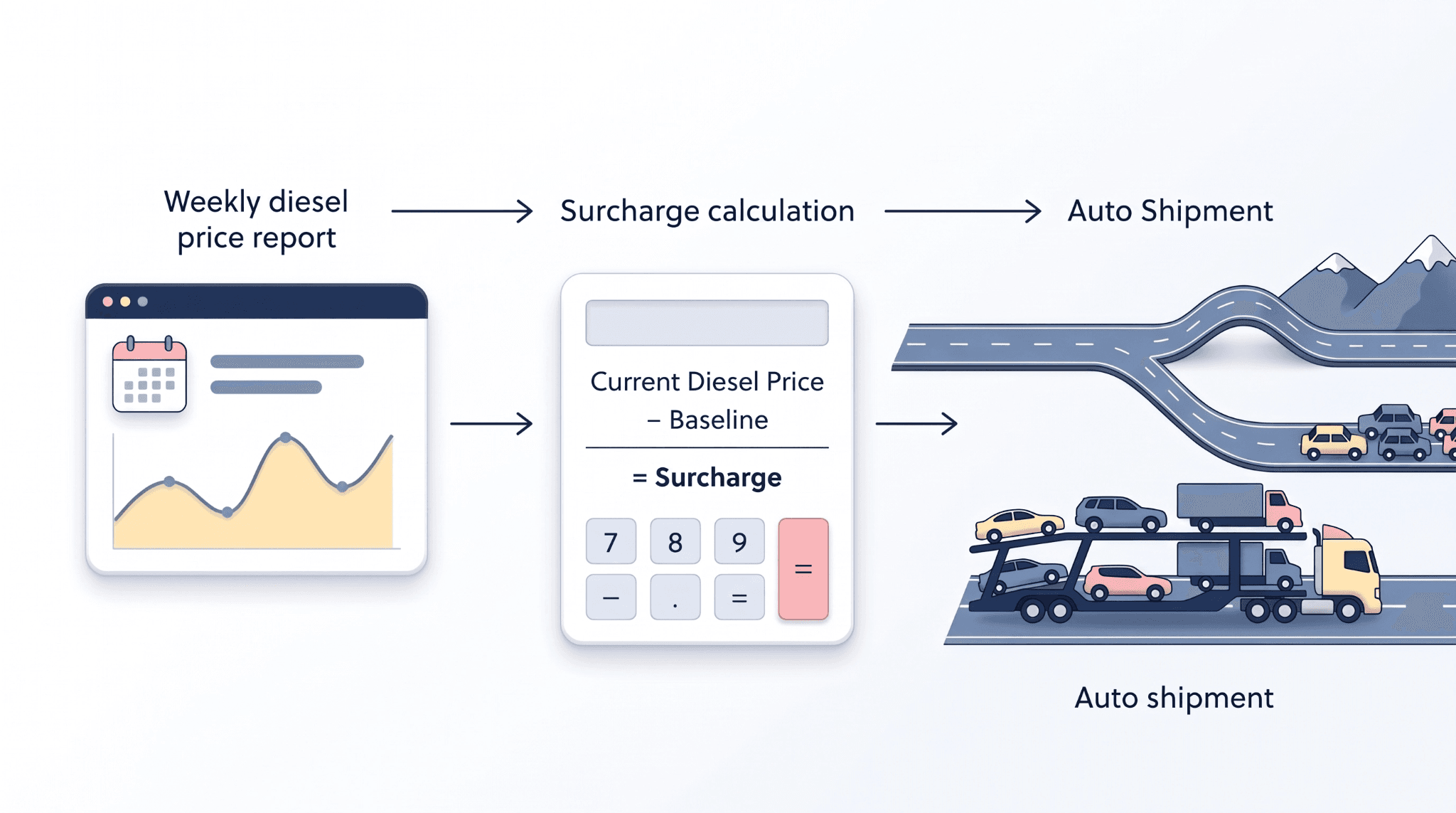
A fuel surcharge works by updating on a set schedule, usually weekly, using a public fuel price report rather than a single carrier's opinion. This keeps the fee consistent across the industry instead of varying wildly from one company to the next.
Most carriers and brokers use the U.S. Energy Information Administration's weekly diesel price report as the source for this update. Since it is public data, anyone can check it and see whether a quoted surcharge matches the current numbers.
How fuel surcharge works in practice:
The report updates once a week, usually on Monday.
Carriers apply the new percentage to quotes issued after that update.
A quote issued before a price jump may not reflect the new, higher surcharge.
How does a fuel surcharge work when prices drop? It's the same process in reverse. As diesel gets cheaper, the surcharge shrinks, and the customer pays less, not more.
What's a fuel surcharge doing on weeks when diesel barely moves? In those weeks, the surcharge stays close to flat, since there is little gap between the current price and the baseline.
Understanding how the fuel surcharge is calculated during a stable fuel market helps explain why some weeks carry almost no surcharge at all.
What Sets the Fuel Surcharge Price?
The fuel surcharge price is set mainly by the gap between the current diesel price and the baseline price, plus a few smaller factors like route distance and vehicle weight. Distance and weight affect how much fuel the trip actually uses.
These smaller factors do not change the surcharge formula itself. They change how much fuel a specific truck actually burns, which is what the formula is built to reflect in the first place.
A few factors that shift the number:
A longer route burns more fuel in total, even at the same surcharge percentage.
A heavier vehicle, like a full-size truck, lowers fuel efficiency and raises the fuel cost per mile.
A route through mountains or heavy traffic uses more fuel than a flat, direct highway route.
Transportation fuel surcharge figures can look different for two shipments of the same distance if one truck is carrying heavier vehicles or driving a harder route.
Fuel surcharge meaning always comes back to actual fuel use, not distance alone. Two routes of equal length can carry different surcharges once real road conditions and vehicle weight are factored in.
What Is the Fuel Surcharge Cost?
The fuel surcharge cost usually falls between 8 and 15 percent of the base rate, though it can go higher during periods of sharp fuel price increases. On a typical $1,000 shipment, that works out to roughly $80 to $150.
This range has stayed fairly steady over the past few years, since it reflects normal fuel price swings rather than a fixed government rule. It moves up during periods of high diesel demand and back down once prices settle.
Fuel surcharge explained simply: it is a moving number, not a fixed one. The same route can carry a different surcharge in July than it did in January, purely based on diesel prices at the time.
A properly written quote should show this fuel surcharge as its own clear number, not folded into a single total with no explanation. If a quote does not break it out, ask directly what percentage was used and compare it against the current EIA diesel report yourself. This one question takes only a minute and can reveal whether a number was calculated fairly or simply added on.
What Shippers Want to Know
Fuel surcharges raise a specific set of questions for most first-time shippers. Here are direct answers to the ones we hear most.
Is a fuel surcharge legal?
Yes. It is a standard, disclosed fee used across the transport industry. It becomes a problem only when a company hides it or fails to explain it clearly. You can confirm any carrier's licensing status through the FMCSA's public database, though pricing itself is not directly regulated the way safety and licensing are.
Does every carrier charge a fuel surcharge?
Most do, since fuel is one of the highest costs in moving a vehicle long distance. A quote with no fuel surcharge listed at all is worth asking about directly.
Can a fuel surcharge change after booking?
It can, if diesel prices move significantly before pickup. Many brokers lock the total quote, surcharge included, for a set number of days to prevent this.
Is the fuel surcharge included in the base rate?
No. It should always appear as a separate line, since combining it with the base rate makes it harder to check whether the number is fair.
How often does the fuel surcharge update?
Typically once a week, tied to the national diesel price report. Some brokers update less often, so it is worth asking directly how current their number is.
Check the Math Before You Book
A fuel surcharge is a normal part of transport pricing, not a hidden trick, as long as it is shown clearly and tied to real diesel prices. Knowing the formula behind it means you can check any quote yourself instead of taking the number on faith.
Most disputes over a final bill come down to the same simple problem: a surcharge that was never explained clearly at quote time. Asking one direct question upfront removes almost all of that risk before you commit to anything.
Ask for the surcharge as its own line, compare it against the current national diesel price, and treat a vague or unexplained number as a reason to ask more questions. None of this takes more than a few extra minutes, and it puts you in a much stronger position to spot a fair quote from an inflated one. Get your free, price-locked quote today and see your fuel surcharge broken out clearly before you book.