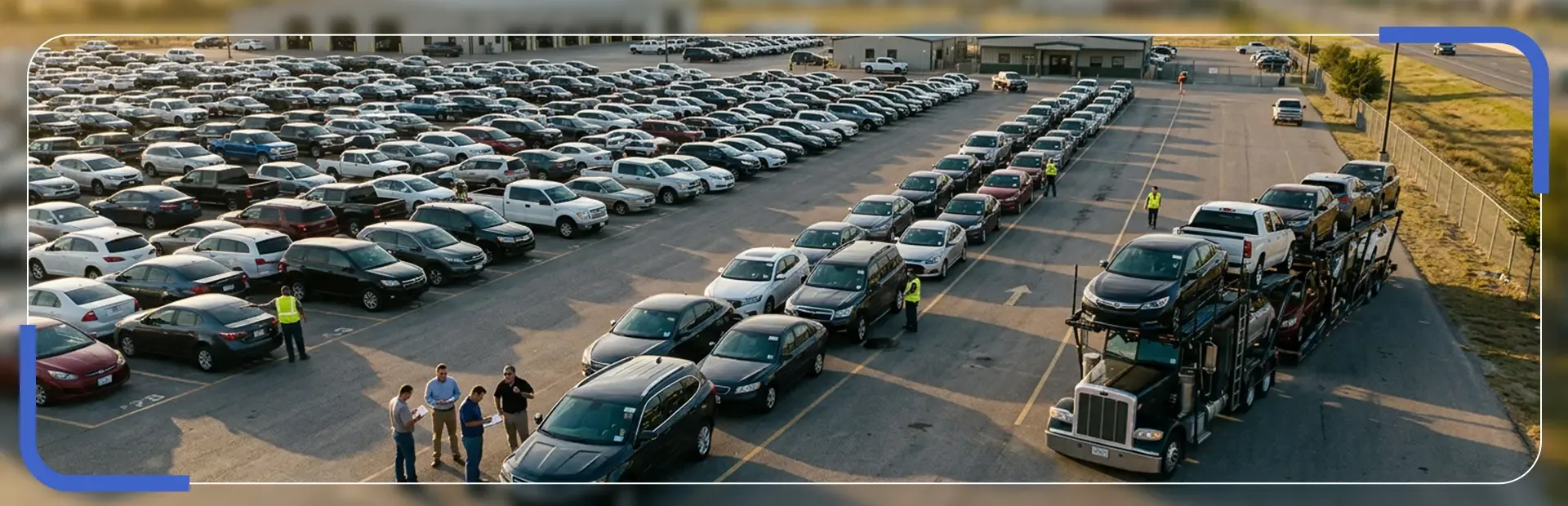
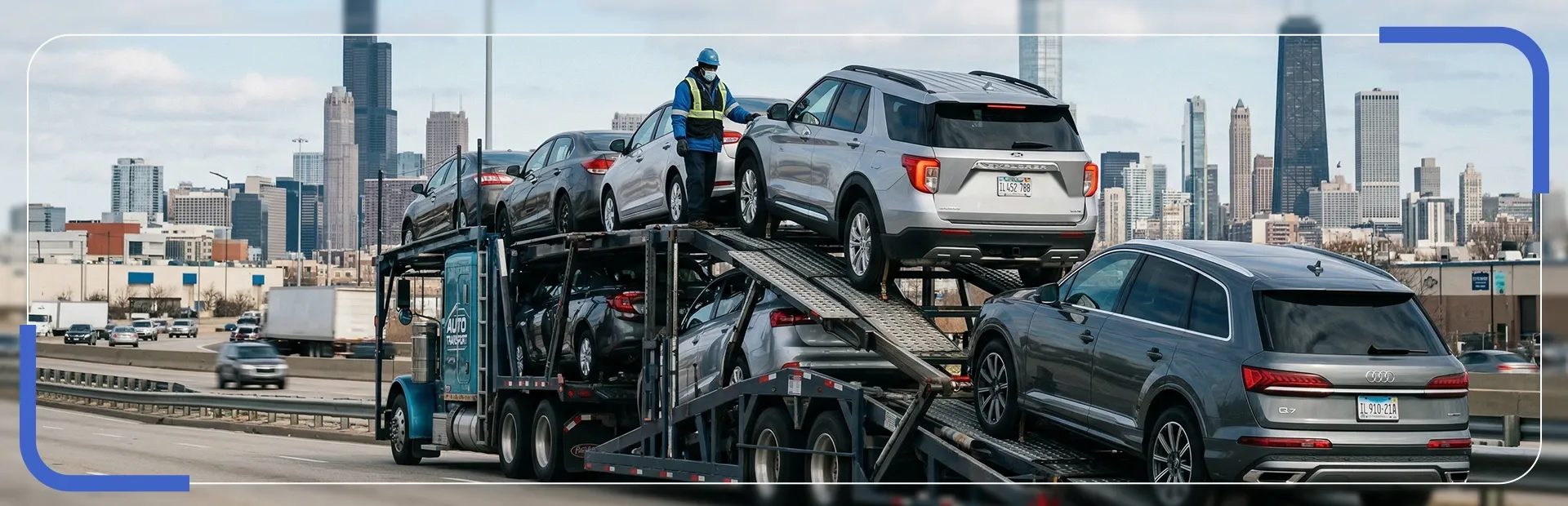
Shipping a vehicle is not simply a matter of handing over keys and waiting for a delivery call; it is a coordinated logistics operation involving planning, dispatching, tracking, and risk management at every stage.
Logistics and supply chain management sit at the center of every successful vehicle shipment. Its quality determines whether a vehicle arrives on time, in the same condition it left, and at the price originally quoted, or whether delays, miscommunication, and unexpected costs define the experience instead.
This article breaks down five essentials every customer should understand before booking auto logistics car transport, from route coordination and technology to risk prevention and specialized services. Get an instant, price-locked quote from Safeeds Transport, no deposit, no hidden fees.
How Logistics and Supply Chain Management Drive Vehicle Shipping
Before comparing quotes or evaluating providers, it helps to understand what logistics and supply chain management mean in vehicle transport and why it directly affects every shipment outcome.
What Logistics Management Means in Auto Transport
Logistics management in auto transport coordinates routes, carrier assignments, scheduling, documentation, and communication, all working together to move a vehicle efficiently and safely. When it is strong, shipments move predictably. When it is weak, customers absorb the consequences through delays, missed pickups, and unresolved disputes.
How Supply Chain Planning Impacts Auto Transport Logistics
Auto transport logistics does not operate in isolation. Carrier availability, fuel pricing, seasonal demand, and route congestion all feed into the planning process. A well-managed supply chain anticipates these variables rather than reacting to them. For customers, this translates into:
More accurate delivery windows based on real carrier availability
Competitive pricing through efficient route and carrier matching
Fewer last-minute scheduling changes at pickup or delivery
Better handling of exceptions, such as weather events or carrier delays
Why Customers Should Care Before Booking
The quality of logistics management services a provider offers is not always visible upfront, but its effects are felt throughout the shipment. Customers who book on price alone, without evaluating logistics capability, frequently encounter the delays and communication gaps that a well-structured operation would have prevented.
Essential #1: Smart Planning and Route Coordination
Effective auto transport logistics begins before a carrier is assigned. Route coordination and dispatch planning are the foundation on which every successful shipment is built.
How Route Optimization Reduces Delays
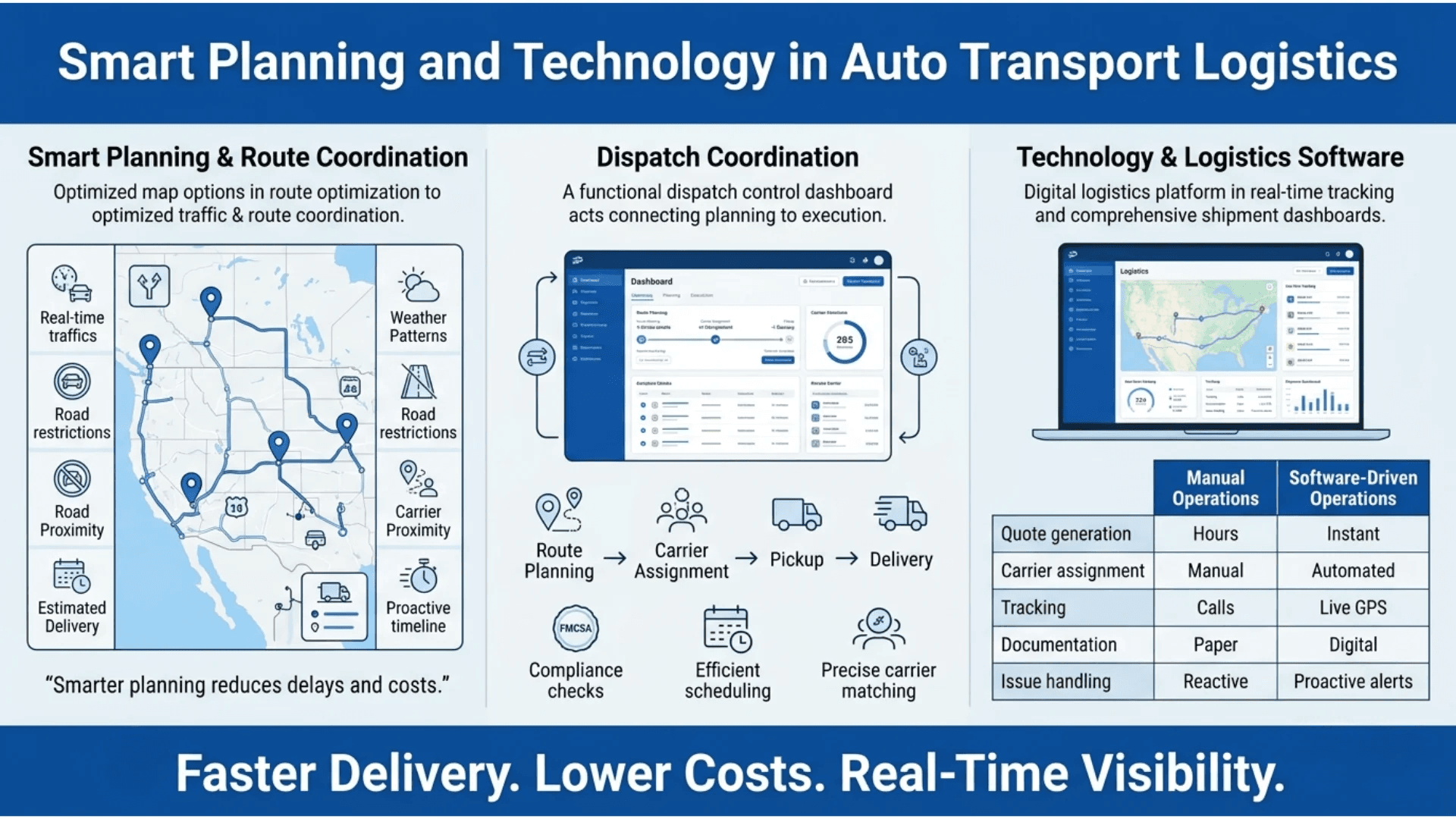
Smart route optimization evaluates traffic patterns, weather forecasts, road restrictions, carrier proximity, and delivery timeline requirements simultaneously. The result is reduced transit time, lower fuel costs, and a more reliable delivery experience for the customer.
The Role of Auto Transport Dispatch
Auto transport dispatch connects route planning with carrier execution, assigning carriers based on availability and route match, then coordinating pickup and delivery handoffs. According to the Federal Motor Carrier Safety Administration (FMCSA), all brokers and carriers in interstate transport must maintain active licensing, a compliance requirement that reliable dispatch operations verify before every carrier assignment.
Why Dispatch Software Improves Delivery Accuracy
Auto transport dispatch software replaces manual scheduling with digital load management. Key improvements include:
Faster carrier assignment, reducing idle time between booking and pickup
Automated documentation reduces paperwork errors that delay release
Real-time schedule visibility allows dispatchers to resolve conflicts proactively
Digital audit trails create accountability at every shipment stage
Essential #2: Technology and Logistics Management Software
Technology infrastructure is one of the clearest indicators of operational quality in auto transport and logistics. Providers who have invested in modern systems deliver a fundamentally different customer experience.
What Logistics Management Software Does
Logistics management software manages scheduling, carrier assignment, route tracking, documentation, and communication from a centralized platform. The table below shows how software-driven operations compare to manual ones:
Capability | Manual Operations | Software-Driven Operations |
Quote generation | Hours to days | Instant, 24/7 availability |
Carrier assignment | Phone-based, time-consuming | Automated, data-driven matching |
Shipment tracking | Customer calls for updates | Real-time portal access |
Documentation | Paper-based, error-prone | Digital, timestamped, auto-stored |
Exception handling | Reactive, after problems occur | Proactive, alerts before delays compound |
How Customers Benefit from Real-Time Updates
Customers who receive proactive updates at carrier assignment, pickup, transit, and delivery consistently report higher satisfaction than those who must initiate contact for information. Real-time tracking removes the uncertainty from a process that can otherwise feel invisible, particularly on long-distance logistics vehicle transportation moves.
Choosing Companies That Use Modern Dispatch Tools
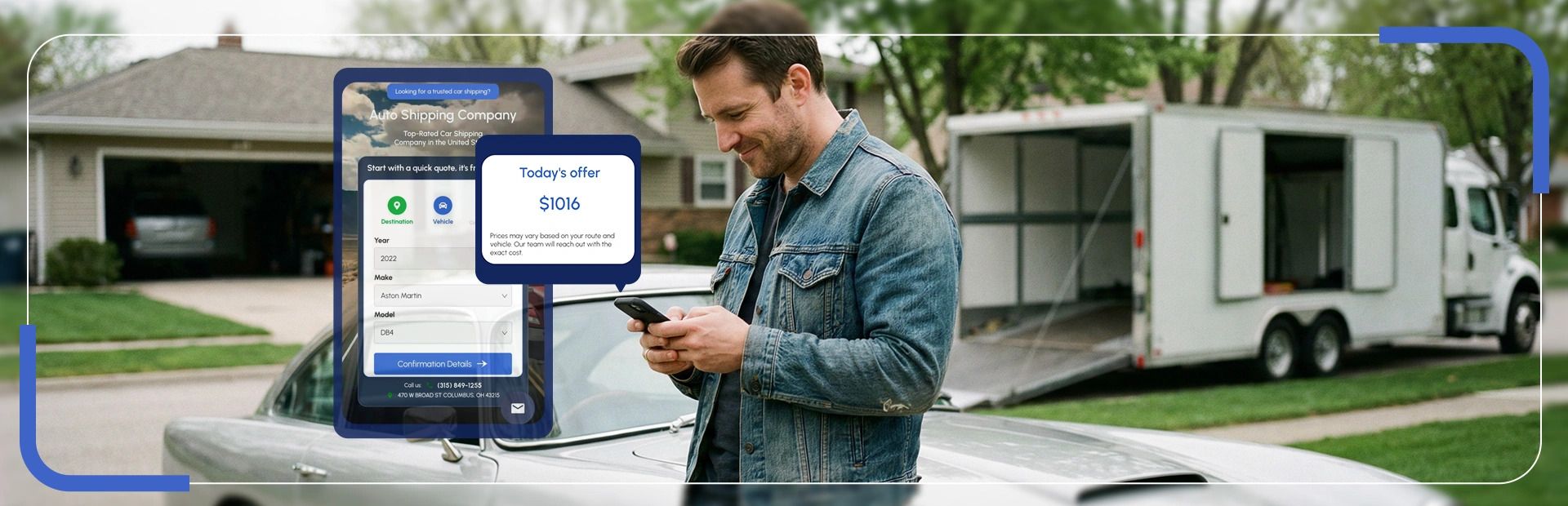
When evaluating auto logistics transport providers, confirm whether instant online quotes, real-time tracking portals, and automated shipment notifications are available. Providers who offer all three have built the infrastructure that supports consistent, accountable service.
Essential #3: Choosing the Right Auto Transport Services
Service selection is where many customers make avoidable mistakes, prioritizing price over capability rather than evaluating what the provider actually offers.
Open vs Enclosed Auto Transport Services
Open transport is the standard option, cost-effective, widely available, and appropriate for most standard vehicles. Enclosed auto transport services provide full trailer coverage, protecting vehicles from weather and road debris, suited for luxury, classic, or high-value vehicles. Enclosed transport typically costs 30 to 50 percent more on the same route, a premium most owners of qualifying vehicles consider justified.
Evaluating Professional Auto Transport Service Providers
A professional auto transport service is defined by more than a competitive quote. Key evaluation criteria include active FMCSA licensing, carrier insurance validation, transparent pricing with a written guarantee, clear communication protocols, and verified reviews on independent platforms.
Comparing Nationwide Auto Transport Services
The distinction between quality nationwide auto transport services and low-cost brokers becomes most apparent on less-traveled routes, during peak demand, and when exceptions arise. According to the Better Business Bureau, customers should verify complaint history and resolution practices, not just star ratings, before booking.

Essential #4: Risk Prevention and Shipment Protection
Every vehicle shipment carries risk. The difference between a well-managed and poorly managed auto logistics car transport operation is how proactively those risks are identified and controlled.
Common Shipping Risks Customers Should Know
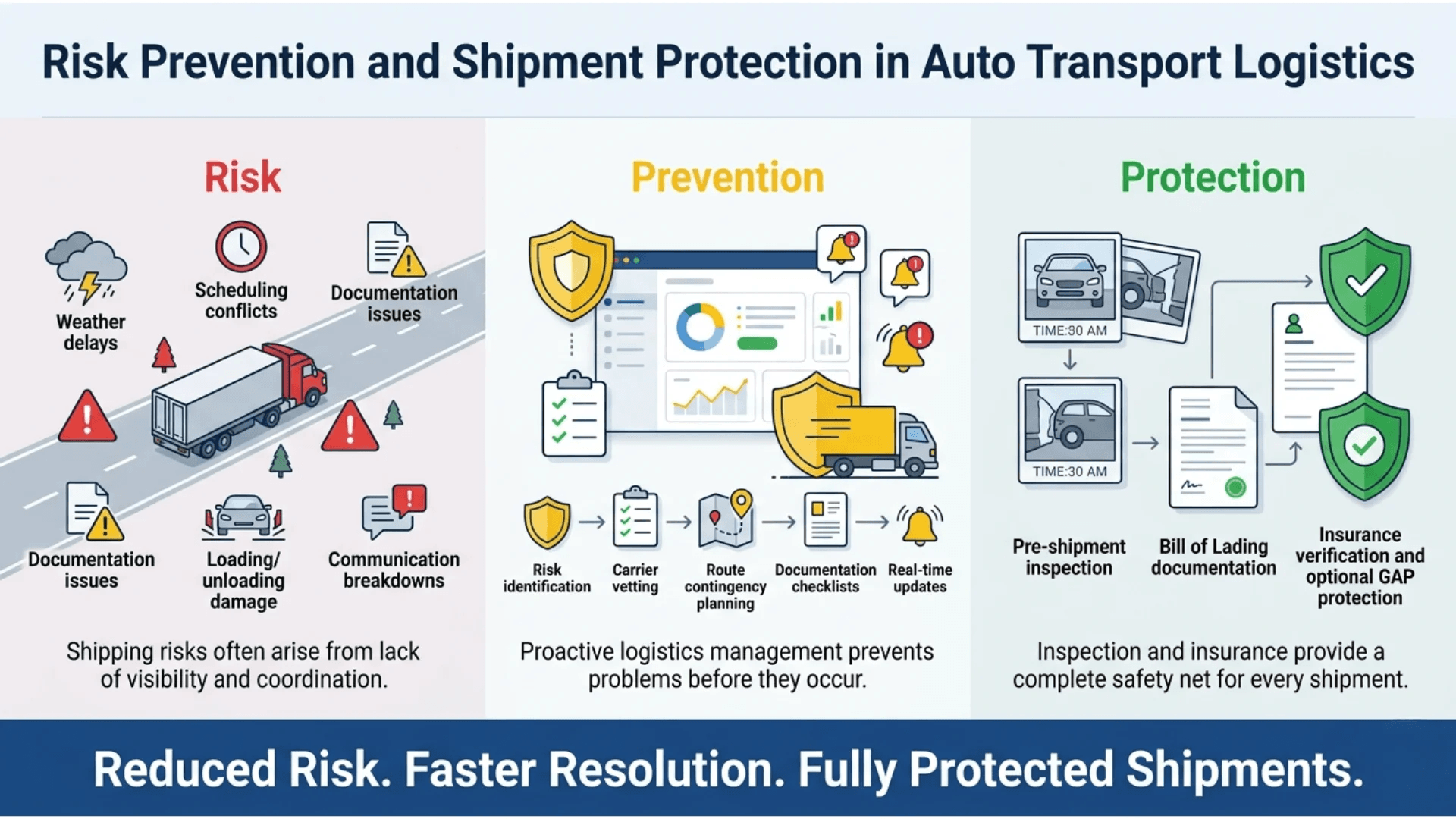
Common risk categories include weather disruptions delaying transit, scheduling conflicts pushing back pickups, documentation gaps delaying release, handling incidents during loading and unloading, and communication breakdowns that leave customers without visibility when problems arise.
How Professional Logistics Management Prevents Problems
Strong logistics management services address risks through proactive planning, carrier vetting before assignment, contingency routing when primary routes are disrupted, documentation checklists before dispatch, and multi-point communication that keeps customers informed without requiring them to ask.
Why Insurance and Inspection Processes Matter
Pre-shipment inspection and insurance verification are the two most important protective steps in any transport booking. A signed Bill of Lading with timestamped photos at pickup creates the evidentiary record that resolves disputes quickly. Safeeds Transport validates carrier insurance on every shipment and offers AFTA GAP Protection as supplemental coverage for high-value vehicles.
Essential #5: Speed, Specialized Shipping, and Accelerated Services
Not every shipment operates on a standard timeline. Understanding how expedited services work within auto transport logistics is essential for customers with urgent requirements.
How Does Auto Transport Work for Expedited Delivery?
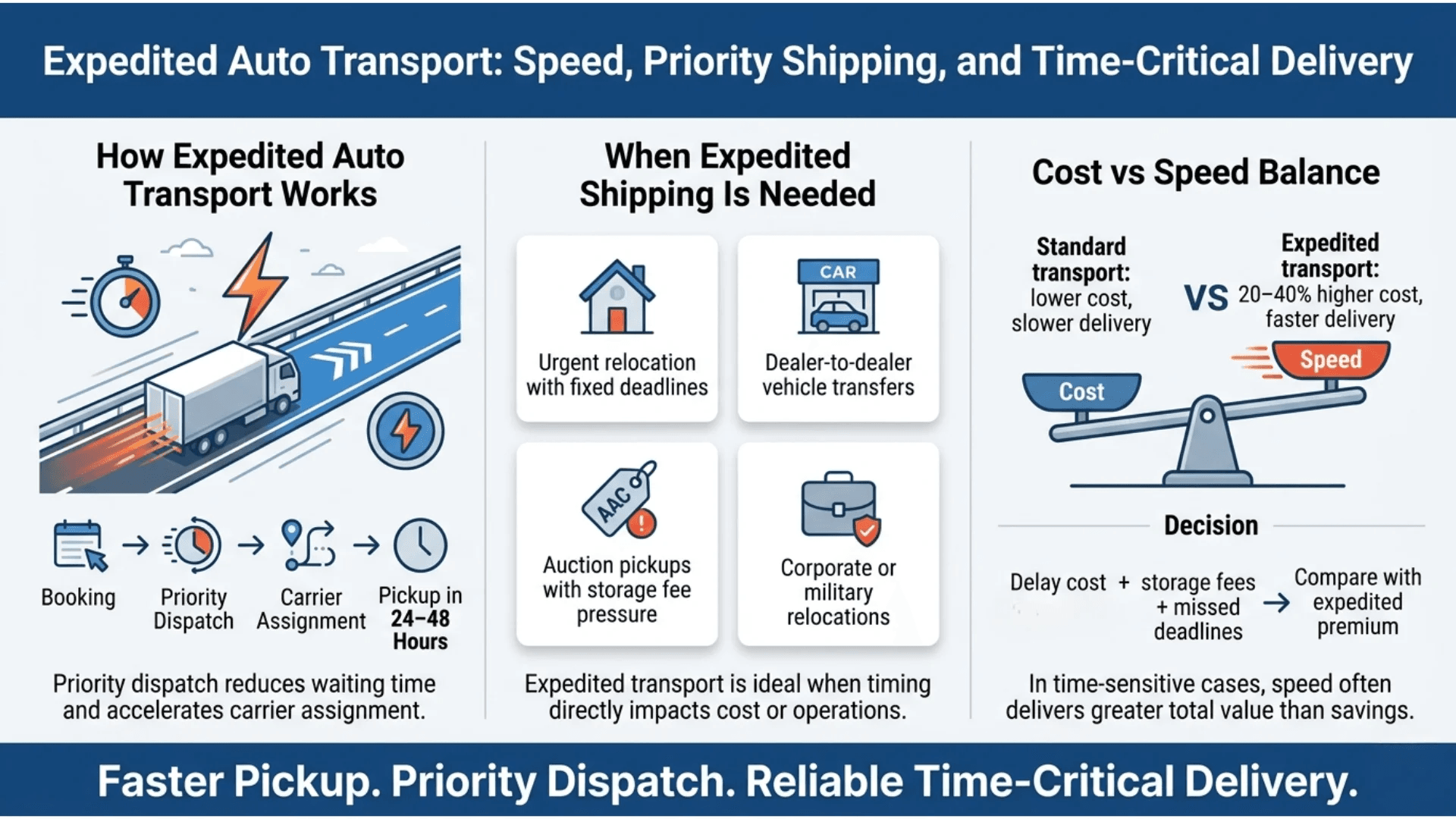
Expedited shipments are handled through priority dispatch, assigning a carrier from available capacity on an accelerated timeline, bypassing the standard matching window. On well-covered routes, this reduces the gap between booking and pickup to as little as 24 to 48 hours.
When Accelerated Services Auto Transport Makes Sense
Accelerated services auto transport is appropriate for urgent relocations with fixed reporting dates, dealer-to-dealer transfers with time-sensitive inventory windows, post-auction pickups where storage fees make delays costly, and corporate or military moves requiring vehicle arrival to align with a broader relocation timeline.
Balancing Cost vs Delivery Speed
Expedited transport typically carries a 20 to 40 percent premium above standard rates. For customers evaluating whether it is justified, the calculation should weigh the cost of delay, storage fees, missed deadlines, or operational disruption against the additional transport cost. In most time-sensitive scenarios, accelerated services auto transport delivers better overall value than a standard booking that misses a critical deadline.
Critical Details for Choosing Transport Services
Choosing the right auto transport provider involves more than comparing prices. The five questions below address what customers most commonly ask when evaluating auto transport and logistics options for the first time.
How do I know if an auto transport company is legitimate?
Verify the broker or carrier holds an active MC number and surety bond through the FMCSA database before booking. Legitimate professional auto transport service providers will also have verifiable reviews on independent platforms and will not request full payment before a carrier is assigned. Safeeds Transport confirms carrier assignment before collecting any deposit, protecting customers from upfront payment risks.
How far in advance should I book auto transport?
For standard routes, five to seven days in advance is generally sufficient. For peak season moves, military or corporate relocations, or accelerated services auto transport requirements, two to three weeks provides a safer window. Last-minute bookings are possible but often carry a premium as carrier availability tightens.
What should I do to prepare my vehicle before pickup?
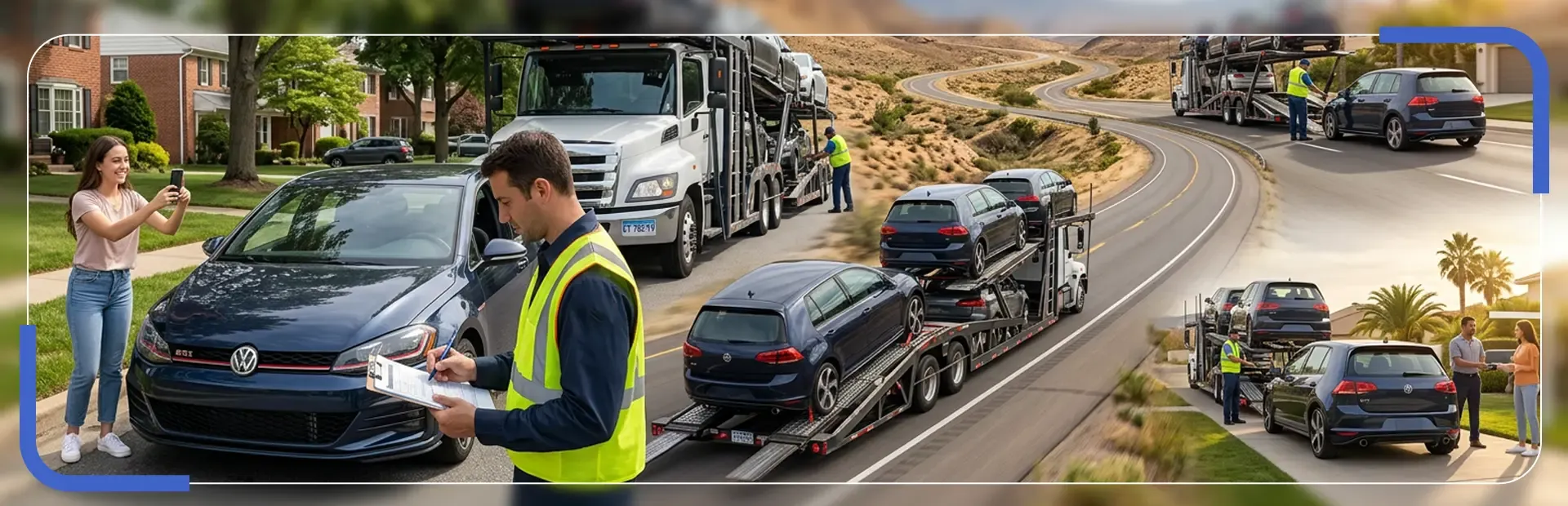
Effective preparation reduces the risk of disputes and delays at both ends of the shipment. Before the carrier arrives, remove all personal belongings as carriers are not licensed to transport personal items. Photograph the vehicle thoroughly from all angles with timestamped images, ensure the fuel tank is at one-quarter or less, confirm the vehicle starts and can be driven onto the carrier under its own power, and disable toll tags and alarm systems to avoid charges and delays during transit.
What is the difference between a broker and a carrier in auto transport?
A broker, like Safeeds Transport, coordinates the shipment by matching the customer's vehicle with a qualified, licensed carrier from an established network. The carrier physically transports the vehicle. Brokers with strong logistics management services handle documentation, carrier vetting, insurance verification, and customer communication, removing the coordination burden from the customer entirely.
Is my vehicle insured during transport?
All licensed carriers are required by federal law to carry cargo insurance. However, coverage limits vary, and a carrier's standard policy may not fully cover a high-value vehicle. Safeeds Transport validates carrier insurance on every shipment and offers AFTA GAP Protection as a supplemental coverage layer, giving customers additional peace of mind throughout the logistics vehicle transportation process.
Making a Smarter Shipping Decision with Expert Logistics Insight
Selecting the right auto transport and logistics provider comes down to verified licensing, confirmed carrier insurance, transparent pricing, and a documented track record, not the lowest quote on the page.
Providers who meet these criteria have built the logistics management infrastructure that supports reliable, accountable service. Those who cannot typically create the delays and disputes that customers want to avoid.
Safeeds Transport offers nationwide carrier coverage, a 7-day price lock, AFTA GAP Protection, and no deposit until a carrier is secured. Get a price-locked quote and experience what structured logistics and supply chain management look like in practice.