Shipping a vehicle across the country is simpler than most first-time customers expect, but only when you know what to prepare for.
Whether you are relocating for work, purchasing a vehicle from an out-of-state seller, or making a permanent move to a new city, cross-country car shipping offers a practical and often cost-effective alternative to driving thousands of miles yourself. That said, first-time shippers frequently have the same concerns: How much does it cost? Is my vehicle safe? How long will it take? Which company can I actually trust?
This guide answers all of those questions by walking through the entire process from start to finish, from understanding how auto transport works to preparing your vehicle, booking a carrier, and completing delivery. By the end, you will have a clear picture of what to expect at every stage and what decisions matter most.
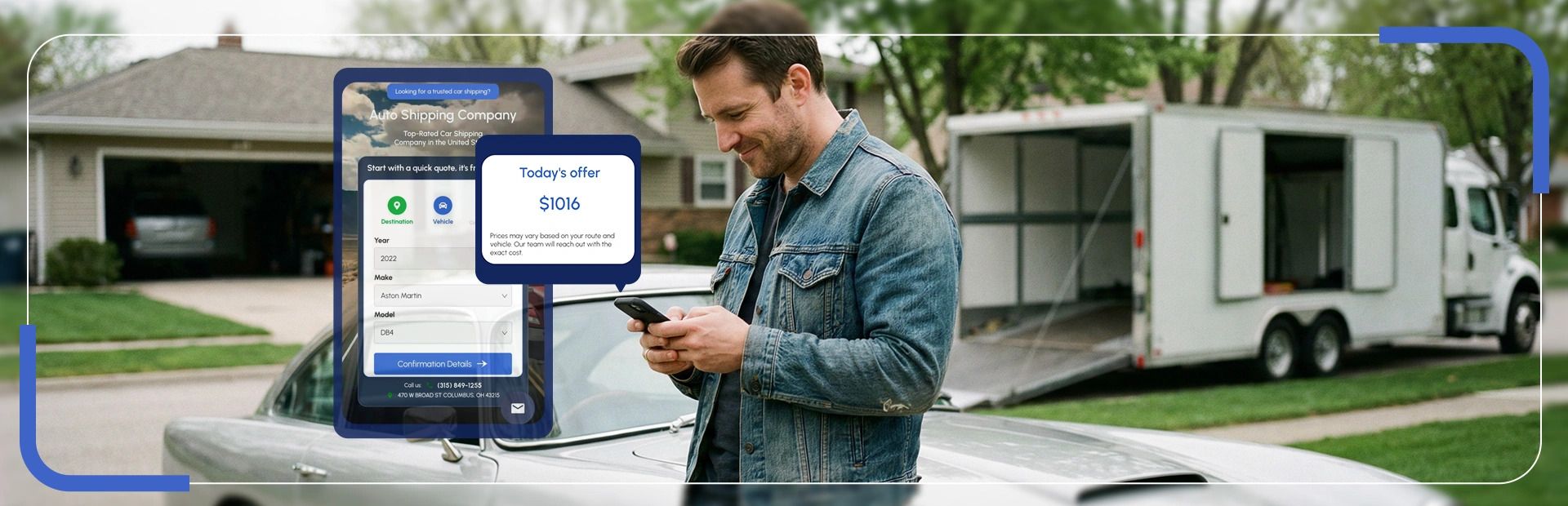
Planning to ship your vehicle? Request a free quote from Safeeds Transport Inc. and get a 7-day price lock with no deposit required.
What Cross Country Car Shipping Really Means
Before booking a shipment, it helps to understand the mechanics of the service, how vehicles are moved, why people use it, and how it compares to driving the vehicle yourself.
Understanding How Auto Transport Vehicles Work
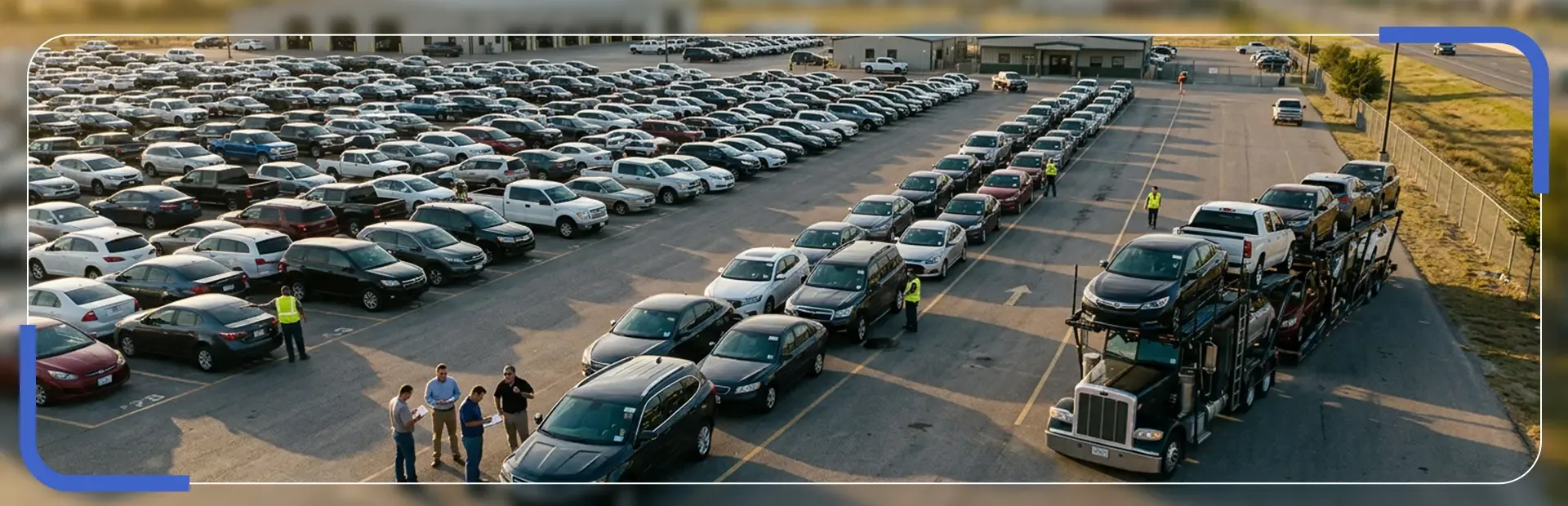
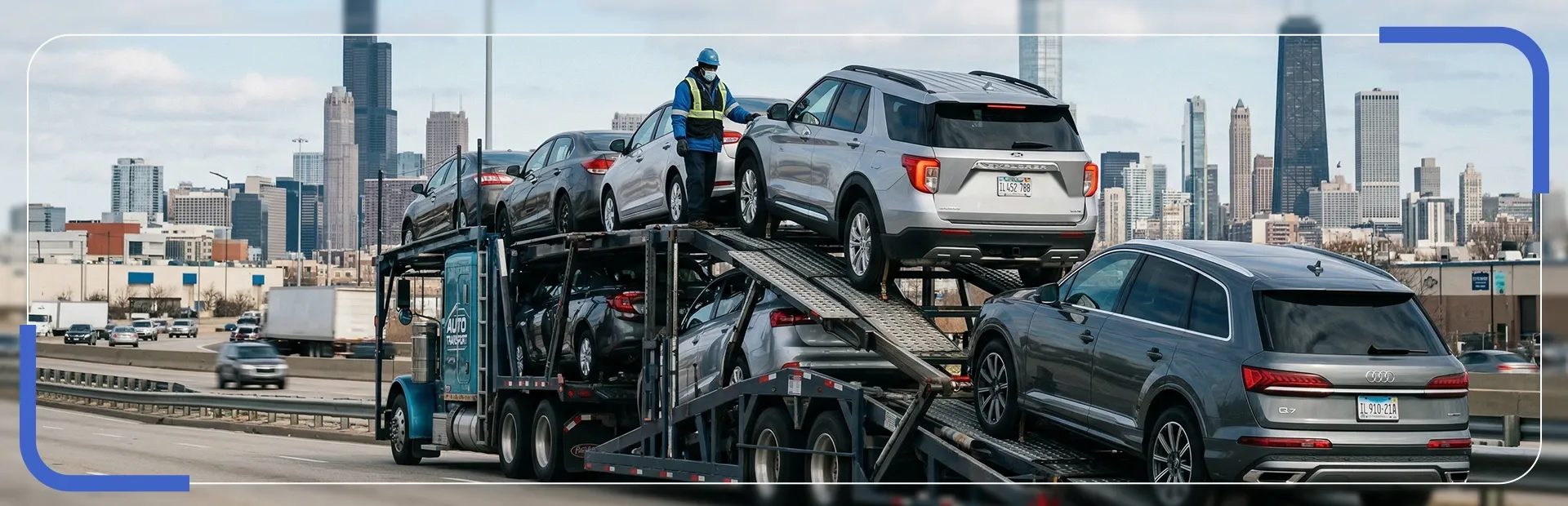
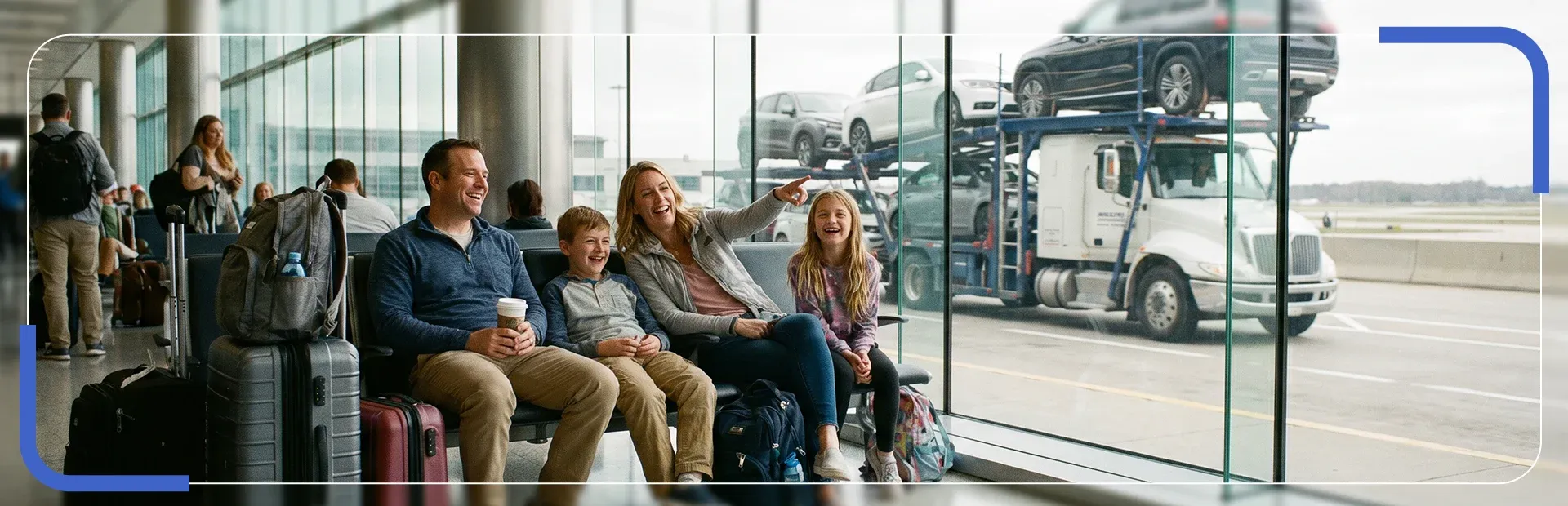
Auto transport vehicles are large multi-car carriers, the same trucks you see on highways loaded with new vehicles being delivered to dealerships. These carriers are designed to move anywhere from two to ten vehicles simultaneously along established long-distance routes across the country.
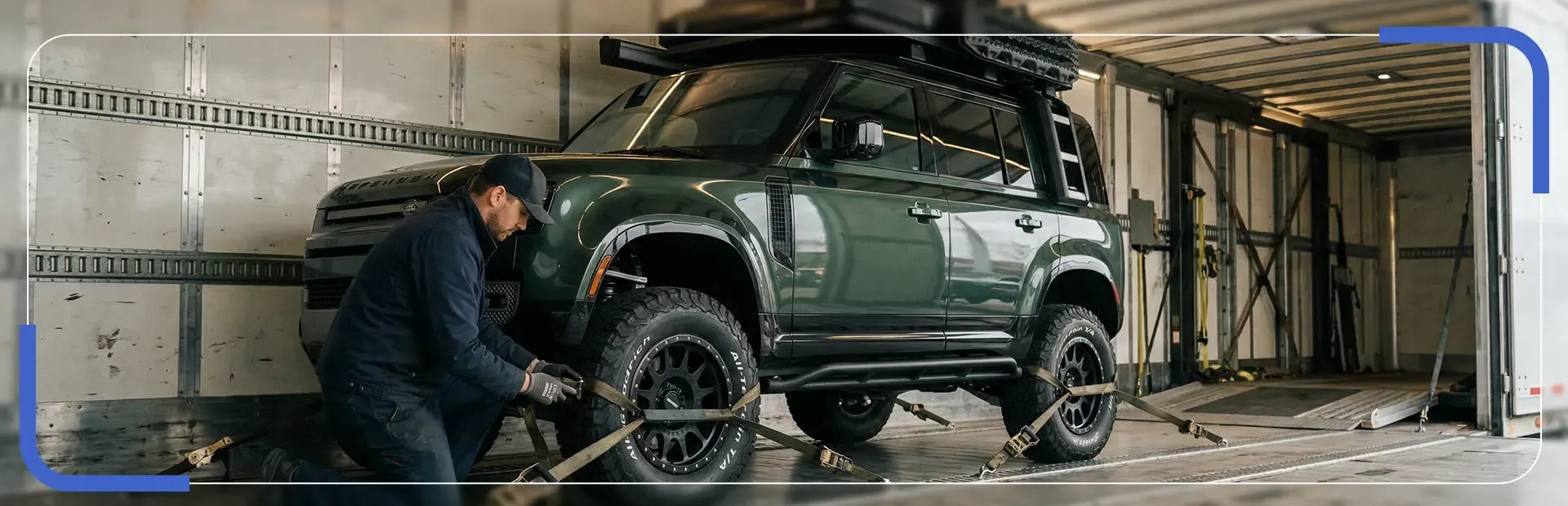
When you book a cross-country car shipping service, your vehicle is assigned to a carrier that is already running a route passing through or near your pickup and delivery locations. A transport broker, such as Safeeds Transport Inc., coordinates this match between your shipment and a licensed motor carrier, handling scheduling, documentation, and communication on your behalf. The carrier then loads, secures, and transports your vehicle to its destination, with inspections conducted at both ends of the journey.
When People Need to Transport a Car Long Distance
Long-distance vehicle transport is used across a wide range of situations:
Relocation: Moving to a new state for work, family, or lifestyle reasons is the most common driver of cross-country shipments
Online vehicle purchases: Buying a car from an out-of-state seller or auction requires a reliable way to ship the car across the country without incurring the cost and risk of flying out to drive it back
Military moves: Service members relocating to new bases frequently use professional transport services due to tight timelines and the impracticality of driving
Seasonal travel: Snowbirds and seasonal residents transport vehicles between northern and southern states each year, rather than putting miles on the vehicle
Estate and inheritance transfers: Vehicles being transferred between family members in different states are a common and often overlooked use case
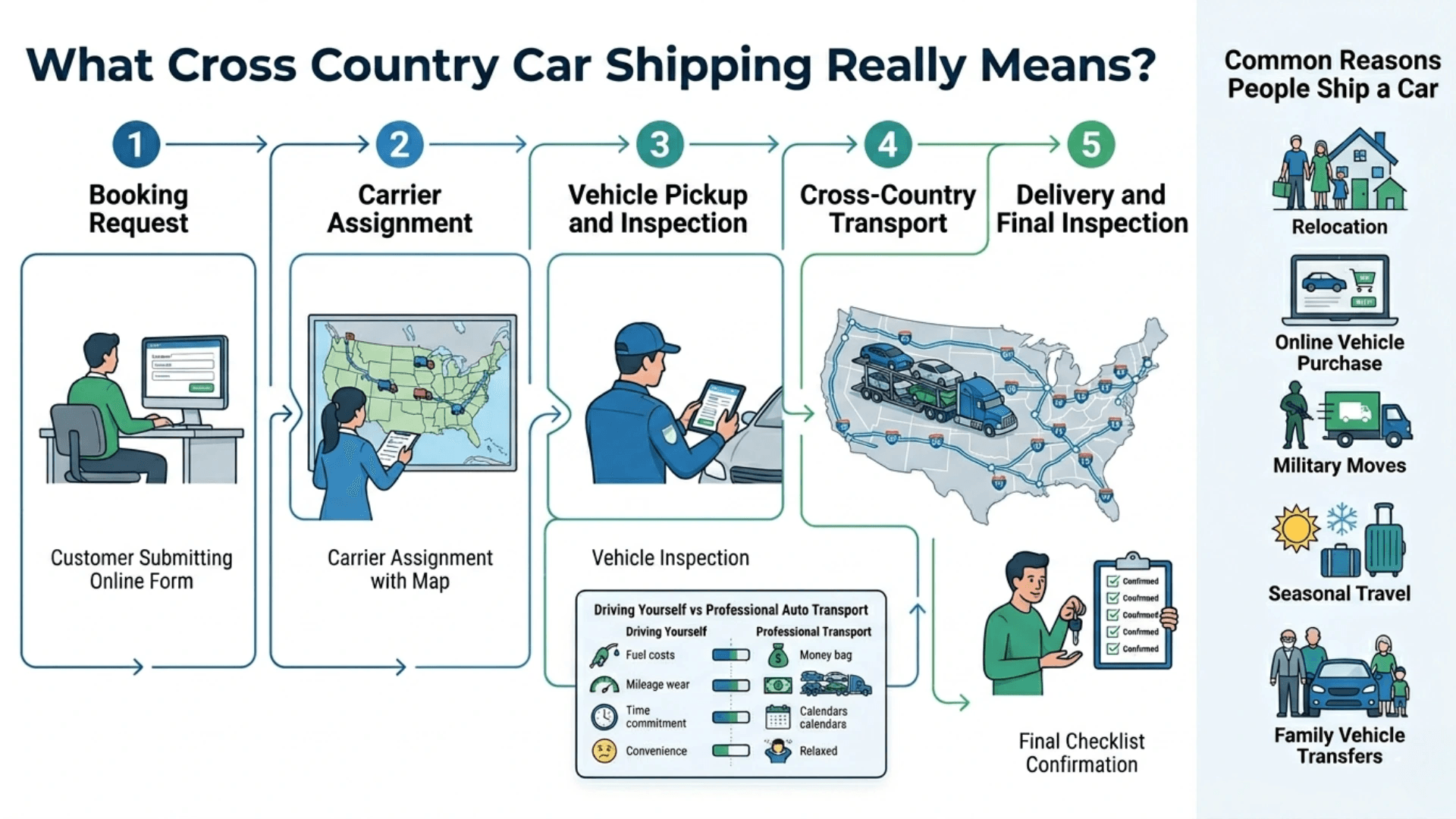
Difference Between Driving and Transporting a Car
Many first-time shippers instinctively consider driving the vehicle themselves before exploring transport options. The comparison, however, is not always as straightforward as it appears.
Factor | Driving Yourself | Professional Transport |
|---|---|---|
Cost | Fuel, hotels, food, and wear | Flat transport rate |
Time | 3–5 days of driving | 1–2 weeks transit, zero personal time |
Vehicle wear | 1,500–3,000+ miles added | Zero miles added |
Risk | Driver fatigue, accidents, and breakdowns | Insured, professionally handled |
Convenience | Requires your time and presence | Fully managed on your behalf |
For most long-distance moves, professional transport is the more practical option, particularly when the distance exceeds 1,000 miles or when the vehicle is newer, high-value, or in a condition that makes long drives inadvisable.
Step 1: How to Prepare Before You Ship My Car
Preparation before booking separates a smooth shipping experience from an avoidable one. Three areas require attention: researching providers, selecting the right transport type, and gathering necessary information.
Research Vehicle Transport Companies Carefully
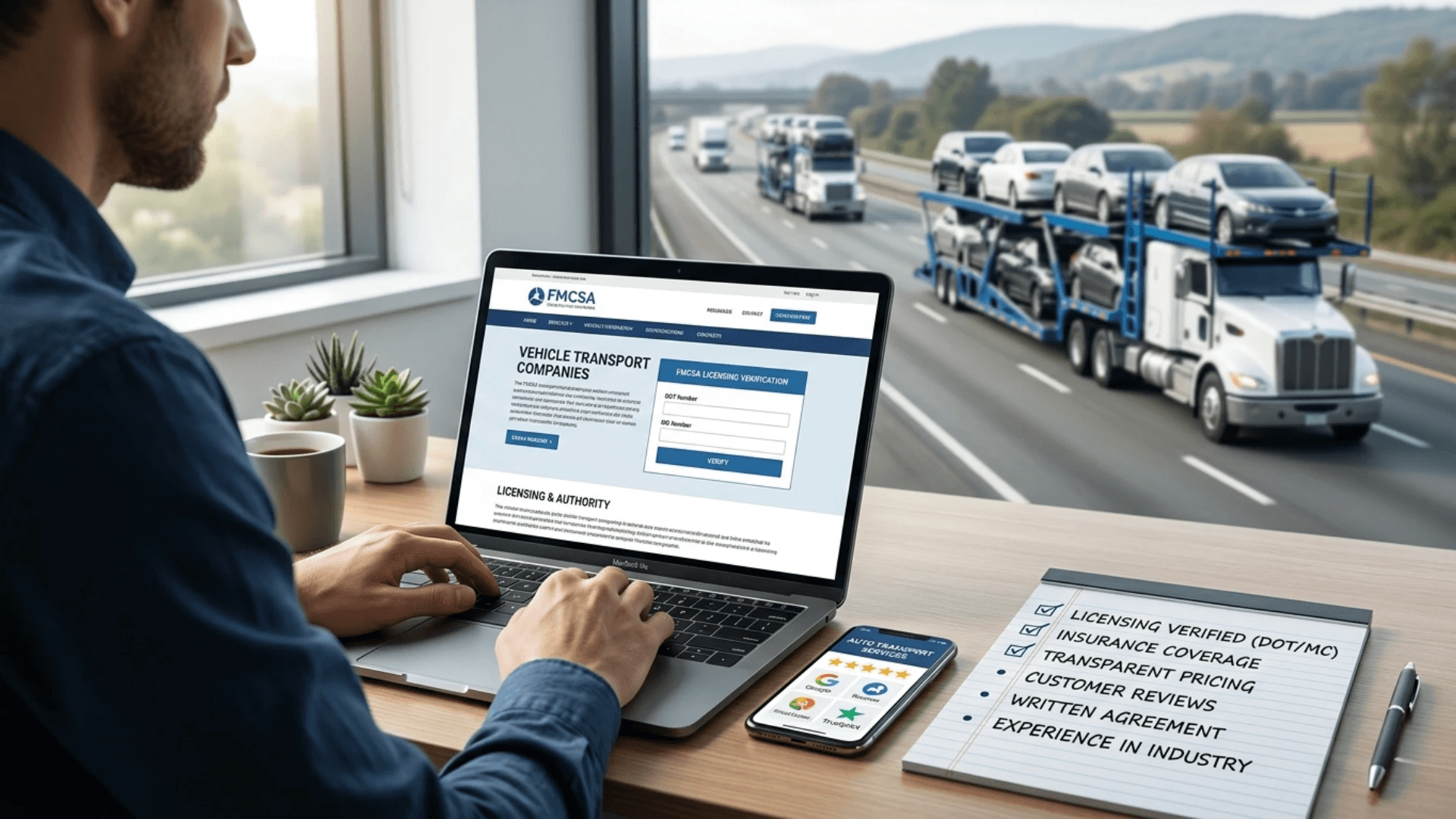
Not all vehicle transport companies operate at the same standard. The auto transport industry includes licensed brokers, direct carriers, and a range of providers whose reliability and transparency vary considerably. When evaluating a company, look for the following:
FMCSA licensing: Any legitimate broker or carrier must be registered with the Federal Motor Carrier Safety Administration (FMCSA). Verify a company's MC number directly on the FMCSA website before committing
Customer reviews: Google, Trustpilot, and Transport Reviews provide unfiltered feedback. Patterns of complaints about hidden fees, late pickups, or damaged vehicles are clear warning signs
Transparent pricing: Reputable companies provide firm quotes without requiring a deposit before a carrier is secured
Insurance verification: Confirm the company validates carrier insurance coverage before assigning your shipment
Choose Between Open and Enclosed Car Shipping
The choice between open and enclosed car shipping directly affects both your cost and the level of protection your vehicle receives. Here is how the two options compare:
Open carrier: The standard, more affordable option. Suitable for most standard passenger vehicles, and the most common form of cheap car shipping that does not sacrifice service quality
Enclosed car shipping: Full protection from weather and road debris. The right choice for luxury, classic, or high-value vehicles. Typically runs 40 to 60 percent higher than open carrier rates
Gather Important Vehicle and Personal Information
Before requesting quotes or confirming a booking, having your details organized in advance speeds up the process and reduces back-and-forth with your transport coordinator. Have the following ready:
Vehicle make, model, year, and condition (running or non-running)
Pickup and delivery addresses with zip codes
Preferred pickup date range and any hard delivery deadlines
Current vehicle insurance documentation
Contact details for whoever is receiving the vehicle if you will not be present
Step 2: Understanding Auto Shipping Cost and Pricing Factors
Auto shipping cost is one of the most variable aspects of the process, and also one of the most misunderstood. Understanding what drives pricing helps you evaluate quotes accurately and avoid decisions based on the wrong criteria.
What Affects Auto Shipping Cost the Most
Several factors feed directly into the rate you are quoted for a cross-country shipment. Knowing these in advance helps you understand why quotes differ between providers and seasons:
Distance: The largest single pricing factor. Cost per mile typically decreases on longer routes
Vehicle size and weight: Larger vehicles take up more carrier space. Full-size trucks, SUVs, and vans cost more to ship than standard sedans
Transport type: Enclosed car shipping carries a significant premium over open carrier
Seasonal demand: Peak season from May through August pushes rates up. Fall and early winter offer more competitive pricing
Route demand: High-traffic routes between major cities tend to have better availability and lower rates than rural corridors
Pickup flexibility: A flexible pickup window of several days typically yields better pricing than a fixed date
Why Cheap Car Shipping Isn't Always the Best Option
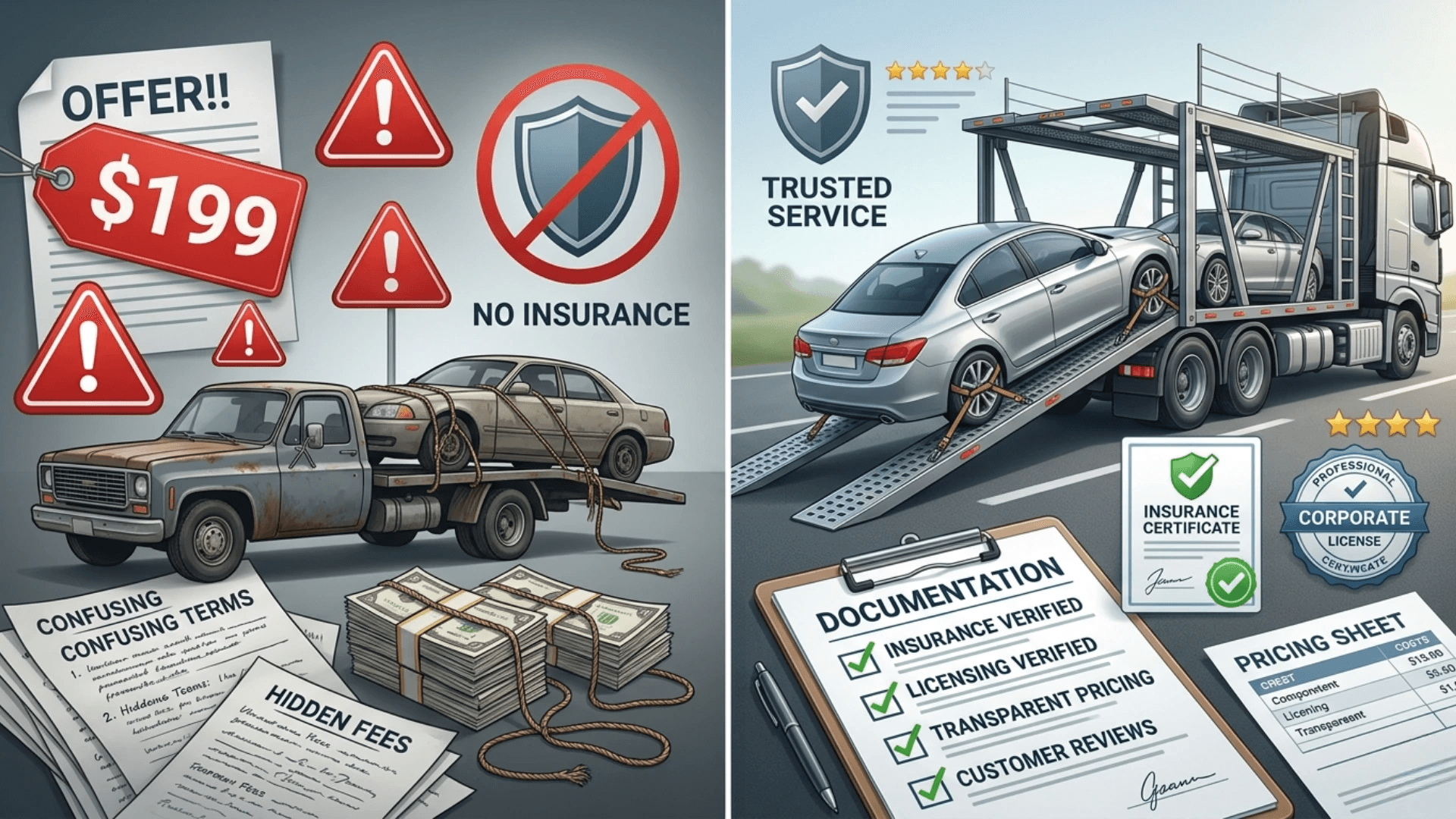
Unusually low pricing in auto transport is frequently a signal of problems rather than value. Companies offering rates well below market averages may be using unverified carriers, skipping insurance checks, or operating without valid FMCSA licensing. According to the Better Business Bureau (BBB), vehicle transport is a consistently high-complaint category, with many issues traced back to customers choosing providers on price alone. The goal is the most accurate, reliable quote from a company with a verifiable track record, not simply the lowest number.
Getting Accurate Quotes for Cross-Country Routes
When comparing quotes from the best auto shipping companies, a few straightforward practices significantly improve the quality of the comparison. Before accepting any quote, make sure you have done the following:
Request quotes from at least three providers to establish a realistic market range
Ensure each quote covers the same service type, route, and vehicle details
Ask whether the quoted rate is guaranteed or subject to change at pickup
Confirm when any deposit is collected, reputable providers do not take payment before a carrier is secured
Step 3: Booking the Best Car Transport Service
Once you have compared quotes and selected a transport type, the booking stage involves a few final checks before confirming your shipment. Taking the time to verify the right details here protects you throughout the rest of the process.
How to Identify Top-Rated Auto Shipping Companies
Beyond pricing, the markers of top-rated auto shipping companies are consistent and easy to verify. Before committing to a booking, confirm the following about any provider you are considering:
FMCSA registration: Confirm the company's broker or carrier authority is active and in good standing
Review volume and recency: Thousands of recent reviews across multiple platforms signal consistent, ongoing performance
No-deposit policy: Reputable brokers collect payment only after a carrier has been secured
Price transparency: The rate confirmed at booking should be the rate honored at pickup
Understanding Your Transport Schedule and Pickup Window
After booking, your coordinator will work to assign a carrier within the agreed pickup window, typically one to five business days from your first available date. Customers who offer a flexible pickup window of three to five days are matched faster and often at better rates than those requiring a fixed date.
What Happens After You Book
Once a carrier is assigned, you will receive the carrier's name, contact details, and an estimated pickup timeframe. The dispatch team will contact you directly to confirm the exact pickup time. At this stage, ensure the vehicle is accessible at the agreed location and that someone is present to hand over the keys.
Step 4: What Happens During Cross-Country Car Shipping
Understanding what happens to your vehicle in transit reduces anxiety and sets accurate expectations. The process is more structured than most first-time shippers expect.
Pickup Process and Vehicle Inspection
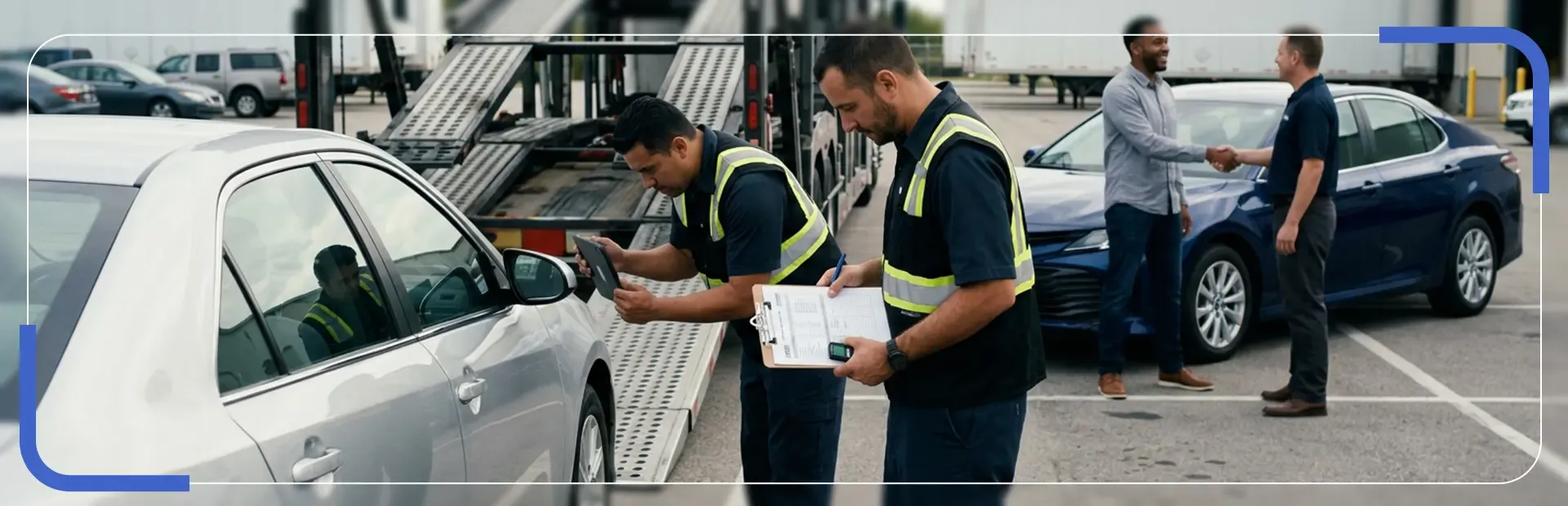
At pickup, the carrier driver inspects your vehicle and documents its condition on a Bill of Lading before loading. This document is your most important protection throughout the shipment; treat it accordingly:
It records all pre-existing scratches, dents, and damage
Both you and the driver sign it at pickup, establishing the official baseline condition
Review it carefully before signing and note any existing damage, no matter how minor
Keep a copy, it will be compared against the vehicle's condition at delivery
Transport a Car Across State Lines Safely
Once loaded, your vehicle travels along the carrier's planned route, which typically spans multiple states over several days. Scheduled stops to deliver and pick up other vehicles along the way are standard and do not indicate any issue with your shipment. Carriers operate under federal hours-of-service regulations enforced by the FMCSA, which govern driving time and mandatory rest periods to keep transport vehicles and their cargo safe on the road.
Tracking and Communication During Transit
Reputable brokers and transport companies provide regular updates so customers always know where their vehicle stands. At a minimum, expect the following touchpoints during transit:
Confirmation when your vehicle is picked up
An estimated delivery window as the carrier approaches the destination
A delivery notification when the carrier is within a day of arrival
Safeeds Transport Inc. provides ongoing customer support throughout transit, so any questions about your shipment's status can be addressed promptly.
Step 5: Delivery Process and Final Inspection
The delivery stage is where the Bill of Lading signed at pickup becomes directly relevant. A careful approach here protects your interests and ensures any issues are properly documented.
How Delivery Scheduling Works
As the carrier approaches your location, you or your designated recipient will be contacted to coordinate a delivery window. A few things to keep in mind before that day arrives:
Door-to-door service brings the carrier as close to your address as safely possible. Large trucks may not access narrow streets, so a nearby open location may be used
Ensure someone is available within the agreed delivery window
If you will not be present, confirm in advance that an authorized representative can accept delivery and sign on your behalf
Vehicle Inspection Before Acceptance
At delivery, inspect the vehicle against the condition recorded on the Bill of Lading, check all panels, the roof, windshield, mirrors, and undercarriage where accessible. If the vehicle's condition matches the pickup record, sign to confirm acceptance. Do not sign until you are fully satisfied with the inspection. Once signed, pursuing a damage claim becomes significantly more difficult.
What to Do If Issues Occur
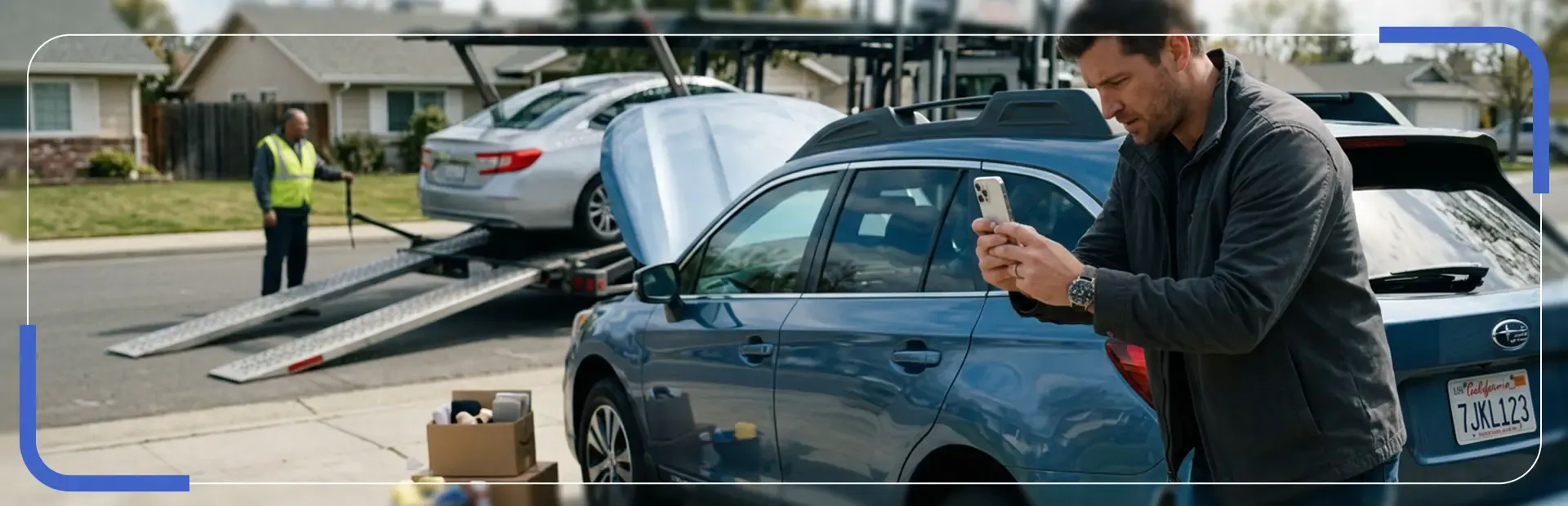
If damage is identified that was not present at pickup, note it on the delivery Bill of Lading before signing and photograph it immediately. Notify your transport broker the same day; they will guide you through the carrier's insurance claims process. Supplemental coverage, such as AFTA GAP Protection, offered by Safeeds Transport Inc., provides an additional layer of protection beyond what standard carrier insurance may cover and is considerably easier to have in place before the shipment than to pursue after the fact.

Smart Information for Better Shipping Decisions
First-time shippers often have a handful of specific questions that do not fit neatly into the step-by-step process but directly affect their confidence in moving forward. The following addresses the most common ones clearly and directly.
How much does it typically cost to ship a car across the country?
Cross-country car shipping rates generally range from $900 to $1,800 for standard open carrier transport, depending on distance, vehicle size, route demand, and the time of year. Enclosed car shipping runs higher, typically 40 to 60 percent above open carrier rates. Safeeds Transport Inc. provides firm quotes with a 7-day price lock, so the rate you see at booking is the rate honored at pickup, no adjustments, no surprises.
How long does cross-country car shipping take?
For routes covering 1,500 miles or more, standard transit time runs between seven and fourteen days from pickup. Shorter cross-country routes in the 1,000 to 1,500 mile range are typically completed in five to ten days. These windows account for the carrier's multi-stop route structure and normal operating schedules. Weather and seasonal demand can extend timelines during peak or winter periods.
Is my vehicle insured during transport?
Yes. Licensed motor carriers are federally required to carry cargo insurance that covers vehicles during transit. Safeeds Transport Inc. verifies carrier insurance on every shipment before assignment. For customers who want coverage beyond the carrier's standard policy, Safeeds offers AFTA GAP Protection, supplemental insurance that addresses scenarios standard carrier coverage may not fully resolve.
Can I place personal items in my vehicle during transport?
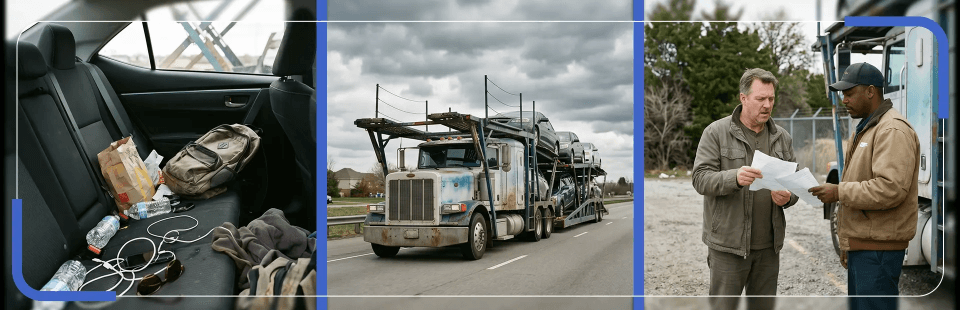
This is not recommended. Personal belongings left inside the vehicle are not covered under carrier insurance and are not the responsibility of the transport company if they are lost or damaged. Additionally, excess weight from personal items can create compliance issues with carrier load limits. The vehicle should be empty of personal belongings at pickup.
What should I do if my vehicle arrives with damage that was not there at pickup?
Do not sign the delivery Bill of Lading until the damage is noted in writing on the document. Photograph the damage immediately from multiple angles and notify your transport broker the same day. Your broker will initiate the claims process with the carrier's insurance. If you have AFTA GAP Protection in place, your broker will also guide you through that supplemental claim. Acting quickly and documenting thoroughly at delivery is the most important step in protecting your interests.
Smart Planning for Smooth Cross-Country Car Shipping
Cross-country car shipping is a straightforward process when approached with the right preparation and realistic expectations. The steps covered in this guide, researching providers, understanding pricing, booking correctly, preparing your vehicle, and conducting thorough inspections at pickup and delivery, are what separate a smooth experience from an avoidable one.
The two factors that matter most are who you choose to work with and how early you start the process. A licensed, transparent broker with verified reviews eliminates most of the risk. Booking ahead of your move date, especially during peak season, keeps pricing manageable and carrier options open.
Safeeds Transport Inc. offers free quotes with a 7-day price lock, no deposit until a carrier is secured, and a nationwide network of licensed, insured motor carriers. Get your quote today and move your vehicle with confidence.