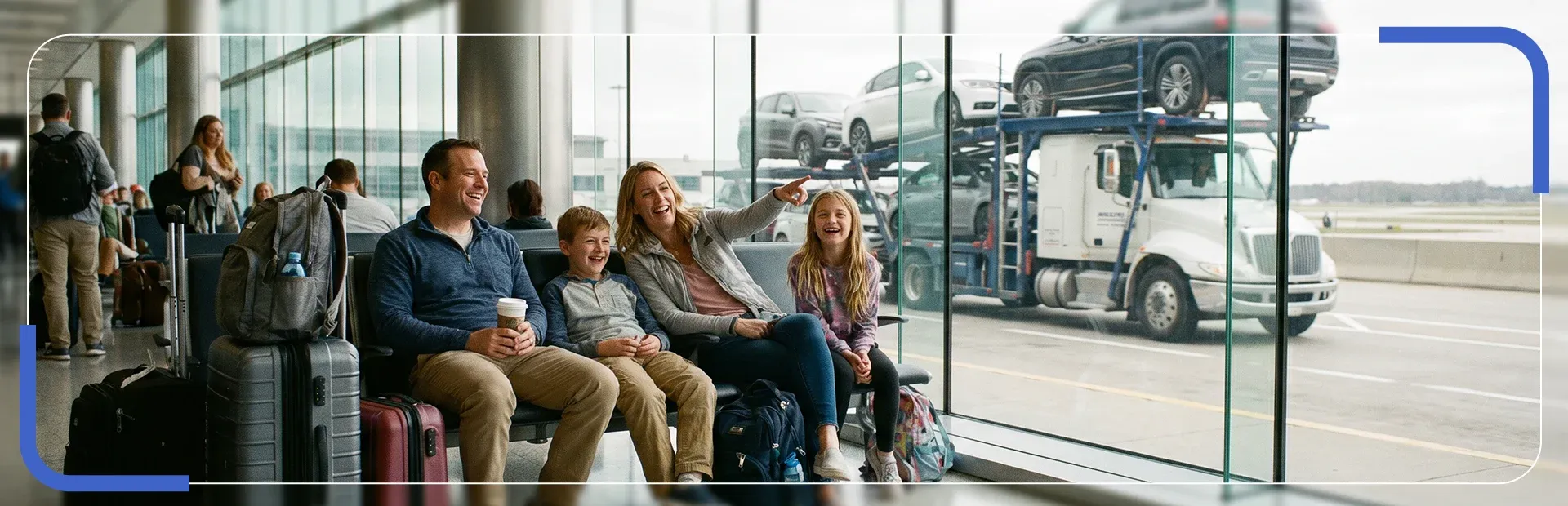
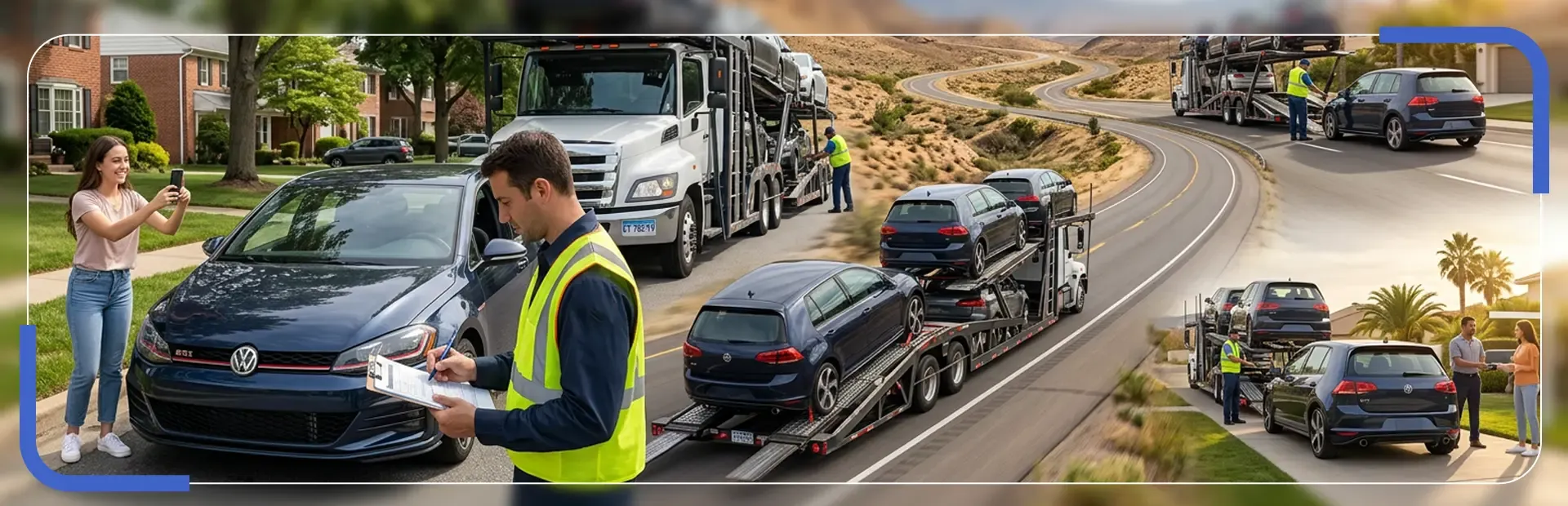
Moving to or from college often involves more than just packing essentials; your vehicle plays a major role in maintaining independence and convenience on campus. That’s why car shipping for college students has become an increasingly practical solution. Instead of dealing with long, exhausting drives, tight academic schedules, or the risks of cross-country travel, students can rely on professional auto transport services to move their vehicles safely and efficiently.
From understanding pricing to choosing the right transport option, planning ahead can make a significant difference in both cost and experience. At Safeeds Auto Transport, we recognize the unique needs of students, including budget constraints and seasonal demand, and we focus on delivering a smooth, transparent shipping process you can trust.
Whether you're preparing for your first semester or heading back after a break, the right strategy can help you avoid stress and delays. Get a quote today and take the first step toward a hassle-free car shipping experience.
Why Car Shipping For College Students Is Becoming Essential
As college moves become more complex, students are increasingly turning to professional transport solutions for convenience and reliability. Here’s why car shipping has become an essential part of modern campus relocation planning:
Rising geographical distance between universities and student residences has made vehicle transport more practical.
Multi-day cross-country drives can be exhausting and economically inefficient due to fuel, lodging, and vehicle wear and tear.
Long-distance driving presents safety risks, including driver fatigue and potential mechanical failure in unfamiliar territories.
The time required for a 1,500-mile journey often takes away from academic preparation, orientation, or part-time employment.
Professionally managed transport services provide a secure, insured, and time-effective alternative.
Outsourcing the logistics allows students to focus on their transition to campus life while ensuring their vehicle arrives safely and ready for use.
Understanding How Car Shipping For Students Actually Works
To the uninitiated, the vehicle transport industry can seem complex, but it essentially operates on a collaborative model between brokers and carriers. A broker, such as Safeeds, acts as your logistics coordinator, vetting carriers and negotiating rates, while the carrier is the actual entity that owns the truck and performs the physical move.
Key steps in the car shipping process
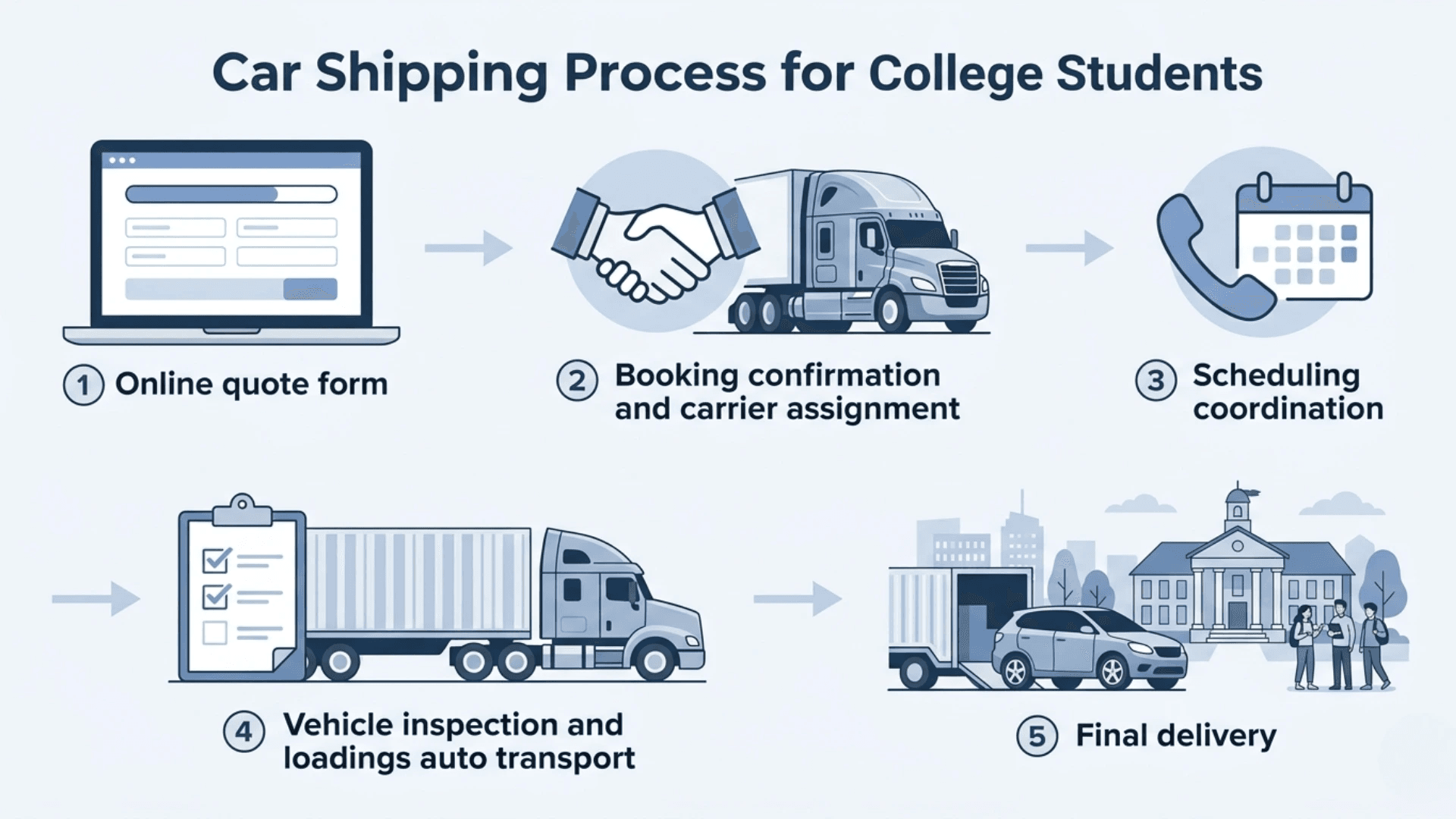
The transition from booking to delivery follows a structured sequence designed to ensure the safety of the vehicle and the transparency of the transaction. Understanding these stages allows students and parents to track the move with confidence.
Initial Inquiry and Quoting: The process starts by providing the vehicle’s make, model, and the specific pickup and delivery locations to receive an accurate service estimate.
Booking and Carrier Assignment: Once the quote is accepted, the broker identifies and assigns a qualified carrier from their vetted network to handle the physical transport.
Scheduling and Coordination: The assigned carrier contacts the student or parent directly to coordinate a specific pickup window and confirm logistics.
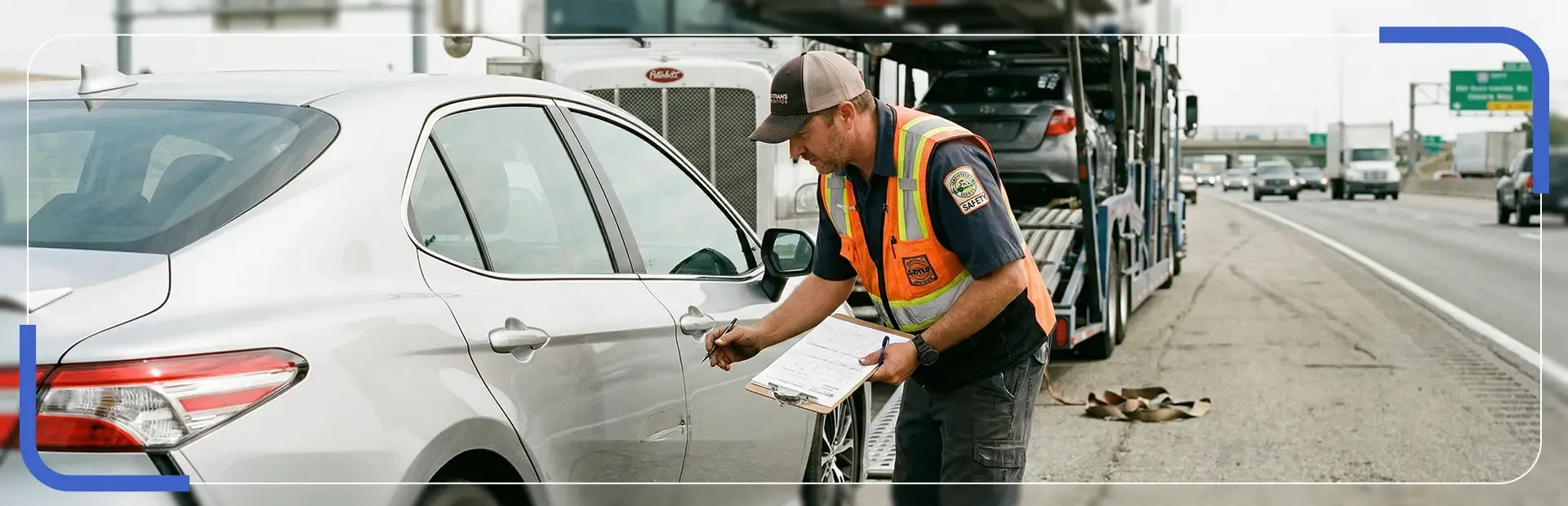
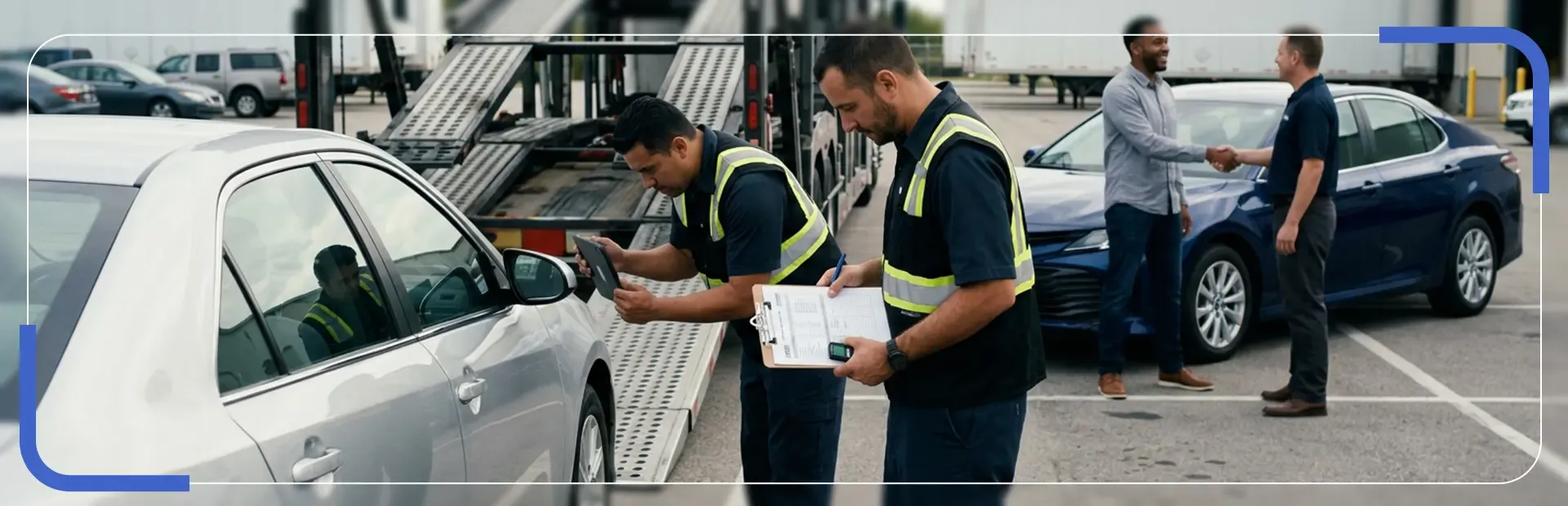
Vehicle Inspection and Loading: Upon arrival, a thorough inspection is documented on the Bill of Lading to record the vehicle’s current condition before it is secured onto the trailer.
Transit and Final Delivery: The vehicle is transported to the destination, where a final walk-through is performed to ensure the car arrived in the same condition as before the keys are handed over.
Types of carriers used for student car shipping
Selecting the appropriate trailer type is a balance between the level of protection required and the available budget. Most student vehicles fall into one of two primary categories based on their specific transport needs.
Open-Carrier Transport: This is the industry standard and the most cost-effective solution for standard sedans and SUVs, utilizing multi-car trailers similar to those used by dealerships.
Enclosed Transport: This method utilizes a fully covered trailer to provide a higher tier of protection from weather elements and road debris, making it the preferred choice for high-value motorcycles or classic vehicles.
Multi-Vehicle Shipping: For students moving with friends or siblings, some carriers offer consolidated shipping options on open trailers to further optimize costs.
Affordable Car Shipping For College Students And What Affects Pricing
Securing affordable car shipping for college students requires an understanding of the variables that influence logistics pricing. Transport costs are not static; they fluctuate based on the distance of the route, the weight of the vehicle, and the current price of diesel fuel. Furthermore, shipping a compact car is generally less expensive than shipping a full-sized SUV due to the "footprint" the vehicle occupies on the trailer.
How to find cheap open car shipping quotes for college students
The most effective way to identify competitive pricing is to use online aggregation tools and request quotes from established brokers. However, it is vital to distinguish between a "cheap" quote and a "fair" quote. If a price seems significantly lower than the industry average, it may be a red flag for hidden fees or a low-priority dispatch that results in lengthy delays.
Smart ways to reduce car shipping costs
Efficiency in pricing can often be achieved through flexibility. Below is a comparison of common shipping methods and their typical cost-to-benefit ratio:
Shipping Method | Cost Level | Best For | Primary Advantage |
Open Transport | Budget-Friendly | Standard Daily Drivers | Most available and affordable |
Enclosed Transport | Premium | Luxury or Classic Cars | Maximum protection from elements |
Terminal-to-Terminal | Moderate | Flexible Schedules | Can be cheaper if terminals are nearby |
Door-to-Door | Standard | Convenience | Reduces student travel to pick up a car |
Back To College Car Shipping And Seasonal Planning Challenges
The timing of your move is perhaps the most significant factor in service availability. The "seasonal rush" for back-to-college car shipping typically peaks in August and January. During these windows, thousands of students are moving simultaneously, which creates a massive spike in demand for carrier space.
Tips for shipping a car during peak season
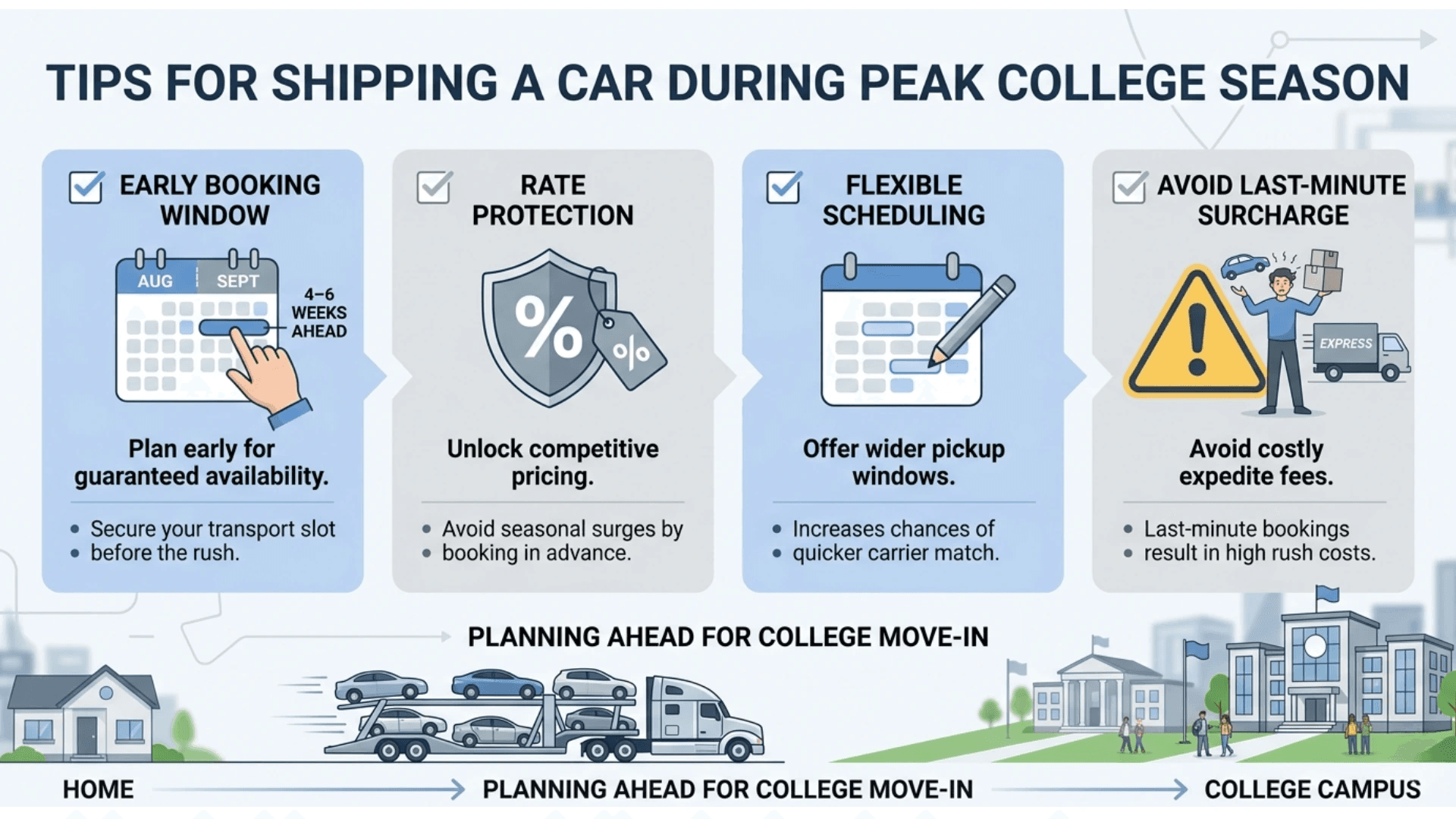
Navigating the high-demand periods of the academic calendar requires a proactive approach to secure both a spot on a trailer and a fair market rate. During these busy windows, carrier space becomes a premium commodity that rewards those who plan ahead.
Early Booking Window: To ensure your vehicle arrives in time for the first week of classes, it is advisable to book your transport at least four to six weeks in advance.
Rate Protection: Securing a spot early helps you avoid the significantly higher rates that typically occur when students wait until the week before move-in day.
Flexible Scheduling: Maintaining a flexible pickup window during the initial rush can help you secure a carrier more quickly than requesting a rigid, single-day appointment.
Avoid the Last-Minute Surcharge: Planning ahead prevents the need for expedited shipping services, which often come with a substantial price increase during peak months.
Planning ahead for shipping a car back to college
Create a logistical timeline that accounts for a 5-to-10-day transport window. Even the most efficient carriers can face weather delays or traffic congestion. Planning for the vehicle to arrive a few days early, and having a local contact or a safe place for delivery, can alleviate the stress of a last-minute arrival.
Tips For Shipping A Car Across Country Safely And Efficiently
For a college student, shipping a car across the country is a major logistical step in their academic journey. Proper preparation ensures your vehicle arrives at your new dorm or apartment without unnecessary complications, allowing you to focus on your classes rather than car trouble.
How to prepare your car before transport
Taking the time to ready your vehicle ensures a smooth handover and helps prevent delays during transit. A well-prepared car allows the carrier to focus on safe loading and efficient delivery to your campus.
Clean the Interior and Exterior: Washing your car isn't just about looks; a clean surface allows for a more accurate inspection of the paint and bodywork during the initial assessment.
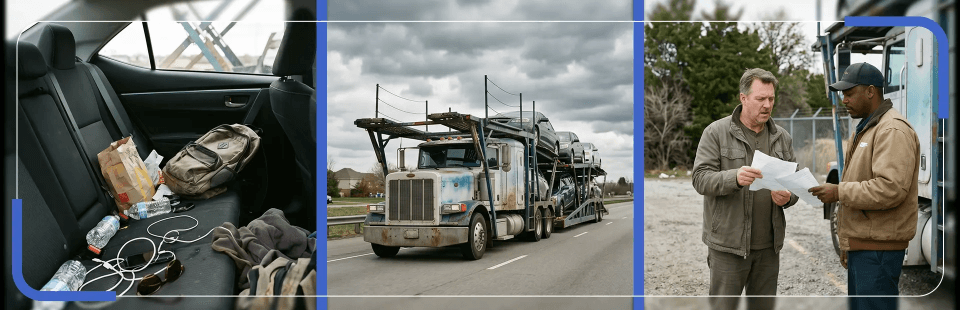
Remove Personal Items: Your car isn't a suitcase. Carriers are not licensed to transport household goods or dorm supplies inside the vehicle, and items left inside are not covered by the carrier's insurance.
Perform a Quick Mechanical Check: Ensure your tires are properly inflated, the battery is charged, and there are no fluid leaks to avoid mechanical delays during the loading process.
Manage Your Fuel Levels: Keep your gas tank at approximately one-quarter full. This provides enough fuel for the driver to move the car onto the trailer while minimizing the total weight of the shipment.
What to expect during pickup and delivery
Clear communication with your driver is the best way to stay on schedule. Most drivers provide a 24-hour notice before they arrive at your driveway or campus parking lot.
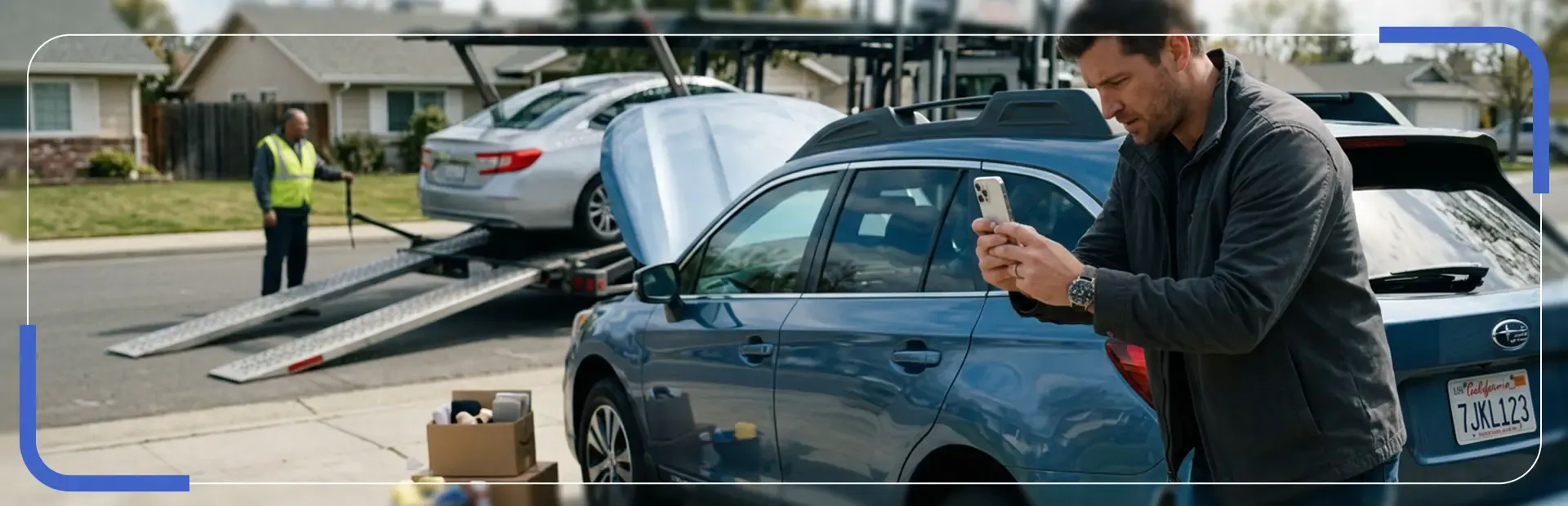
During pickup, you (or a parent) must be present to sign the initial inspection report. The same rules apply to delivery; if you are in class during the delivery window, a designated representative must be available to inspect the vehicle and sign the final paperwork to complete the process.

Car Shipping Scams Every Student Should Recognize And Avoid
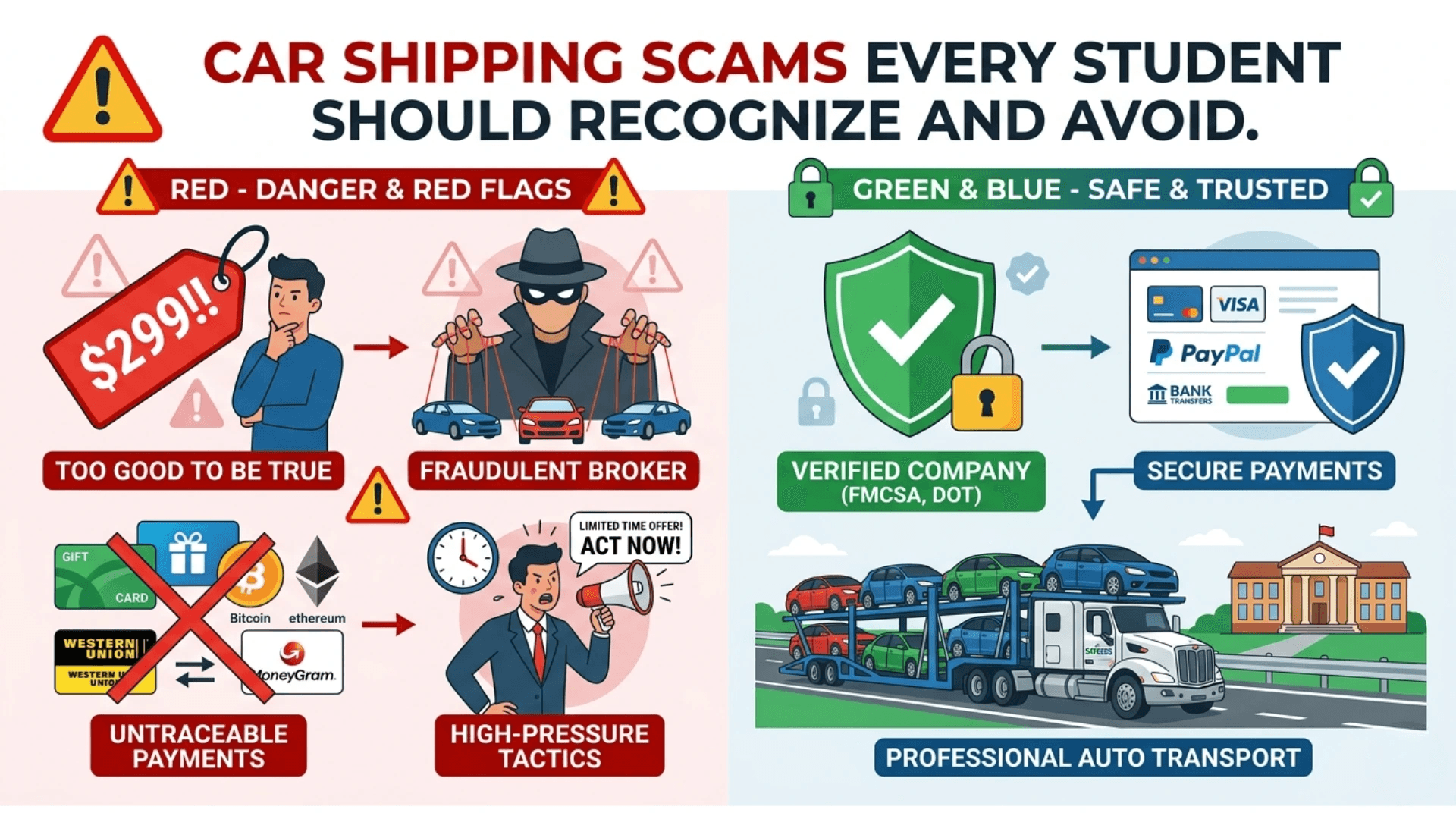
Unfortunately, the high demand for student transport has led to a rise in car shipping scams. Fraudulent entities often pose as legitimate brokers to harvest deposits or personal information. These "phantom" companies often disappear once the initial payment is made, leaving the student without a carrier and out of pocket.
Common car shipping scam warning signs
Identifying a fraudulent operator early in the process is essential for protecting both your finances and your vehicle. Awareness of these common industry red flags allows students to filter out dishonest brokers and focus on legitimate service providers.
"Too-Good-To-Be-True" Quotes: The most prevalent red flag is an unusually low price estimate used to lure in budget-conscious students before adding hidden fees later.
Untraceable Payment Methods: Be wary of any company that demands payment via wire transfers, gift cards, or cryptocurrency, as these methods offer no buyer protection.
Upfront Full Payment: Legitimate businesses like Safeeds use secure, traceable payment processors and do not demand full payment before a carrier has been officially assigned to your route.
High-Pressure Sales Tactics: Scammers often use aggressive communication to force a quick deposit, whereas professional companies provide transparent information and allow time for decision-making.
How to verify a legitimate car shipping company
Performing due diligence before finalizing a contract is essential to ensure your vehicle is handled by a reputable professional. Taking a few minutes to cross-reference official data helps prevent logistical and financial risks.
Verify Federal Credentials: Confirm the company’s operating authority via the Federal Motor Carrier Safety Administration (FMCSA).
Validate Licensing: Ensure the company provides an active Motor Carrier (MC) number and a USDOT number.
Check Insurance Status: Use the FMCSA’s SAFER system to confirm the company’s insurance filings are active and up to date.
Assess Reputation: Consult the Better Business Bureau and independent review platforms to gauge the company’s track record and complaint resolution history.
Confirm Business Legitimacy: A professional company will maintain a verifiable physical address and transparent contact information that aligns with its federal registration.
Choosing The Right Car Shipping Service For Your Needs
Selecting a transport method involves balancing the financial constraints of a student budget with the specific protection requirements of the vehicle. For most undergraduates moving to campus, the primary objective is finding a reliable middle ground between cost and convenience.
Open vs enclosed transport for college students
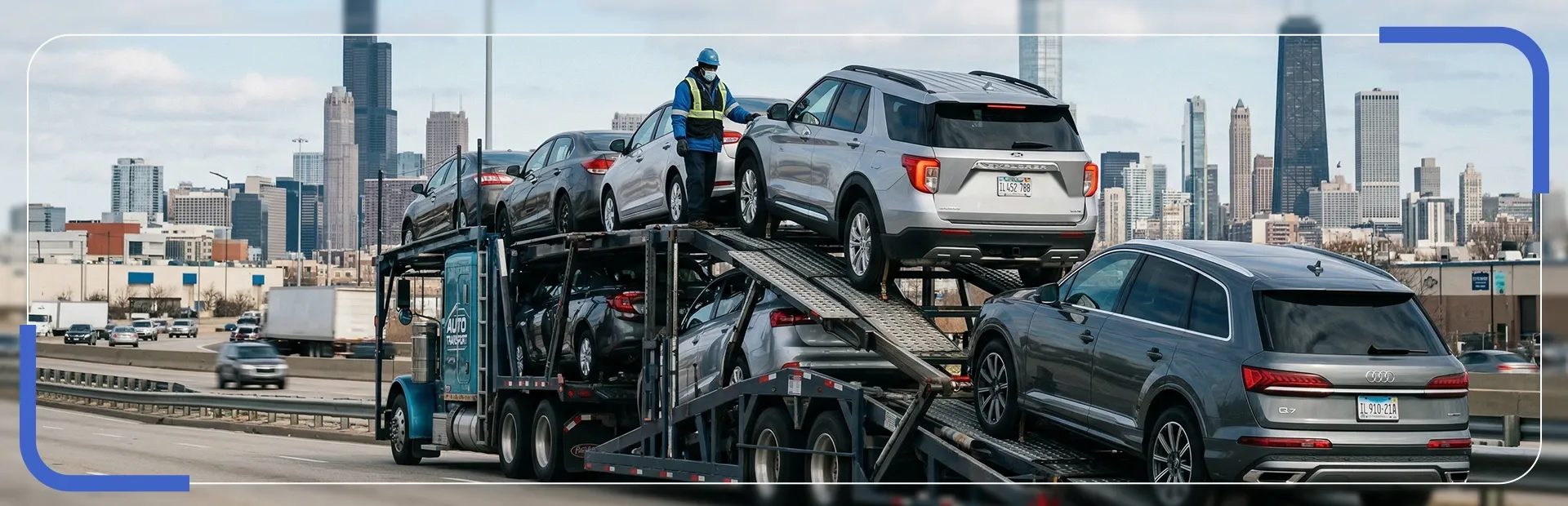
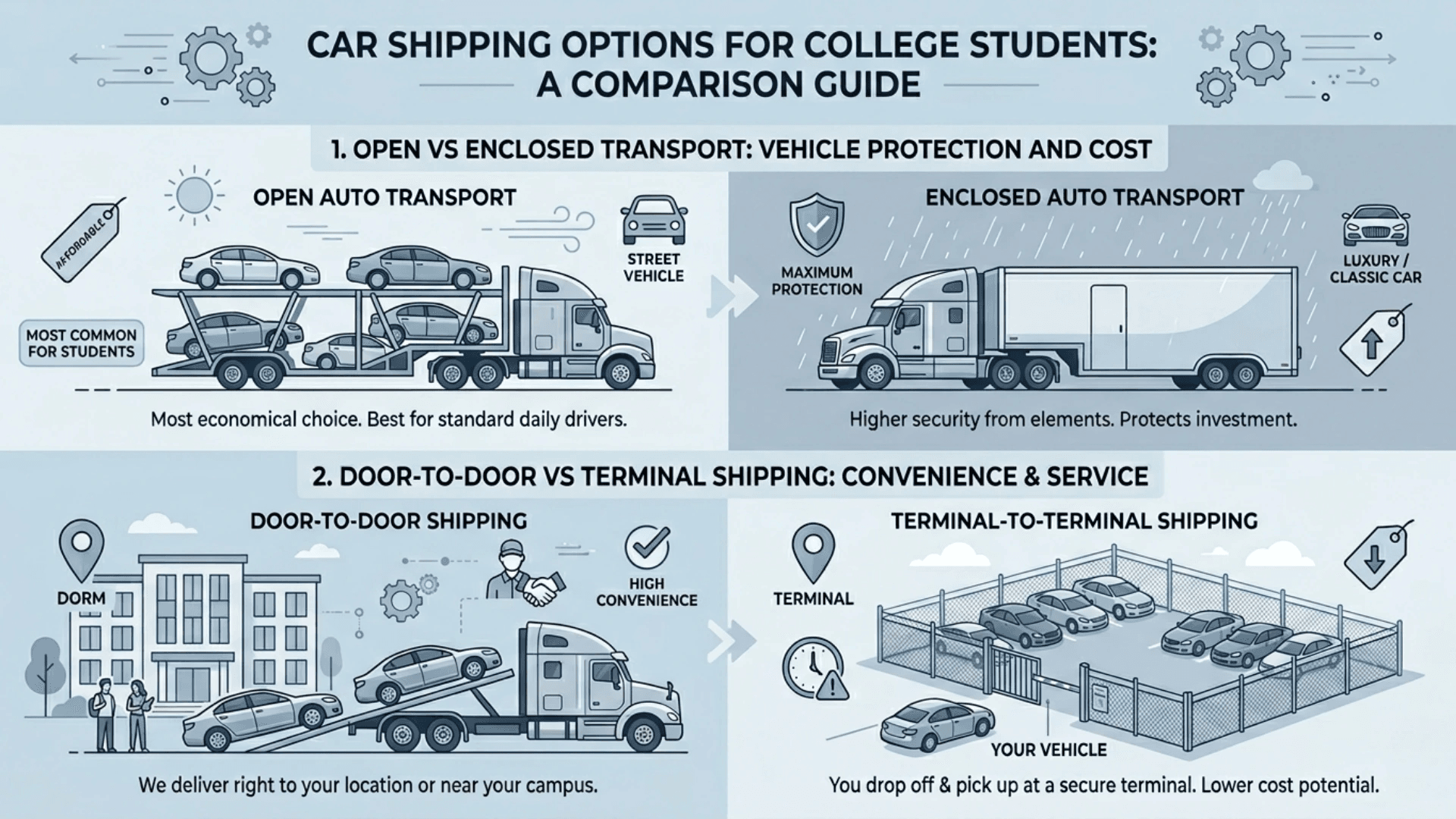
The vast majority of students choose open transport, where the vehicle is placed on a two-level trailer exposed to the elements. This is the most affordable car shipping for college students because carriers can move up to ten vehicles at once, distributing the operational costs across multiple customers.
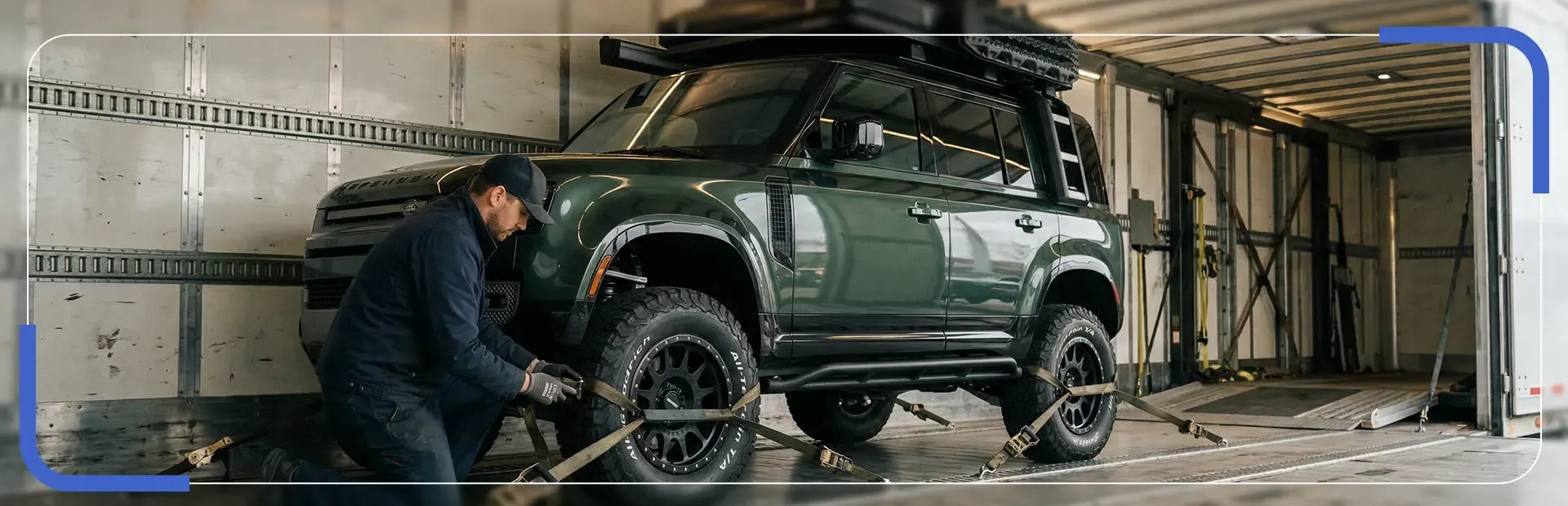
Enclosed transport, conversely, utilizes a specialized trailer that shields the vehicle from rain, road debris, and wind. While enclosed shipping is significantly more expensive, it is a mechanical necessity for high-value motorcycles or classic cars where the risk of a single paint chip far outweighs the added shipping premium.
Door-to-door vs. terminal shipping explained
Door-to-door shipping is the industry standard for convenience; a carrier picks up and drops off the vehicle as close to your specified addresses as safety and local ordinances allow. Terminal shipping involves dropping the vehicle at a central hub. While terminal shipping can occasionally be cheaper, it often results in delays as vehicles wait for a full load. For a student arriving at a new university, the predictability of door-to-door service usually outweighs the minor savings of a terminal drop-off.
Realistic Expectations Students Should Have Before Booking
Understanding the "rhythm" of the transport industry can significantly reduce the anxiety associated with shipping a car across the country. It is important to recognize that transit times are estimates, not guarantees. Federal law mandates strict "Hours of Service" for drivers to ensure road safety, meaning a cross-country trip naturally requires several days.
Aspect of Shipping | What to Expect | Reality Check |
Pickup Window | 1 to 5 business days | Drivers coordinate around multiple stops; specific times may shift. |
Transit Time | 5 to 9 days (Cross-Country) | Weather, traffic, and mandatory driver rest periods impact speed. |
Communication | Direct contact with the driver | Expect a call 24 hours before pickup and delivery. |
Pricing | Binding or Market-Based | Market rates fluctuate; a 7-day price lock offers the best stability. |
Answers Students Look For Before Booking Car Shipping Services
The logistical transition to university life often brings a wave of technical questions regarding the safety and security of one’s vehicle. Addressing these common concerns early ensures that both students and parents can approach the move with a clear understanding of industry standards and professional protocols.
Can I pack personal belongings or dorm supplies inside my car?
No. Following strict Department of Transportation (DOT) regulations, carriers are licensed to transport vehicles, not household goods. Packing your car with personal items can lead to heavy fines at weigh stations and increased weight that may alter your shipping quote. For a seamless experience, Safeeds recommends keeping the vehicle entirely empty to ensure a proper inspection and total compliance with federal law.
Is my vehicle insured during the transport process?
Yes, your asset is protected throughout its journey. As an expert broker, Safeeds verifies that every carrier in our network maintains a valid cargo insurance policy. For those seeking even greater peace of mind, we offer specialized AFTA GAP Protection to supplement the carrier’s basic coverage, ensuring you are shielded from any unexpected transit damage.
How do I know the final price won't change after I book?
At Safeeds, we prioritize financial transparency to help families manage their relocation budgets. We offer a 7-day price lock on our quotes, giving you a full week of stability to finalize your plans without worrying about market fluctuations. Our policy of no upfront deposits means you only pay once a carrier is secured, and you have agreed to the final terms.
Do I need to be present for the pickup and delivery of my car?
Yes, or you must appoint a trusted representative over the age of 18. A physical presence is required to perform the initial and final inspections alongside the driver. This collaborative process ensures that the condition of the vehicle is accurately documented on the Bill of Lading, which serves as your primary receipt and protection during the move.
How long will it take for my car to arrive at campus?
Transit times typically range from 5 to 10 days, depending on the total distance and current route demand. While we provide estimated delivery windows, our real-time tracking services keep you informed of your vehicle’s progress. To ensure your car is ready for the first day of classes, we recommend booking your back-to-college transport at least two to four weeks in advance.
Making Smart And Confident Decisions About Student Car Shipping
Navigating the logistics of a university move is a significant milestone in a student’s path to independence. By understanding the mechanics of the industry and recognizing the red flags of car shipping scams, you can transform a potentially stressful ordeal into a streamlined, professional experience. The goal is not merely to find the lowest price, but to secure a service that respects your timeline and the value of your vehicle.
Successful transport requires a mix of early planning, diligent vetting, and realistic expectations. Whether you are shipping a daily driver for your freshman year or a motorcycle for a summer internship, prioritizing transparency and safety will always lead to the best results. With the right preparation, your vehicle will be waiting for you at your new destination, ready for the academic journey ahead. Secure your spot in the upcoming semester's transport schedule by requesting a quote today.