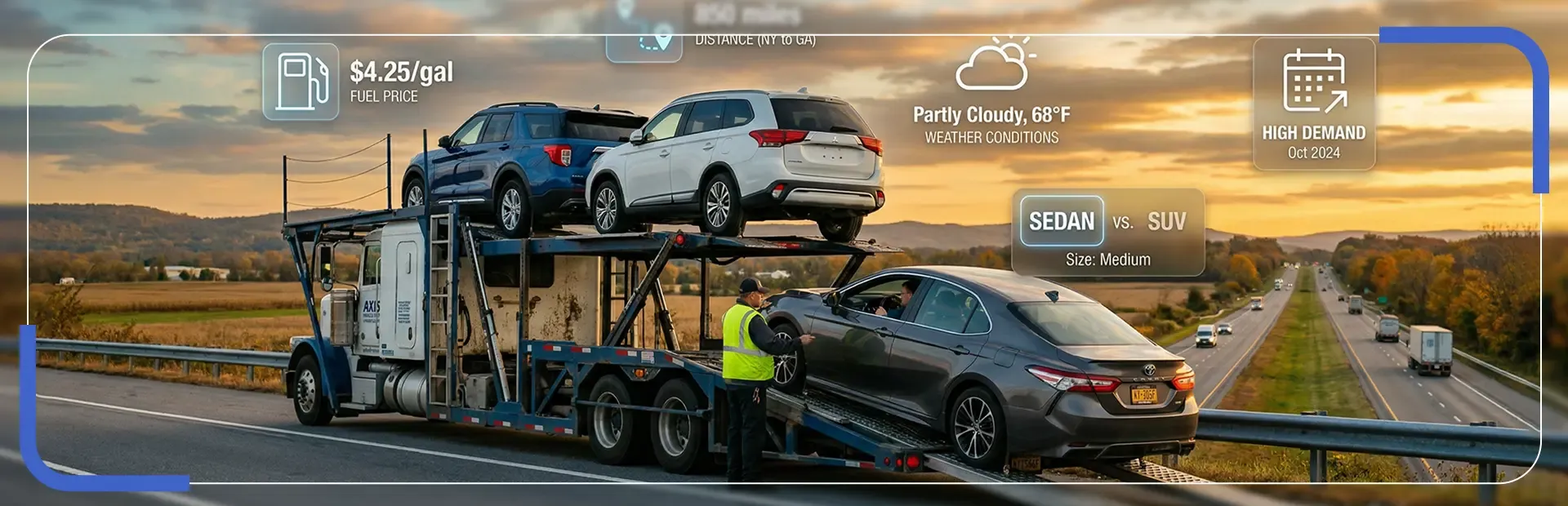
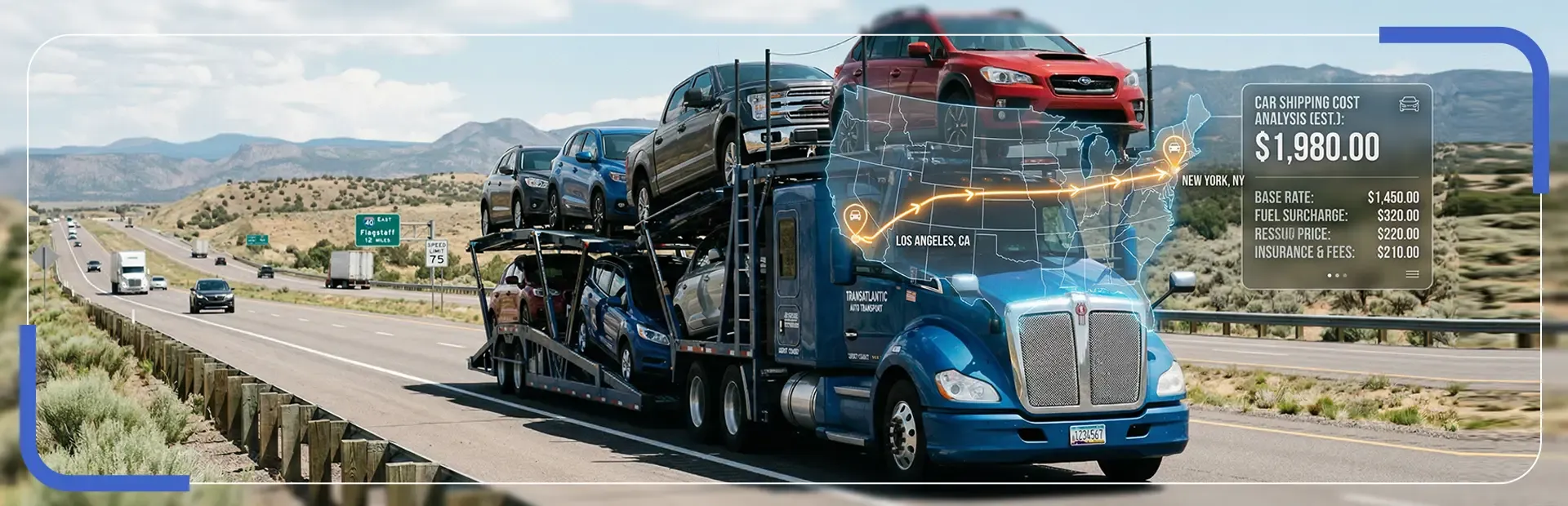
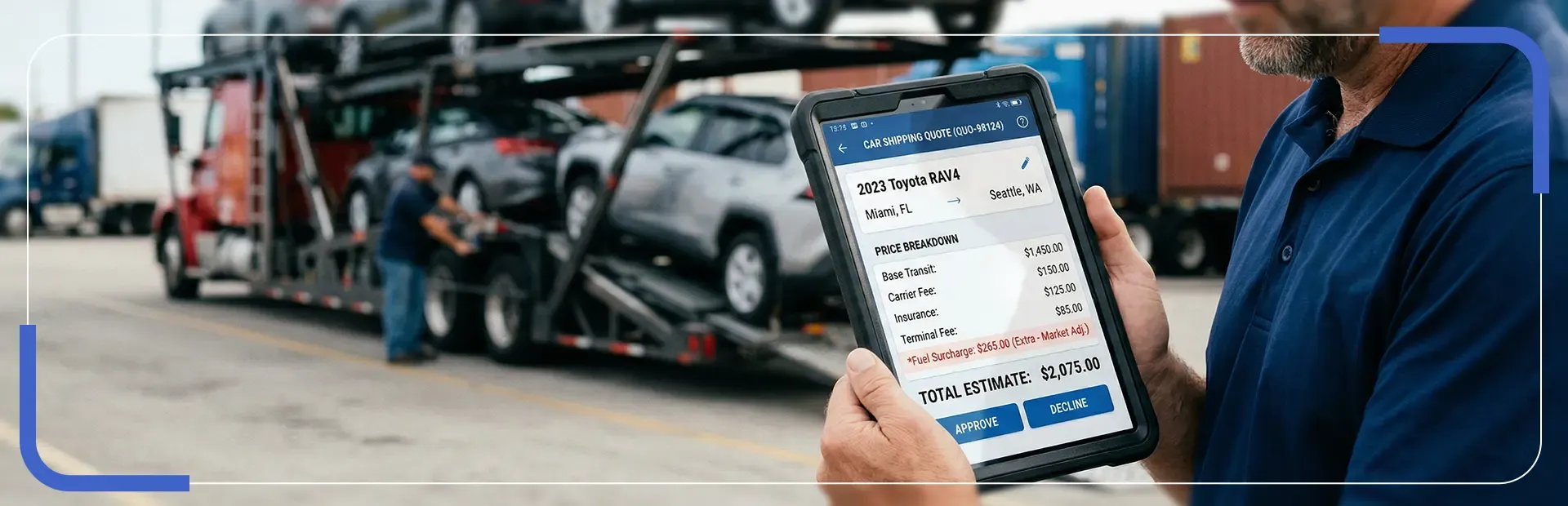
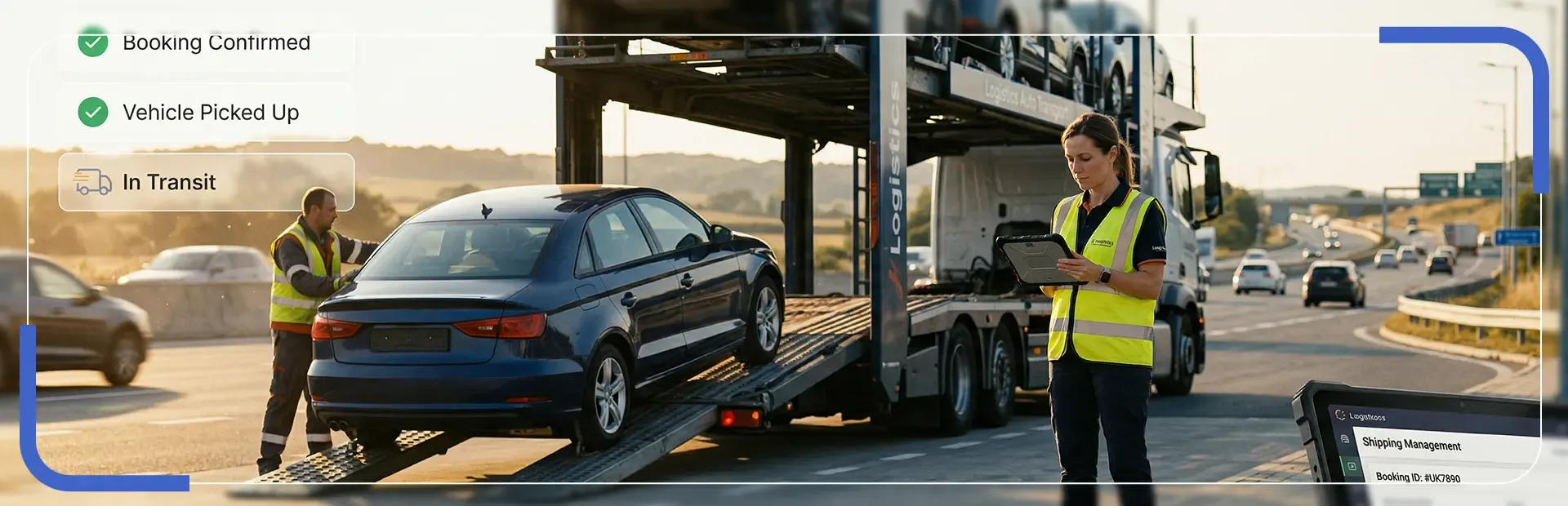
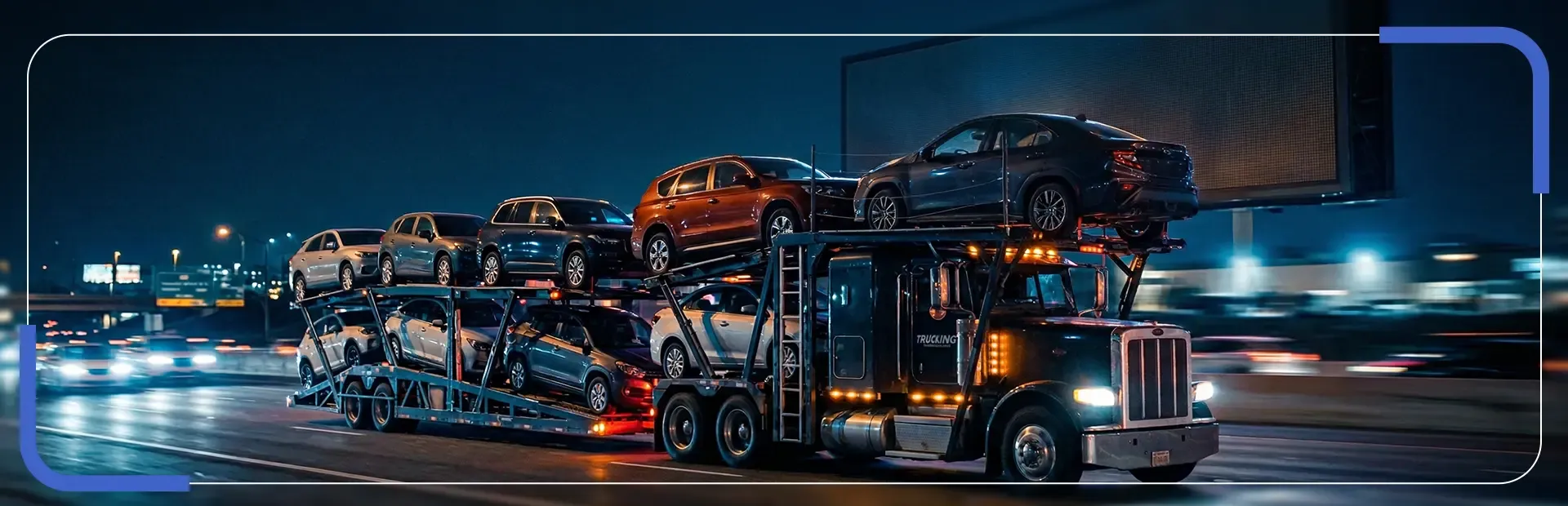
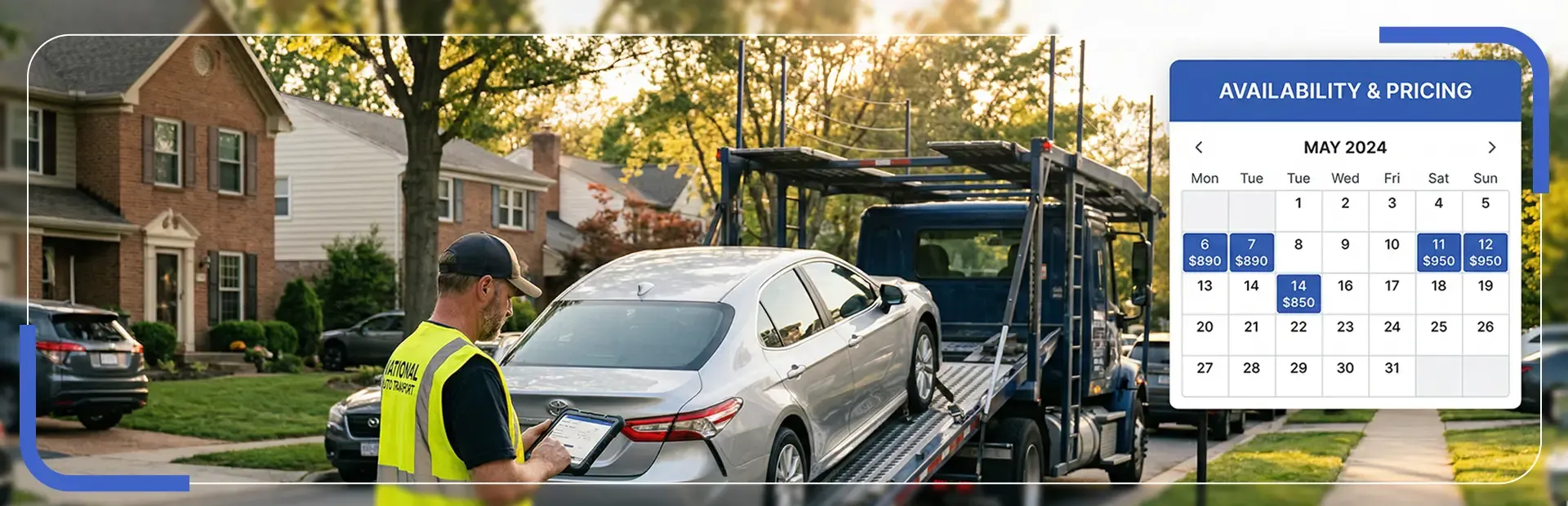
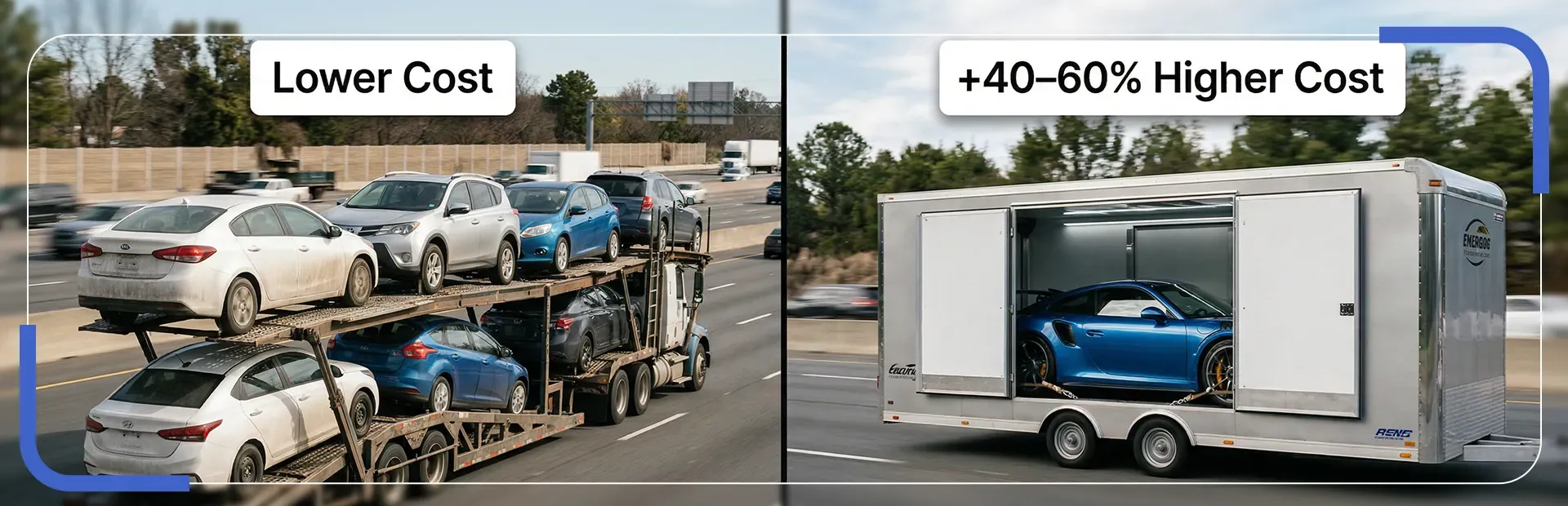
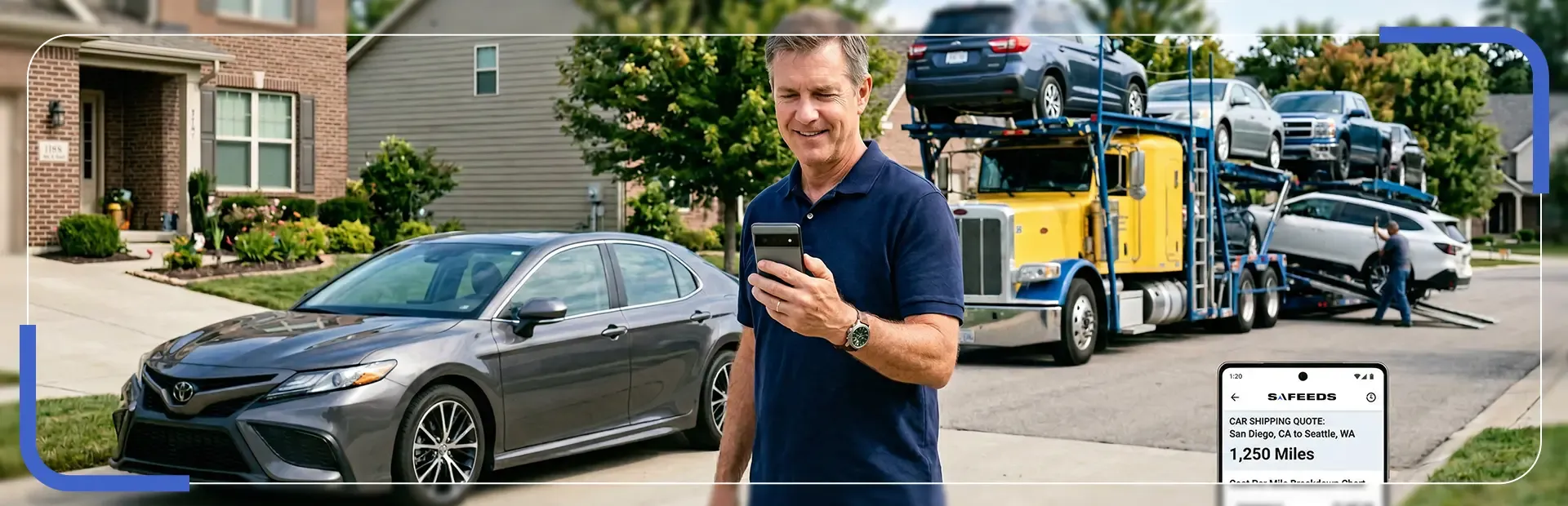
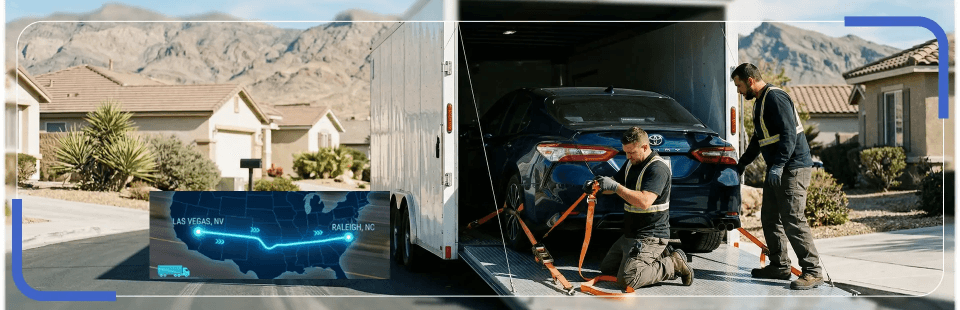
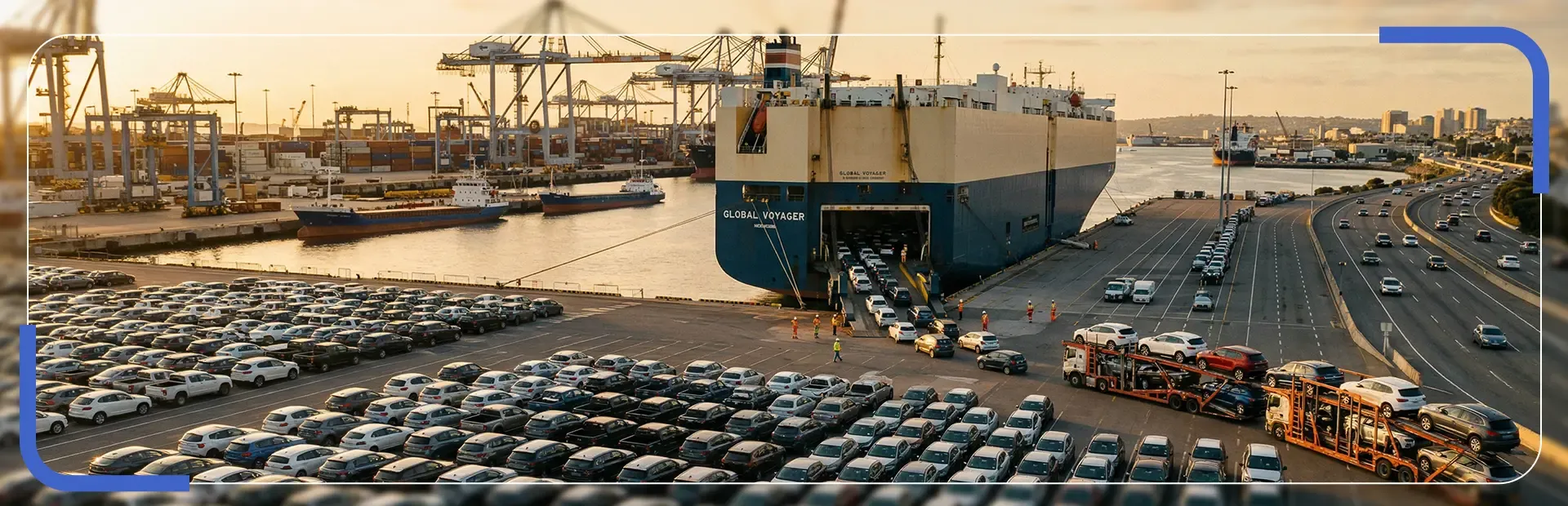
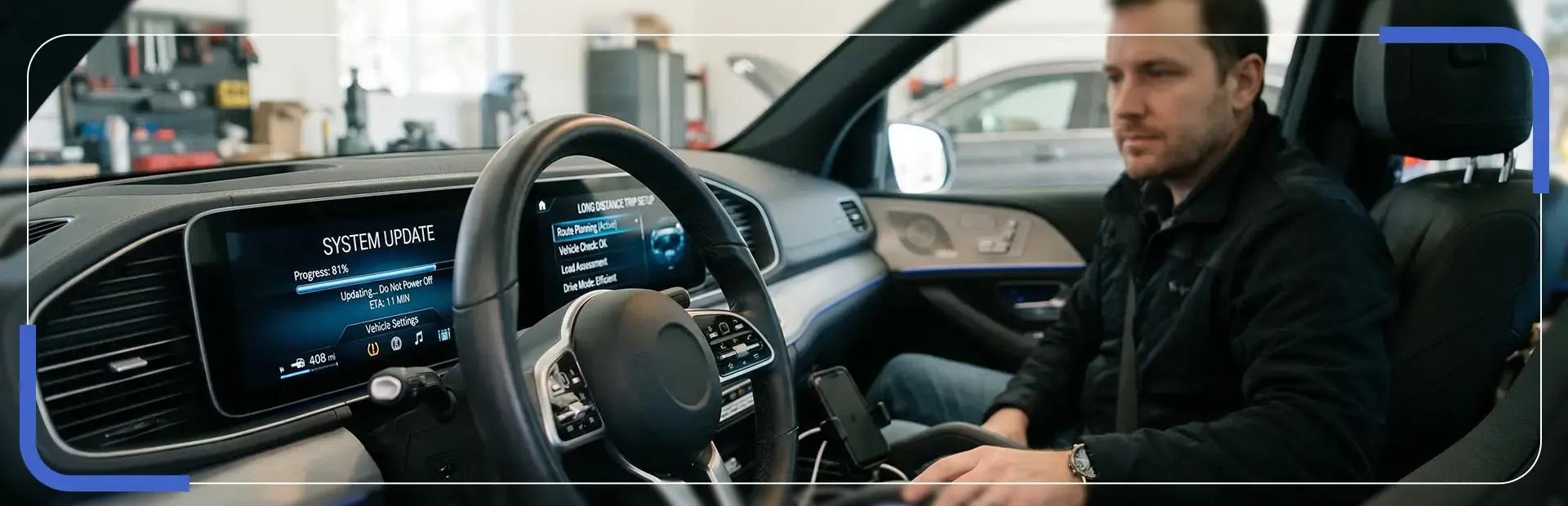
Transporting a vehicle, whether it’s a car, motorcycle, or even a large freight container, is a process that requires careful planning and informed decision-making. With multiple shipping methods available, understanding the differences between door-to-door shipping and terminal-to-terminal transport can make a significant impact on cost, convenience, and overall peace of mind. Door-to-door shipping offers unparalleled convenience, picking up your vehicle directly from your home, business, or preferred location and delivering it straight to your destination, while terminal-to-terminal services can provide a more economical solution for those able to access shipping terminals.
At Safeeds Transport Inc., we guide customers through these options with professionalism, reliability, and care, ensuring every vehicle reaches its destination safely and on time. Get a quote today to start planning your smooth, stress-free vehicle transport experience.
The Basics of Door-to-Door Vehicle Shipping
In modern logistics, door-to-door shipping is the gold standard for convenience. But what is door-to-door shipping exactly? It is a service where a carrier picks up your vehicle at its origin and delivers it directly to your destination. This versatile model covers standard door-to-door car shipping, high-value door-to-door motorcycle shipping, and complex door-to-door freight shipping for specialized equipment.
By removing the need for owners to visit storage terminals, this method saves time and reduces logistical stress. The primary appeal is heightened security, because the vehicle remains on a single trailer; fewer handling points drastically lower the risk of damage. Whether moving an SUV or a vintage bike, this service provides a seamless experience that prioritizes the asset's condition and your schedule.
How Door-to-Door Shipping Works
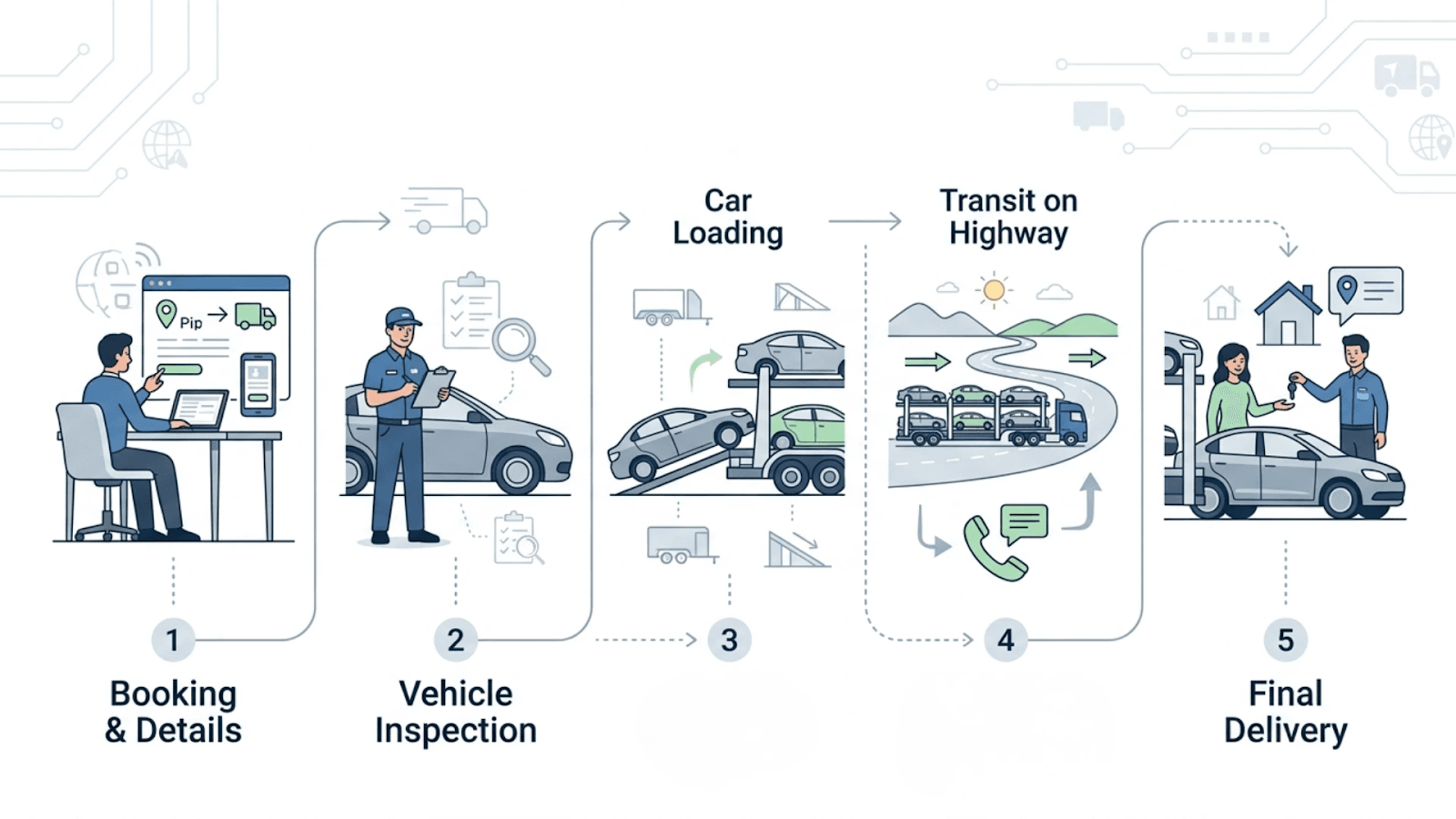
The operational framework of a door-to-door shipping service is designed to provide a high level of transparency and professional oversight at every stage. From the initial logistics planning to the final hand-off, the following steps ensure a secure transit:
Detailed Booking: The client provides origin and destination locations, allowing the coordinator to assign a specialized carrier based on the specific route and vehicle requirements.
Equipment Selection: Owners choose between open-air trailers for standard efficiency or enclosed trailers for maximum protection against the elements.
Origin Inspection: On the scheduled date, the driver performs a rigorous "Bill of Lading" inspection to document the vehicle’s condition before loading.
Direct Transit: Once secured, the vehicle travels directly to its destination, minimizing the risks associated with frequent reloading.
Active Communication: The driver provides consistent updates throughout the journey, ensuring the owner is informed of the estimated arrival time.
Final Delivery: Upon arrival, a second inspection is conducted before the keys are returned, finalizing the door-to-door service shipping cycle.
Key Benefits of Door-to-Door Shipping
Utilizing a premium door-to-door model offers distinct advantages that cater to the safety of the vehicle and the convenience of the owner. By prioritizing a more direct logistical path, this service provides the following benefits:
Absolute Convenience: There is no requirement for the customer to coordinate secondary transportation to or from distant, third-party warehouses or terminals.
Enhanced Safety: By bypassing high-volume terminals, vehicles are shielded from the heavy machinery and constant movement typical of busy shipping hubs.
Strategic Flexibility: This method is highly effective for complex international routes, such as door-to-door shipping to the Dominican Republic, where navigating port logistics independently can be challenging.
Time Efficiency: The removal of intermediary transit points accelerates the total delivery window and reduces the owner's personal logistical burden.
Reduced Risk: A single carrier handling the vehicle from start to finish ensures fewer handling points and greater accountability.
The following video further elaborates on how door-to-door shipping actually works and the benefits involved:
Understanding Terminal-to-Terminal Vehicle Transport
Unlike direct methods, terminal-to-terminal car shipping is a traditional model focused on cost-efficiency. Customers drop off their vehicles at a designated storage lot and retrieve them from a similar facility at the destination. This "bus station" approach allows carriers to consolidate terminal-to-terminal auto shipping loads, maximizing efficiency for large fleets or budget-conscious individuals located near major metropolitan hubs.
While auto shipping terminal-to-terminal offers lower base rates, shippers must account for secondary expenses like storage fees and travel costs. Furthermore, specialized services like terminal-to-terminal motorcycle shipping often require crating to ensure safety within high-volume warehouse environments. Balancing these factors is essential for determining the total value of this high-volume logistics method.
How Terminal-to-Terminal Transport Works
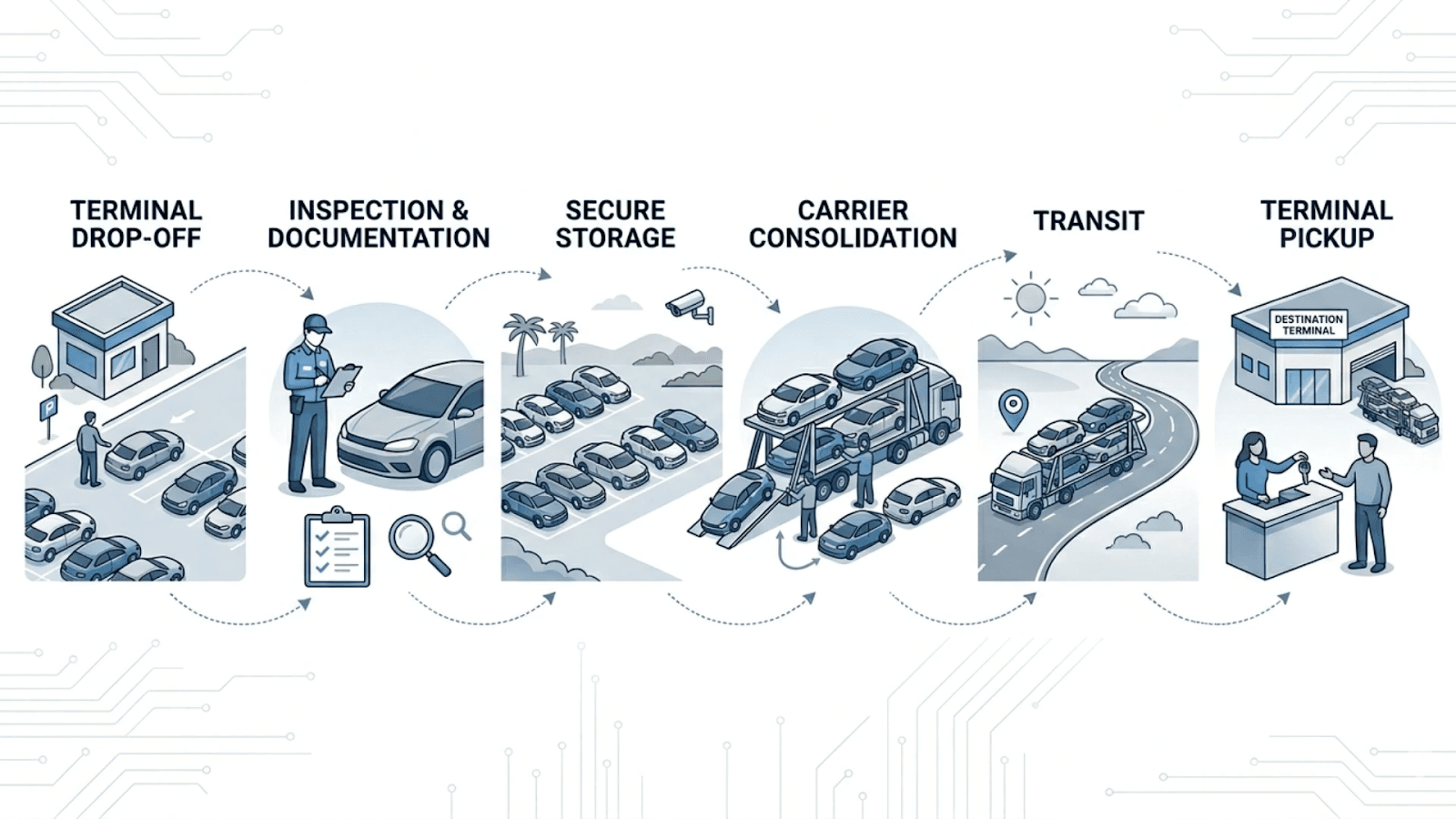
The terminal-based model operates through a centralized logistics network, requiring the vehicle owner to facilitate the initial and final segments of the journey. This process emphasizes carrier consolidation through the following operational steps:
Terminal Drop-off: The shipper drives the vehicle to a regional storage facility, typically located near major highways or maritime ports, to initiate the process.
Documentation: After completing the necessary check-in paperwork and inspections, the vehicle is left in a secure lot.
Carrier Consolidation: The vehicle remains at the hub until a carrier with available trailer space for that specific route arrives to collect multiple units.
Destination Notification: Once the vehicle reaches the destination terminal, the facility staff notifies the owner that the asset is ready for pickup.
Retrieval Window: Owners generally have a 24-to-72-hour window to retrieve their vehicle before the facility begins accruing daily storage fees.
Active Participation: This method requires more coordination from the shipper compared to the hands-off nature of shipping door-to-door.
Advantages of Terminal-to-Terminal Shipping
While it requires more effort from the vehicle owner, terminal shipping remains a viable option for specific logistical and financial needs. This traditional approach provides several distinct advantages:
Lower Base Pricing: Carriers save on fuel and time by avoiding narrow residential streets, allowing them to offer more competitive rates.
Operational Savings: By consolidating pickups at a single hub, the carrier passes the reduced labor and navigation costs directly to the customer.
Commercial Efficiency: It serves as an excellent option for businesses with their own staff capable of managing the "first and last mile" of transport.
Strategic Proximity: For residents of major metropolitan hubs like Los Angeles, Chicago, or Miami, the convenience of nearby terminals makes this a straightforward choice.
Predictable Hubs: Established terminals provide a fixed, known location for pickup and delivery, which can be beneficial for high-volume commercial fleet movements.
Explore further factors, benefits, and considerations of terminal-to-terminal shipping in the following video:
Feature | Door-to-Door Shipping | Terminal-to-Terminal Shipping |
Pickup Location | Origin Address (Home/Office) | Centralized Storage Hub |
Handling Points | Minimal (Load once, Unload once) | Multiple (Moving within lots) |
Owner Effort | Low (Carrier comes to you) | High (Owner drives to the terminal) |
Cost | Premium (Higher operational costs) | Standard (Lower base rate) |
Insurance Risk | Lower (Less movement) | Moderate (Risk of lot damage) |
Comparing Costs Between Door-to-Door and Terminal Services
When evaluating a door-to-door shipping service versus terminal transport, look beyond the initial quote. Door-to-door rates are comprehensive, covering the fuel, time, and labor needed to navigate local traffic directly to your doorstep. For door-to-door freight shipping, costs also reflect cargo dimensions and site accessibility, ensuring a specialized delivery.
Conversely, shipping door-to-door eliminates hidden terminal "gate fees" and potential storage charges. Expert analysis on door-to-door vs. terminal shipping shows the price gap often narrows once you calculate personal travel and storage risks. Choosing direct service typically offers better overall value and transparency.
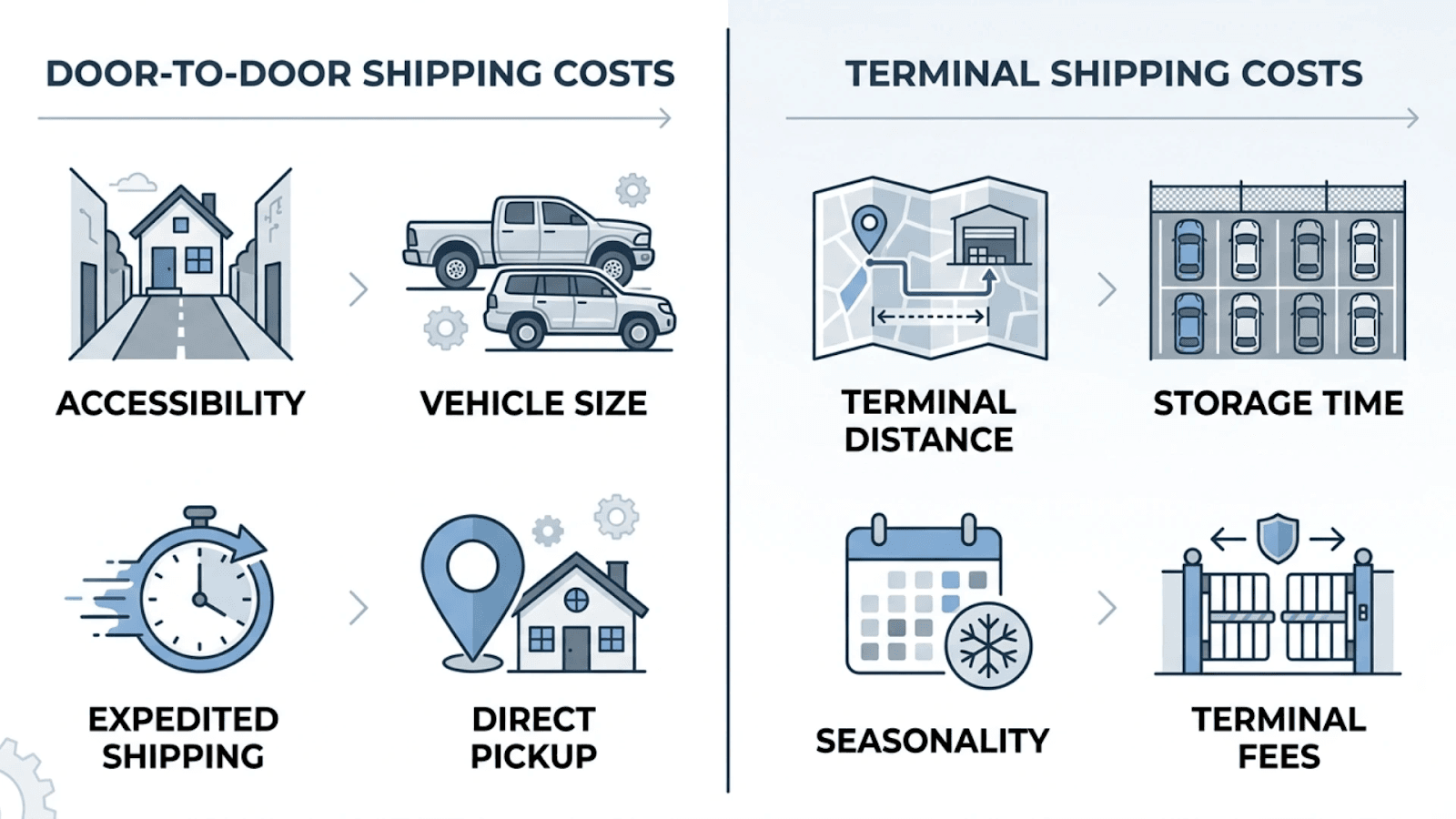
Factors Influencing Door-to-Door Shipping Costs
Calculating the final rate for personalized transport involves evaluating the specific logistical requirements of your pickup and delivery locations. Beyond basic mileage, several site-specific and vehicle-specific variables directly impact the total investment required for a door-to-door shipping service.
Accessibility: If your home is located on a narrow cul-de-sac or behind low-hanging trees, the carrier may require a "meet-point" at a nearby shopping center, though it remains a door-to-door vehicle shipping service in principle.
Vehicle Specifications: Larger vehicles, such as dually trucks or modified SUVs, take up more "slots" on a trailer and require more labor to secure, naturally increasing the price.
Time Sensitivity: Expedited windows for door-to-door car shipping require carriers to prioritize your route over others, which will always command a higher premium.

Factors Influencing Terminal-to-Terminal Costs
While terminal shipping is generally viewed as the more economical route, the final price is heavily dependent on the current state of the national logistics network. Understanding the regional and seasonal constraints of these facilities is essential for accurately budgeting your terminal-to-terminal auto shipping costs.
Terminal Availability: Not all cities have active terminals. If the nearest secure hub is 100 miles away, the cost of fuel and the personal time required to get there must be factored into the "total" shipping cost.
Seasonality: During peak "Snowbird" seasons, terminals can become overcrowded with high volumes of traffic, leading to higher storage rates and significantly longer wait times for carrier pickup.
Facility Fees: Unlike residential pickups, terminals often charge administrative "gate fees" or processing fees that can add to the base transport rate.
Risk Management and Vehicle Safety Considerations
Safety is the paramount concern for any vehicle owner. In the realm of door-to-door vehicle shipping, the primary safety measure is the consistency of the carrier. Since the vehicle is generally not moved from its spot on the trailer during the trip, the risk of "fender benders" or loading accidents is drastically reduced.
However, in terminal-to-terminal car shipping, vehicles are often moved by lot attendants to make room for other arriving or departing trucks. Every time a vehicle is started and driven, even for a short distance in a parking lot, the statistical risk of minor damage increases. This is a crucial distinction for owners of high-end or classic vehicles.
Safety Measures for Door-to-Door Shipping
The most effective way to ensure safety in a door-to-door shipping service is to opt for enclosed transport. This shields the vehicle from road debris, salt, and weather. Additionally, verifying the carrier’s safety rating through the Federal Motor Carrier Safety Administration (FMCSA) is a mandatory step for professional-grade logistics.
Safety Measures for Terminal-to-Terminal Shipping
If using a terminal, ensure that the facility is gated, monitored by 24/7 surveillance, and has a clear policy on "lot damage." It is also imperative to perform a rigorous inspection at both the drop-off and pickup terminals, as insurance claims can be difficult to prove once the vehicle has left the lot.
When to Choose Door-to-Door vs. Terminal-to-Terminal Shipping
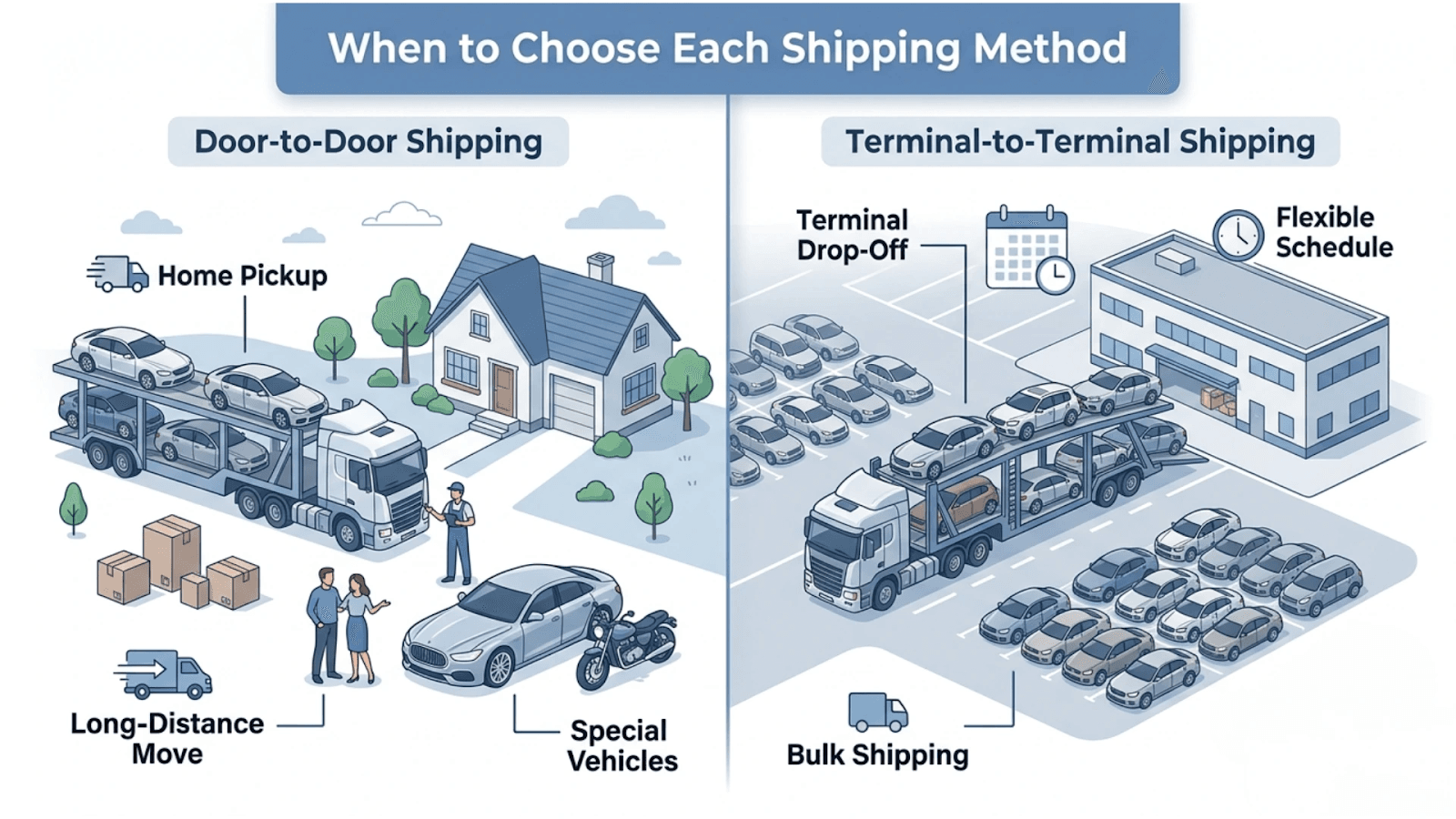
Choosing between these methods requires balancing the budget with the specific value of your cargo. For most residential moves, door-to-door car shipping is the preferred choice, as it removes the logistical burden of coordinating secondary transportation to a terminal. Conversely, terminal-to-terminal auto shipping serves as a functional alternative for budget-conscious shippers or commercial entities moving multiple units where cost savings outweigh speed.
High-value assets, such as luxury vehicles or motorcycles, essentially necessitate a door-to-door service shipping model. This approach minimizes handling and allows for personal oversight during loading, security that busy, high-volume terminals cannot guarantee. For first-time shippers, the peace of mind and simplicity of home-based service usually outweigh the slight premium in cost.
Ideal Scenarios for Door-to-Door Shipping
This method is optimal for cross-country moves where the owner is managing a complex relocation. It is also the superior choice for door-to-door motorcycle shipping and sensitive door-to-door freight shipping, as these items often require specialized loading equipment. For residents in rural areas or cities without major logistics hubs, door service is a necessity to avoid the travel expenses that would otherwise negate any terminal-based savings.
Ideal Scenarios for Terminal-to-Terminal Shipping
Terminal services are best suited for budget-conscious shippers with the flexibility to manage vehicle transport during business hours. This remains a viable option for standard daily drivers where minor schedule fluctuations are not a concern. Additionally, collectors or commercial entities moving multiple units may find that terminal-to-terminal auto shipping streamlines the loading process, often securing more competitive bulk rates and logistical efficiency.
Scenario Feature | Best Choice: Door-to-Door | Best Choice: Terminal |
Vehicle Type | Luxury, Classic, Exotic | Standard, Used, Fleet |
Location Type | Residential, Rural, Remote | Major Metropolitan Hubs |
Schedule | Tight, Specific Windows | Flexible, Non-Urgent |
Primary Goal | Convenience & Safety | Maximum Cost Savings |
Insurance Priority | High (Minimize handling) | Standard (Broker-verified) |
Expert Tips for Choosing the Best Vehicle Shipping Method
Selecting a door-to-door shipping service is about more than just clicking a button; it requires a bit of due diligence to ensure you are partnering with a reputable firm. Professionalism in this industry is marked by transparency and a track record of reliable communication.
When shipping door-to-door, always ask for the carrier's specific credentials. A legitimate broker will have no problem providing you with the necessary details to verify their authority. Furthermore, planning ahead is the single most effective way to lower your costs and secure a spot on a high-quality trailer.
Carrier Verification and Reputation
Before committing to a terminal-to-terminal car shipping or door-to-door contract, research recent customer reviews across multiple platforms. Look for mentions of the specific agents and how they handled delays or issues. A critical step is checking the USDOT and MC numbers on the official FMCSA website to ensure the company is legally authorized to facilitate transport.
Planning and Timing Your Shipment
Booking your shipment at least two to three weeks in advance typically yields the most competitive rates. Seasonal trends, such as the winter "snowbird" migration to the South, can cause prices to spike due to high demand. If your schedule allows for a 3-to-5-day pickup window, you are much more likely to be matched with a top-tier carrier at a fair price.
What You Need to Know About Vehicle Shipping
Navigating the auto transport industry can feel overwhelming, but understanding the core mechanics of the business helps you avoid common pitfalls and ensures your vehicle arrives safely.
How much does it cost to ship a car with Safeeds Transport Inc?
The cost is determined by several factors, including the total distance, the size and weight of the vehicle, the current fuel price index, and whether you choose open or enclosed transport. We provide a transparent quote with a 7-day price lock to ensure you have financial stability throughout the process.
How long does it take to ship a car?
Typically, cross-country shipments take between 7 and 10 days, while shorter regional moves may take 2 to 5 days. Factors like weather, road conditions, and driver mandatory rest periods influence the final delivery window.
How do I prepare my car for shipping?
Ensure the vehicle is clean for a proper inspection, remove all personal belongings, and maintain the fuel level at approximately a quarter tank. This reduces weight and ensures the vehicle can be moved safely onto the trailer.
What type of carriers do you use for auto transport?
We utilize a network of highly vetted, licensed, and insured motor carriers. Depending on your preference, we offer open carriers for cost-efficiency and enclosed carriers for maximum protection.
Is my vehicle insured during transport?
Yes, every carrier in our network is required to maintain valid insurance. Additionally, we advocate for AFTA GAP Protection to cover any potential gaps between the carrier's policy and the full value of your vehicle.
Making an Informed Decision for Vehicle Transport
Ultimately, the choice between a door-to-door car shipping service and terminal transport is a personal one based on your specific priorities. If your primary concern is the safety of a cherished asset and the preservation of your own time, the "door" model is the undisputed winner. It provides a level of white-glove service that simplifies an otherwise stressful event.
Conversely, if you are looking to shave every possible dollar off your relocation budget and don't mind the extra legwork of driving to a warehouse, terminal shipping remains a functional tool in the logistics world. Regardless of the method you choose, focusing on door-to-door vehicle shipping remains the most reliable path to a stress-free experience. By weighing the factors of convenience, cost, and safety, you can move forward with the confidence that your vehicle is in professional hands. Get an instant quote from Safeeds Transport Inc. now and lock in your price for 7 days.