Safe Transport of Non-Runners with Specialized Car Hauler Trailers

Safeeds
March 18, 2026
18 min read

Share post

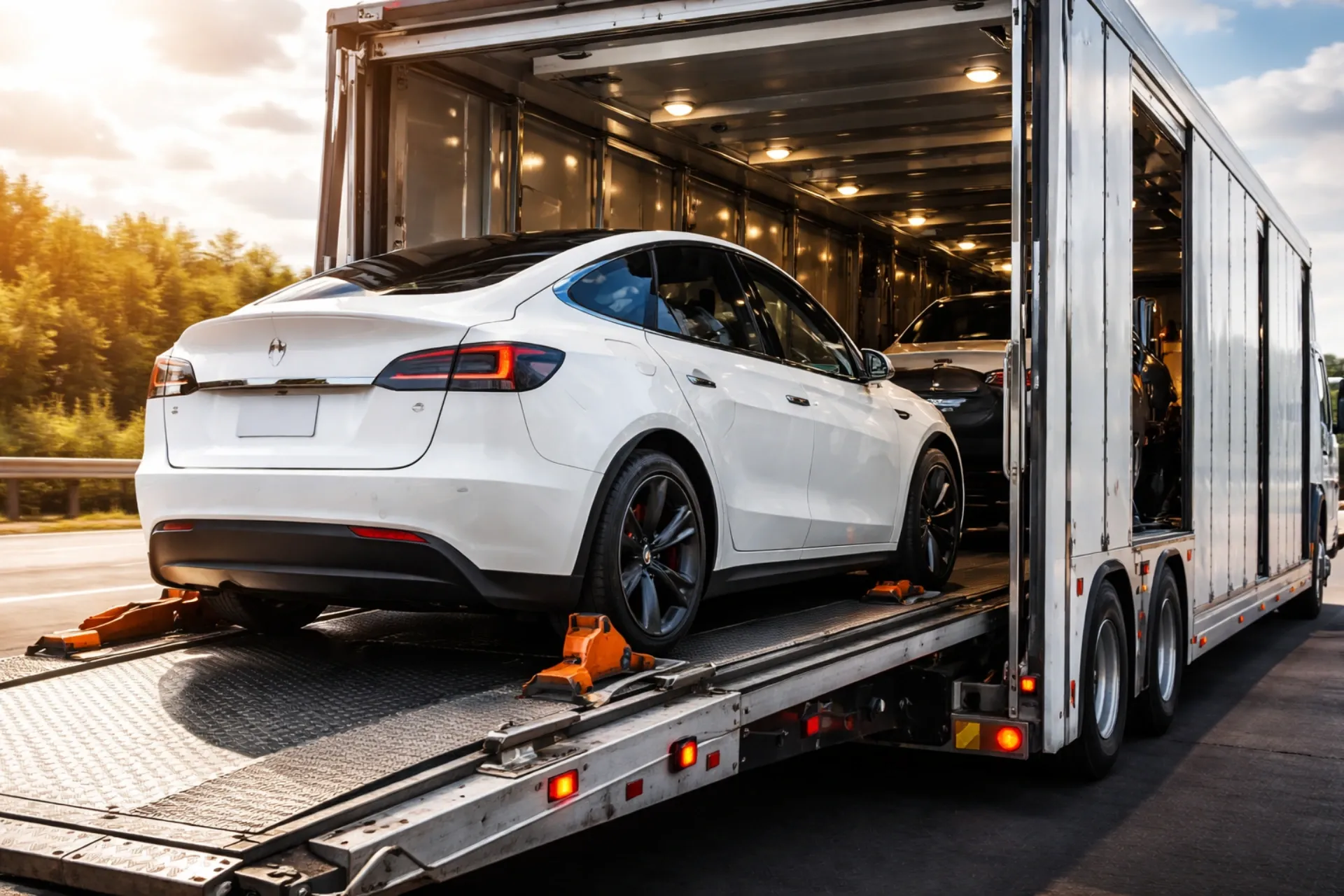
Transporting a vehicle that cannot start or move on its own requires more than standard auto shipping. From mechanical failures to accident-damaged cars, non-running vehicles need specialized equipment and experienced handling to ensure safe loading and transit. This is where a car hauler trailer equipped with winches, low-angle ramps, and secure tie-down systems becomes essential. These tools allow transporters to carefully load inoperable vehicles without causing additional damage to the suspension, body, or drivetrain.

Whether you are dealing with inoperable car shipping, relocating a project vehicle, or arranging non-running car transport after a breakdown, understanding the process can help you avoid costly mistakes. Working with experienced professionals ensures your vehicle is moved safely from pickup to delivery.

If you need reliable help with shipping a non-running car, get a quote from Safeeds Transport Inc. today and explore secure transport options tailored for inoperable vehicles.

Understanding Non-Running Vehicles and Their Shipping Challenges

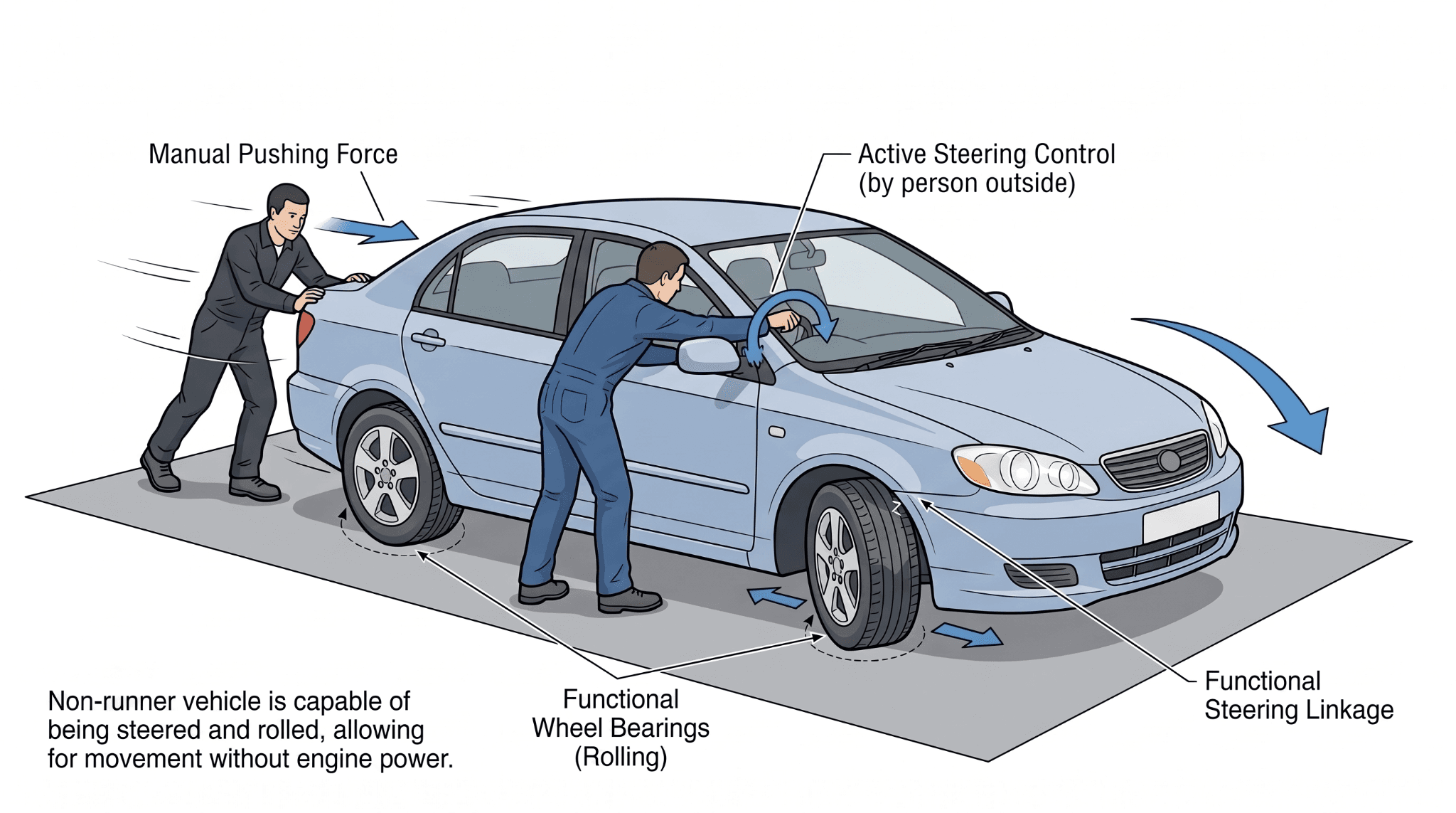
In the logistics sector, a non-running or inoperable vehicle is defined as any unit that cannot move under its own power, whether due to engine failure, missing keys, or structural damage from an accident. Unlike a standard vehicle that a driver can simply steer onto a car hauler trailer, an inoperable unit is essentially "dead weight." This status fundamentally changes the equipment and labor requirements of the move.

The primary challenge of non-running car transport lies in the loading and unloading phases. Without the ability to drive the vehicle, transporters must utilize specialized equipment such as winches, forklifts, or even cranes in extreme cases. To ensure safety, carriers must strictly adhere to federal safety regulations regarding vehicle weight and trailer integrity. If a carrier attempts to load an inoperable car transport job without the proper winch-equipped trailer, the risk of catastrophic damage to the vehicle’s suspension, tires, or undercarriage increases exponentially. Furthermore, the physical strain of "dragging" a vehicle onto a ramp without rolling capability can compromise the structural integrity of the tie-down points, leading to potential shifts during transit.

Types of Car Hauler Trailers for Non-Running Cars

Choosing the right equipment is the first line of defense against both damage and logistical delays. In the world of inoperable car shipping, the configuration of the trailer dictates the safety of the cargo. Most residential or small-batch moves utilize a 2-car hauler trailer or a 3-car hauler trailer for sale, typically seen behind heavy-duty dually trucks. These smaller configurations are often preferred for inoperable units because they offer more maneuverability in tight residential spaces where a massive car hauler truck might struggle to navigate.

Open vs. Enclosed Car Hauler Trailers

For a standard auto transport non-running car project, an open trailer is the industry workhorse. These trailers are cost-effective and provide easy access for winching cables. However, if the vehicle is a classic motorcycle or a high-end vehicle that is non-running but aesthetically pristine, an enclosed car hauler trailer is recommended. Enclosed units protect the vehicle from road debris and weather, which is vital when a car cannot be easily washed or moved once it reaches its destination.

Single vs. Multi-Car Transport Trailers

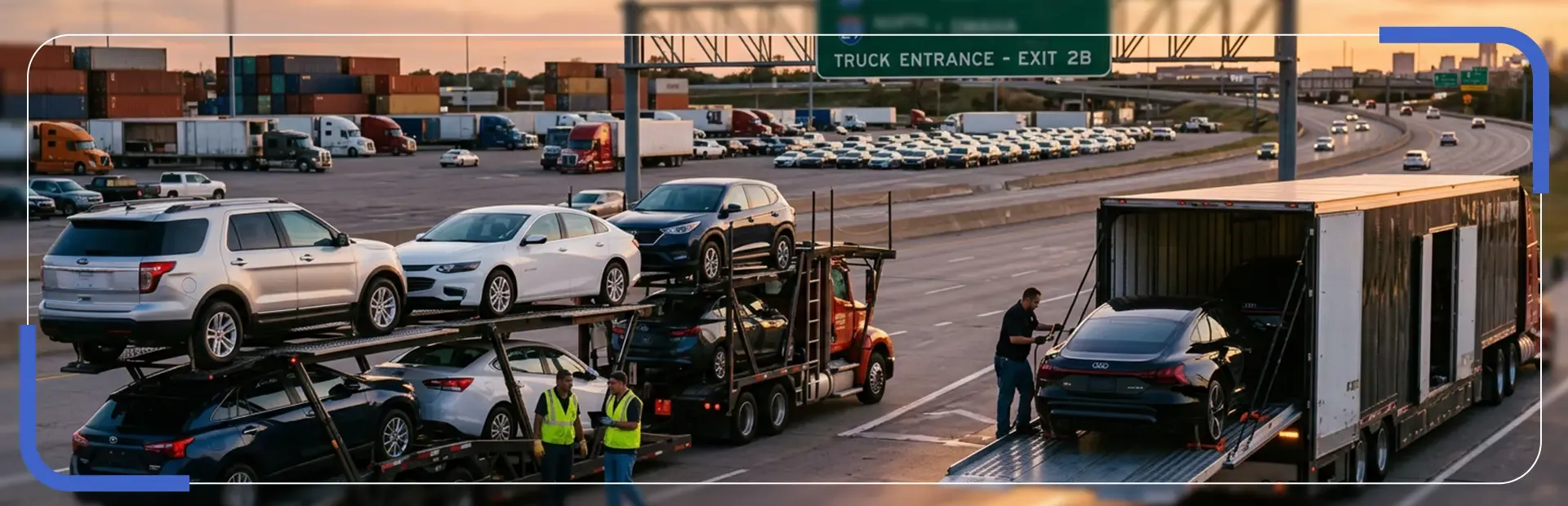
The scale of the move also matters. A 3-car hauler trailer for sale in the secondary market is a common sight for regional transporters, balancing fuel efficiency with the ability to move multiple "salvage" or "project" cars at once. Larger 7-to-9 car carriers are less ideal for shipping a non-running car because the winching process is time-consuming and can block the loading sequence of the other operable vehicles on the rack.

Trailer Type

Best Use Case

Equipment Required

Flatbed Trailer

Local, short-distance moves

Industrial Winch

2-Car Hauler

Residential pickups/deliveries

Pulling Winch & Ramps

Enclosed Hauler

Luxury or Classic "project" cars

Hydraulic Lift-gate

Multi-Car (7-9)

Long-distance dealership moves

Specialized Winch/Rack system

Step-by-Step Process for Loading a Non-Running Car

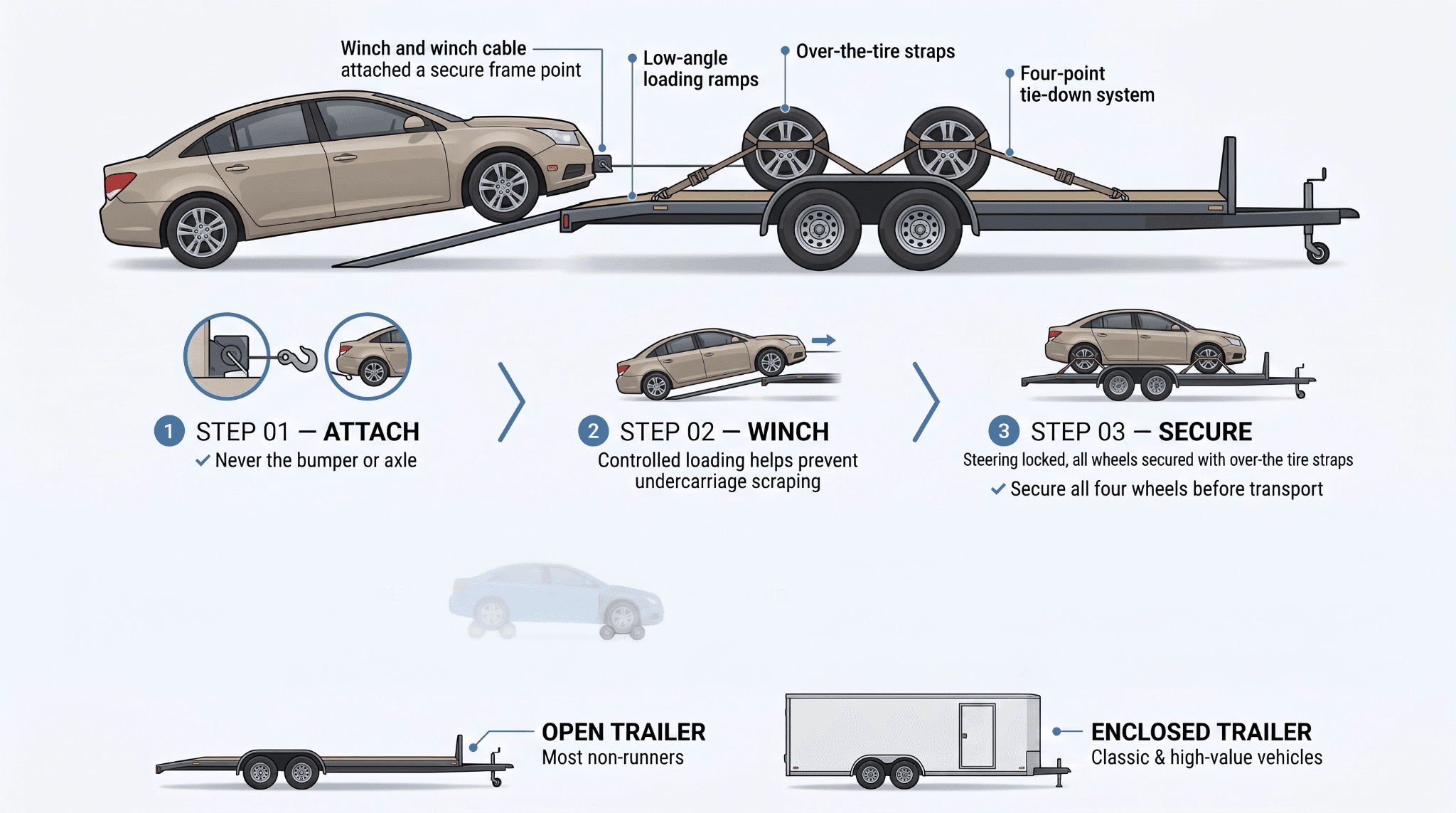
Safety is the paramount concern when shipping non-running cars. Because the vehicle cannot move under its own power, the loading process requires technical precision and specialized equipment. Here is the professional step-by-step sequence for a safe "winch-on" operation:

Step 1: The Winch-Out Attachment: The process begins by extending a high-tensile steel or synthetic cable from the trailer. The driver attaches this to a secure point on the vehicle's frame or a designated tow hook. It is critical to never attach to the bumper or axle, as these components can easily bend or snap under the extreme tension required to pull a stationary 4,000-pound vehicle.

Step 2: Establishing the Ramp Angle: Maintaining the correct incline is essential to prevent "high-centering," where the middle of the car's underbody scrapes the top of the ramp. Professional transporters often utilize "race ramps" or specialized wooden blocks to decrease the angle, ensuring the vehicle clears the transition point safely.

Step 3: Controlled Winch Loading: Using a remote-controlled winch, the operator slowly guides the vehicle up the ramps. This slow, steady pace allows the driver to monitor the steering and ensure the non-running car transport remains centered on the tracks of the car hauler.

Step 4: Final Positioning and Neutral Lock: Once the vehicle is properly situated on the deck, the driver ensures the transmission is handled according to its mechanical state. If possible, the steering wheel is locked in the straight-ahead position to prevent shifting during transit.

Step 5: Four-Point Securement: Finally, the vehicle is secured using a four-point tie-down system. For inoperable car transport, over-the-tire straps are the gold standard. These secure the vehicle by its tires rather than compressing the suspension, which protects the shocks and springs from unnecessary stress during the long-distance journey.

Common Mistakes to Avoid When Transporting Inoperable Cars

Many novice shippers and "fly-by-night" carriers make critical errors that lead to significant insurance headaches. To ensure your non-running car transport experience is seamless, avoid these common pitfalls:

  • Verifying Roll and Steer Status: Never assume a car is movable just because it has wheels. If the steering is locked or the wheels are seized, a standard car hauler trailer cannot winch it without a "skidding" operation, which dramatically increases costs and damage risks.

  • Underestimating Total Weight: A heavy project truck or vintage vehicle can easily exceed the weight rating of a standard 2-car hauler trailer. Overloading the trailer can lead to frame failure or dangerous tire blowouts during transit.

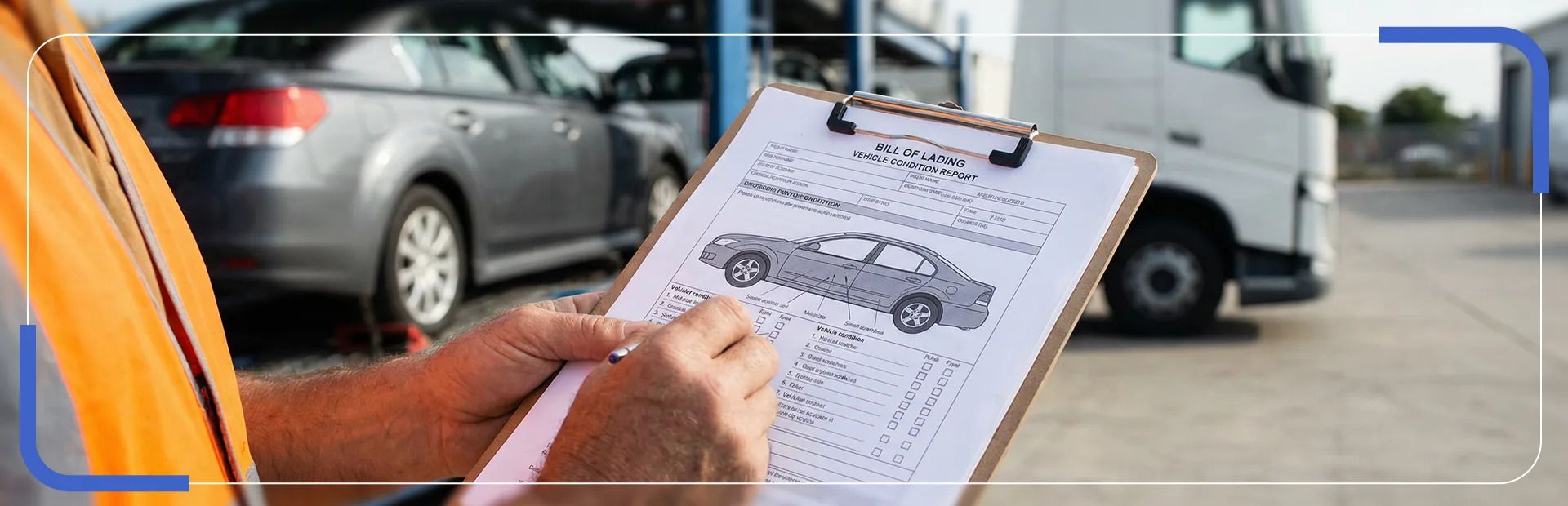
  • Skipping Detailed Documentation: Many owners overlook inspections for non-running car transport, but high-resolution photos are your only protection. Without them, you cannot prove that new damage, like a dented rocker panel, occurred during the move.

  • Ignoring Tire Integrity: Flat or rotted tires make winching hazardous. If a tire slips off the rim while being pulled onto the car hauler, the vehicle can shift violently, potentially causing catastrophic damage to the car or the equipment.

By avoiding these errors, you protect your investment and ensure the carrier has the correct equipment to handle your inoperable car shipping safely.

Preparing Your Vehicle for Non-Runner Transport

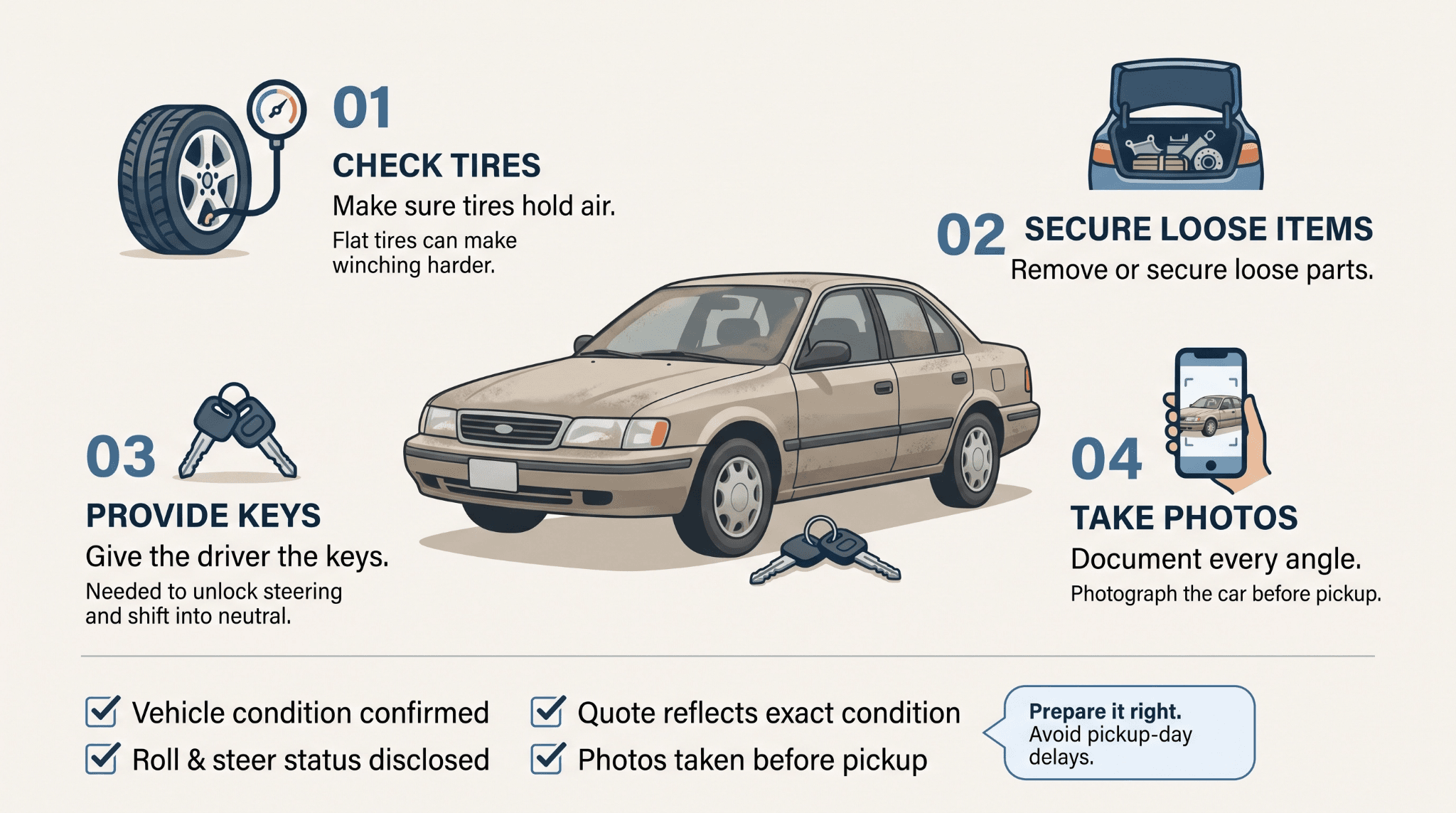
Before the car hauler truck arrives, the owner has several key responsibilities to ensure a successful pickup. Even though the car does not start, it should be cleared of all loose internal parts. Many "project" cars are shipped with extra engines or parts in the trunk; these must be secured or removed, as they can shift and cause internal body damage.

  • Check the Tires: Ensure they hold air. If they don't, inform the carrier so they can bring "dollies."

  • Fluid Check: Non-runners often leak. Ensure any active leaks are patched or noted so they don't drip onto other cars on the car hauler trailer.

  • Keys and Access: Even if the car won't start, the driver needs the keys to unlock the steering column and shift the transmission into neutral.

  • Photography: Take 360-degree high-resolution photos of the vehicle in its current state.

By preparing the vehicle properly, you minimize the "on-site" time for the driver, which is often a point of friction in auto transport non-running car logistics. Clear communication regarding the vehicle's exact mechanical state is vital. All owners should familiarize themselves with the legal requirements for household goods movers and for-hire carriers to ensure they are working with a legitimate entity.

Choosing the Right Partner for Regional and Specialized Transport

Selecting a partner for inoperable car shipping requires moving beyond the lowest price point to evaluate true technical competency. A reputable company should possess a diverse fleet, ranging from the agile 2-car hauler trailer for residential pickups to the heavy-duty car hauler truck for interstate routes. When vetting a provider, the first step is to verify their Motor Carrier (MC) and DOT numbers through the FMCSA's public database. A company that specializes in shipping non-running cars will typically have specific insurance riders that cover the increased risks associated with winch-loading and stationary cargo.

Evaluating Technical Expertise and Equipment

Industry experience in inoperable car transport is non-negotiable for a damage-free experience. You should ask potential transporters about their specific equipment, such as whether they utilize manual or hydraulic winches, and if their drivers are trained in loading vehicles with seized brakes or steering. A high-quality provider will always offer a transparent contract that clearly defines the "inoperable fee", which covers the specialized labor and equipment, to avoid the bait-and-switch tactics common in modern car hauler scams.

Navigating High-Density and Mountainous Routes

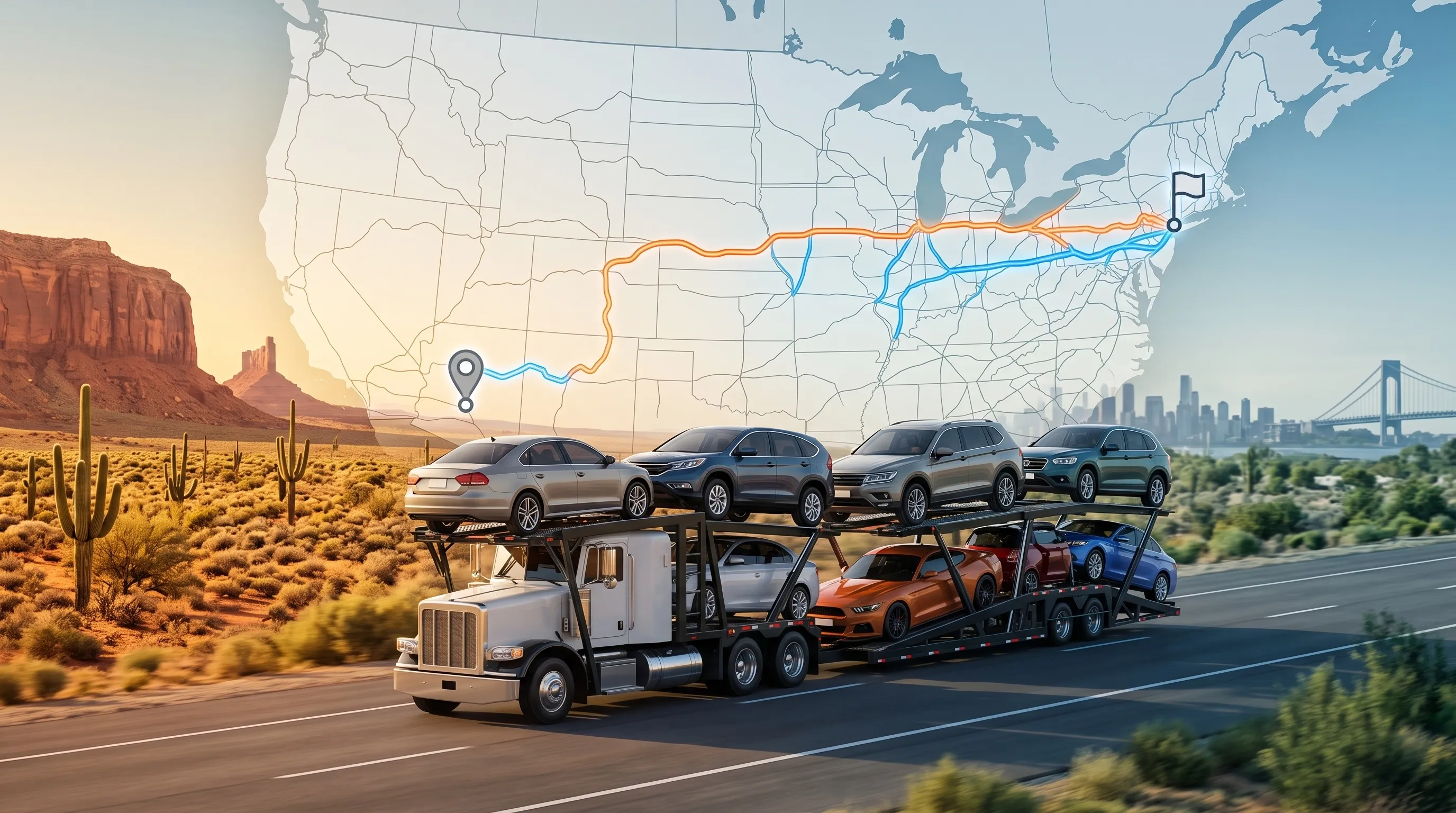
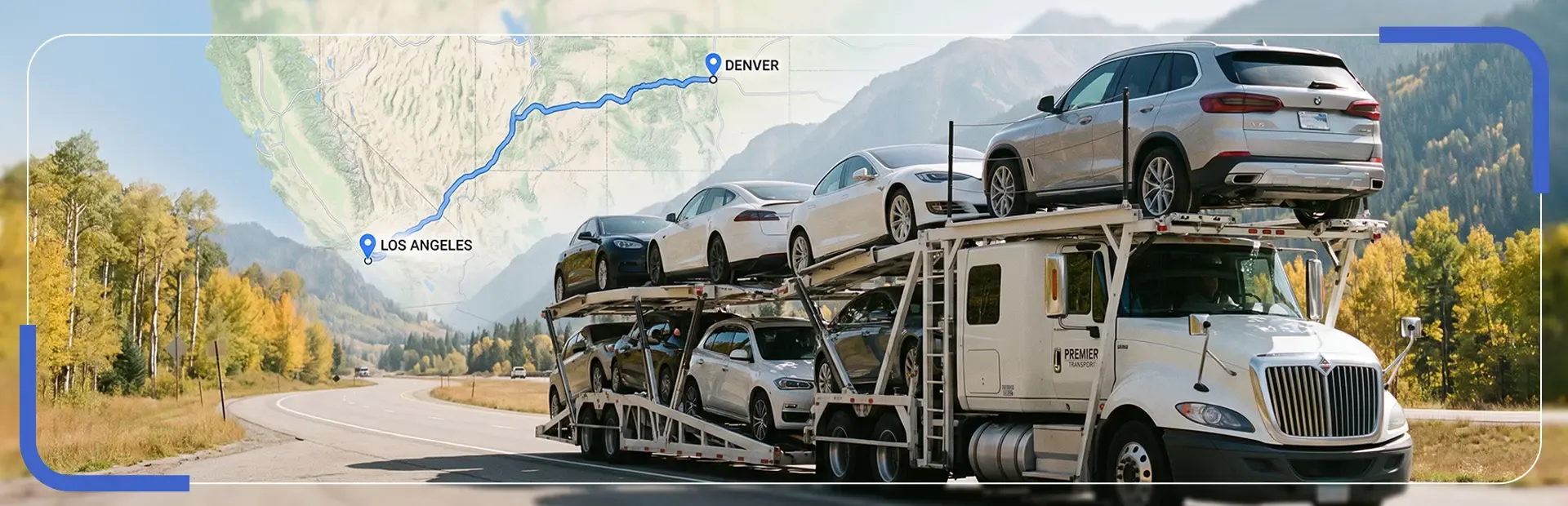
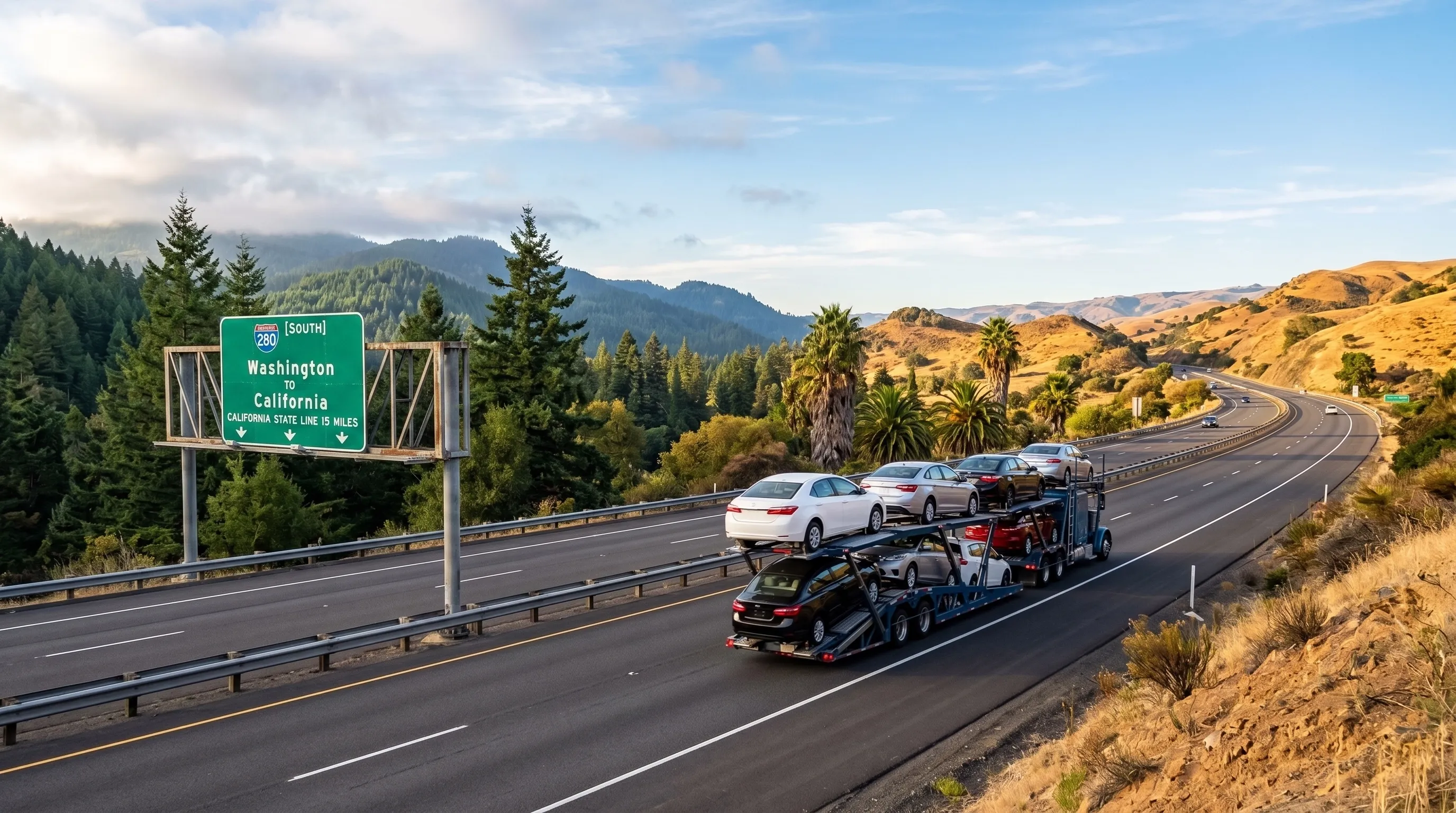
The geography of your move significantly influences the logistics of auto transport for non-running car services. In 2026, certain "high-density" corridors, such as the route between California and Texas, have become streamlined for non-running car transport due to the high volume of auction and project vehicle sales. However, shipping a vehicle through mountainous regions or rural areas like Montana or Maine introduces "route variance," where narrow roads or steep inclines may prevent a large car hauler trailer from safely reaching your doorstep.

Local Regulations and Final Mile Logistics

In many scenarios, local regulations also dictate how a transport is executed. Some urban centers in the Northeast have strict "idle time" and weight restrictions that force carriers to use smaller 2-car hauler trailer units for the final mile of delivery. This often requires a "trans-loading" process at a regional hub, which can add time to the shipping of a non-running car timeline. Understanding these regional quirks ensures you are not caught off guard by "remote area surcharges" or the need to meet a driver at a nearby commercial parking lot for the final hand-off.

Cost Factors in Shipping Non-Running Vehicles

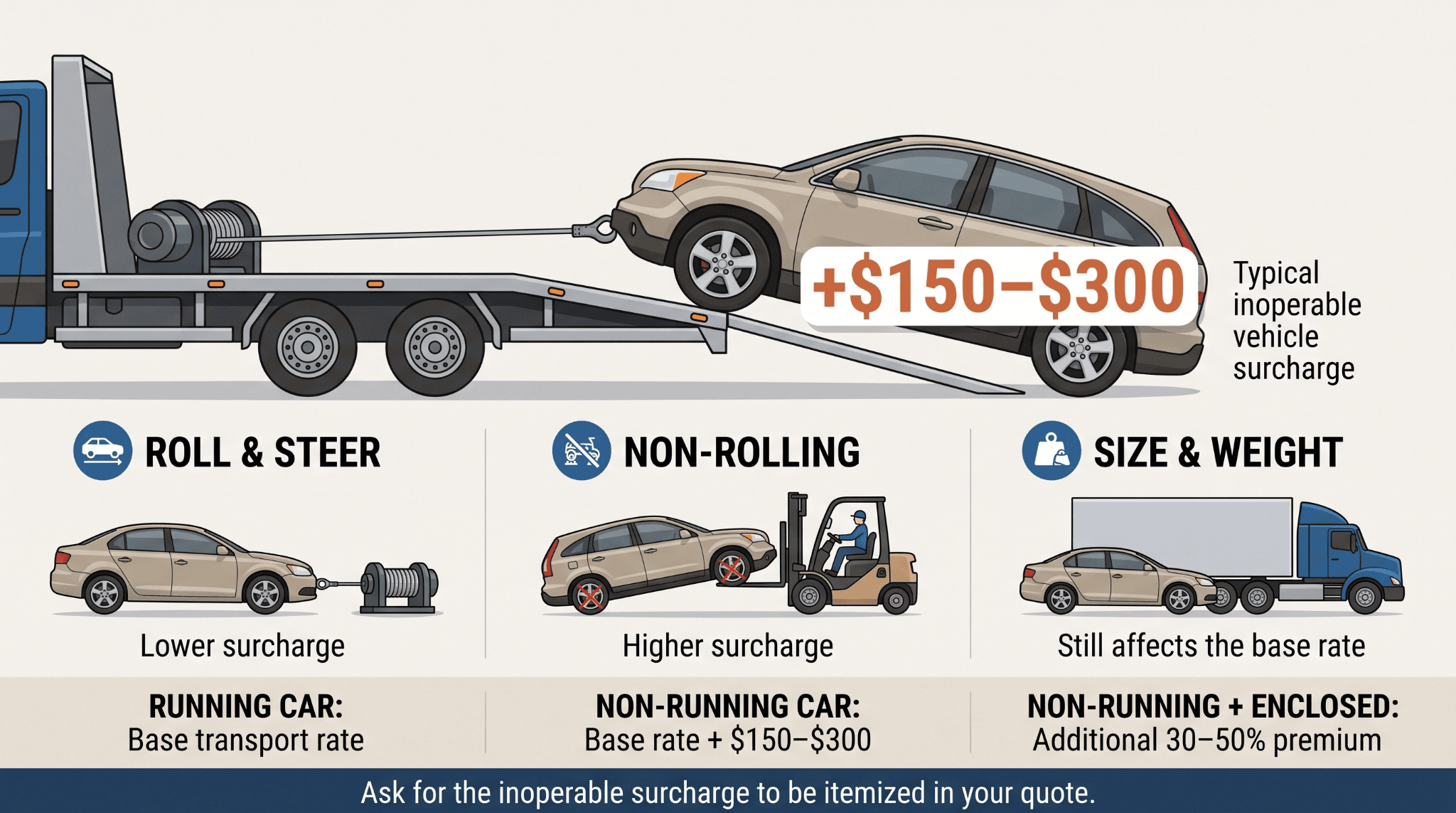
Pricing for inoperable car transport is fundamentally different from standard shipping. While a running vehicle's cost is largely driven by distance and fuel, an inoperable unit carries a "technical surcharge." This fee, often ranging from $150 to $500, accounts for the specialized winching equipment and the extra time, sometimes up to an hour, required to safely load and secure a vehicle that cannot move under its own power.

  • Vehicle Weight and Dimensions: A heavy-lift diesel truck or a large SUV will always command a higher rate than a compact sedan because it consumes more of the hauler trailer's weight capacity and fuel.

  • Rolling vs. Non-Rolling: If the vehicle has seized wheels or broken axles, the cost will increase significantly, as it may require "dollies" or a forklift for loading.

  • Transport Type: Choosing an enclosed car hauler provides maximum protection but typically costs 30% to 50% more than an open hauler trailer for sale in the standard market.

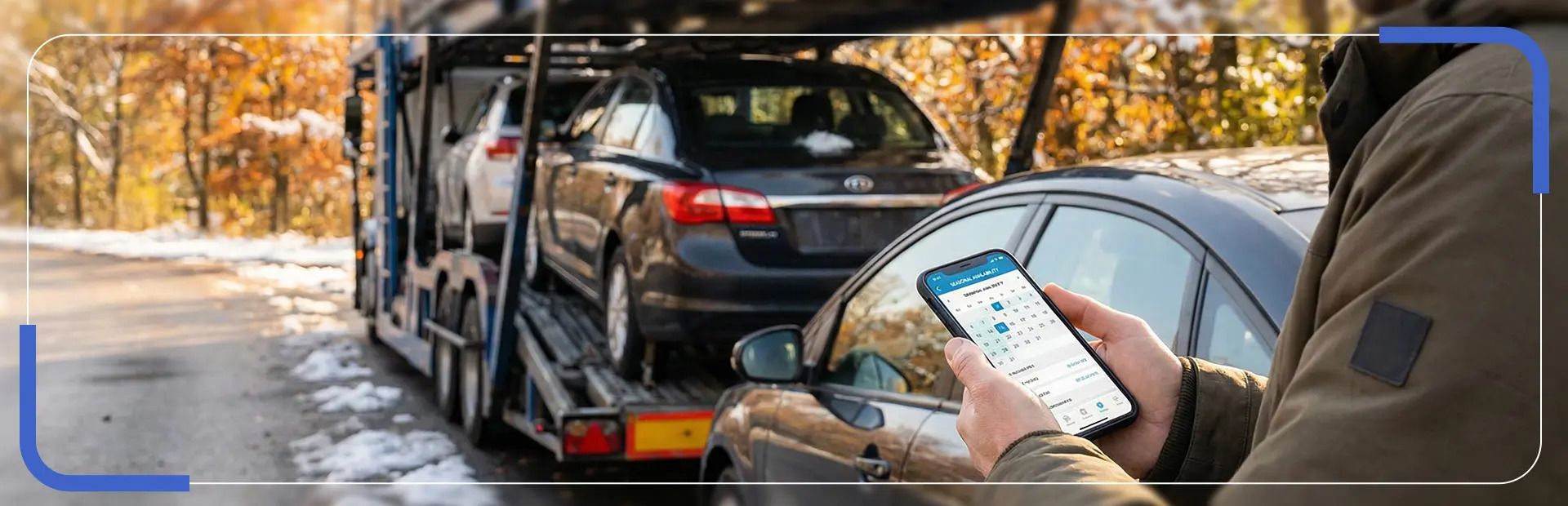
  • Seasonal Demand: During the "snowbird" migration or peak summer months, carrier availability for specialized inoperable car shipping may tighten, driving up "spot market" rates.

2026 Estimated Regional Surcharges for Inoperable Transport

To assist in your budgeting and logistical planning, the following table outlines the expected financial adjustments for specialized transport across various geographic landscapes. These surcharges reflect the increased operational costs and technical demands associated with moving inoperable vehicles through challenging environments in 2026.

Region / Route Type

Estimated Surcharge

Reason for Cost Increase

Metropolitan / Urban

$75 – $150

Limited access & congestion tolls

Rural / Remote

$200 – $400

Out-of-route mileage & low carrier density

Mountainous Terrain

10% – 15%

Increased fuel consumption & wear

Inoperable Winch Fee

$150 – $300

Specialized equipment & labor time

Guidance for Moving Inoperable Vehicles Safely

Transporting a non-running vehicle requires careful planning and expert handling. Using a professional car hauler truck with a high-capacity winch and specialized equipment ensures your vehicle stays safe during loading and transit. Proper preparation and working with experienced transporters turn a complex move into a smooth, reliable delivery.

Can any car hauler trailer move a non-running vehicle? 

Not necessarily. While many may have a car hauler trailer for sale, only those equipped with a functional, industrial-grade winch and heavy-duty loading ramps can safely handle non-running car transport. At our firm, we ensure every assigned carrier has the mechanical means to load your vehicle without manual pushing or unsafe dragging.

What is the difference between an inoperable car and a "junk" car for shipping? 

An inoperable car may simply have a dead battery or a broken starter, whereas a junk car might have seized wheels or missing axles. We specialize in auto transport non-running car services for all conditions; however, knowing if the car "rolls and steers" allows us to dispatch the perfect 2-car hauler trailer or specialized flatbed for the job.

How much extra does inoperable car shipping cost? 

Shipping an inoperable vehicle typically incurs a modest "winch fee" to cover the specialized equipment and the extra time required for safe loading. Our transparent pricing model breaks this down upfront, ensuring you get the best value for a 3-car hauler trailer for sale or a larger multi-car carrier route.

Is my non-running vehicle insured during transit? 

Yes, when you book through a reputable agency, your inoperable car shipping project is covered by the carrier's cargo insurance. We go a step further by vetting every car hauler in our network to verify their policy limits specifically cover "stationary" or "salvage" cargo.

Can I ship extra parts inside my non-running car? 

While we focus on the vehicle, we understand many "project" cars come with spare parts. As long as the parts are secured and do not exceed weight limits for the trailer, we can often accommodate them. This is part of our commitment to providing flexible shipping solutions for non-running cars.

Ensure a Smooth Delivery with Professional Car Hauler Services

In the modern logistics landscape of 2026, the difference between a successful delivery and a costly mistake lies in the caliber of equipment and the experience of the operator. Professional car hauler services utilize advanced GPS tracking and digital dispatch systems to coordinate the movement of inoperable car transport units across vast distances. By matching your specific vehicle dimensions with the right car hauler truck, professionals manage risk through precise weight distribution and the use of soft-tie down systems that protect your vehicle’s frame.

The importance of using a specialized trailer cannot be overstated. From the initial winch-on to the final off-load, every step must be executed with a focus on safety protocols and cargo integrity. Whether you are moving a single project vehicle on a 2-car hauler trailer or managing a fleet of shipping non-running cars, working with an established transport partner provides the peace of mind that comes from professional vetting and industry-leading insurance coverage. Do not leave your vehicle’s safety to an unequipped hobbyist; trust the experts who understand the technical demands of moving heavy, inoperable machinery. Request a professional transport quote from our expert team today.

1
Destination
2
Vehicle
3
Date
By checking this box, I acknowledge that I have read and agree to the Terms and Conditions and Privacy Policy and consent to be contacted by call, SMS, or email regarding my quote request.

Share post

Recent Posts

How Fuel Surcharge in Car Shipping Instantly Changes Transport Rates blog post image

How Fuel Surcharge in Car Shipping Instantly Changes Transport Rates

Fuel surcharge car shipping directly ties your delivery quote to the national average cost of diesel. While gas prices vehicle transport fluctuate, many drivers...

27 Jan 2026

Car Shipping Contract Fees Exposed: Avoid Costly Hidden Charges blog post image

Car Shipping Contract Fees Exposed: Avoid Costly Hidden Charges

Most price shocks happen because the quoted rate does not match the final bill. That gap comes from car shipping contract fees, hidden fees car shipping, and un...

26 Jan 2026

Cheap Car Shipping 2026: Proven Ways to Cut Your Transport Costs blog post image

Cheap Car Shipping 2026: Proven Ways to Cut Your Transport Costs

Finding cheap car shipping 2026 depends on timing, carrier type, and knowing how to navigate current market shifts. Most drivers lose hundreds of dollars simply...

17 Jan 2026

6 Critical Car Shipping Tips Before Booking That Trigger Hidden Costs Later blog post image

6 Critical Car Shipping Tips Before Booking That Trigger Hidden Costs Later

Finding the best car shipping tips before booking helps you avoid unexpected bills that can double your initial quote. Most drivers assume the first price they...

14 Jan 2026

Smooth Car Shipping Pickup Process Explained: What to Expect at Pickup and Delivery blog post image

Smooth Car Shipping Pickup Process Explained: What to Expect at Pickup and Delivery

The car shipping pickup process begins with a scheduled driver meeting where you hand over your keys. Most owners do not realize that nearly 5% of shipping dela...

13 Jan 2026

How GPS Car Shipping Tracking Protects Your Vehicle in 2026 blog post image

How GPS Car Shipping Tracking Protects Your Vehicle in 2026

GPS car shipping tracking protects your vehicle by providing constant visibility and security during transit. In 2026, over 90% of transport theft is prevented...

12 Jan 2026

Smart Eco-Friendly Car Shipping Options for 2026 Explained blog post image

Smart Eco-Friendly Car Shipping Options for 2026 Explained

Finding eco-friendly car shipping options in 2026 is easier than ever as the industry moves toward a net-zero future. Did you know that transportation currently...

11 Jan 2026

Critical Car Shipping Myths That Could Ruin Your Transport blog post image

Critical Car Shipping Myths That Could Ruin Your Transport

Many car shipping myths lead to expensive mistakes and delays during vehicle relocation. You might believe that the lowest price quote always guarantees a safe...

06 Jan 2026

Car Shipping Glossary: Essential Terms You Need To Know blog post image

Car Shipping Glossary: Essential Terms You Need To Know

A car shipping glossary simplifies the complex language of moving vehicles. This car shipping glossary explains essential terms you need to know to avoid confus...

05 Jan 2026

Complete Auto Transport 101: The Beginner’s Guide To Shipping A Car blog post image

Complete Auto Transport 101: The Beginner’s Guide To Shipping A Car

Most people think driving is cheaper than hiring a company. In reality, fuel and hotels often cost more than a professional driver. Shipping a car starts with c...

29 Dec 2025

Cheapest Way to Ship a Car in 2025: Proven Tricks and State Comparisons blog post image

Cheapest Way to Ship a Car in 2025: Proven Tricks and State Comparisons

The cheapest way to ship a car is usually through open transport, booked off-peak and far in advance. You can achieve low-cost car shipping by understanding how...

16 Dec 2025

What Buyers Must Know To Ship A Car From Dealership Or Auction In 2025 blog post image

What Buyers Must Know To Ship A Car From Dealership Or Auction In 2025

Buying a new ride often means you need to ship a car from a dealership or figure out how to ship auction cars. This process takes planning, whether you bought a...

14 Dec 2025

Join our newsletter

Subscribe to our newsletter and get $50 off

Safeeds Auto Transport logo

Safeeds Transport Inc U.S. Department of Transportation
MC-1606811
U.S DOT#: 4175566
Company address: 470 W BROAD ST COLUMBUS, OH 43215
Company main # 3153144337

Contact

Mon - Fri: 8am - 7pm EST
Sat - Sun: 9am - 5pm

© 2026 Safeeds Auto Transport. All Rights Reserved.

FOLLOW US: