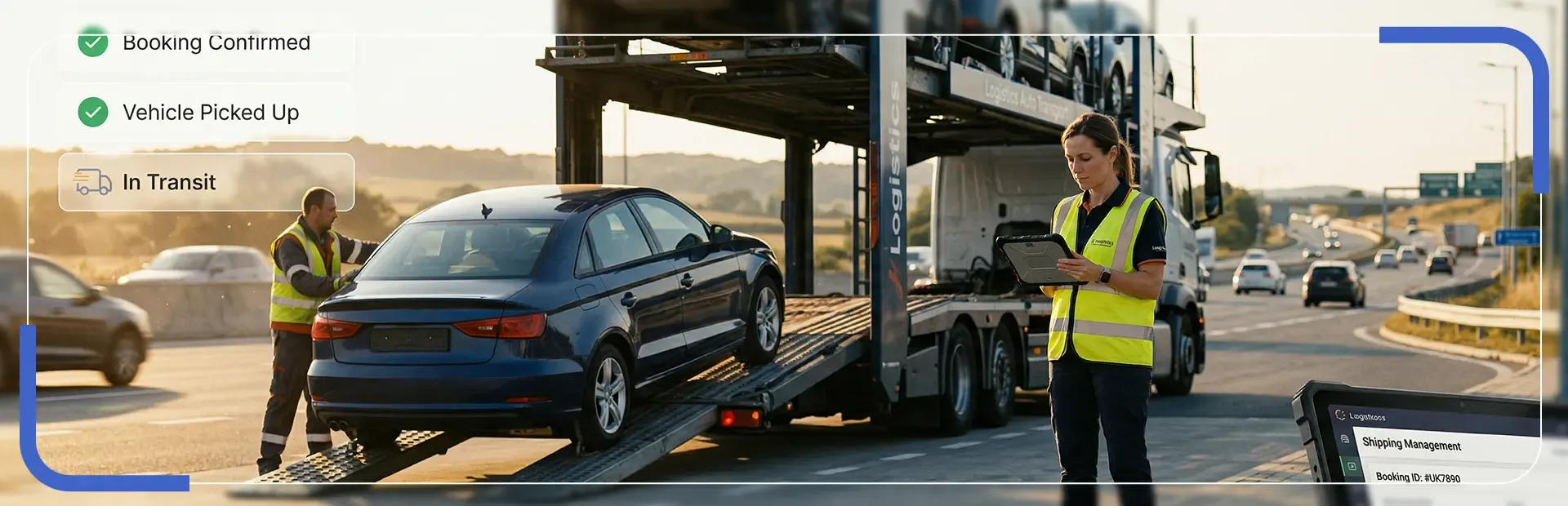
Safe auto transport is more than just moving a vehicle from one location to another; it’s a carefully coordinated process built around trust, timing, and protection. For most people, shipping a car can feel uncertain at first, especially when it involves long distances, insurance coverage, and handing over a valuable asset to a third party. That’s why understanding how the process works and what safeguards are in place is essential before making a decision.
From proper carrier selection and vehicle inspection to insurance coverage and real-time coordination, every step in professional auto transport is designed to minimize risk and ensure a smooth delivery experience. Whether you’re relocating, buying a vehicle online, or sending a classic car to its destination, knowing these details helps you make a more confident choice.
At Safeeds Transport, transparency and reliability are at the core of every shipment we handle. Get a free quote today and experience safe auto transport with complete peace of mind.
How Safe Auto Transport Actually Works Today
In the contemporary logistics landscape, safe auto transport is defined by a multi-layered approach to security. The industry has moved away from informal "handshake" agreements toward a digitized, highly regulated environment that prioritizes transparency and accountability at every stage of the journey.
When evaluating whether it is safe to ship a car, one must look at the "paper trail" and the professional rigor of the shipment process:
Regulated Operations: In reality, the Federal Motor Safety Risk Management sets strict guidelines for carrier operations, including hours of service and mandatory insurance minimums.
Digital Accountability: A secure framework includes a digital Bill of Lading (BOL), which acts as a legal receipt and a detailed record of the vehicle’s condition.
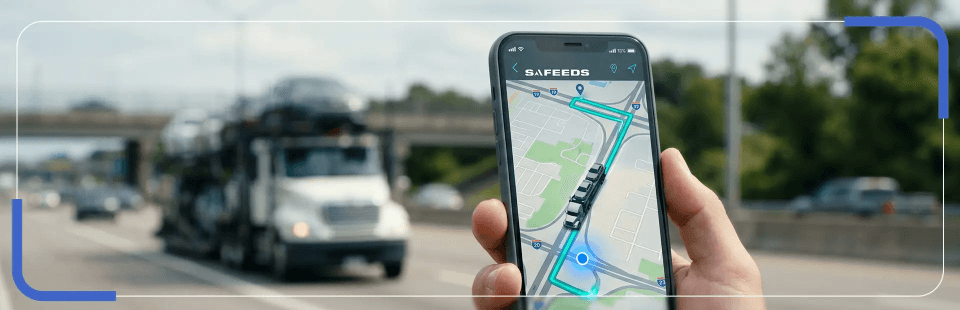
Real-Time Communication: Modern systems utilize real-time communication channels to ensure the owner is aware of the vehicle’s status at every stage, eliminating concerns caused by a lack of information.
Vetted Carrier Selection: Safety is ensured by a rigorous carrier selection process, verifying that the driver assigned to a route is both highly experienced and fully compliant with modern safety mandates.
Mitigating Human Error: By moving toward a structured and digitized system, professional transport services significantly reduce the risks associated with manual logistics and unreliable drivers.
How Car Shipping Works in the Real World
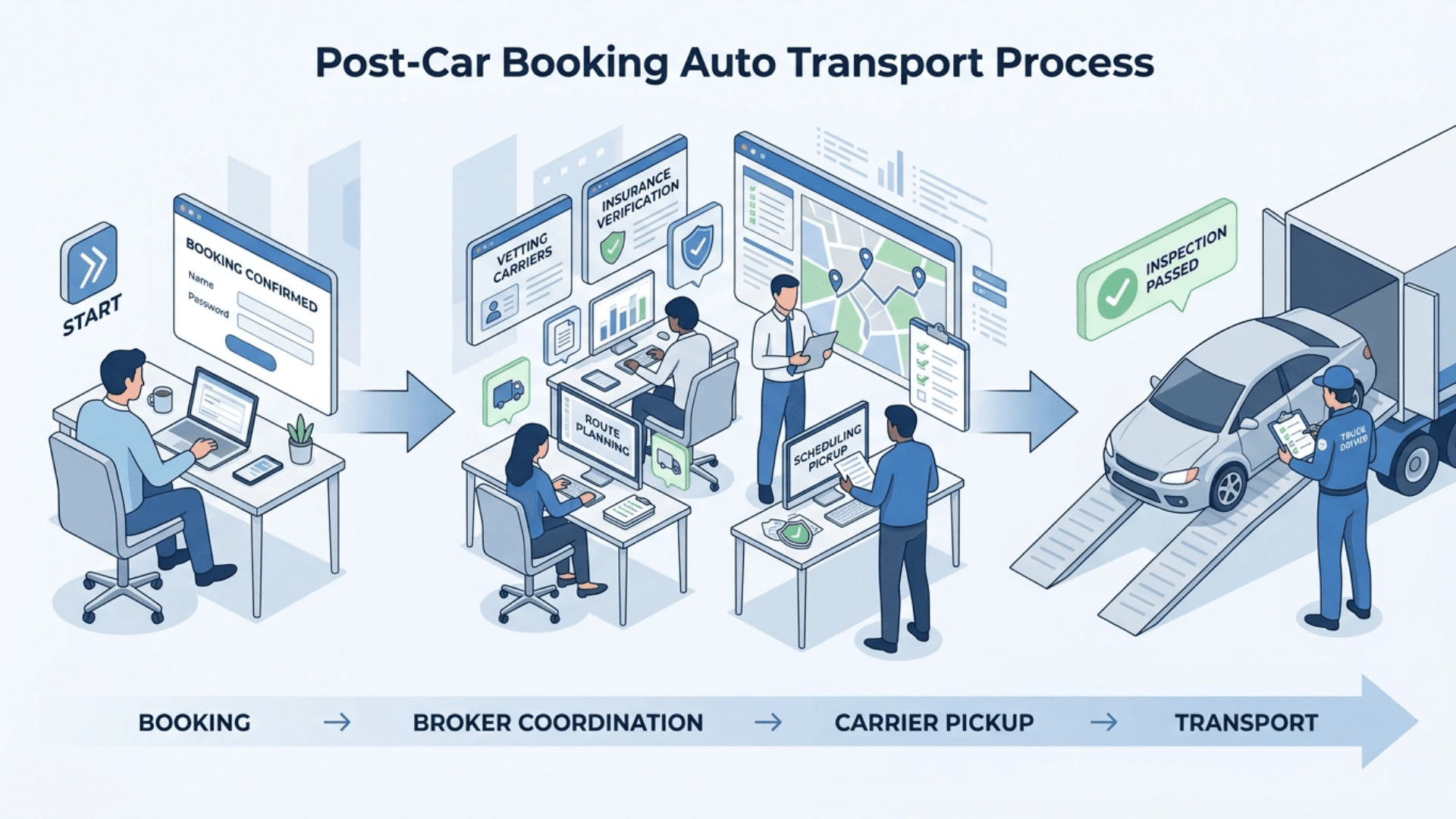
Understanding how car shipping works requires a look at the operational timeline of a standard shipment, starting long before the truck arrives. This collaborative effort ensures every safety protocol is met before the vehicle ever leaves your driveway. By synchronizing the schedules of brokers, carriers, and customers, the industry maintains a high standard of precision and security. Every stage is designed to protect the vehicle’s integrity, from the initial digital verification to the final physical handover at your door.
How car shipping works step-by-step
Navigating the logistics of vehicle relocation is straightforward when broken down into these five essential phases of the transport journey:
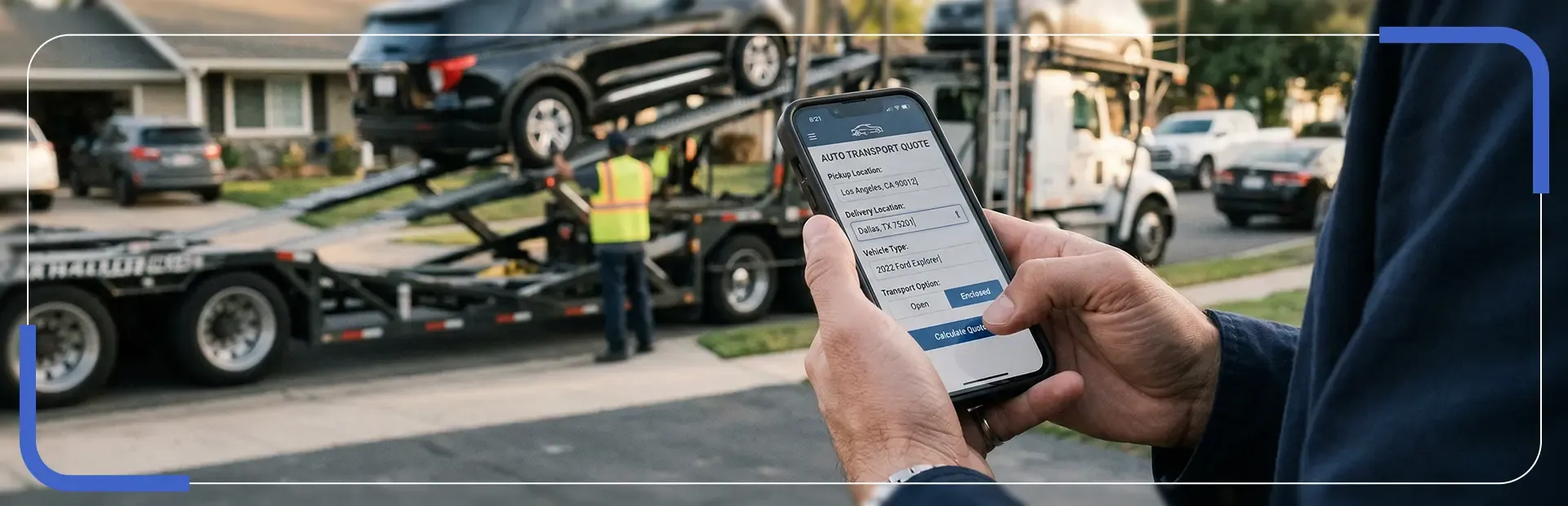
Booking and Consultation: The process begins with a quote based on distance, vehicle size, and transport type.
Carrier Assignment: A professional broker identifies a carrier on the specific route who meets safety and insurance standards.
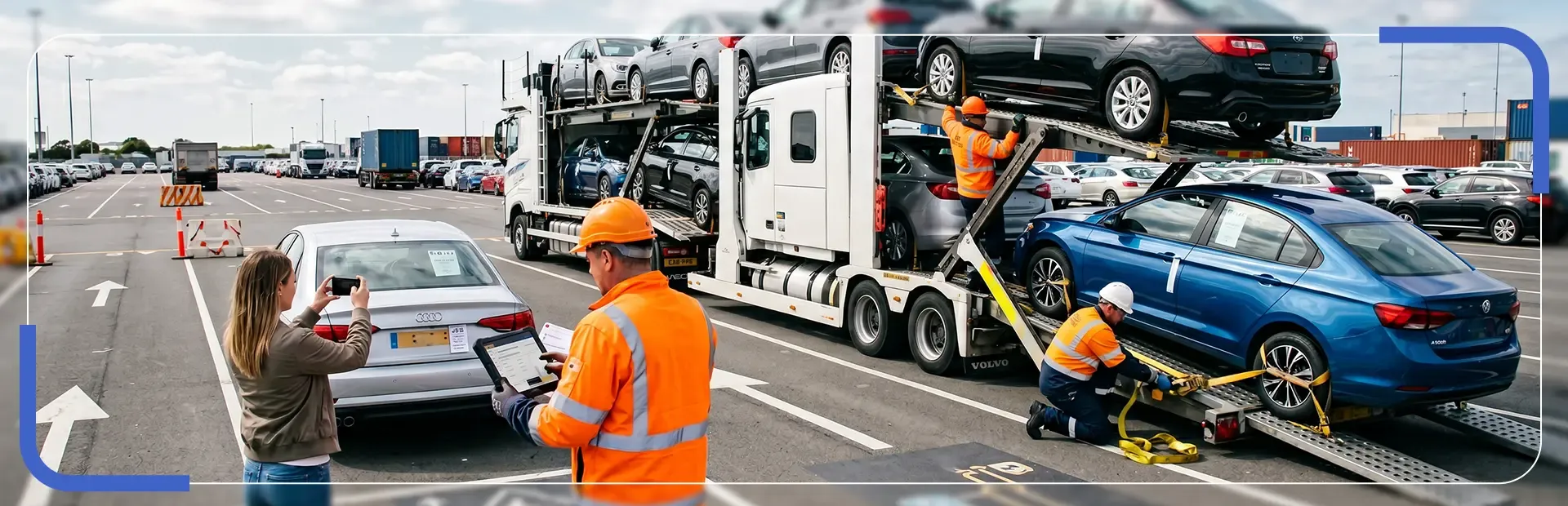
Pickup and Inspection: The driver conducts a detailed "Condition Report," noting any existing marks on the vehicle before loading.
Transit: The vehicle travels via open or enclosed trailer, with updates provided to the owner.
Delivery and Final Inspection: Upon arrival, the vehicle is unloaded and inspected again to ensure it arrived in the same condition.
What happens after you book a carrier
Once a carrier is assigned, the logistics transition from planning to execution. The driver will coordinate a pickup window, usually within 24 to 48 hours. During this phase, the vehicle is prepared for the journey, which includes securing loose parts and ensuring the battery is functional for loading purposes.
Key players: broker vs carrier explained simply
A common point of confusion is the role of the broker versus the carrier. The broker (such as Safeeds) acts as the logistics architect, vetting carriers, verifying insurance, and managing the customer experience. The carrier is the entity that owns the truck and physically moves the vehicle. This partnership is essential for safety; the broker provides the oversight and accountability that a single independent driver might lack.
Is Shipping a Car Safe? What Really Determines Risk
When asking if shipping a car is safe, it is more accurate to ask what factors determine the safety of a specific shipment. Risk in auto transport is never zero, but it can be minimized to a negligible level through professional handling.
Main risks in car transport
The primary risks involved in transport are road debris (for open transport), weather-related delays, and minor surface abrasions during loading. Major accidents are statistically rare in the professional auto hauling industry.
What makes a shipment safe or unsafe
While many variables exist in logistics, the security of your vehicle generally rests on three critical operational pillars:
Equipment Quality: Newer trailers with advanced hydraulic systems provide a more stable platform.
Driver Experience: Seasoned "car haulers" understand weight distribution and tie-down techniques better than general freight drivers.
Route Planning: Avoiding high-congestion areas or severe weather patterns reduces the likelihood of incidents.
Why most damage claims are preventable
Most transport issues stem from poor communication or inadequate pre-trip inspections. When a thorough condition report is conducted at pickup, it creates a "zero-tolerance" environment for damage, forcing the carrier to maintain the highest standards of care.
Car Shipping Insurance Explained in Simple Terms
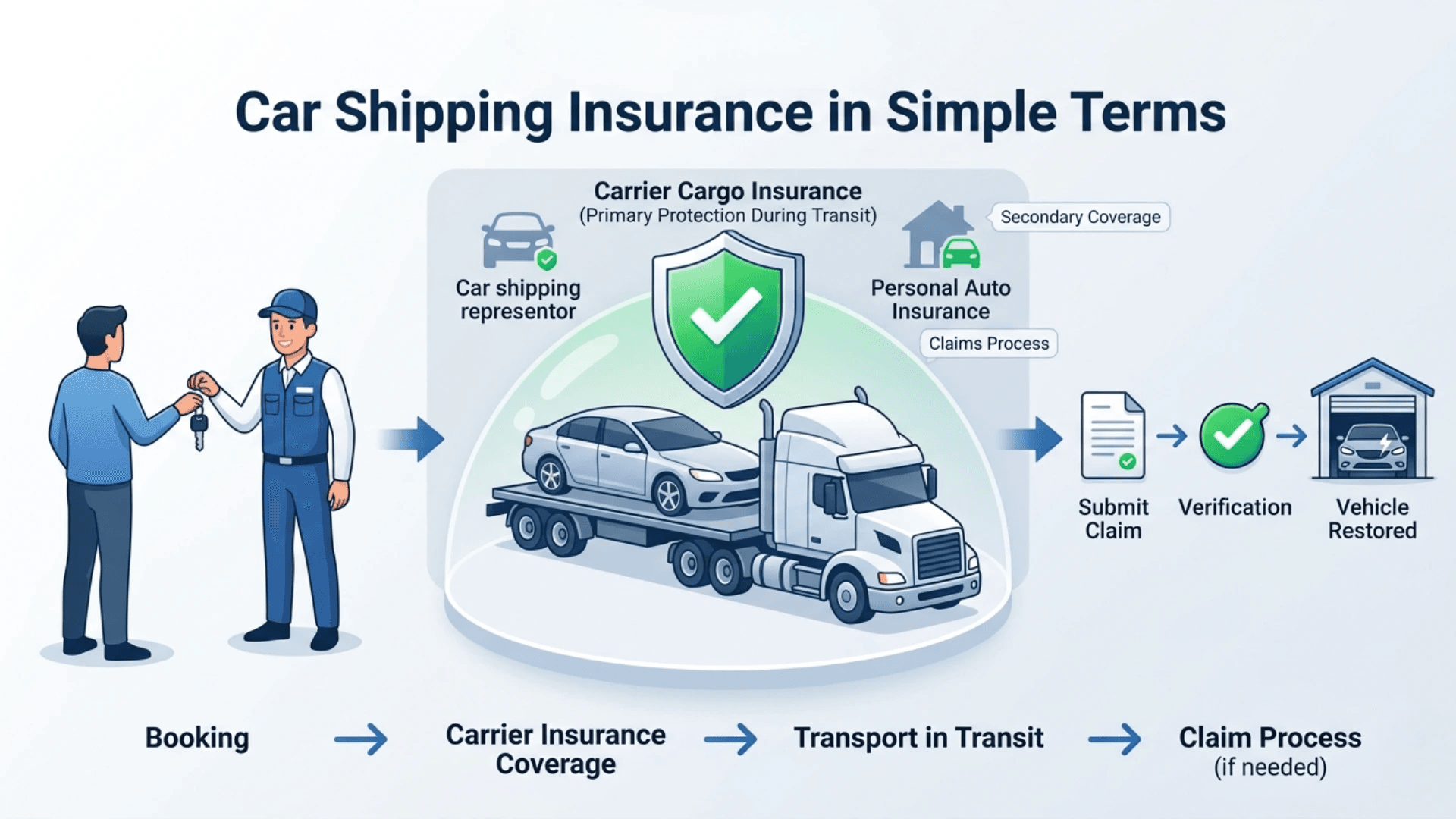
A critical pillar of safe auto transport is the financial protection provided by car shipping insurance. Many owners wonder, "Do you need insurance to ship a car?" While your personal auto insurance might provide some coverage, it is often secondary to the carrier’s commercial policy during transit.
Do you need insurance to ship a car?
Yes, but the primary coverage should come from the carrier. Under federal law, every commercial car hauler must carry commercial cargo insurance. This coverage is designed specifically to protect the vehicles being transported, rather than the truck itself.
How does car shipping insurance actually work?
When you book through a professional service, the broker verifies that the carrier’s policy is active and has sufficient limits. If an incident occurs, the claim is filed against the carrier’s cargo insurance. It is important to note that fully insured car shipping generally covers the vehicle while it is on the trailer; it does not typically cover personal items left inside the car.
Car Shipping Insurance Options and Cost Breakdown
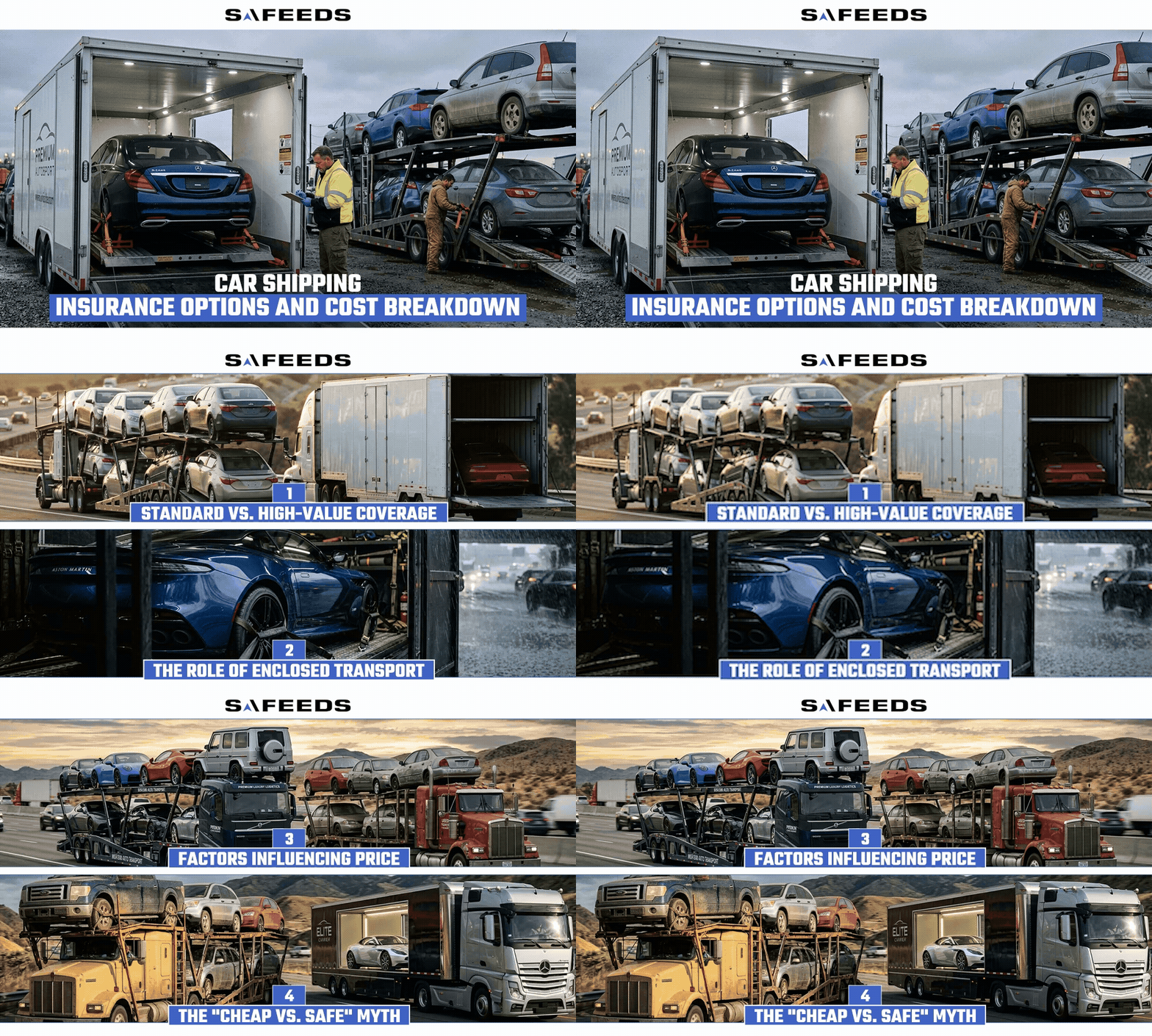
The level of car shipping insurance required often depends on the value and type of the vehicle, as a standard sedan has different protection needs than a vintage collectible. When reviewing a quote, the car shipping insurance cost is almost always integrated into the total price, ensuring that professional brokers only work with carriers whose premiums are already verified.
To understand how coverage and pricing scale with your specific vehicle, consider the following industry standards:
Standard vs. High-Value Coverage: For high-value assets, classic car shipping insurance options often involve significantly higher cargo limits. While standard carriers typically provide $100,000 to $250,000 in coverage, specialized insurance options for classic car shipping may feature policies exceeding $1,000,000 to account for rarity and restoration costs.
The Role of Enclosed Transport: Choosing enclosed transport is a security decision that provides a higher tier of ship car insurance peace of mind. Shielding the vehicle from rock chips or hail eliminates the most common sources of minor insurance claims.
Factors Influencing Price: Insurance pricing is primarily influenced by the total value of the load. A trailer carrying ten high-end vehicles requires a much higher insurance premium than one carrying older, lower-value models.
The "Cheap vs. Safe" Myth: Some low-cost providers may cut corners by using carriers with "base-level" insurance or high deductibles. Secure car shipping involves paying for the overhead of high-limit, $0-deductible cargo policies that protect the consumer fully, which is why the cheapest quote is rarely the safest.
Open vs Enclosed Transport: Security & Protection Breakdown
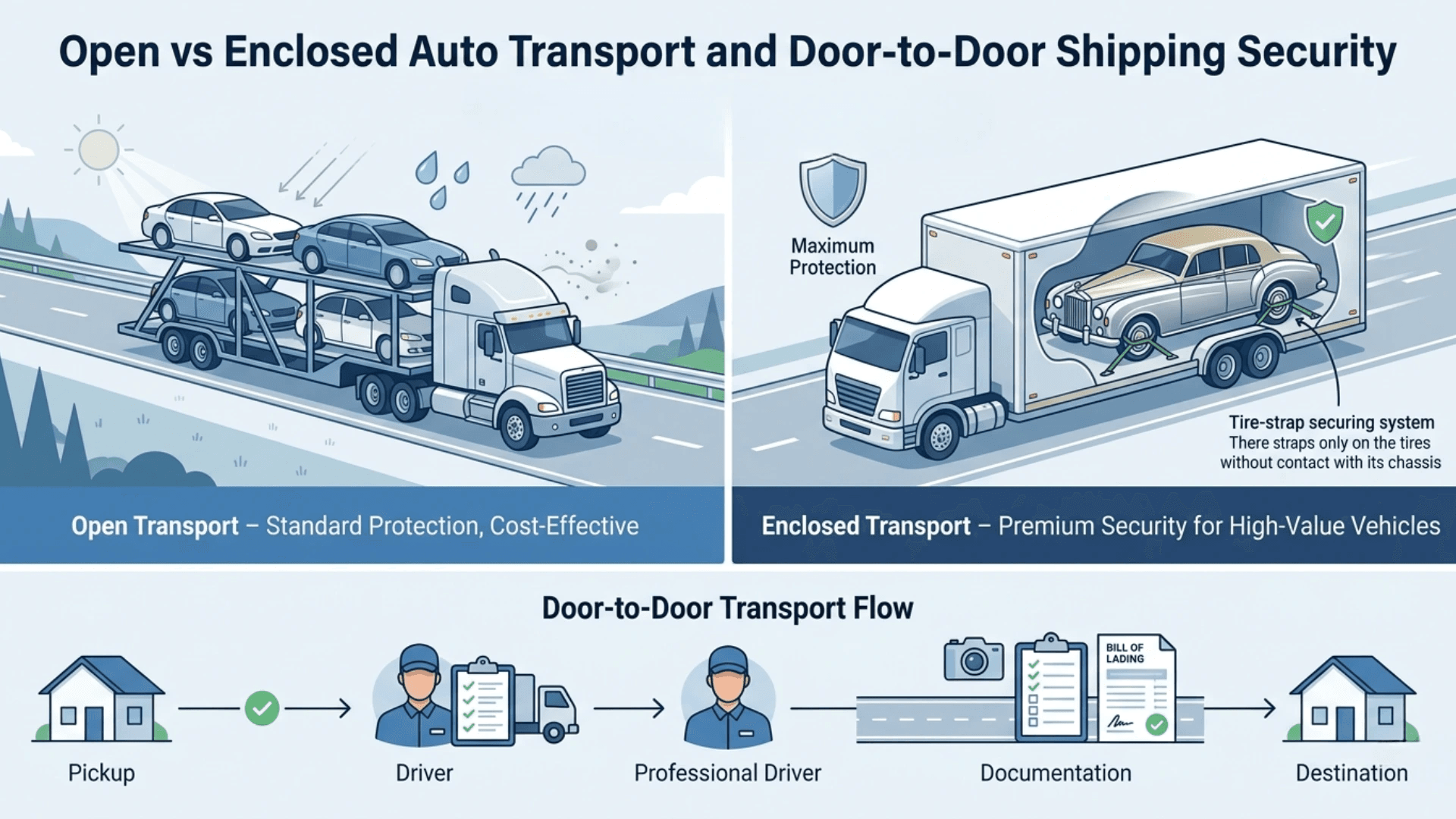
When considering secure car shipping, the choice between open and enclosed trailers is the most significant factor in physical protection. While both methods are industry standards, they offer different levels of defense against the elements and road conditions.
Open car shipping insurance and damage protection explained
Open transport is the most common method seen on highways. Because the vehicles are exposed to the air, open car shipping insurance and damage protection reviews often emphasize that while the carrier's cargo insurance covers structural damage or accidents, it may not cover minor "acts of God" like hailstorms or dust. However, for a standard daily driver, this remains the most cost-effective and safe method of transit used by thousands of people daily.
When to choose enclosed transport
For those seeking the highest level of secure car shipping, enclosed transport is the gold standard. These trailers feature hard or soft-sided walls that completely shield the vehicle. This is the preferred choice for exotic cars, luxury SUVs, and vintage restorations that require protection from road debris and weather.
Security differences in real conditions
The security of enclosed transport goes beyond just a roof. These trailers often utilize specialized nylon straps that secure the vehicle by its tires rather than the chassis, reducing stress on the suspension, a key detail in how car shipping works for high-end models.
Transport Feature | Open Transport | Enclosed Transport |
Protection Level | Standard (Road Exposure) | Maximum (Fully Shielded) |
Typical Use | Daily Drivers, SUVs | Classics, Luxury, Exotic |
Cost | More Economical | Higher Premium |
Security | Visual Inspections Easy | Hard-Side Protection |
Door-to-Door Shipping Security and Handling Standards
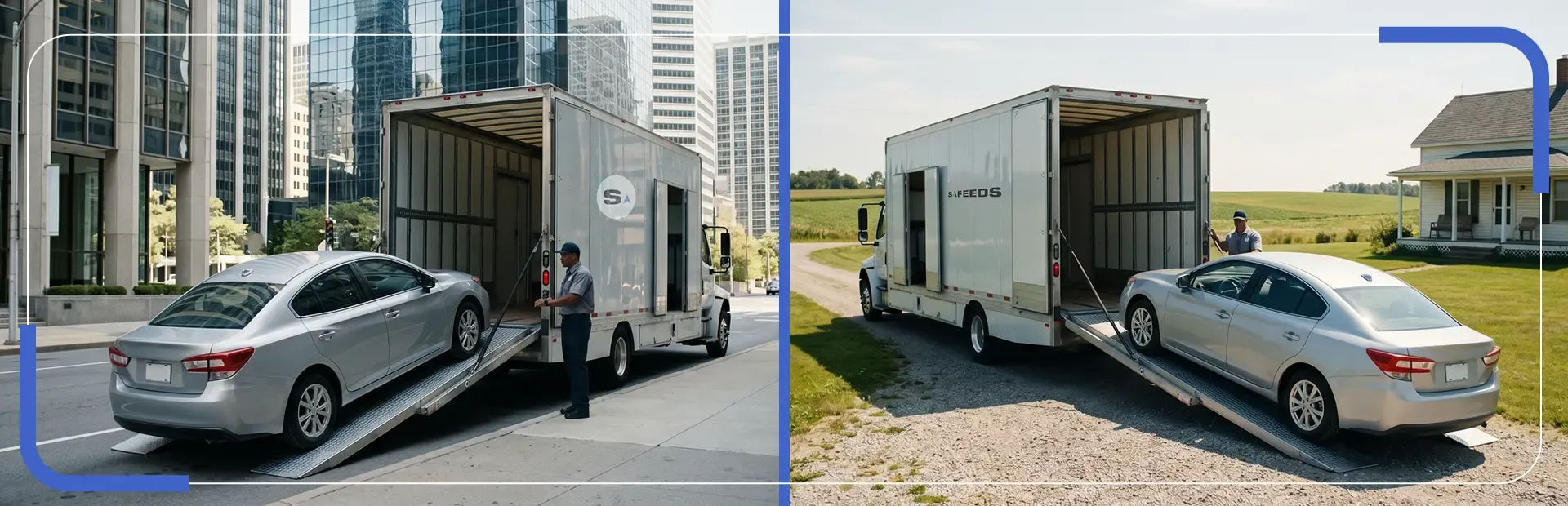
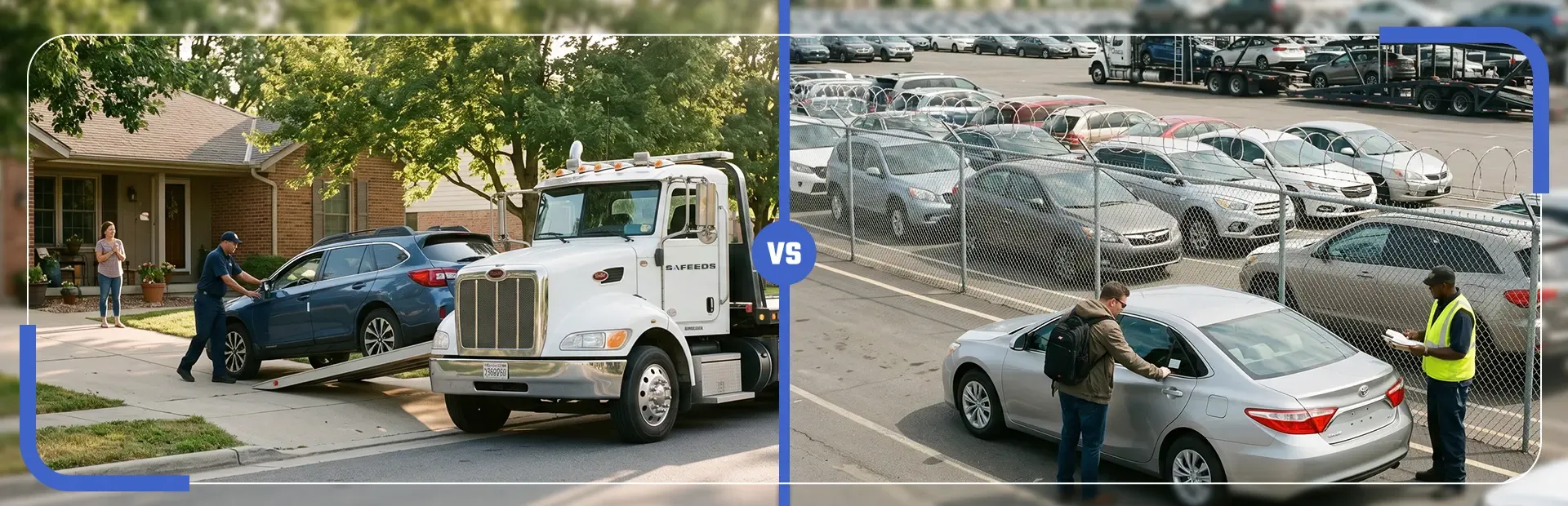
Modern logistics emphasizes convenience through door-to-door car shipping security. This service removes the need for customers to travel to a central terminal, which reduces the number of times a vehicle is moved or handled by different staff members.
How door-to-door car shipping security works
In a door-to-door model, the same driver who picks up the vehicle is typically the one who delivers it. This continuity is vital for safe auto transport because it maintains a single point of accountability. The driver is responsible for the vehicle’s security from the moment it is loaded at your residence until it is offloaded at the destination.
Vehicle inspection and handover process
The handover is the most critical security gate in the shipping process, serving as the official record of the vehicle's condition before and after transit.
The driver and owner perform a joint walk-around.
High-resolution photos are often taken to document the current state.
The Bill of Lading is signed digitally or on paper, acting as a legal receipt of the vehicle's condition.
Why location accuracy matters for safety
For secure car shipping, providing a clear, accessible pickup location is essential. If a residential street is too narrow for a large multi-car hauler, the driver will coordinate a meeting at a nearby well-lit parking lot. This ensures the vehicle is loaded on level ground, preventing any undercarriage scrapes or loading mishaps.
How to Ensure a Safe Auto Transport Experience
Achieving a safe auto transport experience is a collaborative process. While the carrier handles the heavy lifting, the vehicle owner plays a key role in the "Safety Framework."
Choosing a trusted shipping company
The first step is vetting. Ensure the company has a valid MC (Motor Carrier) number and positive third-party reviews. A company like Safeeds prioritizes transparency, ensuring you know exactly who is hauling your vehicle and what their safety rating looks like.
Pre-shipping vehicle checklist
Preparing your vehicle properly is a vital step in the safety framework, as it ensures the carrier can handle your shipment efficiently and without unnecessary liability.
Clean the vehicle: This allows for an accurate inspection.
Check for leaks: Carriers may refuse a vehicle that is leaking fluids onto others.
Quarter-tank of gas: This reduces weight while ensuring the car can be moved on and off the trailer.
Remove personal items: Cargo insurance does not cover household goods left inside the car.
Documentation and inspection tips
Never skip the inspection. Use your smartphone to take your own time-stamped photos of the vehicle from all angles, including the roof and odometer. Having your own record is the best way to ensure that fully insured car shipping works in your favor if a claim ever needs to be filed.
Security Feature | Standard Protocol | Safeeds Premium Standard |
Carrier Vetting | Basic License Check | Multi-point Safety & Insurance Verification |
Updates | Occasional Phone Calls | GPS Tracking & Proactive Status Alerts |
Insurance | Minimum Cargo Coverage | High-Limit, Fully Verified Cargo Policies |
Delivery | Terminal-to-Terminal | Direct Door-to-Door Service |
Important Things to Know About Vehicle Transport
Navigating the world of auto logistics often leads to specific questions regarding safety and timing. Understanding these nuances helps set realistic expectations for a smooth, safe auto transport journey.
How does shipping a car work if I am not there?
Your presence isn't a barrier to a professional experience. You can easily designate any trusted representative, such as a friend or neighbor over 18, to sign the inspection reports on your behalf, ensuring your shipment stays on schedule without you having to miss a moment of your day.
Is it safe to ship a car with personal items inside?
To guarantee the highest level of secure car shipping, we recommend keeping the vehicle interior clear. Because personal items are not covered by cargo insurance and added weight can complicate weigh station compliance, a clean car ensures your vehicle remains the carrier's sole priority for a swift and safe delivery.
What is the "Bill of Lading"?
Think of the Bill of Lading as your ultimate protection. This is the most vital document in how car shipping works, serving as your official contract, legal receipt, and detailed condition record all in one. It provides the documented proof you need for total peace of mind from pickup to drop-off.
How long does secure car shipping take?
Efficiency is a hallmark of our service. While cross-country trips typically take 7–10 days and regional moves often arrive in just 2–5 days, our expert dispatchers optimize every route to balance speed with the uncompromising safety your vehicle deserves.
Can I track my vehicle?
Absolutely. We believe you should never be in the dark about your shipment. Our safe auto transport framework includes modern tracking options, allowing you to monitor your vehicle's progress in real-time so you know exactly where your investment is at every mile.
A Smarter Way to Think About Safe Auto Transport
The safety of your vehicle during transport is not a matter of luck; it is the result of a deliberate, professional system. When you look at the logistics chain, from the initial vetting of the carrier to the final signature on the Bill of Lading, it becomes clear that safe auto transport is built on the pillars of regulation, insurance, and professional accountability.
By choosing a provider that prioritizes a "Safety First" framework, you are not just buying a shipping service; you are investing in the security of your asset. Understanding how car shipping works empowers you to make informed decisions, whether you are moving a family SUV or a priceless classic. Ultimately, the goal is a seamless experience where the only thing that moves is your vehicle, not your stress levels. Choosing a verified, transparent transport system is the smartest way to ensure your vehicle arrives exactly as you left it. Request a personalized quote today to see how our secure transport framework can simplify your move.