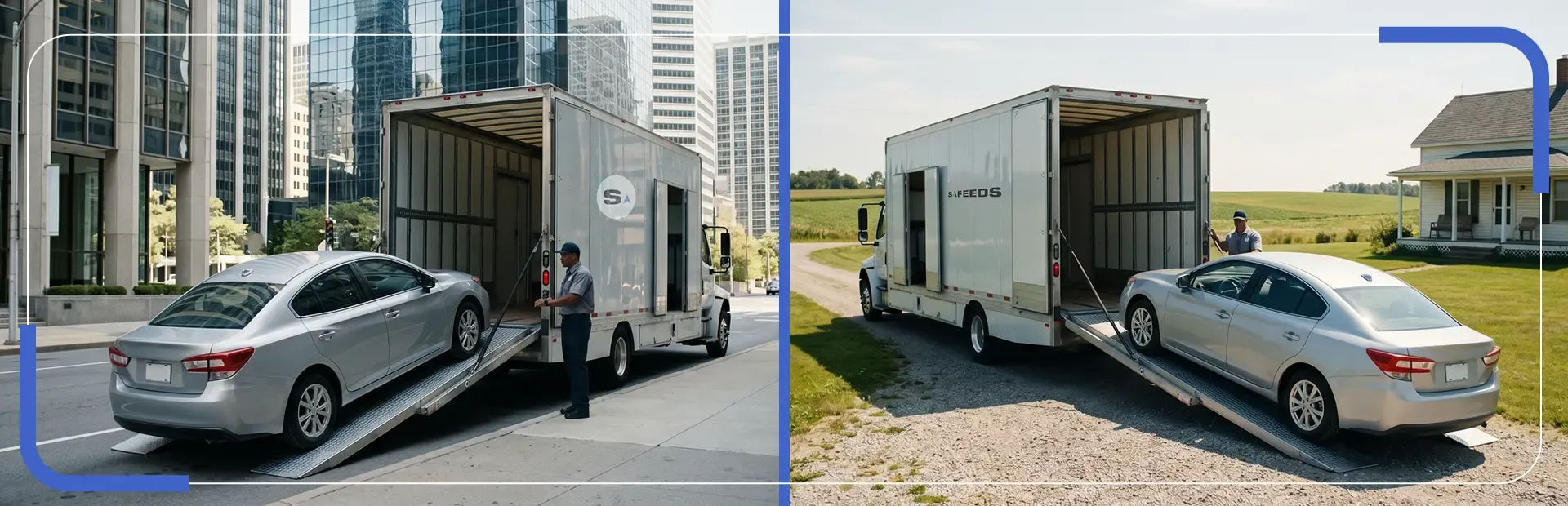
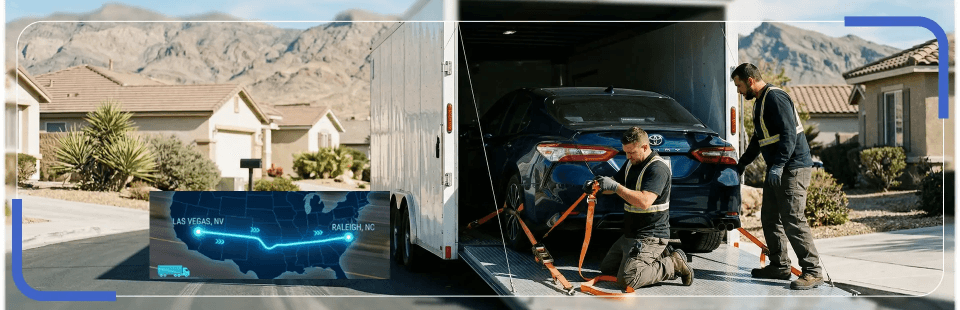
Booking your shipment is just the beginning; understanding what follows is essential for a smooth and stress-free car transportation experience. Once your order is confirmed, a structured process begins that includes carrier assignment, scheduling coordination, route planning, and transit preparation. Whether you are arranging cross-country car shipping, looking for long-distance vehicle transport, or simply exploring how to ship a car, knowing what happens behind the scenes helps you set realistic expectations and avoid confusion.
After booking, your request is typically reviewed and matched with a qualified carrier based on your route, timing, and vehicle type. This stage ensures your shipment is handled efficiently and safely. At Safeeds Transport, every step is managed with a focus on reliability, communication, and timely updates, so customers always know what’s happening with their shipment. Get a quote today and start your shipment with confidence.
What Happens After Booking Car Transportation
Once your order is placed, the process transitions from a customer service interaction to an operational mission. It is important to recognize that car shipping is not a "courier-style" instant service; rather, it is a specialized form of freight logistics.
Transition to Logistics: The primary goal of a reputable car transport service is to bridge the gap between your specific schedule and the available capacity of licensed motor carriers.
Order Review and Accuracy: After booking, your information is reviewed to ensure the vehicle make, model, and operational status are correctly logged to avoid logistical errors.
The Dispatching Phase: Your shipment is matched with a carrier whose route and equipment align with your needs, ensuring the auto transport vehicle is suitable for your specific journey.
Carrier Vetting: This period is dedicated to securing a spot on a truck that has been thoroughly vetted for safety and insurance compliance, whether for a short move or a long-haul journey.
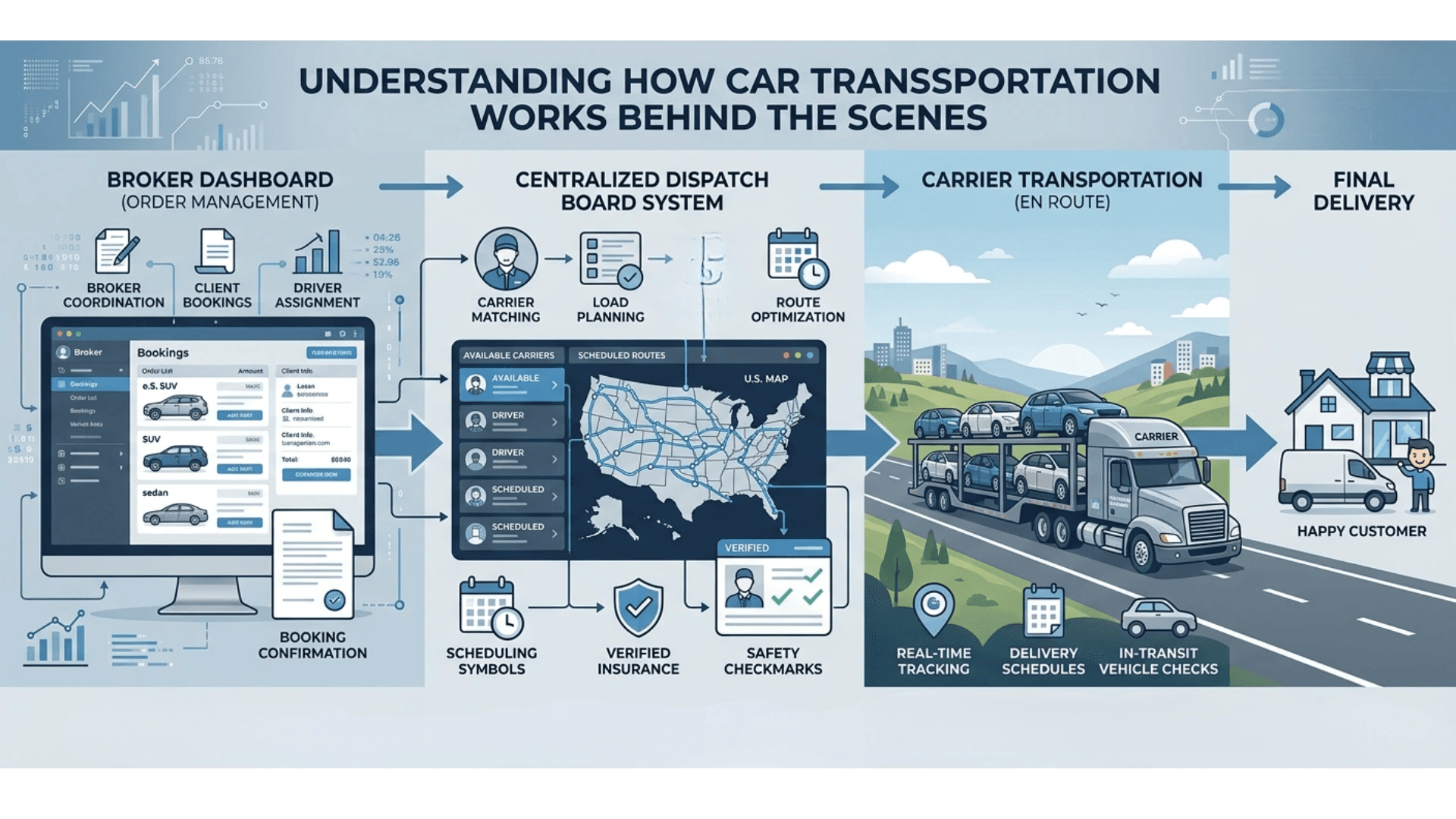
How Car Transportation Works Behind the Scenes
The logistics of moving a vehicle involve a partnership between organizers and physical operators. Understanding these roles helps you navigate the journey with confidence.
Role of Brokers and Carriers
In the logistics ecosystem, there is a fundamental distinction between a broker and a carrier. A broker acts as the organizing entity, leveraging a network to find reliable drivers and handle administrative complexities. The carrier is the company that owns the physical trucks and performs the actual hauling. This ensures that when you transport vehicles, you have both a management advocate and a hardware specialist.
Dispatch Boards and Carrier Matching
Once your order is live, it is posted to secure, industry-only dispatch boards where professional drivers look for loads. Brokers do not simply pick the first driver; they vet recent safety ratings and verify insurance coverage. This rigorous process ensures only high-quality drivers are entrusted with your shipment.
Scheduling and Route Coordination
Planning a route for vehicle transport cross-country is a jigsaw puzzle of timing and geography. Carriers must coordinate up to ten different pickups and drop-offs on a single trailer. They must also account for federal road safety regulations, which include strict "hours of service" limits for drivers.
Logistics Comparison: Broker vs. Carrier Roles
To better understand how your vehicle moves from point A to point B, it is helpful to see how responsibilities are divided. The following table outlines the distinct operational duties managed by your broker and the assigned carrier.
Feature | Role of the Broker (Safeeds) | Role of the Carrier (The Driver) |
|---|---|---|
Primary Task | Vetting, booking, and support | Loading, hauling, and unloading |
Responsibility | Verifying insurance and authority | Physical safety of the vehicle |
Communication | Central point of contact | Real-time updates during transit |
Insurance | Verifies and maintains gap coverage | Provides primary cargo insurance |
Step-by-Step Car Transportation Process After Booking
A successful shipment follows a chronological path to eliminate confusion. Each step is designed to keep the vehicle secure and the owner informed.
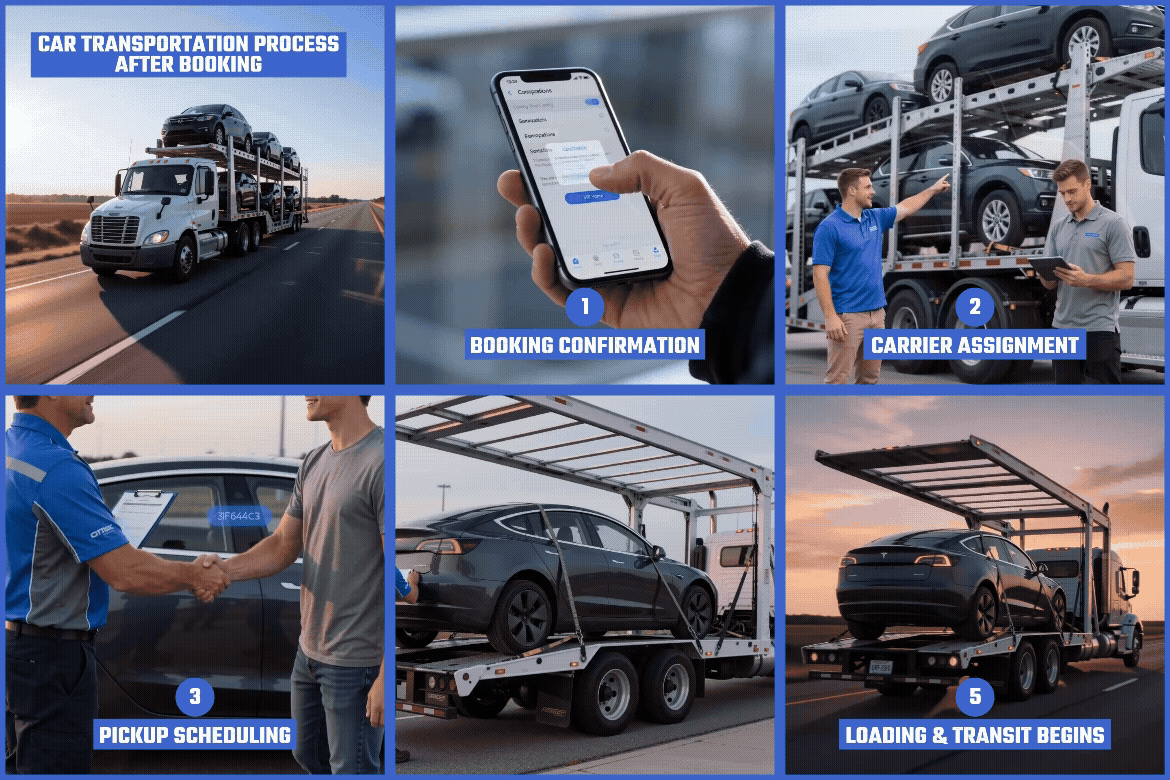
Booking Confirmation and Order Review
Immediately following your booking, you will receive a detailed order summary. It is vital to double-check the Vehicle Identification Number (VIN) and contact details during this time. Thoroughly reviewing this data is your first line of defense against potential scheduling delays.
Carrier Assignment and Dispatch
Once a driver is selected, you receive a "Dispatch Notification" identifying the carrier company. This document often provides the driver’s name and phone number for direct communication. This signifies that a physical spot has been officially reserved for you on a specific trailer.
Pickup Scheduling and Preparation
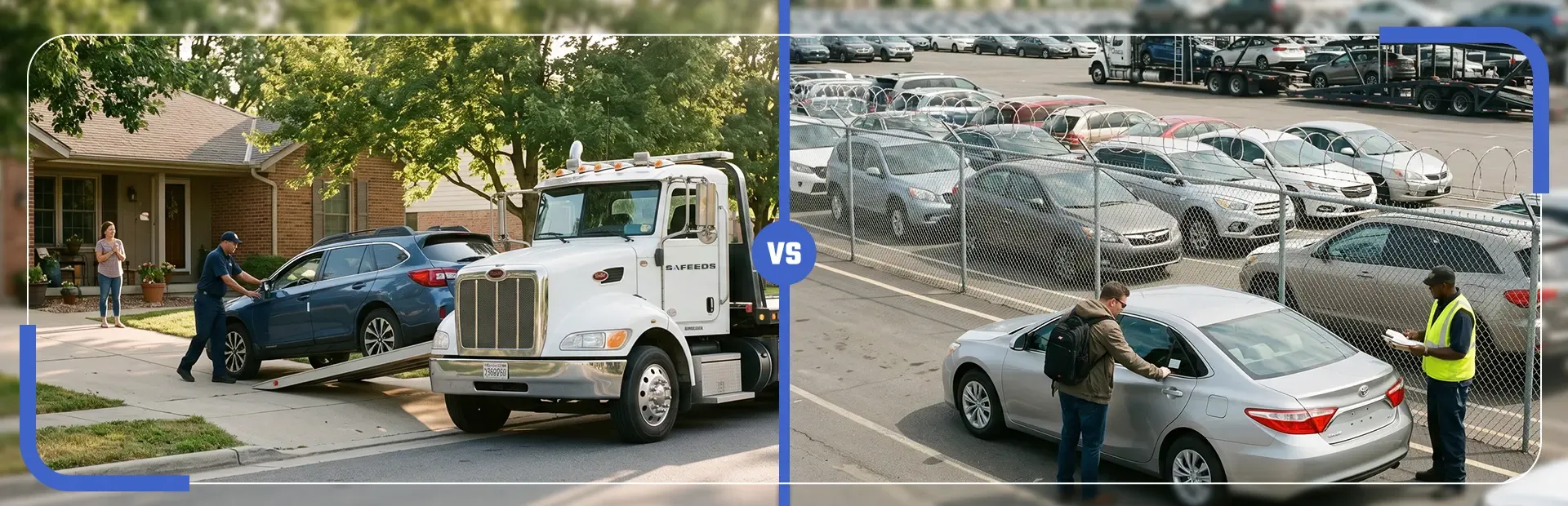
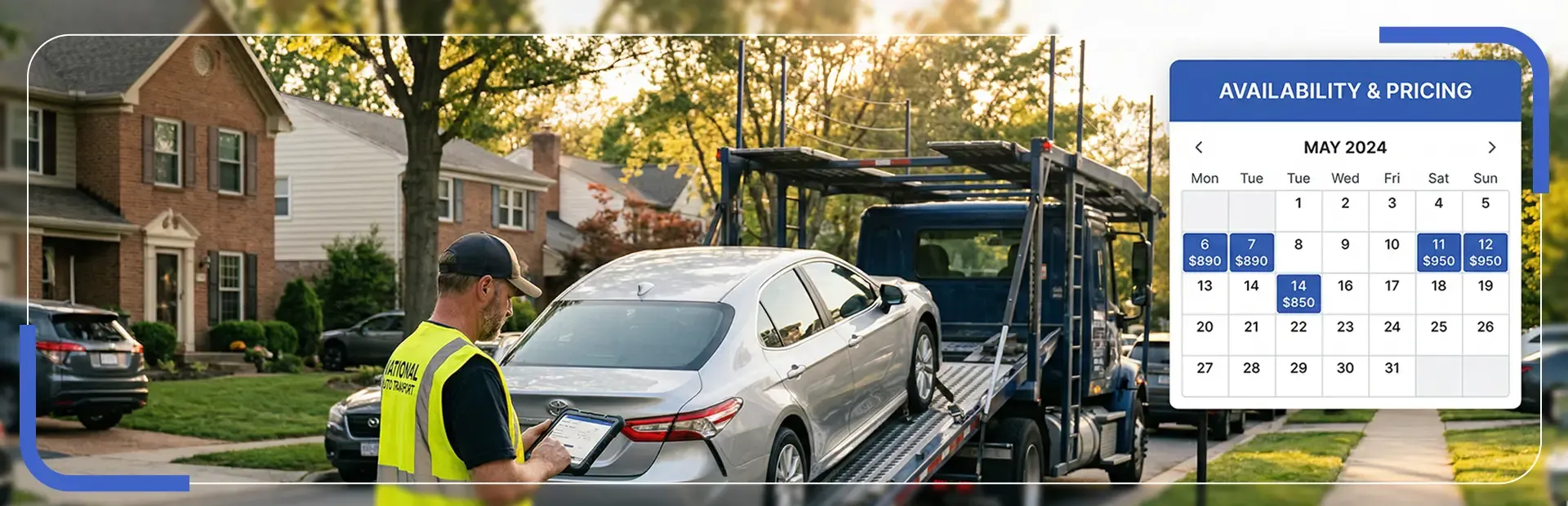
The driver or a dispatcher will contact you to establish a pickup window, usually spanning 24 to 48 hours. Because trucks face variables like traffic or weather, a degree of flexibility is required from the customer. You will agree on a meeting point that is safe and accessible for a large transport trailer.
Vehicle Loading and Transit Begins
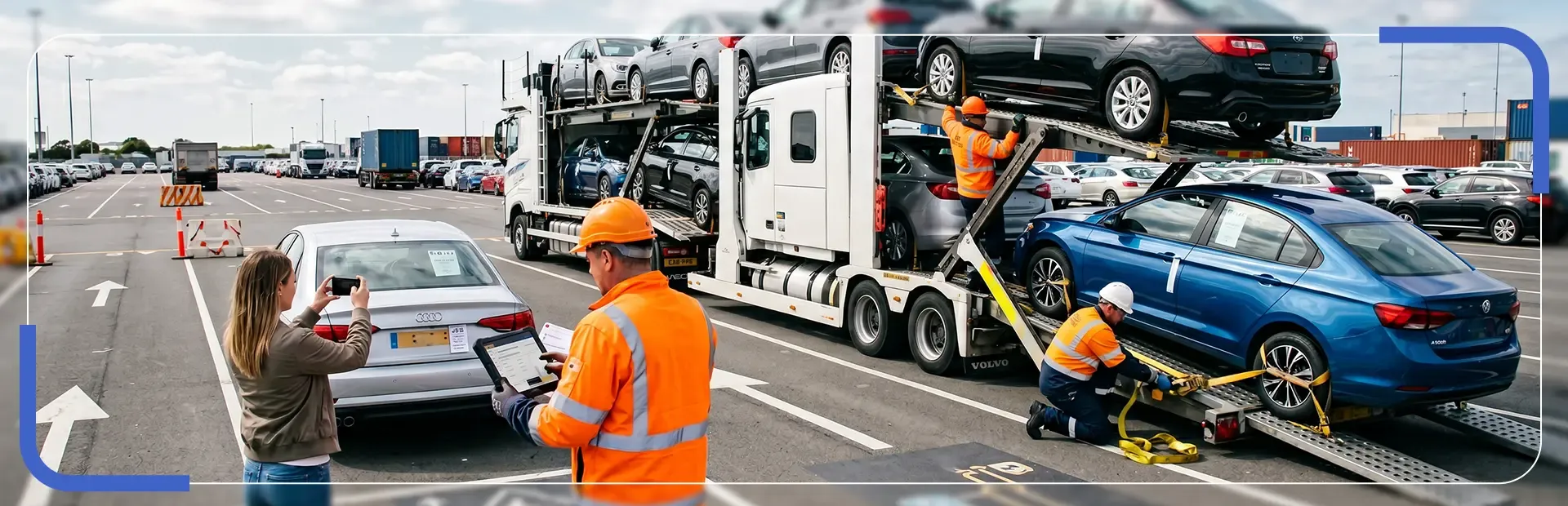
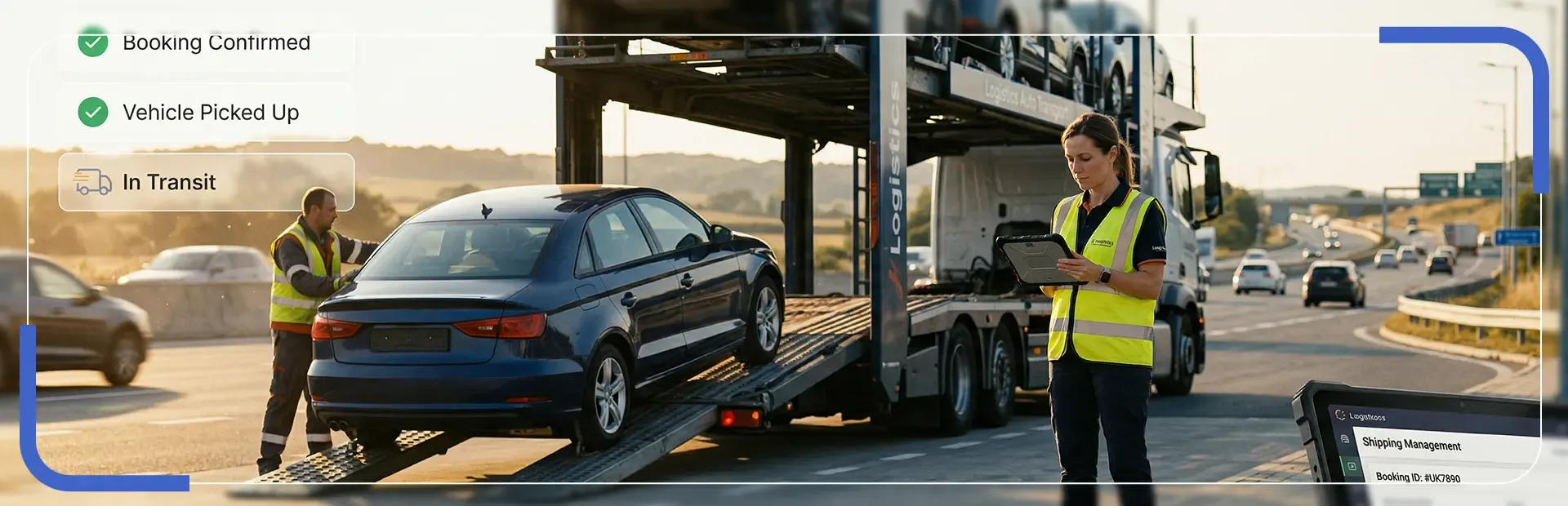
When the auto transport vehicle arrives, a detailed inspection is performed and noted on the Bill of Lading (BOL). Both parties sign this document to confirm the vehicle's condition before it is loaded. Once secured with specialized straps, the journey officially begins.
Car Transportation Timeline for Local and Cross-Country Shipping
Timing depends largely on the total mileage and the route's complexity. Being aware of these windows helps you plan your own travel or relocation.
Short Distance Transport Timelines
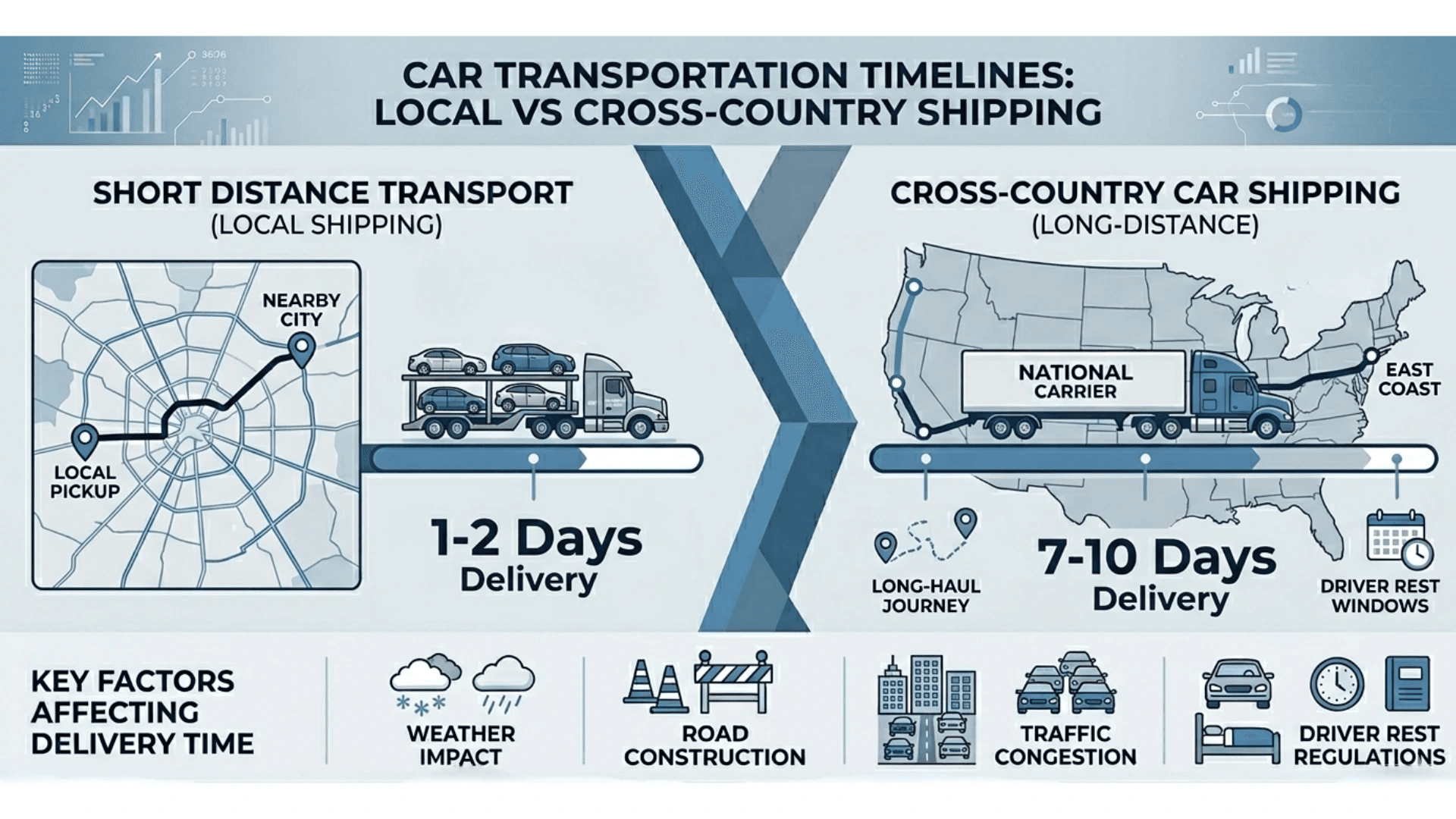
For shipments under 500 miles, the turnaround is often very swift. Once the vehicle is loaded, delivery typically occurs within one to two business days. These routes are frequently serviced by smaller regional fleets or "hotshot" trailers.
Cross Country Car Shipping Timeframes
When you ship a car across the United States, the timeline extends significantly to account for distance. For cross-country car shipping, you should anticipate a delivery window of 7 to 10 days. The truck covers roughly 400–500 miles per day, adhering to mandatory rest periods for the driver.
The following video explains how long car shipping typically takes from pickup to delivery:
Factors That Influence Delivery Speed
Logistics are often at the mercy of the environment and infrastructure. While carriers strive for precision, factors like heavy snow or major interstate construction can shift the final delivery date. Understanding that these timelines are professional estimates, not guaranteed appointments, is a hallmark of a prepared customer.
Key Factors That Affect Car Transportation After Booking
Multiple variables influence how quickly and safely your vehicle moves through the network. Transparency regarding these factors helps prevent surprises during the transit phase.
Distance and Route Demand: Popular routes like Florida to New York offer faster dispatch due to high carrier availability. Remote areas may require extra time to find a driver willing to deviate from major interstates.
Weather, Traffic, and Inspections: Seasonal weather and mandatory DOT inspections are factored into your estimated delivery window. Safety is always prioritized over speed to ensure your vehicle arrives in its original condition.
Vehicle Type and Condition: Larger SUVs occupy more deck space and add weight, affecting carrier selection. Inoperable vehicles require extra coordination to secure a truck equipped with a specialized winch.
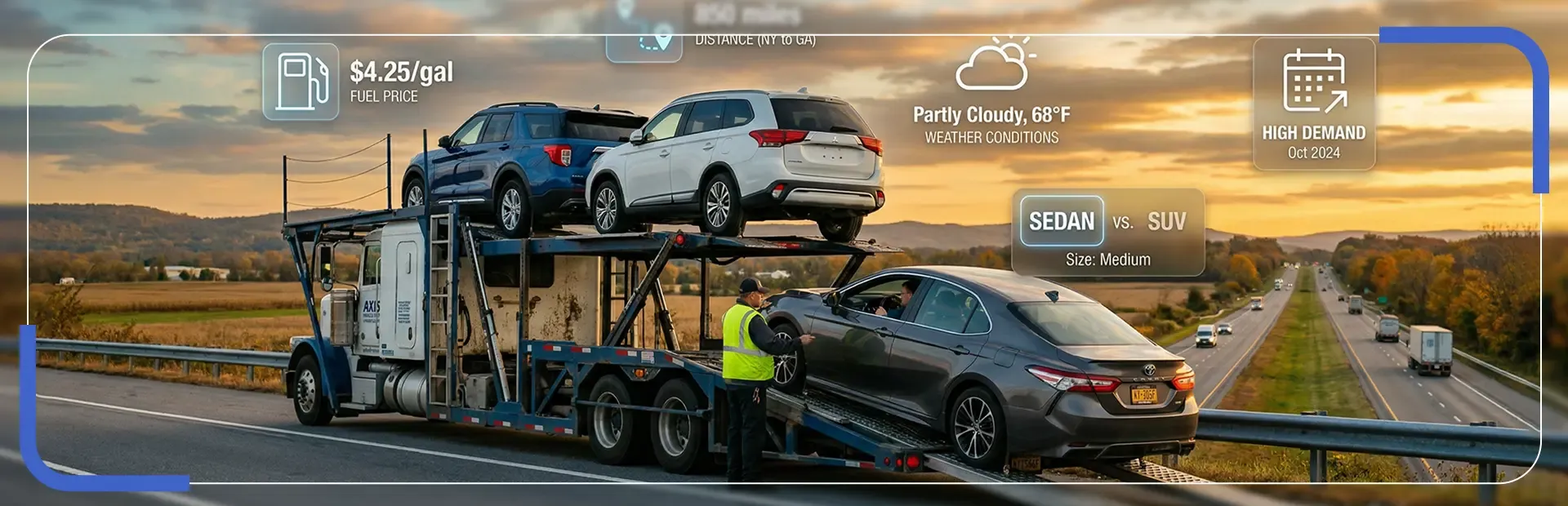
Carrier Availability and Market Conditions: Shipping rates and capacity fluctuate based on fuel prices and seasonal surges like the "snowbird" season. Booking in advance is the best way to secure cheap vehicle transportation services safely.
Understanding Costs After Booking Car Transportation
While your initial booking provides a solid financial framework, the final cost of shipping is often influenced by dynamic market variables. Understanding these nuances ensures you are prepared for the final transaction without surprises.
Initial Quote vs Final Carrier Price
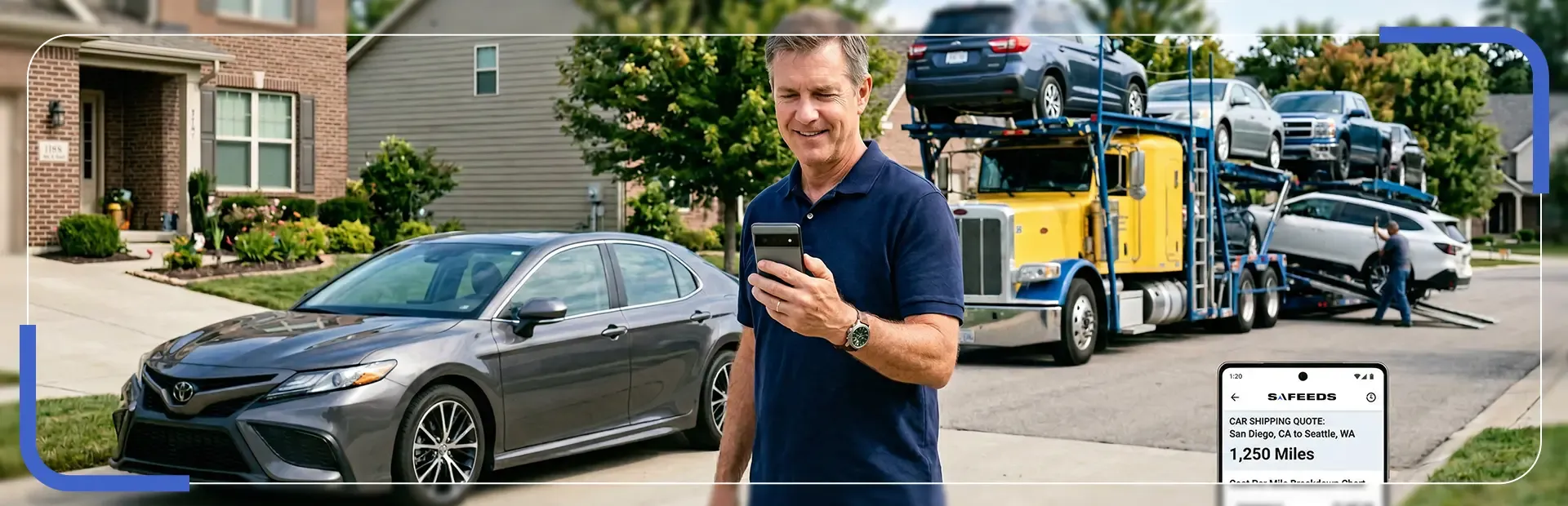
The quote you receive during the booking phase is an estimate based on current market data and seasonal trends. However, the final price is confirmed once a specific carrier accepts the load and a dispatch agreement is signed. Professional brokers work to keep these figures aligned, but shifts in driver availability can occasionally lead to minor adjustments before the carrier is locked in.
What Affects Cost in Cross-Country Shipping
When calculating how much to ship a car cross-country, several logistical layers come into play beyond simple mileage. The price is heavily influenced by current fuel surcharges and the "opportunity cost" for a driver taking a long-haul route. High-demand routes usually offer more stable pricing, whereas remote locations may require a higher fee to entice a driver away from major shipping hubs.
Watch the video below to learn about additional factors that affect car shipping prices:
Finding Cheap Vehicle Transportation Services Safely
Achieving cheap vehicle transportation services is possible by being flexible with your pickup and delivery dates. Choosing open-air transport instead of enclosed shipping is the most significant way to reduce costs for a standard vehicle. However, it is vital to balance affordability with reliability, as the lowest price should never come at the expense of a carrier’s insurance or safety rating.
Cost Factors and Pricing Dynamics
To help you budget effectively, it is important to understand the specific variables that influence your final shipping rate. The following breakdown illustrates the primary drivers of transport costs and their typical impact on your total investment.
Cost Driver | Description | Impact Level |
|---|---|---|
Transport Type | Open-air is standard; Enclosed is premium for luxury cars. | High |
Fuel Prices | National averages for diesel significantly affect carrier rates. | Moderate |
Vehicle Size | Larger vehicles take up more deck space and add weight. | Moderate |
Time of Year | Seasonal demand (like "Snowbird" season) increases prices. | High |
What to Do and Mistakes to Avoid After Booking
Once the paperwork is finalized, the responsibility shifts toward physical preparation and clear communication. Taking proactive steps while avoiding common logistical pitfalls ensures that your vehicle is ready the moment the driver arrives for pickup.
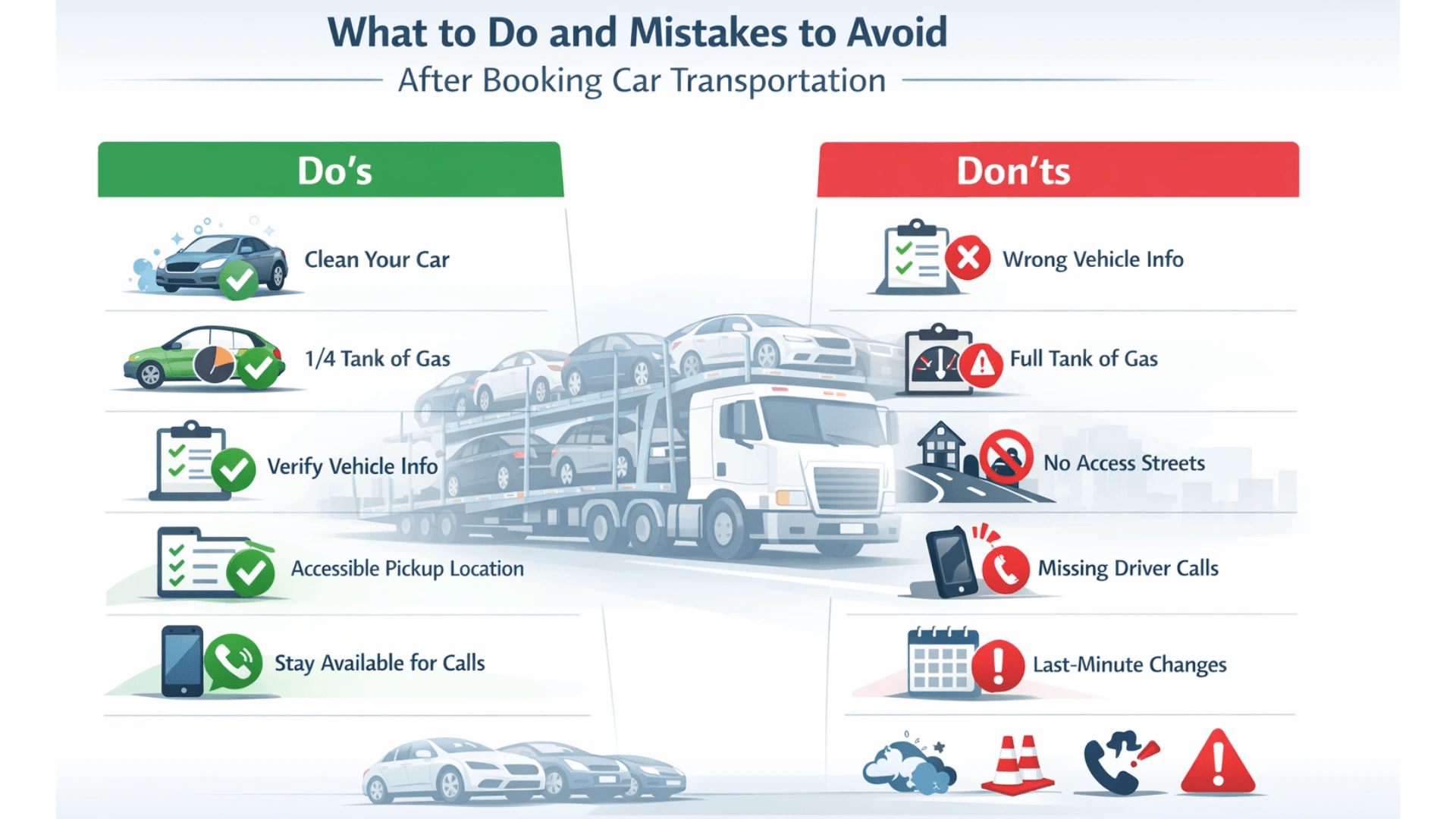
Prepare Your Vehicle and Information: Clean your car to facilitate a quick inspection and keep the gas tank at one-quarter full to minimize trailer weight. Ensure all vehicle details, including modifications like roof racks or lift kits, are accurate, as incorrect info can lead to a carrier refusing the load.
Coordinate Accessibility and Timing: Confirm that your pickup and delivery addresses can accommodate a 75-foot articulated carrier; otherwise, arrange a nearby parking lot as a meeting point. Understand that pickup dates are 48-hour windows rather than fixed appointments, allowing drivers to navigate traffic and weather safely.
Maintain Open Communication: Keep your phone accessible for calls from the driver or dispatcher, typically 24 hours and again two hours before arrival. Avoid waiting until the last minute to book or update details, as early coordination is the most effective way to secure a vetted driver and avoid premium "emergency" pricing.
Key Insights Before Moving Forward with Car Transportation
Success in the auto shipping industry is built on the foundation of transparency and communication. By understanding the roles of the broker and carrier, the reality of transit timelines, and the importance of vehicle preparation, you are now equipped to navigate the process effectively.
How much does it cost to ship a car with Safeeds Transport Inc?
Costs vary based on distance, vehicle size, and the type of trailer (open or enclosed). For an accurate figure, we recommend using our online calculator to get a quote that reflects current market conditions.
How long does it take to ship a car?
Local shipments (under 500 miles) usually take 1–3 days, while long-distance vehicle transport can take 7–10 days. These timelines depend on weather, route demand, and driver safety regulations.
How do I prepare my car for shipping?
You should clean the vehicle, remove all personal items, and leave the gas tank at about one-quarter full. Ensure you have a spare key ready for the driver and that any loose parts or spoilers are secured.
Is my vehicle insured during transport?
Yes, all carriers we work with are required to maintain active cargo insurance. Additionally, Safeeds provides extra protection options like AFTA GAP to give you complete peace of mind during transit.
Can I track my shipment?
We provide regular updates via our dispatch team, and in most cases, you can communicate directly with the driver. This ensures you know exactly where your vehicle is as it moves toward its destination.
Prepare for a Smooth and Reliable Shipping Experience
Navigating the car transportation process is a collaborative effort between you and the logistical team. By following the steps outlined in this guide, from booking and dispatch to preparation and delivery, you can ensure your vehicle is handled with the highest level of professional care. Remember that while the hardware is the most visible part of the move, the coordination and communication behind the scenes are what truly drive a successful outcome.
Safeeds Transport is dedicated to providing a clear, authoritative path for your vehicle’s journey. Whether you are moving a family SUV or a luxury classic, our commitment to safety and transparency remains the same. When you are ready to ship a car, you can move forward with the confidence that every detail has been accounted for. Request your personalized car shipping quote today and schedule your stress-free vehicle transport.