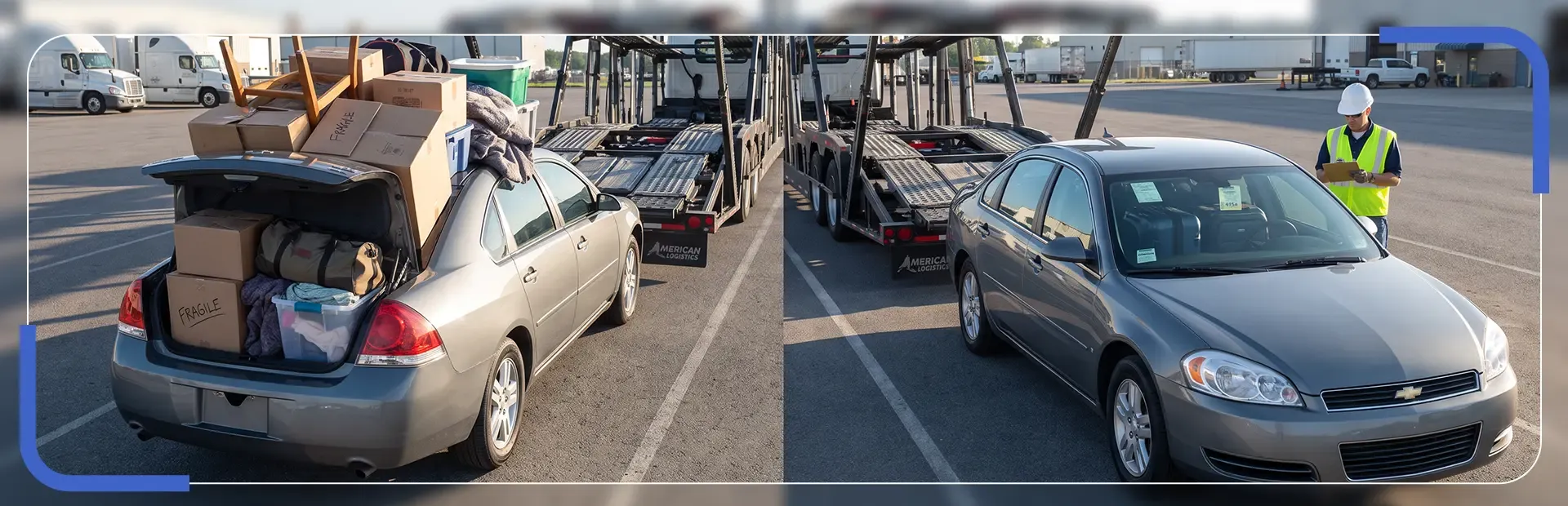
You can generally ship personal items in your car up to 100 lbs, packed in the trunk below the window line. Federal carrier authority covers vehicles, not household goods, which is why the limit exists. Anything in the car is excluded from the carrier's cargo insurance, regardless of weight.
Shipping car and belongings together comes down to three distinct legal limits, not one general rule: a weight cap, a list of restricted items, and placement rules tied to carrier liability. Understanding all three, and where each one actually comes from, is what separates a smooth pickup from a refused shipment.
Knowing these limits before you pack saves a frustrating conversation on pickup day. Get your free, price-locked quote today and confirm your carrier's exact personal items policy before you start loading the trunk.
How Much Can You Legally Pack When Shipping Your Car?
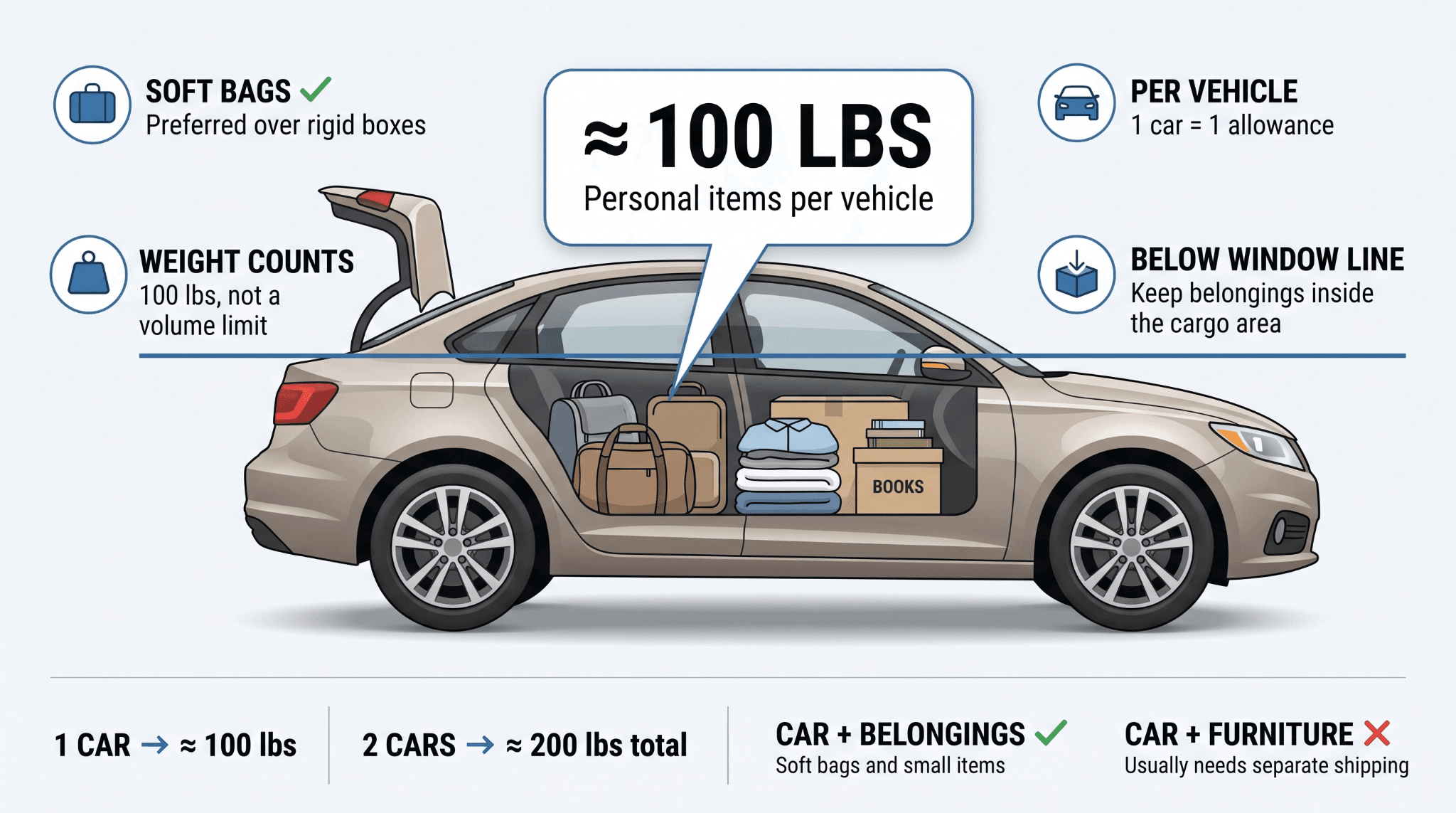
You can legally pack up to roughly 100 lbs of personal items in the trunk or rear cargo area, below the window line. This is a carrier-level courtesy that has become the informal industry standard, not a right granted by federal regulation.
A few things worth understanding about this allowance:
It applies per vehicle, not per person, so a family shipping two cars gets two separate allowances.
Soft-sided bags are strongly preferred over boxes, since they compress more easily below the window line.
The allowance covers weight only, not volume, so a small box of books can hit the limit faster than a large bag of clothing.
This shipping car and belongings together guide focuses on getting these numbers right before pickup day, since a miscalculation here is one of the most common causes of a delayed or refused shipment.
Reading shipping car and belongings together reviews from other customers can confirm whether a broker actually enforces this allowance consistently or lets it slide inconsistently between shipments.
This differs somewhat from shipping car and furniture together, which almost never fits within the allowance and typically needs to move separately regardless of weight, since furniture rarely fits below the window line even at low weights.
Why Is There a 100 lb Limit?
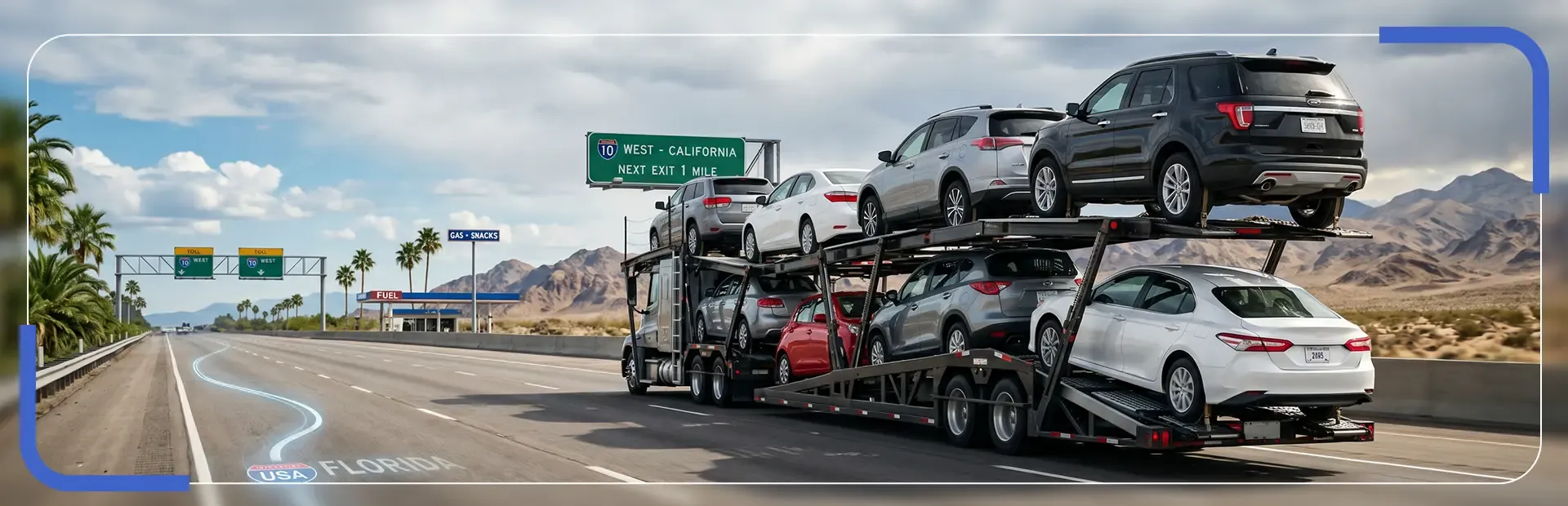
The 100 lb limit exists because of federal weight law, not carrier preference: commercial trucks are capped at 80,000 lbs gross vehicle weight, and every extra pound inside every vehicle on the trailer counts against that total. A driver hauling near capacity has little room to absorb extra weight across multiple customers' cars.
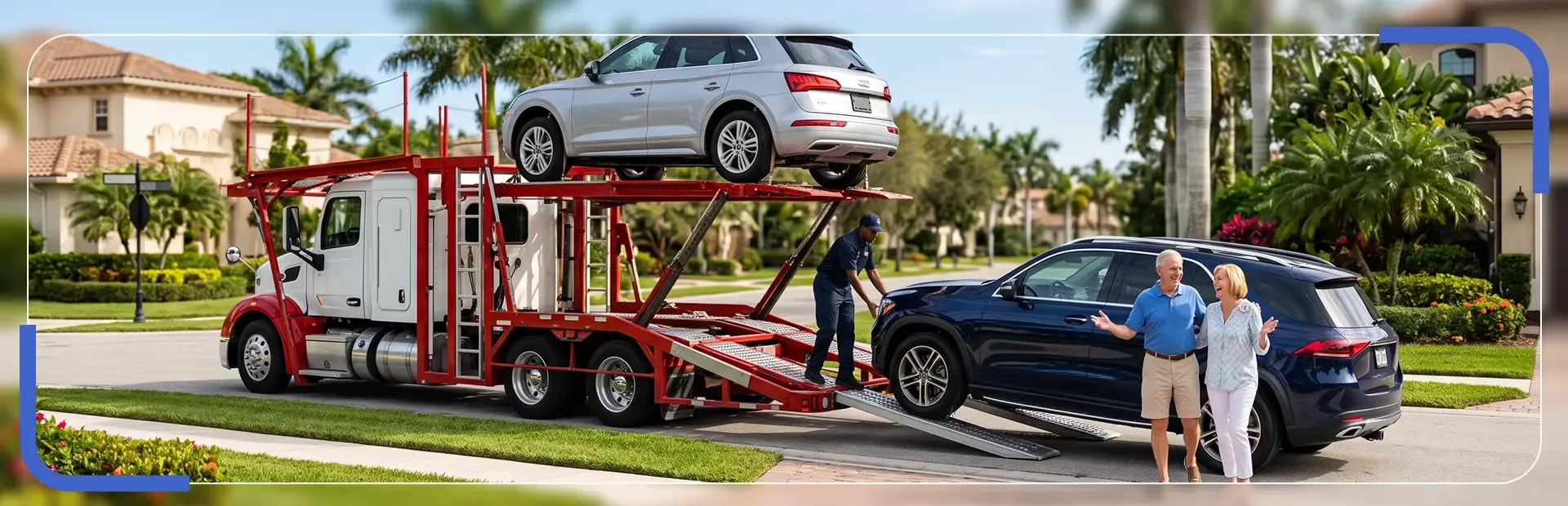
This becomes clearer when you consider a fully loaded car hauler carrying eight to ten vehicles at once. Even a modest amount of extra weight in each car adds up quickly across the whole trailer, which is exactly the scenario federal weight law is designed to prevent.
Auto carriers are also licensed under a specific FMCSA category that covers vehicles as freight, not household goods, which is a separate legal distinction from the weight cap itself. This is part of why shipping car and belongings together cost estimates rarely include a line item for personal items unless you exceed the standard allowance.
Anyone budgeting for shipping car and belongings together cost 2026 figures should expect this same 100 lb standard to hold, since it's tied to federal weight law rather than anything that shifts year to year.
What Items Are Never Permitted?
Certain items are never permitted inside a shipped vehicle regardless of weight, since federal hazardous materials regulations prohibit them outright. This includes explosives, flammable liquids, compressed gases, and corrosives.
These restrictions apply no matter how the item is packed or how far under the weight cap the rest of the car sits, since the prohibition is about the item itself, not the total weight.
Beyond federal hazmat rules, most carriers add their own restrictions:
Firearms and ammunition are excluded under federal transport law, not just carrier policy.
Cash, jewelry, and other valuables are excluded since cargo insurance won't cover theft or loss.
Perishable food and loose electronics are typically discouraged due to spoilage and shifting risk.
None of this changes the shipping car and belongings together price you're quoted, since these items were never part of the standard allowance to begin with.
Shipping car and belongings together rates stay the same whether or not you disclose restricted items, because the answer is simply that they can't travel in the car at all.
Are Your Belongings Insured?
 No, belongings packed inside a shipped car are generally not insured, even within the standard weight allowance. Standard cargo insurance covers damage to the vehicle itself, not personal property inside it.
This surprises a lot of first-time shippers, since the word "insured" on a quote naturally implies everything in the vehicle is protected. In practice, the coverage is written specifically around the vehicle as freight, not its contents.
If you're searching for a shipping car and belongings together near me option assuming local coverage rules differ, know that this exclusion is standard nationwide, since it comes from how cargo insurance is written at the federal level, not local practice.
Real differences exist among shipping car and belongings together companies in how clearly they explain this gap upfront.
A transparent shipping car and belongings together company will tell you before pickup, not after something goes missing. For anything of real value, a homeowner's or renter's insurance rider, or a standalone shipping policy, offers far better protection than the trunk of a car.
What Happens If You Exceed the Limit?
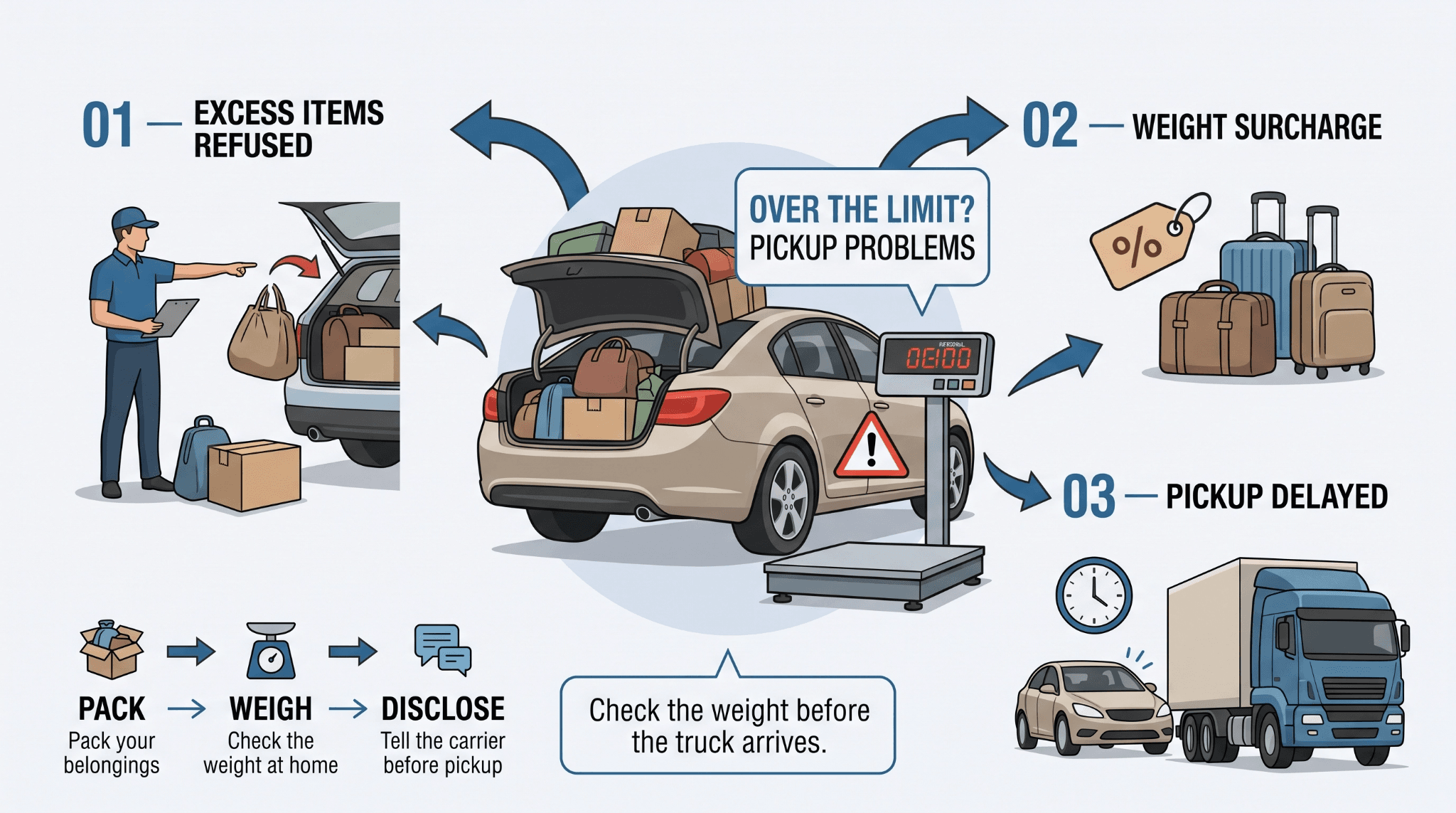
If you exceed the limit, the driver can refuse the excess items on the spot, apply a weight surcharge, or delay pickup until the vehicle is brought within the standard allowance. None of these outcomes favor the customer, which is why disclosing weight upfront matters so much.
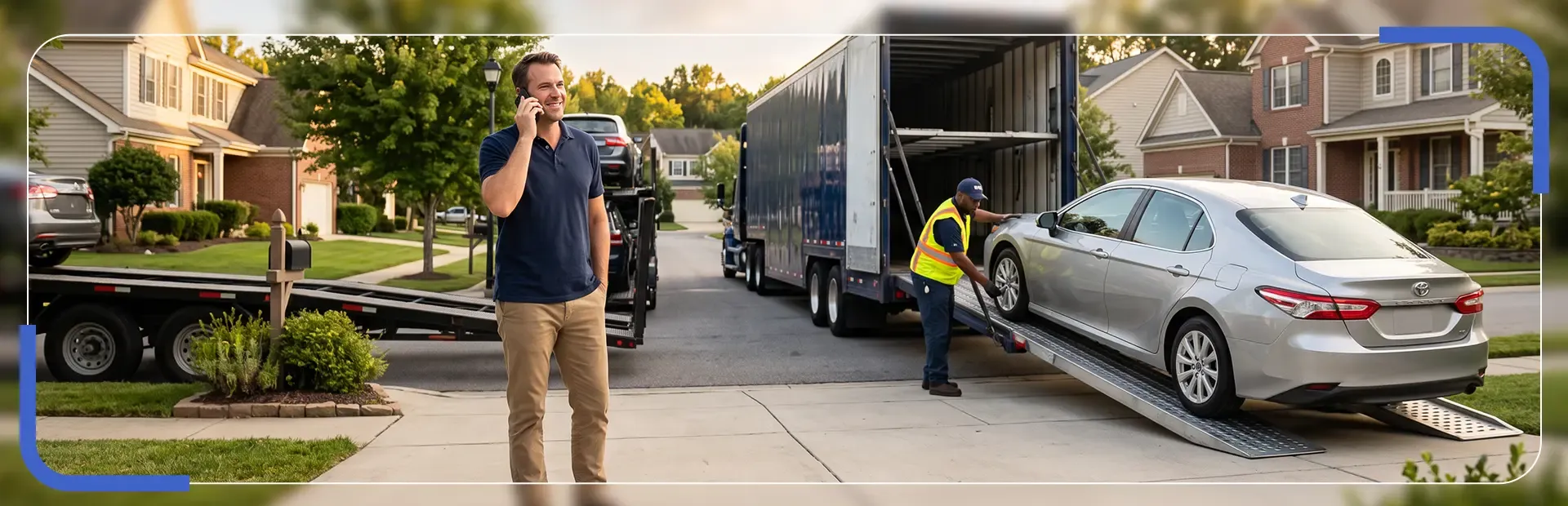
A driver discovering excess weight on pickup day is in a difficult position: their schedule for the rest of the route is already set, and an unplanned delay at one stop pushes back every delivery after it. That pressure is exactly why refusal, rather than accommodation, is the more common outcome.
A genuine shipping car and belongings together service will ask about your packing plans at quote time, not discover the issue at pickup.
So how much shipping car and belongings together weight actually costs you in fees depends entirely on whether you disclosed it in advance or the driver found it unannounced on pickup day. A quick bathroom-scale check at home before the truck arrives is a small step that avoids nearly all of this risk.
What Shippers Ask Most About Packing Limits
Packing questions come up on nearly every first-time booking. Here are direct answers to the ones we hear most.
Can I ship belongings in my car?
Yes, generally up to 100 lbs, packed in the trunk below the window line. This is an industry standard, not a guaranteed right, so confirm it with your specific carrier.
What is the weight limit for personal items?
Roughly 100 lbs is the standard allowance across most carriers. Request a shipping car and belongings together quote that confirms this limit for your specific shipment.
Why can carriers not haul household goods?
Auto carriers are licensed under a specific FMCSA category covering vehicles as freight, not general household goods, which is a separate legal category entirely.
Are items in the car insured?
No. Cargo insurance covers the vehicle, not personal belongings inside it, regardless of weight or value. Comparing shipping car and belongings together quotes won't change this exclusion, since it's standard across the industry.
What if I go over the weight limit?
The driver may refuse the excess, apply a surcharge, or delay pickup. An online shipping car and belongings together calculator can give a rough weight estimate, but a kitchen scale at home is more reliable.
Pack Within the Limits Before Pickup Day
Shipping car and belongings together comes down to three clear limits: a roughly 100 lb weight cap, a firm list of restricted items, and placement rules tied directly to what's actually insured. None of these are arbitrary, and each traces back to a specific federal or contractual source rather than an individual carrier's preference.
A cheap shipping car and belongings together quote that skips explaining these limits is rarely the outcome you actually want once a driver arrives and refuses your packed items.
The best shipping car and belongings together approach is disclosing your packing plans upfront, not discovering the rules on pickup day.
This same framework is expected to hold for any shipping car and belongings together 2026 booking, since these limits are tied to federal regulation rather than anything that changes annually. Get your free, price-locked quote today and confirm your carrier's exact personal items policy before pickup day.