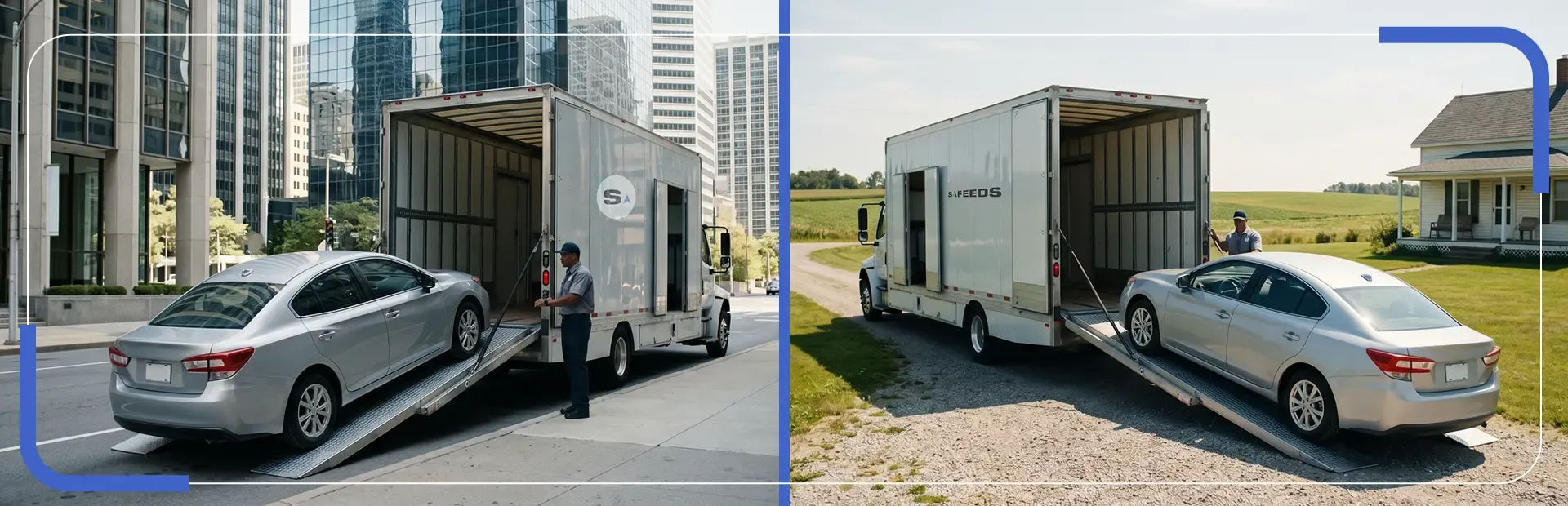
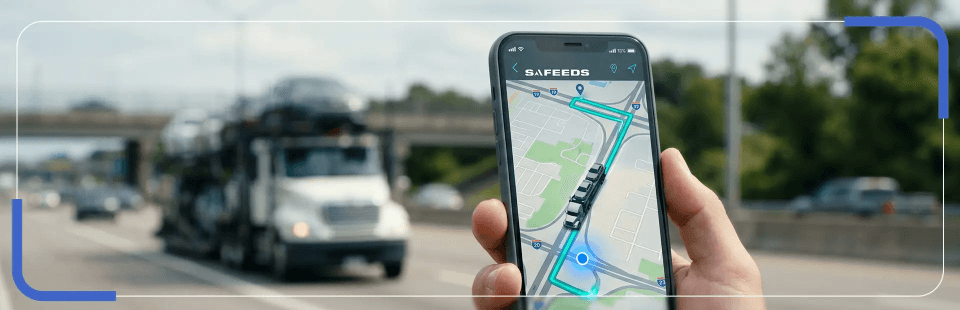
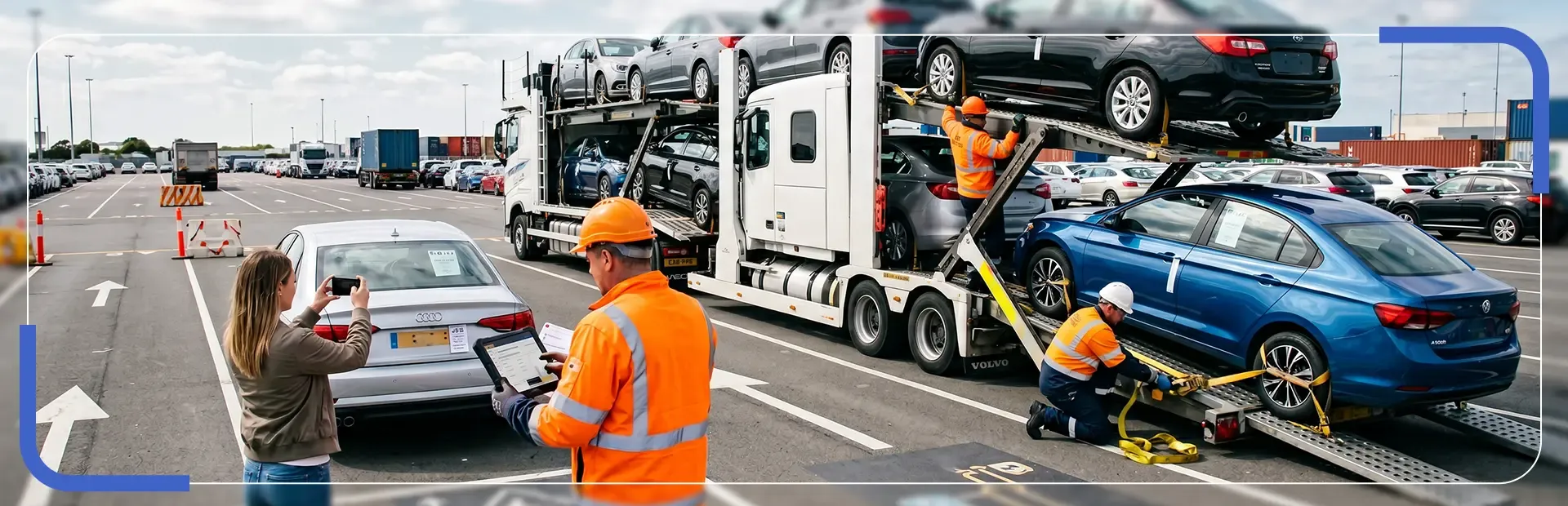
Every year, thousands of vehicle owners hand over their cars to brokers they trust, only to discover their shipment was quietly passed to another broker, then another, without their knowledge. Double brokering is one of the most damaging practices in the auto transport industry, and most customers do not realize it has happened until something goes wrong.
The consequences range from unexpected delays and inflated costs to stolen deposits, denied insurance claims, and vehicles that never arrive. This guide breaks down seven concrete risks, explains the regulatory framework, and gives you the tools to identify and avoid them before you book. Get a free quote from Safeeds Transport, a verified broker that assigns carriers directly, with full transparency at every stage.
What Is Double Brokering in Car Shipping?
Double brokering meaning in auto transport is straightforward: a licensed broker accepts a shipment, then passes it to a second broker, who may pass it to a third, without the customer's knowledge or authorization. The result is a chain of middlemen, each taking a cut, while accountability for the vehicle diminishes at every step.
This practice is distinct from legitimate subcontracting, where permissions are clearly documented. Double brokering is defined specifically by the absence of transparency and authorization.
Double Brokering Trucking Definition in Simple Terms
The double brokering trucking definition applies across freight categories but carries particular risk in car shipping due to the high value of the cargo.
A real-world example of what double brokering looks like in practice:
You book with Broker A at an agreed price
Broker A cannot find a carrier at that rate and lists your vehicle on a load board
Broker B picks it up and assigns it to Carrier C
You were never informed, and if anything goes wrong, no single party is clearly responsible
Why Double Brokering Happens in Auto Transport
Several factors drive brokers toward unauthorized reassignment:
Thin profit margins: Brokers underbid to win business, then cannot cover costs at the agreed rate
Load board dependence: Overreliance on open load boards creates opportunities for unauthorized reassignment
Inadequate vetting: Some brokers accept shipments before confirming carrier availability
Fraudulent intent: In the worst cases, brokers collect deposits with no intention of arranging legitimate transport

Is Double Brokering Illegal? FMCSA Rules and Industry Standards
The question of whether double brokering is illegal does not have a single simple answer, but the regulatory framework makes it clearly prohibited in most circumstances. Under federal regulations, brokers must maintain written agreements with the carriers they use. Reassigning a load to a second broker violates those agreements and creates an unregistered intermediary in a federally regulated chain of custody.
Double brokering illegal activity becomes criminal when it involves fraud, collecting a deposit with no intent to deliver, or impersonating a licensed carrier to obtain loads.
What FMCSA Says About Double Brokering
The Federal Motor Carrier Safety Administration (FMCSA) requires all brokers to hold a valid MC number and maintain surety bonds to protect shippers. FMCSA double-brokering violations occur when loads are transferred outside authorized agreements, breaching 49 CFR Part 371.
Brokers found in violation face:
License suspension or revocation
Surety bond forfeiture
Civil penalties and shipper claims
Double Brokering News and Real Industry Cases
Double brokering news has grown more prominent as digital load boards have expanded. According to the Transportation Intermediaries Association (TIA), freight fraud, much of it linked to double brokering scams, has increased significantly in recent years, with losses running into the hundreds of millions of dollars annually across trucking and transport sectors.
Risk #1: Fake Car Shipping Scam and Fraudulent Bookings
The most severe form of double brokering crosses directly into criminal territory: the fake car shipping scam. A fraudulent broker collects payment, sometimes in full, then either disappears or assigns the load to an unvetted operator with no ability to complete the shipment.
Customers who fall victim to a car shipping scam often have little recourse. The broker may be operating under a fake business name, a cloned MC number, or a recently registered shell company.
How Fake Car Shipping Scams Typically Work
Most double brokering scams follow a recognizable pattern. Knowing it in advance is your best defense.
Here is how the sequence typically unfolds:
A broker advertises unusually low rates to attract customers quickly
The customer pays a deposit, sometimes the full amount, upfront
The broker lists the load on an open load board at a lower rate than collected
A second broker or unvetted carrier picks it up
Communication breaks down, and pickup is missed
The original broker becomes unresponsive or disputes responsibility
The red flag most commonly ignored: rates significantly below the market average. In auto transport, prices that seem too good to be true almost always are.
Here is how a legitimate broker compares to a double-brokering or scam operation:
Factor | Legitimate Broker | Scam / Double Broker |
|---|---|---|
MC Number | Verified and active | Fake, cloned, or expired |
Carrier Assignment | Confirmed in writing | No confirmation provided |
Pricing | Transparent, no hidden fees | Low quote, surprise charges later |
Communication | Consistent throughout | Goes silent after deposit |
Insurance | Carrier coverage verified | Unknown or unverifiable |
Payment Terms | Deposit after carrier secured | Full payment demanded upfront |
Risk #2: Delays Caused by Unauthorized Load Transfers
Even without outright fraud, double brokering causes serious scheduling disruptions. When a load passes through multiple brokers before reaching a carrier, each handoff introduces new opportunities for miscommunication and missed pickup windows.
The original broker sets a pickup date based on assumptions that may not hold once the load is reassigned. The carrier, now several steps removed, may not prioritize the shipment the same way a directly assigned operator would.
The practical consequences:
Pickup dates missed without advance notice
Conflicting information from different parties in the chain
Rescheduling adds days or weeks to the total timeline
No single party accepts clear responsibility for the delay
Escalating the issue becomes difficult when accountability is spread across multiple brokers
In time-sensitive situations, military relocations, financed vehicle purchases, or cross-country moves , these delays carry real financial consequences.

Risk #3: Higher Costs and Hidden Fees in Double Brokering Chains
Every additional layer in a brokering chain extracts a margin. When a shipment passes from broker to broker before reaching a carrier, each party marks up the rate. The customer, who agreed to a price at booking, may not see this inflation until extra charges appear at pickup or delivery.
This is one of the most common patterns in double brokering complaints.
Here is how cost inflation typically builds through the chain:
The original broker quotes a low rate to win the booking
Unable to cover carrier costs, they pass the load to a second broker at a lower margin
The second broker adds their own markup before engaging a carrier
The carrier, receiving less than the fair market rate, demands a surcharge at delivery
The customer has no visibility into why the final cost differs from the original quote
How Load Boards Contribute to Cost Inflation
Understanding how to avoid double-brokering using load boards starts with knowing how open load boards function. When a broker posts a load at a lower rate than collected from the customer, the margin gap is recovered through added fees or reduced service quality.
Brokers with established direct carrier relationships, like Safeeds Transport, control pricing more reliably and eliminate unauthorized reassignment risk.
Risk #4: Loss of Carrier Accountability During Transit
When a shipment passes through multiple brokering layers, identifying who is actually responsible for the vehicle becomes genuinely difficult. The original broker points to the second. The second point of the career. The carrier may not even be aware of the full chain above them.
This accountability gap has direct consequences:
The original broker claims their obligation ended when the load was passed
The second broker argues they fulfilled their role by engaging a carrier
The carrier's insurance may only cover damage they directly caused
Customers find themselves negotiating with parties who have no record of their original agreement
Resolution timelines extend significantly when multiple companies must be contacted
Double brokering fundamentally undermines the single point of accountability that legitimate auto transport is designed to provide. When something goes wrong mid-transit, and in a multi-broker chain, something eventually does, the customer bears the burden of proving which party is liable.

Risk #5: Insurance and Claim Complications
Double brokering does not just create logistical problems; it creates serious gaps in insurance coverage that most customers only discover when they need to file a claim.
When a load is reassigned without authorization, the carrier handling the vehicle may not be the one listed in the original broker's insurance documentation. This mismatch creates grounds for claim denial.
The most common insurance complications in double brokering situations:
The carrier operating the vehicle is not the carrier listed on the broker's paperwork
The unauthorized carrier may carry insufficient coverage for the vehicle's value
Insurance companies deny claims when the carrier assignment cannot be verified
Customers are left pursuing compensation across multiple parties with no clear liability
The process can drag on for months with no resolution
Working with a broker who directly verifies and documents carrier assignments before pickup is the only reliable way to ensure your vehicle is covered end to end.
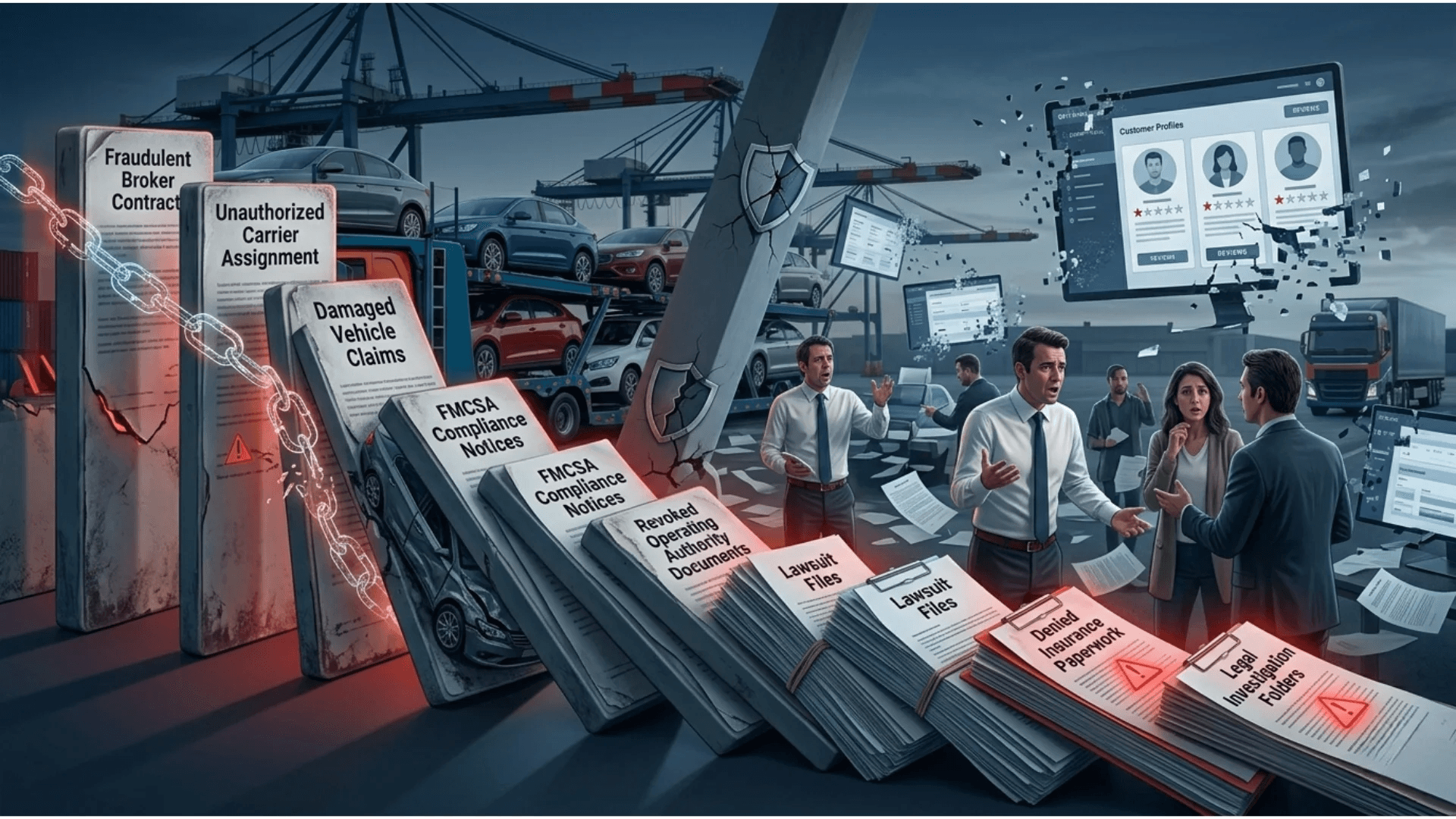
Risk #6: Legal Exposure for Brokers and Shippers
Double brokering illegal activity not only affects the broker caught doing it, but it can also create legal exposure for everyone involved in the chain, including the customer in certain circumstances.
For brokers, the consequences under FMCSA double-brokering regulations can be severe:
Revocation of operating authority
Forfeiture of surety bond
Civil lawsuits from shippers and carriers
Criminal charges in cases involving fraud or identity theft
Customers are not immune either. If a vehicle is shipped under an unauthorized carrier arrangement and an accident or damage occurs, the customer may face disputes over liability, particularly if they signed paperwork without verifying the carrier assignment.
How to Report Double Brokering
If you suspect double brokering has occurred, take the following steps:
Document all communications with the broker, emails, texts, and contracts
Request the MC number of the carrier actually assigned to your vehicle
Verify the MC number independently at the FMCSA SAFER system
File a complaint directly with the FMCSA if violations are confirmed
Report the incident to the Transportation Intermediaries Association (TIA) or your state's consumer protection office
How to report double brokering promptly protects not just your own shipment, but it helps remove fraudulent operators from the market before they affect other customers.
Risk #7: Trust Breakdown in the Car Shipping Industry
Beyond individual shipments, double brokering causes lasting damage to the broader auto transport industry. Every scam that goes unresolved, every delayed vehicle, and every denied claim makes customers more hesitant to book transport services online, even with legitimate, verified brokers.
The industry-wide consequences are significant:
Customers demand excessive documentation from even reputable brokers
Legitimate carriers face increased scrutiny and slower load acceptance
New customers enter the market with distrust, leading to lower booking rates
Online reviews filled with scam complaints damage the reputation of the entire sector
Brokers who operate with integrity are forced to work harder to establish credibility
The compounding effect of widespread double-brokering scams is a market where trust is scarce and verification takes longer, raising costs and friction for everyone involved.
How to Avoid Double Brokering in Car Shipping Safely
The most effective protection against double brokering is knowing what to verify before you hand over a deposit. A few straightforward checks at the booking stage eliminate the majority of risk.
Before committing to any broker, take the following steps:
Verify the MC number: Look up the broker's Motor Carrier number on the FMCSA SAFER system to confirm active registration
Request carrier confirmation in writing: A legitimate broker will provide the assigned carrier's name, MC number, and insurance details before pickup
Check the surety bond: Brokers are required to carry a minimum $75,000 surety bond; confirm it is active
Read the contract carefully: Ensure the agreement prohibits unauthorized reassignment and identifies the carrier directly
Avoid full upfront payment: Reputable brokers do not require full payment before a carrier is confirmed and assigned
Research the broker's reviews: Look for patterns of missed pickups, surprise charges, or communication failures, common indicators of double brokering
Key Warning Signs of Double Brokering Scams
Certain signals at the quote and booking stage indicate a higher risk of double brokering scams. Watch for the following before signing anything:
Rates that are significantly below the market average with no clear explanation
Pressure to pay in full immediately, before carrier details are provided
Vague or absent carrier assignment information at the time of booking
No physical business address or verifiable company history
Broker cannot or will not provide the MC number for the assigned carrier
Communication becomes inconsistent or slow after the deposit is paid
No written contract or agreement was provided before transport began
Common Concerns About Double Brokering in Auto Transport
Double brokering remains one of the least understood risks in car shipping, yet one of the most consequential. Whether you are shipping for the first time or have used transport services before, these questions come up consistently.
What is double brokering in simple terms?
What double brokering comes down to is this: your shipment is passed from the broker you hired to another broker, or multiple brokers, without your knowledge or approval. Each handoff reduces accountability and increases risk.
Is double brokering illegal in the U.S.?
Double brokering illegal activity violates FMCSA broker regulations and carrier agreement terms. When it involves fraud, fake MC numbers, stolen deposits, or impersonation, it becomes a criminal matter subject to federal prosecution.
How do I know if my shipment was double brokered?
Common signs include: the carrier that shows up does not match the name on your paperwork, you receive conflicting pickup information from different parties, or the broker becomes unresponsive after payment. Verify the carrier's MC number independently using the FMCSA SAFER system.
What should I do if I suspect a double brokering scam?
Document everything immediately. Request the actual carrier's MC number, cross-check it with FMCSA records, and file a formal complaint through the FMCSA complaint portal. Contact your payment provider about a chargeback if a deposit was taken fraudulently.
How does Safeeds Transport prevent double brokering?
Safeeds Transport works exclusively with vetted, licensed motor carriers and provides full carrier assignment details, including MC number and insurance confirmation, before every pickup. There are no unauthorized reassignments and no hidden brokering layers.
The Bigger Picture on Double Brokering in Auto Transport
Double brokering is not a minor industry irregularity; it is a systemic risk that affects pricing, accountability, insurance, and customer safety across the auto transport market. The seven risks outlined in this guide represent real outcomes that occur every day when shipments pass through unauthorized brokering chains.
The good news is that double brokering is largely avoidable. Customers who verify broker credentials, request carrier assignments in writing, and work with established, transparent operators significantly reduce their exposure to every risk covered here.
Safeeds Transport is built on direct carrier relationships, verified assignments, and complete pricing transparency, from the first quote to final delivery. Every shipment is managed without unauthorized reassignment, and every carrier is vetted before your vehicle is loaded. Get your free car shipping quote from Safeeds Transport, direct carrier assignments, verified coverage, and transparent pricing from start to finish.