Dealership car shipping moves vehicles between auctions, dealer lots and partner stores using licensed carriers. Most dealers save time and money by booking multi-car loads, sending gate passes before pickup, scheduling around auction days and keeping signed condition reports for every unit. The right carrier keeps inventory moving without storage fees or lost sales days.
Win a car at auction on Tuesday, and it can sit on the lot all week racking up storage fees, then arrive with half the paperwork missing.
That’s why dealership car shipping is nothing like shipping one personal car. This guide covers the six areas you need to get right, from auction pickups and dealer trades to gate passes, scheduling and documentation. Request a dealer quote from Safeeds Transport for single units, multi-unit orders or a full load.
Key Takeaways
Dealership car shipping moves vehicles between auctions, dealer lots, and partner stores using licensed carriers, and it depends on fast release paperwork as much as on finding a truck.
Auctions release a vehicle only after payment clears, and the carrier presents a valid gate pass, so booking auction car transport on sale day helps dealers avoid storage fees.
Bulk vehicle shipping lowers the per-car price because several vehicles share one truck, and a full load on an open carrier is usually 8 to 9 cars.
In a dealer trade, both stores should agree in writing on who pays for transport and inspect the vehicle at pickup and delivery.
A signed bill of lading, the gate pass, dated photos and a delivery receipt give dealers proof of a vehicle’s condition and timing if damage or a dispute occurs.
Shipping From Auction to Lot
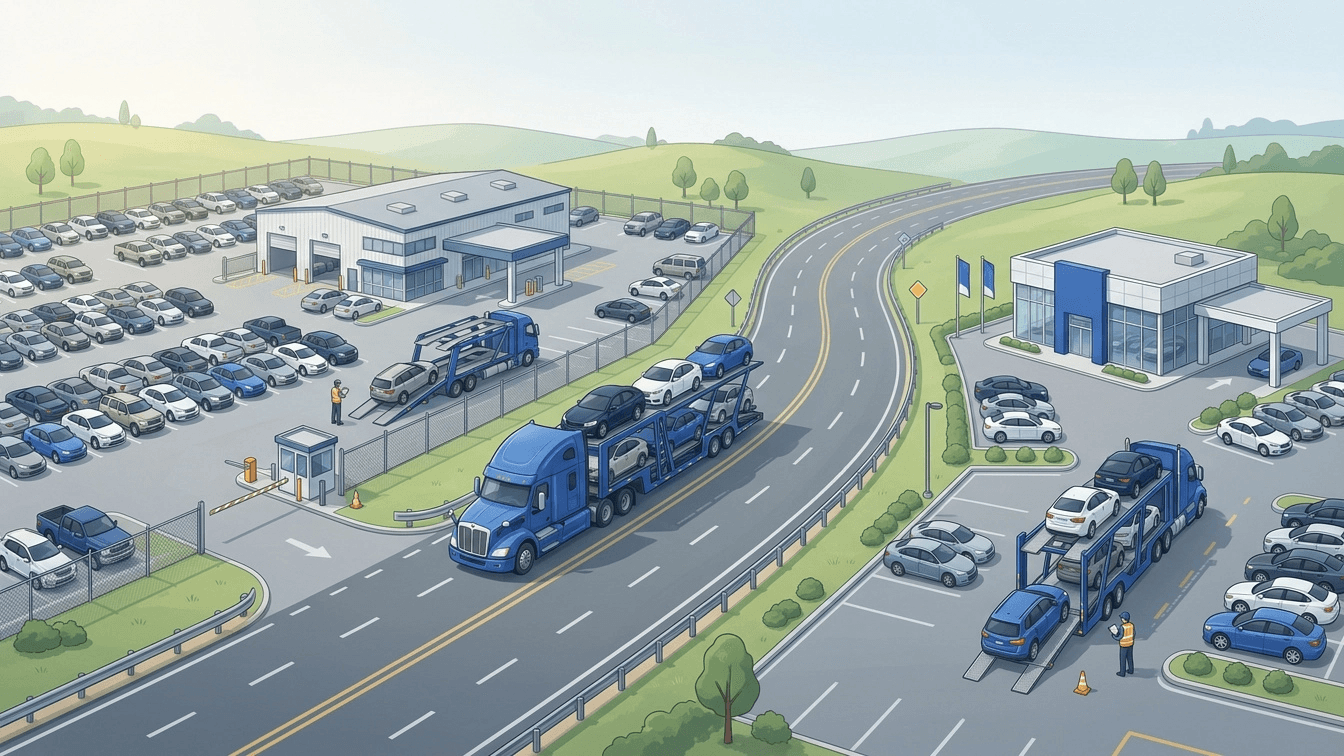
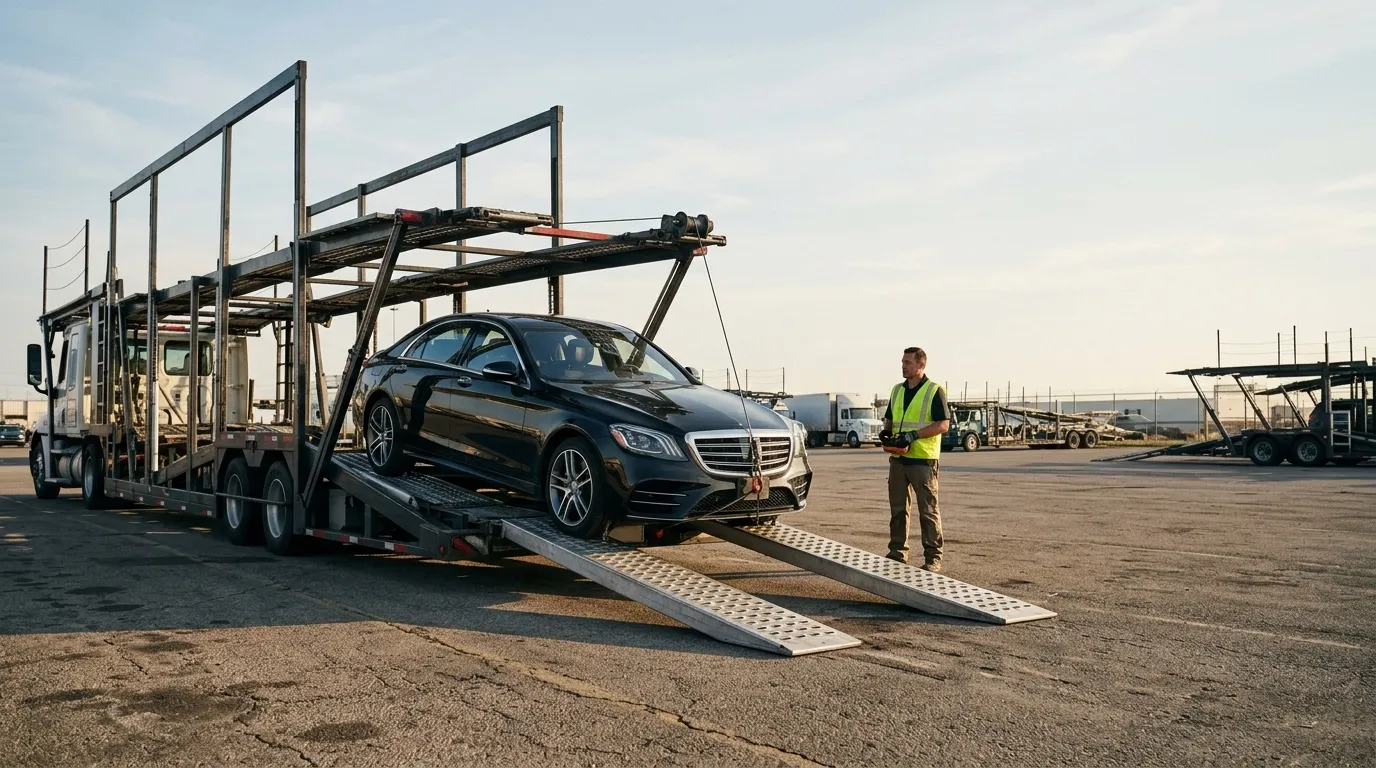
Every auction purchase follows the same basic path: the bid wins, payment clears, the auction releases the car, a carrier collects it, and the unit arrives for lot delivery. Simple on paper. In practice, most delays happen in those middle three steps.
So where does auction car transport usually get stuck? Nearly always in one of three places:
Payment hasn’t cleared. Auctions won’t release a vehicle until funds are confirmed.
Release paperwork is missing or wrong. The driver shows up, but the gate pass, buyer number or carrier name doesn’t match.
No carrier is available. After a big sale, every dealer in the region needs a truck at the same time.
When you’re shipping cars from auction, your goal is to close all three gaps before the truck is dispatched. That matters, because storage and re-dispatch fees caused by an incomplete release usually land on the buyer, not the carrier. For a step-by-step look at the auction side, see how to ship vehicles from auction.
How Soon Should You Book Transport After Winning a Bid?
Short answer: on sale day, ideally within hours of the win. Two things make speed important.
First, auctions set their own pickup deadlines and storage charges. OPENLANE, for example, asks buyers to pick up vehicles within 5 business days of purchase. After that, it orders transport automatically and bills you for it. Policies differ by auction and location, so check each facility’s current rules.
Second, carrier space fills fast after big sales. Book the next morning, and you may find the regional trucks already loaded. If you’re unsure how much lead time you need, this guide on how far in advance to book car shipping breaks it down.
Pro Tip: Book transport the same day you win, even if payment is still clearing. Getting a truck lined up early costs you nothing and can save you several days of storage fees.
Should Auction Cars Ship Open or Enclosed?
Open carriers suit most wholesale units. They cost less, run more often and are easier to book on short notice.
Enclosed carriers protect high-value, classic and exotic vehicles from weather, road debris and salt. Not sure which one you need? Use this simple rule:
Choose enclosed if the car is worth more than about $50,000, is a classic or exotic, or would lose value from a single rock chip.
Choose open for everything else.
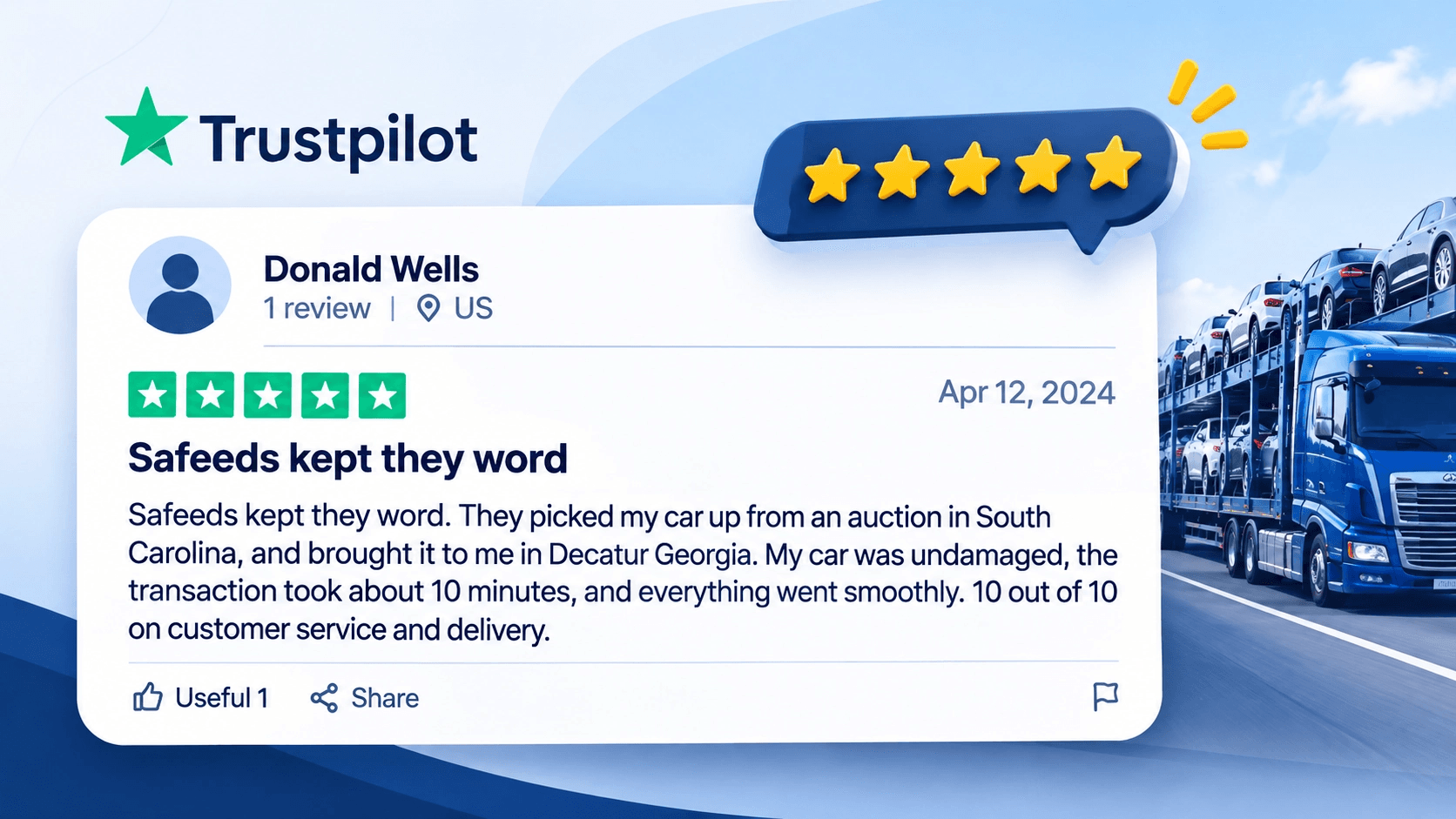
For more on the difference, see the enclosed auto transport page. When release paperwork and pickup are handled on time, auction car transport can go smoothly from the lot to your door. Here’s how one buyer described his auction pickup from South Carolina to Georgia:
Dealer Trades Between Stores
A dealer trade is when two dealerships swap vehicles so one of them can meet a customer’s request. Your customer wants a specific trim, color or package, and a nearby store has it on the ground.
Here’s why speed matters so much: a buyer is often sitting in your showroom waiting. Every extra day raises the chance that they walk away or buy somewhere else.
That’s why dealer trade transport works best when you treat it like a scheduled delivery, not a favor between stores. You’ll want a booked carrier, a named contact at each store, and a clear pickup time.
Who Pays for Transport in a Dealer Trade?
There’s no single rule, but you’ll usually see one of three setups:
The requesting store pays. The store that needs the vehicle covers the cost of bringing it in.
The stores split the cost. Each store pays half, often when both sides benefit from the swap.
One truck, round trip. A single carrier delivers one car and brings the other back, so both units share one booking.
Whichever setup you choose, put it in writing before the truck is booked. A short email or trade form that names who pays, which VINs are moving, and the agreed condition prevents most disputes later.
Pro Tip: Running trades both ways? Ask for a round trip on one truck. You’ll share one booking instead of paying for two separate moves.
How Do You Protect Both Stores During the Handoff?
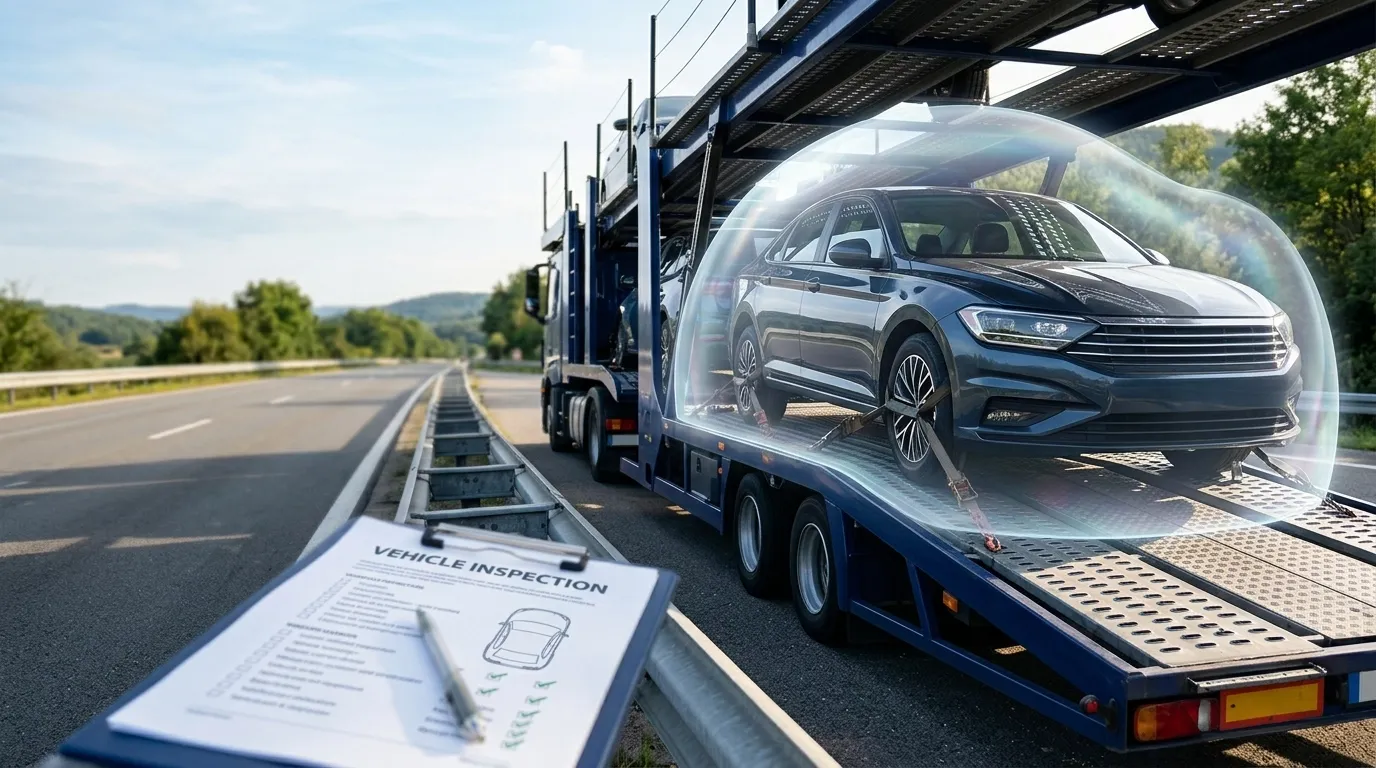
Both stores should inspect the vehicle at pickup and again at delivery. Match the VIN on the car to the VIN on the trade paperwork, and take dated photos of every side.
These quick steps make sure each store receives the right unit in the agreed condition. The records behind them are covered in the documentation section below.
Multi-Unit and Full-Load Pricing
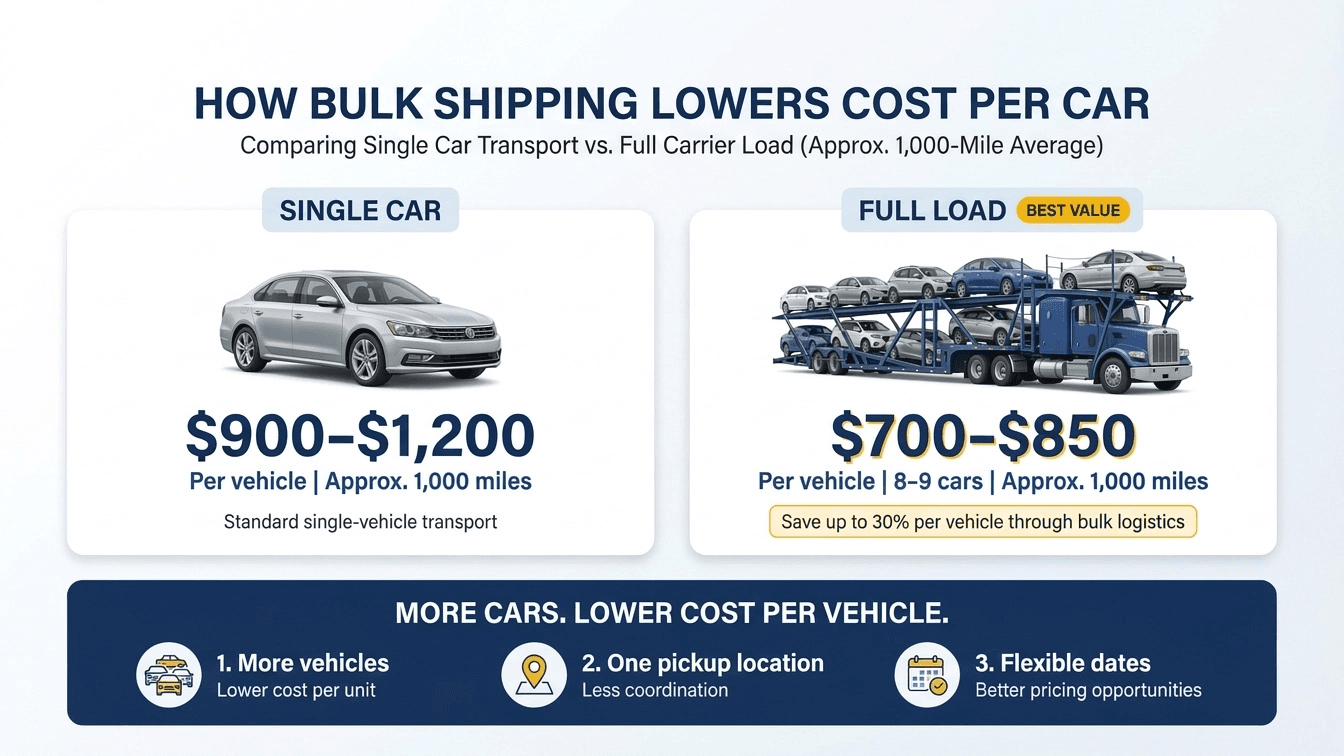
Here’s the simple math behind bulk vehicle shipping: many vehicles share one truck, one driver and one route. The fuel, tolls and driver time are spread across every unit on the trailer, so your cost per car drops.
Safeeds Transport’s dealer and bulk shipping cost guide shows how big the difference can be. A single car shipped about 1,000 miles might cost $900 to $1,200. On the same route, a full load of 8 to 9 cars can bring the cost down to about $700 to $850 per unit.
Volume also shapes account pricing. On the Safeeds Transport dealer program page, stores shipping 11 to 25 vehicles a month qualify for a 10% volume discount, and stores shipping 26 or more can receive up to 20% off. For more on how multi-car loads are planned, read multiple vehicle transport: rates and how it works.
How Many Cars Fit on One Carrier?
Most open car carriers hold fewer than 10 standard cars. According to Overdrive’s guide to car-haul trailer setups, a high-mount trailer maxes out at eight cars, while a stinger-steer rig can carry up to 11.
Keep in mind that size and weight change those numbers. A trailer that holds nine compact sedans may only fit five or six full-size pickups. Federal rules also cap a truck’s gross weight at 80,000 pounds on interstate highways, so heavier units fill a load faster.
What Affects the Per-Car Price on a Bulk Order?
The number of cars matters most, but it’s not the only factor. Here’s what moves your per-car rate up or down:
Factor | How It Changes Price |
|---|---|
Number of units | More cars usually lower the per-car rate |
Distance and route | Popular corridors cost less per mile |
Vehicle size and condition | Large or non-running units cost more |
Pickup locations | One pickup point is cheaper than several |
Timing | Flexible dates usually cost less than rush orders |
Sources: Safeeds Transport dealer and bulk shipping cost guide and dealer program page, November 2026.
Fuel prices can also shift rates from month to month. This explainer on what a fuel surcharge means for your shipment covers how that works.
Pro Tip: Want the lowest per-car rate? Group units at one pickup point, keep your dates flexible and fill the trailer. Those three moves usually save more than any single discount.
Gate Pass and Release Requirements
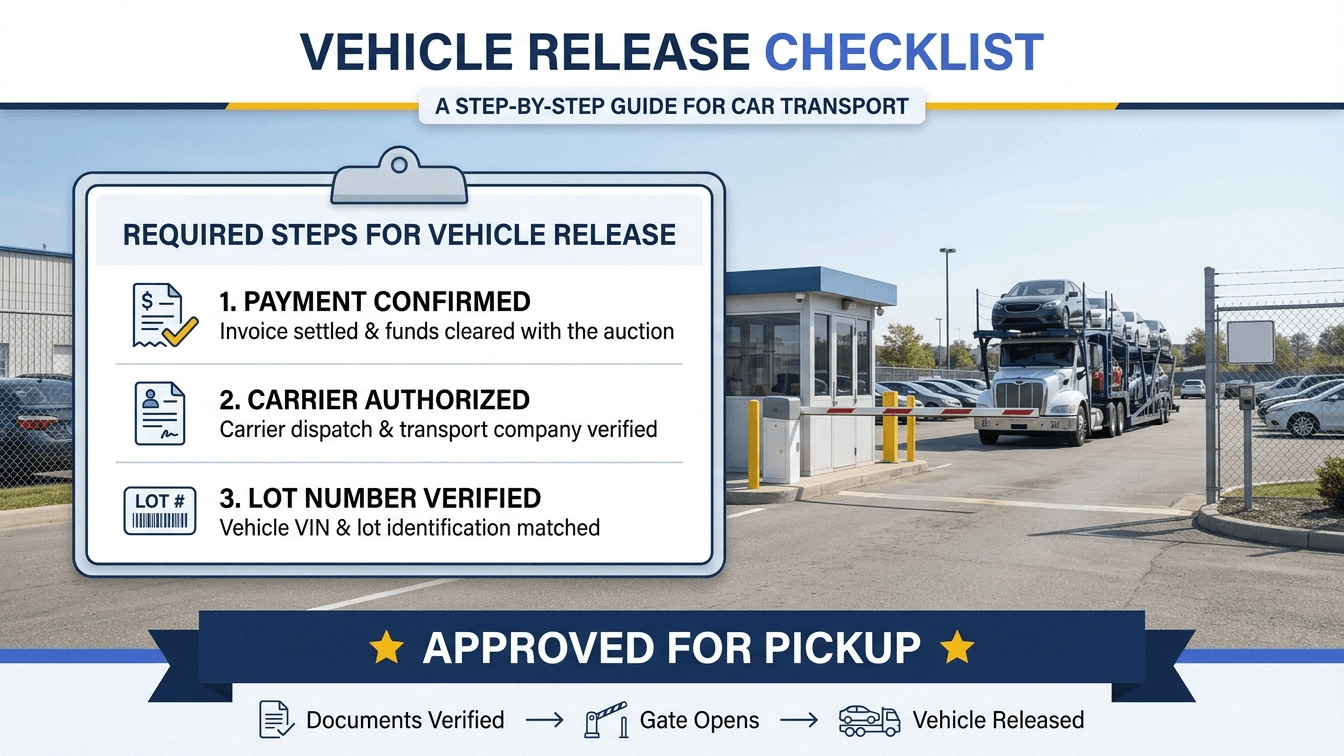
Auctions won’t release a car to a driver without proof that you’ve paid and authorized that carrier to collect it. The rule protects everyone involved, from the auction and the seller to you as the buyer.
For your store, that means the release step is just as important as booking the truck. A driver with no valid release gets turned away at the gate, and you may end up paying for a wasted trip.
What Is a Gate Pass, and Who Issues It?
A gate pass, also called a release form or gate release code, is the auction’s permission for a specific vehicle to leave the facility. The auction issues it only after payment arrangements are complete.
Each platform handles this a little differently. OPENLANE emails pickup instructions and a gate code once payment has been submitted. Manheim uses an electronic gate pass that’s delivered digitally to buyers. Either way, you forward the pass, along with your buyer number and the lot or stock number, to the carrier before the driver arrives.
What Causes Release Delays at Auctions?
Good news: most release problems come from a short list, and each one has a simple fix.
Unpaid balance: Confirm the payment has cleared before booking pickup.
Wrong buyer or carrier name: Make sure the name on the release matches the carrier being sent.
Missing transporter authorization: Add the carrier to your auction account or send written authorization.
Title hold: Ask the auction to confirm title status before scheduling.
Arbitration: Wait until the arbitration is resolved, then book transport.
Pro Tip: Forward the gate pass, buyer number and lot number to your carrier in one message the moment payment clears. One complete email beats three partial ones.
Scheduling Around Auction Days
Most auctions hold sales on set weekdays. So when hundreds of dealers in one region buy on the same day, they all need trucks in the same few days afterward.
The smartest stores plan for these spikes instead of reacting to them. When shipping cars from auction, consolidated scheduling, where buys from one sale are grouped into planned loads, keeps your costs down and gets cars off the auction lot sooner.
Why Do Auction Days Create Carrier Shortages?
Carriers have a fixed number of trucks in each region. When a big sale ends, demand for auction pickup jumps far above the usual level, and the closest trucks book up first. It works a lot like the busy months for personal moves, which this guide to shipping during peak season explains.
Two habits help you stay ahead of the rush:
Pre-booking: Reserve carrier space before the sale, based on how many units you expect to buy.
Standing pickup windows: Agree on a regular pickup day after each sale, so the carrier plans for your volume.
Curious what happens between booking and pickup? Read what dispatching means in auto shipping.
How Can Dealers Plan Pickups Before Storage Fees Start?
The fix is a simple routine. Run through this checklist after every sale:
Pre-book recurring lanes between your regular auctions and your stores
Send gate passes to the carrier the same day payment clears
Confirm each vehicle’s exact location at the auction before dispatch
Group buys from the same sale into one multi-unit load
Reporting and Documentation for Dealership Car Shipping
Think of paperwork as your insurance policy. It’s the only proof of a vehicle’s condition and timing if something goes wrong. Without it, a damage claim or a dispute with another store comes down to one person’s word against another’s.
Good records also save time on routine work. They show which units moved, when they arrived and who signed for them.
What Should a Bill of Lading Include?
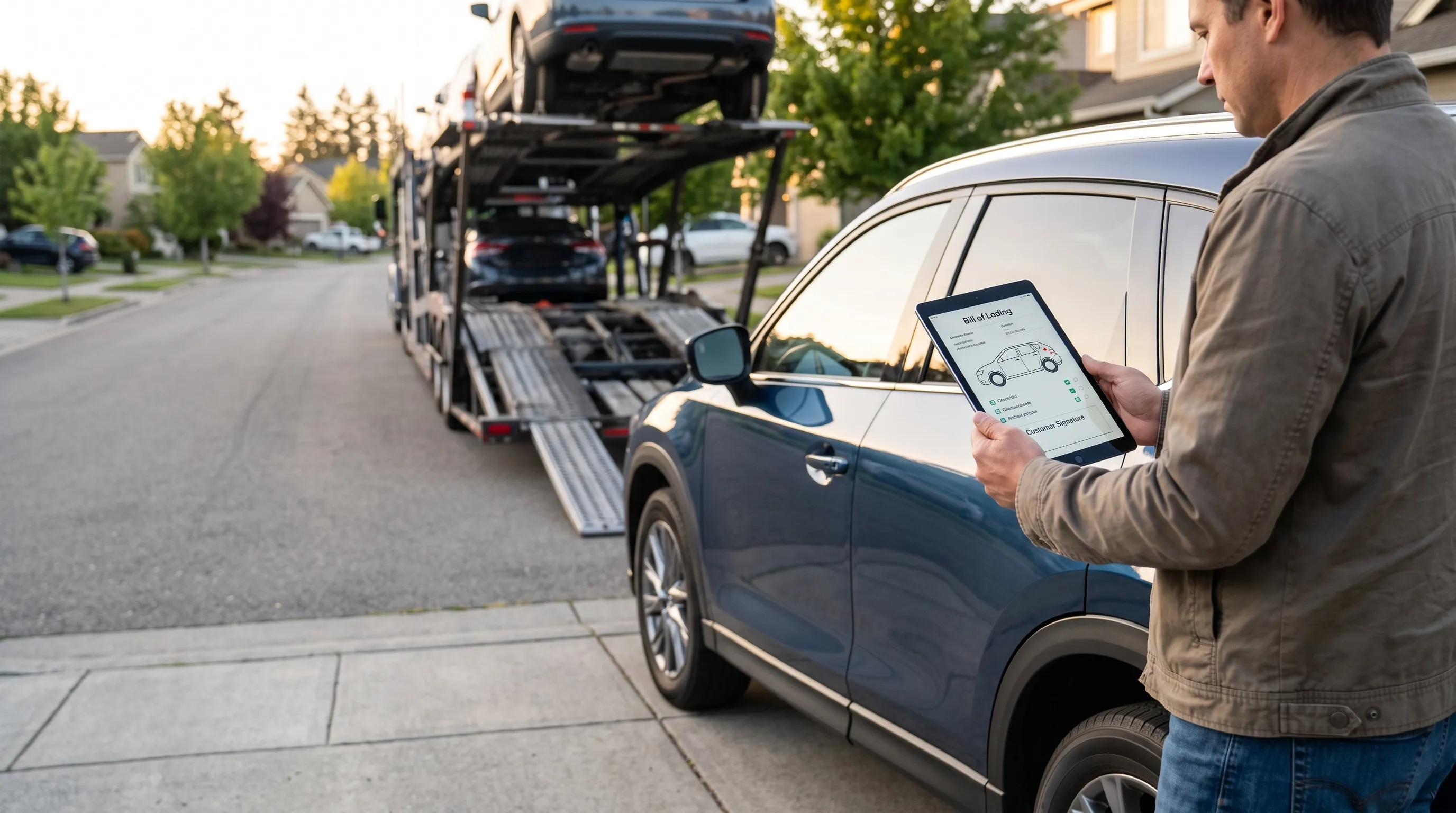
A bill of lading (BOL) is the main transport document. It lists each vehicle, records its condition at pickup and delivery, and is signed by both the driver and the person handing over or receiving the car. Any damage must be noted on the BOL at delivery, or a claim may be denied.
The BOL is your core record, but it works best alongside a few other documents:
Document | Why It Matters |
|---|---|
Bill of lading | Records condition at pickup and delivery |
Gate pass or release | Proves the carrier may collect the car |
Photos and VIN check | Confirms the right car in the right condition |
Delivery receipt | Confirms when and to whom the car was delivered |
Carrier insurance certificate | Confirms coverage before the car moves |
Want to know what to check before you sign? The Bill of Lading car shipping guide walks through it, and the car shipping insurance guide explains what carrier coverage actually includes. If a unit does arrive damaged, here’s what to do if your car is damaged during transport.
How Do Tracking and Delivery Reports Help Dealers?
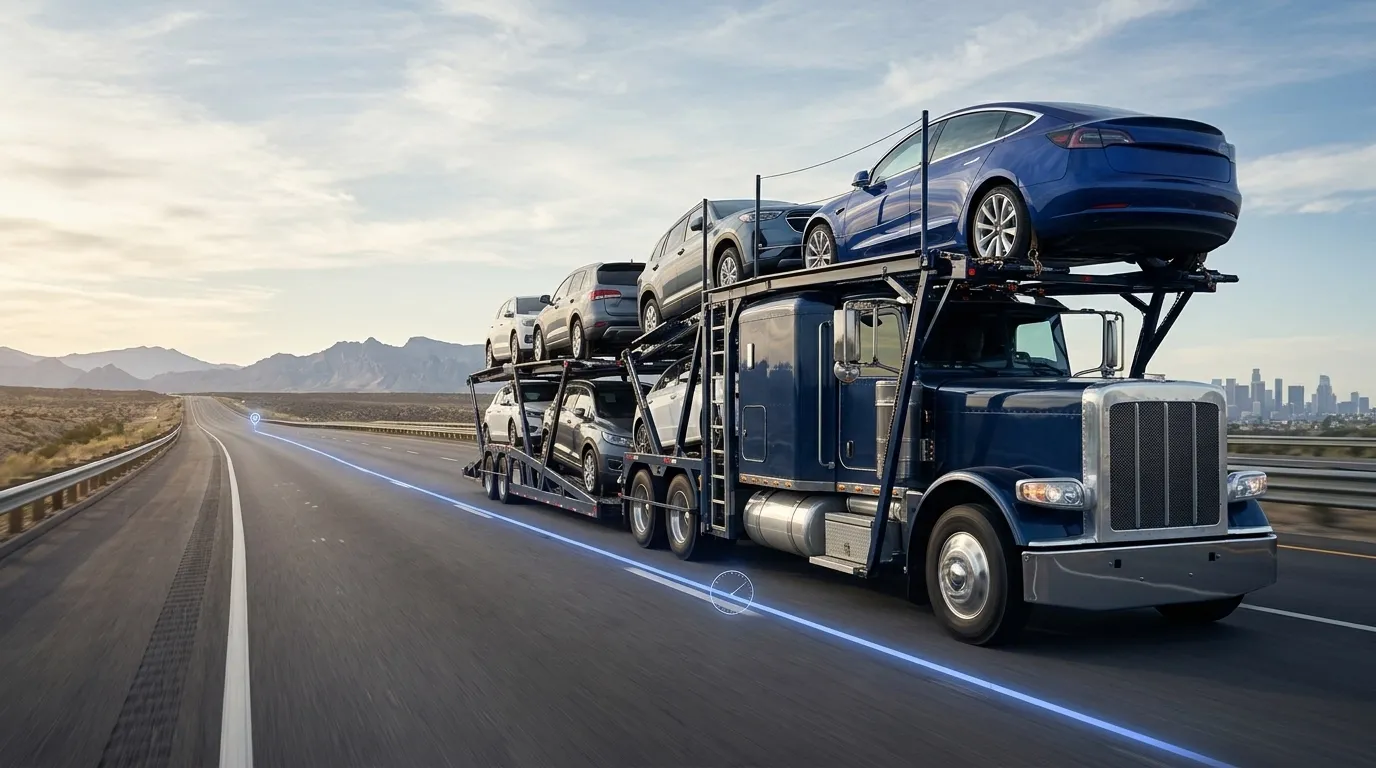
Tracking gives each store status updates and estimated arrival times, so your sales team knows when a unit will be ready. That lets you plan reconditioning, photos and online listings before the car even arrives. This article on GPS car shipping tracking explains how live updates work.
Monthly reports by store give you the bigger picture. They show average transit times by lane, which routes run slow and how many units each store moved. Safeeds Transport’s dealer program includes an online portal for booking and tracking, plus a volume reporting dashboard for accounts shipping 11 or more vehicles a month.
Pro Tip: Compare transit times by lane every month. The slowest route is usually where your next storage fee is hiding.
Dealership Car Shipping Questions, Answered
Still have questions? You’re not alone. Here are clear answers to the ones dealers ask most often before opening an account or booking their first multi-unit order.
How do I ship cars from an auction?
Pay for the vehicle, get the gate pass or release code, then book auction car transport and send the carrier your release, buyer number and lot number. Book on sale day to stay inside the pickup window. With a dealer account, one point of contact handles the booking, so your cars leave the lot before storage fees start adding up.
What is the minimum for volume pricing?
There’s no minimum to get started. Stores shipping 1 to 10 vehicles a month get standard dealer rates. At 11 to 25 vehicles a month, you unlock a 10% volume discount, and at 26 or more, you can save up to 20%. Moving more than 50 vehicles a month? Ask about custom enterprise pricing built around your volume.
How does a dealer trade shipment work?
Both stores agree on the vehicles, cost split and timing in writing. A carrier collects the unit from the sending store, records its condition on the bill of lading and delivers it to the receiving store. Need both cars moved? A round trip on one truck covers the swap in a single booking, so your customer gets their car sooner.
What do you need for an auction gate release?
You’ll need cleared payment, the auction’s gate pass or release code, your buyer number and the lot or stock number. The carrier’s name must match any authorization on file with the auction. Send everything at once, and your account manager can confirm it’s complete before dispatch, so the driver isn’t turned away at the gate.
Can you ship multiple vehicles on one order?
Yes. Bulk vehicle shipping on a single order can cover several units from one auction, several stores or a full load of 8 to 9 cars. Grouping cars on one order usually lowers your per-car price, because they share one truck, driver and route. It’s one of the easiest ways to cut your transport spend each month.
How is billing handled for dealer accounts?
Approved commercial accounts can qualify for net terms of Net 7, Net 15 or Net 30, set in writing. That means you can move inventory now and pay on a schedule that fits your cash flow. Credit approval is reviewed by Safeeds Transport, and depending on your account setup, carrier fees may be invoiced or collected on delivery.
Can you handle recurring dealer routes?
Absolutely. If you move cars on the same recurring lane, such as a weekly auction to your store, you can set up a standing schedule. A regular pickup day lets carriers plan for your volume, which improves availability. Every dealer account comes with a dedicated account manager, and higher-volume stores also get strategic transport planning.
What happens if a vehicle is not ready at pickup?
If a vehicle isn’t ready, the carrier may leave without it, and dry-run or re-dispatch fees can apply. Common causes include missing release paperwork, a car that won’t start or a unit that can’t be found on the lot. A quick pre-dispatch check with your account manager helps catch these issues before the truck rolls.
Do you ship non-running auction vehicles?
Yes, as long as you disclose the vehicle as inoperable when you place the order. Non-running units need a carrier with a winch or other loading equipment, so they cost more than running cars. Flag them upfront, and the right truck is assigned the first time. The non-running car shipping guide covers the details.
How fast can you move a dealer trade?
Dealer trade transport speed depends on distance and carrier availability. Trips under 500 miles usually take 1 to 3 days in transit, based on published route times. Same-day dispatch is available on urgent dealer moves, so a waiting customer isn’t left hanging. Delivery dates are estimates, since weather and traffic can affect the schedule.
Keeping Inventory Moving Without the Guesswork
Dealership car shipping works best as a repeatable process, not a string of one-off bookings. The stores that spend the least on transport are rarely the ones chasing the lowest single quote. They’re the ones that book auction car transport and recurring lanes before sale day, send releases the moment payment clears, group units into full loads and keep clean records for every vehicle.
That routine pays off in two ways. Cars spend fewer days on auction lots, so storage fees stay low, and they reach the front line sooner, so they sell sooner. Over a year, those saved days add up across every store in your group.
A great first step is to review last month’s auction pickups. Find your slowest route, look at where the delay started, and fix that step before the next sale. When you’re ready to set up a regular schedule, request a dealer quote from Safeeds Transport.