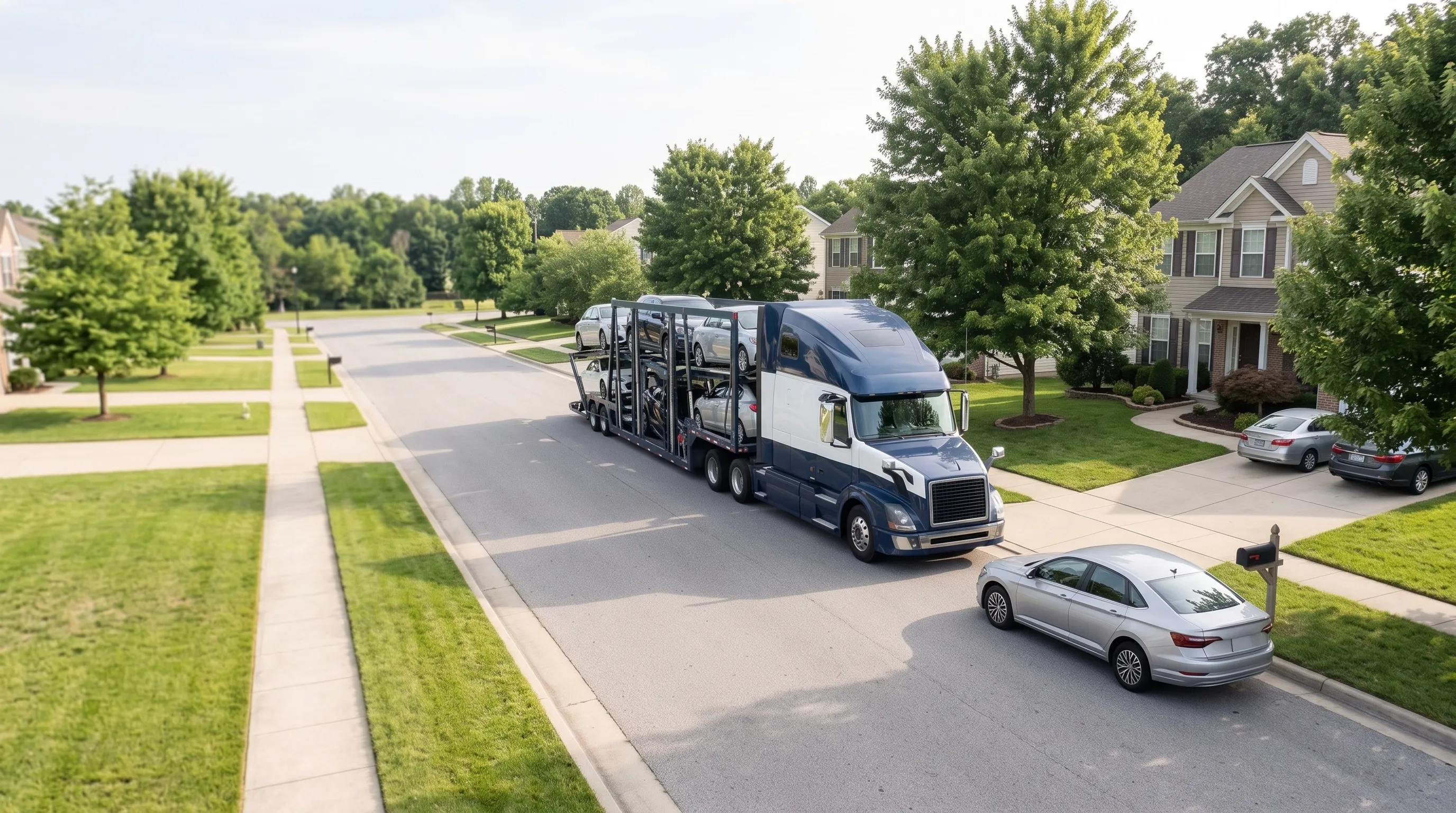
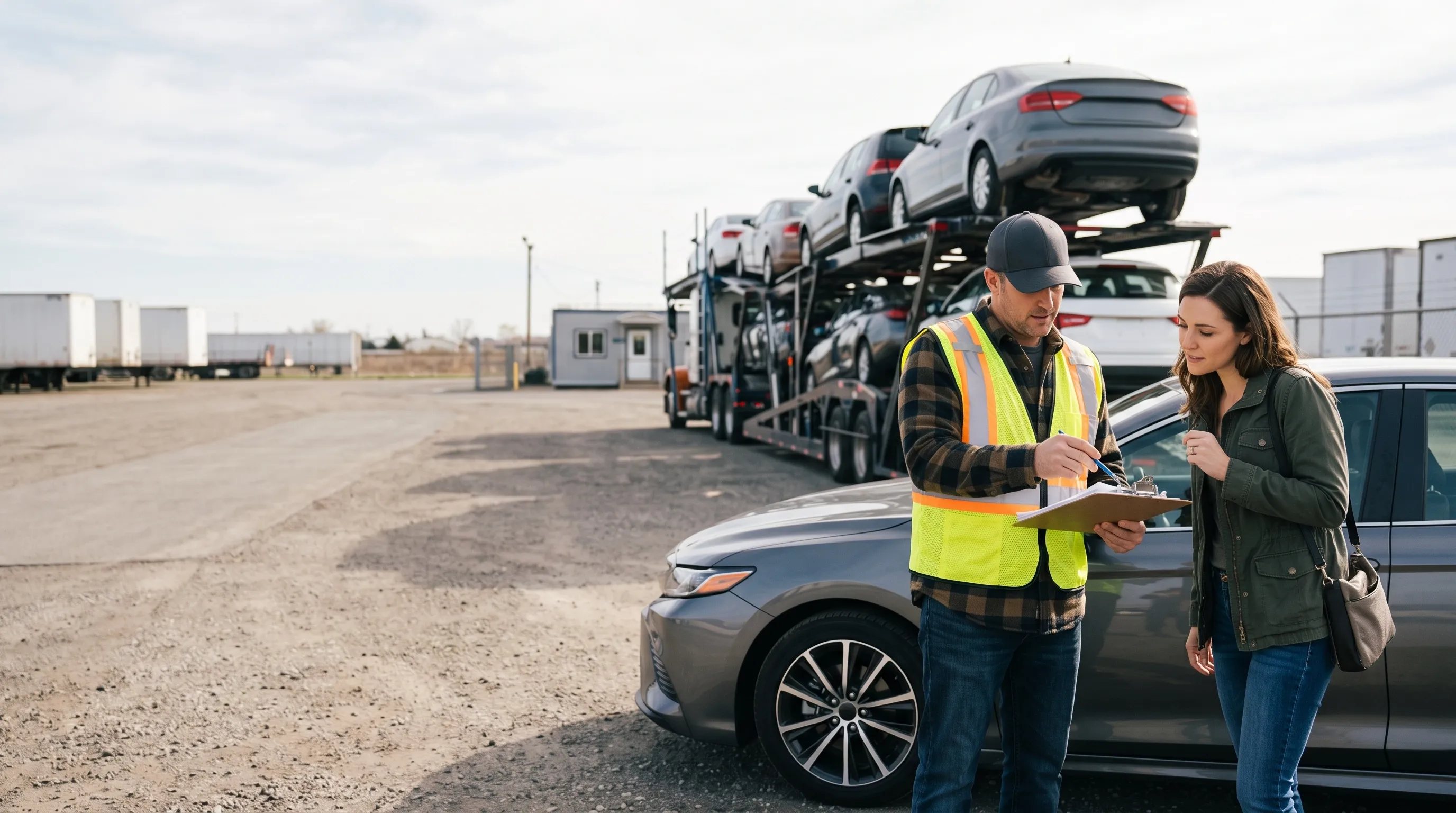
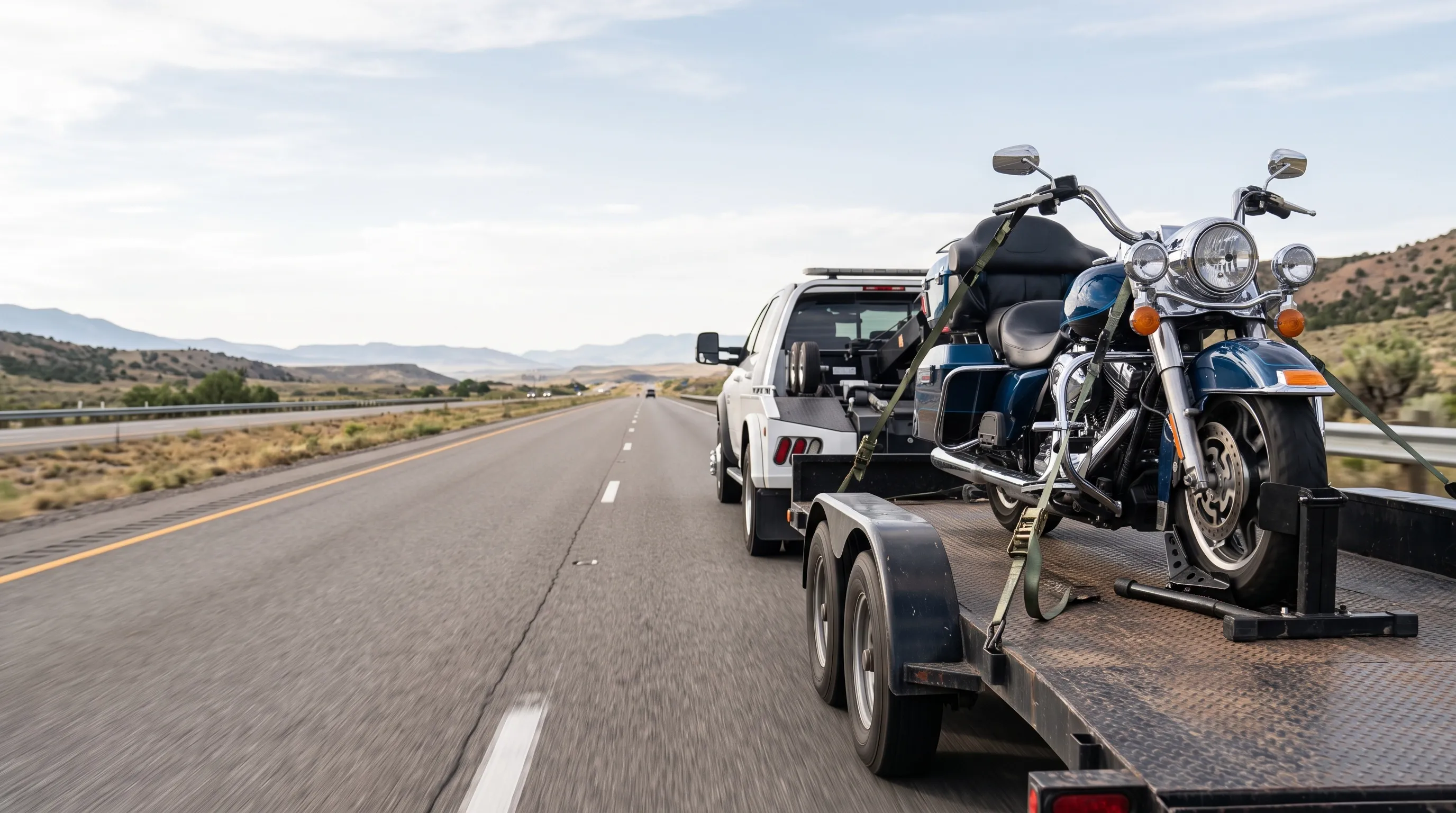
You can ship a non-running car on a carrier equipped with a winch, forklift, or lift gate. Inoperable vehicle transport usually adds $150 to $300 to the base price, according to Safeeds Transport’s non-runner guide. The car should still roll, brake, and steer. If it can’t, it needs extra equipment and costs more.
A car that will not start can still travel 2,000 miles. It just needs the right truck and an honest description at booking.
Inoperable vehicle transport is a routine part of auto shipping. Carriers move project cars, auction purchases, accident-damaged vehicles, and cars with dead engines every day. This guide explains what counts as inoperable, how loading works, what it adds to the price, and how to prepare your car so pickup goes smoothly.
Have a car that won’t start? Request a free quote and describe its condition for an accurate price.
Key Takeaways
Inoperable vehicle transport usually adds $150 to $300 to the base shipping price, according to Safeeds Transport’s published non-runner guide.
A non-running car should still roll, brake and steer so it can be safely winched onto a carrier.
Non-running cars are loaded with a winch, a forklift or a hydraulic lift gate, depending on their condition.
Telling the broker whether the car starts, rolls, brakes and steers at booking prevents refused pickups and surprise charges.
Standard carrier cargo insurance still applies when a non-running car is shipped.
What Counts as Inoperable
A vehicle is inoperable when it cannot start or move under its own power. The cause does not matter much to the carrier. What matters is that the driver cannot simply drive the car onto the truck.
Common reasons a car becomes a non-runner include:
A dead or missing battery
Engine failure or a seized engine
Transmission problems
Accident or flood damage
Missing parts in a project car
What is inoperable vehicle transport? Inoperable vehicle transport, also called non-operational vehicle transport, is the shipping of a car that cannot be driven onto a carrier. The truck uses special equipment, such as a winch, forklift, or lift gate, to load and unload the vehicle safely.
What is the difference between a non-runner and a non-roller?
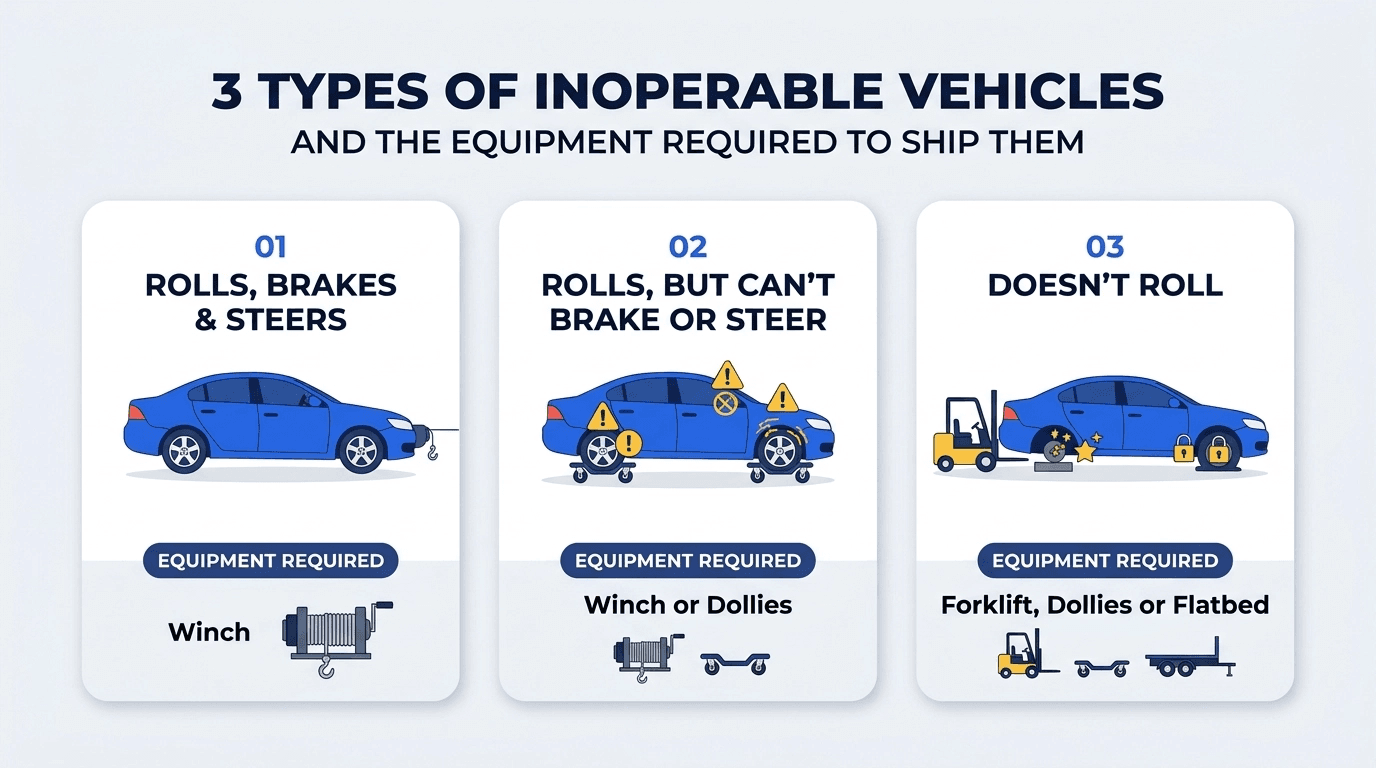
Not every inoperable car is the same. The real question for a carrier is whether the car can still move when pushed.
Condition | What It Means | Typical Equipment |
|---|---|---|
Rolls, brakes and steers | Won’t start, but moves when pushed | Winch |
Rolls, but can’t brake or steer | Wheels turn, but controls don’t work | Winch plus extra care, or dollies |
Doesn’t roll | Wheels are locked or missing | Forklift, dollies or flatbed |
This one detail shapes almost every other part of your shipment, from the equipment needed to the final price.
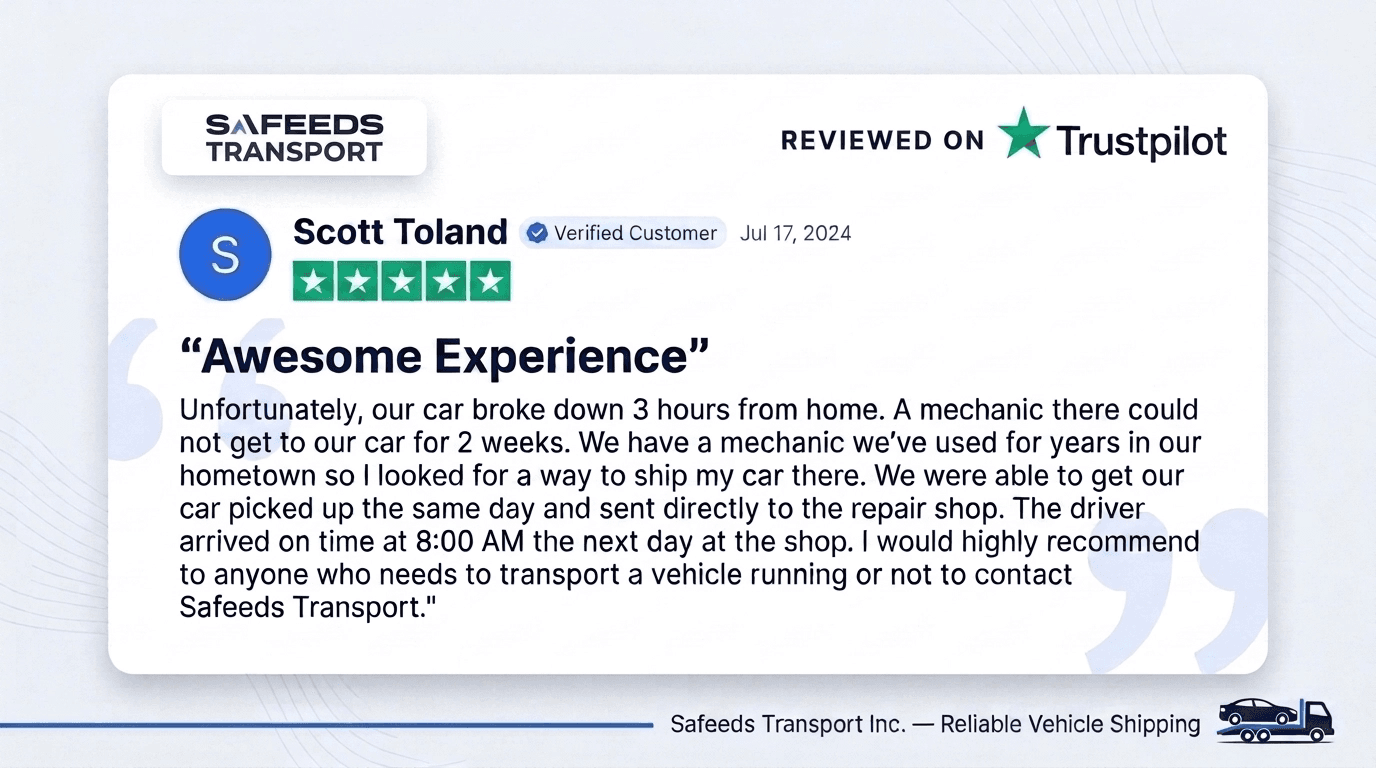
A breakdown away from home is one of the most common reasons drivers need inoperable vehicle transport. Here is how one customer handled it:
Roll, Brake and Steer: The Minimum Requirement
For most carriers, a non-running car needs three basic abilities: it must roll, brake and steer. These are what let a driver guide the car up a ramp safely while a winch pulls it.
Here is why each one matters:
Rolling lets the winch pull the car smoothly without dragging the tires.
Braking lets the driver stop the car on the ramp and hold it in place.
Steering keeps the car lined up straight so it does not slide off the ramp or hit the trailer.
If you are learning how to ship a car that does not run, the test below is the best place to start. It tells you, and your broker, which type of truck you need.
How can you test if your car rolls, brakes, and steers?
You can check this yourself in a few minutes with a helper.
Put the car in neutral. Insert the key and turn it to the “on” or accessory position so the steering wheel unlocks.
Push it a few feet on flat ground. The car should roll forward without grinding or dragging.
Turn the steering wheel both ways. The front wheels should move left and right.
Press the brake pedal while it rolls. The car should slow down and stop.
Note that power steering and power brakes feel much heavier with the engine off. That is normal. What matters is that they still work.
If your car fails any of these steps, it can still be shipped. It simply needs different loading equipment, explained in the next section.
Winch vs Forklift vs Lift Gate Loading
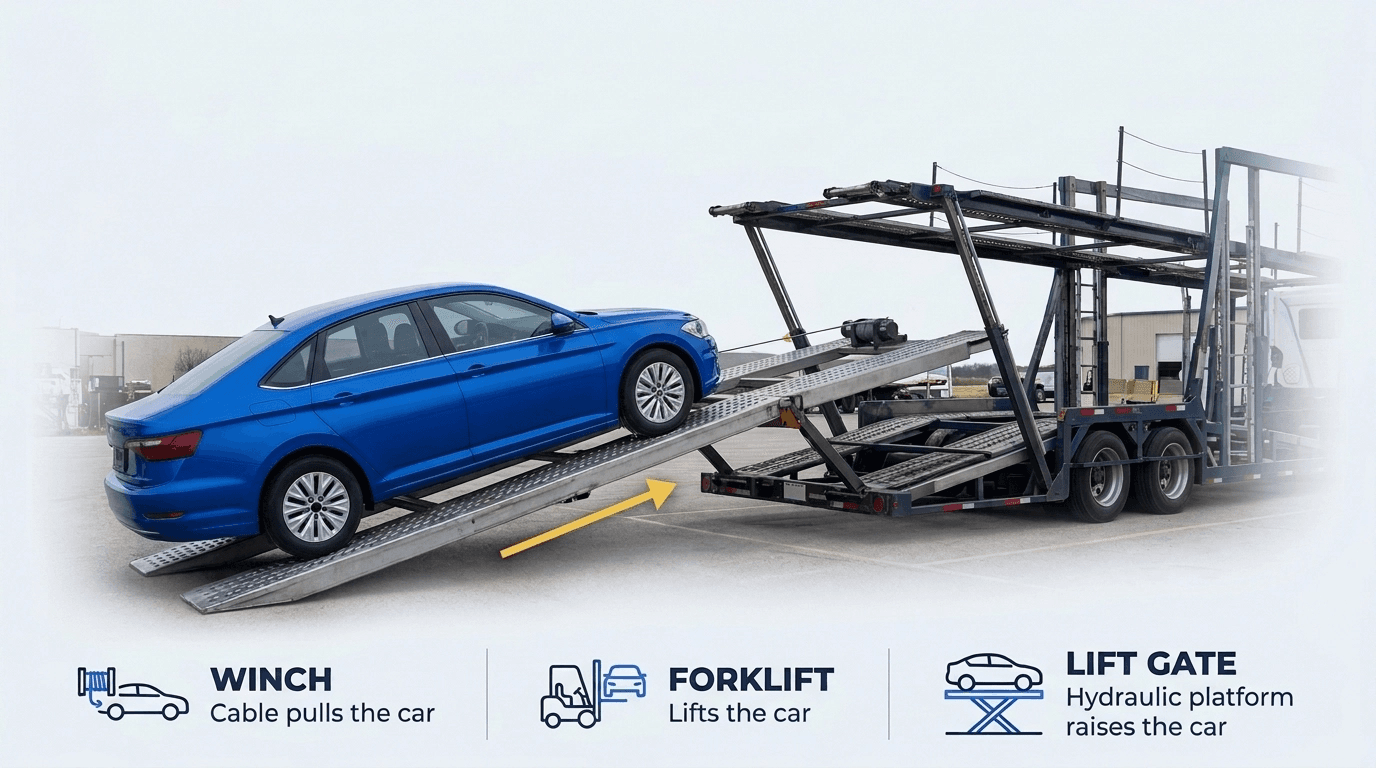
Carriers use three main methods to load a non-running car. The right one depends on the car’s condition and the type of trailer.
What is winch loading?
Winch loading, defined simply: Winch loading uses a steel cable and a motor to pull the car slowly up the ramp onto the trailer. The cable attaches to the car’s frame or a tow hook, never to the bumper or axle.
Winch loading car transport is the most common option for non-runners. Once the car is on the trailer, the driver keeps the steering straight and secures the car with straps over the tires, the same way a running car is secured.
Method | How It Works | Best For | Availability | Cost Impact |
|---|---|---|---|---|
Winch | A cable pulls the car up the ramp | Cars that roll, brake and steer | Most common | Lowest add-on |
Forklift | Lifts the car onto the trailer | Cars that don’t roll | Usually at yards and auctions | Higher |
Lift gate | A hydraulic platform raises the car | Enclosed and low-clearance cars | Mostly enclosed trailers | Highest |
A few points help explain the differences:
Winch loading works on most open carriers that are set up for non-runners.
Forklift loading is common at auction yards, salvage lots and repair shops, where the equipment is already on site.
Lift gates are found mostly on enclosed auto transport trailers and are often used for classic, exotic or lowered cars.
For cars that cannot roll at all, carriers may also use wheel dollies, which are small wheeled platforms placed under locked tires so the car can still be moved. Fewer carriers own forklifts or lift gates, so booking earlier matters more for cars that need them.
What Inoperable Transport Adds to the Price
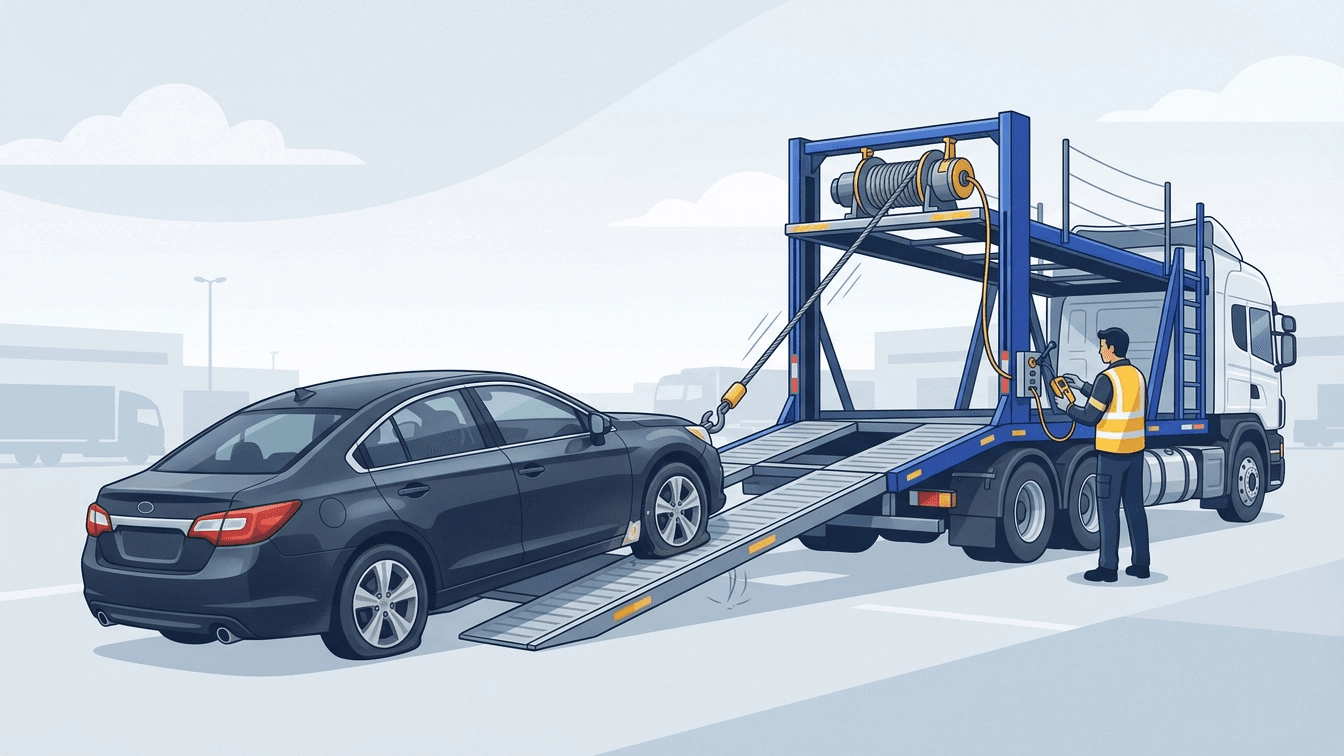
Shipping a non-running car costs more than shipping one that drives. According to Safeeds Transport’s non-runner guide, inoperable transport typically adds:
$150 to $300 to the base shipping price
About 30 to 60 minutes of extra loading time at pickup, which rarely changes the overall car shipping timeline
30 to 50 percent more on top of that if you choose enclosed transport
The extra cost covers the specialized equipment and the added time the driver spends loading and securing the car.
Cost Factor | Lower Cost | Higher Cost |
|---|---|---|
Roll, brake and steer status | Rolls, brakes and steers | Does not roll |
Loading method | Winch | Forklift or lift gate |
Vehicle size and weight | Compact car or sedan | Large truck or heavy SUV |
Transport type | Open carrier | Enclosed carrier |
Pickup location | Easy access near a main road | Remote, narrow or blocked access |
For a full picture of how base rates are set, see what determines car shipping cost in 2026.
What can make inoperable transport cost more than quoted?
Most surprise charges come from details that were not shared at booking. Common causes include:
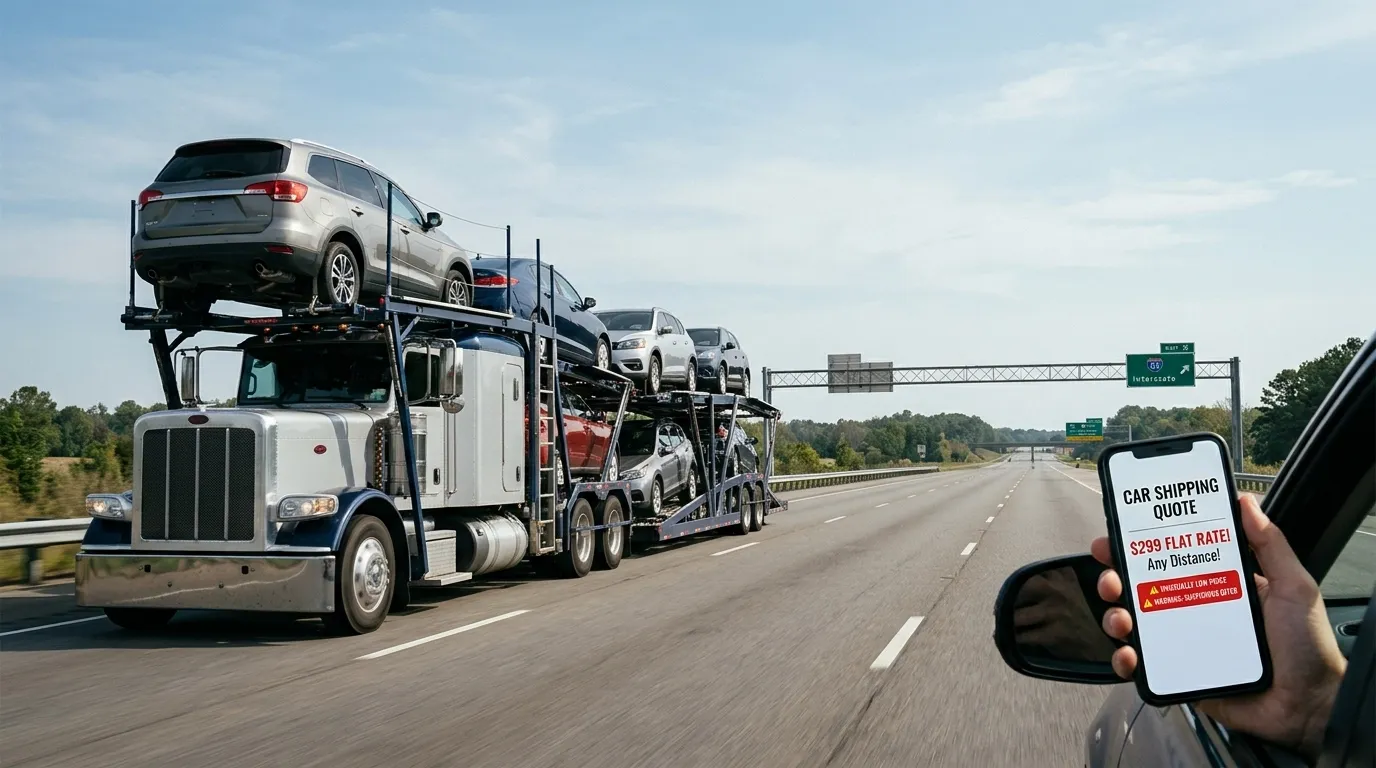
Not disclosing that the car does not run. A driver who arrives without a winch may refuse the pickup.
Missing keys. Without keys, the steering may stay locked.
Flat tires. Flat tires make winching harder and may require dollies.
A hard-to-reach pickup spot. If the truck cannot get close, extra equipment or time may be needed.
Preparing a Non-Running Vehicle
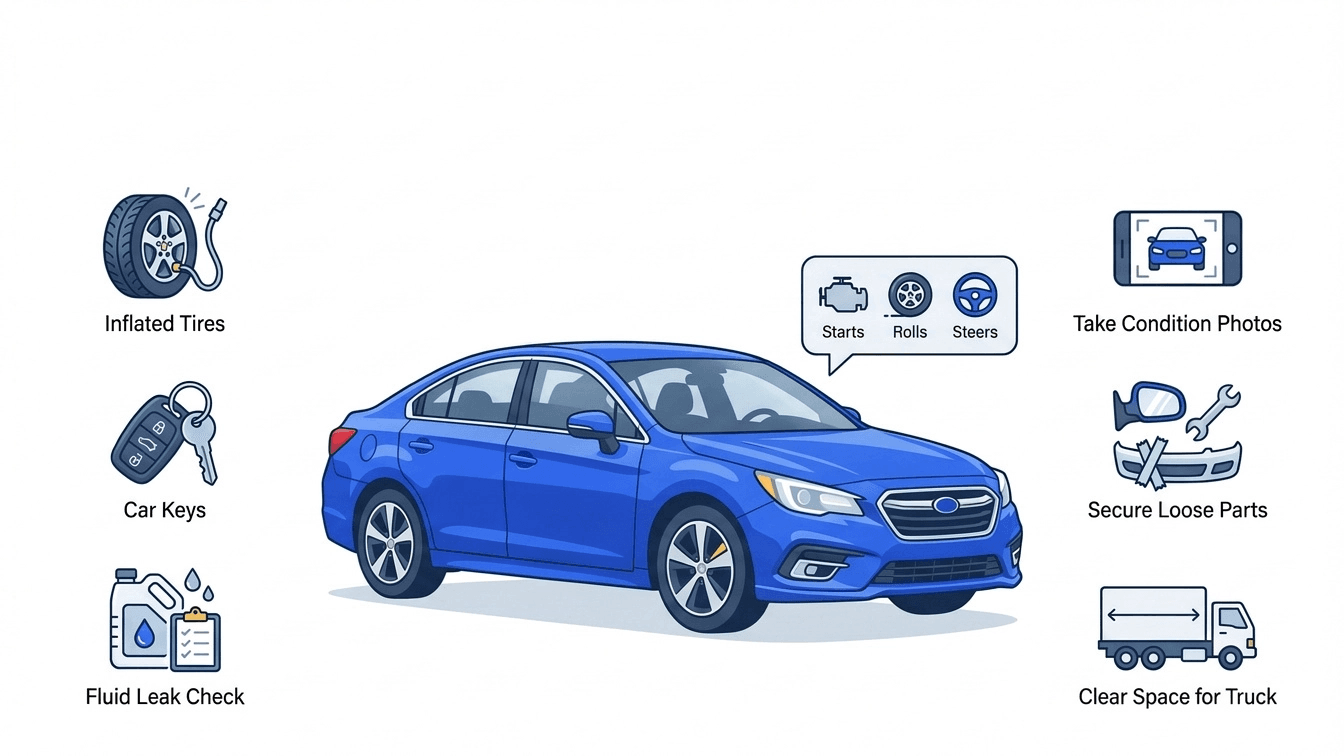
Good preparation keeps your pickup on schedule and protects you if a problem comes up later. Shipping a non-running car takes a little more planning than shipping one that drives, but the steps are simple.
Before the carrier arrives:
Keep the tires inflated. Inflated tires roll and winch much more easily.
Provide the keys. The driver needs them to unlock the steering and shift into neutral.
Note any fluid leaks. Carriers need to know if oil or coolant may drip onto cars below.
Remove or secure loose parts. Panels, trim and spare parts can shift or fall during transport.
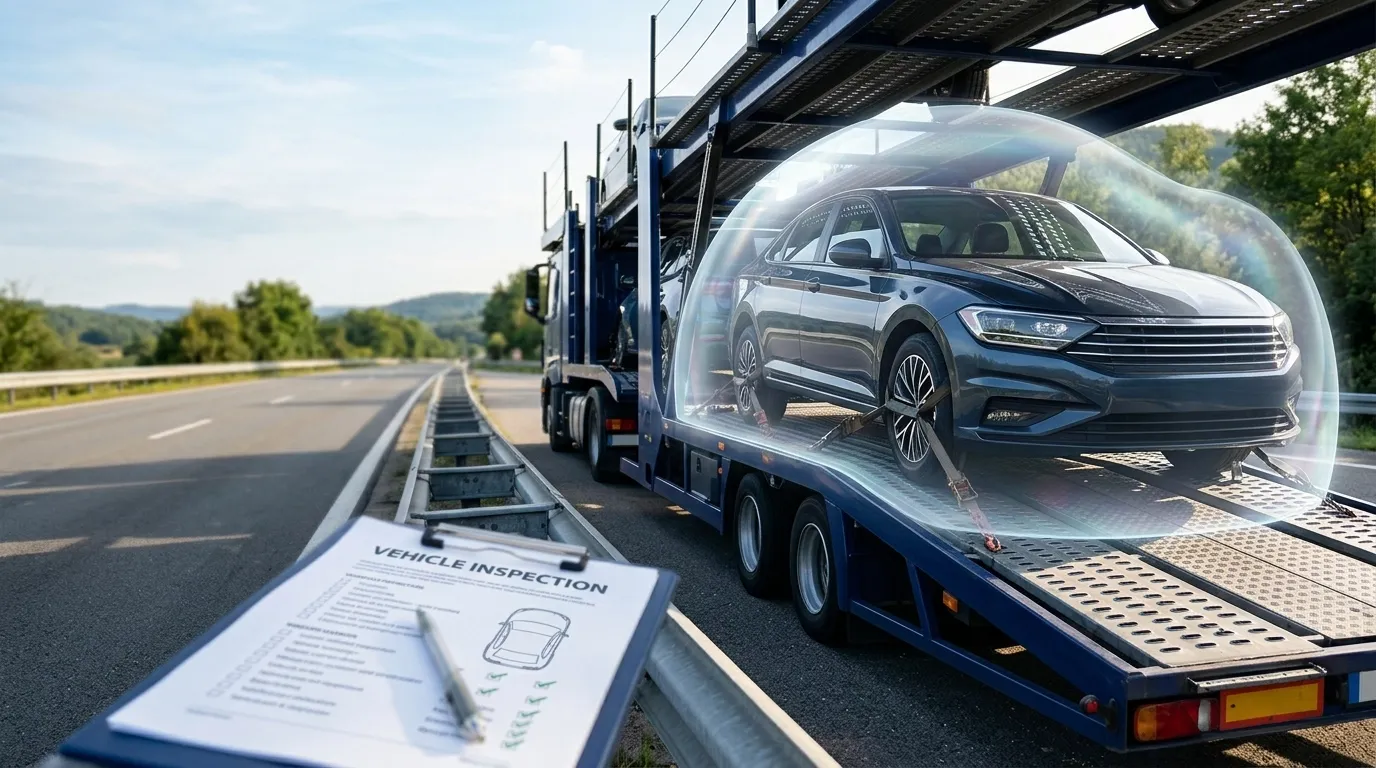
Take dated photos of every side. These help if there is a dispute about damage.
Clear a path for the truck. Move other cars, bins or obstacles away from the pickup spot.
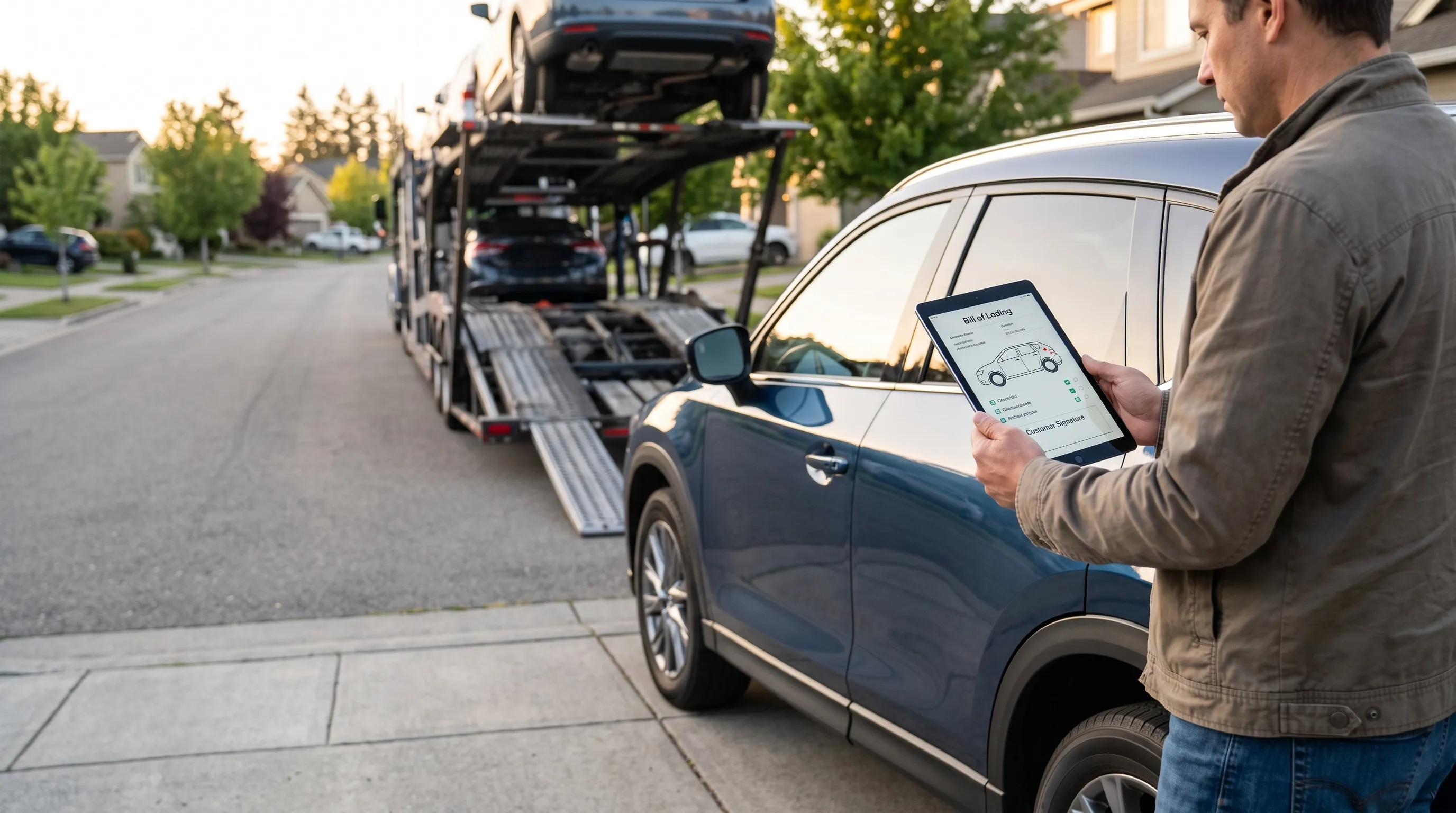
At pickup, review the condition report with the driver before you sign. The Bill of Lading car shipping guide explains what to check.
What should you tell the broker at booking?
Clear information at booking is the most important step. Be ready to answer:
Does the car start?
Does it roll, brake and steer?
Are the keys available?
Are the tires inflated and holding air?
Are any parts missing, such as wheels, doors or the hood?
These answers help the broker assign a carrier with the right equipment the first time.
Project Cars, Salvage and Auction Purchases
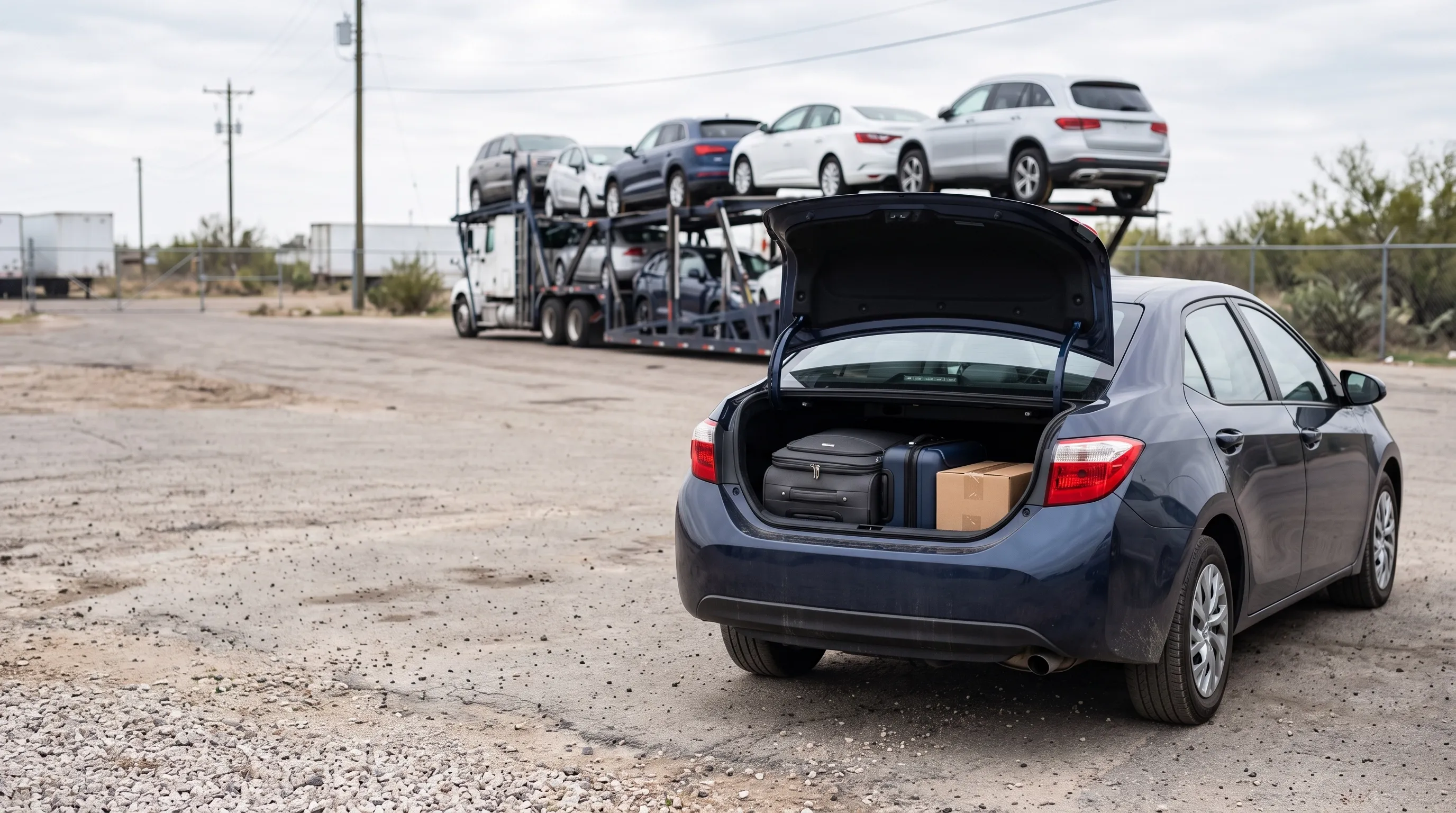
Some non-runners need extra planning because of their history or where they are being picked up. Project cars, including many classic and luxury cars under restoration, often travel with loose parts, missing panels or even a spare engine in the trunk. Tell the broker about any extra parts, and secure everything so it cannot move. Some carriers limit how much weight can be packed inside the car, so check what carriers allow when you ship a car with belongings.
Salvage and flood vehicles can usually be shipped, but it is smart to check the car’s history first, especially if you are buying it. The National Motor Vehicle Title Information System (NMVTIS), run by the U.S. Department of Justice, helps protect buyers from title fraud and unsafe vehicles. You can also run the car’s VIN through the NICB VINCheck tool to look for theft or insurance total-loss records.
How do you ship a car bought at auction?
Auction purchases are one of the most common reasons people need non operational vehicle transport. Follow these steps to avoid delays and extra fees:
Get the release form or gate pass. The yard will not hand over the car without it.
Check the storage deadline and fees. Many auctions charge daily storage after a short free period.
Confirm the yard can load the car. Ask whether a forklift is available for non-rolling vehicles.
Book transport before the free pickup period ends. This keeps storage fees from adding up.
If you bought the car online, the Online Car Buyers page and the guide to buying a car out of state cover the next steps.
Common Questions About Inoperable Vehicle Transport
Non-running cars raise specific questions before booking. Here are clear answers to the ones customers ask most often.
Can you ship a car that does not run?
Yes. A car that does not run can be shipped on a carrier equipped with a winch, forklift or lift gate. Safeeds Transport arranges inoperable vehicle transport nationwide and matches your car with a carrier that has the right equipment. Share the car’s condition when you request a quote, and the rest is handled for you.
How much more does it cost to ship a non-running car?
Shipping a non-running car typically adds $150 to $300 to the base price. Cars that do not roll, need a forklift or travel in an enclosed trailer cost more. A detailed quote shows the surcharge clearly, and locking your price early protects you from rate changes while you finalize your plans.
Does my car need to roll, brake and steer?
For standard winch loading, yes. Rolling, braking and steering let the driver guide the car up the ramp safely. If your car cannot do all three, it can still be shipped with dollies, a forklift or a flatbed. Simply describe its condition at booking, and a suitably equipped carrier will be assigned.
What if the car has no keys?
Without keys, the steering wheel often stays locked and the car cannot be shifted into neutral. If possible, have a replacement key cut from the VIN before pickup. If that is not an option, let your broker know early so a carrier with dollies or a forklift can be arranged without delaying your shipment.
Can you ship a salvage or flood vehicle?
Yes. Salvage and flood vehicles ship like any other non-runner, as long as the condition is shared at booking. Safeeds Transport can coordinate pickups for salvage and auction vehicles across the country. If you are buying one, check the title history through NMVTIS first, and note any fluid leaks for the carrier.
How is a non-running car loaded?
Most non-running cars are loaded with a winch that pulls the car slowly up the ramp. Cars that cannot roll may be lifted with a forklift or moved on wheel dollies, while enclosed trailers often use a hydraulic lift gate. Your broker confirms the right method before the truck arrives, so pickup goes smoothly.
What is winch loading?
Winch loading uses a steel cable and a motor to pull a non-running car up the ramp onto the trailer. The cable attaches to the frame or a tow hook, never the bumper. Winch loading car transport is the most common and affordable option for a car that rolls, brakes and steers.
Can you ship a car with a seized engine?
Yes. A seized engine stops the car from starting, but the wheels usually still turn in neutral. If the car can roll and steer, it can be winched like any other non-runner. Mention the seized engine when you request a quote, and you will get an accurate price and the right carrier from the start.
Do I need to be present for an inoperable pickup?
You or someone you trust should be there to hand over the keys, confirm the car rolls and steers, and sign the Bill of Lading. For auction or yard pickups, a release form usually lets the driver collect the car without you, which makes buying a vehicle from out of state much easier.
Is a non-running car still insured in transit?
Yes. The carrier’s cargo insurance covers a non-running car the same way it covers a running one, protecting against damage during loading and transport. It does not cover existing mechanical problems or loose items inside. With Safeeds Transport, you can confirm coverage details before booking, with no upfront payment beyond a $1 verification hold.
Booking Inoperable Vehicle Transport With Confidence
Inoperable vehicle transport is straightforward when the carrier knows exactly what to expect. If you are still working out how to ship a car that does not run, start with one question: does it roll, brake and steer? Almost every problem at pickup, from a refused load to a surprise charge, traces back to details that were not shared at booking. Keeping the keys ready and describing the car’s condition honestly are the simplest ways to keep your shipment on schedule and on budget.
When you are ready to move your vehicle, request a free quote from Safeeds Transport and describe your car’s condition so the right equipment is assigned from the start. Your price is locked for 7 days, with no upfront payment beyond a $1 card verification hold.