Boat transport moves a boat over land on a trailer or hydraulic carrier, usually costing a few hundred dollars for short trips to several thousand for large boats going cross-country. Price depends on length overall, beam width, distance, and permits. Boats wider than 8.5 feet need an oversize permit, and good preparation prevents delays and damage.
A boat that glides perfectly on the water can turn into a real puzzle once it needs to travel by road, whether you bought it in another state or you’re moving to new waters.
Boat transport isn’t like shipping a car. Your boat’s size, shape, and height decide the equipment, the route, and the paperwork. This guide covers how boat shipping works, what it costs, when you need permits, and how to prepare.
Planning to move a boat? Request a free boat transport quote from Safeeds Transport and get a price locked for 7 days.
Key Takeaways
Overland boat transport usually costs $600 to $1,500 for boats under 25 feet and $4,500 to $15,000 or more for boats 40 feet and longer, based on Safeeds Transport’s 2026 pricing data.
Federal rules limit trucks and trailers to 102 inches, or 8.5 feet, of width, so boats with a wider beam need an oversize permit.
A trailerable boat travels on its own trailer, while larger boats are lifted onto a carrier’s hydraulic trailer and held in place by a cradle.
Cleaning the hull, removing loose gear, disconnecting batteries, and arranging mast removal before pickup help prevent delays and damage.
Carrier cargo insurance may not cover a boat’s full value, so owners should request a certificate of insurance and check their own marine policy before booking.
How Boats Are Transported
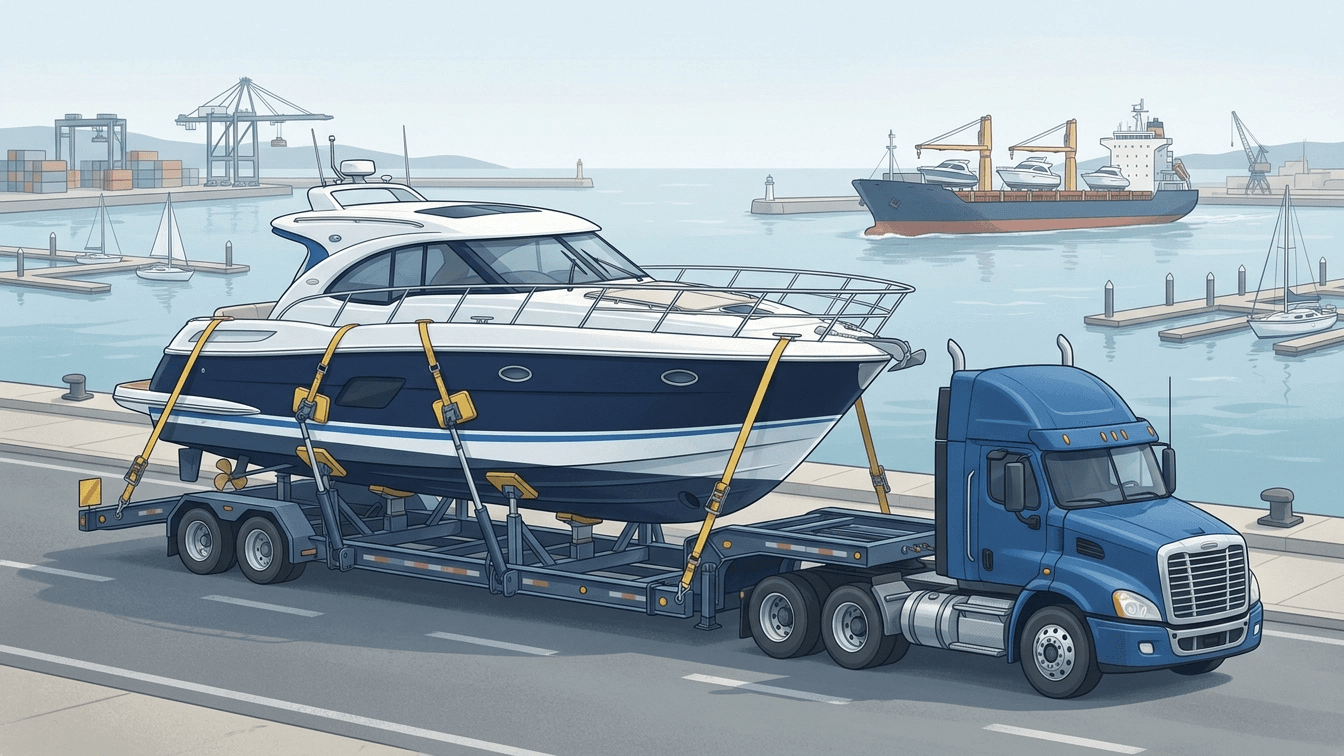
Most boats in the United States travel by road on a specialized trailer. Boat hauling services pick the equipment based on your boat’s size, weight and hull shape.
Smaller boats usually ride on a standard boat trailer, often your own trailer pulled by the carrier’s truck. Larger boats go on a hydraulic boat trailer. This kind of trailer has adjustable arms and pads that raise and lower to fit the hull, so in many cases the carrier can load and unload your boat without a crane.
Here’s the part that matters most: keeping the boat steady. Your hull was built to be supported evenly by water, not by a few hard points on a trailer. To protect it, carriers use:
A cradle: a frame that holds the boat upright and spreads its weight across the hull.
Hull support pads: padded stands placed at strong points along the bottom of the boat.
Straps and tie-downs: heavy-duty straps that keep the boat from shifting during braking, turns and bumps.
Before the trip starts, the driver checks that the weight is balanced and every support is snug against the hull. Uneven support can stress the hull over hundreds of miles, so a good setup matters just as much as careful driving.
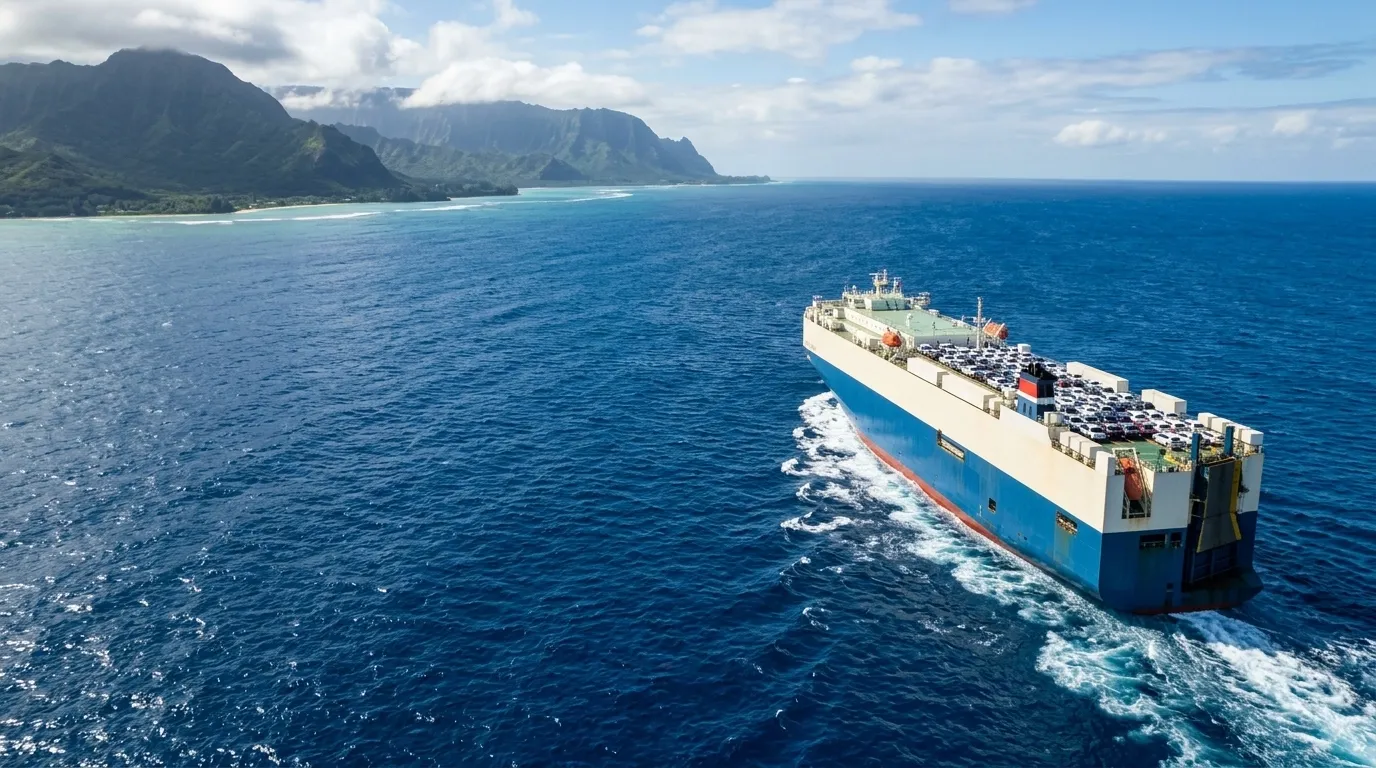
One more thing: not every boat move stays on the road. Boats headed to Hawaii, Alaska, or overseas usually travel by ship, with a truck taking the boat to and from the port. That process has its own schedule and paperwork, so plan it separately from an overland move.
What Boat Transport Costs by Size
So, what will you actually pay? Length overall is the starting point for most boat transport cost estimates, because longer boats need bigger trailers and often more permits. Here’s what typical overland moves cost by boat size:
Boat Size | Typical Overland Cost |
|---|---|
Under 25 ft | $600 to $1,500 |
25 to 40 ft | $1,500 to $4,500 |
40 ft and over | $4,500 to $15,000+ |
Source: Safeeds Transport, 5 Boat Transport Cost Trends Shippers Should Watch in 2026, June 2026.
Length sets the starting range, but a few other factors move your final price up or down:
Beam width. A boat wider than 8.5 feet needs an oversize permit, and very wide boats may need pilot cars.
Height on the trailer. Tall boats may need tower lowering, mast removal or a special route around low bridges.
Weight. Heavier boats need stronger trailers and trucks.
Distance and route. Busy corridors with lots of carriers usually cost less than remote or rural routes.
Permits and pilot cars. A single pilot car adds about $150 to $400 per day, according to the same Safeeds Transport data.
Season. Spring and fall are the busiest seasons for boat shipping, so rates and wait times go up.
Pro Tip: Book early if you can. Safeeds Transport’s 2026 data shows that booking within two weeks of a peak-season pickup often costs 15% to 25% more than booking four to six weeks ahead. Here’s how far in advance to book for the best rate.
How much does shipping a boat cross country cost?
Shipping a boat cross-country typically costs $1,800 to $5,500 for mid-size boats and $5,000 to $15,000 or more for boats over 40 feet, based on Safeeds Transport’s 2026 figures.
Here’s something that surprises a lot of owners: long trips cost more in total, but less per mile. The same data shows typical rates of $3.50 to $6.00 per mile for trips under 500 miles, compared with $1.50 to $3.50 per mile for longer hauls. Fuel surcharges can make up 12% to 18% of the total on cross-country routes, so ask for a quote that lists fuel separately.
Large boats and yachts are often priced as a flat project rate instead of per mile. These moves can include crane lifts, custom cradles and permits in several states, so a site inspection usually gives you the most accurate price.
When You Need an Oversize Permit
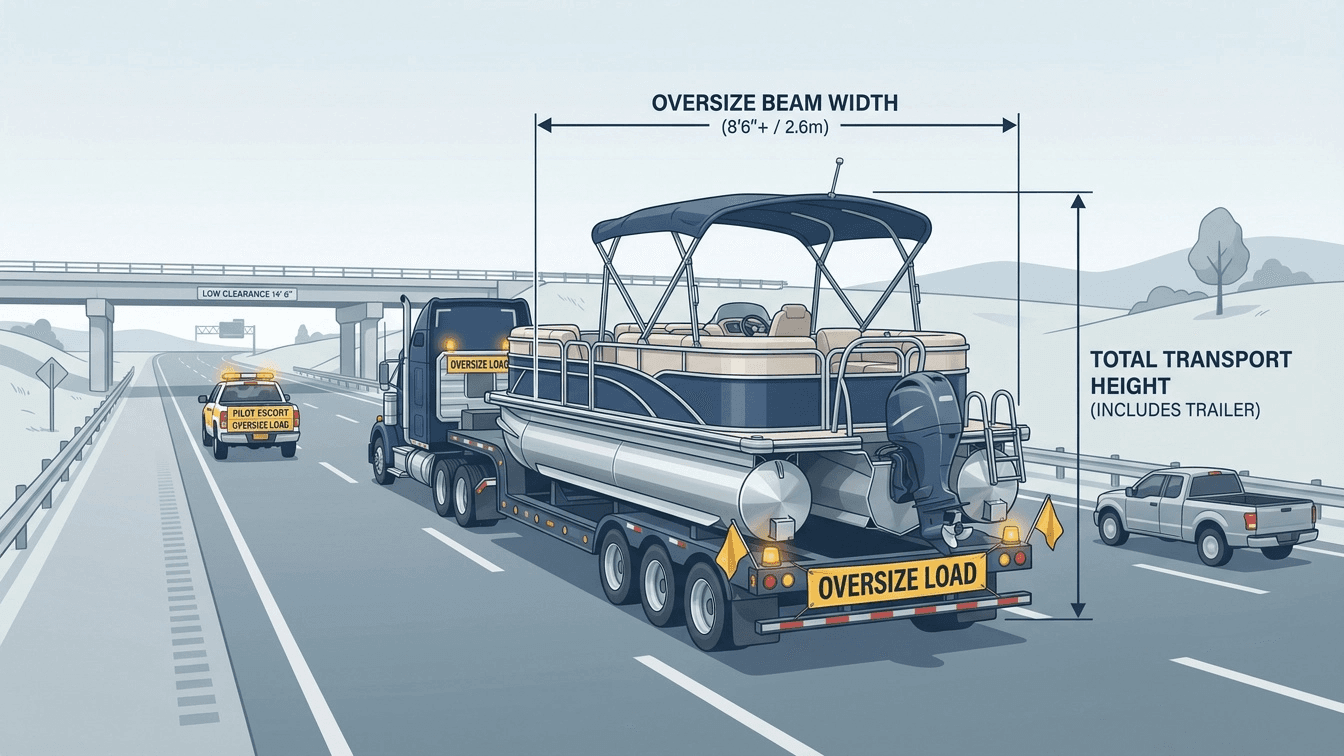
Every truck and trailer on U.S. highways has a legal width limit. Under federal rule 23 CFR 658.15, states can’t set a width limit of more or less than 102 inches, which is 8.5 feet, on the national highway network.
For boats, beam width usually decides whether you need a permit. The beam is the widest point of your boat. If it’s more than 8.5 feet, the load counts as oversize, and the carrier needs an oversize permit from each state on the route. The same rules apply to RVs and other wide loads, as our guide to transporting an oversized vehicle explains.
Boats that often need permits include:
Wide pontoon boats and houseboats
Catamarans and trimarans
Larger cruisers and yachts
Height matters too. Draft height, in transport terms, means how tall your boat sits on the trailer, measured from the road to its highest point, including any tower, arch or mast. Many states set the legal height at 13 feet 6 inches. Florida, for example, requires a permit for loads taller than 13 feet 6 inches, or 14 feet for car carriers. Bridges, overpasses, and power lines are the reason height limits exist, and a load that’s too tall can cause serious damage.
Pro Tip: Measure your boat’s height on the trailer, not just the boat itself. The trailer adds several feet, and that total is the number permits and bridges care about.
When does a boat need a pilot car?
A pilot car is an escort vehicle that drives ahead of or behind a wide or tall load to warn other drivers. There’s no single national rule for pilot cars. Each state sets its own requirements, so a cross-country trip may need different escorts in different states.
Florida’s oversize movement rules are a good example of how this works:
Load Width in Florida | Escort Requirement | Travel Hours |
|---|---|---|
Up to 10 ft | No escort stated | Daytime only |
Over 10 to 12 ft | Two escorts on some roads, unless the load has four warning lights | Daytime only, no holidays |
Over 12 to 14 ft | One escort at all times | Daytime only, no holidays |
Over 14 to 16 ft | Two escorts, front and rear | Daytime only, no holidays |
Source: Florida Administrative Code Rule 14-26.012. Other states set different limits.
Daylight-only and no-weekend rules can add days to a trip, which is why wide boats often take longer to deliver than standard loads. The good news? A reliable carrier checks the rules for every state on your route and builds permits and pilot cars into the quote.
Trailerable vs Non-Trailerable Boats
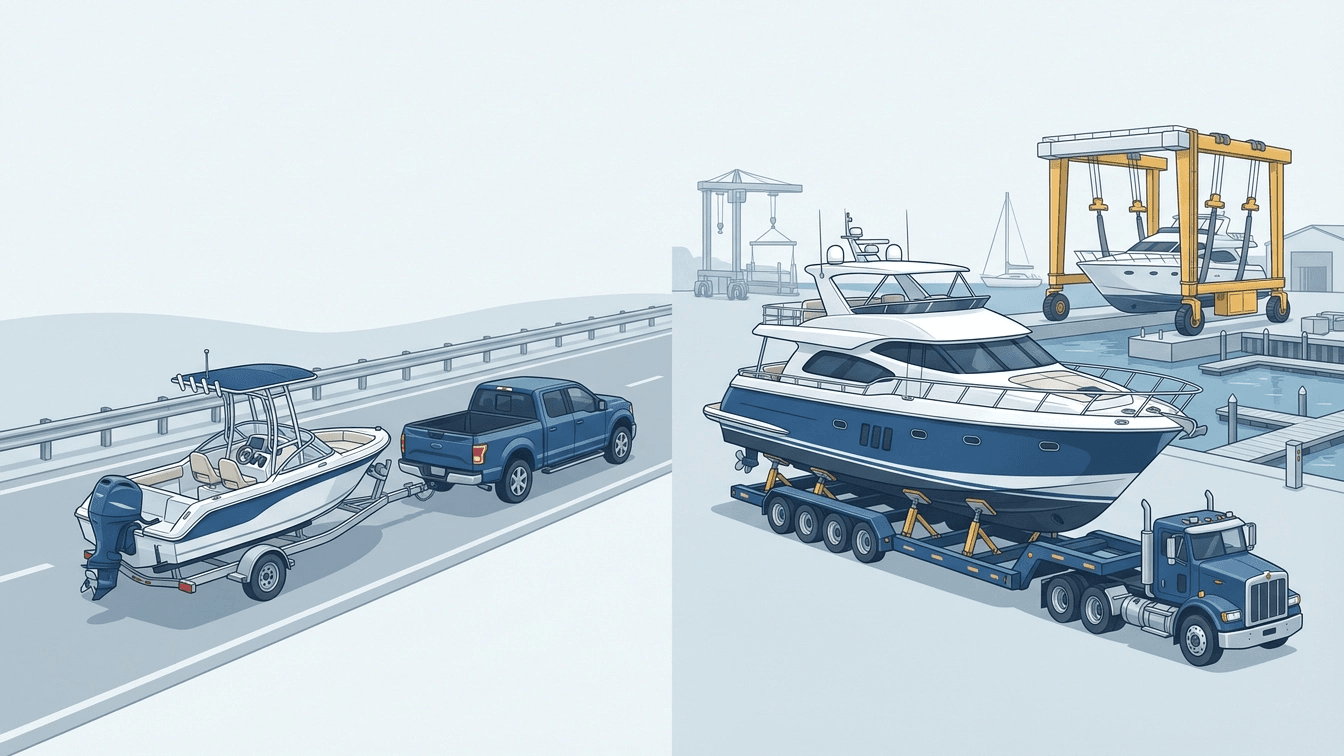
Not sure which group your boat falls into? A trailerable boat is one that can travel legally on its own trailer without special permits. In most cases, that means the beam is 8.5 feet or less, the boat stays under the legal height on the trailer, and a tow vehicle can safely pull its weight.
Common trailerable boats include:
Small fishing boats and bass boats
Personal watercraft such as jet skis
Most runabouts and bowriders
Many pontoon boats with a standard-width deck
Trailerable boats are usually the simplest and cheapest to move. The carrier can hook up your trailer or load the boat onto a standard boat trailer at your home or marina.
Larger boats are a different job. Cruisers, yachts and many sailboats are too wide, tall or heavy for a standard trailer. These boats are usually lifted out of the water with a travel lift or crane, then placed on the carrier’s hydraulic trailer and secured in a cradle.
That process costs more because it takes more equipment and more people. It also needs coordination at both ends of the trip:
Book the lift at the departure marina for the day the carrier arrives.
Confirm the delivery marina or boatyard can lift the boat off the trailer when it arrives.
Share exact measurements with both marinas and the carrier, so the right equipment is ready.
Skip one of these steps, and a truck could end up waiting, which may add fees or push back your delivery date.
Preparing Your Boat for Transport
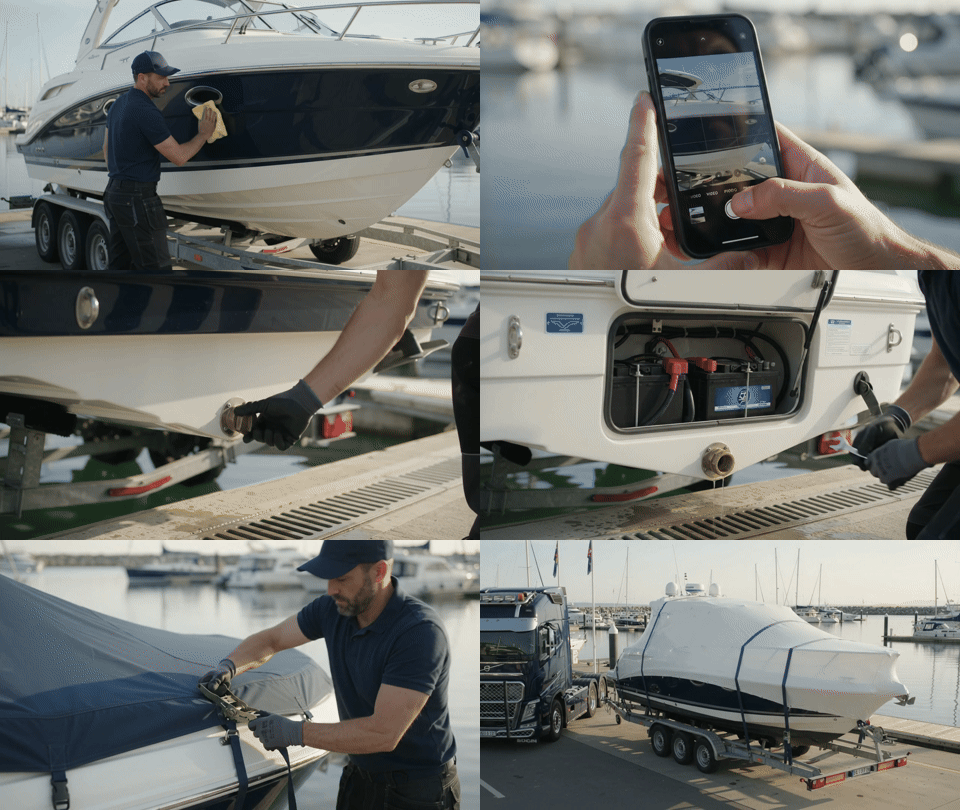
A well-prepared boat loads faster, travels more safely, and is easier to inspect at delivery. Here’s what to do in the days before pickup:
Clean the hull and take dated photos of every side. Clear photos show the boat’s condition before the trip and support any claim later.
Remove loose gear, electronics, and personal items. Anything loose can fly off or cause damage at highway speeds, and personal items usually aren’t covered by carrier insurance.
Drain water tanks, bilge and livewells, and follow fuel limits. Water adds weight, and carriers usually ask for low fuel levels for safety.
Disconnect the batteries. This prevents electrical problems and keeps the battery from draining during the trip.
Secure hatches, windows and covers. Lock or tape anything that could open, rattle or break in the wind.
Arrange mast removal or tower lowering. Tall parts often have to come down to meet road height limits.
Add shrink wrap for long trips or bad weather. A tight wrap protects your boat from rain, dirt and road debris.
Mast removal is usually handled by a marina or rigger, not by the carrier. Book it early, because a mast that’s still standing on pickup day can mean a missed pickup and a rescheduling fee.
Pro Tip: Book your marina lift and mast removal the same day you book transport. Lining up all three at once is the easiest way to avoid a truck arriving before your boat is ready.
Should you shrink wrap your boat for transport?
Shrink wrap is a plastic film that’s heated so it shrinks tightly around your boat. It keeps out rain, dust, road grime, and small debris during a long haul.
Shrink wrap is usually worth the cost for:
Cross-country trips that last several days
Moves through rain, snow or salted winter roads
Boats with open cockpits or delicate interiors
For a short regional move in good weather, a well-secured cover may be enough. Just avoid loose canvas covers. At highway speeds, a cover that isn’t tight can flap, tear and scratch the finish, causing the exact damage it was meant to prevent.
Insurance on Boat Shipments
Professional boat hauling services must carry cargo insurance, but coverage limits vary from carrier to carrier. If damage happens, note it on the Bill of Lading at delivery and take photos right away, then follow these steps on what to do if your vehicle is damaged during transport. Our car shipping insurance guide explains what carrier coverage actually includes.
Before booking boat shipping, take these steps to protect yourself:
Ask for a certificate of insurance. This document shows the carrier’s coverage amount and the insurance company’s name. Check that the limit is high enough for your boat.
Call your own marine insurer. Some boat policies cover a boat while it’s being transported, and some don’t. Ask whether transit coverage applies, and get the answer in writing.
Ask about extra coverage. For boats valued above $100,000, Safeeds Transport’s 2026 data recommends confirming coverage limits carefully, since standard cargo insurance covers carrier liability, not full replacement value.
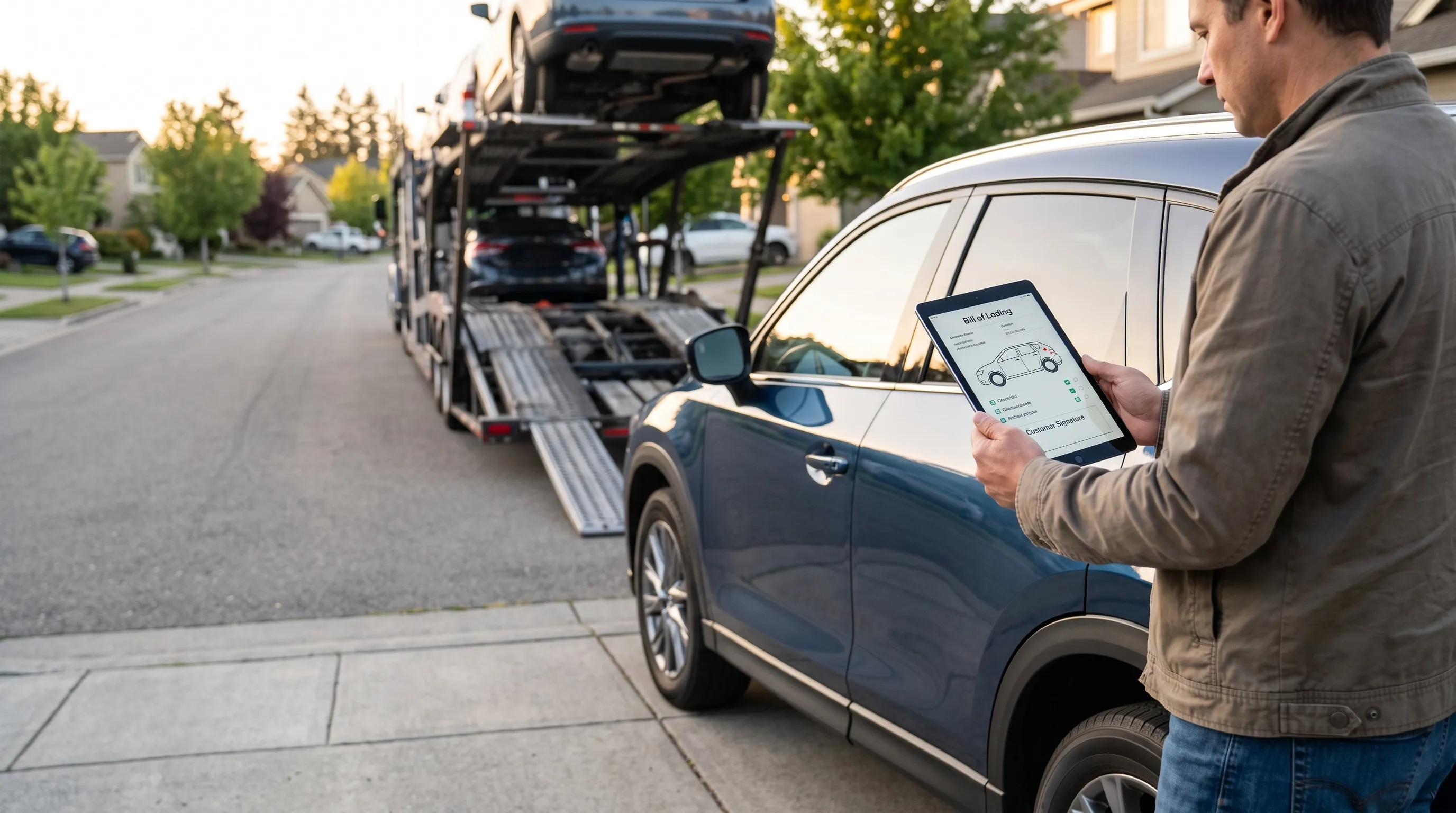
The Bill of Lading is your most important document on pickup and delivery day. It records your boat’s condition when the carrier takes it and when you get it back. Walk around the boat with the driver at both ends, note every scratch or dent, and don’t sign until the report is accurate.
If damage happens, note it on the Bill of Lading at delivery and take photos right away. A claim is much harder to prove if the damage wasn’t written down when the boat arrived. Our Bill of Lading guide walks you through what to check before you sign.
Pro Tip: Keep your pickup photos and the signed Bill of Lading together in one folder on your phone. If you ever need to file a claim, you’ll have everything in one place.
Boat Transport Questions Owners Ask Before Booking
Still have questions? You’re not alone. Here are clear answers to the ones boat owners ask most often before they book.
How much does it cost to transport a boat?
Boat transport usually costs $600 to $1,500 for boats under 25 feet, $1,500 to $4,500 for boats 25 to 40 feet, and $4,500 to $15,000 or more for larger boats, based on 2026 data. Your exact price depends on beam width, height, distance, and permits. A free quote shows your real cost, locked for 7 days.
Do I need a permit to transport my boat?
You need an oversize permit if your boat is wider than 8.5 feet, the federal width limit for trucks and trailers. Many states also require one for loads taller than about 13 feet 6 inches. The good news is that you don’t have to file anything yourself, since permits for each state are arranged as part of your booking.
Can you transport a boat without a trailer?
Yes. Boats without a trailer are lifted onto a carrier’s hydraulic trailer by crane or travel lift, then supported by a cradle and hull support pads. It’s the standard method for larger boats. Just book lift services at both marinas when you book transport, and your boat can move as smoothly as a trailerable one.
How is a boat secured for transport?
Your boat is held in place by a cradle or adjustable hydraulic arms, padded hull supports and heavy-duty straps. These spread the weight evenly across strong points of the hull. Before leaving, the driver checks the balance and every strap, then rechecks the load at stops, so your boat arrives the way it left.
How long does boat transport take?
Timing depends on distance, boat size, and permit rules. Short regional moves often finish within a few days. Cross-country trips take longer, especially for oversize boats, since many states allow wide loads only in daylight and not on weekends. Booking early gives you a better pickup date and a clear delivery window.
Is my boat insured during transport?
Yes, the carrier’s cargo insurance covers its liability during the trip, though limits vary and may not equal your boat’s full value. Ask for a certificate of insurance before booking and check your own marine policy. Safeeds Transport works with licensed, insured carriers, so you can review coverage before your boat moves.
What is the maximum boat size you can move?
It depends on beam width, height, and weight, not just length. Many boats up to about 40 feet move by road with the right permits, while yachts over about 45 feet may need a dedicated carrier or ocean freight. Share your boat’s length overall, beam width and height, and you’ll get a quote built for your boat.
Do I need to remove the mast or tower?
Often, yes. If your boat’s draft height on the trailer is more than about 13 feet 6 inches, the mast, tower or arch usually needs to come down to clear bridges. A marina or rigger normally handles mast removal before pickup. Book it early, and your boat will be ready to roll on pickup day.
Can you transport a boat with the engine attached?
In most cases, yes. Outboard and inboard engines usually stay on the boat during transport. Outboards should be tilted up and secured so they don’t bounce or strike the road. Mention your engine type and any extra parts when you book, and your boat will be loaded and supported the right way.
What do I need to do to prepare my boat?
Clean the hull, take dated photos, and remove loose gear and personal items. Drain water tanks and the bilge, follow fuel limits, and disconnect the batteries. Secure all hatches, arrange mast removal if needed, and consider shrink wrap for long trips. A few hours of prep helps your boat load fast and arrive safely.
Moving Your Boat Without Costly Surprises
Most boat transport problems start before the truck ever shows up. A wrong measurement can mean a missing permit. A mast that’s still standing can mean a missed pickup. A cover left loose can tear on the highway. The good news is that every one of these problems is easy to avoid with a little planning.
Start by measuring your boat’s length overall, beam width and height on the trailer, and share those exact numbers when you request quotes. Ask whether each quote includes permits, pilot cars, and fuel, and check that the company is legit before you book. Book mast removal and marina lifts early, and confirm your insurance coverage in writing before pickup day. With those steps done, boat shipping becomes a predictable process instead of a gamble. When you’re ready, request a free quote from Safeeds Transport and lock in a price for your boat’s route.