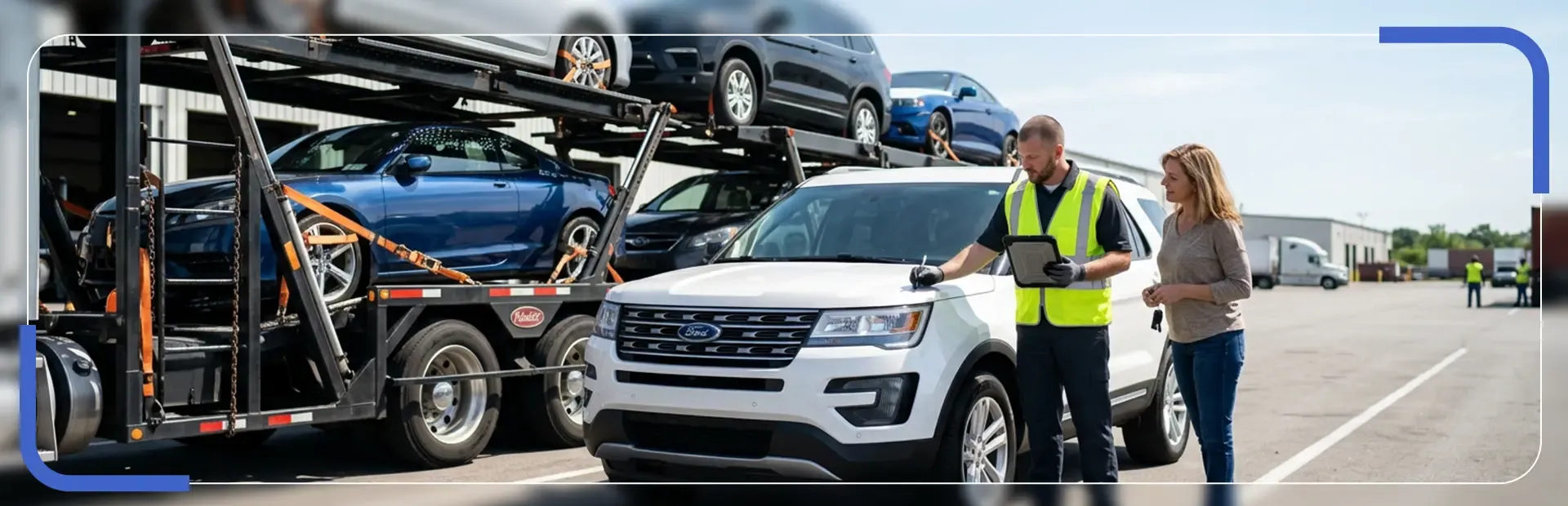
Understanding how to transport a car without insurance starts with one key fact: licensed carriers are required to carry their own cargo insurance for every vehicle they haul. This means your vehicle is protected during transit whether or not you have an active personal policy of your own.
That said, shipping without personal coverage still comes with rules. Owners need to confirm the carrier's insurance before pickup, provide the right documentation, and understand where their responsibility begins and ends.
This guide walks through exactly what those rules look like in 2026 and what you'll need to have ready before booking. Get an Instant Quote and lock in your price in 30 seconds.
Is It Possible to Transport a Car Without Insurance?
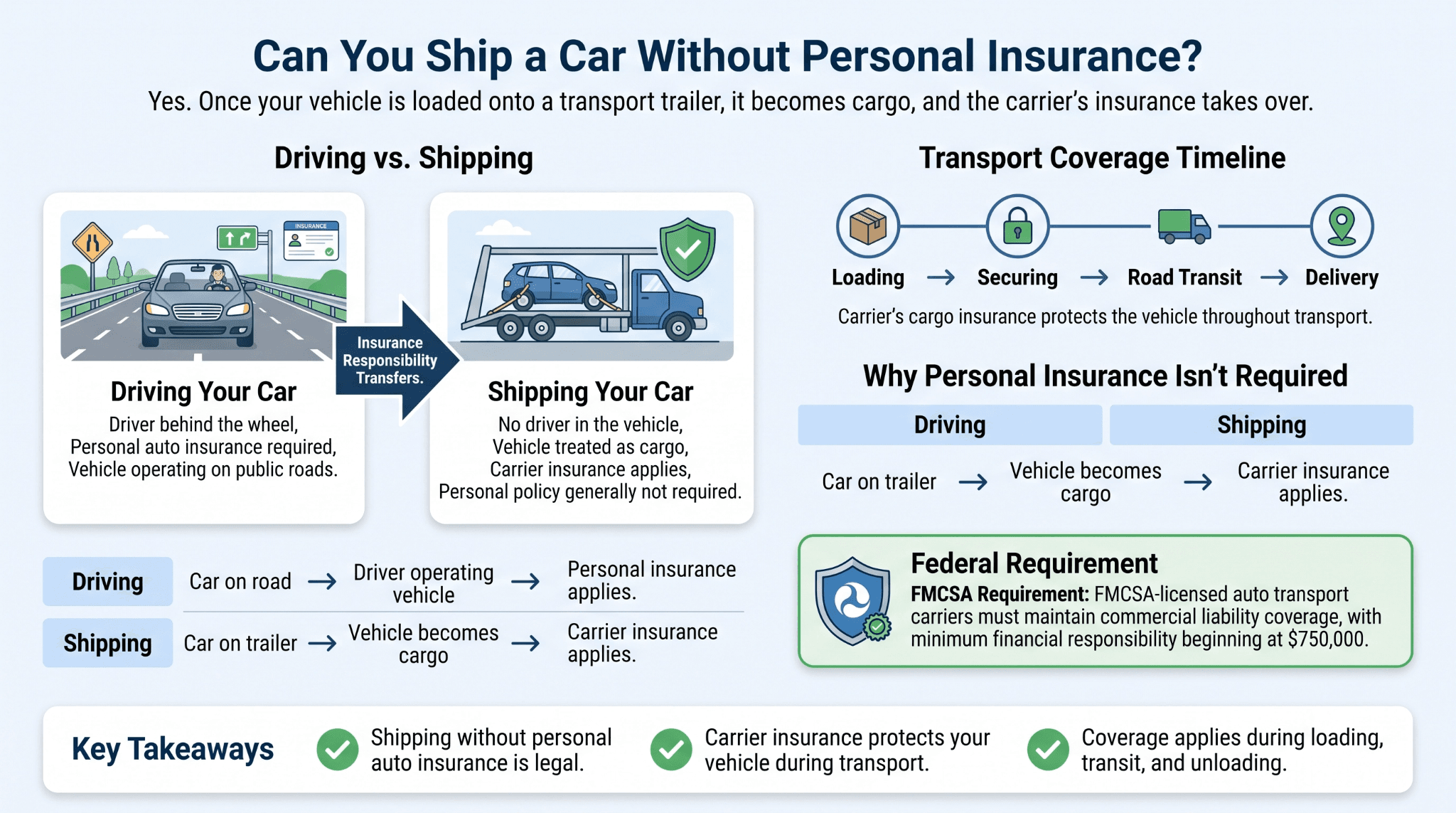
Yes. It is both legal and common to ship a vehicle without a personal auto insurance policy attached to it. The party responsible for insurance during transport isn't the owner. It's the carrier moving the vehicle.
Every FMCSA-licensed auto transport company is required to hold minimum levels of financial responsibility under federal regulation, with minimum liability coverage starting at $750,000. That coverage exists specifically to protect the vehicles carriers transport, regardless of whether the owner has an active personal policy.
The distinction that matters legally is simple:
A car being driven on public roads requires the driver to carry insurance.
A car being shipped on a trailer does not.
As Progressive explains in its car shipping guide, if you won't be the one driving it, you generally aren't required to carry your own insurance when shipping a vehicle by truck, ship, or rail. This is the foundation of how to transport a car without insurance without breaking any law.
Why Doesn't Shipping Require Personal Auto Insurance?
Personal auto insurance exists to cover a vehicle while it's operating under its own power, on the road, with a driver behind the wheel.
Once a car is loaded onto a carrier's trailer, it stops being "driven" in any legal sense. It becomes cargo. That shift is exactly why the insurance obligation moves from the owner to the carrier. The trucking company's cargo policy is designed to cover the vehicle for the specific risks of transport:
Loading
Securing
Road transit
Unloading
Since the owner isn't operating the vehicle during this window, the law doesn't require a personal policy to be active for the shipment itself.
This is also the most direct answer to the question owners search most often: do you need insurance to ship a car? In most cases, no, not your own. The carrier's policy is what protects the vehicle from pickup to delivery.
What Are the Rules to Ship an Uninsured Car?
Understanding the legal distinction is only half the picture. Owners who want to ship an uninsured car also need to understand the rules that apply to the carrier, not just to themselves.
Here's what the rules actually require:
Federal law requires every licensed carrier to hold valid cargo insurance before they're permitted to haul vehicles. FMCSA minimums for cargo insurance are set at $5,000 per vehicle and $10,000 per occurrence.
Most professional auto transporters carry far more than this federal floor, particularly for higher-value vehicles.
Coverage minimums vary depending on trailer type, with enclosed carriers typically holding higher cargo limits than open carriers.
Owners have one clear responsibility: verifying coverage before the vehicle is picked up. The simplest way to do this is by requesting a written certificate of insurance from the carrier.
"Uninsured" in this context refers only to the owner's personal policy. The shipment itself is never legally uninsured, because the carrier's coverage is a federal requirement, not an option.
Personal Auto Insurance | Carrier Cargo Insurance | |
Covers | Vehicle while being driven | Vehicle while being transported |
Who carries it | The vehicle owner | The auto transport carrier |
Required to ship? | No | Yes, by federal law |
Typical minimum | Varies by state | $5,000–$10,000 per vehicle (federal floor); often much higher in practice |
What Happens If the Car Sits Unused Before Pickup?
One rule owners often overlook involves the gap between canceling a personal policy and the carrier actually arriving. The carrier's cargo insurance only takes effect once the vehicle is loaded and in their custody, not while it's parked and waiting.
This means a vehicle sitting idle before pickup, whether in a driveway or a storage lot, isn't covered by anyone's policy if the owner has already canceled their own.
For this reason, many owners choose to keep minimal or storage-only coverage active until the day of pickup, rather than dropping insurance the moment they book. It's a small step that closes an otherwise avoidable coverage gap.
How to Transport a Car Without Insurance: What Does a Customer Need?
Even without personal insurance, there are still a few things carriers require before they'll accept a vehicle. None of them are complicated, but skipping them can delay pickup.
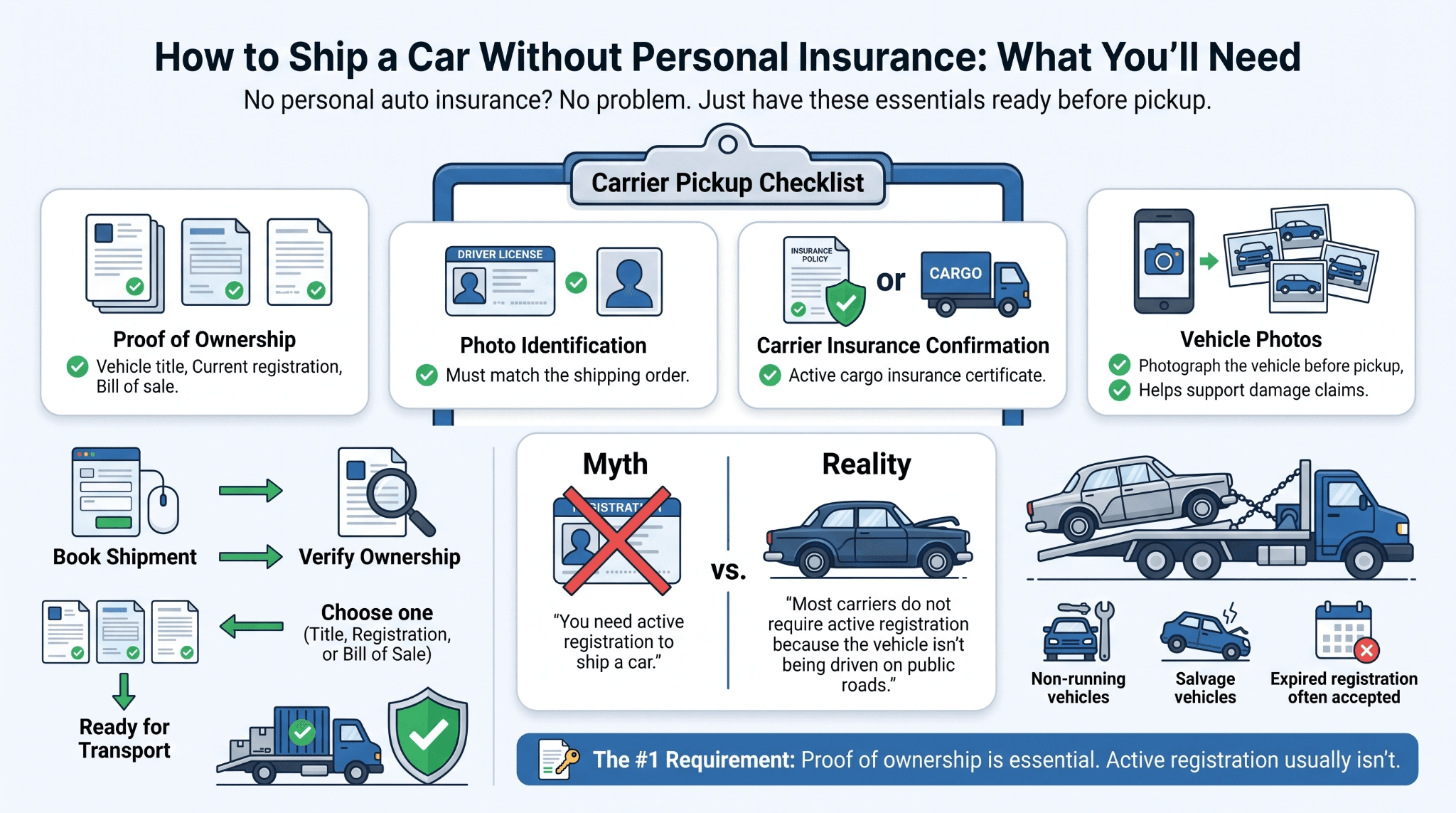
At minimum, most carriers ask for:
Proof of ownership: A valid title, current registration, or a bill of sale for non-titled or salvage vehicles.
Photo identification: Matching the name on the shipping order.
A written certificate of insurance from the carrier: Confirming their cargo coverage is active before handoff.
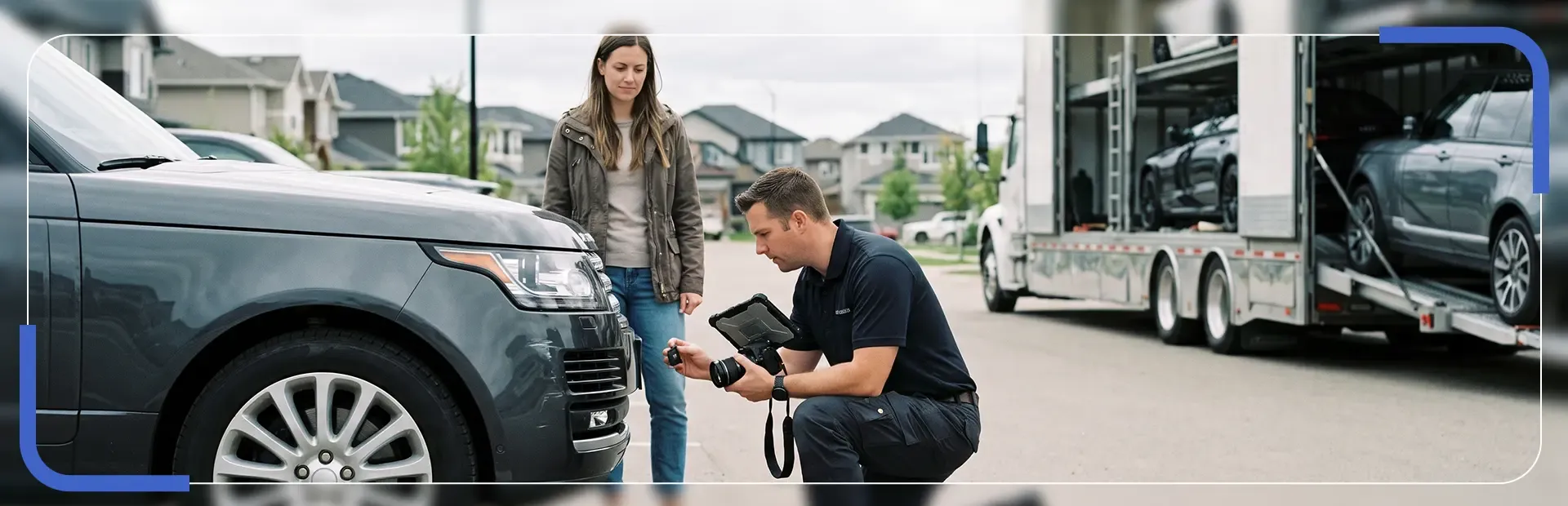
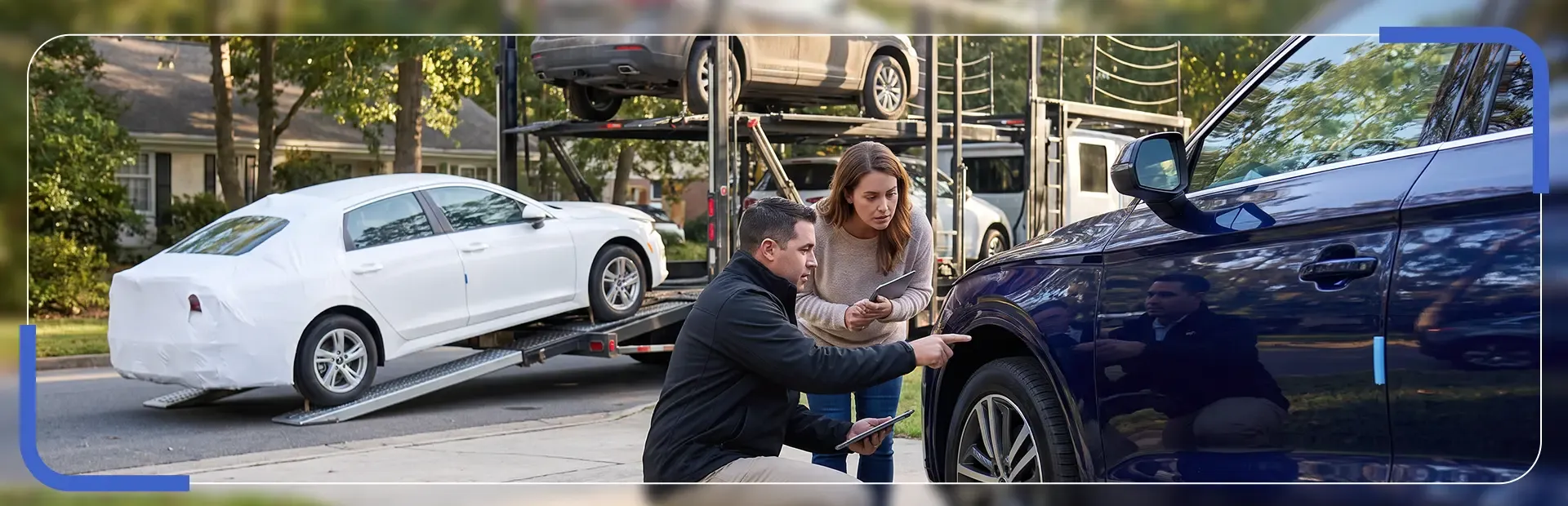
It's also worth photographing the vehicle's condition, inside and out, immediately before pickup. This isn't a legal requirement, but it's the single most useful thing an owner can do to protect themselves if a damage claim ever becomes necessary.
Do You Need Active Registration to Ship a Non-Running Car?
Most carriers don't require active registration or current tabs to ship a vehicle, since the car isn't being driven on public roads during transport.
Non-running vehicles, salvage cars, and even vehicles with lapsed tabs are shipped regularly.
What carriers do still need is proof that the vehicle actually belongs to the person booking the shipment. The registration requirements to ship a vehicle are more flexible than most owners expect, but ownership verification, through a title, registration, or bill of sale, is the one document that isn't optional.
Should You Get Temporary Coverage Before Shipping?
For most standard vehicles, the carrier's cargo insurance is sufficient protection during transport. But owners of high-value, classic, or exotic vehicles sometimes find that a carrier's standard coverage limit wouldn't fully replace the car in the event of a total loss.
This is where temporary coverage for shipping becomes worth considering. Some insurers offer short-term transport or storage endorsements that supplement the carrier's policy for the duration of the shipment, without requiring a full annual policy.
It isn't a legal requirement, but it functions as an added layer of protection for vehicles whose value exceeds what a standard cargo policy would cover.
The decision typically comes down to vehicle value:
A daily driver is usually well covered by the carrier's existing policy.
A collector car or high-performance vehicle may justify the modest cost of temporary coverage for shipping as a precaution rather than a necessity.

What Owners Often Ask Before Shipping
Shipping without a personal policy raises a few practical questions for most owners. Here are the ones we hear most often, along with straight answers.
Do you need insurance to ship a car?
No, not a personal policy. Every carrier we work with is required to carry its own cargo insurance, so your vehicle is protected the moment it's picked up, whether or not you have an active policy of your own.
Can you ship a car without registration or title?
In many cases, yes, particularly for non-running or salvage vehicles. We simply ask for some form of proof of ownership, such as a bill of sale, so your shipment stays fast and hassle-free even without current registration.
Do auto transport companies include insurance in their price?
Yes. Cargo insurance is built into every quote we provide, not sold as a pricey add-on later. That's part of what makes booking with a licensed, transparent carrier worth it.
What happens if my car is damaged and I don't have insurance?
The carrier's cargo policy is responsible for covering damage that occurs during loading, transit, or unloading. We provide a written certificate of insurance before every pickup, so you know exactly what's covered before your vehicle ever leaves your driveway.
Is my car insured while it's being shipped?
Yes. From the moment your vehicle is loaded to the moment it's delivered, it's covered under the carrier's cargo insurance policy. Choosing a trusted, FMCSA-licensed carrier with verified coverage is the best way to ship with real peace of mind.
The Bottom Line for Owners Shipping Without Insurance
The question of how to transport a car without insurance ultimately comes down to understanding where responsibility sits.
Owners don't need a personal policy for the shipment itself, because the carrier's cargo insurance is a federal requirement, not an optional service. What owners do need is proof of ownership, a verified certificate of insurance from the carrier, and, for higher-value vehicles, a decision about whether temporary coverage for shipping makes sense.
Handled this way, shipping without personal insurance isn't a workaround. It's simply how the process is designed to work. Get an instant quote and see your locked-in price before you book.