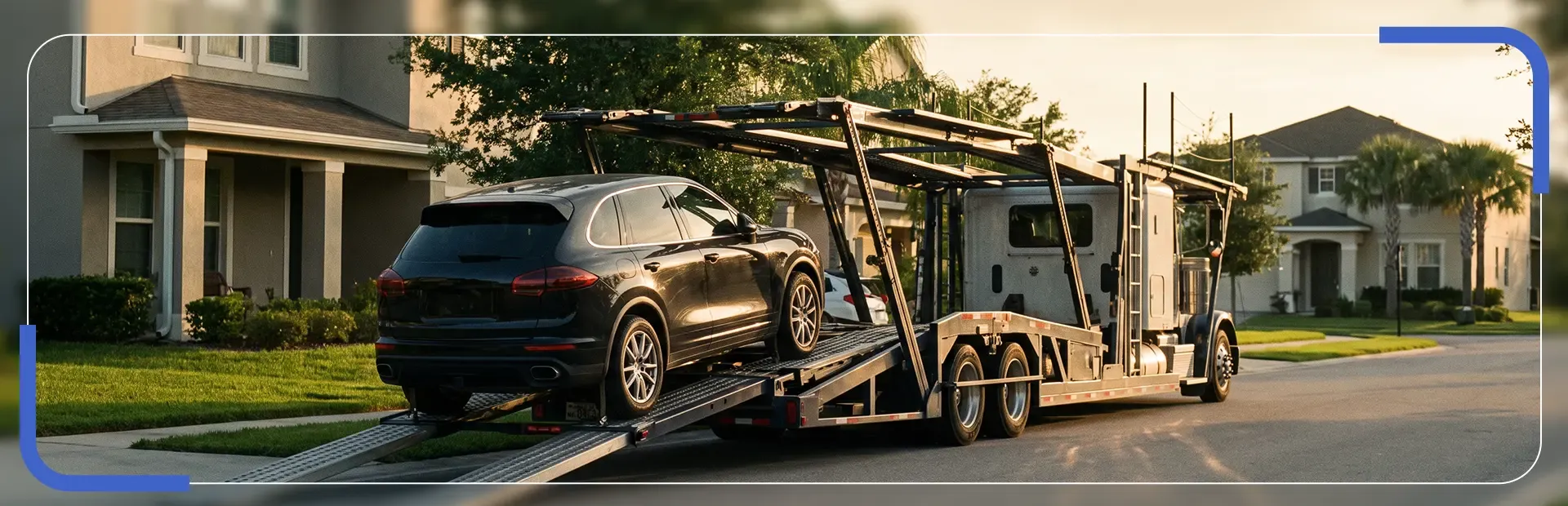
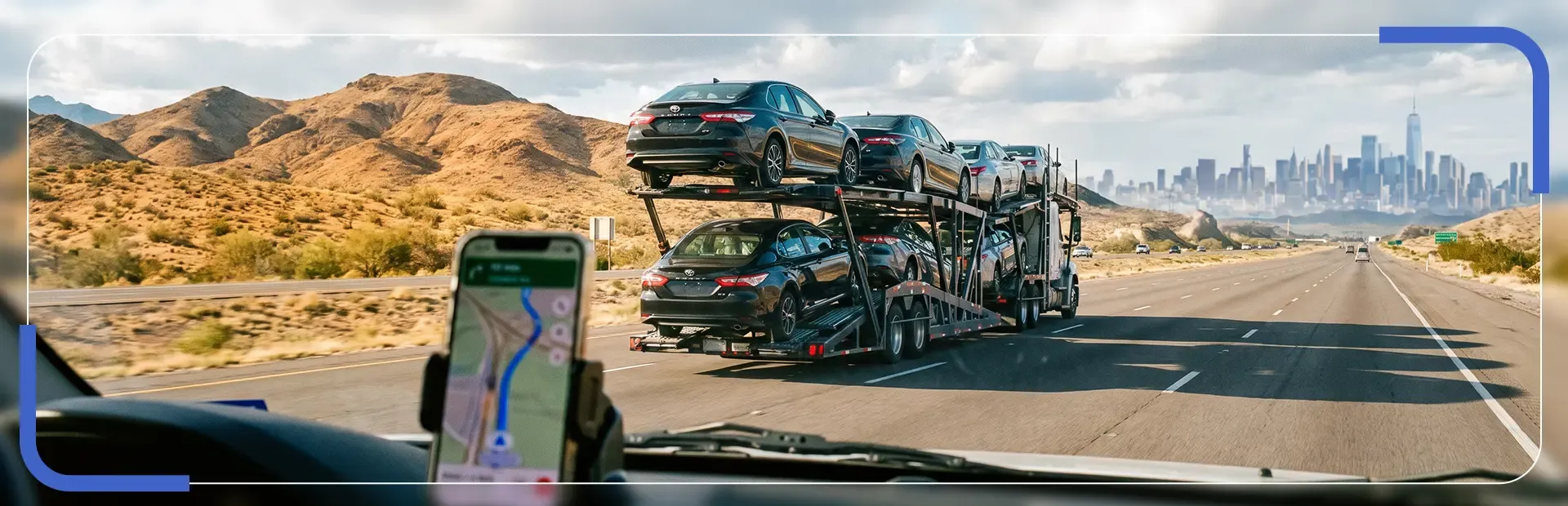
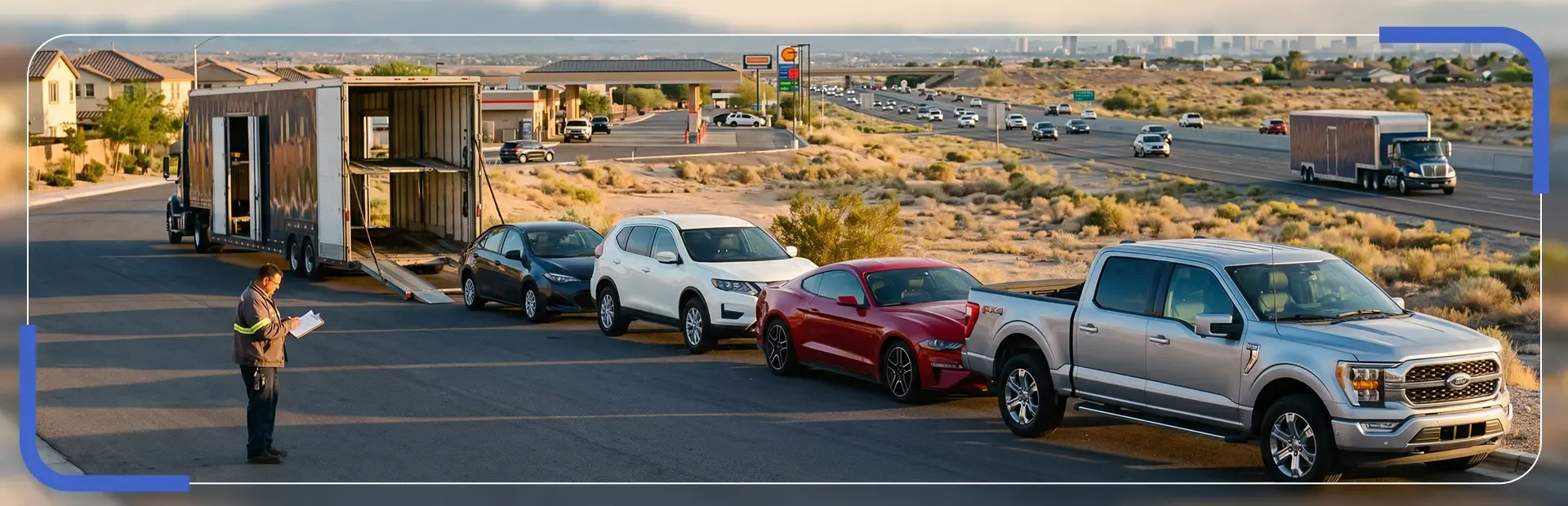
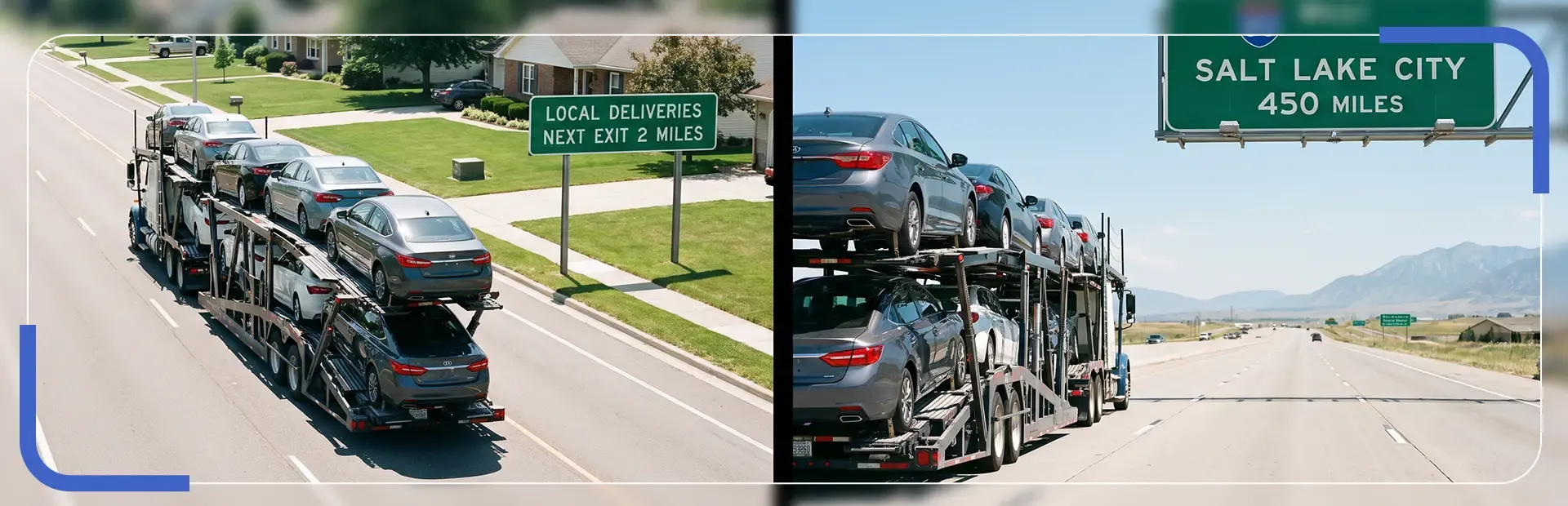
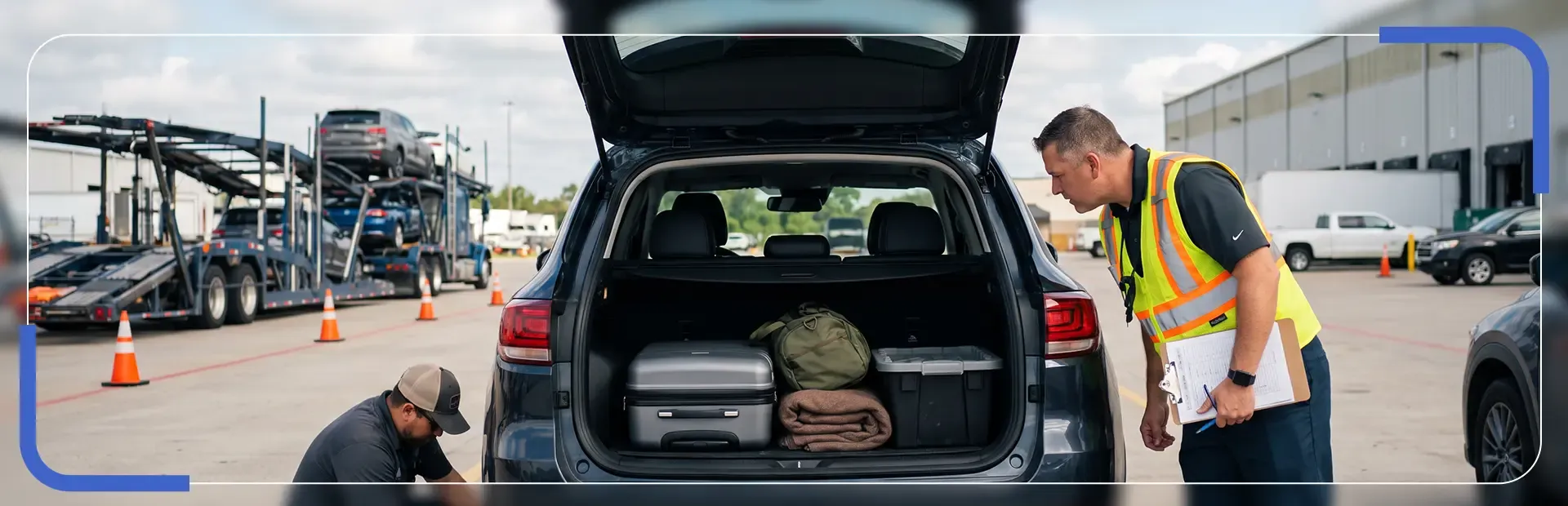
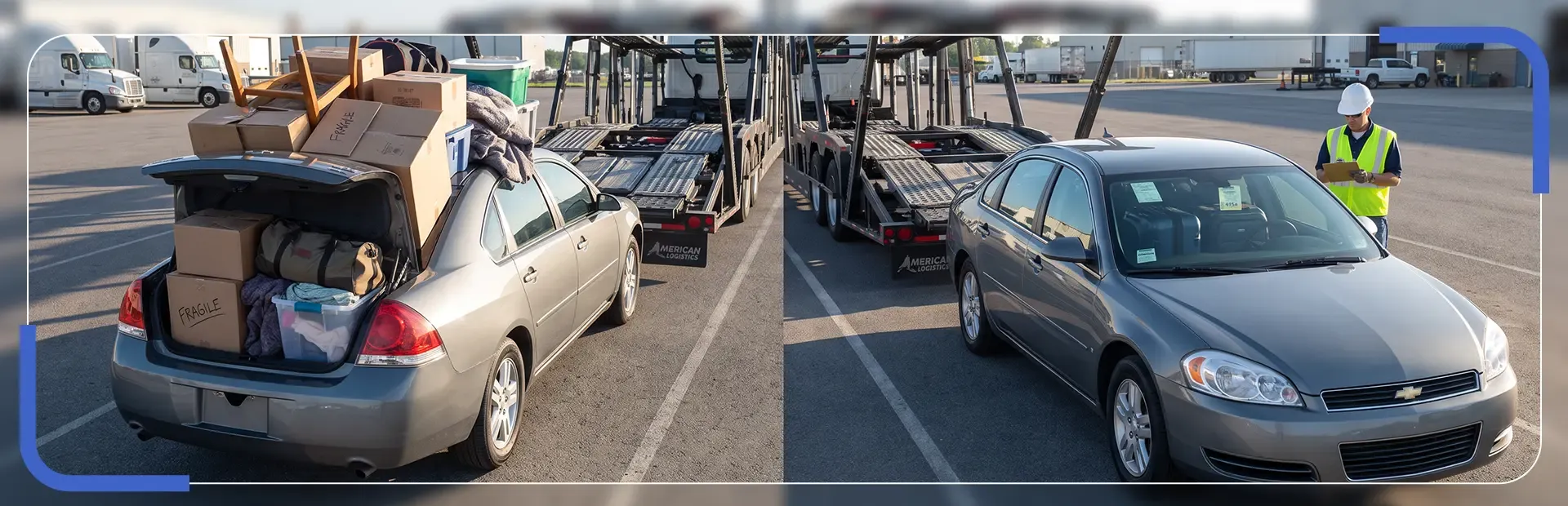
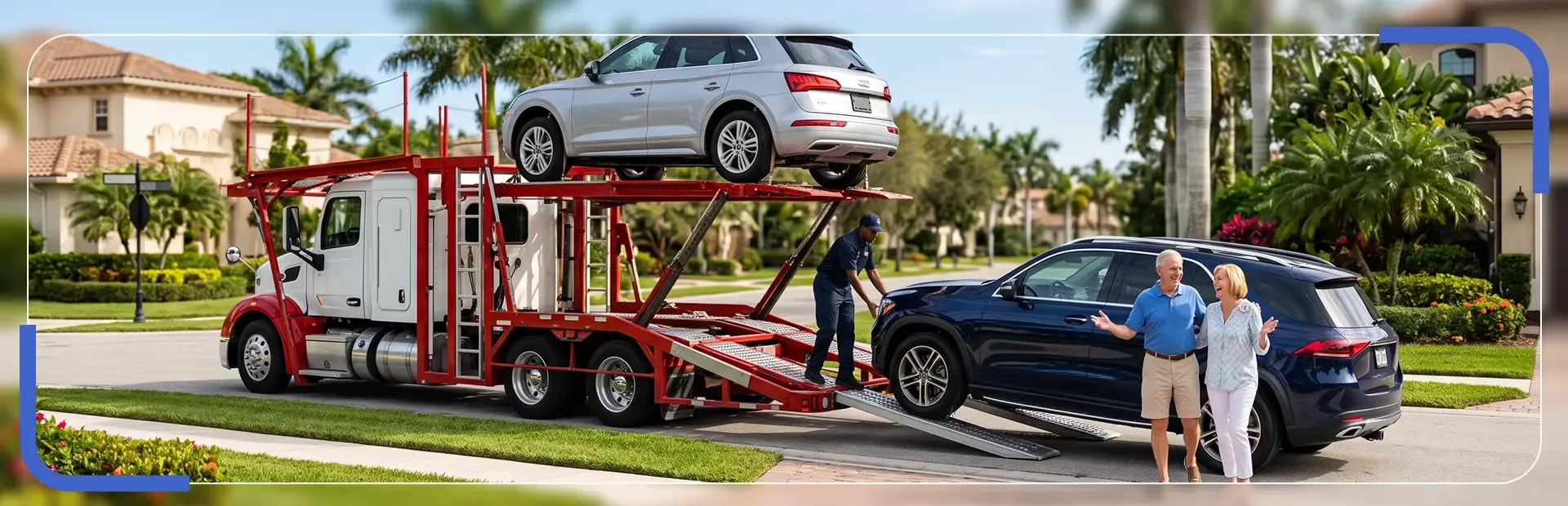
Shipping a car is safe for the vast majority of shipments, particularly when you work with a licensed, insured carrier. The main risks are minor cosmetic damage, delivery delays, unvetted carriers, and gaps in insurance coverage, though none are common when a few basic precautions are taken.
Most people searching is shipping a car safe aren't asking about the industry as a whole. They want to know if their vehicle, route, or carrier is trustworthy, and understanding what causes the rare problems that do occur makes that decision far less stressful.
The sections below walk through each risk and show how proper vetting and carrier standards protect your vehicle from pickup to delivery. Get a personalized quote for your shipment in under 30 seconds.
Common Risks to Expect When Shipping a Car
Most vehicles arrive exactly as they left, which answers the question "is shipping a car safe?" for the vast majority of shipments. Still, it's worth understanding the handful of things that can go wrong before you book. There are four risk categories worth knowing about:
Physical damage in transit, usually minor and cosmetic rather than structural.
Delivery delays, often caused by weather, traffic, or carrier scheduling.
Unlicensed or unvetted carriers, which increase every other risk on this list.
Insurance gaps, where a shipper assumes coverage exists that isn't actually in place.
None of these risks are common outcomes. Industry data consistently shows that damage and serious delays affect a small minority of shipments, and most of the risk on this list comes down to which carrier you choose, not the industry itself.
It helps to put these numbers in perspective. Millions of vehicles are shipped across the country every year, from daily commuters to auction purchases to military relocations, and the overwhelming majority arrive without incident. The risks are real enough to plan around, but they aren't reasons to avoid shipping altogether.
Damage usually traces back to improper loading, loose straps, or a vehicle that wasn't inspected carefully before pickup. Delays often stem from weather along the route or a carrier juggling multiple stops on a shared trailer.
Unvetted carriers cause the most preventable problems. A broker who skips licensing checks, or a carrier operating without proper insurance, introduces risk that a legitimate operator simply wouldn't. Understanding these root causes is the first step toward avoiding them.
How Are Vehicles Secured in Transit?
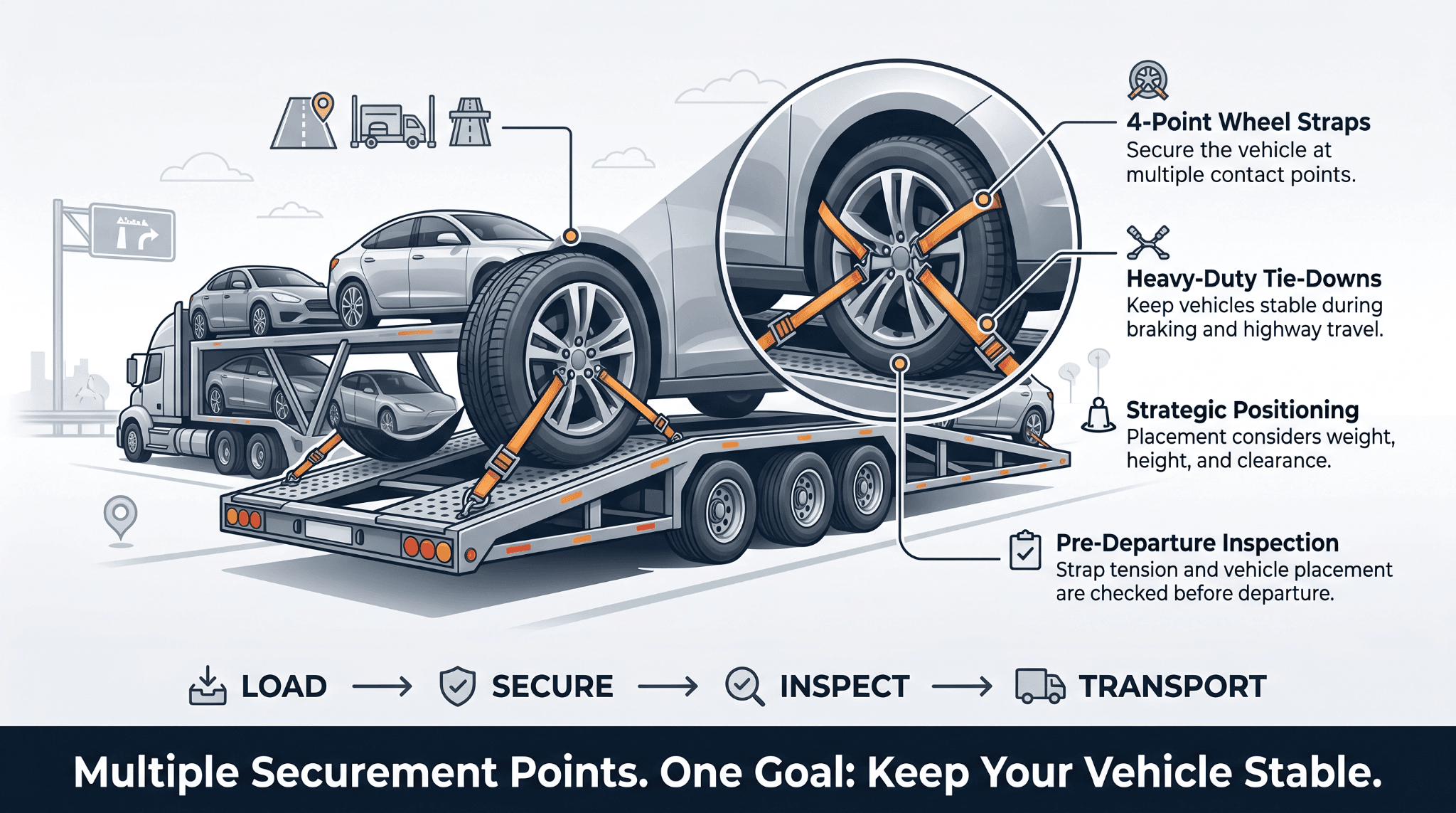
This is where the "damage" risk turns into a reassurance point. Vehicles shipped on modern carriers are held in place using multiple points of contact, not a single strap or chain, and every reputable carrier follows a documented loading and inspection process before the truck ever leaves the lot.
Understanding how vehicles are secured in transit helps explain why cosmetic damage is uncommon and why serious damage is even rarer. If you want a closer look at what different coverage levels actually protect against once a vehicle is loaded, our guide on auto transport damage coverage tiers breaks it down in detail.
Carriers rely on a combination of equipment and routine to keep vehicles stable for thousands of miles:
Wheel straps and chains at four points per vehicle, rather than a single tie-down.
Multi-point tie-downs rated for highway speeds and sudden braking.
Strategic trailer positioning, placing heavier vehicles lower and taller vehicles where clearance allows.
Pre-departure inspection routines, where drivers check strap tension and vehicle placement before every leg of the trip.
Is Car Shipping Reliable Overall?
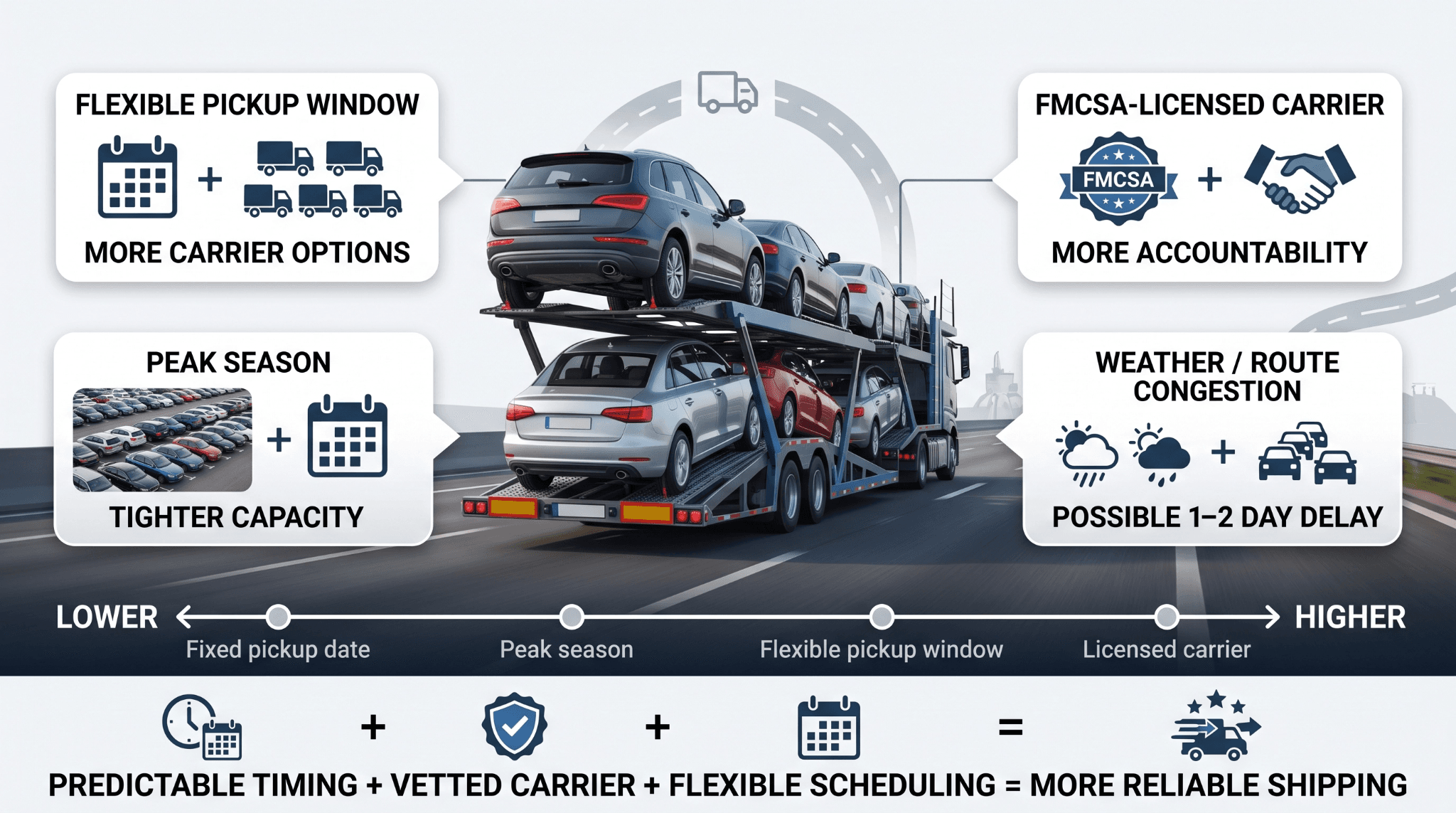
Is car shipping reliable enough to plan around? For the most part, yes. Most shipments arrive within their quoted transit window or close to it, and reliability tracks closely with how well a carrier is vetted rather than the industry being inherently unpredictable.
Delays do happen, but they're usually measured in a day or two, not weeks, and they're almost always tied to identifiable causes like weather or route congestion rather than the carrier disappearing with your vehicle.
Reliability also depends on how a shipment is priced. A quote that's dramatically lower than every competing estimate often signals a broker struggling to find a carrier willing to take the job at that rate, which can translate into longer waits rather than faster service.
A few factors have an outsized effect on how smoothly a shipment goes:
Pickup date flexibility gives carriers more scheduling options and reduces wait time.
Carrier licensing status correlates directly with how professionally a shipment is handled.
Seasonal demand affects both pricing and how quickly a carrier can be assigned.
Factor | Impact on Reliability |
Flexible pickup window (3–5 days) | Higher; more carriers can take the job |
Fixed, non-negotiable pickup date | Lower; fewer carriers available |
FMCSA-licensed carrier | Higher; accountable to federal standards |
Peak season (summer) booking | Slightly lower; higher demand, tighter capacity |
What Car Shipping Problems Should You Avoid?

Most of the car shipping problems to avoid come down to who you book with, not the shipment itself. A handful of red flags show up again and again in complaints about bad experiences:
No visible USDOT or FMCSA number on the company's website or paperwork.
Requests for a large upfront deposit before a carrier is even assigned.
No written contract or Bill of Lading provided before pickup.
A quote significantly below every other estimate you've received.
Recognizing these car shipping problems to avoid early, before you hand over any payment information, is the simplest way to sidestep the riskiest part of the entire process.
A short verification process before booking eliminates most of the risk described above:
Confirm the carrier's or broker's FMCSA registration through the agency's public database.
Check reviews across more than one platform, since a single glowing source can be misleading.
Get insurance coverage details in writing before you pay anything.
Ask directly what happens if your vehicle is delayed or damaged, and get that answer in writing too.
How Does Safeeds Protect Your Vehicle During Shipping?
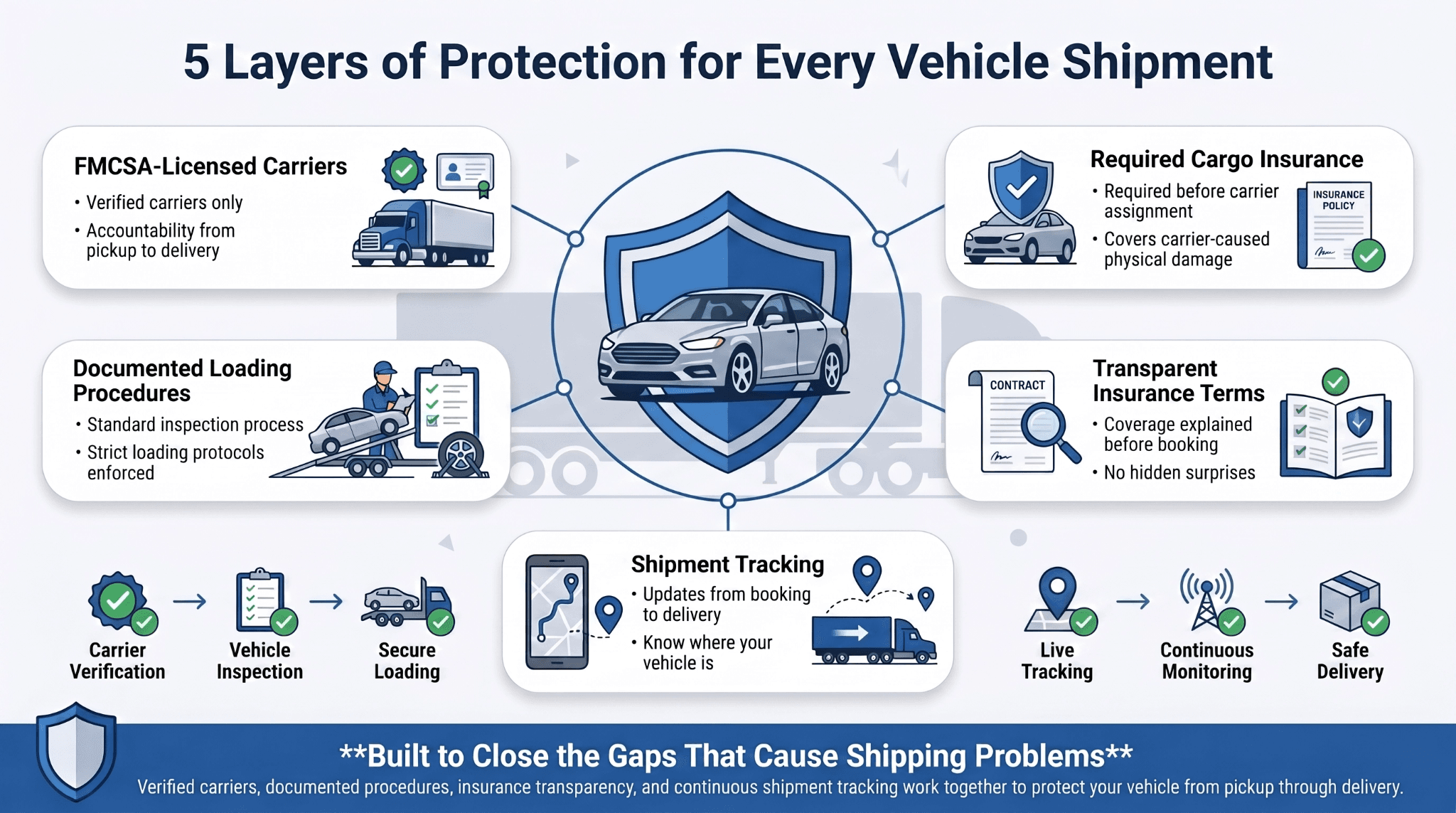
Every carrier in the Safeeds network has to meet a few core requirements before they're eligible to haul a vehicle for us. Together, these standards close the gaps that cause the most serious problems in this industry:
FMCSA-licensed carriers only, closing the gap that lets unverified operators ship vehicles without accountability.
Required cargo insurance, covering physical damage caused by carrier negligence before a carrier is ever assigned a shipment.
Documented loading procedures, so every vehicle is secured and inspected the same way, every time.
Transparent insurance terms, disclosed before booking rather than discovered after a claim. Standard cargo insurance doesn't cover everything, and most shippers don't find out what's excluded until it's too late. Our breakdown of what car shipping insurance won't cover walks through those exclusions before you book.
Ongoing shipment tracking, with updates from booking through delivery, rather than leaving customers to guess where their vehicle is or when a carrier plans to arrive.
Between carrier vetting, documented procedures, and transparent terms, Safeeds is built around closing the exact gaps that make people ask whether shipping a car is safe in the first place.
What Do People Want to Know Before Trusting a Car Shipping Company?
Before booking, most people want straight answers about what happens if something goes wrong.
What happens if my car is damaged during shipping?
Document the damage on the Bill of Lading before signing, take photos immediately, and contact the carrier the same day. Cargo insurance typically covers damage caused by carrier negligence.
Is insurance automatically included when I book a shipment?
Yes. Every licensed carrier is required to carry cargo insurance, though coverage limits and exclusions vary, which is why reviewing the policy before pickup matters.
How can I confirm a carrier is actually licensed?
Ask for their USDOT number and verify it through the FMCSA's public database before you pay a deposit or sign anything.
What percentage of shipped vehicles actually get damaged?
Industry data indicates that more than 5% of vehicles shipped by open carrier report any damage, and most of that is minor and cosmetic.
What recourse do I have if a carrier misses the delivery window?
Reputable brokers stay in contact throughout the shipment and will update you proactively. Ask about this policy before booking, not after a delay happens.
Should I choose enclosed transport for a safer shipment?
Enclosed transport adds weather and debris protection, which matters most for classic, luxury, or high-value vehicles, but open transport remains safe and standard for the vast majority of shipments.
Is Shipping a Car Safe in 2026? Shipping With Confidence
The honest answer is that shipping a car is safe in the overwhelming majority of cases, and the risks that do exist are well understood and largely preventable. Damage is uncommon, delays are usually short and explainable, and both issues become far less likely once you're working with a licensed, insured carrier that can clearly explain how vehicles are secured in transit and what happens if something goes wrong.
Knowing what to check before booking, from carrier licensing to insurance exclusions, puts the decision back in your hands rather than leaving it to chance. The four risks covered here- damage, delays, unvetted carriers, and insurance gaps- all shrink considerably once you're working with a company that treats vetting and transparency as standard practice rather than an afterthought. See real-time carrier options and lock in a quote for your next shipment.