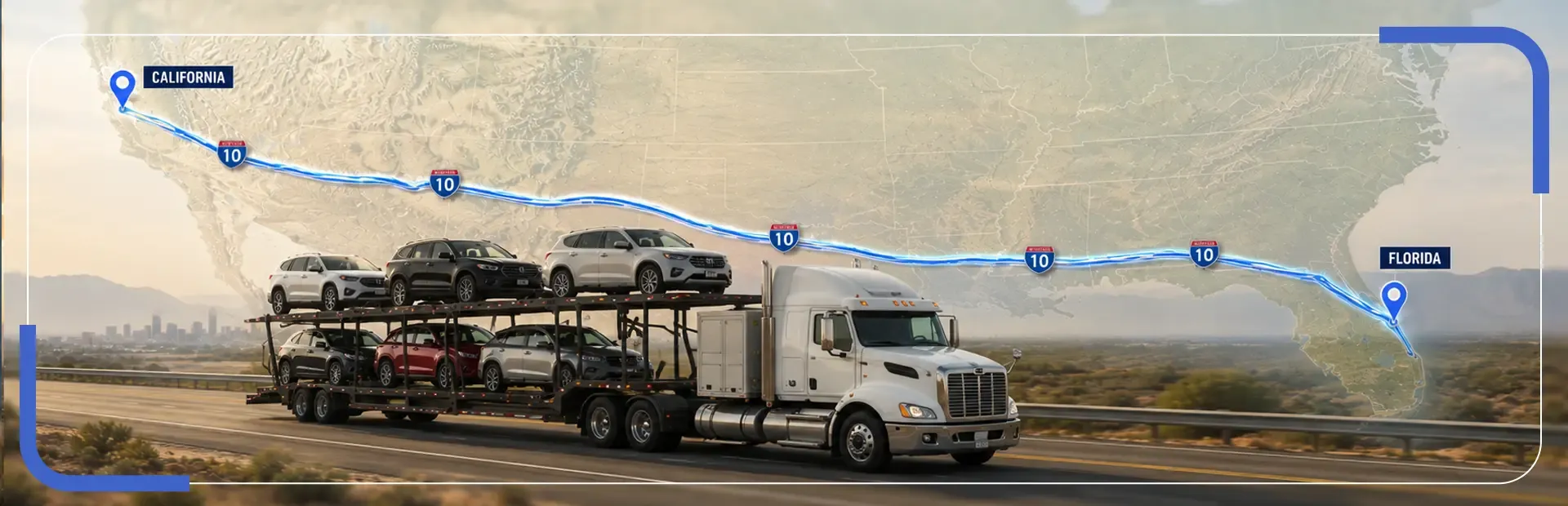
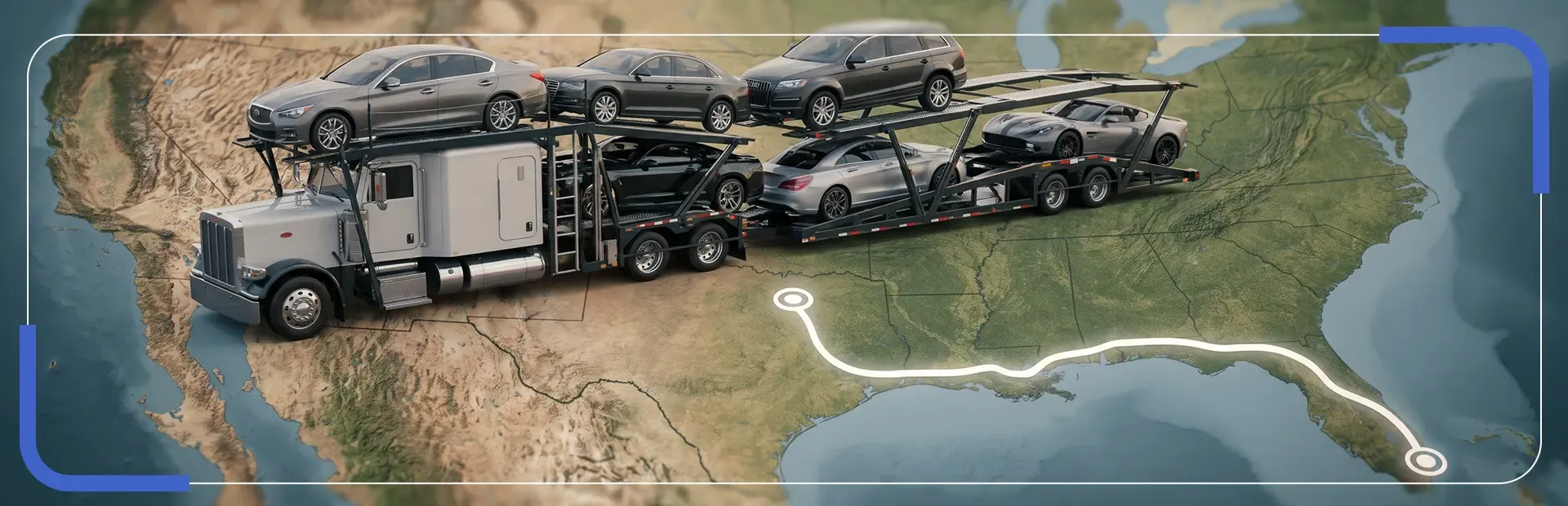
Texas-to-Florida car shipping typically costs between $700 and $1,300 on open transport, or $1,200 to $2,200 enclosed, with transit taking 2 to 6 days depending on your pickup city and destination. Distance, vehicle size, and seasonal demand are the biggest price drivers on this corridor.
Moving a vehicle between two of the country's most active shipping states should be simple, but the price and timeline you're quoted can vary widely depending on where you start and when you book. This guide breaks down real cost ranges, honest transit windows, and what to expect on pickup and delivery day. Request a free quote with Safeeds Transport and see your locked-in price in under 30 seconds.
How Much Does Texas to Florida Car Shipping Cost?
Texas-to-Florida auto transport costs depend heavily on your exact pickup and delivery cities, since this route spans roughly 900 to 1,500 miles depending on which two cities are involved. Unlike a true coast-to-coast shipment, this is considered a medium-distance route, which keeps pricing more moderate than routes originating from California.
Here's a realistic breakdown for a standard sedan:
Transport Type | Typical Cost Range | Best For |
Open Transport | $700 – $1,300 | Everyday vehicles, most shipments |
Enclosed Transport | $1,200 – $2,200 | Luxury, classic, or exotic vehicles |
Two habits consistently help keep quotes toward the lower end of these ranges. First, book 7 to 14 days ahead of your target pickup date, since carriers plan multi-stop routes in advance and last-minute requests often carry a premium. Second, match your transport type to your actual vehicle. According to Move.org's national car shipping data, open transport remains the more economical option for the large majority of shippers, with enclosed transport reserved for vehicles that genuinely need the extra protection.
What Factors Push the Price Up or Down?
A handful of specific variables explain most of the difference between a $750 quote and a $1,300 quote for the same Texas to Florida car shipping route.
Vehicle size and weight: SUVs, trucks, and vans take up more trailer space and add fuel cost, typically pushing the price several hundred dollars above a standard sedan.
Running condition: Non-operable vehicles require special loading equipment, which usually adds $150 to $300 to the total.
Pickup and delivery location: Addresses near major hubs like Houston or Miami are easier for carriers to reach efficiently, while remote addresses can add cost due to routing complexity.
Proximity to shipping corridors: The closer your pickup and delivery points sit to established interstate routes, the more competitively carriers can price the job.
Understanding these factors before requesting a quote helps explain why two people who ship a car from Texas to Florida on what looks like "the same route" can still receive noticeably different prices.
How Many Days Does It Take to Ship a Car from Texas to Florida?
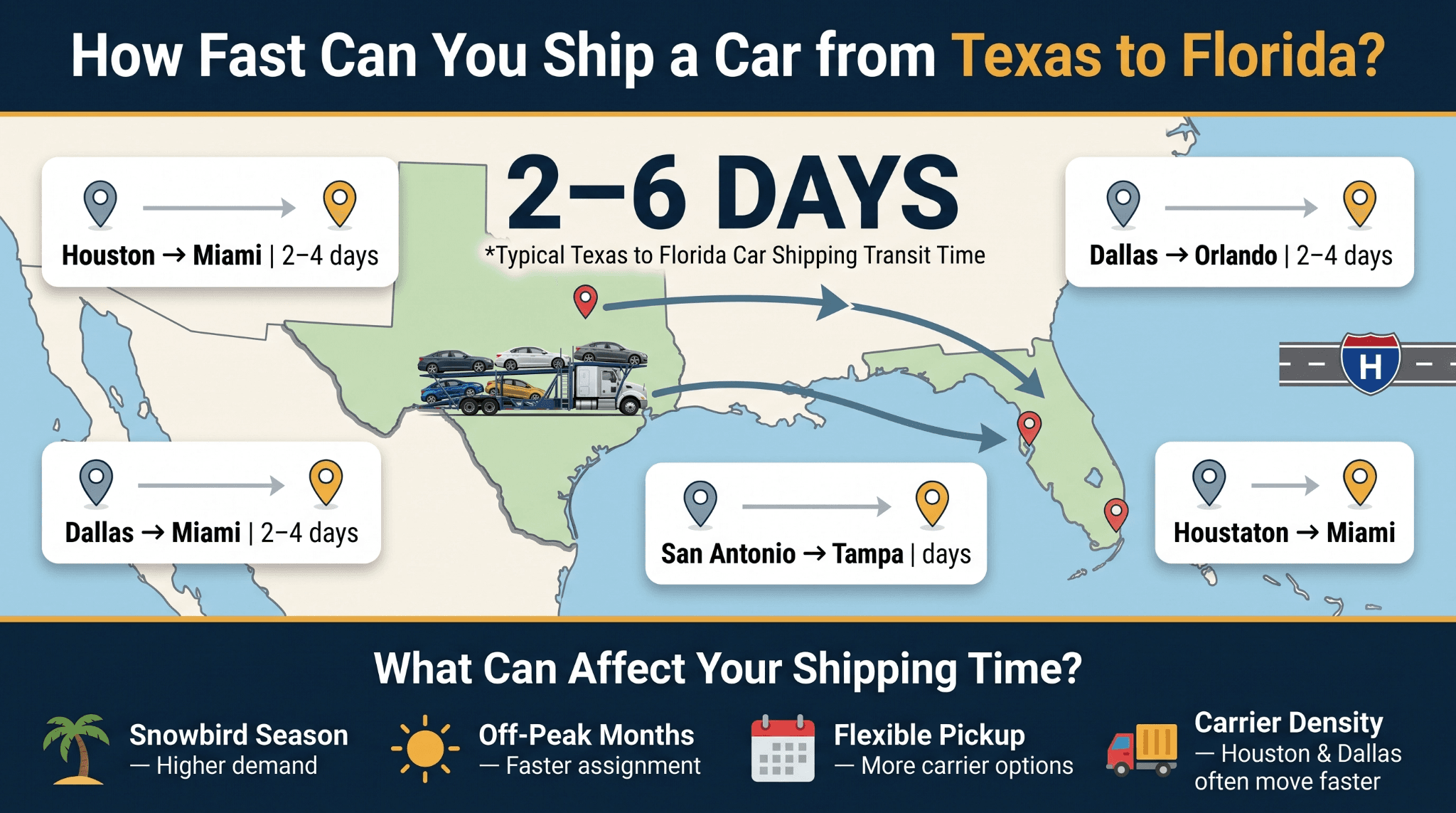
TX to FL car shipping days typically range from 2 to 6 days, depending on your specific pickup and delivery cities. This is considerably shorter than a coast-to-coast shipment, since Texas and Florida sit within the same general region of the country.
Seasonal demand still plays a meaningful role in both timing and Texas to Florida auto transport cost. Here's what to keep in mind:
Typical transit window: Most shipments on this route take 2 to 6 days, depending on the exact cities involved.
Snowbird season demand: Florida remains one of the most popular snowbird destinations in the country, and demand for capacity rises noticeably from late fall through early spring.
Off-peak advantage: Shipping during the late spring or summer months often means faster carrier assignment and more competitive pricing, since demand eases outside snowbird season.
Flexibility pays off: Readers with flexible pickup dates typically see both shorter wait times and lower quotes.
Which Pickup Cities Ship Fastest?
Carrier density varies by city, and that directly affects how quickly your vehicle gets matched with a driver on this route.
Pickup City (TX) | Delivery City (FL) | Typical Transit Time |
Houston | Miami | 2–4 days |
Dallas | Miami | 2–4 days |
Dallas | Orlando | 2–4 days |
San Antonio | Tampa | 3–5 days |
Houston and Dallas tend to have the highest carrier volume on this corridor, given the sheer number of vehicles moving in and out of these metro areas daily. San Antonio shipments can occasionally take an extra day or two to find capacity, since fewer carriers regularly service that specific origin point compared to Houston or Dallas.
What Should You Know Before Pickup and Delivery Day?
A little preparation on your end goes a long way toward a smooth handoff. Most of what carriers ask for is straightforward, but it's easy to overlook if this is your first time shipping a vehicle.
How Should You Prepare Your Car for Pickup?
Before your scheduled pickup window, take care of the following:
Clean the vehicle, inside and out. A clean car makes it far easier for both you and the driver to spot and document existing scratches, dents, or wear during inspection.
Remove personal items. Most carriers do not insure personal belongings left inside the vehicle, and extra weight can affect loading.
Photograph existing damage from multiple angles and keep timestamped copies for your own records.
Leave about a quarter tank of gas. This is enough for loading and unloading without adding unnecessary weight to the trailer.

What Happens During the Inspection and Handoff?
The handoff follows the same basic steps at both ends of the trip. Here's what to expect:
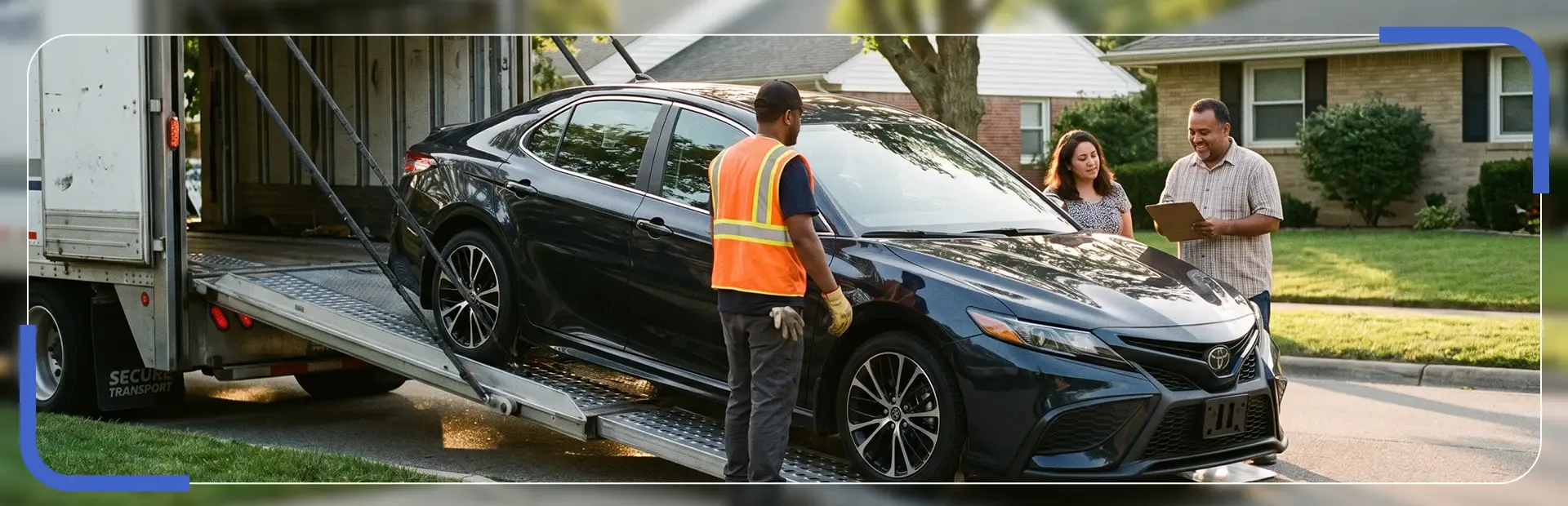
Joint inspection at pickup: The driver documents the vehicle's condition with you on a bill of lading before loading it.
Sign before loading: You'll sign the bill of lading, and the driver will give you an estimated delivery window.
Matching copy at delivery: You'll get the same bill of lading in Florida to compare against the vehicle's condition on arrival.
Final inspection: You or an authorized adult reviews the vehicle against the bill of lading before signing off and paying.
Typical time on-site: The full handoff usually takes fifteen to twenty minutes.
What Do People Usually Ask Before Booking This Route?
Before committing to a carrier, most people researching this route have a handful of recurring questions. Here are the ones that come up most often, along with straightforward answers.
Is open or enclosed transport better for this route?
For most standard vehicles, open transport is the right call, even on a route with as much carrier traffic as Texas to Florida. It's the same method used to deliver new cars to dealerships nationwide, and it's fully covered by carrier cargo insurance. Enclosed transport is worth the extra cost mainly for classic, luxury, or exotic vehicles.
Do I need to be home for pickup or delivery?
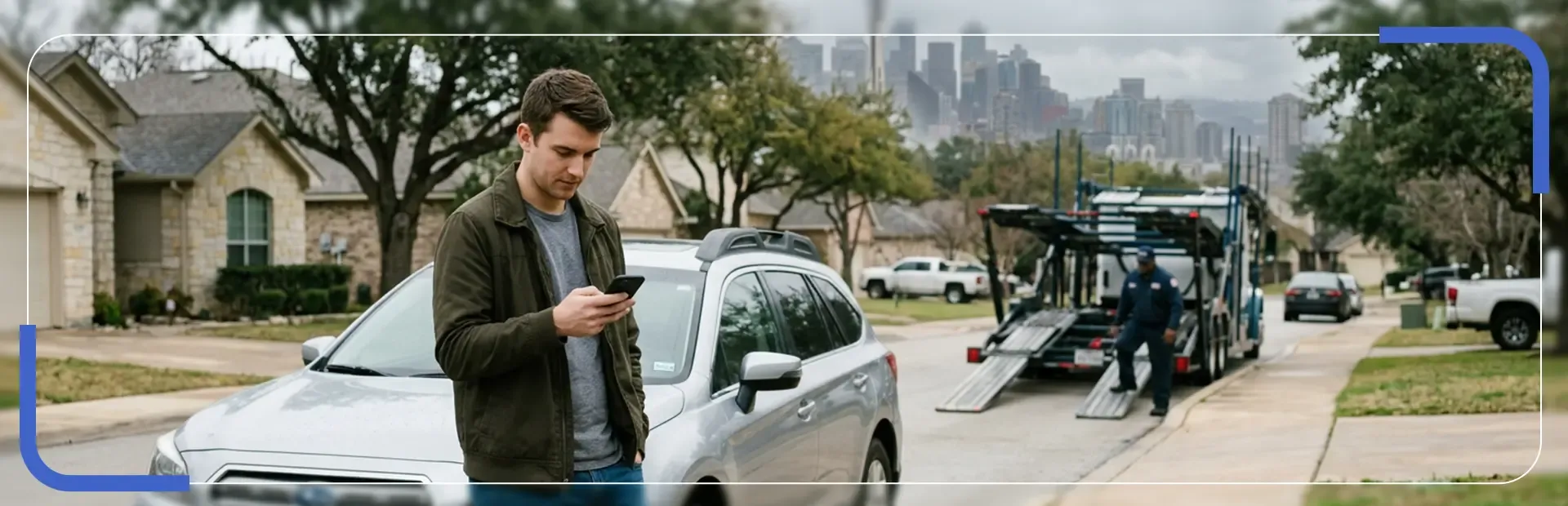
No. Any authorized adult, such as a family member, neighbor, or property manager, can stand in for you at either end, as long as they're prepared to complete the inspection and sign the bill of lading on your behalf.
Can I pack personal items inside the car during shipping?
It's best to avoid this. Most carrier insurance policies don't cover personal belongings, and added weight can occasionally affect how a vehicle is positioned on the trailer. If you must pack a few items, keep them below the window line and under 100 pounds.
How far in advance should I book?
Seven to fourteen days ahead of your target pickup date is the sweet spot. This gives carriers enough lead time to plan your pickup into an existing route, which often works in your favor on price.
How is my vehicle protected during the trip?
Every shipment with a licensed carrier is covered by cargo insurance from pickup to delivery. Before booking with any company, it's worth confirming their FMCSA operating authority directly. As explained in this FMCSA broker licensing guide, a legitimate broker must file a $75,000 financial security bond, which is a useful baseline to check when comparing providers.
Start Your Texas to Florida Car Shipping Quote
Shipping a vehicle from Texas to Florida is a predictable process once you understand the moving parts: expect $700 to $1,300 for open transport, a realistic 2 to 6 day transit window, and a straightforward inspection process at both ends. Booking early, choosing the right transport type for your vehicle, and preparing your car properly for pickup are the three habits that consistently lead to a smoother, more affordably priced shipment.
Safeeds Transport connects you with licensed, insured carriers nationwide, backed by a 7-day price lock and no upfront payment required. Get your free quote today and see your exact price for the Texas to Florida route in under 30 seconds.