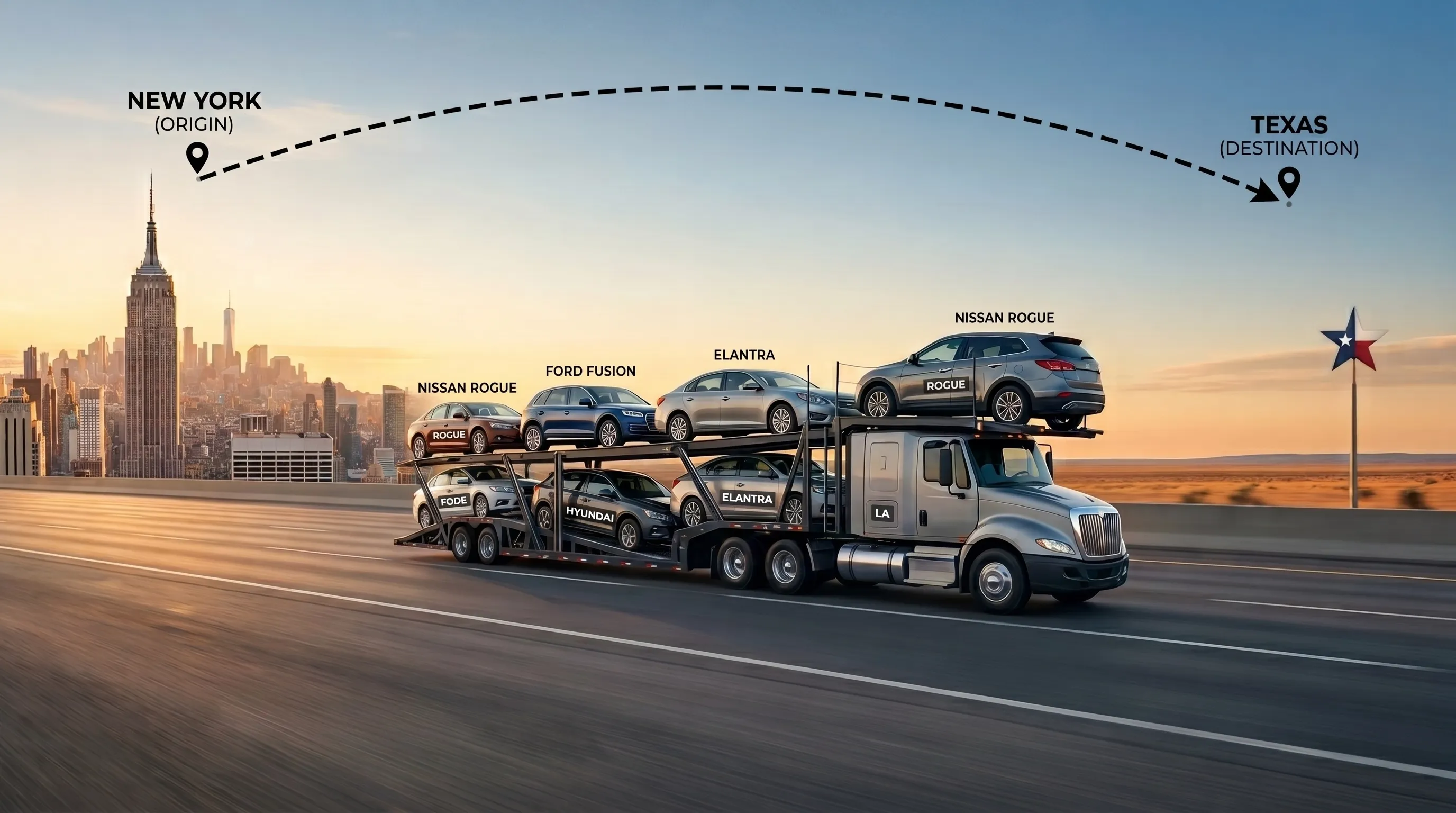
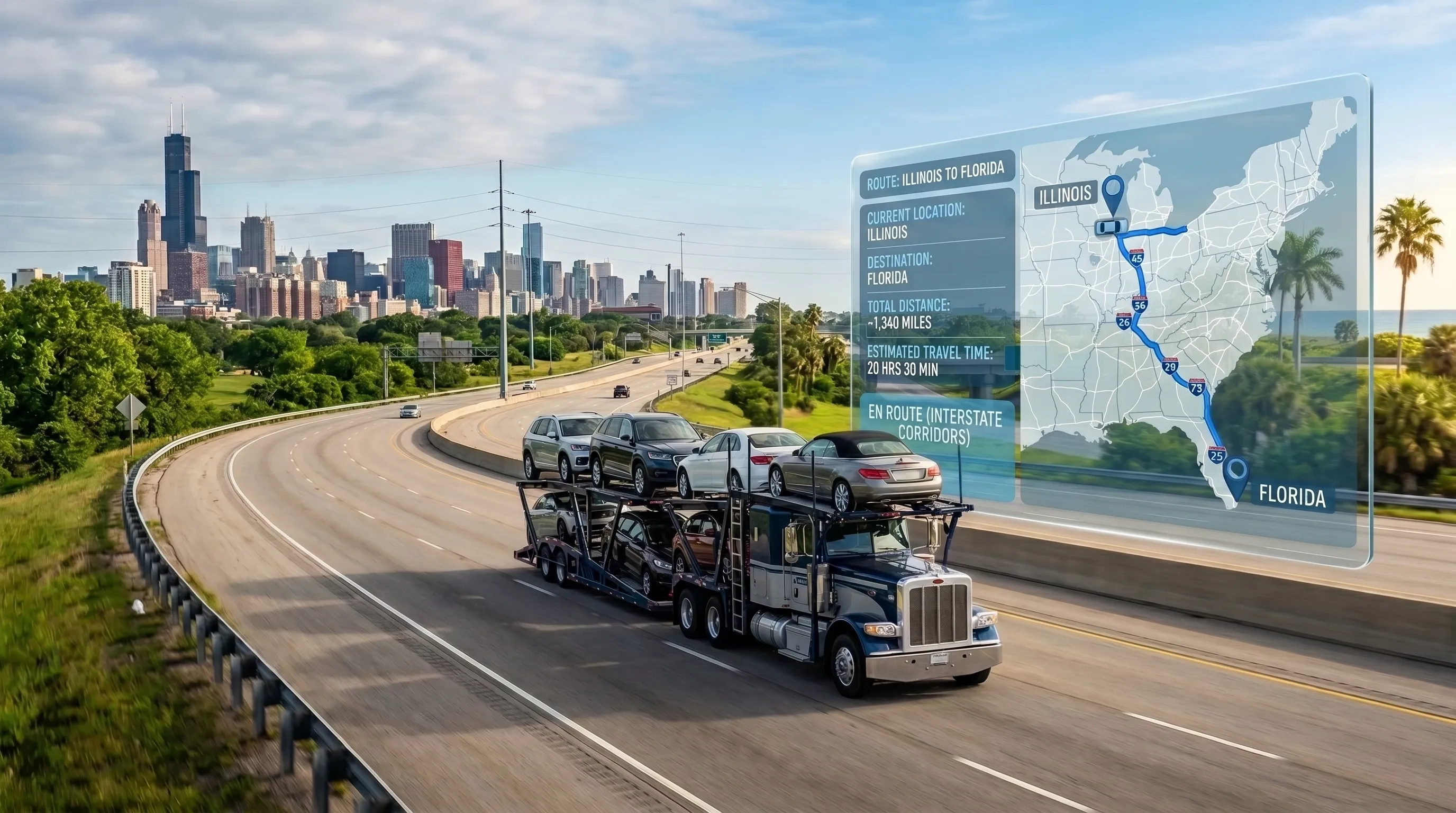
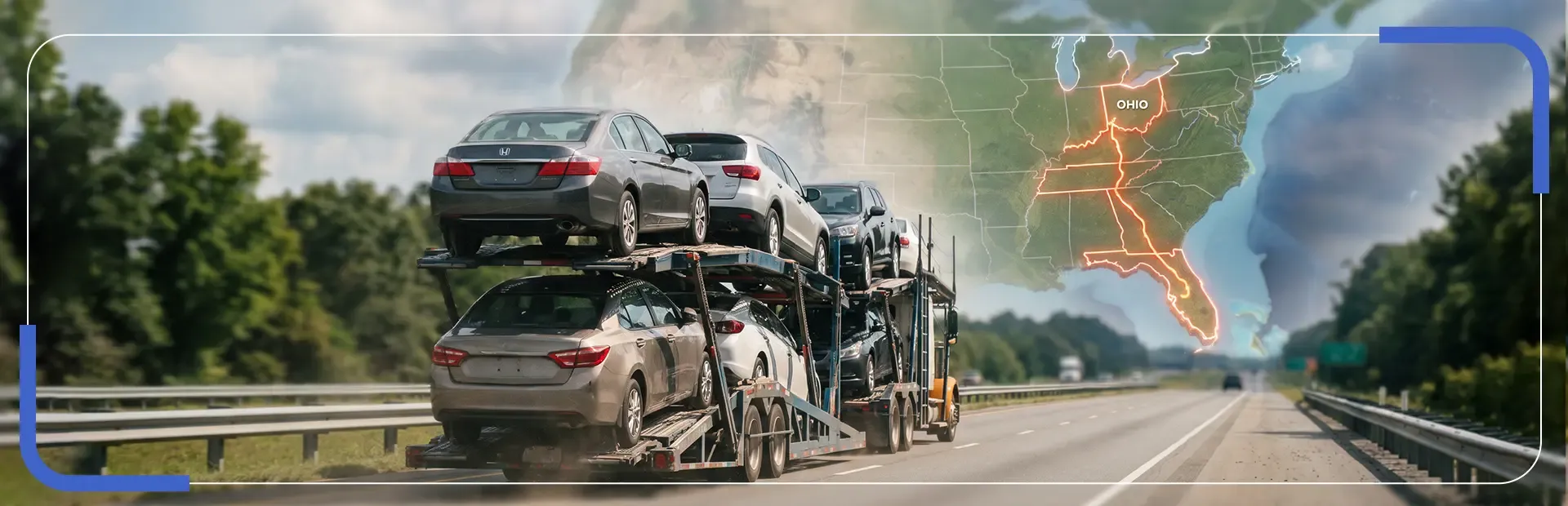
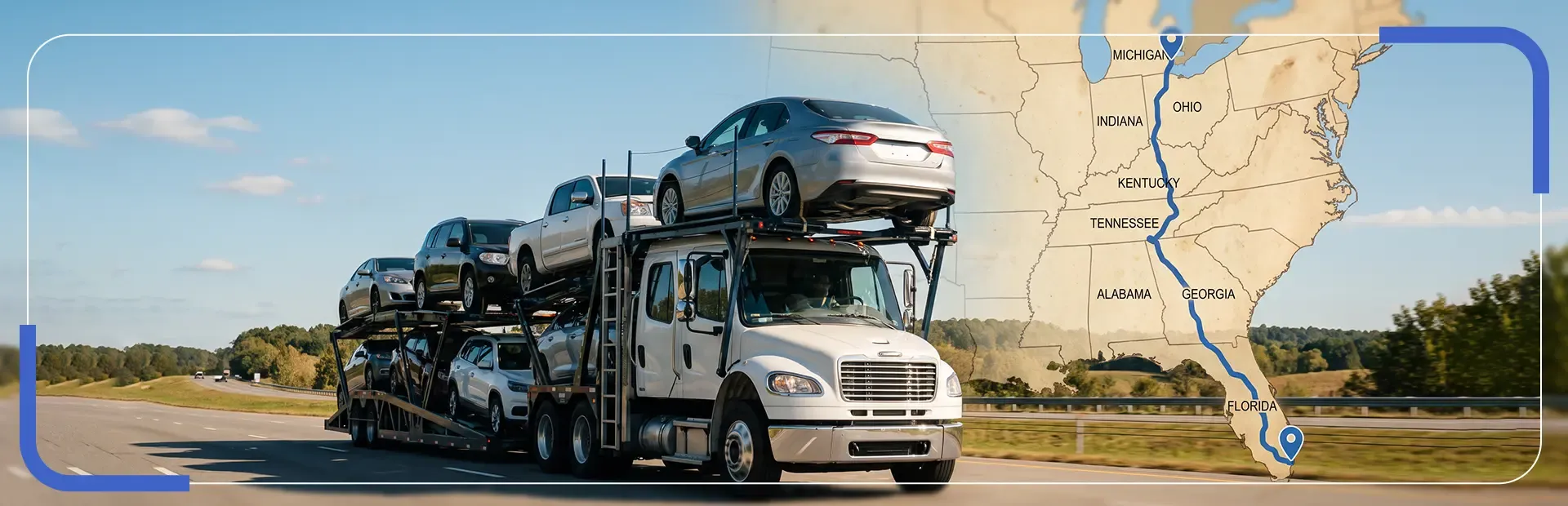
Car shipping costs between $550 and $1,900 in 2026, or roughly $0.58 to $1.90 per mile depending on distance. Short routes under 500 miles carry the highest per-mile rate; cross-country routes carry the lowest. Distance, vehicle size, transport type, season, and route popularity account for almost all of the variation.
The sections below break down car shipping cost 2026 factor by factor, so your quote makes sense before you commit to a carrier. Get your free, price-locked quote today and see exactly what your shipment costs.
What Are The Factors Affecting Car Shipping Costs in 2026?
Car shipping cost 2026 breaks down into eight variables: distance, route demand, vehicle size, transport type, timing flexibility, fuel surcharge, pickup and delivery location, and season. No two quotes are priced the same because no two shipments share the same combination of these factors.
Factors affecting car shipping cost 2026 fall into two groups, and knowing which one applies to your shipment is the fastest way to bring your quote down without cutting corners on service:
Fixed factors you cannot change: distance and route demand
Flexible factors you can control: timing flexibility and transport type
1. Distance
Distance is the starting point of every quote. Longer routes cost more in absolute terms but less per mile. A 300-mile shipment might cost $1.80 per mile. A 2,000-mile cross-country shipment typically runs $0.50–$0.75 per mile. The per-mile rate drops as distance increases because carriers spread fixed costs across more miles.
2. Route Demand
High-demand corridors, such as Los Angeles to Phoenix, New York to Florida, and Texas to California, have more carriers running them regularly, which keeps prices competitive. Low-demand or one-directional routes cost more. Carriers need to account for the return leg, often driven empty.
3. Vehicle Size and Weight
Larger and heavier vehicles take up more space on a carrier and reduce the number of other vehicles that can be loaded. A compact sedan costs less to ship than a full-size pickup truck or SUV. Oversized vehicles, large trucks, vans, and modified vehicles may require specialized equipment and carry additional surcharges.
4. Transport Type
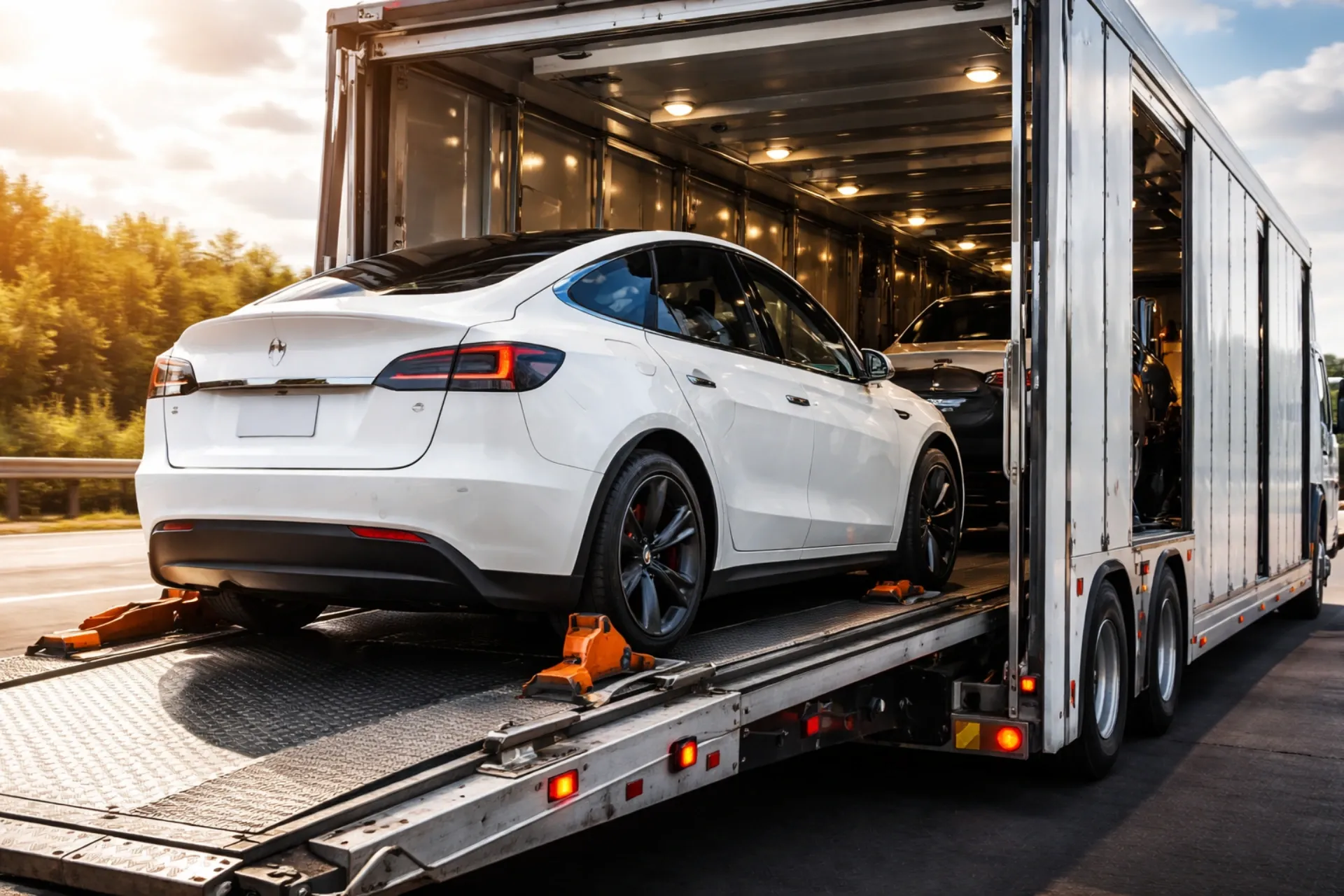
Open transport is the industry standard and the least expensive option. Enclosed transport, which protects the vehicle inside a covered trailer, costs 30–80% more than open on the same route. The premium reflects lower vehicle capacity per load and higher equipment and insurance costs for the carrier, one of the widest swings in car transport cost between any two shipping methods.
5. Timing Flexibility
Customers who can offer a 5–7 day pickup window consistently receive better pricing than those who require a fixed date. Flexible timing allows brokers to match your vehicle with a carrier already running that route, a meaningful cost difference on most routes.
6. Fuel Surcharge
Fuel is one of the highest variable costs in auto transport, and carriers pass it through directly. See the dedicated section below for how fuel surcharges work in 2026.
7. Pickup and Delivery Location
Urban addresses are cheaper to service than rural ones. See the dedicated section below for the specific cost mechanics of the delivery location.
8. Season
Demand for auto transport is not uniform across the year. Peak seasons push prices up; slow seasons bring them down. See the dedicated section below for the specific seasonal patterns affecting 2026 rates.
What Is the Average Cost Per Mile?
Per-mile rates drop as distance increases, since carriers spread fixed costs like fuel and driver time across more miles. This is the single biggest reason a 300-mile move can feel disproportionately expensive compared to a 2,500-mile one.
Distance Band | Typical Rate Per Mile | Example Route | Estimated Total |
Under 500 miles | $1.50-$2.00 | New York to Boston (215 mi) | $320-$430 |
500-1,000 miles | $0.90-$1.40 | Atlanta to Chicago (720 mi) | $650-$1,010 |
1,000-1,500 miles | $0.65-$0.95 | Dallas to Denver (1,070 mi) | $695-$1,015 |
1,500-2,000 miles | $0.55-$0.75 | Chicago to Los Angeles (1,740 mi) | $955-$1,305 |
2,000+ miles | $0.40-$0.65 | New York to Los Angeles (2,790 mi) | $1,115-$1,815 |
Why the Rate Isn't the Whole Story

A car shipping cost calculator built on distance alone will miss fuel surcharges and location fees, two of the biggest swing factors in any quote. Fuel surcharges typically add 8-25% to the base rate depending on current diesel prices, and this is one of the car shipping cost factors fuel surcharge shoppers most often overlook, catching customers off guard when it is added after the fact instead of built into the upfront number. Published car shipping cost rates rarely spell this out clearly, which is exactly why it's worth asking directly before you book.
Rural or residential delivery adds another $75-$300 on top, since carriers running fixed corridors have to deviate off-route to reach addresses outside major metro areas. Whether you are comparing a car shipping cost near me search or getting a quote for a longer route, always ask whether fuel and location fees are included in the total or billed separately.
How Does Vehicle Size Change the Price?
Larger and heavier vehicles take up more space on a carrier, which reduces how many other vehicles fit on the same load. This directly affects the price, since carriers price partly on space, not just weight.
A compact sedan sits at the bottom of the pricing scale on any given route.
A full-size pickup truck or SUV typically adds $75-$200 over sedan pricing on the same corridor.
Oversized, modified, or lifted vehicles may need specialized equipment, adding further surcharges.
Sedans vs. Trucks vs. SUVs
Weight matters, but so does length. Extended-cab and crew-cab trucks take up more linear space on a carrier deck than a sedan of similar weight, which is why two vehicles with a similar curb weight can still carry different price tags. If you are shipping anything larger than a standard sedan, confirm the exact make and model with your quote request so the estimate reflects the real vehicle, not a generic category.
Enclosed transport adds a further 30-80% over open transport regardless of vehicle size, since it protects the car from weather and road debris inside a covered trailer. This is the standard choice for exotic, classic, and high-value vehicles where an open carrier's exposure is not an acceptable risk.
Why Does the Season Affect What You Pay?
Demand for auto transport is not the same every month, and carriers price accordingly. Two seasonal peaks push prices up:
Snowbird season (October-November and March-May): retirees relocating between northern and southern states drive heavy volume on Midwest-to-Florida and Northeast-to-Arizona corridors, pushing prices up 15-30%.
Summer moves (May-August): students and new hires relocating create a nationwide demand surge, especially on cross-country routes and near university cities.
January through March, outside snowbird routes, is consistently the slowest period in the industry. Carrier capacity outpaces demand, and prices can drop 10-20% below peak-season rates on the same corridor. If your schedule allows it, shipping during this window is one of the most reliable ways to find a cheap car shipping cost without sacrificing service quality.
How Do You Get an Accurate Quote?
An accurate car shipping cost quote depends less on which company you call and more on how much detail you give upfront. Vague requests get vague estimates; specific requests get specific numbers, and the best car shipping cost quotes are always the ones built from real vehicle and route details rather than a generic online form.
Give the exact make, model, and running condition of the vehicle.
State your ideal pickup window, not just a single fixed date.
Confirm whether the number quoted is the full total or a base rate with fees added later.
Ask directly whether the price is locked for a set number of days.
Comparing Quotes the Right Way
Whether you are researching car shipping cost Hartford, CT for a specific move or comparing national averages, the same checklist applies everywhere in the country. A car shipping cost guide is only useful if the numbers inside it match how your specific route, vehicle, and timing actually price out, so treat published ranges as a starting point, not a guarantee.
Before booking with any car shipping cost company, check recent car shipping cost reviews for patterns around hidden fees or price changes after booking, not just star ratings. A reliable car shipping cost service will confirm the total in writing and hold that number for a defined period rather than adjusting it once your vehicle is already scheduled. Comparing two or three car shipping cost companies side by side, with the same vehicle details given to each, is the most reliable way to catch a quote that is priced unusually high or unusually low for the route.
Safeeds Transport locks every quote for 7 days with no fees added after booking and no deposit required until a carrier is confirmed. Car shipping cost 2026 will keep shifting with fuel prices and seasonal demand, but a locked, itemized quote removes that uncertainty from your side of the transaction.
Common Queries About Car Shipping Cost
Pricing questions come up on nearly every call we take, so here are direct answers to the ones asked most often.
What is the average cost to ship a car in 2026?
Most standard sedans cost between $550 and $1,900 depending on distance, season, and transport type. Cross-country routes cost less per mile than short regional ones, even though the total is higher.
Why is my quote higher than the average?
Your quote may reflect a rural delivery address, a fixed pickup date, enclosed transport, or a heavier vehicle than a standard sedan. Any one of these can push a price above the typical range for your distance band.
Does an SUV cost more to ship than a sedan?
Yes, typically $75-$200 more on the same route. SUVs and trucks take up more space on the carrier, which reduces how many other vehicles fit on the same load.
Is it cheaper to ship a car in winter?
January through March is generally the slowest period in the industry, outside snowbird routes, with prices running 10-20% below peak season. Snowbird corridors are the exception and stay elevated through this window.
Can a quote change after I book?
It should not, if the broker offers a price lock. Safeeds Transport locks your total for 7 days with no fees added after booking, so the number you agree to is the number you pay.
Get an Accurate Car Shipping Quote from Safeeds
Price in auto transport comes down to a small set of variables working together: distance, vehicle size, transport type, timing, and season. Distance and demand are fixed once you know your route, but timing flexibility, transport type, and the accuracy of the details you provide are within your control, and they are what separate an average quote from a well-priced one. Request your free, price-locked quote today and know the exact cost of your shipment before you commit.