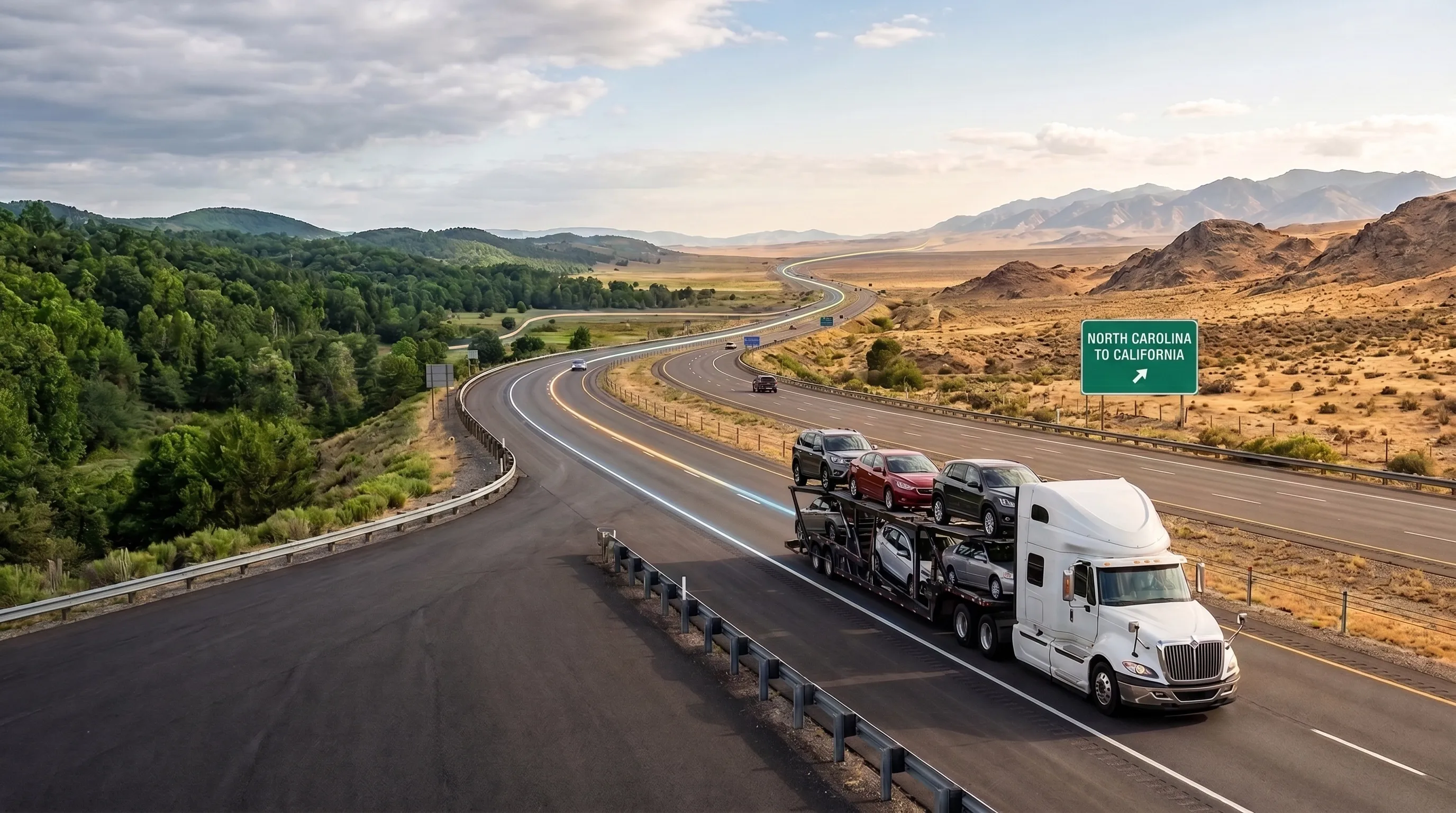
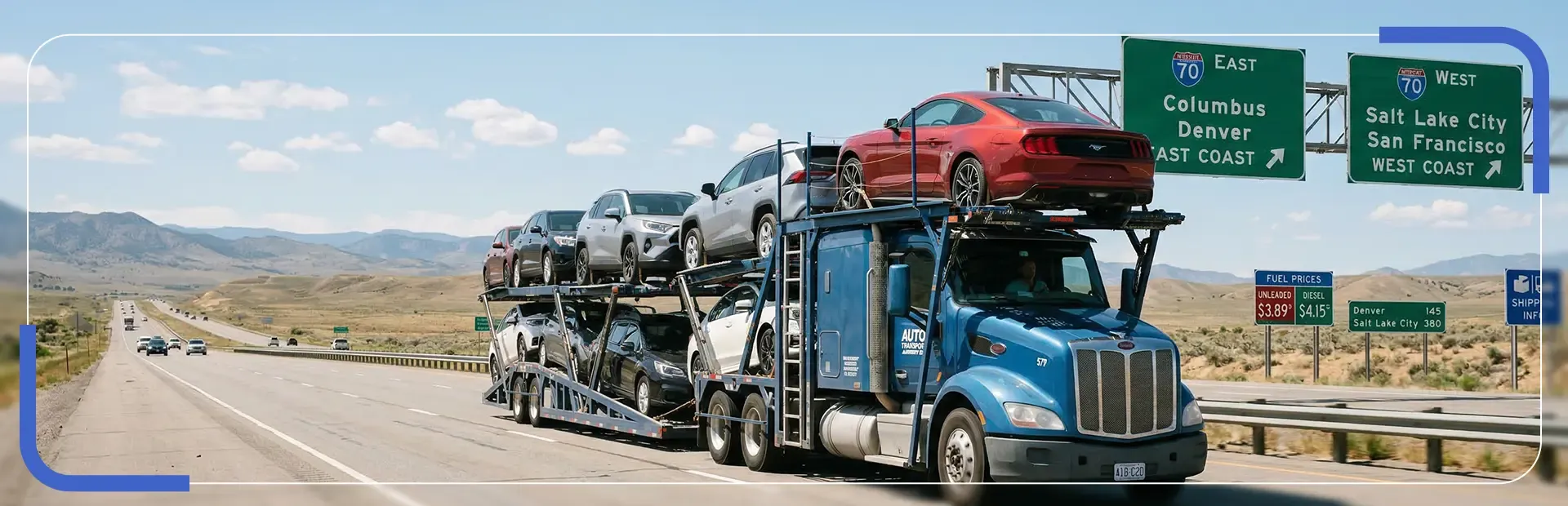
Auto shipping means hiring a carrier to move your vehicle on a truck instead of driving it yourself. Most auto shipping quotes fall between $600 and $1,800, depending on distance, vehicle size, and season. The full process, from quote to delivery, usually takes one to two weeks.
Whether you're relocating, buying a car from an out-of-state seller, or sending one to family, the same questions come up: what will it cost, how long will it take, and how do you know the company is legitimate?
This guide covers real costs, transport options from budget-friendly open carriers to fully enclosed trailers, what makes a company trustworthy, and what happens at each step. By the end, you'll know exactly what to ask before you book.
Want real numbers instead of averages? Request a free auto shipping quote from Safeeds Transport and see what your route actually costs.
Key Takeaways
Auto shipping costs range from $400 to $1,800, depending mostly on distance. Short hauls cost more per mile, while cross-country routes average $1,000 to $1,800.
Open transport is the standard, budget-friendly choice for daily drivers. Enclosed transport costs 30 to 60 percent more and suits classic, luxury, or show cars.
Always verify a company's USDOT number through the FMCSA's SAFER system before booking, and check its complaint history on the Better Business Bureau.
A trustworthy auto shipping quote stays consistent from booking to pickup. Prices that jump right before pickup are a common warning sign.
Standard carrier insurance covers transit damage, but not pre-existing damage or personal items left in the vehicle, so document everything on the inspection report.
Most shipments take one to two weeks door to door. Booking one to three weeks ahead secures better pricing and availability.
Safeeds Transport locks your auto shipping quote for seven days after booking, with no upfront payment required beyond a card verification hold.
What Auto Shipping Actually Involves
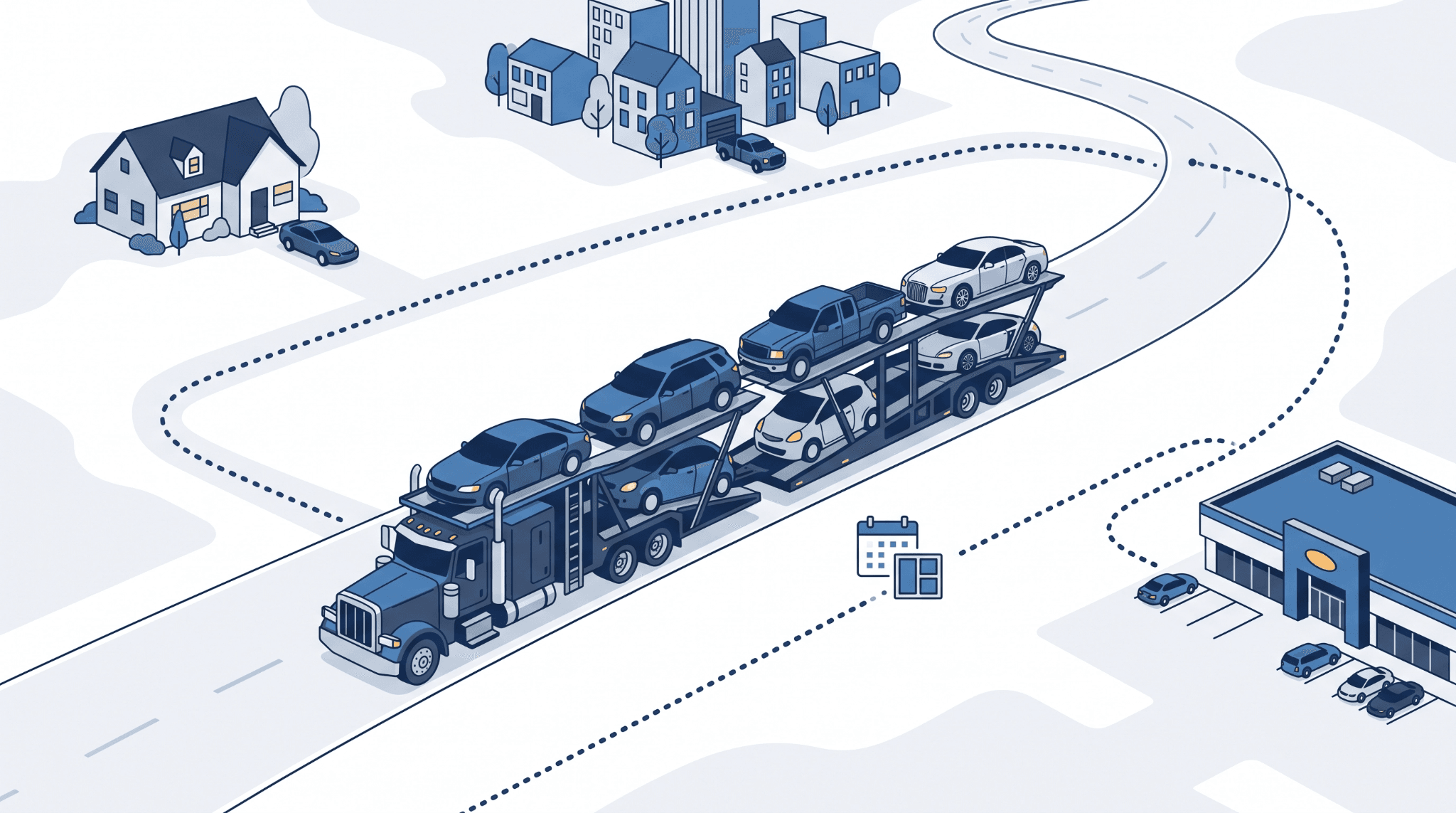
Auto shipping is the process of transporting a vehicle on a carrier truck, either door-to-door or through a terminal, instead of driving it yourself.
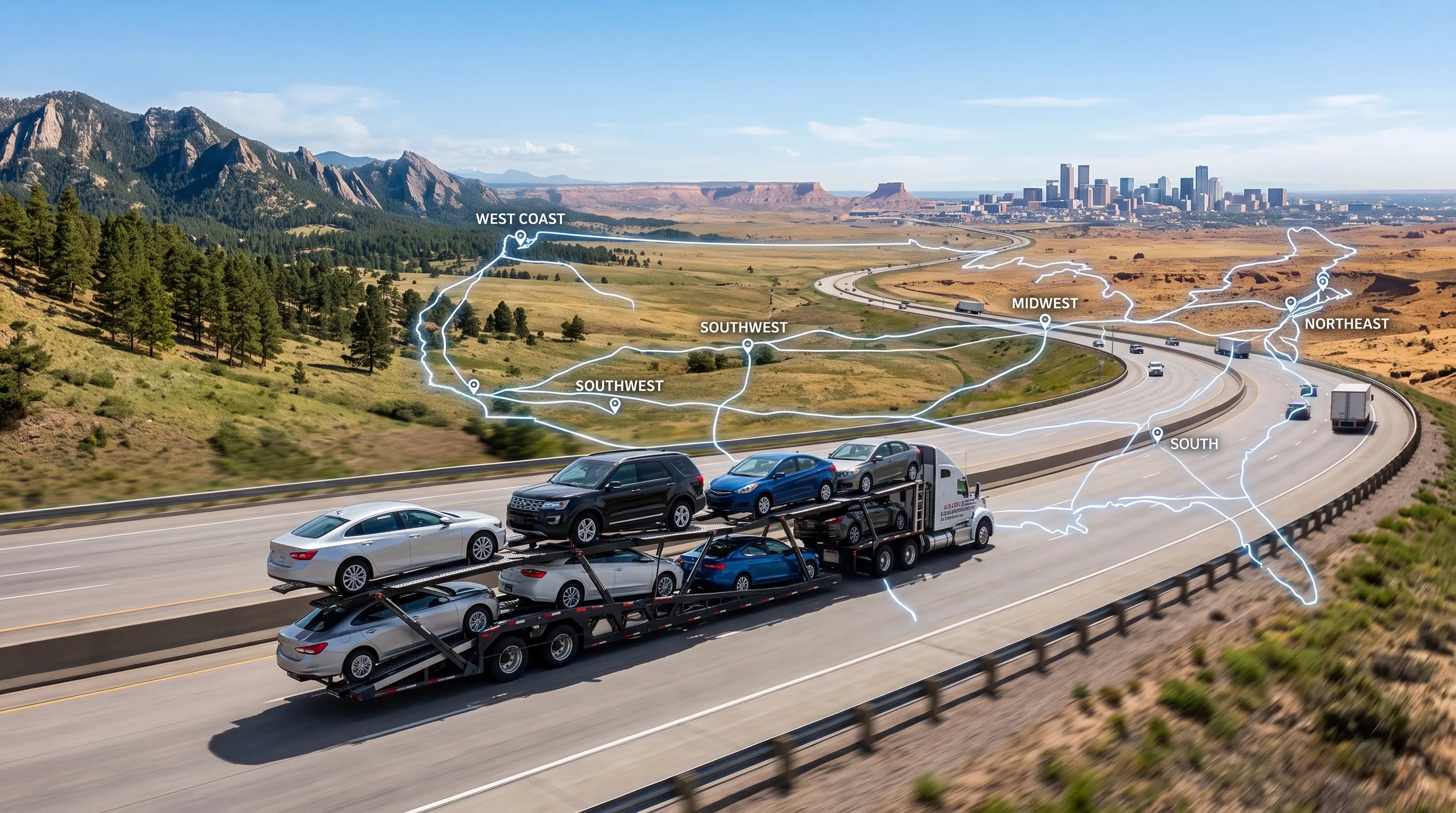
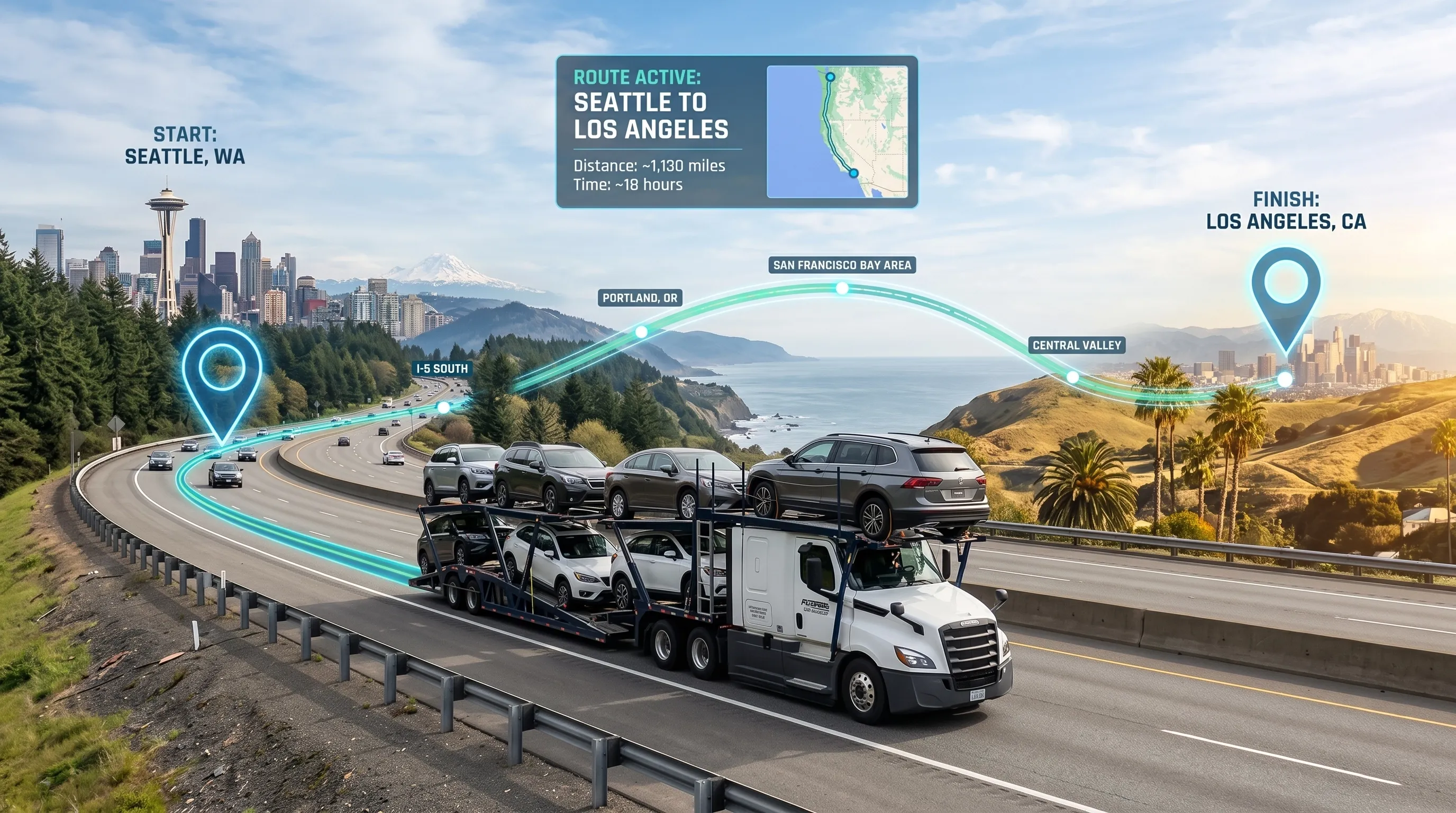
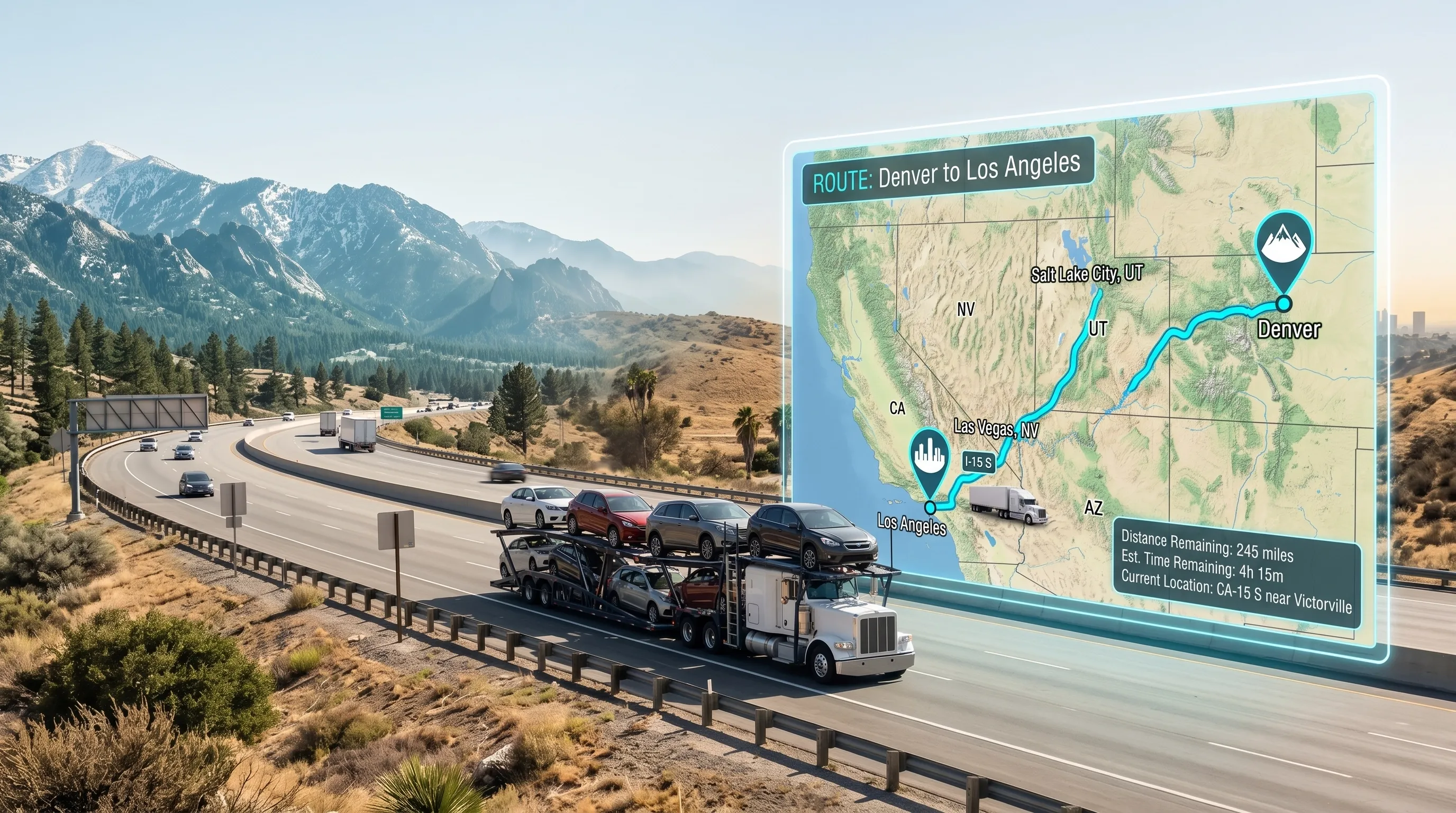
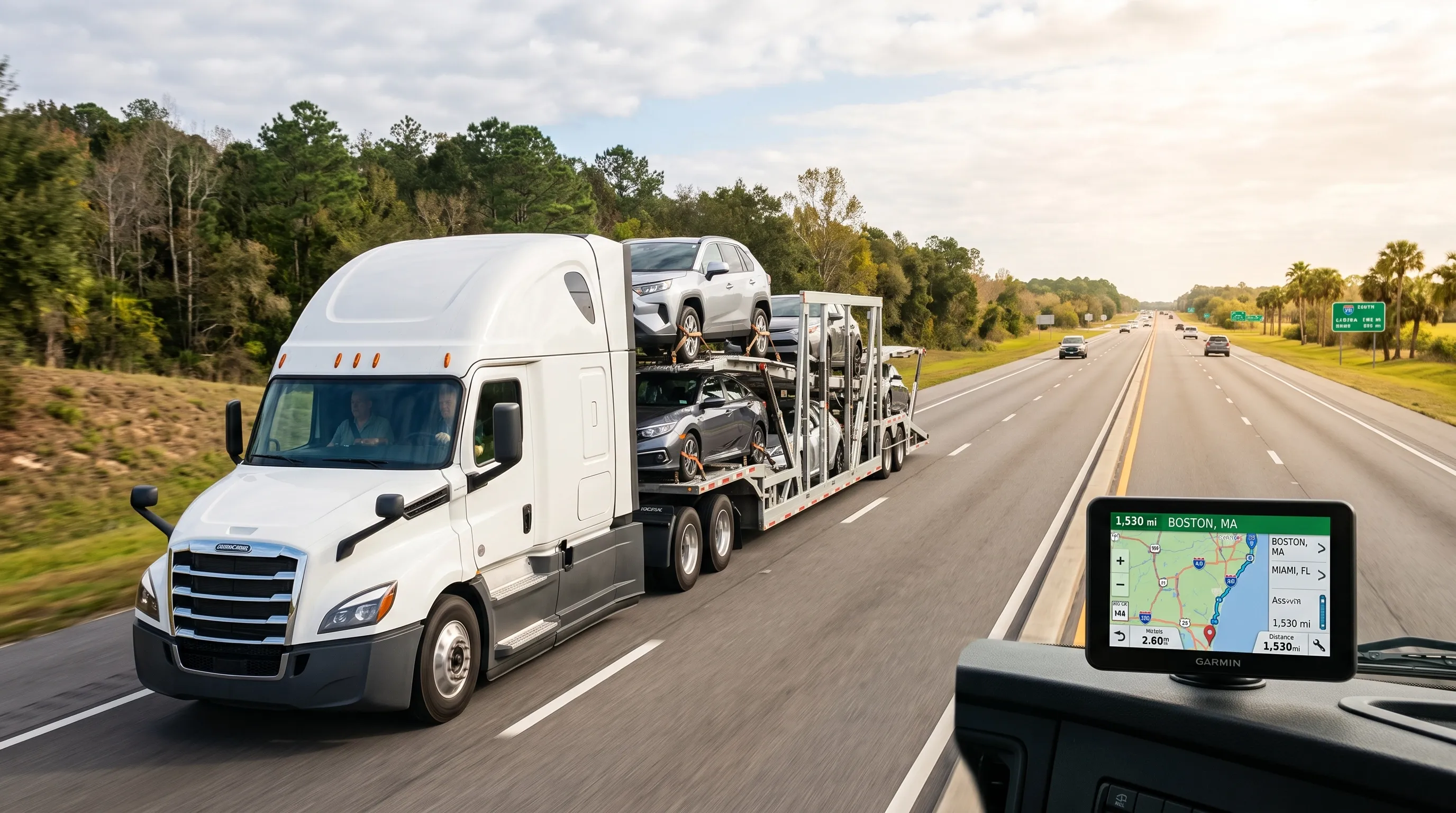
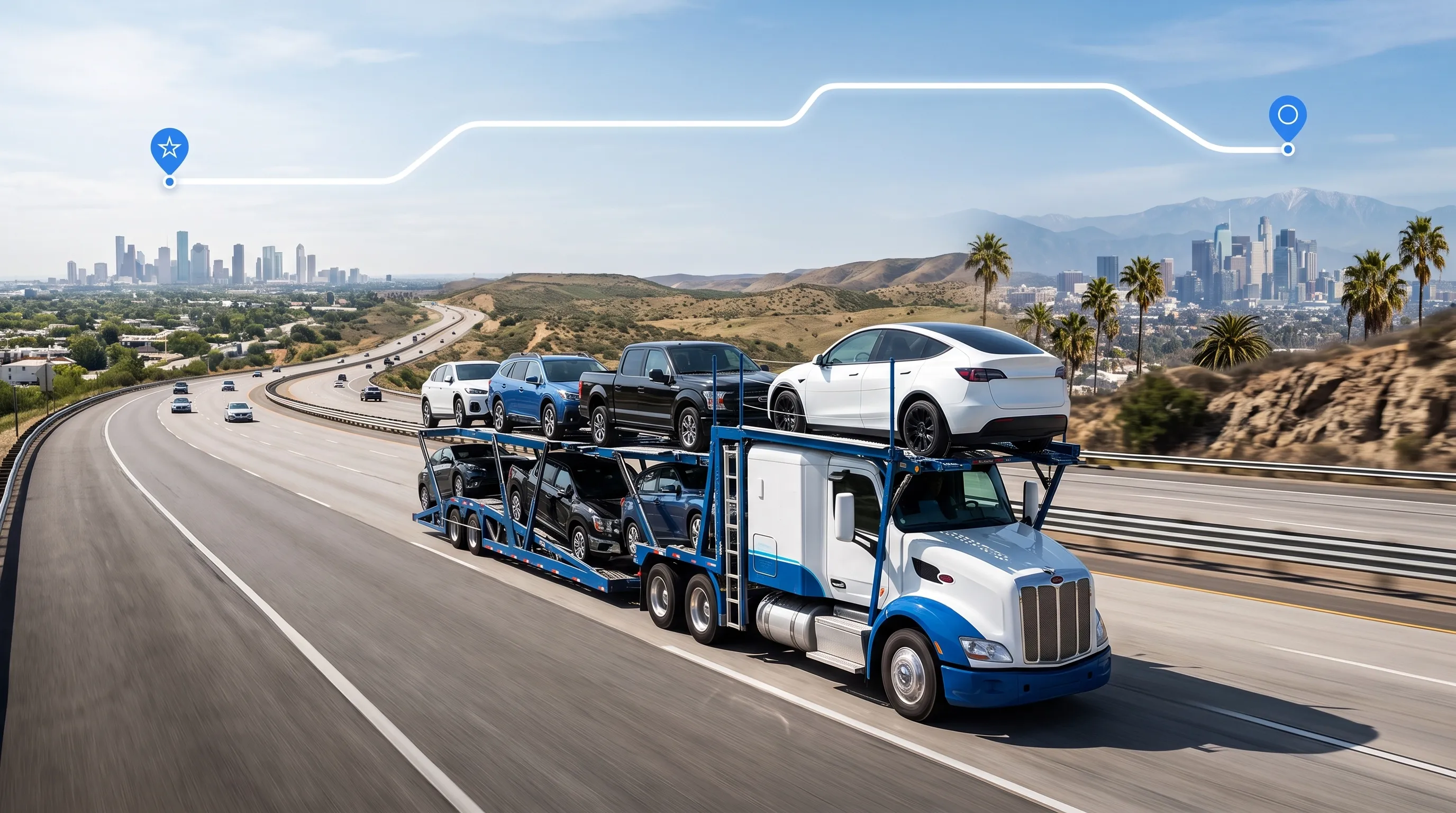
A driver picks up your car, loads it onto a multi-car trailer alongside other vehicles heading the same general direction, and drops it off once the route is complete. That's the entire concept in one sentence. Most carriers run trailers that hold anywhere from six to ten vehicles at once, which is exactly why routes are planned around multiple pickups and drop-offs rather than a single customer's schedule.
You'll typically choose between two service types.
Door-to-door service means the carrier picks up and delivers as close to your actual addresses as the truck can safely get, and it's the option most people choose.
Terminal-to-terminal service means you drop off and collect the vehicle at a fixed facility instead, which can lower the price but adds an extra step on both ends, plus the added task of arranging transportation to and from the terminal yourself.
One thing that trips people up: your booking comes with a transport window, not a guaranteed appointment time, since carriers are coordinating multiple customers, weather, and road conditions across one route. Think of it the way you'd think of a furniture delivery window rather than a scheduled flight. It's a realistic range, not a broken promise if pickup happens on day two of a three-day window instead of day one.
A few terms worth knowing before you request an auto shipping quote:
Carrier: the company or driver physically transporting the vehicle
Broker: a company that arranges transport by matching your shipment with a carrier in its network
Bill of lading: the inspection document signed at pickup and delivery that records the vehicle's condition
Once you know this vocabulary, everything else in this guide, from comparing auto shipping companies to reading your delivery paperwork, gets a lot easier to follow.
Auto Shipping Costs by Distance
Short routes under 500 miles typically cost $400 to $700. Cross country shipments of 1,500+ miles usually run $1,000 to $1,800. Distance is the biggest factor, but it's not the only one.
For moves under roughly 500 miles, expect a higher rate per mile. The carrier still has to route a truck, pay for fuel, and coordinate loading and unloading, and those fixed costs get spread across fewer total miles. A typical short haul auto shipping quote lands in the $400 to $700 range, and a very short move under 100 miles can sometimes carry an even higher rate per mile, since it's harder to pair with a longer, more profitable route.
Longer routes, 1,500 miles or more, usually come with a lower cost per mile even though the total price is higher. A coast-to-coast shipment commonly falls between $1,000 and $1,800. Popular corridors, like routes connecting major metro areas, tend to be cheaper per mile than remote routes simply because more carriers are already running that direction, which keeps competition and availability higher on those lanes.
A few other variables shift your final auto shipping quote up or down: vehicle size and weight, the season (demand climbs in spring and fall as snowbirds relocate), fuel prices at the time of booking, and how far in advance you book relative to your preferred pickup date.
Route Type | Typical Distance | Typical Cost Range |
Short haul | Under 500 miles | $400 to $700 |
Medium haul | 500 to 1,500 miles | $700 to $1,200 |
Cross country | 1,500+ miles | $1,000 to $1,800 |
These ranges are general guidelines, not guarantees. Vehicle type, current fuel prices, and route demand can all move your final auto shipping quote higher or lower, which is exactly why comparing a few real quotes for your specific route matters more than relying on averages alone.
Choosing Between Open and Enclosed
Open transport is cheaper, faster to book, and fine for most daily drivers. Enclosed transport costs more but fully protects the vehicle, making it the better call for classic, luxury, or show cars.
Open transport is the industry standard, and it's the default option most auto shipping companies will quote first. Your vehicle rides on an open trailer next to several others, exposed to weather and road debris along the way. It's widely available, quicker to book, and noticeably cheaper than the enclosed alternative, making it the practical choice for a daily driver in normal condition. The vast majority of vehicles shipped in the United States travel this way, largely because most cars simply don't need extra protection to arrive in the same condition they left in.
Enclosed transport uses a fully covered trailer that shields your vehicle from rain, dust, and debris. It typically runs 30 to 60 percent more than open transport, since fewer enclosed trailers exist and each carries fewer vehicles per trip, sometimes just two or three compared to six or more on an open trailer. That extra cost makes sense for classic cars, exotic or luxury vehicles, or anything headed to a show, auction, or sale where arriving in pristine condition matters more than the price difference.
Feature | Open Transport | Enclosed Transport |
Typical cost | Lower | 30 to 60 percent higher |
Weather protection | None | Full |
Best suited for | Daily drivers, standard vehicles | Classic, luxury, and show cars |
There's no universally "better" option here. It comes down to your vehicle's value and how much its condition matters when it rolls off the truck.
What Separates a Good Auto Shipping Company
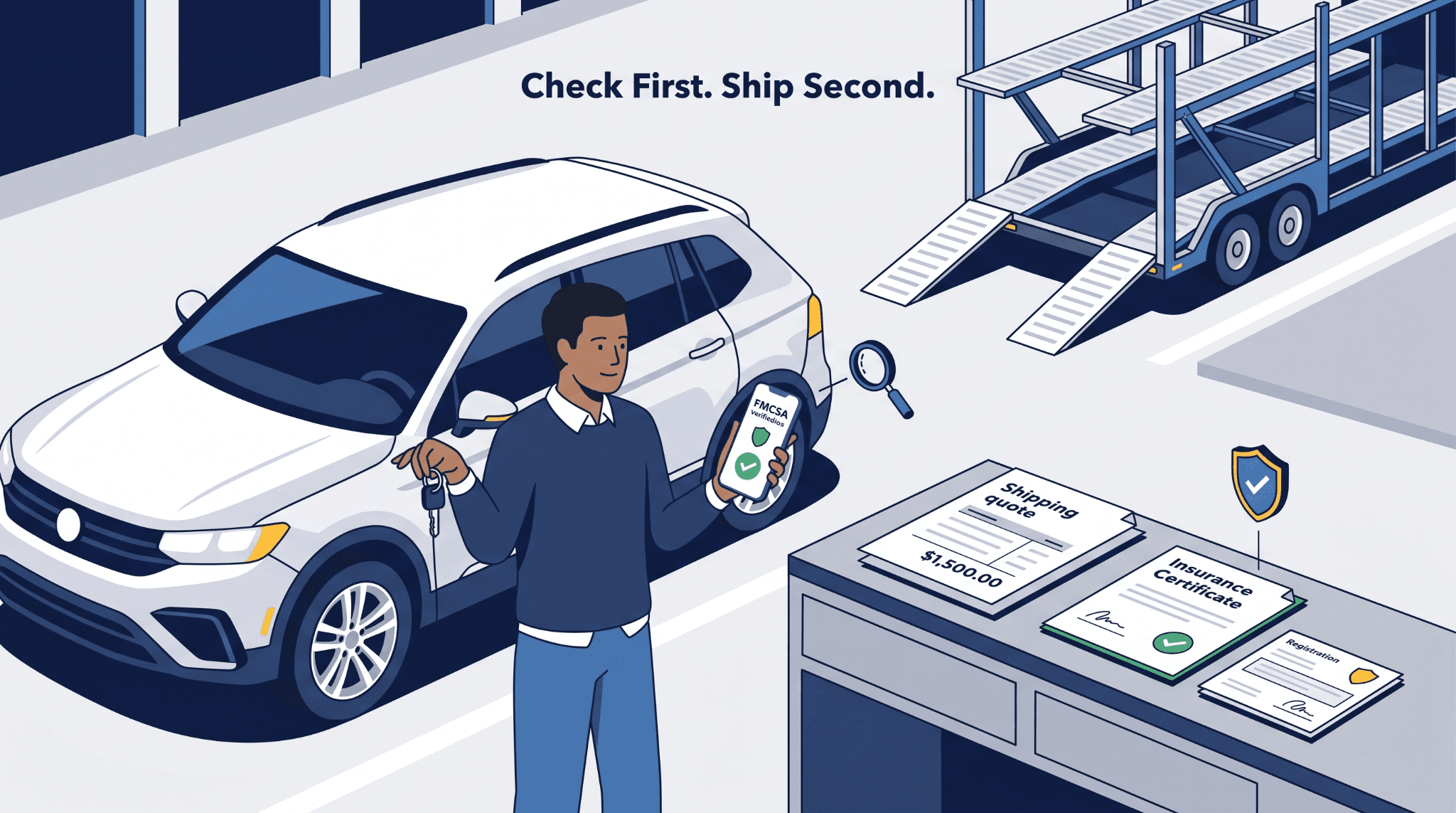
A trustworthy auto shipping company has an active USDOT number, offers transparent pricing that doesn't jump before pickup, and can clearly explain its insurance coverage.
Licensing and credentials come first. Any legitimate broker or carrier operating across state lines must hold an active USDOT number, and most brokers also carry an MC number. You can look either one up for free through the FMCSA's SAFER system, which shows a company's registration status and safety history. Do this before you hand over any payment information. It takes only a couple of minutes and immediately rules out unregistered operators.
Transparent pricing matters just as much. A trustworthy auto shipping quote should clearly explain what's included and shouldn't jump dramatically between the quote and pickup day without a real reason, such as the vehicle turning out to be inoperable when the quote assumed it ran. A price that looks unusually low compared to other quotes often creeps up later, right when you have the least room to shop around and the least leverage to push back.
Real insurance coverage is the third signal. A reliable company should state its cargo insurance limits clearly and hand over proof on request, without hesitation. It's also worth checking a company's track record before you commit. The Better Business Bureau publishes complaint histories and ratings for auto shipping companies, and patterns, like repeated complaints about surprise fees or missed pickup windows, show up there that a single quote call will never reveal.
Safeeds Transport publishes its licensing details openly and answers insurance questions directly, which is exactly the kind of transparency this section describes.
The Booking Process Step-by-Step
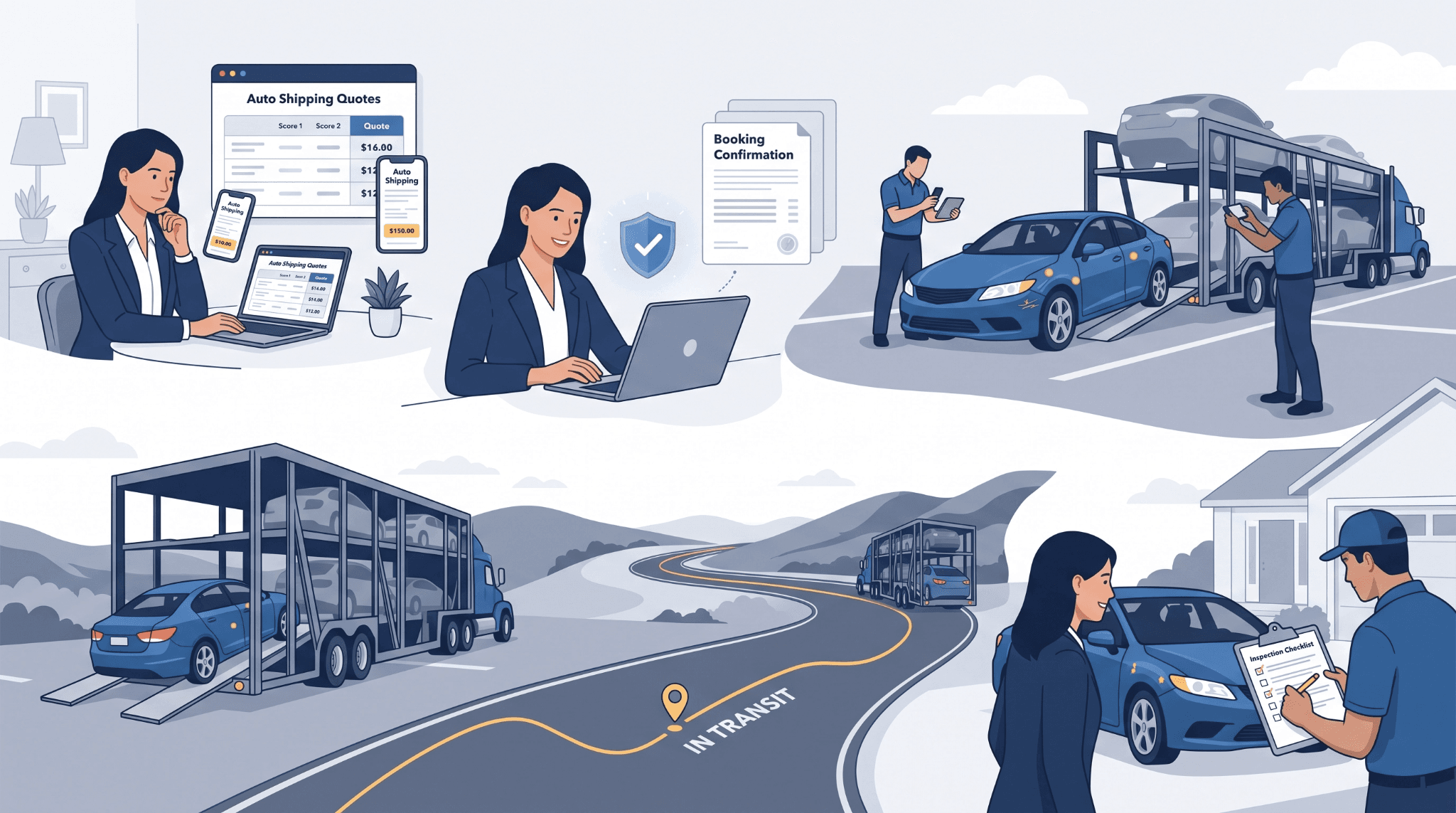
Booking auto shipping involves six steps: request quotes, compare and select a company, confirm vehicle condition, schedule pickup, track transit, and inspect the vehicle at delivery.
Request quotes. Get auto shipping quotes from two or three sources so you have a real basis for comparison rather than accepting the first number you're offered.
Compare and select. Weigh price against licensing, insurance, and reviews, then commit to a company rather than choosing on price alone.
Confirm vehicle condition. Tell the company if the car is running, has existing damage, or needs special handling, since this shapes both price and equipment.
Schedule pickup. Agree on a transport window and confirm the pickup address and any access restrictions a large trailer might face on your street.
Track transit. Most companies offer status updates through a call, text, or online tracking link so you always know roughly where the vehicle is.
Inspect at delivery. Walk around the vehicle with the driver, compare it against the pickup inspection report, and sign only once everything checks out.
Follow these steps in order, and you'll remove most of the guesswork, plus have a paper trail if anything needs to be disputed later.
Insurance and What It Covers
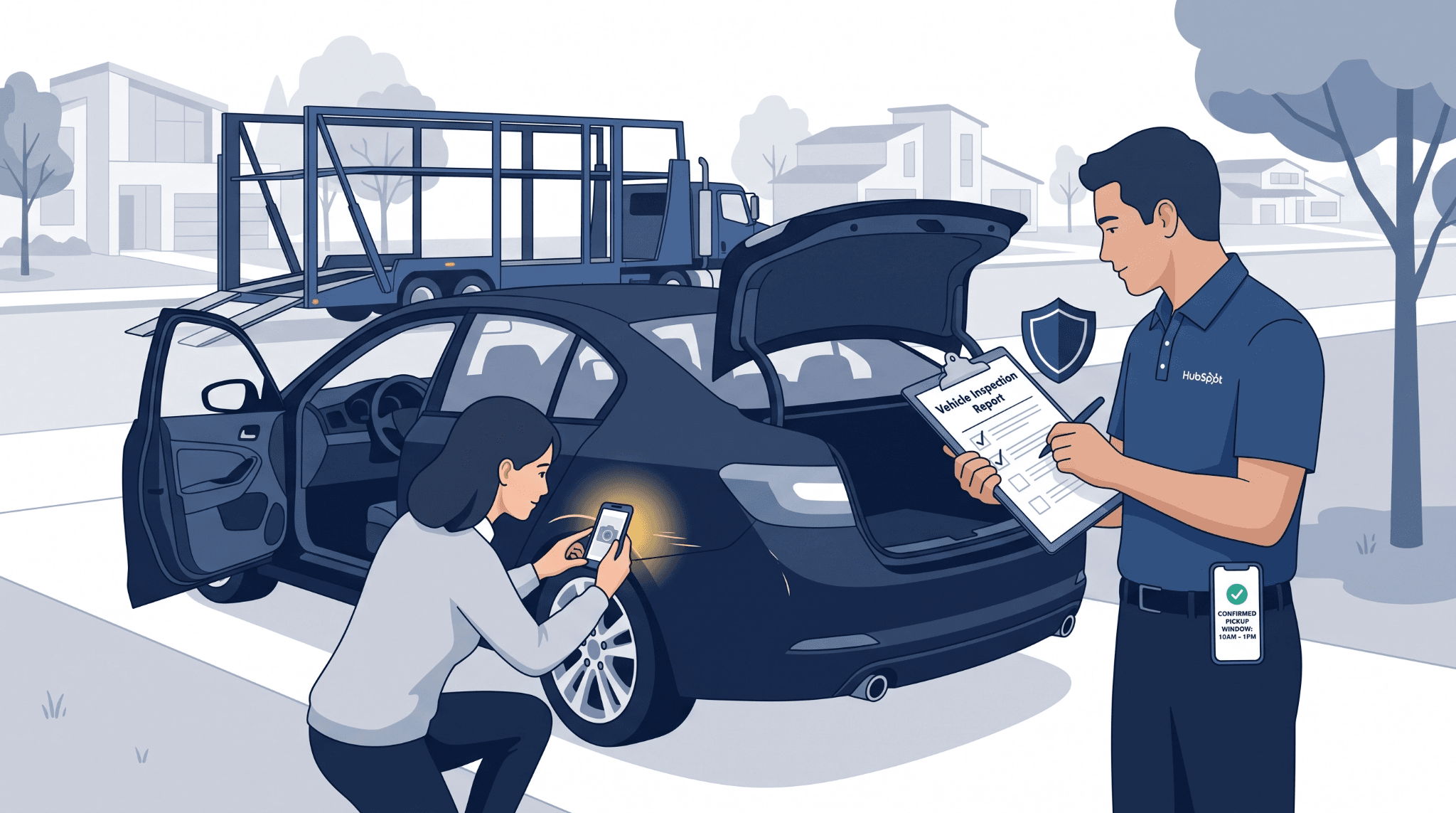
Carrier insurance typically covers damage that happens during loading, transit, or unloading. It usually does not cover pre-existing damage or personal items left inside the vehicle.
Standard carrier cargo insurance covers damage that occurs during loading, transit, or unloading, such as a scratch from another vehicle on the trailer or damage from a securing strap. Coverage limits vary by carrier, so ask for the specific dollar amount before booking rather than assuming a flat industry standard applies to every shipment.
Two things commonly fall outside standard coverage:
Pre-existing damage: If it wasn't documented on the pickup inspection report, it isn't covered, since there's no way to prove when it happened once the vehicle is in the carrier's hands.
Personal items left inside the vehicle: These are typically excluded, so clear out valuables before pickup rather than assuming they're covered as part of the shipment.
This is exactly why the inspection report at both pickup and delivery matters so much. It's the document that determines whether a claim has a leg to stand on, and carriers generally require any damage to be noted at delivery before they'll process a claim at all.
Common Auto Shipping Mistakes
The most common auto shipping mistakes are booking on price alone, skipping the inspection report, leaving personal items in the car, and not confirming dates in writing.
Booking on price alone. The cheapest auto shipping quote isn't always the safest bet, especially from a company with no verifiable licensing.
Skipping the inspection report. Rushing the pickup walkaround makes it harder to prove damage happened in transit rather than before.
Leaving personal items in the car. Belongings left inside typically aren't covered by carrier insurance and can add weight that affects loading.
Not confirming dates in writing. A verbal estimate isn't the same as a documented transport window, and this mismatch causes most scheduling complaints.
Not asking about the payment structure. Some companies require large upfront payments before a truck is even assigned, which limits your options if the timeline slips. Confirming payment terms upfront avoids this entirely.
Avoid these five, and you'll sidestep the vast majority of complaints people post about auto shipping online.
Auto Shipping Questions People Ask Before Booking
Here are the questions that come up most often once someone's close to actually booking a shipment.
What does auto shipping cost?
Most auto shipping quotes fall between $400 and $1,800, depending mainly on distance. Short routes run $400 to $700, cross country moves typically land between $1,000 and $1,800. Safeeds Transport locks your quoted price for seven days once you book, so the number you see is the number you pay.
How far in advance should I book?
One to three weeks ahead is usually enough, though busy seasons like spring and fall reward extra lead time and better pricing. Safeeds Transport's locked in quotes hold steady for a full week after booking, so there's no rush to decide same day.
What is the difference between an auto shipping broker and a carrier?
A carrier owns and drives the trucks. A broker arranges shipments by matching you with a carrier in its network, giving you access to far more routes than one carrier alone. Safeeds Transport works this way, connecting you to vetted carriers nationwide.
Can I ship a non-running vehicle?
Yes, though it requires special loading equipment, so not every carrier can take the job. Mention it upfront, and Safeeds Transport will match you with a carrier equipped to handle it, no surprises at pickup.
How do I track my shipment?
Most companies offer status updates through a call, text, or online tracking link. Safeeds Transport keeps you updated at each stage of the trip, so you're never left wondering where your vehicle is.
What happens if my car is damaged in transit?
Document the damage against the pickup inspection report, note it on delivery paperwork before signing, and photograph everything. Safeeds Transport's team walks customers through the claims process directly, so you're never handling it alone.
Is open or enclosed auto shipping better for my car?
Open transport suits daily drivers and costs less. Enclosed transport protects against weather and debris, better for classic or luxury cars. Safeeds Transport offers both, so you can choose based on what your vehicle actually needs.
How long does auto shipping take coast to coast?
Cross-country shipments typically take one to two weeks from pickup to delivery. Request a quote from Safeeds Transport for a realistic timeframe on your specific route, not a generic estimate.
Do I need to be present for pickup?
Someone needs to be available to release the vehicle and sign the inspection report at both pickup and delivery. Safeeds Transport's coordinators will work around your schedule to make this easy.
Can I cancel after booking?
Most companies allow cancellation, though fees and timing vary. Cancel as early as possible if plans change. Safeeds Transport keeps its cancellation policy clear and upfront, so you'll never be guessing where you stand.
Getting Your Vehicle Moving
Auto shipping doesn't have to be complicated once you understand what drives the price, what separates a dependable company from a risky one, and what your coverage actually includes. Compare a few real quotes, verify licensing before you commit, and read the fine print on insurance and cancellation terms before you sign.
Safeeds Transport makes that first step easy. Get a straightforward auto shipping quote with no upfront payment required at booking, just a card verification hold, and a price that stays locked for seven days while you decide. Request your quote today and see exactly what your route costs.