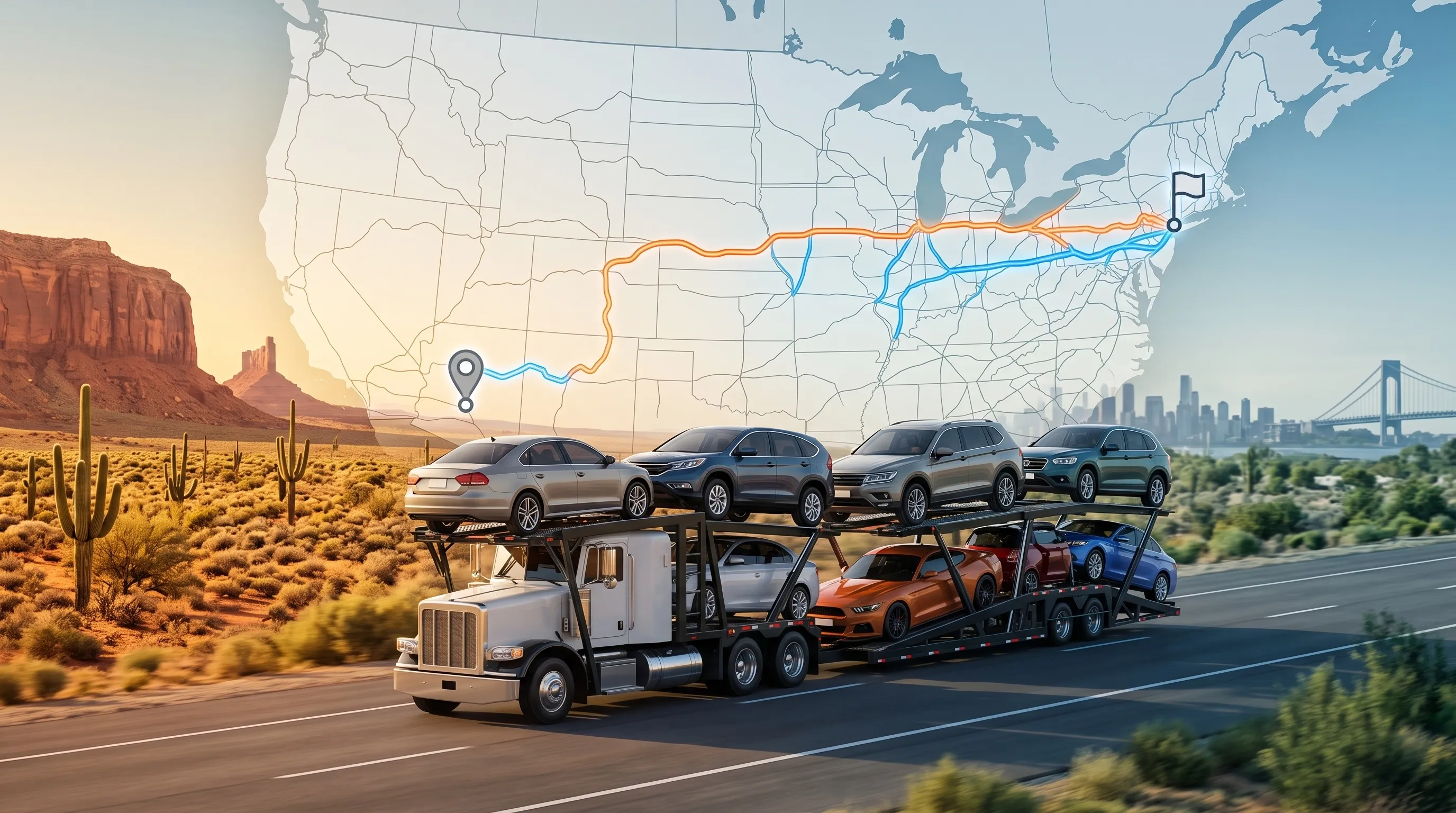
Houston to Los Angeles car shipping typically costs between $900 and $1,225 for open transport, with delivery in 4 to 7 days depending on the carrier's route and the time of year. Enclosed transport runs higher and is generally reserved for higher-value vehicles that need extra protection.
This guide walks through the full picture: what drives the price up or down, how the transit window works, what pickup and delivery day actually look like, and the questions most first-time shippers ask before they book. Ready to see your own numbers? Request a free quote and get a locked-in price in about 30 seconds.
What Does It Cost to Ship a Car from Houston to Los Angeles?
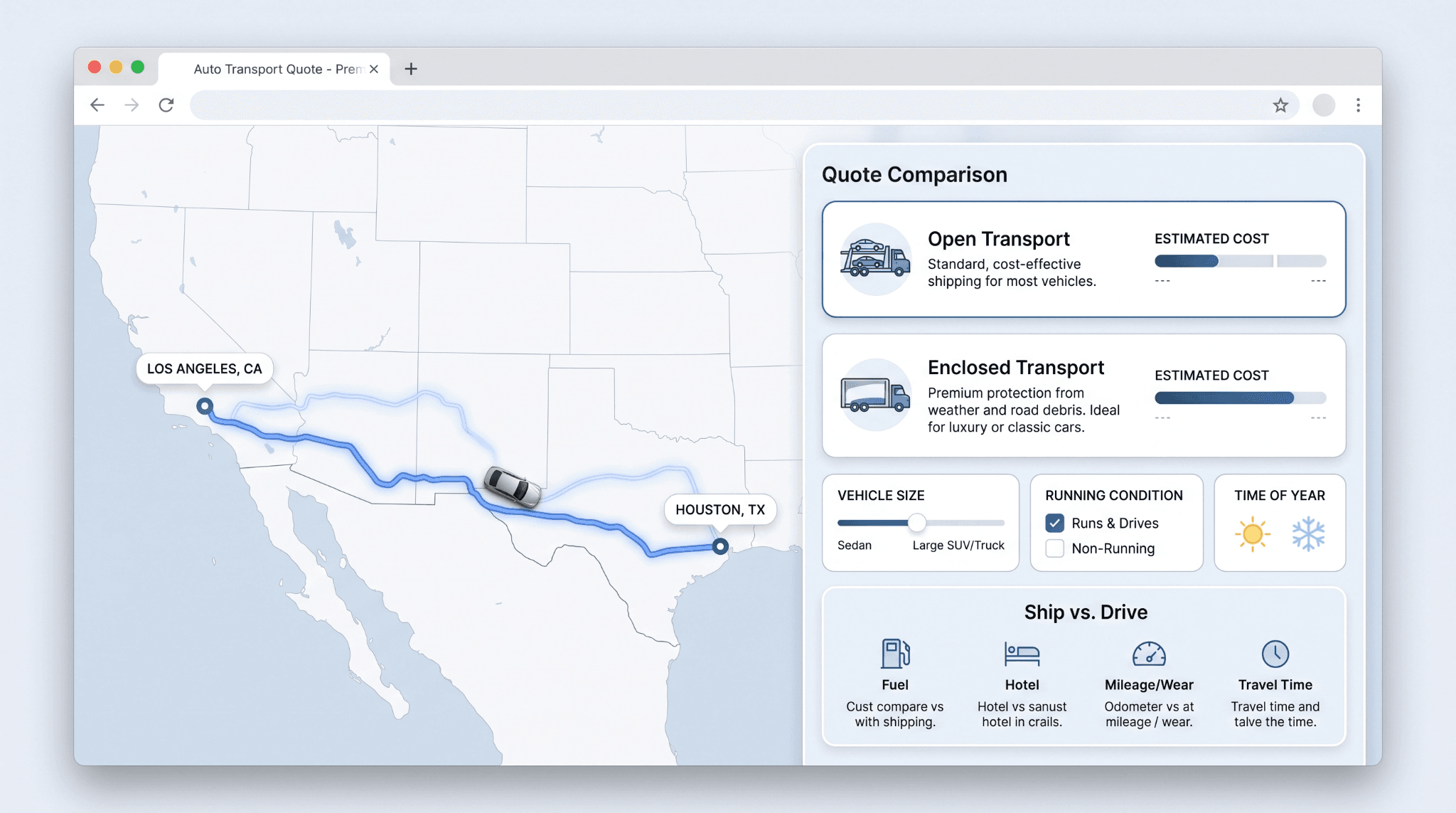
For most vehicles, open transport is the standard choice, and it's also the more affordable one. On the Houston to Los Angeles route, open transport typically runs $900 to $1,225, while enclosed transport typically runs $1,400 to $1,900, depending on the vehicle and the carrier's current load.
The reason this shows up as a range rather than one fixed number is simple: carriers price each shipment individually based on what's actually being moved and when. A quote generated today may look slightly different from one generated next month, even for the exact same two cities.
It's worth noting what's already built into that price. A standard Houston to Los Angeles auto transport cost quote from a licensed carrier typically includes:
Fuel and driver time for the full 1,545-mile route
Standard cargo insurance coverage during transit
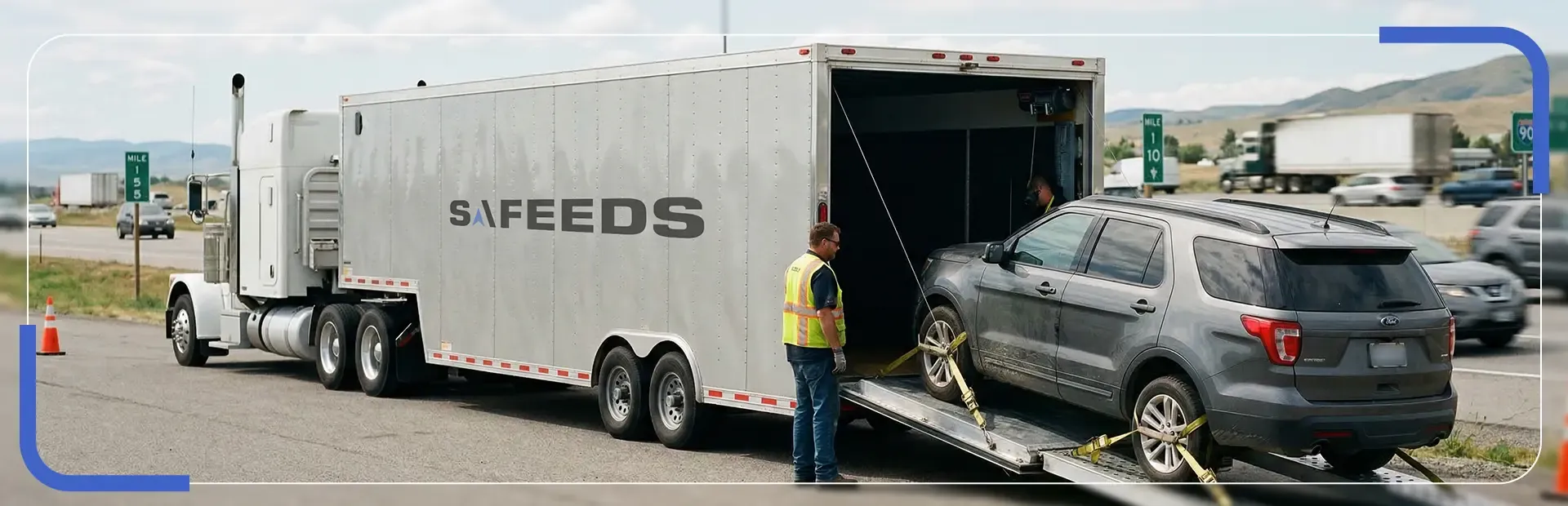
Loading and unloading at both ends
That means the number quoted upfront is generally the number paid at delivery, with no separate fuel surcharge or hidden loading fee added later.
Why Do Quotes for This Route Vary?
Three factors do most of the work in moving a quote up or down:
Vehicle size and weight. A full-size truck or SUV takes up more space on the trailer than a compact sedan, so it costs more to ship. Carriers price by the space and weight a vehicle occupies, not just the distance traveled.
Running condition. A vehicle that starts and drives loads onto the trailer under its own power in a few minutes. A non-running vehicle needs a winch and extra hands-on time, which adds cost to the shipment.
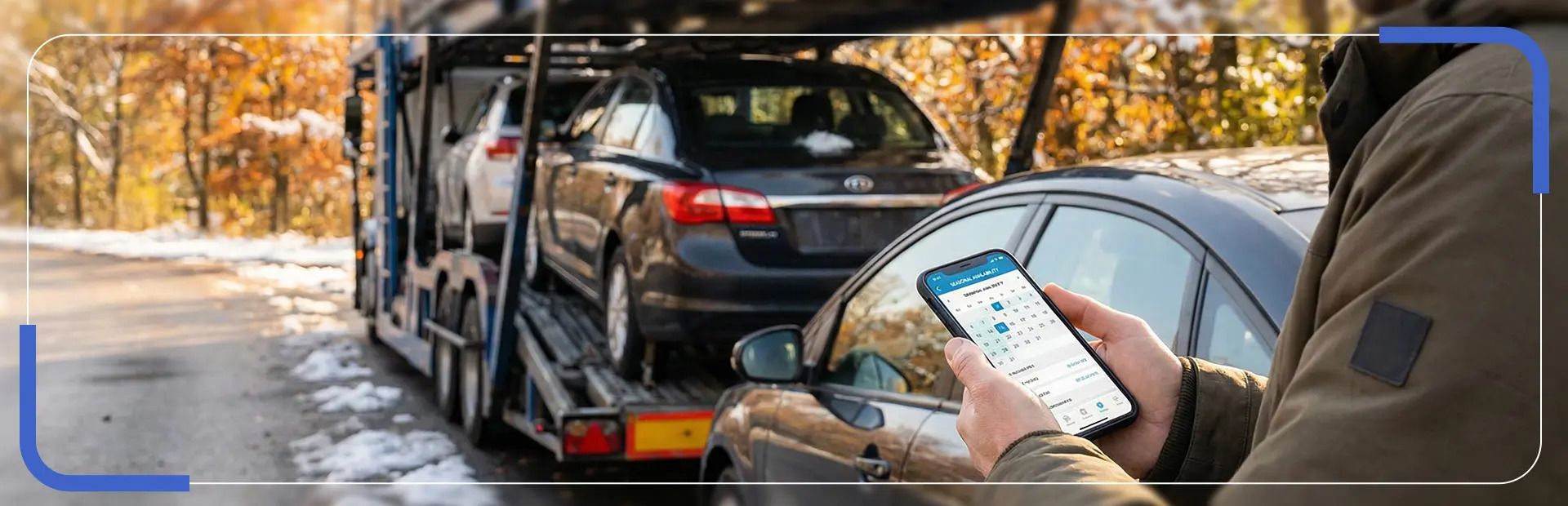
Time of year. Texas to California routes see heavier demand during snowbird season (late fall through early spring) and again during the summer moving months, which can push prices toward the higher end of the range.
Understanding these three levers helps explain why two people shipping "the same route" can still receive different quotes.
Should You Drive or Ship Your Car from Houston to LA?
For anyone still weighing whether to make the drive themselves, it helps to look at the real cost of the trip, not just the sticker price of a shipping quote.
Driving from Houston to Los Angeles covers roughly 1,545 miles and takes about 22 hours or more behind the wheel, not counting stops. That typically means:
Fuel for the full distance
One or two hotel nights
Meals on the road
Added mileage and wear on the vehicle
Once those costs are added up, the gap between driving and shipping often narrows considerably, and sometimes shipping comes out ahead once time is factored in.
Shipping trades that time and mileage for a flat, locked-in price and a vehicle that arrives with no extra wear from the trip. The right choice usually comes down to priorities. Someone with flexible time and a vehicle built for a road trip may prefer to drive. Someone relocating for work, managing a tight schedule, or shipping a second or third vehicle typically finds that arranging car shipping from Houston to LA is the more practical option.
How Many Days Does Houston to LA Car Shipping Take?
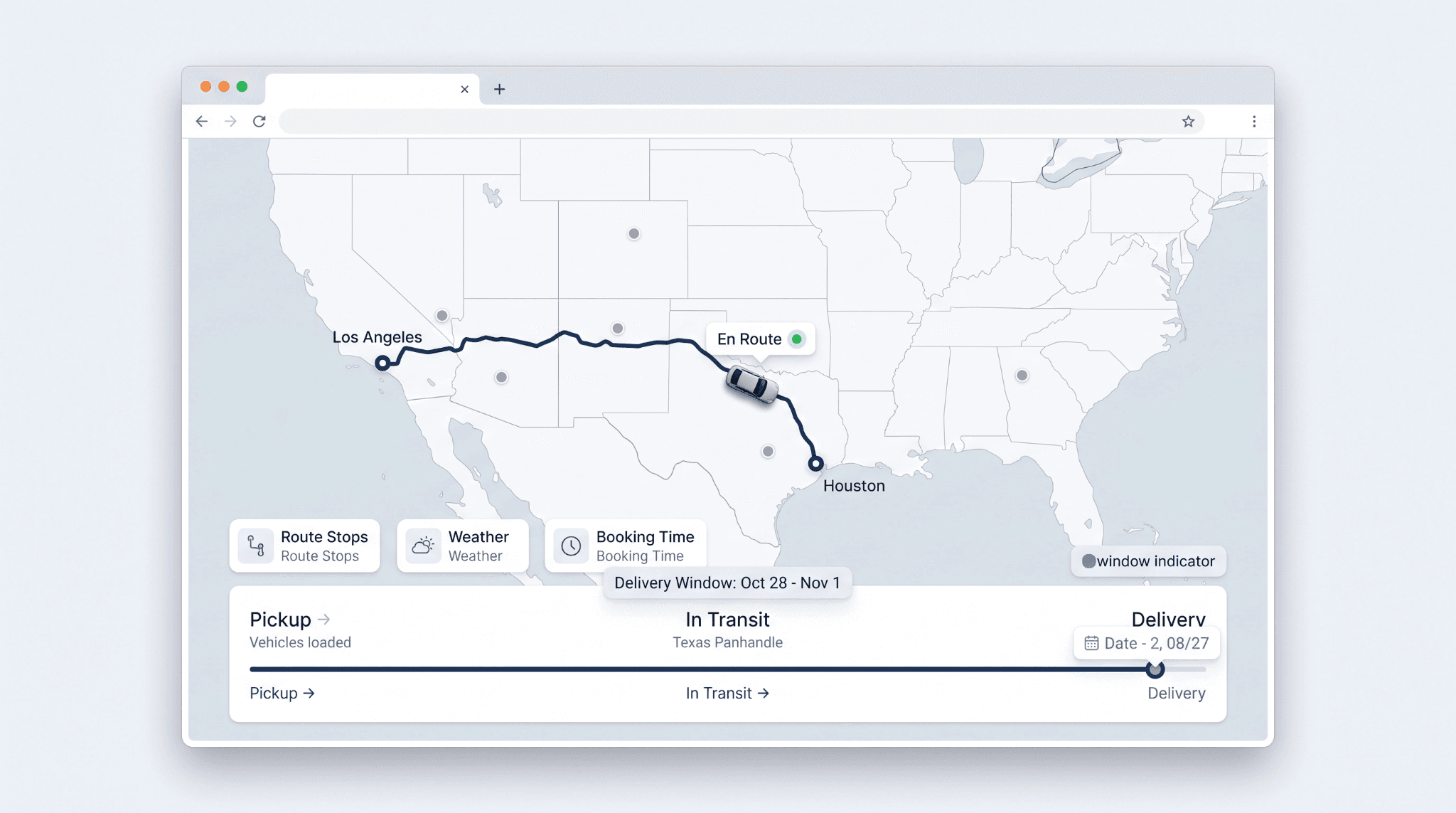
For most shipments, Houston to LA car shipping days fall between 4 and 7 days from pickup to delivery. A few things determine where a given shipment lands within that window:
Route stacking. Carriers often serve multiple customers along one route. A truck heading straight through will typically deliver faster than one making several stops along the way.
Weather. The Southwest desert corridor is usually reliable, but seasonal weather events can occasionally add a day to the schedule.
Booking timing. Shipments booked further in advance generally have more carrier options, which can help lock in a spot on a faster-moving route.
A shipment that takes a day or two longer than the average window isn't unusual and isn't a sign that something went wrong. It reflects the normal variability of coordinating a nationwide carrier network across more than 1,500 miles.
Route Detail | Typical Range |
Distance | ~1,545 miles |
Open transport cost | $900–$1,225 |
Enclosed transport cost | $1,400–$1,900 |
Transit time | 4–7 days |
Busiest seasons | Late fall–early spring, summer |
What Should You Expect on Pickup and Delivery Day?
Knowing the process in advance makes pickup and delivery day far less stressful, especially for first-time shippers.
Before pickup: The assigned carrier typically calls to confirm a pickup window, usually a 24-hour range rather than an exact time. This gives the driver flexibility to account for traffic and other stops on the route.
At pickup in Houston: The driver and vehicle owner (or an authorized representative) walk around the vehicle together and note its condition on a bill of lading, a simple document that records the car's state before it's loaded. This step protects both parties and creates a clear record for delivery.
During transit: Most carriers provide tracking updates or are reachable by phone for a status check, so the vehicle owner isn't left guessing where the shipment stands.
At delivery in Los Angeles: A second walkaround inspection compares the vehicle's condition against the original bill of lading before the owner signs off. In some dense Los Angeles neighborhoods, a large carrier truck may not be able to access a specific driveway directly, in which case the driver and customer typically agree on a nearby, more accessible meeting point.
Is Open or Enclosed Transport Better for This Route?
Open transport is the standard choice and works well for the vast majority of vehicles making this trip. It's what roughly 90% of vehicles ship on nationally, according to the Federal Motor Carrier Safety Administration, because it's cost-effective and carriers are widely available.
Enclosed transport costs more but adds a layer of protection from weather and road debris, which makes it worth considering for classic cars, luxury vehicles, or anything with significant value where extra protection outweighs the added cost.
Common Questions About Shipping from Houston to Los Angeles
A few questions come up consistently from people shipping a vehicle on this route for the first time. Here are direct answers to the most common ones.
Do I need to be present for pickup and delivery?
Not necessarily, as long as an authorized adult (such as a family member, friend, or dealership representative) can meet the driver, inspect the vehicle, and sign the paperwork on the owner's behalf.
Is my car insured during the shipment?
Yes. Licensed carriers are required to carry cargo insurance that covers the vehicle for the duration of transit, from pickup in Houston to delivery in Los Angeles.
Can I leave personal items in the car?
It's best to keep the vehicle as empty as possible. Carrier insurance typically covers the vehicle itself, not personal belongings left inside, and extra weight can affect loading.
What information do I need for an accurate quote?
An accurate Houston to Los Angeles car shipping quote generally requires the pickup and delivery ZIP codes, the vehicle's year, make, and model, its running condition, and a preferred pickup date.
Is there an upfront payment required?
Reputable carriers and brokers typically don't require payment until a carrier is confirmed and a pickup date is scheduled, which protects the customer from paying for a shipment that hasn't been arranged yet.
Planning Your Houston to Los Angeles Car Shipping
The exact cost and timeline for any shipment ultimately comes down to the specifics: the vehicle being moved, the time of year, and how far in advance it's booked. The ranges and timelines covered here reflect what most shippers on this route can realistically expect, but every quote is built around the individual details of the trip.
The most reliable next step is getting an actual quote based on the real vehicle and dates involved, rather than estimating from general averages alone. Request a free quote to see current pricing and available pickup windows for a Houston to Los Angeles shipment.