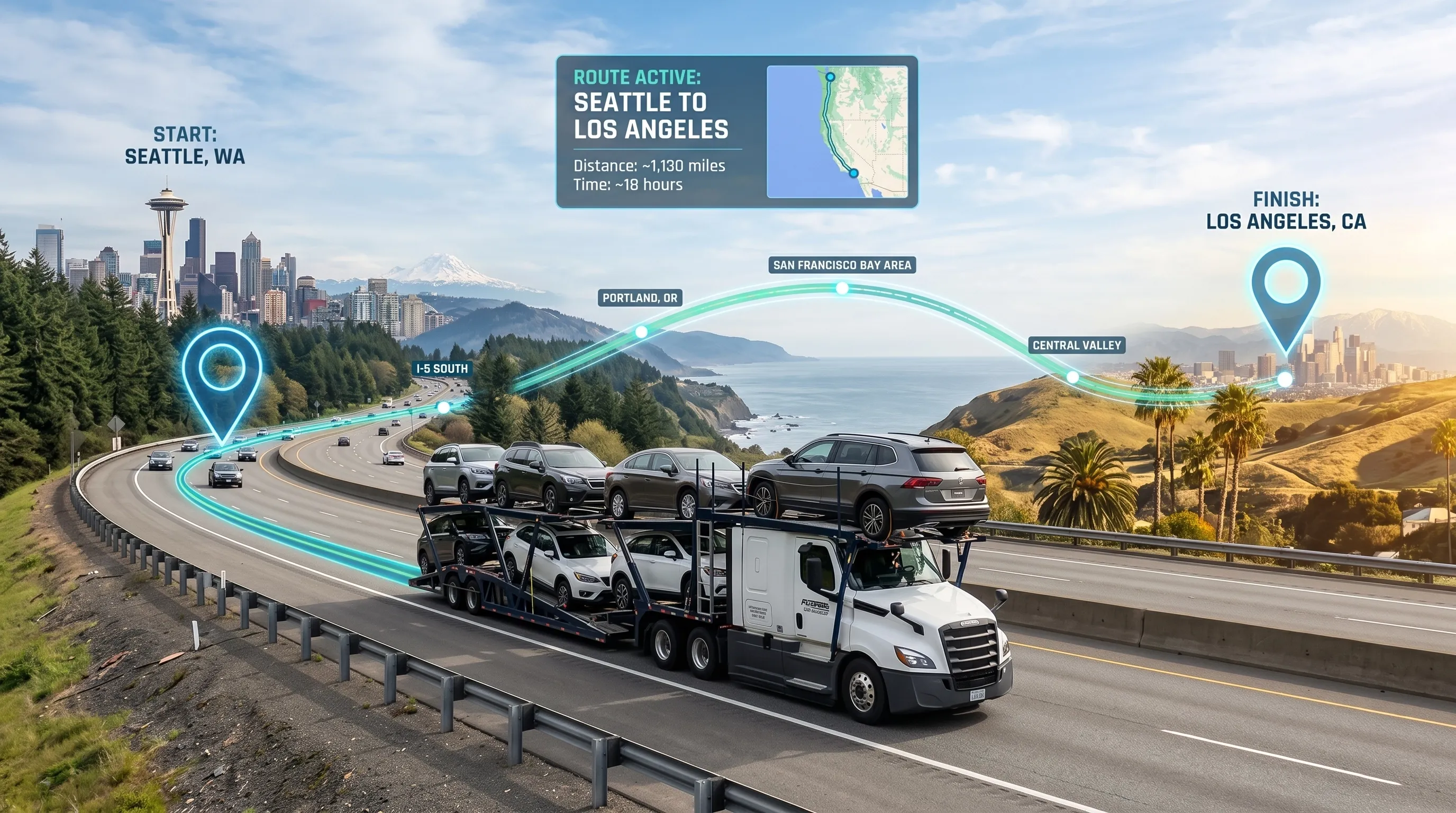
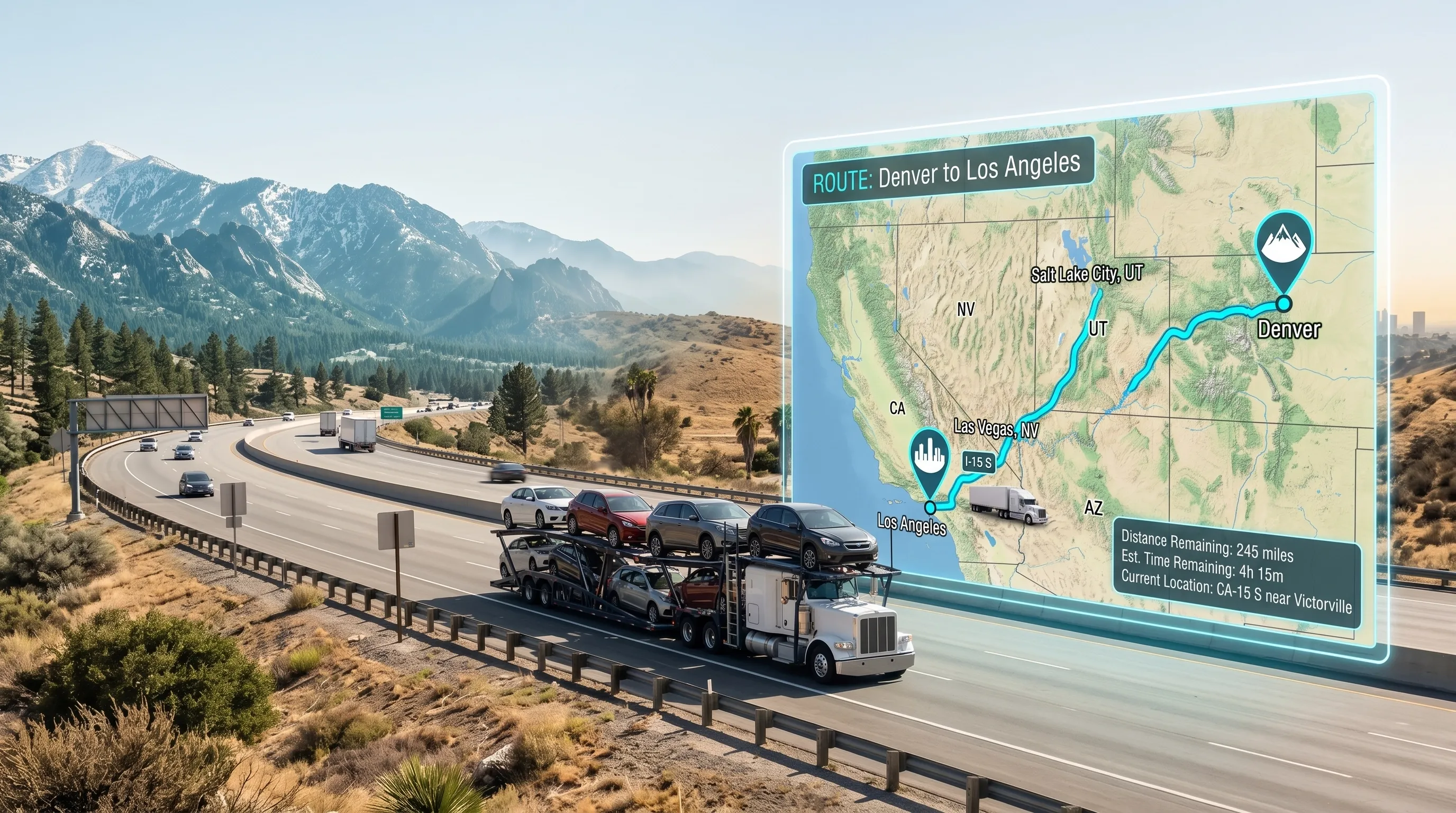
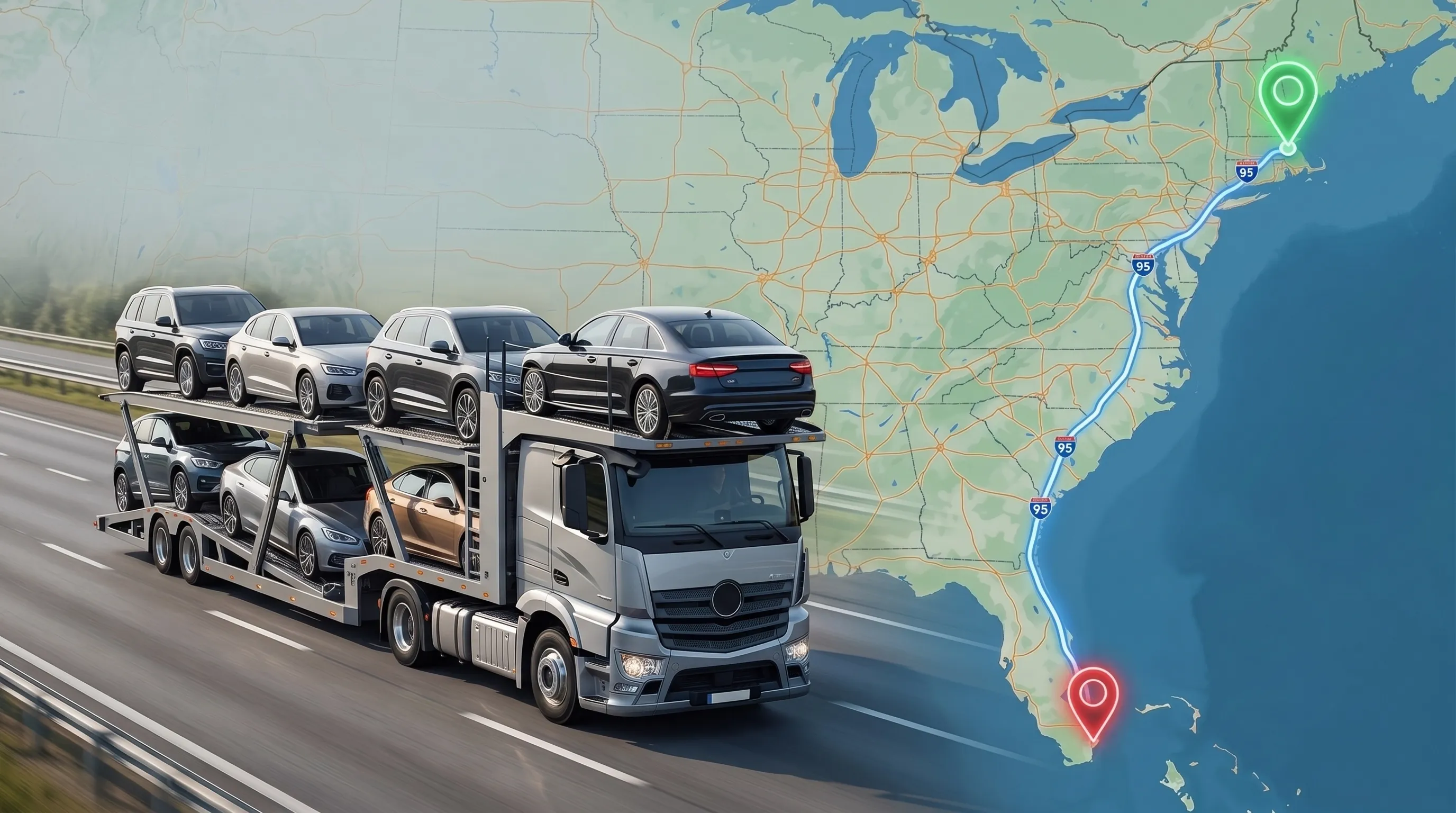
You can ship a car anywhere in the United States. Licensed carriers cover all 50 states, most shipments cost between $400 and $1,800 depending on distance and vehicle type, and delivery usually takes two to ten days.
That's the short version. Here's what you actually need to know before you book.
Maybe you searched car transport near me and want a truck at your driveway. Maybe you're comparing costs before a cross-country move. Either way, when you're deciding how to transport car shipments across state lines, cost is only one part of the decision. This guide walks through the rest.
Want a real number for your route? Request a free car transport quote now, then keep reading to see how that number breaks down.
Key Takeaways
Car transport is available in all 50 states through licensed, insured carriers, with typical costs ranging from $400 for short regional moves to $1,800 for coast-to-coast shipments.
Most car transport companies you find online are brokers, not carriers, meaning they arrange the shipment but a separate licensed company owns the truck and drives it.
Open transport costs less and covers most vehicles, while enclosed transport costs 30 to 50 percent more and suits classic, luxury, or high-value cars.
With Safeeds Transport, you don't pay anything upfront, just a $1 card hold to verify your card, and your quoted price stays locked for 7 days while you decide.
Booking one to three weeks in advance generally secures better pricing and more carrier availability than booking at the last minute.
How Car Transport Works
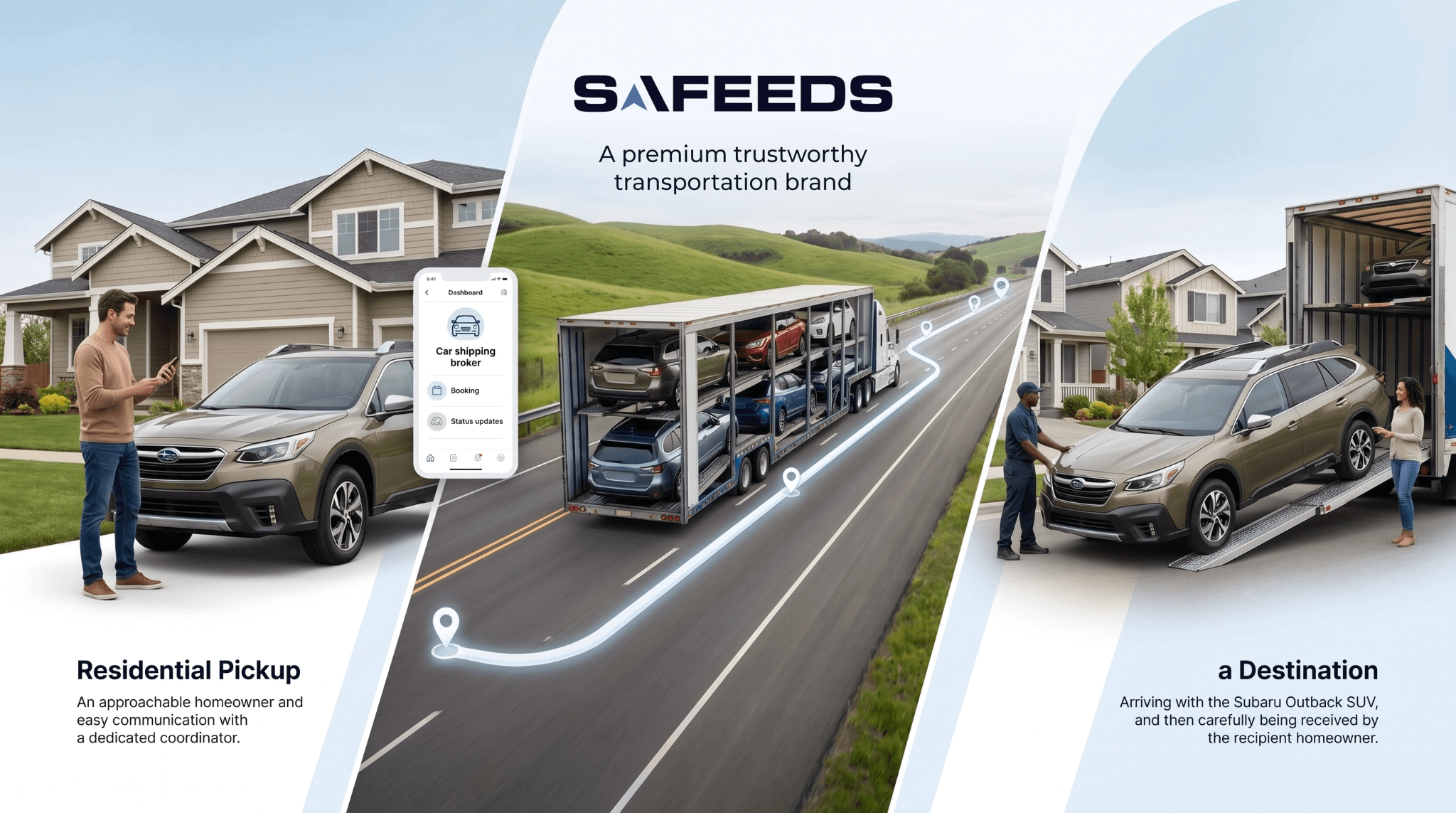
You don't drive your car anywhere. A carrier comes to you. Here's what actually happens, step by step:
You submit your pickup and delivery locations, vehicle details, and timeline.
A carrier is matched to your route based on availability and schedule.
The carrier inspects your car, photographs it, and loads it onto a trailer.
Your car travels to the destination, sometimes with stops to pick up or drop off other vehicles along the same route.
Your car arrives, gets inspected again, and you sign off on delivery.
That's the whole process. No driving, no overnight motel stops, no extra mileage on your odometer.
Most first-time shippers assume this works like a moving truck, where one driver takes your item straight from point A to point B. It usually doesn't. Multi-car carriers load several vehicles heading in a similar direction, which is part of why open transport costs less than paying for a truck dedicated to just your car.
Who Picks Up and Delivers the Car?
Most companies you find when you search for car transport companies are brokers, not carriers. This trips people up, so here's the difference.
A broker arranges the shipment. Safeeds Transport is a broker. We match your car with a licensed, insured carrier from our network and handle the coordination, the scheduling, and the paperwork. The carrier is the company that actually owns the truck and drives your car.
Why this matters to you: a good broker has already checked the carrier's license, insurance, and safety record before your car ever gets loaded. You don't have to research an unfamiliar trucking company yourself, and you have one point of contact if a question comes up mid-shipment.
What Car Transport Costs in 2027
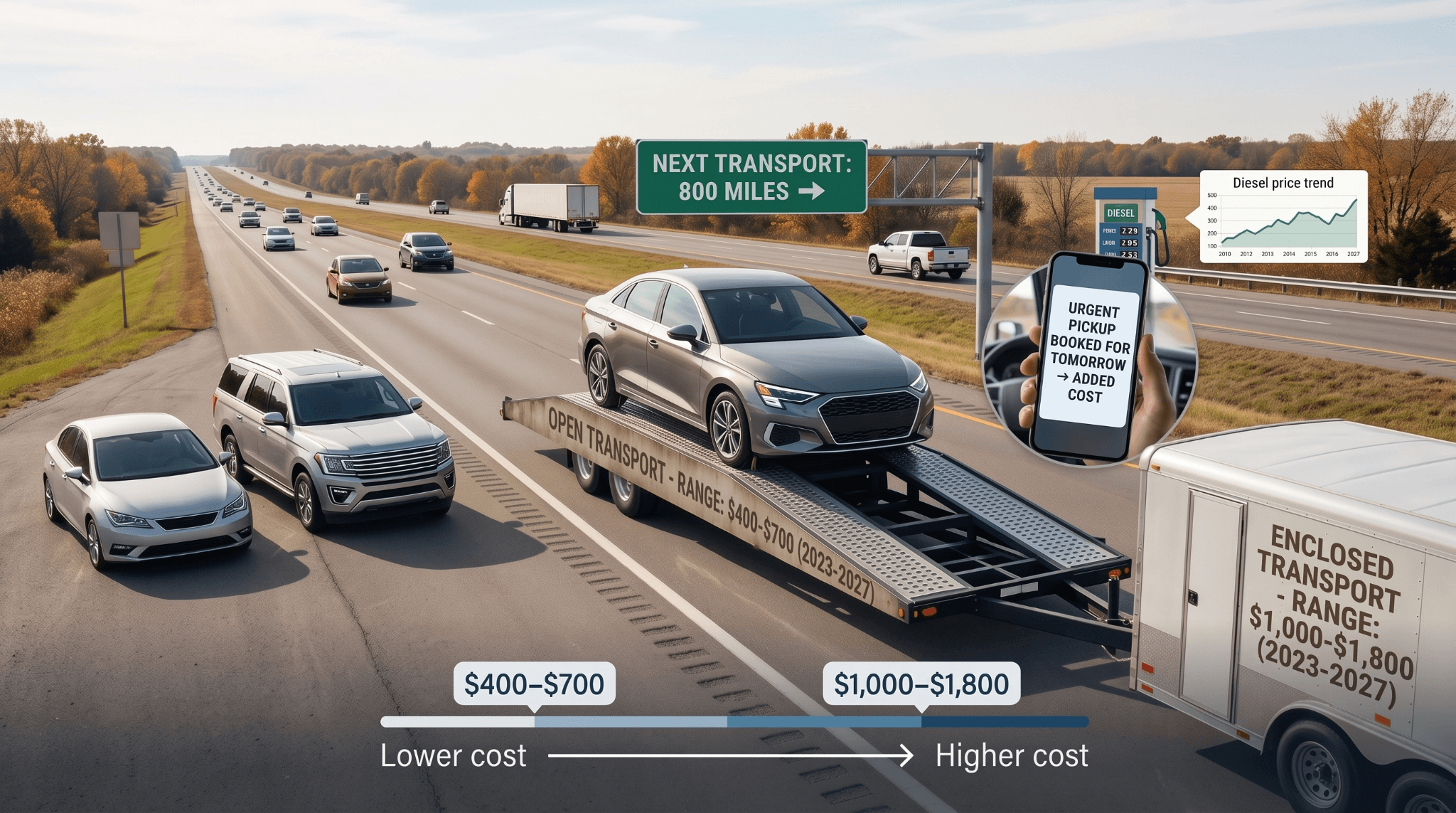
Car transport cost isn't one fixed number. It moves based on a few specific things:
Distance. Longer routes cost more overall, but less per mile.
Vehicle size. A truck or SUV costs more to ship than a sedan, since it takes up more trailer space.
Trailer type. Open costs less. Enclosed costs more.
Season. Routes like Northeast to Florida get more expensive in fall and spring, when snowbird demand spikes.
Timeline. Need pickup in 24 to 48 hours? Expect to pay more for it.
A short regional move usually runs $400 to $700. A coast-to-coast shipment usually runs $1,000 to $1,800. A car going from Chicago to Dallas will typically land somewhere in the middle of that range.
These numbers shift with fuel prices and how many trucks are available on your route. According to the U.S. Energy Information Administration, diesel prices can swing several cents per gallon week to week, and carriers factor that directly into quotes. That's why you should get a current car transport quote instead of trusting a number you saw somewhere months ago.
What Affects Your Quote the Most?
Two things move the price more than anything else: distance and fuel cost.
Demand matters too. If you're shipping on a route a lot of other people are also shipping on right now, expect to pay more for the same truck space. This is the same reason plane tickets cost more around holidays.
And if you book last minute, you'll usually pay a premium. Carriers plan their routes days or weeks ahead. Squeezing your car in on short notice means bumping something else on their schedule, and that cost gets passed to you.
Open vs Enclosed Car Transport
You have two options. Here's how they compare.
Feature | Open Transport | Enclosed Transport |
Average cost | Lower | 30 to 50 percent higher |
Weather protection | None | Full |
Road debris exposure | Possible | None |
Best for | Everyday vehicles | Classic, luxury, or high-value cars |
Availability | Widely available | Limited, longer lead time |
Open transport is the standard. Most cars on the road today were shipped this way, and most arrive with zero issues. It's also the option most car transport service providers can schedule fastest, since there are simply more open trailers on the road.
Enclosed transport makes sense if your car's value justifies the extra cost. Think classic cars, show cars, or anything with paint or trim you don't want exposed to highway debris and weather. Choosing between the two is one of the first real decisions you'll make when booking, so it's worth thinking through before you request a quote rather than after.
How We Vet the Carriers
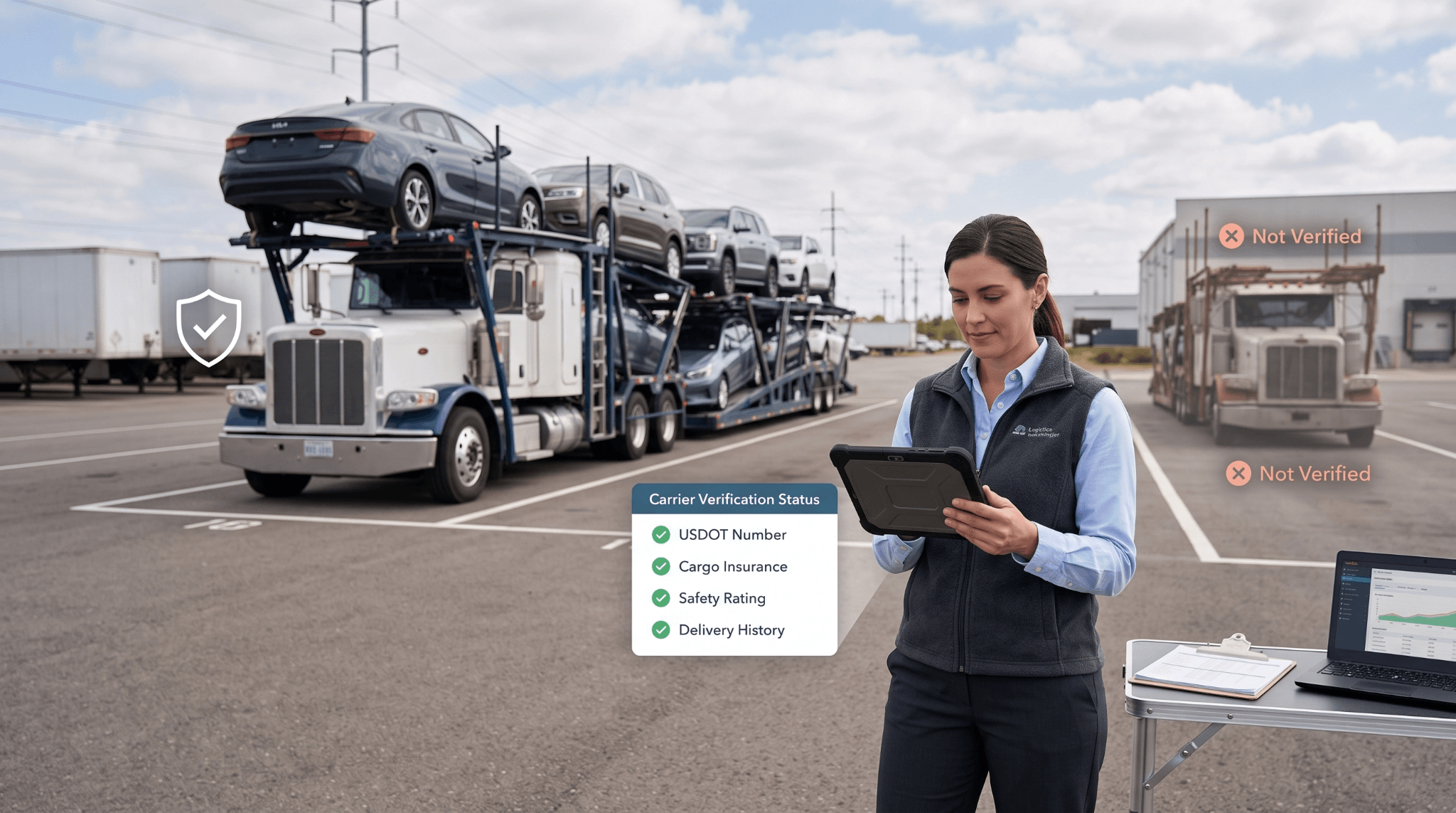
Not every truck on the road should be trusted with your car. This is the part of the process you can't see, so here's what we actually check before a carrier joins our network:
An active USDOT number registered with the Federal Motor Carrier Safety Administration
Current cargo and liability insurance
A verifiable safety and complaint history
A track record of on-time delivery
Here's the thing most people miss: the cheapest quote isn't automatically the best car transport service. If a carrier skipped this vetting, that low price comes with a real risk attached. This is also why comparing car transport companies on price alone can lead you to a worse outcome than paying slightly more for a carrier that's actually been checked out.
Red Flags to Watch For
Walk away if you see any of these:
A quote way below every other estimate you got
No written contract or Bill of Lading before pickup
Pressure to pay a large deposit right away
Vague or dodgy answers about insurance
No verifiable USDOT number when you ask for one
One of these alone might be nothing. A few of them together is a pattern worth trusting.
What You Pay and When
Cost and payment structure are two different things. Here's how payment actually works with Safeeds Transport. You don't pay anything upfront. When you book, we place a $1 hold on your card, just to confirm it's valid. That's it. No deposit, no charge, until your car is actually picked up.
Your quoted price is locked for 7 days. That gives you room to compare options or get your schedule sorted without worrying about the number changing on you. The full balance is due at pickup or delivery, depending on the carrier's policy. Accepted payment methods typically include:
Card
Cash or cashier's check
This is one of the reasons it's worth getting your car transport quote directly through Safeeds Transport rather than piecing one together from an outdated estimate. You'll know exactly what you owe and when, with nothing charged until your car is on the truck.
Door-to-Door vs Terminal-to-Terminal
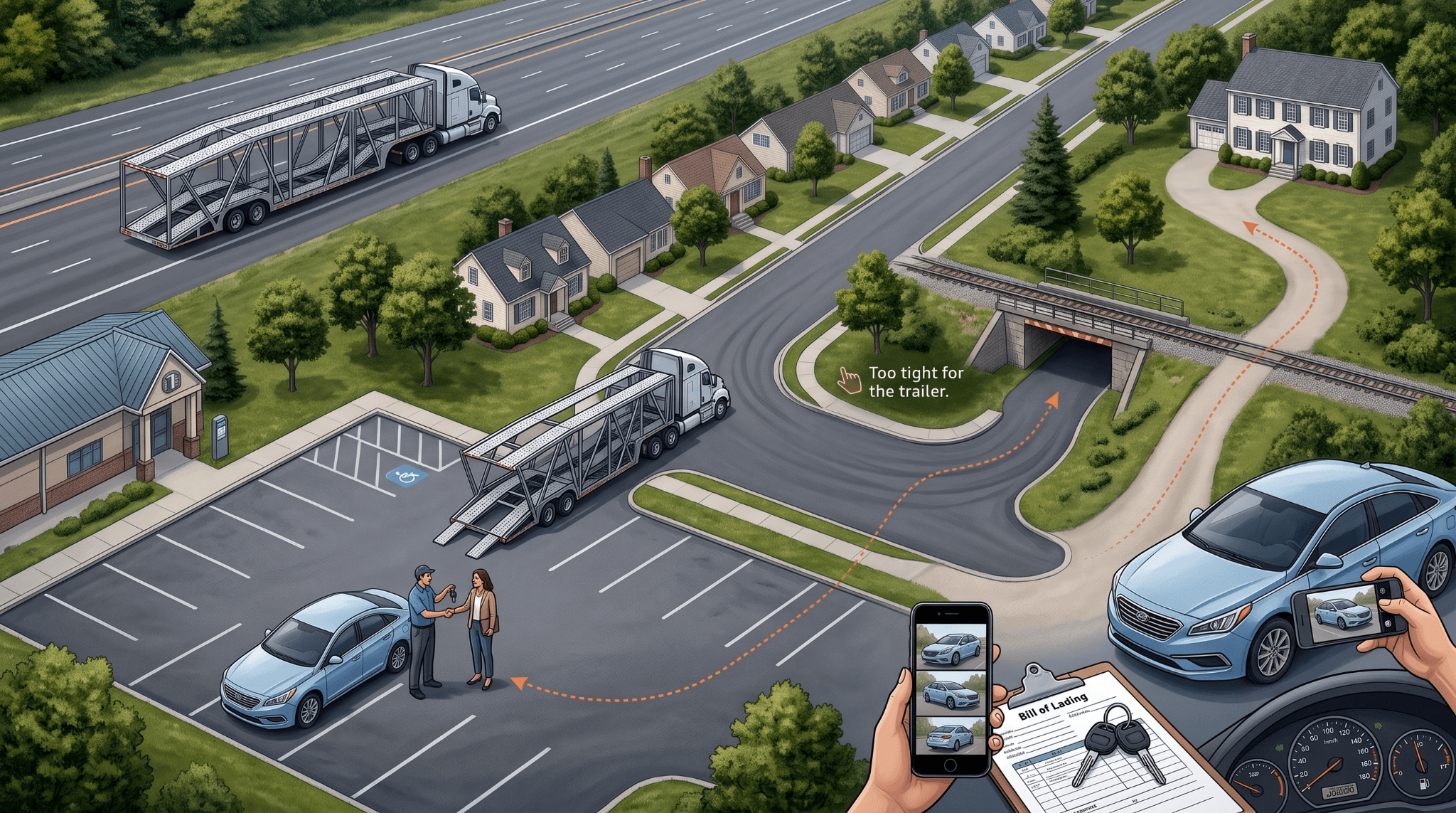
You've got two delivery options.
Door-to-door means the carrier gets as close to your actual address as the truck physically can. This is what most people mean when they search for car transport near me. It's more convenient, and it's usually a little more expensive since the driver has to navigate directly to you instead of a fixed drop point.
Terminal-to-terminal means you drop off and pick up your car at a secure lot instead. It costs less, but it means more driving on your end, and your car may sit at the terminal for a day or two before the next truck heading your direction is ready.
What If You Live in a Rural Area?
Big carrier trucks can't always get down narrow streets, under low bridges, or up long dirt driveways. A standard car-hauling trailer is longer than most moving trucks, so tight turns and low clearance are common problems.
If that's your situation, the carrier will usually ask to meet you at a nearby parking lot, gas station, or main road instead. This isn't a red flag. It's just physics, and it's worth planning for if you know your address is hard to reach.
How to Prepare Your Vehicle
Do these five things before pickup day. Each one takes a few minutes and protects you if there's ever a dispute about condition.
Wash the car so any existing scratches or dents are visible.
Take dated photos from every angle, inside and out.
Remove personal belongings and valuables.
Write down the current mileage and fuel level.
Confirm your pickup window in writing the day before.
That's it. Under an hour of work, and you'll have documentation if anything looks different at delivery.
What If Something Goes Wrong During Transport?
Every legitimate shipment includes a Bill of Lading. It's signed at pickup and again at delivery, and it records your car's exact condition both times, often alongside the photos taken during inspection.
If something happens in between, that document is w Read Article a claim starts. It gets filed against the carrier's insurance, not against you or the broker. This is why the vetting step earlier in this guide actually matters. A properly insured carrier means there's a real process if something goes wrong, not a dead end and a shrug.
Frequently Asked Questions
These are the questions we hear most from people shipping a car for the first time, answered plainly so you can book with confidence.
How much does car transport cost?
Expect $400 to $700 for a short regional move, and $1,000 to $1,800 for a coast-to-coast shipment. Safeeds Transport locks your quoted price for 7 days, so the number you get is the number you can count on.
How long does car transport take?
Most shipments take two to ten days. Regional routes deliver in two to four days, cross-country routes can take a week or more, and Safeeds Transport works with carriers vetted for consistent, on-time delivery.
Is my car insured during transport?
Yes. Every carrier in the Safeeds Transport network is required to carry active cargo insurance while your car is in transit, and we check that coverage before a carrier ever joins the network.
Do I pay before or after delivery?
You don't pay anything upfront with Safeeds Transport, just a $1 card hold to verify your card. The full balance isn't due until pickup or delivery, so your money stays in your pocket until your car is actually moving.
Can I put belongings in the car?
Usually a small amount, but check with your carrier first. It may not be covered by insurance, and going over the weight limit can affect your quote, so it's worth asking before pickup rather than after.
What is the difference between a broker and a carrier?
A broker arranges your shipment and finds you a carrier. A carrier owns the truck and drives it. Safeeds Transport works as a broker, matching you with licensed, insured carriers nationwide so you get the vetting without doing the legwork yourself.
How far in advance should I book car transport?
One to three weeks ahead gets you better pricing and more carrier options. And since Safeeds Transport locks your price for 7 days, you have time to plan your booking without losing the rate you were quoted.
Can you transport a car that does not run?
Yes. Just tell us upfront that your car doesn't run, and Safeeds Transport will match you with a carrier that has the right equipment, like a winch, ready to go.
Does the truck come to my exact address?
In most cases, yes. If your street is narrow or hard to access, your carrier will work with you to find the closest practical spot, and Safeeds Transport carriers are used to handling that kind of coordination smoothly.
What happens if nobody is available at delivery?
Someone needs to be there to inspect and sign for the car. If nobody shows up, the carrier may hold the vehicle or reschedule, sometimes with a fee, so it's worth confirming your delivery window with Safeeds Transport ahead of time.
Getting Your Vehicle Where It Needs to Go, Safely and On Time
Car transport across all 50 states really comes down to four decisions: open or enclosed, what actually drives your quote, when you pay, and how you prep your car before pickup.
None of these are complicated on their own. Most problems happen when one of them gets skipped, not because the process itself is complicated.
Ask questions before you book. The best car transport service is the one that can answer everything in this guide clearly and without hesitating. If a company gets vague when you ask about insurance, licensing, or payment timing, take that as your answer.
If you're ready, requesting a quote is free and gives you a real number to compare against everything you just read. Request a free car transport quote and get a price locked for 7 days, with no upfront payment, just a $1 card hold to verify your card.