Motorcycle shipping usually costs between $300 and $1,200, depending on distance, transport type, and whether the bike runs. Short regional moves often arrive in 1 to 3 days, while cross-country motorcycle shipping takes 7 to 10 days. Most bikes travel uncrated, held upright in a wheel chock and secured with soft straps on an open or enclosed carrier.
A motorcycle weighs a fraction of what a car does, so it needs different handling on a trailer. This guide explains how bikes are secured, what drives the price, and how to prepare. Safeeds Transport is a licensed, bonded, and insured broker that matches your bike with a vetted carrier. The FMCSA advises riders to understand the difference between an auto transporter and an auto broker before booking. To review your options with a 7-day price lock and no upfront payment, get a quote.
Key Takeaways
Motorcycle shipping in the United States usually costs between $300 and $1,200, with distance, open or enclosed transport, and running condition setting the final price.
Short motorcycle shipments under 500 miles typically arrive in 1 to 3 days, while cross-country motorcycle shipping takes about 7 to 10 days.
Most motorcycles ship uncrated, held upright in a wheel chock and tied down with soft straps, while crating is mainly needed for ocean, international, or air shipments.
Enclosed motorcycle transport costs about 30 to 50 percent more than open transport and suits vintage, custom, show and high-value bikes.
Before pickup, a motorcycle should have a quarter tank of fuel or less, no loose accessories, and dated photos that record its condition for any insurance claim.
How Motorcycles Are Loaded and Secured
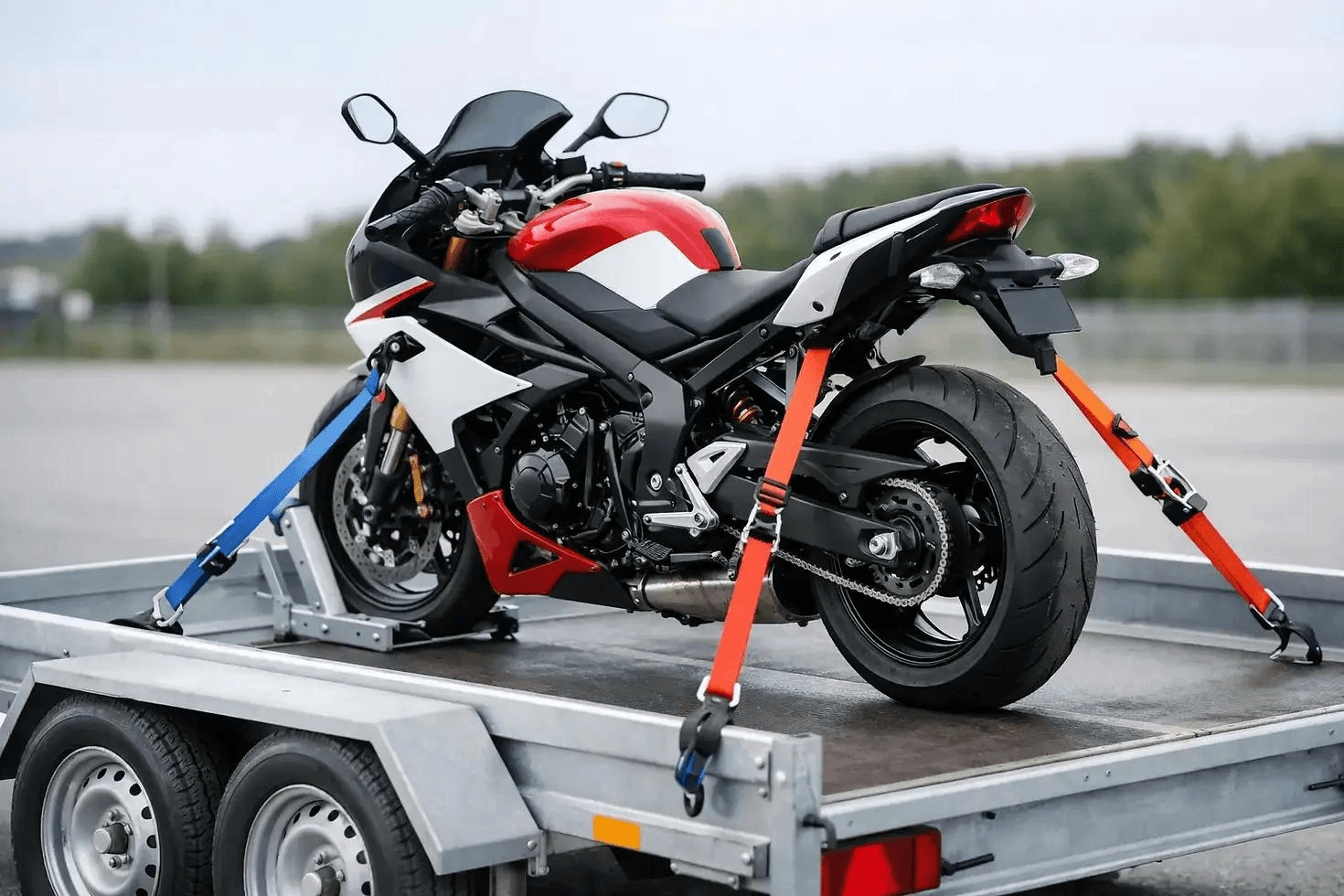
A motorcycle balances on two narrow tires and carries its weight high, so it cannot stand on its own when a trailer brakes, turns, or climbs a hill. Those forces push the bike from side to side. The three main risks in transit are tipping, shifting, and marks left by straps.
Carriers manage these risks with a small set of standard tools:
Wheel chock: a metal cradle that locks the front tire in place, so the bike stands upright before any strap goes on.
Soft straps: fabric loops wrapped around solid frame points, such as the lower triple clamp or frame rails, so metal hooks never touch paint or chrome.
Ratchet tie-downs: hooked to the soft straps and tightened to compress the front suspension slightly. A compressed suspension cannot bounce, which keeps the straps tight over bumps.
Handlebar strap: a padded strap that gives tie-downs a safe anchor on bikes with few frame points, without bending levers or cables.
Rack system: a fixed motorcycle rack built into some trailers, holding several bikes in a row with built-in chocks.
Most bikes roll up a ramp. Heavy touring bikes and large cruisers, some of which weigh more than 800 pounds, are often loaded on a hydraulic liftgate instead. This keeps anyone from pushing a heavy machine up a steep incline.
Once the bike is in place, the driver tightens each strap in an even pattern and checks for movement. A properly secured motorcycle should not rock when pushed by hand.
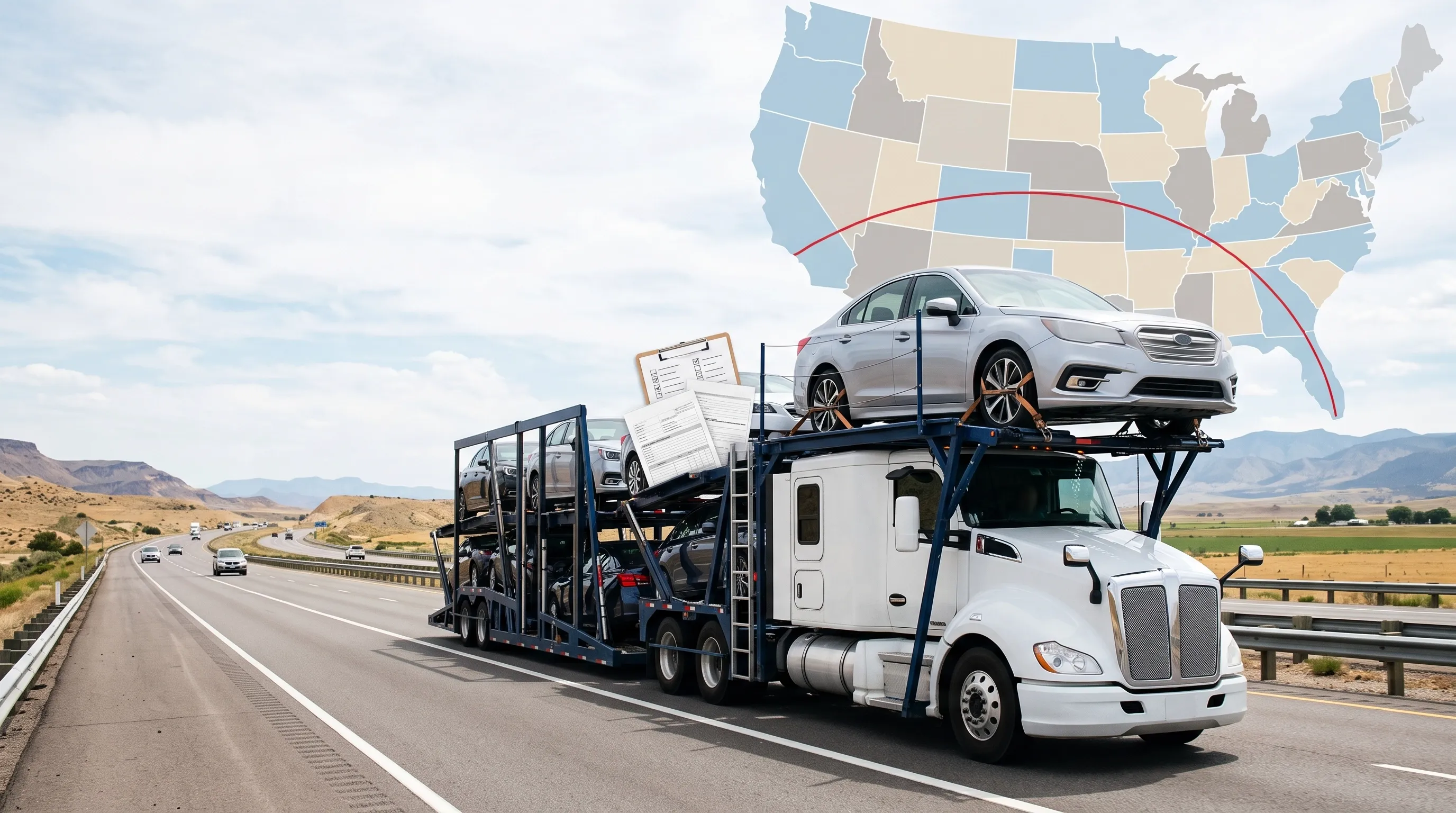
On pickup day, the driver from the carrier assigned to your shipment inspects the bike with you. Together, you record existing scratches, dents and missing parts on the bill of lading, a document that serves as both your receipt and the condition report. You sign it, keep a copy, and the bike is loaded. The same document is checked again at delivery.
What Motorcycle Shipping Costs by Distance
Distance is the main factor in your motorcycle shipping cost. Longer routes cost more in total, but the price per mile usually drops as the trip gets longer. That happens because fixed costs, such as loading and paperwork, are spread across more miles.
The table below shows typical 2026 ranges for open transport of a running, standard-size motorcycle.
Distance | Typical cost (open transport) | Typical transit time | Example route |
Under 500 miles | $300 to $600 | 1 to 3 days | Los Angeles to Phoenix |
500 to 1,500 miles | $500 to $900 | 3 to 6 days | Chicago to Atlanta |
Over 1,500 miles (cross country) | $800 to $1,200 | 7 to 10 days | New York to Los Angeles |
Enclosed transport usually adds about 30 to 50 percent to these figures. Cross-country motorcycle shipping sits at the top of the range because the bike spends more days on the road and the carrier covers more fuel and driver hours.
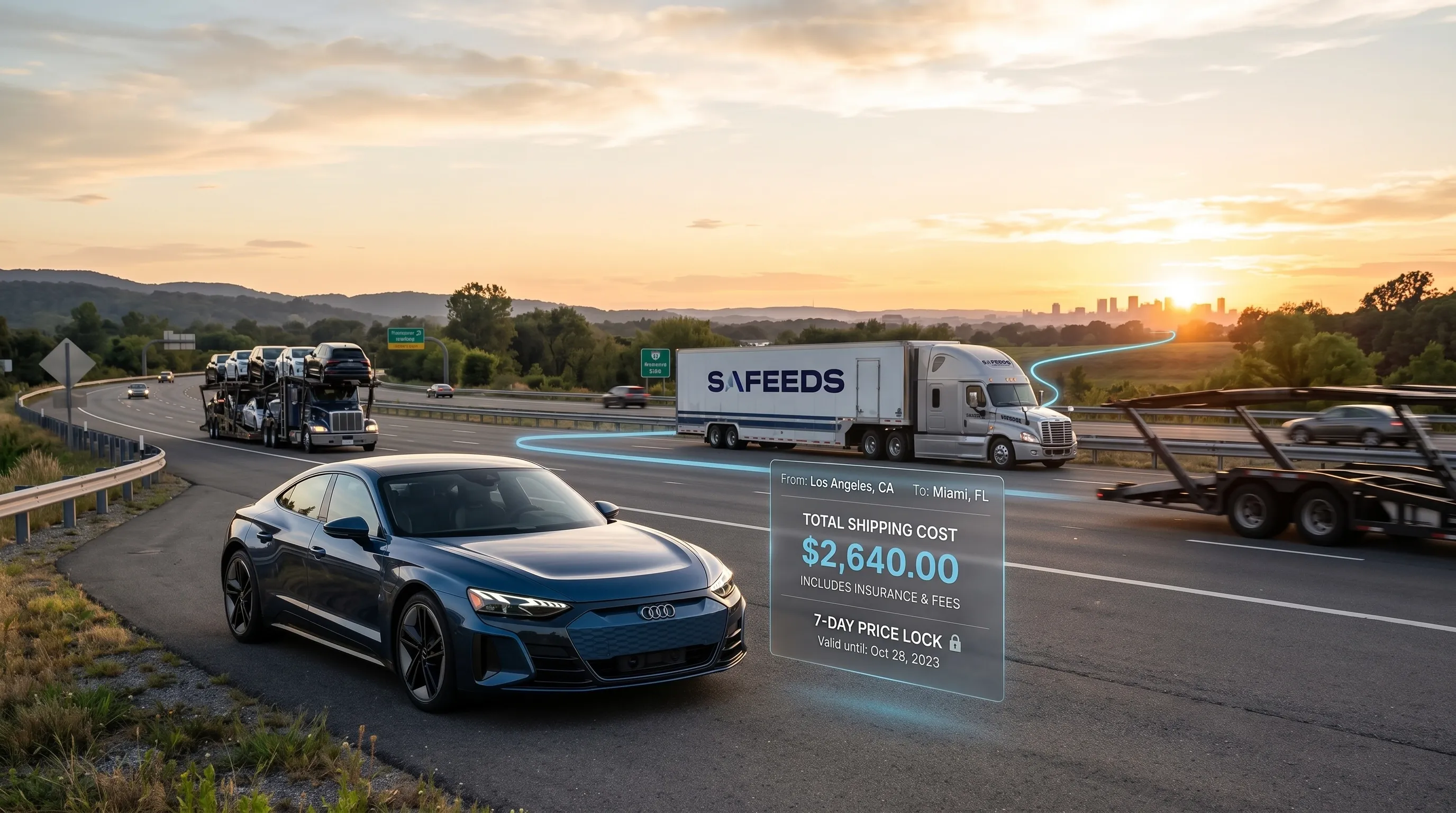
With Safeeds Transport, booking does not require an upfront payment. A $1 card verification hold confirms the order, and your quoted price stays locked for 7 days. The full balance is paid at pickup or delivery.
What else changes your motorcycle shipping cost?
Bike size and weight: A 1,800 cc touring bike takes more deck space and handling than a 300 cc commuter, so it costs more to move.
Running condition: A bike that does not start needs a winch, a liftgate or extra hands to load, which adds a fee.
Season and demand: Spring brings riders shipping bikes for the riding season, and fall brings snowbird moves south. Prices rise when carriers are busy.
Route popularity: Carriers run major highway routes often, so a bike moving between large cities usually costs less per mile than one going to a remote rural address.
Transport type: An enclosed trailer carries fewer vehicles per load than an open one, so each spot costs more.
Open vs Enclosed for Motorcycles
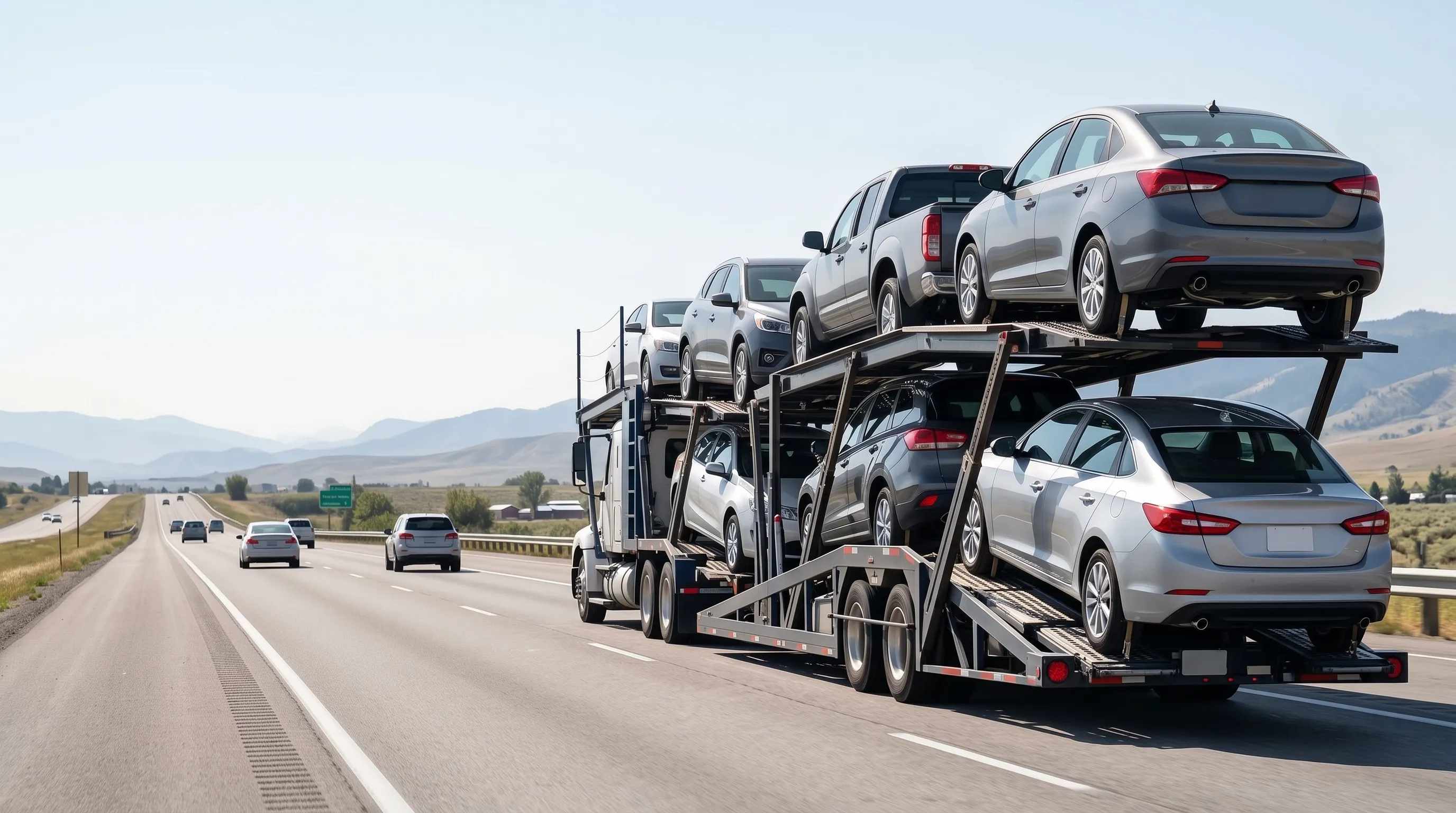
Open transport is the standard choice for most riders. The bike rides on an open trailer, often alongside cars, and faces the same weather and road dust as any vehicle on the highway. For a commuter, sport or touring bike in good condition, the usual result is a bike that needs a wash on arrival.
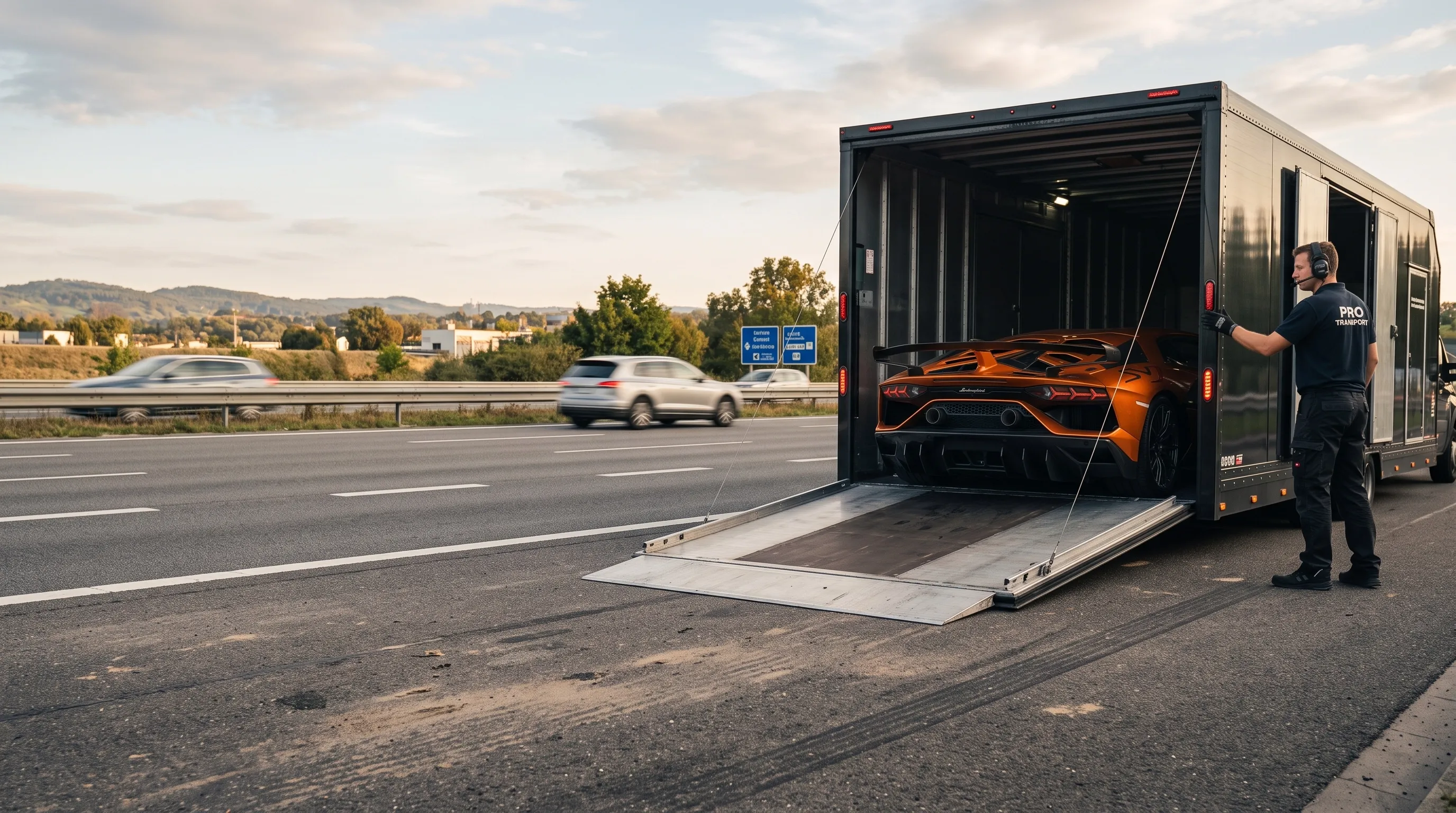
An enclosed trailer has solid walls and a roof. It shields the bike from rain, snow, road salt, gravel and direct sun. Enclosed carriers also tend to haul fewer vehicles per load and often use liftgates, which means gentler loading for low or heavy bikes.
Factor | Open transport | Enclosed transport |
Typical cost | Lower | About 30 to 50% higher |
Weather exposure | Exposed to rain, sun and dust | Fully covered |
Road debris | Small stone chips are possible | Shielded |
Carrier availability | Many carriers on most routes | Fewer carriers, may need more lead time |
Suited for | Commuter, sport and touring bikes | Vintage, custom, show and high-value bikes |
A simple rule of thumb helps here. If fixing a single paint chip would cost more than the price difference between the two options, choose enclosed. The same applies to bikes with custom paint, rare parts or show-quality chrome.
Winter routes through northern states also favor enclosed motorcycle transport, because road salt can corrode exposed metal. When comparing motorcycle shipping companies, ask whether an enclosed quote uses a dedicated motorcycle trailer or a shared enclosed car trailer, since that affects how the bike is loaded.
Crated vs Uncrated Shipping
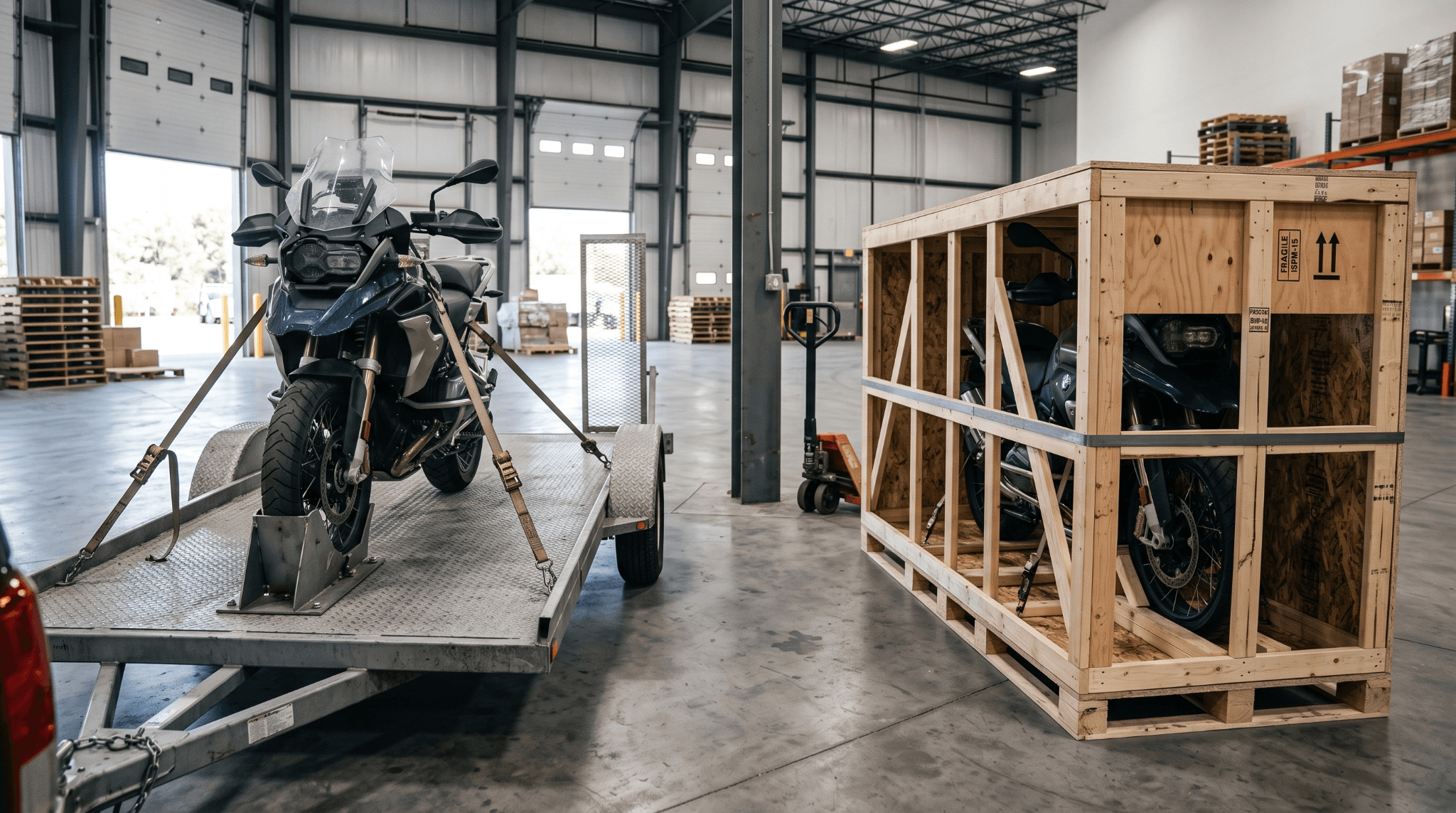
Uncrated shipping is the norm for moves within the mainland United States. The bike rolls onto the trailer as it is, sits in a wheel chock, and is held down with soft straps. No packing is needed, so pickup can happen quickly and the bike arrives ready to ride.
Crated shipping means the bike is bolted to a pallet or built into a wooden or steel crate before it moves. The crate keeps the bike stable when it travels with other cargo by ship, plane or freight truck.
A crate usually makes sense in these situations:
Ocean shipping: some routes between the mainland and Hawaii may require a crate or pallet, depending on the port and the vessel.
International moves: customs inspections and port handling often call for a crated unit.
Air freight: airlines treat fuel as hazardous cargo, so air shipments may also require a fluid drain and a disconnected battery.
Partly taken apart vehicles: a project bike, or a powersports vehicle with parts removed, cannot roll onto a trailer safely.
Crating adds both time and cost. Building the crate can take a day or more, and the crate itself carries a separate fee. If your route needs one, ask for the crating fee to appear as its own line in your quote so you can compare it fairly.
Preparing Your Bike for Transport
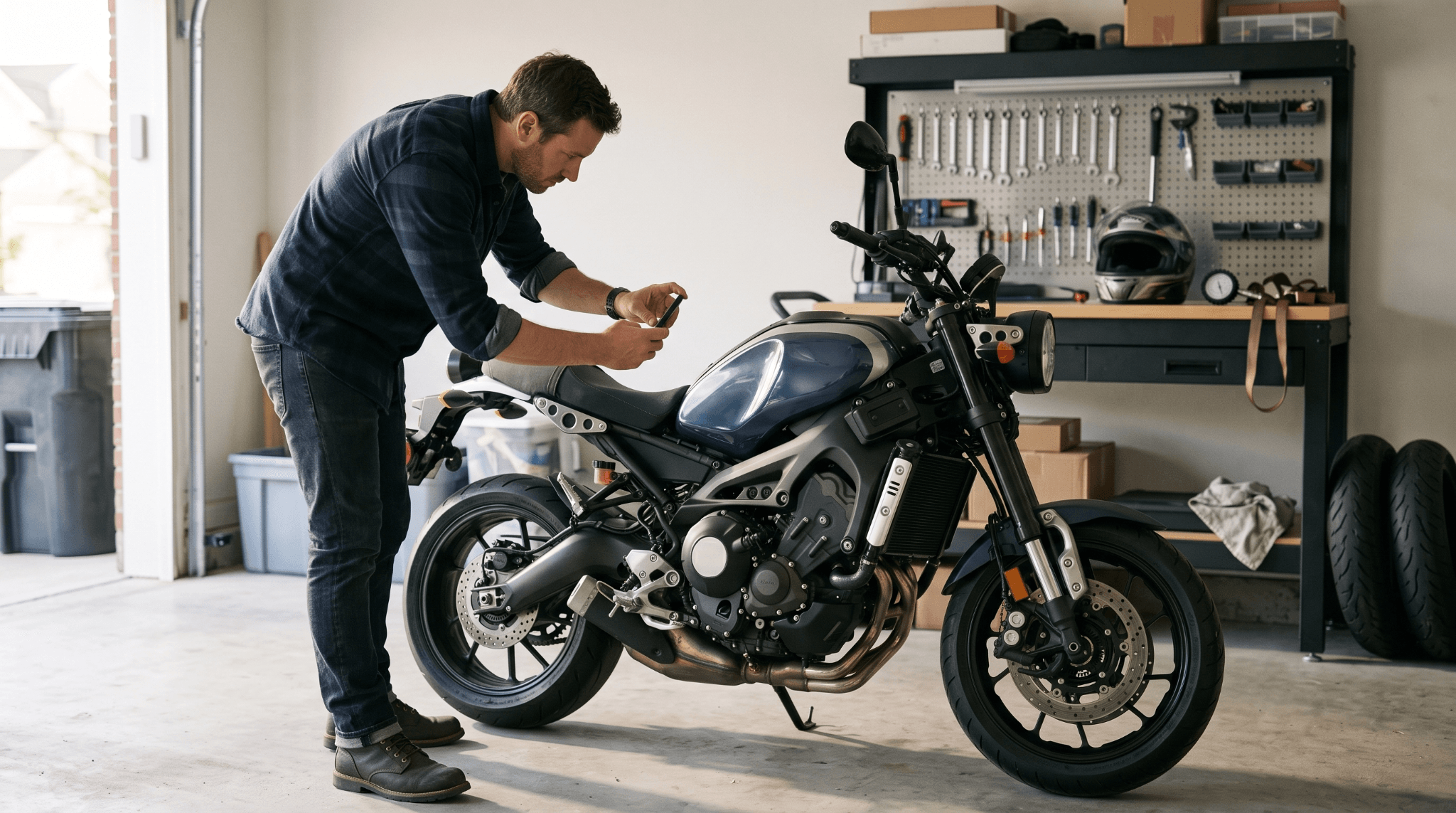
Good preparation prevents most transport problems. Start about a week before pickup, so you have time to fix anything you find.
Wash the bike. Clean paint makes existing scratches easy to see during the inspection.
Check the tires. Inflate them to the pressure in your owner’s manual, so the bike sits firmly in the wheel chock.
Look for leaks. A carrier may refuse a bike that drips oil or coolant, because leaks can damage vehicles parked below it.
Lower the fuel level. Keep the tank at a quarter full or less to cut weight and fire risk.
Turn off the alarm. A driver on the highway cannot silence an alarm that keeps going off. Disconnect the battery if the carrier asks you to.
Remove loose items. Take off GPS units, phone mounts, tank bags, soft saddlebags and anything that could fall or go missing.
Secure what stays. Fold in the mirrors and lock any hard cases the carrier allows you to leave on.
Prepare one key. The driver needs it to move the bike. Keep your spares at home.
If your bike has a tall windshield, extended handlebars or other large accessories, mention them when you book. The carrier can then plan the right space on the trailer.
How do you document your bike’s condition before pickup?
Photos give you clear proof of how the bike looked before it left your hands. Take dated photos from the front, back, both sides and above, plus close-ups of any scratches, dents or chips.
Record a short walk-around video that also shows the odometer reading. Save the files in two places, such as your phone and a cloud folder.
If damage appears at delivery, these images and the signed bill of lading together show exactly what changed during transport. Without them, a claim becomes your word against the driver’s.
Insurance on Motorcycle Shipments
The carrier assigned to your shipment carries cargo insurance that pays for damage it causes in transit, such as a strap failure or a loading accident. Safeeds Transport works only with licensed and insured carriers that pass its approval process.
You can confirm a carrier’s operating authority and insurance filings yourself through the FMCSA SAFER Company Snapshot by searching its USDOT number. According to the FMCSA, interstate brokers and carriers receive a six-digit MC docket number, and carriers also receive a seven-digit USDOT number.
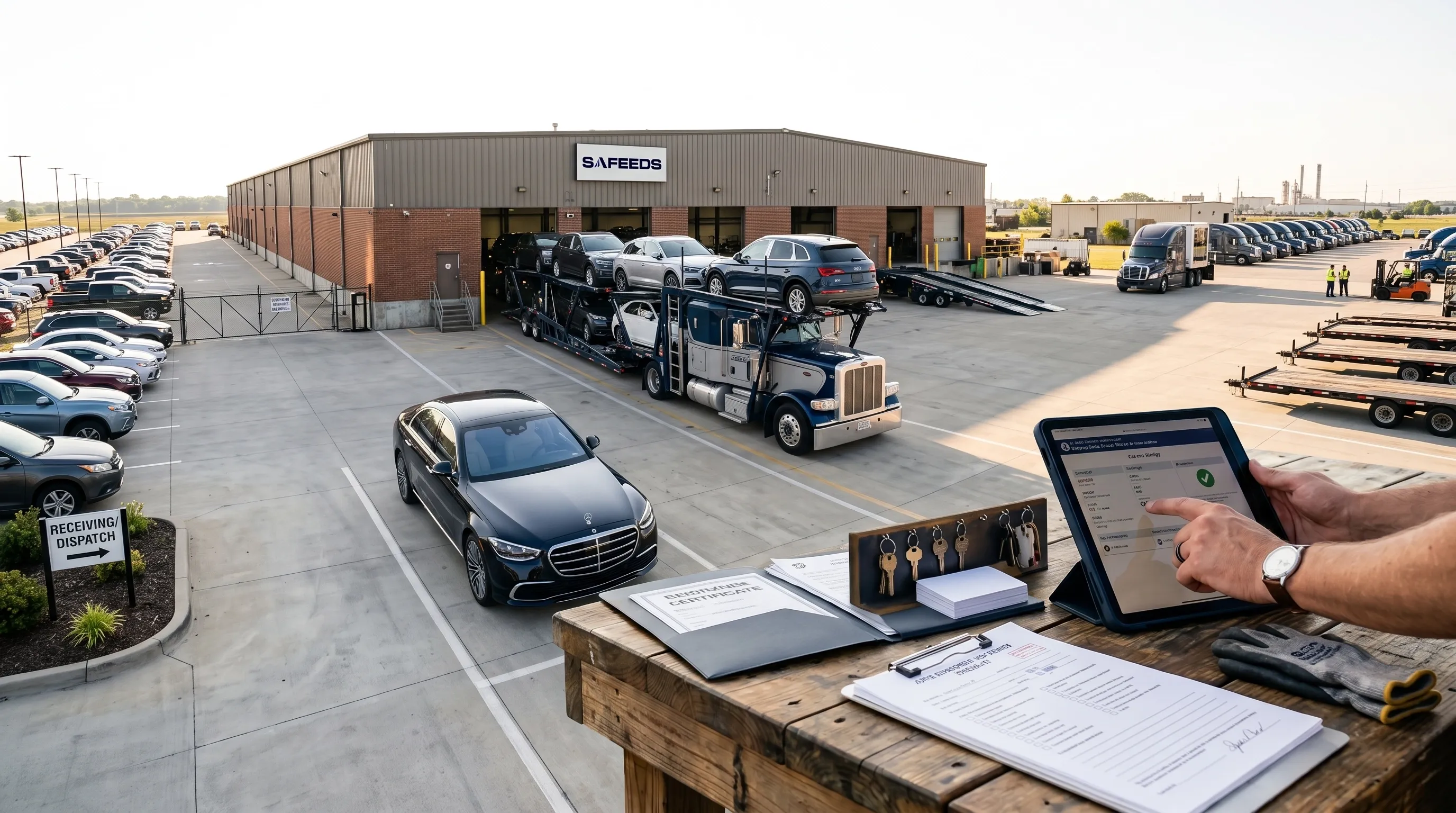
Before pickup, ask for the carrier’s certificate of insurance. It should show the carrier’s name, the coverage limit and the policy dates. Limits vary by carrier, so check that the amount covers your bike’s value.
Your own motorcycle policy may also apply. Some policies cover a bike while it is being shipped, and others do not, so call your insurer to confirm.
Cargo insurance generally does not cover:
Personal items left on the bike, such as helmets, tools or bags
Damage that existed before pickup
Mechanical problems unrelated to loading or transport
What should you do if you find damage at delivery?
Inspect the bike with the driver before you sign anything. Check the same spots shown in your pickup photos.
Write any new damage on the bill of lading, including its location, size and type.
Take photos on the spot, with the trailer visible in the frame if possible.
Sign only after your notes are on the document, and keep your copy.
File the claim with the carrier’s insurer using your pickup photos, delivery photos and the bill of lading. Your broker can help you reach the carrier.
Damage that is not noted on the bill of lading at delivery is much harder to claim later. If a carrier or broker does not respond to a valid claim, the FMCSA accepts complaints at 1-888-368-7238.
What Else Do Riders Ask About Motorcycle Shipping?
Booking a shipment often raises a few last questions about price, timing and how the bike will be handled. The answers below cover the points riders ask about most before they schedule pickup.
How much does it cost to ship a motorcycle?
Most riders pay between $300 and $1,200 to ship a motorcycle within the continental United States. Short trips under 500 miles sit at the low end, while cross country routes reach the high end. The three main price drivers are distance, open or enclosed transport, and whether the bike runs. Enclosed service adds roughly 30 to 50 percent.
Should I ship my motorcycle enclosed?
Choose enclosed transport if your bike is vintage, custom, a show bike or worth more than a typical commuter model. It is also a smart choice for winter routes with road salt. For a daily rider or touring bike in good condition, open transport is safe and costs less. Many owners decide by comparing the price difference with the cost of a paint repair.
Do I need a crate to ship a motorcycle?
No, not for most domestic moves. Uncrated shipping is standard within the mainland United States, with the bike held in a wheel chock and tied down with soft straps. A crate or pallet is usually needed only for ocean or international shipping, or for a bike that has been partly taken apart and cannot roll on its own wheels.
How is a motorcycle secured during transport?
The front tire rolls into a wheel chock, which holds the bike upright. Soft straps loop around solid frame points, and ratchet tie-downs pull the bike down evenly, compressing the suspension slightly so it cannot bounce loose. The driver checks the straps at stops along the route and retightens them if needed.
Can I ship a motorcycle with luggage attached?
Locked hard cases that are bolted to the bike can often stay on, but confirm this with the carrier first. Soft bags, tank bags, helmets and loose gear should come off, since they can shift, fall or go missing. Keep in mind that carrier cargo insurance covers the motorcycle, not personal items left on or inside it.
How long does motorcycle shipping take?
Transit usually takes 1 to 3 days for trips under 500 miles and 7 to 10 days for cross-country motorcycle shipping. Pickup is a separate step. After booking, the carrier picks up the bike within a scheduled window, often a few days, so plan your total timeline around both the pickup window and the transit time.
Can you ship a motorcycle that does not run?
Yes. A non-running motorcycle can be shipped, but it needs extra loading help, such as a winch, a liftgate or additional workers, so carriers charge an inoperable fee. Tell the broker the bike’s condition when you book. If a driver arrives expecting a running bike and finds one that does not start, pickup may be delayed or rescheduled.
How much fuel should be in the tank?
Keep the fuel level at a quarter tank or less. Fuel adds weight and creates a fire risk if the tank is damaged or leaks during transport. A small amount lets the driver move the bike on and off the trailer. Ocean and air shipments may require an even lower level or a full fluid drain.
Is my motorcycle insured during transport?
Yes. The carrier assigned to your shipment carries cargo insurance that covers damage caused during transit. Ask for the carrier’s certificate of insurance before pickup and check the coverage limit against your bike’s value. Your own motorcycle policy may add protection, so call your insurer to ask whether it covers the bike while it is being shipped.
Can I ship a motorcycle with a car at the same time?
Yes. You can book a car and a motorcycle together, and both can often travel on the same carrier. Combining them saves you from arranging two pickups and can lower the cost per vehicle. Mention both vehicles when you request a quote so the carrier can plan deck space and the right tie-down equipment for each.
Choosing the Right Way to Ship Your Motorcycle
Shipping a motorcycle comes down to a few decisions made in order. Distance sets your motorcycle shipping cost and timeline, and the bike’s value decides between open transport and an enclosed trailer. Skip the crate unless your route crosses an ocean or a border, then prepare the bike and photograph its condition before pickup.
When comparing motorcycle shipping companies, look past the headline price. Ask who the carrier will be, request the certificate of insurance, and confirm how payment works before you commit.
Safeeds Transport, rated 4.8 out of 5 across more than 10,000 vehicles shipped, arranges motorcycle transport in all 50 states with no upfront payment and a 7-day price lock. Request your free quote or call (315) 314-4337.