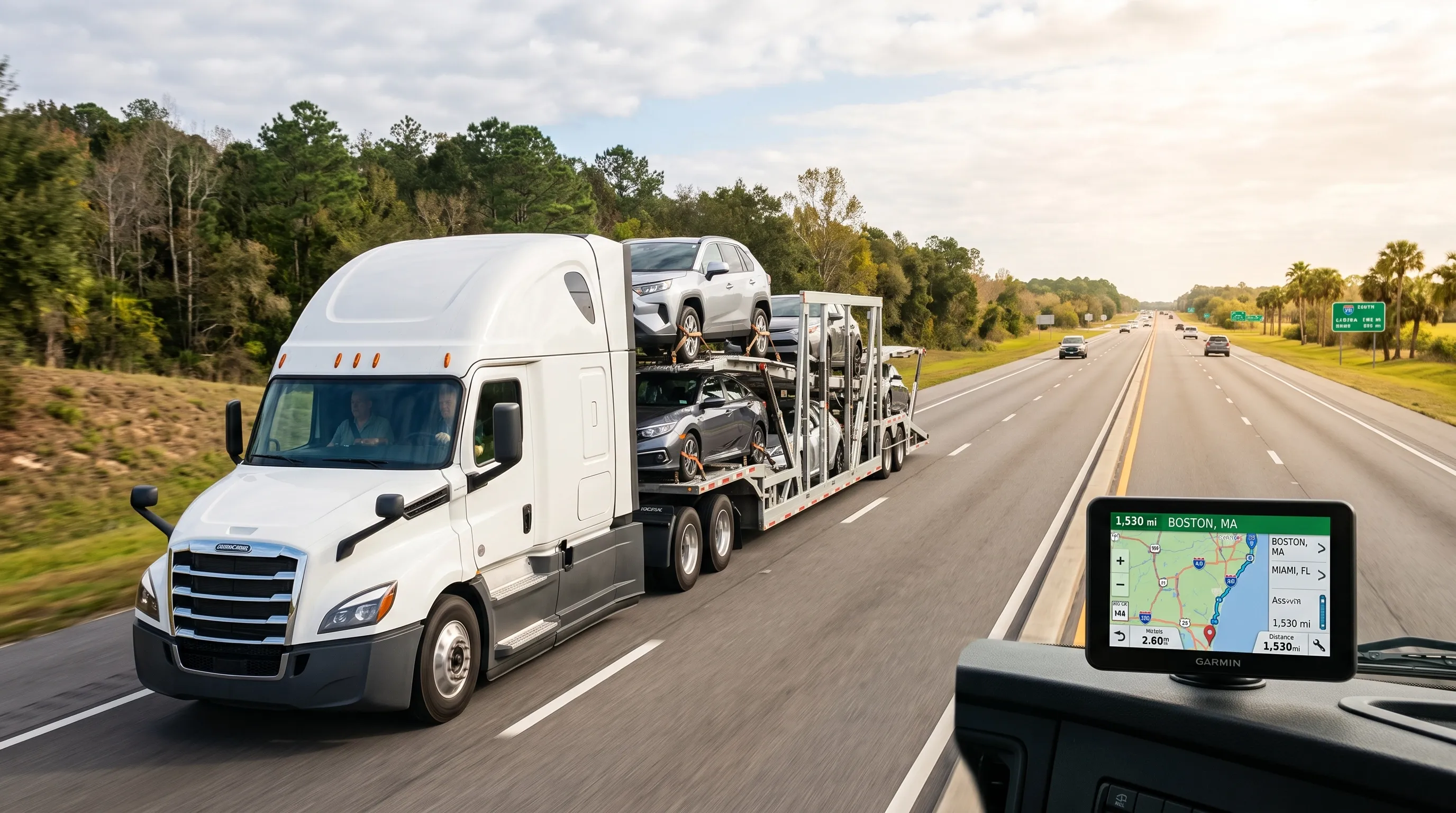
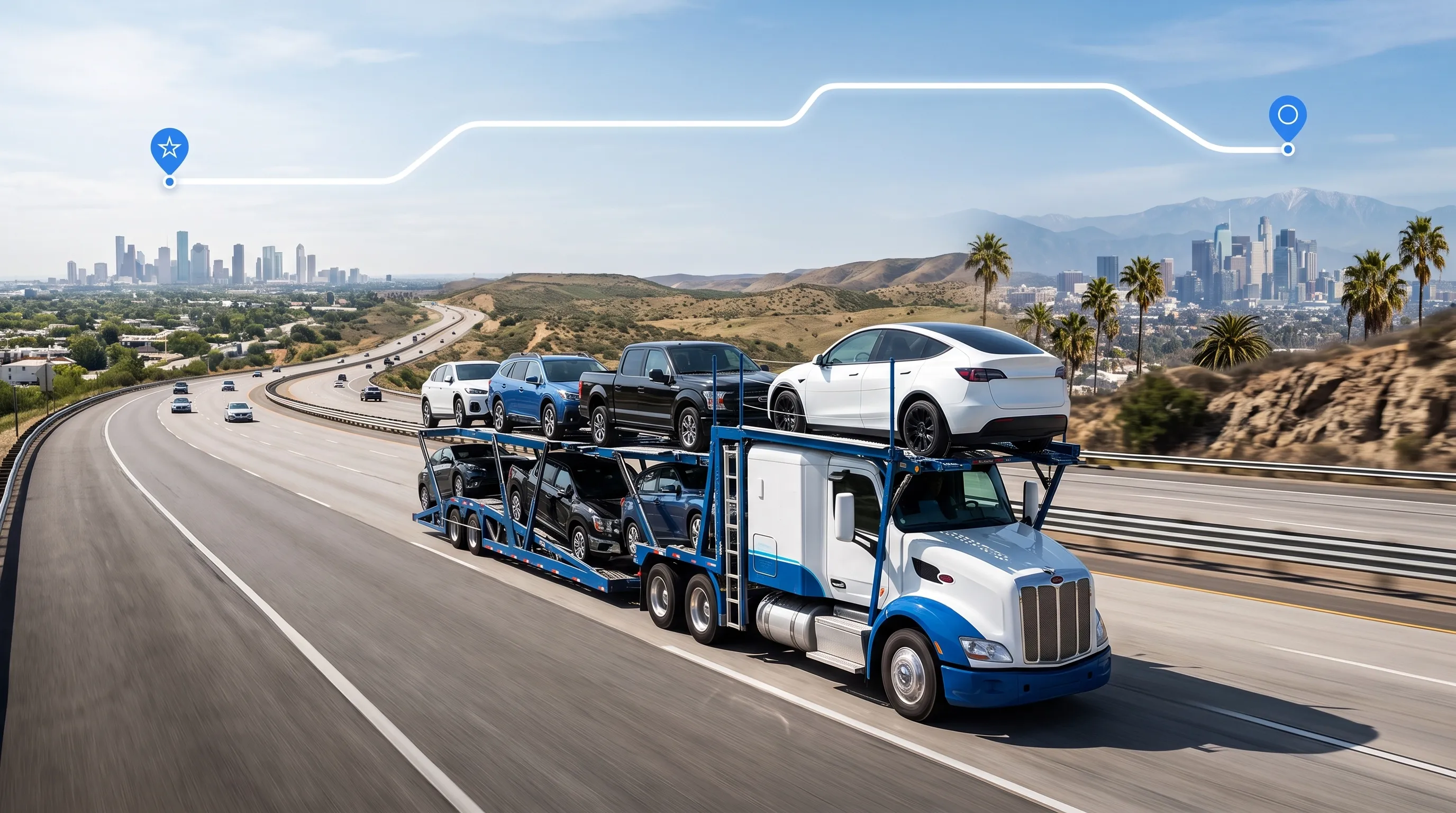
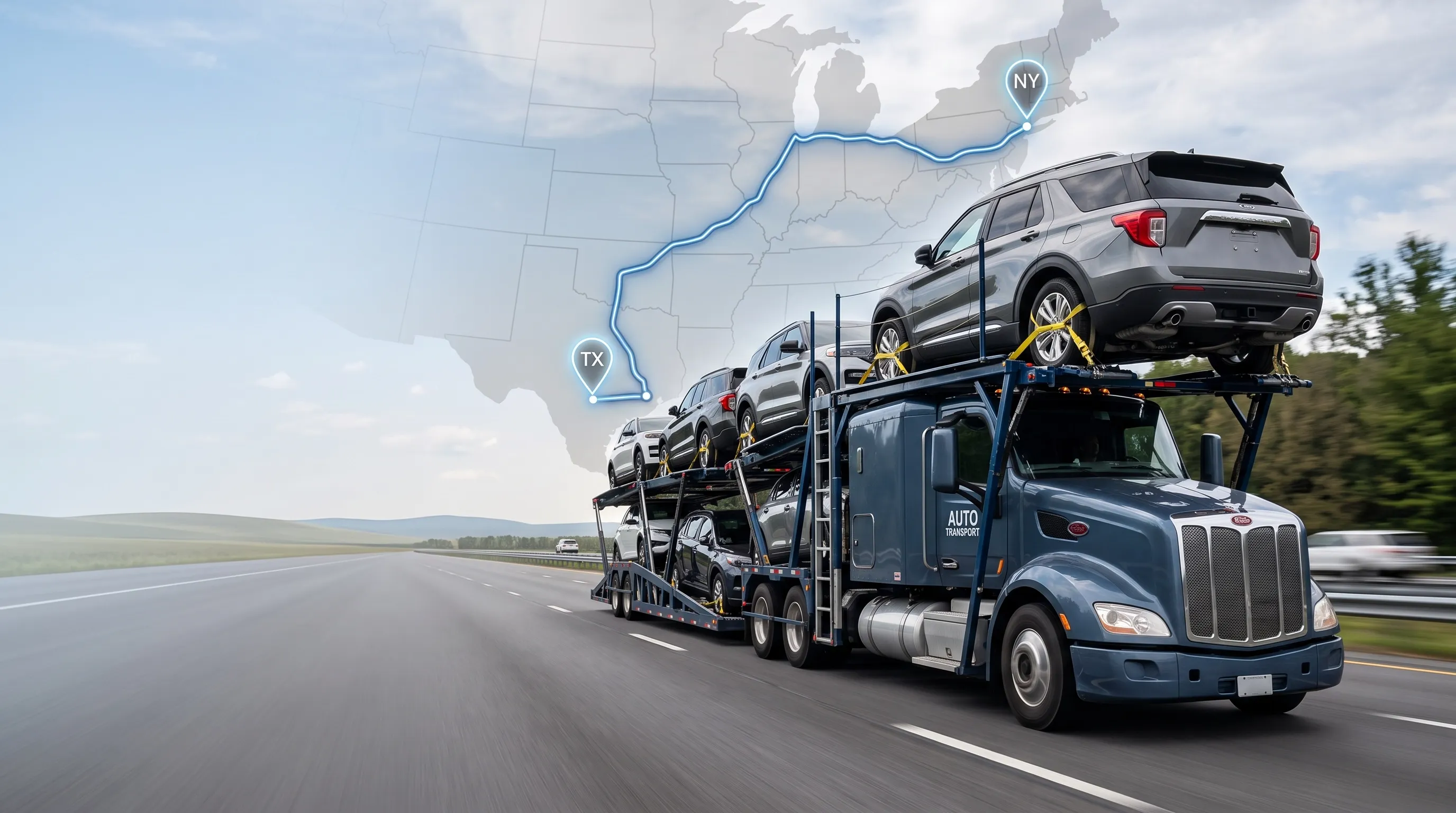
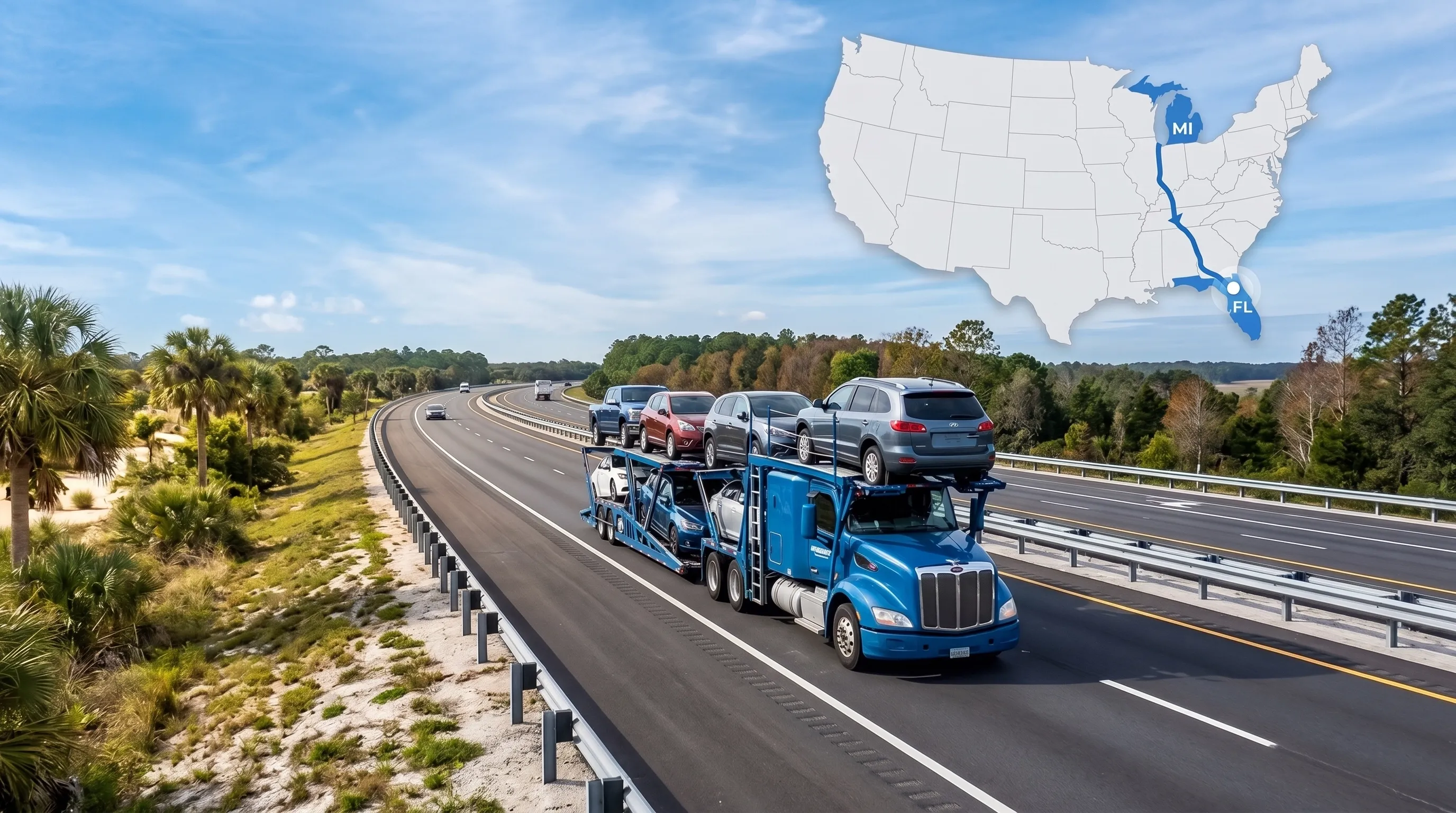
The average car shipping cost in 2027 is $500 to $1,900 for a standard sedan on an open carrier. Short routes under 500 miles usually cost $500 to $900, while cross-country trips run $1,300 to $1,900. Your final cost to ship a car depends on distance, vehicle size, transport type, and season.
Getting a car shipping cost quote sounds simple. Then you compare three quotes for the same route and find they're $400 apart. I've seen this confuse even careful planners, and it's the most common question customers ask before booking.
So how do you tell a fair price from a risky one? This guide covers average prices by distance, how per-mile rates work, and what raises or lowers a quote. It also shows how to spot a "cheap" quote that ends up costing more.
Want your exact price? Request a free quote from Safeeds Transport and get a written rate locked for 7 days.
Key Takeaways
In 2027, the average car shipping cost for a standard sedan on an open carrier ranges from about $500 for short trips under 500 miles to $1,900 for cross-country routes.
The car shipping cost per mile drops as distance increases, from about $1.50 to $2.50 per mile on short trips to $0.45 to $0.65 per mile on routes over 2,500 miles.
Enclosed car transport usually costs 40% to 60% more than open transport and is best suited to classic, luxury, exotic, and newly restored vehicles.
Car shipping prices are usually highest in summer, around major holidays, and during the fall and spring snowbird seasons, while January and February tend to be the cheapest months.
A car shipping quote priced well below market rates often leads to pickup delays and price increases, so a fair quote should include a written price, clear payment terms, and no large upfront deposit.
Average Car Shipping Cost by Distance
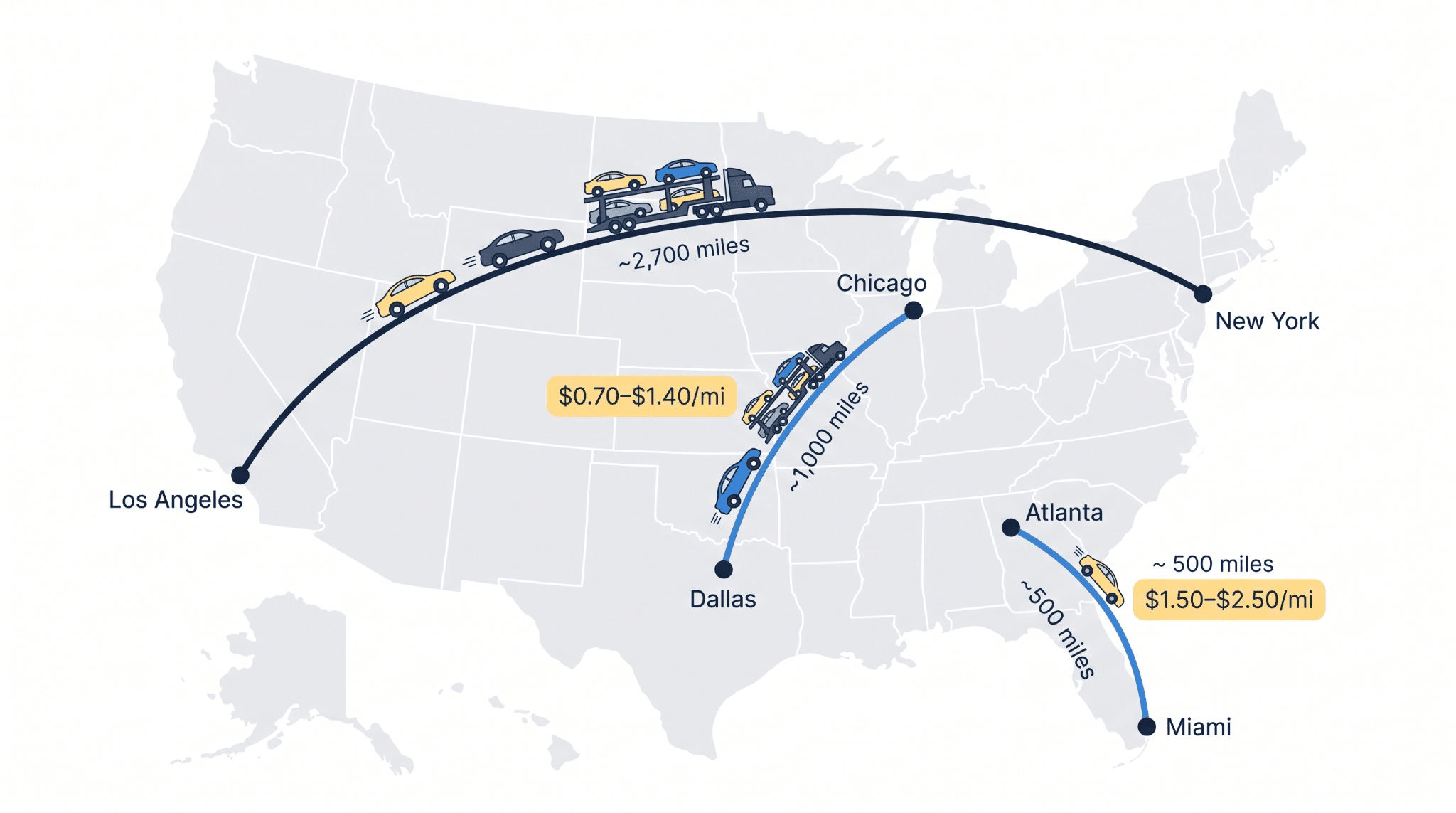
Distance matters more than any other factor. Longer trips mean more fuel, more driver hours, and more days on the road. Here are estimated 2027 ranges for a standard sedan on an open carrier.
Distance | Estimated Price | Approx. Cost Per Mile | Transit Time |
Under 500 miles | $500 to $900 | $1.50 to $2.50 | 1 to 3 days |
500 to 1,000 miles | $700 to $1,100 | $0.90 to $1.40 | 2 to 5 days |
1,000 to 1,500 miles | $900 to $1,300 | $0.70 to $1.00 | 3 to 6 days |
1,500 to 2,500 miles | $1,100 to $1,600 | $0.55 to $0.80 | 5 to 8 days |
2,500+ miles | $1,300 to $1,900 | $0.45 to $0.65 | 7 to 10 days |
These are starting points. Your actual cost to ship a car depends on your exact addresses, your vehicle, and the time of year.
A 500-mile trip, such as Atlanta to Miami, usually costs $600 to $900 and takes one to three days. Short trips can feel pricey for the distance. That's because loading, securing, and unloading take the same time whether the trip is 200 miles or 2,000.
Chicago to Dallas, at about 1,000 miles, usually costs $900 to $1,300. A full cross-country route like Los Angeles to New York usually runs $1,300 to $1,900 and takes a week or more.
Knowing how much to ship a car should cost on your route is the first step toward spotting a fair quote.
Cost Per Mile: Why It Drops on Longer Routes
Look closely at the table, and you'll notice a pattern: the farther your car goes, the less you pay for each mile.
A normal car shipping cost per mile in 2027 falls into three bands. Short trips under 500 miles cost about $1.50 to $2.50 per mile. Medium trips of 500 to 1,500 miles cost about $0.70 to $1.40. Long trips over 1,500 miles cost about $0.45 to $0.80.
Think of a taxi. You pay a base fee the moment you get in. On a short ride, that fee is most of your fare. On a long ride, it's spread across many miles.
Here's how that plays out:
A 300-mile trip at $600 costs $2.00 per mile.
A 2,700-mile trip at $1,500 costs about $0.56 per mile.
The long trip is nine times farther but costs only 2.5 times more.
Pro tip: When you compare quotes, divide each price by your route's mileage. A per-mile rate far below the bands above is a warning sign.
What Drives Your Price Up or Down
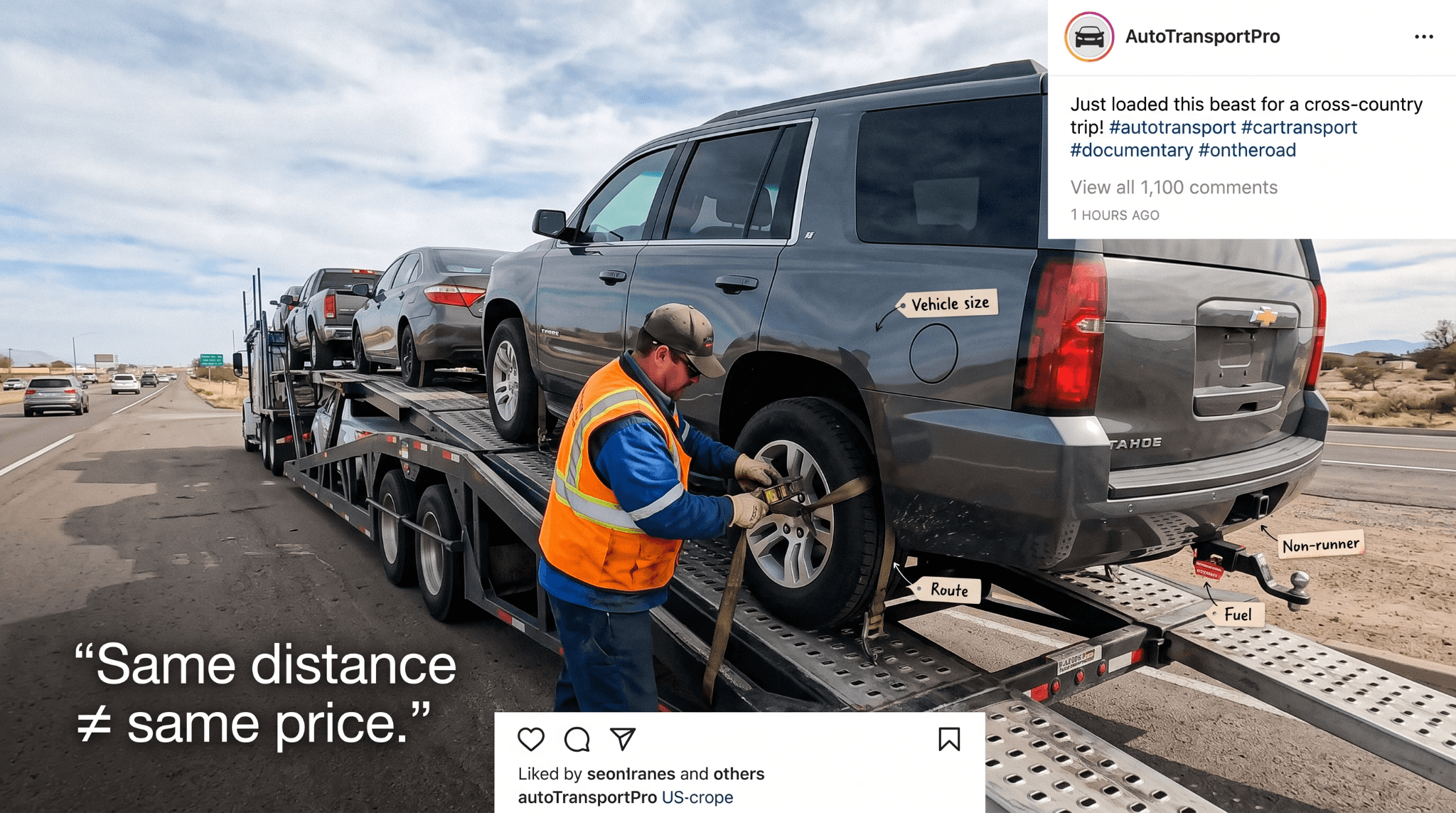
Two people shipping the same distance can still pay very different prices. Here's why.
Trailers have limited space and a legal weight limit, so bigger vehicles cost more. A mid-size SUV or minivan usually adds $100 to $250 over a sedan. A full-size pickup usually adds $200 to $400. Lift kits and roof racks can add more.
Carriers prefer busy highway routes like I-95 and I-10, where they can fill trailers quickly. Major cities are easier to reach, too. Routes between large cities usually get the best car transport cost, while remote towns and back roads cost more.
Does it cost more to ship a car that doesn't run?
Yes. A car that can't drive onto the trailer needs a winch, and not every carrier has one. Expect a fixed fee of about $150 to $300.
Fuel matters here, too. AAA's 2026 Your Driving Costs study used an average regular fuel price of $4.152 per gallon, and AAA noted that gas prices were up 31.8% from the year before. Carriers build fuel into their rates, which is one reason car transport costs rose on many routes in 2026. See the full breakdown in AAA's 2026 Your Driving Costs data.
Open vs Enclosed: The Real Price Difference
Your choice of trailer is one of the biggest price decisions you'll make. Open transport carries your car on a two-level trailer, like the new cars you see headed to dealerships. It's the most common and most affordable option. Enclosed transport keeps your car fully covered and usually costs 40% to 60% more.
Feature | Open Transport | Enclosed Transport |
Cross-country price | $1,300 to $1,900 | $1,900 to $2,900 |
Protection | Exposed to weather and dust | Fully covered |
Availability | High, faster pickup | Lower, fewer carriers |
Best for | Daily drivers, family cars | Classic, luxury, exotic cars |
What do you get with enclosed transport?
You get protection from rain, hail, dust, and road debris. Many enclosed carriers also have higher insurance limits and liftgates for low cars. Classic, luxury, exotic, and freshly restored cars are good candidates, because even a small chip is costly to fix on these vehicles. For a regular sedan, SUV, or truck, open transport is safe and sensible.
Seasonal Price Swings and How to Avoid Them
Car shipping works like airline tickets. When demand rises, so do prices. Once you know when those spikes usually happen, you can plan around them and avoid paying peak rates for the same route.
Summer is peak moving season for families and college students. More cars competing for trailer space means higher prices. Around the holidays, many drivers take time off, which cuts capacity. Plenty of customers find that shipping a car costs them noticeably more in late December than in early November.
Winter weather adds another layer. Snow and ice can slow drivers and raise prices on northern routes through states like Michigan, Minnesota, and New York. Southern routes usually stay steadier.
Seasonal residents head south from October to December and north from March to May. Routes like New York to Florida can get much more expensive during these windows.
Pro tip: Ship against the snowbird flow, or book a few weeks before the rush begins.
How to Lower Your Car Shipping Cost
You don't have to trade quality for savings. A few smart choices can bring your car shipping cost down.
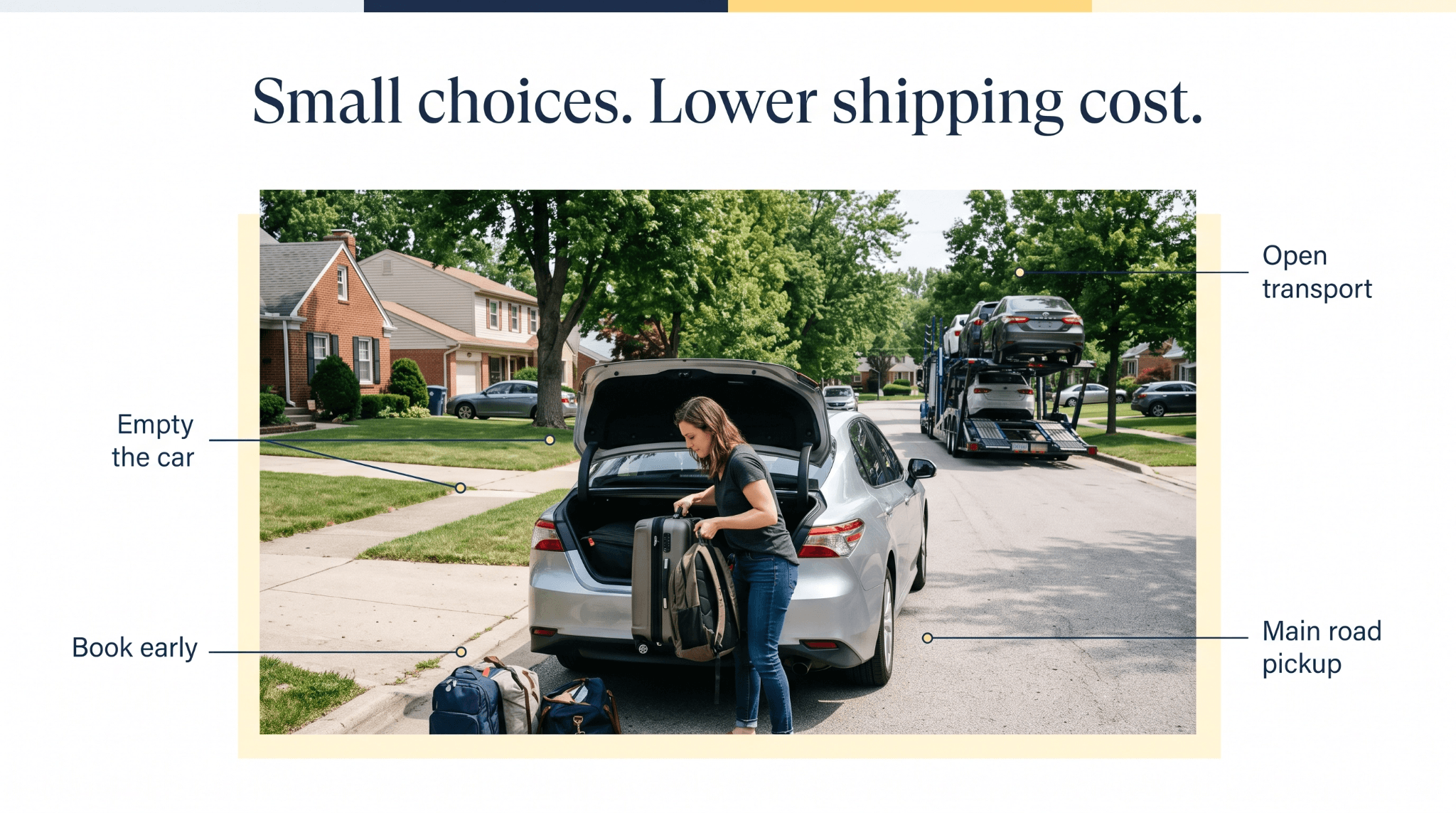
Book two to three weeks ahead. That gives your broker time to match your car with a carrier already running your route. Last-minute bookings usually cost more. A pickup window of three to five days makes your car easier to fit into an existing route, which often means a better rate.
Other easy ways to save:
Choose open transport unless your car truly needs protection.
Remove personal items. They add weight, and carrier insurance doesn't cover them.
Meet the driver near a main road if your street is narrow or gated.
Use promo code SAFE25 for $25 off your Safeeds Transport booking.
Each step saves a little, and together they add up when shipping a car cost is already a big part of your moving budget.
Why the Cheapest Quote Is Often the Most Expensive
Let's be clear: the lowest number on your screen is rarely the best deal.
Brokers post your shipment to a network of licensed carriers, and carriers choose jobs based on price. If your price is below market, nobody takes it. Your car sits for days. Then you get a call asking for more money to "find a driver," and you end up paying more than a fair quote would have cost.
That's why it helps to know how much to ship a car should cost before you compare offers.
What red flags should you watch for?
A trustworthy broker is usually easy to recognize once you know what to look for. If a company shows any of these warning signs, pause before you book and ask more questions.
A large deposit before a carrier is assigned
No written price
Pressure to book right away
Vague answers about insurance
No visible MC number
The FMCSA notes that interstate auto transport brokers and carriers must be registered with the agency, that each receives a six-digit MC Docket number, and that consumers should avoid any company that doesn't display this number prominently on its website. You can check a company through the FMCSA consumer advisory for auto transporters.
What Else Do People Ask About Car Shipping Costs?
Once you know the basics, a few practical questions usually come up before booking. Here are quick, clear answers to the ones customers ask most often.
How much does it cost to ship a car across the country?
Shipping a standard sedan coast to coast on an open carrier usually costs $1,300 to $1,900 in 2027, while enclosed transport runs about $1,900 to $2,900. Most trips take seven to ten days after pickup. Working with a licensed broker gets you a written quote and a realistic pickup window before you commit.
What is the average cost per mile to ship a car?
The average car shipping cost per mile ranges from about $0.45 on long cross-country routes to $2.50 or more on trips under 500 miles. Medium routes usually fall between $0.70 and $1.40. Rates drop with distance because fixed loading costs are spread across more miles. A free Safeeds Transport quote shows your exact rate for your route.
Why do car shipping quotes vary so much?
Brokers use different pricing methods and fees. Some offer a low quote to win your booking and raise it later, while others quote a realistic market rate from the start. Safeeds Transport takes the second approach, with a written price locked for 7 days, so you can plan around a number that holds.
Is it cheaper to ship a car or drive it?
For long trips, shipping often wins. AAA's 2026 study put the total cost of driving a gas-powered medium sedan at about $0.705 per mile, which comes to nearly $2,000 over 2,800 miles before hotels and meals. Shipping usually costs less, saves you days on the road, and spares your car the extra wear.
When is the cheapest time of year to ship a car?
January and February are usually the cheapest months, along with late fall on routes outside the snowbird rush. Summer and the weeks around major holidays tend to cost the most. If your dates are flexible, ask your broker to aim for a pickup window in a lower-demand period.
Do I pay a deposit?
Not with Safeeds Transport. There's no upfront payment when you book, only a $1 card verification hold to confirm your payment details. You pay the full balance at pickup or delivery, once a carrier is assigned and your car is on the move. You're never paying ahead for a shipment that hasn't been scheduled.
Does the size of my car change the price?
Yes. Larger, heavier vehicles take more trailer space and weight capacity. A mid-size SUV usually costs about $100 to $250 more than a sedan, and a full-size pickup can cost $200 to $400 more. Share your exact make, model, and any modifications when you request a quote, so your price is accurate from the start.
How much more does enclosed transport cost?
Enclosed transport usually costs 40% to 60% more than open transport. On a cross-country route, that's often $1,900 to $2,900 instead of $1,300 to $1,900. The extra cost buys full protection from weather and road debris, and that protection is well worth it for classic, luxury, and exotic cars.
Does shipping to a rural address cost more?
Usually, yes. Rural addresses are often far from major highways, which can add about $100 to $300 to your quote. Meeting the driver in a nearby town or a large lot close to the highway can lower that cost. A good broker can help you choose a convenient meeting point that keeps your price down.
Can my quoted price go up after I book?
With Safeeds Transport, your quoted price is locked for 7 days. It changes only if your shipment details change, such as a different vehicle, a car that no longer runs, or a new pickup address. Share accurate details when you request your quote, and your price stays steady from booking through delivery.
What Does a Fair Car Shipping Quote Look Like?
The best quote isn't always the lowest. It's the one that gets your car moving on time without surprises. A fair quote gives you a written price you'll actually pay and payment terms that don't require a large deposit before a carrier is assigned. It also sets a pickup window that's realistic for your route and season, and it tells you clearly who covers your vehicle during transport.
If a quote can't meet that standard, keep looking. At Safeeds Transport, we connect you with vetted, licensed carriers and give you a written quote locked for 7 days. Request your free quote today and see what your shipment should really cost.